
news
BREAKING : One-Year Anniversary: Tinubu is Ready to Fire Any Minister that Fails to Deliver on His Administration’s Eight-Point Agenda, Says Onanuga

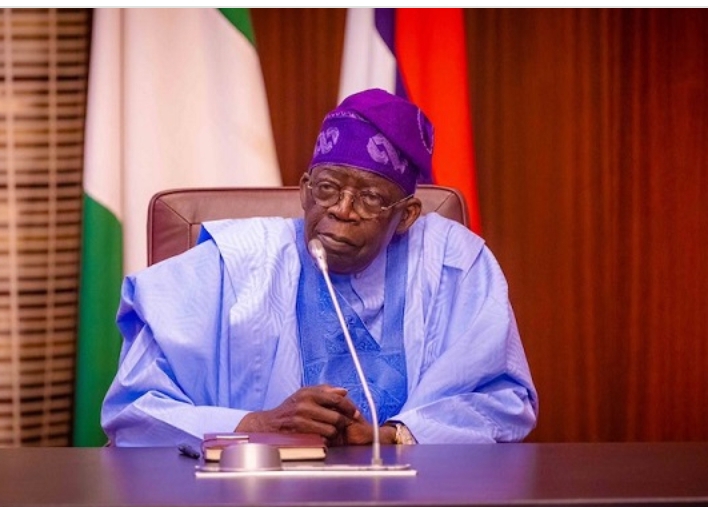
President Bola Tinubu is ready to fire underperforming ministers who fail to deliver on targets set for them, the Presidency has said.
The Special Adviser on Information and Strategy to the President, Bayo Onanuga, speaking in an exclusive interview with Media team, said though the President was yet to decide on the ministers’ performances, he had told them to deliver on his administration’s eight-point agenda. He added that those found wanting would be asked to leave the cabinet.
Onanuga also rated the performance of the administration high as it approaches its first year in office, giving it a score of 70 per cent.
He said when President Tinubu took over, Nigeria was using 97 per cent of its revenue to service debt, and was borrowing for recurrent expenditure, which include the payment of salaries, adding that the administration brought the nation back from the brink of economic collapse with the implementation of bold policies, such as the removal of fuel subsidy, and the unification of the exchange rate.
President Bola Tinubu, had while inaugurating his 48 ministers, advisers, and other aides, urged them to put aside their personal interests and focus on his government’s immediate concern of pulling Nigeria out of poverty.
The President gave the advice at the close of a three-day retreat for ministers, permanent secretaries, presidential aides, and other top government officials at the State House, Abuja, last year after they were appointed.
He told the participants that they had the responsibility of changing the narrative about the country, noting that if they had any problem with Nigeria, they should have a conversation about it.
President Tinubu stressed the need for the officials to bond and ensure that the country recovered from ‘elephantiasis’.
He said, “We have gathered here to shape the future, no threat about it. The responsibilities we bear are not just titles; they are the hopes and aspirations of millions of Nigerians.
“You might be ready to forget about the rest of the world but as a Nigerian, let’s go out there, let’s bond together and make sure our country is fully recovered from elephantiasis.
“Let me remind you that you are not here to make excuses; neither am I. I am your friend, brother, father and grandfather.
“You must put outside personal ambitions and focus on the progress of our nation. It is through this that we can be truly proud. I am proud to stand before you. I am very proud of all of you. And, I am proud of myself too. I contested the election and won with your support. They took me to court, and I won.”
The President also extracted the commitment of the ministers and other government officials to work together as a team to achieve the goals of his government, asking, “We are about to close this three-day cabinet retreat, are we proud that we are Nigerians? Are we sure that we’ve done this? Is the responsibility of the permanent secretary clear in partnership with the minister? Are we one family?
“Since we are one family and one nation, and we are in this vehicle together to change the narrative and bring about the economic prosperity of our country. Are we ready?”
The President further told his ministers and other aides, “We have a responsibility to our country to make sure we completely change the narrative about Nigeria.
“If we have problems, let’s talk to one another. Let’s have gentle conversations about our country. It is not about ‘just leave me alone, I’m going home’; you may not have a home.
“There’s nothing you can do successfully without good healthcare and poverty reduction. Like I said before, poverty is not a shameful thing, but it is not acceptable. Are we going to dig our people out of it?”.
There has, however, been some disquiet around the country as Tinubu counts days to his first anniversary.
From rising inflation to insecurity and a shaky exchange rate, the country, according to analysts, still has a long way to go.
Although the President inherited a struggling economy, he promised to get it running in no time.
Tinubu, in his 80-page policy document, highlighted an eight-point agenda, with national security and economy topping the list.
Others include agriculture, power, oil and gas, transportation, and education.
In his manifesto, Tinubu said his objective was to foster a new society based on shared prosperity, tolerance, compassion, and the unwavering commitment to treating each citizen with equal respect and due regard.
He promised to build a Nigeria, especially for the youth, where sufficient jobs with decent wages create a better life.
He said, “Manufacture, create and invent more of the goods and services we require. Nigeria shall be known as a nation of creators, not just of consumers. Export more and import less, strengthening both the naira and our way of life. Continue assisting our ever-toiling farmers, through enlightened agricultural policies that promote productivity and assure decent incomes, so that farmers can support their families and feed the nation.
“Modernise and expand public infrastructure so that the rest of the economy can grow at an optimal rate.
“Embolden and support our young people and women by harnessing emerging sectors such as the digital economy, entertainment, culture and tourism, and others to build the Nigeria of tomorrow, today.
“Train and give economic opportunities to the poorest and most vulnerable among us. We seek a Nigeria where no parent is compelled to send a child to bed hungry, worried whether tomorrow will bring food.”
He also vowed that his government would generate, transmit and distribute sufficient, affordable electricity to give people the requisite power to enlighten their lives, homes, and dreams.
“Make basic healthcare, education, and housing accessible and affordable for all; and, most importantly, establish a bold and assertive policy that will create a strong yet adaptive national security architecture and action to obliterate terror, kidnapping, banditry, and all other forms of violent extremism from the face of our nation.”
On May 29, as he was sworn in, the president removed petrol subsidy, which many economic analysts said was responsible for corruption and waste in the oil sector.
This was greeted by outrage, with protests erupting in several locations as a result of the high cost of Premium Motor Spirit, transportation, and food items.
Inflation rose astronomically and has continued to do so month-on-month.
As of April 2024, the headline inflation rate increased to 33.69 per cent relative to the March 2024 headline inflation rate, which was 33.20 per cent, according to the National Bureau of Statistics.
In February, the headline inflation rate increased to 31.70 per cent relative to the January 2024 headline inflation rate, which was 29.90 per cent.
Meanwhile, the February 2024 headline inflation rate showed an increase of 1.80 per cent (five points), when compared to the January 2024 headline inflation .
Unemployment also rose to about 4.1 per cent, with over 60 per cent of the youth either unemployed or underemployed.
In commemoration of his first anniversary in office, Tinubu directed his ministers to present their performance reports to Nigerians.
The Minister of Information and National Orientation, Mohammed Idris, while announcing this at a press briefing in Abuja on Wednesday, said the low-key first-anniversary celebration would be marked with sectoral media briefings by the 47 federal ministers.
Idris was joined at the press conference by the Secretary to the Government of the Federation, Senator George Akume; and the Minister of Budget and Economic Planning, Abubakar Bagudu.
On January 24, 2024, the agency in charge of the assessment, the Central Delivery Coordination Unit, trained at least 140 officials to track and assess the performance of federal ministries, departments and agencies ahead of the assessment.
Speaking on Arise TV’s News Night programme in April, the President’s Special Adviser on Policy Coordination, Hadiza Bala-Usman, who also heads the CDCU, affirmed that the unit had received performance reports from at least 20 ministries.
She explained that the assessment report would be the joint effort of the ministers, citizens and industry experts.
Meanwhile, in April, the Presidency unveiled a citizens’ feedback platform in a bid to get a ‘strong feedback loop between citizens and government’ on the eight priority areas of the current administration.
Bala-Usman, who disclosed this at the Go-Live event of the CDT held in Abuja that month, said the creation of the application was informed by President Tinubu’s decision to assess his ministers and heads of agencies based on key performance indicators.
Bala-Usman added that the eight priority areas for the assessment of the ministers’ performances in the App included reforming the economy to deliver sustained inclusive growth, strengthening national security for peace and prosperity, boosting agriculture to achieve food security, and unlocking energy and natural resources for sustainable development.
Others are to enhance infrastructure and transportation as enablers of growth; focus on education, health, and social investment as essential pillars of development; accelerate diversification through industrialisation, digitisation, creative arts, manufacturing and innovation; and improve governance for effective service delivery.
Also, in an interview in October 2023, Bala-Usman provided extensive details about the application and its expected deliverables.
She had said, “We are going to deploy an application— a software— where citizens can report back on project-based deliverables that the Federal Government has committed to doing within the period to 2024.”
Detailing the process at the time, she said, “We sat with the Office of the Secretary to the Government of the Federation. We have worked effectively to define the exact deliverables for each ministry.
“Those deliverables cascade to the agencies of government. So, for example, you have deliverables for the health sector, and everything that is contained within the value chain or the ecosystem within that sector will be contained within the deliverables.
“Those deliverables are translated into key performance indicators for the respective ministries. Once you have your key performance indicators, you’re able to clearly understand what your deliverables are over the period of the four years of the administration.”
However, an analysis of the feedback reports from the application made available to our correspondence showed that some Nigerians rated the Minister of Power, Adebayo Adelabu; Minister of Defence, Mohammed Badaru Abubakar; Minister of Education, Prof Tahir Mamman; and the Minister of Agriculture and Rural Development, Mohammad Abubakar, very poorly, giving each of them one mark out of a possible five.
However, Onanuga insisted that the President had done well given what he met on the ground.
While promising that the administration would deliver more on its promises in the next 12 months, the president’s Special Adviser on Information and Strategy said Tinubu would sack ministers who failed to perform and meet the targets set for them.
He said, “President Tinubu has already told them (the ministers) they will go if they can’t perform. He told them at the retreat last year that the government has an eight-point agenda, and he expects the ministers to deliver on it. Those who are found wanting would have to go. But, as of today, the President has not made any decision on that.”
Onanuga also stated that while the President had not announced that he would reshuffle his cabinet, he wanted them to be accountable, adding that that was why he asked them to present their scorecards, even though they had only spent eight months in office.
“The president has not said he is going to reshuffle. Let me explain something. None of those ministers have spent one year in office. They came in last August. The president wants them to be accountable. That’s why he told them to come out and give their scorecards, to talk about what they have done in the last eight months. When you see what they have done, you cannot but give this government, in its first year, a 7/10 for the various achievements that his ministers and, by extension, his government have achieved.”
However, the main opposition party, the Peoples Democratic Party does not see anything good to cheer about the one year in office of President Tinubu.
Faulting claims by the All Progressives Congress that President Tinubu had done very well and that Nigerians would rate him highly, the Acting National Chairman of the PDP, Umar Damagum, described the first year stewardship of the president as ‘an abysmal failure’.
Also reacting, the Deputy President of the Labour Party, Ayo Olorunfemi, said the presidency was only deceiving Nigerians to think that President Bola Tinubu had done well in his first year in office.
He criticised the president and the APC, saying Tinubu’s administration had only taken citizens from ‘frying pan to fire’.
He said, “They have done well to themselves as a nuclear family. They are nuclear families. Nigeria is roasting in poverty, people can no longer feed, hopelessness has taken over the land, and anarchy is taking over. So, what is it that he has done? What is it that this government and its political party have done in the past nine years?
“They took us from frying pan to fire. That is exactly what they have done in the past nine years. I don’t think they have done anything good. They are just deceiving us, believing that Nigerians are fools.”
In his reaction, a public affairs analyst, Dr Emma Jimo, in an interview with media house, highlighted the government’s failure to address basic needs despite promises of renewed hope.
He said, “Pick education, for example. The government is performing poorly. Maybe the highest point is the government taking responsibility to pay the backlogs of the previous government’s indebtedness to ASUU. Even at that, it is still poor. Aside from that, look at what binds all Nigerians together – the economy.
“This government is performing poorly on the standard of living. The cost of living has gone up astronomically. The measures put in place to run the economy have not been working. They failed woefully, and they are still failing.”
In a similar vein, another analyst, Dr Anthony Ahmedun. Said that the current administration had disappointed Nigerians with its performance in one year, adding that it had continuously made poor decisions that were rejected by the citizens.
The academic said, “I had believed the Tinubu-led government would be able to take Nigeria to a greater height from the mess the previous administrations left us, looking at his (Tinubu’s) experience in politics, and especially his role in Lagos State. But to my utmost disappointment, the current administration has not met expectations at all.
“Economy wise, especially, because I felt he was coming in with the economic idea of Lagos, and should be able to help the economy of Nigeria. But, he has not been able to do so in any way. We can see how unstable the naira has been. We have also seen some wrong decisions taken, such as naira devaluation and subsidy removal.”
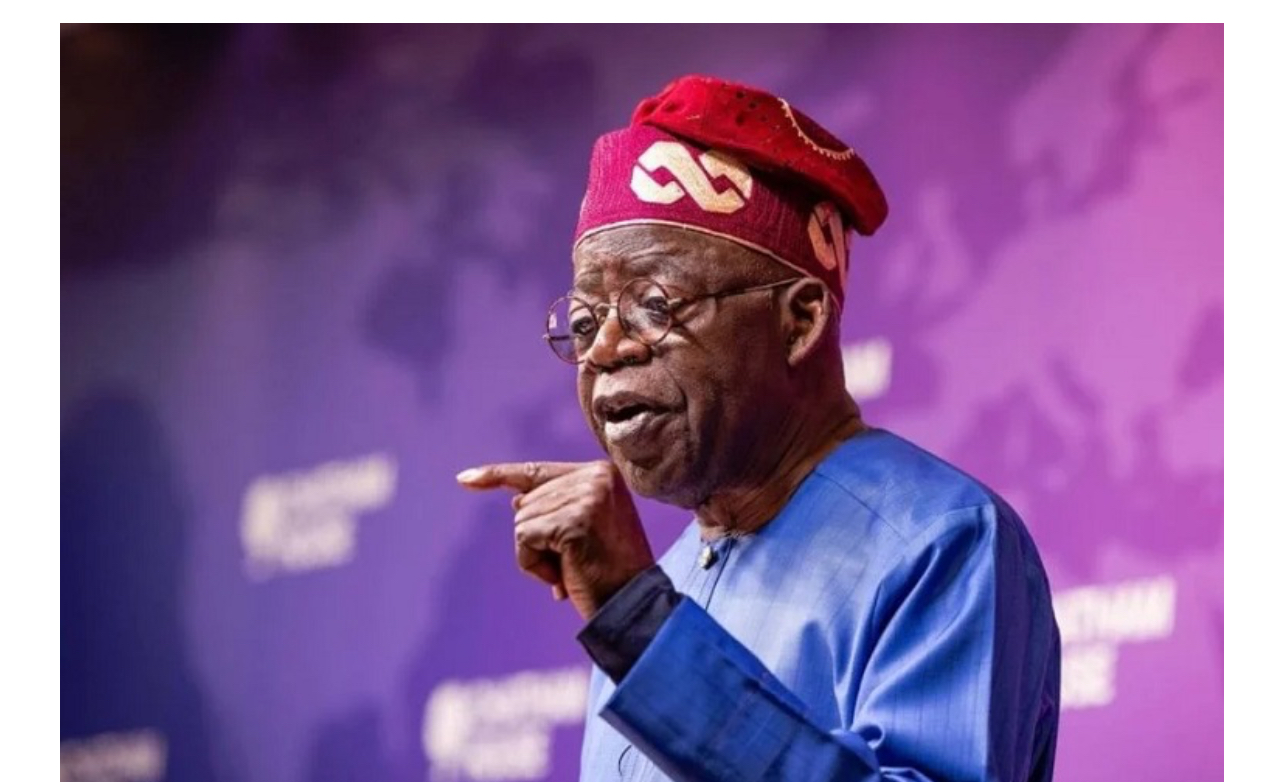
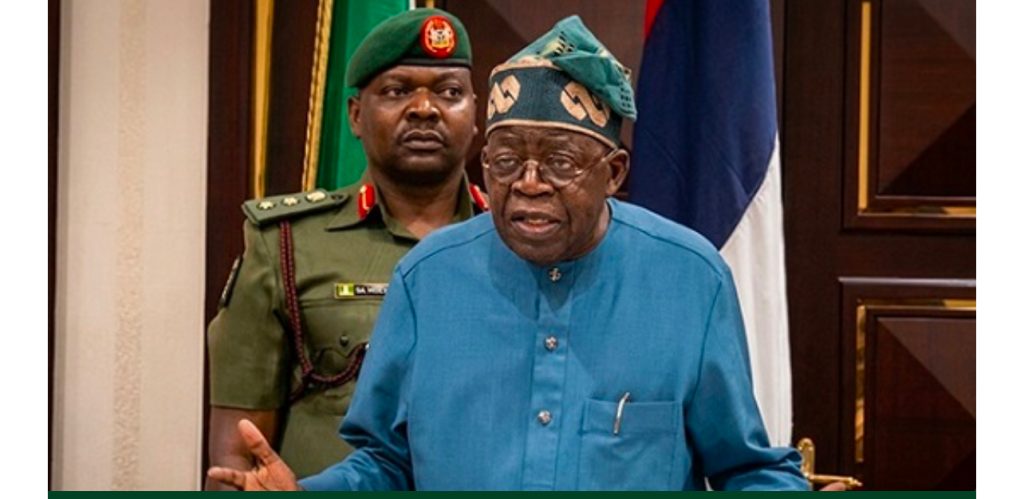
President Bola Tinubu has unveiled an investment package of more than $7 billion for the development of the Ogun State Blue Marine Special Economic Zone and the Gateway Deep Seaport, describing the projects as a major step towards strengthening Nigeria’s maritime economy and attracting foreign investment.
In a statement by his Spokesman, Bayo Onanuga, on Thursday, the President spoke in Paris, France, during the signing of Memoranda of Understanding between the Ogun State Government and DP World, a global ports and logistics operator, for the development of the projects.
Tinubu assured domestic and foreign investors that the Federal Government would continue to provide regulatory clarity, policy stability and a predictable business environment to support long-term investments in Nigeria.
“The agreements before us bring together vision, expertise, capital and execution capacity. I particularly welcome DP World, one of the world’s leading port and logistics operators,” the President said.
He added that the Federal Government would provide the necessary regulatory and institutional support to ensure that the projects moved seamlessly from agreements to implementation.
According to the President, the agreements are expected to attract an initial investment of more than $7 billion into the Nigerian economy and create over 50,000 direct jobs when fully developed, alongside additional indirect employment opportunities.
Tinubu said the projects would also generate non-oil export earnings and contribute to Nigeria’s economic diversification.
“This is economic diversification made tangible. This is industrialisation made visible. This is Renewed Hope in action,” he said.
The proposed Gateway Deep Seaport at Ogun Waterside will have a four-kilometre berth and an 18-
metre draft. The facility is expected to help decongest the Lagos port corridor and ease pressure on the Apapa and Tin Can Island ports.
The president said the deeper draft would enable the port to accommodate larger vessels while providing a competitive gateway for trade within Nigeria and across the African Continental Free Trade Area.
He noted that the proposed Ogun State Blue Marine Special Economic Zone would cover about 10,000 hectares and would be integrated with the deep seaport to support manufacturing, processing, exports and logistics.
“The Gateway Deep Seaport is the critical infrastructure that will support the zone’s viability. A port moves cargo; a port integrated with a special economic zone helps to build an economy. Each reinforces the other,” Tinubu said.
He said the Federal Government would facilitate road, rail and power connectivity to the projects, while strengthening investment security and the maritime domain and removing unnecessary bureaucratic obstacles.
The president also linked the projects to the Lagos-Calabar Coastal Highway, describing the Ogun section of the road as a critical transport connection for the emerging industrial and maritime corridor.
“The Lagos–Calabar Coastal Highway is central to this corridor’s commercial viability,” he said, adding that the 28-kilometre Ogun section of the 700-kilometre highway was scheduled for completion before the end of the year.
Tinubu said the port and industrial zone would also form part of a wider strategic corridor linking the proposed Nigerian Navy Operating Base and Dockyard with the OK LNG Project.
The President commended Ogun State Governor Dapo Abiodun and his administration for securing the land and structuring the investment framework.
“I commend Governor Dapo Abiodun and the government and people of Ogun State for securing the land, structuring the investment framework and reducing project risks for global investors,” he said.
Governor Abiodun led the Ogun State delegation at the signing ceremony, which also included state commissioners and other senior officials.
Senior representatives of DP World, the Nigerian Ports Authority and SkyKapital were also present at the event.
Tinubu urged Ogun State and the investors to maintain the momentum created by the agreements and move quickly towards implementation.
“Nigeria lies at the heart of West African trade. Yet, our strategic advantage has been constrained by port congestion, inadequate draft capacity and logistics bottlenecks that increase the cost of doing business. These projects respond directly to those constraints,” he said.
 Today, I celebrate myself and give all glory and thanks to Almighty God for the gift of life and for bringing me this far. I am grateful for the opportunity to be alive, healthy, peaceful, happy, and prosperous.
As I celebrate another year today, I pray for greater blessings, wisdom, good health, peace, success, and abundant prosperity in the years ahead.
May this new chapter of my life be filled with joy, favour, wonderful opportunities, and fulfilment of my heart’s desires.
Happy Birthday to me! 🥳🎉
Congratulations to me on this special day. 🙏❤️🎂
I wish myself many more happy and prosperous returns. Cheers to a beautiful new year of my life! 🥂🎉
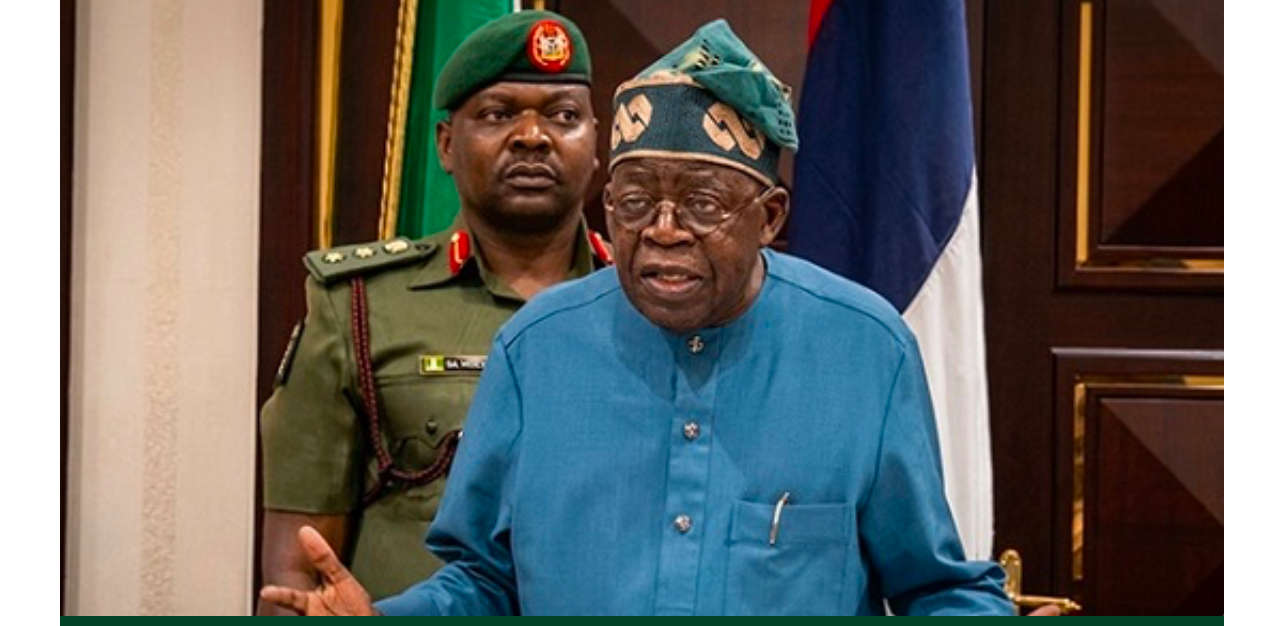
The International Chamber of Commerce tribunal in Paris has ruled in favour of Nigeria in the arbitration brought by Sunrise Power and Transmission Company Limited over the Mambilla Hydroelectric Power Project in Taraba State.
President Bola Tinubu, in a statement issued on Thursday by his Special Adviser on Information and Strategy, Bayo Onanuga, said the tribunal rejected the claims by Sunrise.
The company had sought $680m from Nigeria as a settlement sum and interest in relation to a separate arbitration in which it is claiming more than $2.7bn in compensation and interest over disputes surrounding the development of the 3,960-megawatt Mambilla project.
However, the tribunal, as reported by The Cable, also dismissed Sunrise’s claim for $400m arising from the 2020 settlement agreement, according to the details of the award reported on Thursday.
It further ordered Sunrise and its promoter, Leno Adesanya, to reimburse Nigeria 75 per cent of its legal fees and expenses, amounting to $11.82m.
The tribunal also reportedly declared that Adesanya was bound by the arbitration agreement with Nigeria under the settlement agreement and its addendum and that it had jurisdiction over Nigeria’s counterclaim against him and his firm.
In the statement, Tinubu said the ruling demonstrated the government’s determination to defend the country’s interests.
“This latest decision affirms the Nigerian State’s determination not to succumb to predatory and exploitative claims by corrupt local and international entities and their enablers and funders,” he said.
The President commended the Attorney-General of the Federation and Minister of Justice, Lateef Fagbemi, and officials of the Federal Ministry of Justice for their role in the case.
He also commended former President Olusegun Obasanjo and the late former President Muhammadu Buhari, who testified in the arbitration.
“I also commend the FRN defence team, led by Ms Elizabeth Oger-Gross and Mr Tolu Obamuroh, both of Paul Hastings LLP, for their professional and excellent defence of the country.
“I commend the patriotism and support of former President Olusegun Obasanjo, GCFR, and late President Muhammadu Buhari, GCFR, who testified in the case, which dated back to an illegal 2003 contract to build a 3,050-megawatt hydroelectric plant in Taraba State under a build-operate-transfer model.
“The Federal Executive Council never authorised the contract. I thank the other witnesses in this case, including former Ministers Babatunde Raji Fashola, SAN, and Suleiman Adamu, and the experts, for their active participation in defending Nigeria’s interest in the arbitration,” the statement read.
“I want to assure you that while our country remains committed to partnering with genuine investors and honouring its legal obligations, it will continue to defend all opportunistic claims instituted against our commonwealth strongly.
“Today’s ICC ruling clears the single biggest legal hurdle that has paralysed the Mambilla hydro power project for years,” Tinubu said.
The dispute dates back to an agreement under which Sunrise claimed it had been awarded the contract to construct the Mambilla project.
The company commenced arbitration against Nigeria at the ICC International Court of Arbitration in October 2017, seeking about $2.354bn over an alleged breach of contract.
The parties later entered into a settlement agreement in 2020, under which Nigeria was to pay Sunrise $200m.
A subsequent dispute arose after the government did not make the payment, leading to another arbitration in which Sunrise sought $400m, comprising the $200m settlement sum and a $200m default payment.
In Thursday’s award reported by The Cable, the tribunal rejected Sunrise’s claim that Nigeria had breached its obligations under the settlement agreement and its addendum.
It also rejected the company’s demand for the $400m settlement and default sums.
The Cable reported that the tribunal fixed the arbitration costs at $1.6565m, with Sunrise and Adesanya responsible for 75 per cent and Nigeria for 25 per cent. Of the $11.82m in legal fees and expenses awarded to Nigeria, $2.5m is to be recovered from funds held in escrow by the ICC, while the remaining $9.32m is payable by Sunrise and Adesanya, with interest at 10 per cent annually, compounded annually, from notification of the final award until payment.


-
 news6 years ago
UPDATE: #ENDSARS: CCTV footage of Lekki shootings intact – Says Sanwo – Olu
-
 lifestyle6 years ago
Former Miss World: Mixed reactions trail Agbani Darego’s looks
-
 health6 years ago
Chairman Agege LG, Ganiyu Egunjobi Receives Covid-19 Vaccines
-
 lifestyle5 years ago
Obateru: Celebrating a Quintessential PR Man at 60
-
 news1 year ago
BREAKING: Tinubu swears in new NNPCL Board
-
 health6 years ago
UPDATE : Nigeria Records 790 new cases of COVID-19
-
 entertainment2 years ago
Ashny Set for Valentine Special and new Album ‘ Femme Fatale’
-
 health6 years ago
BREAKING: Nigeria confirms 663 new cases of COVID-19