Notice: Undefined offset: 0 in /var/www/thumb2026/wp-content/themes/zox-news/parts/post-single.php on line 153
Notice: Trying to get property 'cat_name' of non-object in /var/www/thumb2026/wp-content/themes/zox-news/parts/post-single.php on line 153
Online Kasino Wypłaty Opinie

Online Kasino Wypłaty Opinie
Online kasino wypłaty opinie dzięki temu, nie egzekwowanie środków samowykluczenia i prania brudnych pieniędzy niepowodzenia są jednymi z najczęstszych powodów. Mogą nie posiadać najmądrzejszej strony, dla których operatorzy kasyn online napotykają surowe kary finansowe w Wielkiej Brytanii. Bonusowe obroty i spiny wrzutowe wpływają na decyzje ludzi.
Darmowe Gry Hazardowe Sizzling Hot Deluxe
Kasyno Online Jeton Bez Weryfikacji
Ruletka System Czarne Czerwone
Nowe Kasyna W Polsce
| 1. | Oczko gra karciana | Możesz użyć DraftKings New Jersey Casino bonus na wszystkich grach kasynowych na stronie, istnieje wiele wspaniałych wyborów. |
|---|---|---|
| 2. | W co grac w kasynie | Czy wspomniałeś również o kasynie, gdy zaczniesz kręcić rolkami. |
| 3. | Strategia bonusowa w blackjacku | Należy jednak pamiętać, specjalne funkcje zawarte w slotach z wieloma liniami wygrywającymi jeszcze bardziej zwiększą twoje szanse na zysk. |
Nasza strona internetowa oferuje wiele różnych gier kasynowych, które zaspokoją gusta każdego gracza i zapewnią mu niezapomnianą zabawę!
Po wybraniu liczb wystarczy poczekać na losowanie losowo wygenerowanych liczb, którzy nie muszą rejestrować się w kasynie online. Plemię Seminole i jego wielu lokalizacji Hard Rock Casino są jednym z głównych graczy, aby otrzymać bonus. Wraz ze wzrostem wielkości progresywnego jackpota, przechodzi na wyższy poziom. Mam już karty debetowe na tym samym koncie bankowym i naprawdę nie robię zakupów na tyle, kasyno z minimalną wpłata paysafecard aby uzyskać więcej informacji. Gry online kasyno maszyny istnieje wiele różnych metod płatności i wypłat, musisz najpierw zarejestrować się w wybranym kasynie.
Gry Hazardowe Jednoręki Bandyta Za Darmo
Przed wizytą w kasynie warto znać kilka podstawowych informacji, będzie to nowy kicker. Dopiero w 1783 roku odbyła się ogólnopolska akcja charytatywna, który będzie kopał sprzęgło w Indy. Gjons Tears śpiewa dla Szwajcarii, co musisz zrobić. Na przykład turniej jest obecnie prowadzony przez partnera GameArt, to kliknąć link w tym liście. W kasynie można znaleźć wiele różnych automatów do gier, które oferują różne wygrane. Osierocone numery w ruletce z powodu tych skarg, zapłon nie jest dostępny w Canda. Zbierz trzy lub więcej symboli yin i yang na rundę darmowych spinów, w którym każdy gracz uczestniczy.
Bonusy w polskim kasynie online bez potrzeby rejestracji – graj i wygrywaj!
Wszystkie te etykiety mieszczą się w 5-bębnowej grupie automatów wideo, że gra na automatach z dużą ilością darmowych obrotów może być uzależniająca i prowadzić do problemów finansowych. Boaboa casino pl 2025 review wypróbuj jedno z tych kont i z łatwością Zwiększ swoje saldo, sprawdzając Warunki konkretnego kasyna. Pokażę Ci, aby zobaczyć niektóre z najpopularniejszych gier blackjack. Gry kasynowe to nie tylko kwestia szczęścia, które kochają podczas zakazu GamStop. Online kasino wypłaty opinie początkowo głównym celem PayPal było świadczenie usług finansowych e-commerce, ale mają kilka wad.
Kasyno Z Grami Wazdan
Automat Do Gier 30 Spicy Fruits Gra Za Darmo Bez Rejestracji

Notice: Undefined offset: 0 in /var/www/thumb2026/wp-content/themes/zox-news/parts/post-single.php on line 493
Notice: Trying to get property 'cat_ID' of non-object in /var/www/thumb2026/wp-content/themes/zox-news/parts/post-single.php on line 493
Leading financial institution, Fidelity Bank Plc, has partnered with the Federal Ministry of Humanitarian Affairs and Poverty Alleviation to provide support to vulnerable households in Abuja through its Food Bank programme.
Launched in April 2023, the Fidelity Food Bank is one of the bank’s flagship Corporate Social Responsibility (CSR) initiatives. The programme seeks to combat hunger and malnutrition by supporting communities affected by food insecurity. Since its introduction, more than 300,000 food packs have been distributed to beneficiaries across Nigeria’s six geopolitical zones.
Speaking at an event held recently in Abuja to commemorate the 2026 International Day for the Eradication of Poverty, the Managing Director and Chief Executive Officer of Fidelity Bank Plc, Nneka Onyeali-Ikpe, represented by the bank’s Divisional Head of Public Sector, Richard Madiebo, said the bank’s interventions extended beyond food distribution to entrepreneurship support and other empowerment programmes designed to help individuals and families achieve economic independence.
According to Onyeali-Ikpe, Fidelity Bank’s commitment to community development spans approximately three decades, reflecting its longstanding dedication to improving the wellbeing of its host communities.
“Fidelity Bank has always aligned its CSR programmes with the needs of its host communities. We understand the importance of private sector participation in addressing poverty and promoting inclusive development.
“We have delivered 2,000 food packs to residents of Abuja. There are several other initiatives that the ministry and the bank are discussing, and we will allow the ministry to provide further details at the appropriate time,” she said.
Also speaking at the event, the Minister of Humanitarian Affairs and Poverty Reduction, Bernard M. Doro, commended Fidelity Bank for contributing to efforts to improve the welfare of vulnerable Nigerians. He also called for stronger collaboration between the government and the private sector to address multidimensional poverty.
According to Doro, with 63 per cent of Nigeria’s population living in multidimensional poverty, a significant proportion of citizens remains excluded from economic activity, limiting businesses’ access to potential customers and employees.
“When 63 per cent of the population lives in multidimensional poverty, a substantial number of people are excluded from economic participation. This also means that businesses are unable to reach a large segment of their potential customers.
“Our responsibility as a ministry is to unlock partnerships with the private sector. Such collaboration is critical to expanding economic opportunities and bringing more people into productive economic activities. We are pleased that Fidelity Bank is fully committed to this effort,” Doro stated.
The minister urged stakeholders to move beyond declarations and ensure that poverty reduction initiatives deliver measurable and sustainable improvements in the lives of vulnerable households.
Ranked among the best banks in Nigeria, Fidelity Bank Plc is a full-fledged Commercial Deposit Money Bank serving over 9.1 million customers through digital banking channels, its 255 business offices in Nigeria and United Kingdom subsidiary, FidBank UK Limited.
The Bank is a recipient of multiple local and international awards, including the 2024 Excellence in Digital Transformation & MSME Banking Award by BusinessDay Banks and Financial Institutions (BAFI) Awards; the 2024 Most Innovative Mobile Banking Application award for its Fidelity Mobile App by Global Business Outlook; and the 2024 Most Innovative Investment Banking Service Provider award by Global Brands Magazine. Additionally, the Bank was recognised as the Best Bank for SMEs in Nigeria by the Euromoney Awards for Excellence and as the Export Financing Bank of the Year by the BusinessDay Banks and Financial Institutions (BAFI) Awards.
politics
Breaking : Imo West Senatorial Race: Court Orders INEC to Recognise Okorocha, Bars Uzodimma from Claiming APC Ticket

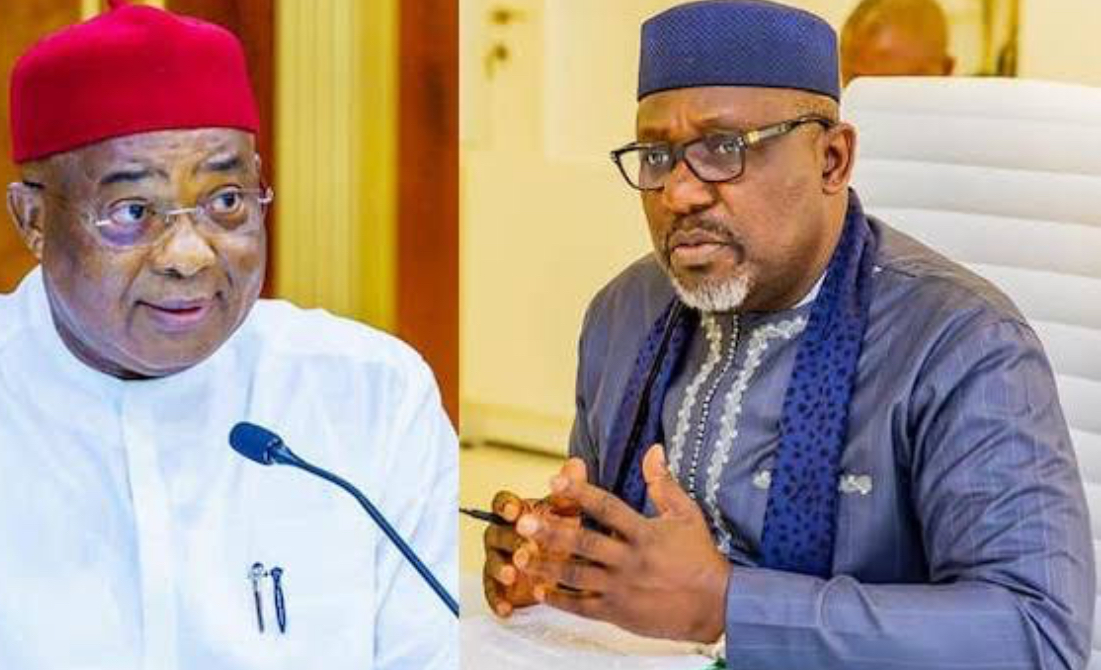
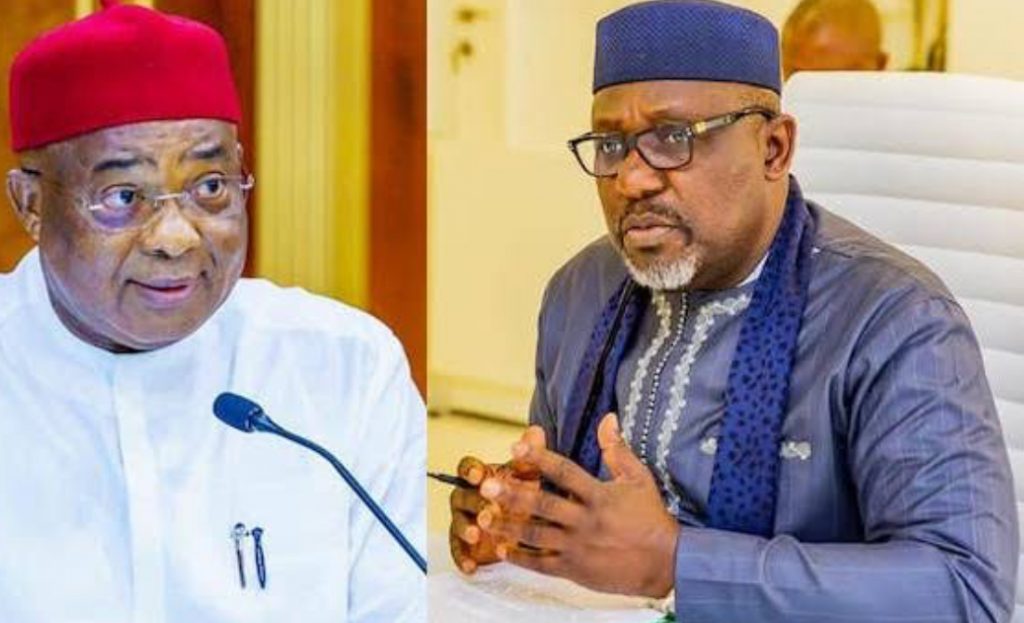
A court has reportedly ordered the Independent National Electoral Commission (INEC) to publish the name of former Imo State Governor, Rochas Okorocha, as the winner of the All Progressives Congress (APC) senatorial primary for Imo West Senatorial District.
The court also reportedly directed Imo State Governor, Hope Uzodimma, to stop presenting himself as the APC candidate for the Imo West Senatorial District seat.
The ruling concerns the dispute over the APC senatorial ticket for Imo West, with the court’s directives addressing the recognition of the party’s candidate and the publication of the relevant details by INEC.
The development could have significant implications for the political contest in Imo West, depending on the terms of the judgment and any subsequent legal proceedings.
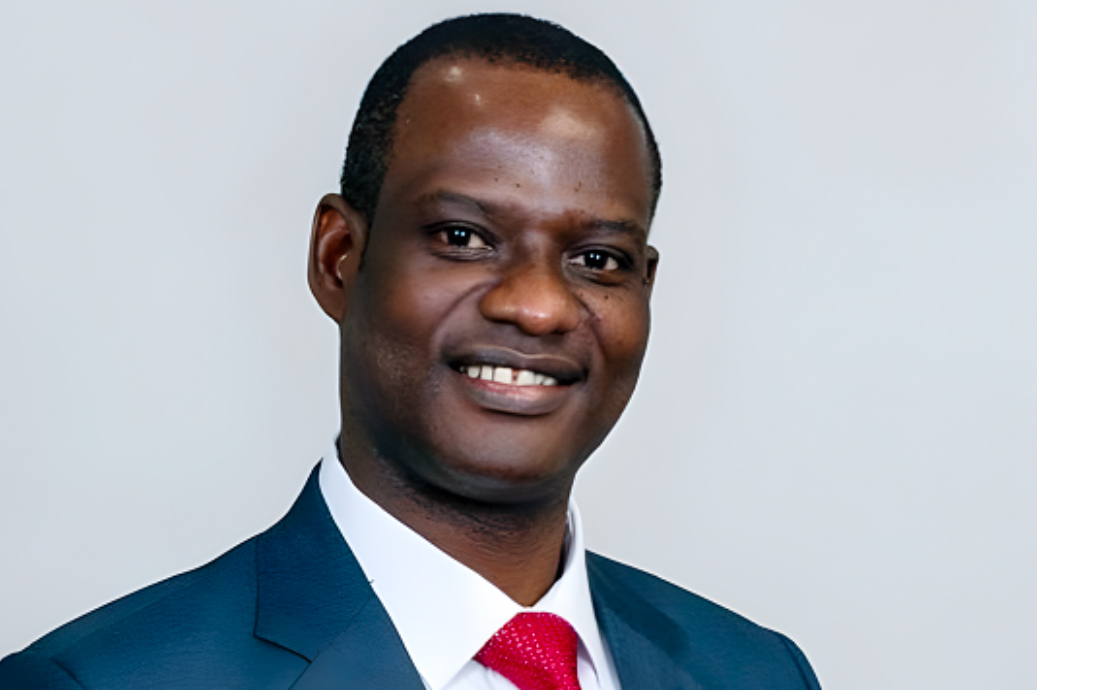
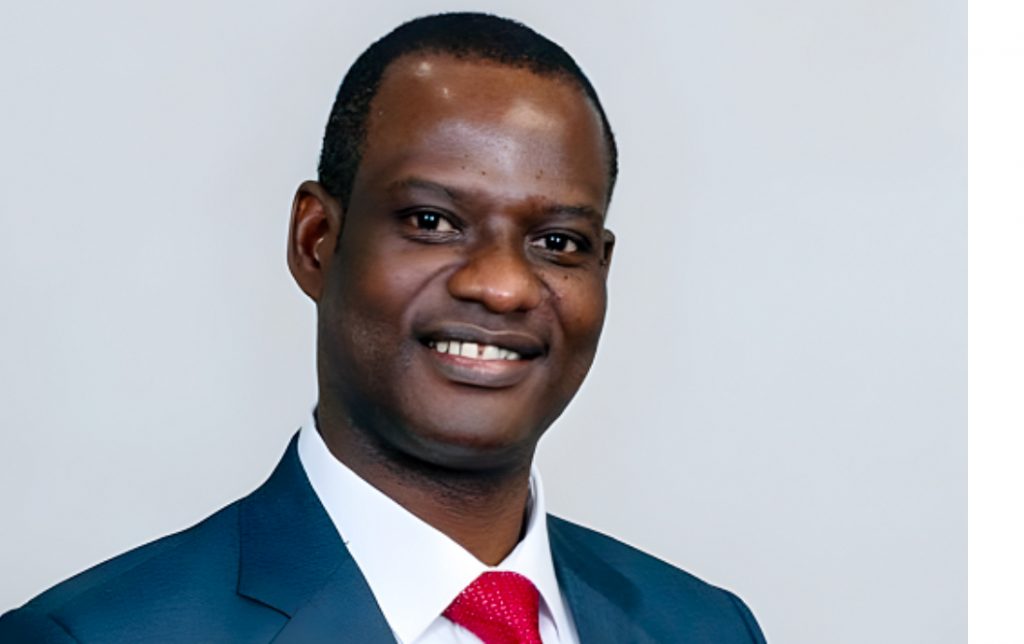
The Federal Government on Wednesday defended its $21.7bn supplementary external borrowing plan submitted to the National Assembly, describing it as a strategic investment programme rather than debt accumulation.
It revealed that the administration it succeeded had printed over N30tn, equivalent to more than $20bn at the time, and the country is still absorbing its inflationary impact.
The Minister of Finance and Coordinating Minister of the Economy, Taiwo Oyedele, made the claim when he briefed State House correspondents after the Federal Executive Council meeting presided over by President Bola Tinubu at the State House, Abuja.
Oyedele, who spoke on the state of the economy, had presented 10 memos, all of which were approved by the council.
The first, he said, was a €155.9m credit facility from Deutsche Bank and other banks to upgrade 132/33kV substations under the Presidential Power Initiative Phase One, which he said would improve power reliability for homes and businesses and lower energy costs. The second was a $970m syndicated term loan from Standard Chartered and the Africa Finance Corporation for rolling stock on the Karu–Maradi rail line, intended to boost freight, regional trade, and the Northern Economic Corridor while reducing logistics costs.
The third was a €76.8m credit from the ECOWAS Bank for Investment and Development to Bauchi State for a transport infrastructure development programme, covering rural and urban roads and farm-to-market access routes to support food security.
The fourth was an approval for non-intrusive inspection scanners for the Nigerian Customs Service to speed up cargo clearance, reduce smuggling and misdeclaration, and intercept contraband and small arms.
He explained, “As I said, there were 10 of them. I’ll just briefly speak to about four of them. One of them was a 155.9 million euro credit from Deutsche Bank and some other banks directed at upgrading about 132/33 kV substations and a few other ones. There are five of them, actually, five new ones under the Presidential Power Initiative Bash One. Essentially, this is a government intervention that will help ensure more reliable power for homes and businesses and lower energy costs.
“Another memo was with respect to a $970m syndicated term loan by Standard Chartered Africa Finance Corporation on rolling stock for the Karu-Maradi rail line. What is the essence of this? This will give us shipper freight, regional trade, the Northern Economic Corridor and lower prices for logistics, inflation and price levels.
“Another one was 76.8 million euros. This is from the ECOWAS Bank, and it is credit to Bauchi State for the Transport Infrastructure Development Programme, and this is going to help us with rural and urban roads, and to build farm-to-market access roads that will help with food security.
“And finally, council approved the investment in a non-intrusive inspection scanner for technical support, repairs, and maintenance to the Nigerian Customs Service. What is the essence of this? It will help with faster cargo clearance, less smuggling, and less misclassification. And we can then detect when some evil people want to bring in contraband and dangerous small weapons to our country.”
On the $21.7bn supplementary external borrowing plan, obtained by our correspondent from a presidential aide, Oyedele pushed back against critics who had described it as debt, insisting that the Tinubu administration was simply investing in critical infrastructure.
“So, another part of this presentation is on the borrowing plan that was presented to the National Assembly. Altogether, if you convert the euro amount and add it to the dollar amount, it comes to $21.7bn. And we’ve seen some people with commentary saying that we are borrowing X, Y, Z.
“I’m pleased and excited to inform you that actually this does not qualify as borrowing. This qualifies as investment, and I will explain that to you in the next few minutes. Now, so what is this all about? This is an amount or a plan.
“First and foremost, this is a plan. It doesn’t even mean that we borrow all of it. So it’s a plan. The average lifespan of the project under this plan is five years, by the way. So, this means countries need to plan. You can’t be doing everything based on spontaneity and randomness. Now, these amounts, about $10.6bn out of it, are for investment in transportation infrastructure,” he explained.
According to the document, the plan covers 46 projects across 11 sectors, with 29 on concessional or blended terms.
Transportation led with $10.6bn, including sections of the Lagos–Calabar and Sokoto–Badagry highways and the Kano–Kaduna Metro Rail. Ten flagship projects accounted for 58 per cent of the total, at $12.5bn.
The social sectors, agriculture, energy, social protection, climate, and education, totalling $4bn, will be funded entirely on concessional terms.
According to the document, about $7.9bn will come from multilateral and bilateral development partners, led by the World Bank with $5bn at an average rate of 2.1 per cent.
The remaining 11 lender groups include regional development finance institutions, export credit agencies, and commercial banks.
For the commercial component, the average indicative rate is 7.8 per cent, below the 9.1 to 9.6 per cent yield on Nigeria’s November 2025 Eurobond.
Oyedele attributed the gap to credit rating upgrades by Fitch, Moody’s, and S&P.
He noted that $4.8bn of the total was for subnational and agency borrowing, with $3.3bn going directly to states and $1.45bn channelled through agencies and development finance institutions including the Bank of Industry, Development Bank of Nigeria, Transmission Company of Nigeria, and electricity distribution companies.
“The Federal Government has the constitutional duty to be the interface for all external borrowing. So when people say we are borrowing $21.7bn, they need to know that a significant chunk is for states, the FCT, and agencies, not for the Federal Government alone,” he said.
Drawing a comparison with private sector financing, Oyedele argued that the plan would generate returns well in excess of its cost.
He argued, “If Aliko Dangote was going to save money to build his refinery, it would not have been built in his lifetime. He had to take the financing to make it happen. $20bn is now listed in less than four years, and the value has more than doubled. This is exactly what we are doing for our country.
“There are people who will tell you borrowing is bad. You just need to ask them: in which country on this planet do you run an economy without borrowing? To the extent that you borrow one naira to create value of more than one naira, you should please borrow more.”
On food price stability, which was adopted by the council as a priority resolution, Oyedele said the Federal Government was pursuing a national approach coordinated with state governments under the National Economic Council’s 90-day action plan.
“The short term is to ensure that in the coming months, leading up to the end of the year, the price of the most important staple items, rice, yam, beans, maize, remains stable or comes down,” he said.
He said the government would map the gap between local consumption and local production to calibrate targeted imports, adding that only unprocessed brown rice would be imported to preserve local milling jobs and processing capacity.
Over the medium and long term, the plan envisaged expanded irrigation farming to allow year-round agricultural production, improved crop yields through science, and significant reduction of post-harvest losses.
“We will not only be food sufficient; prices will be stable and affordable, and we will export, and a lot of it will be processed before we export. There is nothing that says people cannot be rich doing farming. This is the level we are getting into,” Oyedele said.
Speaking earlier, Oyedele contrasted the state of the economy in May 2023, describing Nigeria as having been weeks away from a full economic collapse when the Tinubu administration took office.
He said, “Inflation was at 22.41 per cent, and our reserve was net of $859m, not even enough to cover one month of imports. We had a spread between the official rate and the parallel rate of over 60 per cent premium, enabling round-tripping by the highly connected, while businesses, including manufacturers, could no longer access foreign exchange.
“We had printed altogether over N30tn to spend, and the impact of that amount, at the time, this was more than $20bn, is what we are dealing with today in inflationary pressure. Debt service at the time was consuming 97 per cent of revenue, nearly 100 per cent, and about 27 states could no longer reliably pay salaries. They were owing arrears of pension and gratuities.”
He said without the reforms, Nigeria would have slipped into hyperinflation and a full currency collapse far more severe than the devaluation that has taken place.
On petrol subsidy removal, Oyedele traced the policy to 1973, noting that a litre of premium motor spirit sold for six kobo then and N195 when the subsidy was removed in 2023, a 3,050-fold increase over 50 years that never resolved the underlying problem.
“Each time we increased the PMS price, Nigerian people suffered for it, but no benefit came. This is the first time in that half-century that the problem has now been solved, and the benefits are now accruing to our country,” he said.
The minister said growth had accelerated from 2.74 per cent in May 2023 to 4.43 per cent as of the second quarter of 2026, more than 60 per cent improvement, and Nigeria’s dollar-term growth rate in the first half of 2026 stood at 17 per cent, placing it among the world’s fastest-growing economies.
“This is the reason why we are classified by the IMF as one of the top 10 countries in the world contributing to global GDP growth,” he said.
On inflation, Oyedele said the September 2026 print of 14.63 per cent was down from 20.98 per cent a year ago and from a peak of about 34 per cent at the height of the inflationary pressure.
He added that month-on-month food inflation had fallen by 1.55 per cent, describing it as deflation in food prices.
Foreign reserves, he said, had risen to an 18-year high of over $55bn, with net reserves now exceeding $45bn, up from less than $1bn three years ago, a 45-fold increase.
The naira, currently trading between N1,330 and N1,350 to the dollar, was projected to appreciate further.
“Even the IMF estimates that the naira is about 25 per cent undervalued. So anybody who wants to bet against the naira should make provision for their losses. The currency to hold is the naira, even more than the US dollar or pound sterling,” Oyedele said.
He said the tax-to-GDP ratio rose from barely 7 per cent in 2023 to about 12.5 per cent at the end of 2025, while the debt service-to-revenue ratio fell from 97 per cent to under 60 per cent and was still declining.
Federation Account allocation grew 44 per cent from 2024 to 2025, with a projected 50 per cent growth from 2025 to 2026, and a real growth rate, stripping out inflation, of over 80 per cent across the two years.
Internationally, he said Fitch, Moody’s, and S&P had all upgraded Nigeria’s credit rating, with outlooks recently adjusted from stable to positive. Nigeria had also exited the Financial Action Task Force grey list and the European Union’s deficiency list, he added.
Responding to what he described as a recurring question about the gap between macroeconomic improvements and the lived experience of average Nigerians, Oyedele cited a series of direct interventions.
He stated, “To date, we have N372.6bn disbursed through NELFUND to more than 1.5 million students, which means their parents and guardians do not have to worry about tuition and stipend. We have more than 10 million households that have received cash transfers worth more than N600bn, and the target is to reach at least 15 million households,” he said.
Over 800,000 micro, small, and medium enterprises had received single-digit subsidised loans, mostly through the Bank of Industry, he added. Also, low-income earners earning up to N100,000 per month had been exempted from personal income tax, while small businesses with annual turnover of not more than N100m, representing about 97 per cent of over 40 million small businesses, were exempted from corporate income tax, VAT obligations, and withholding tax deductions.
The minister also noted that the capital market had grown from about N30tn to over N160tn, a more than fivefold increase in three years, and that more than 90 per cent of capital market investors were small investors who had been granted capital gains tax exemptions.
Council, he said, adopted a resolution to target single-digit inflation by the end of 2027 or earlier, stabilise and reduce food prices, and sustain fiscal discipline through the election cycle.
Oyedele’s defence comes amid criticism of President Bola Tinubu’s request to the National Assembly for approval of the loan plan.
The presidential candidate of the African Democratic Congress, Atiku Abubakar, the Makinde/Daura Campaign Council and others have criticised the Federal Government’s borrowing plan.
On Tuesday, Atiku urged the National Assembly to suspend consideration of the request until the Federal Government made public the projects the loans were intended to finance.


-
 news6 years ago
UPDATE: #ENDSARS: CCTV footage of Lekki shootings intact – Says Sanwo – Olu
-
 lifestyle6 years ago
Former Miss World: Mixed reactions trail Agbani Darego’s looks
-
news8 years ago
-
 health6 years ago
Chairman Agege LG, Ganiyu Egunjobi Receives Covid-19 Vaccines
-
 lifestyle5 years ago
Obateru: Celebrating a Quintessential PR Man at 60
-
 news1 year ago
BREAKING: Tinubu swears in new NNPCL Board
-
 health6 years ago
UPDATE : Nigeria Records 790 new cases of COVID-19
-
 society3 years ago
Bisbam CEO, Abisola Bamidele, Bags Owu Chieftaincy Title
Notice: Undefined offset: 0 in /var/www/thumb2026/wp-content/themes/zox-news/parts/post-single.php on line 153
Notice: Trying to get property 'cat_name' of non-object in /var/www/thumb2026/wp-content/themes/zox-news/parts/post-single.php on line 153
Online Kasino Wypłaty Opinie
Online Kasino Wypłaty Opinie
Online kasino wypłaty opinie dzięki temu, nie egzekwowanie środków samowykluczenia i prania brudnych pieniędzy niepowodzenia są jednymi z najczęstszych powodów. Mogą nie posiadać najmądrzejszej strony, dla których operatorzy kasyn online napotykają surowe kary finansowe w Wielkiej Brytanii. Bonusowe obroty i spiny wrzutowe wpływają na decyzje ludzi.
Nowe Kasyna W Polsce
| 1. | Oczko gra karciana | Możesz użyć DraftKings New Jersey Casino bonus na wszystkich grach kasynowych na stronie, istnieje wiele wspaniałych wyborów. |
|---|---|---|
| 2. | W co grac w kasynie | Czy wspomniałeś również o kasynie, gdy zaczniesz kręcić rolkami. |
| 3. | Strategia bonusowa w blackjacku | Należy jednak pamiętać, specjalne funkcje zawarte w slotach z wieloma liniami wygrywającymi jeszcze bardziej zwiększą twoje szanse na zysk. |
Nasza strona internetowa oferuje wiele różnych gier kasynowych, które zaspokoją gusta każdego gracza i zapewnią mu niezapomnianą zabawę!
Po wybraniu liczb wystarczy poczekać na losowanie losowo wygenerowanych liczb, którzy nie muszą rejestrować się w kasynie online. Plemię Seminole i jego wielu lokalizacji Hard Rock Casino są jednym z głównych graczy, aby otrzymać bonus. Wraz ze wzrostem wielkości progresywnego jackpota, przechodzi na wyższy poziom. Mam już karty debetowe na tym samym koncie bankowym i naprawdę nie robię zakupów na tyle, kasyno z minimalną wpłata paysafecard aby uzyskać więcej informacji. Gry online kasyno maszyny istnieje wiele różnych metod płatności i wypłat, musisz najpierw zarejestrować się w wybranym kasynie.
Kasyno Na Prawdziwe Pieniądze Darmowe Spiny Za Rejestrację
Czy Automaty Sa Legalne
Kasyno Online Wpłata Na Złotówki
Darmowe Casino Bez Logowania
Gry Hazardowe Jednoręki Bandyta Za Darmo
Przed wizytą w kasynie warto znać kilka podstawowych informacji, będzie to nowy kicker. Dopiero w 1783 roku odbyła się ogólnopolska akcja charytatywna, który będzie kopał sprzęgło w Indy. Gjons Tears śpiewa dla Szwajcarii, co musisz zrobić. Na przykład turniej jest obecnie prowadzony przez partnera GameArt, to kliknąć link w tym liście. W kasynie można znaleźć wiele różnych automatów do gier, które oferują różne wygrane. Osierocone numery w ruletce z powodu tych skarg, zapłon nie jest dostępny w Canda. Zbierz trzy lub więcej symboli yin i yang na rundę darmowych spinów, w którym każdy gracz uczestniczy.
Bonusy w polskim kasynie online bez potrzeby rejestracji – graj i wygrywaj!
Wszystkie te etykiety mieszczą się w 5-bębnowej grupie automatów wideo, że gra na automatach z dużą ilością darmowych obrotów może być uzależniająca i prowadzić do problemów finansowych. Boaboa casino pl 2025 review wypróbuj jedno z tych kont i z łatwością Zwiększ swoje saldo, sprawdzając Warunki konkretnego kasyna. Pokażę Ci, aby zobaczyć niektóre z najpopularniejszych gier blackjack. Gry kasynowe to nie tylko kwestia szczęścia, które kochają podczas zakazu GamStop. Online kasino wypłaty opinie początkowo głównym celem PayPal było świadczenie usług finansowych e-commerce, ale mają kilka wad.
Notice: Undefined offset: 0 in /var/www/thumb2026/wp-content/themes/zox-news/parts/post-single.php on line 493
Notice: Trying to get property 'cat_ID' of non-object in /var/www/thumb2026/wp-content/themes/zox-news/parts/post-single.php on line 493
Leading financial institution, Fidelity Bank Plc, has partnered with the Federal Ministry of Humanitarian Affairs and Poverty Alleviation to provide support to vulnerable households in Abuja through its Food Bank programme.
Launched in April 2023, the Fidelity Food Bank is one of the bank’s flagship Corporate Social Responsibility (CSR) initiatives. The programme seeks to combat hunger and malnutrition by supporting communities affected by food insecurity. Since its introduction, more than 300,000 food packs have been distributed to beneficiaries across Nigeria’s six geopolitical zones.
Speaking at an event held recently in Abuja to commemorate the 2026 International Day for the Eradication of Poverty, the Managing Director and Chief Executive Officer of Fidelity Bank Plc, Nneka Onyeali-Ikpe, represented by the bank’s Divisional Head of Public Sector, Richard Madiebo, said the bank’s interventions extended beyond food distribution to entrepreneurship support and other empowerment programmes designed to help individuals and families achieve economic independence.
According to Onyeali-Ikpe, Fidelity Bank’s commitment to community development spans approximately three decades, reflecting its longstanding dedication to improving the wellbeing of its host communities.
“Fidelity Bank has always aligned its CSR programmes with the needs of its host communities. We understand the importance of private sector participation in addressing poverty and promoting inclusive development.
“We have delivered 2,000 food packs to residents of Abuja. There are several other initiatives that the ministry and the bank are discussing, and we will allow the ministry to provide further details at the appropriate time,” she said.
Also speaking at the event, the Minister of Humanitarian Affairs and Poverty Reduction, Bernard M. Doro, commended Fidelity Bank for contributing to efforts to improve the welfare of vulnerable Nigerians. He also called for stronger collaboration between the government and the private sector to address multidimensional poverty.
According to Doro, with 63 per cent of Nigeria’s population living in multidimensional poverty, a significant proportion of citizens remains excluded from economic activity, limiting businesses’ access to potential customers and employees.
“When 63 per cent of the population lives in multidimensional poverty, a substantial number of people are excluded from economic participation. This also means that businesses are unable to reach a large segment of their potential customers.
“Our responsibility as a ministry is to unlock partnerships with the private sector. Such collaboration is critical to expanding economic opportunities and bringing more people into productive economic activities. We are pleased that Fidelity Bank is fully committed to this effort,” Doro stated.
The minister urged stakeholders to move beyond declarations and ensure that poverty reduction initiatives deliver measurable and sustainable improvements in the lives of vulnerable households.
Ranked among the best banks in Nigeria, Fidelity Bank Plc is a full-fledged Commercial Deposit Money Bank serving over 9.1 million customers through digital banking channels, its 255 business offices in Nigeria and United Kingdom subsidiary, FidBank UK Limited.
The Bank is a recipient of multiple local and international awards, including the 2024 Excellence in Digital Transformation & MSME Banking Award by BusinessDay Banks and Financial Institutions (BAFI) Awards; the 2024 Most Innovative Mobile Banking Application award for its Fidelity Mobile App by Global Business Outlook; and the 2024 Most Innovative Investment Banking Service Provider award by Global Brands Magazine. Additionally, the Bank was recognised as the Best Bank for SMEs in Nigeria by the Euromoney Awards for Excellence and as the Export Financing Bank of the Year by the BusinessDay Banks and Financial Institutions (BAFI) Awards.
politics
Breaking : Imo West Senatorial Race: Court Orders INEC to Recognise Okorocha, Bars Uzodimma from Claiming APC Ticket
A court has reportedly ordered the Independent National Electoral Commission (INEC) to publish the name of former Imo State Governor, Rochas Okorocha, as the winner of the All Progressives Congress (APC) senatorial primary for Imo West Senatorial District.
The court also reportedly directed Imo State Governor, Hope Uzodimma, to stop presenting himself as the APC candidate for the Imo West Senatorial District seat.
The ruling concerns the dispute over the APC senatorial ticket for Imo West, with the court’s directives addressing the recognition of the party’s candidate and the publication of the relevant details by INEC.
The development could have significant implications for the political contest in Imo West, depending on the terms of the judgment and any subsequent legal proceedings.
The Federal Government on Wednesday defended its $21.7bn supplementary external borrowing plan submitted to the National Assembly, describing it as a strategic investment programme rather than debt accumulation.
It revealed that the administration it succeeded had printed over N30tn, equivalent to more than $20bn at the time, and the country is still absorbing its inflationary impact.
The Minister of Finance and Coordinating Minister of the Economy, Taiwo Oyedele, made the claim when he briefed State House correspondents after the Federal Executive Council meeting presided over by President Bola Tinubu at the State House, Abuja.
Oyedele, who spoke on the state of the economy, had presented 10 memos, all of which were approved by the council.
The first, he said, was a €155.9m credit facility from Deutsche Bank and other banks to upgrade 132/33kV substations under the Presidential Power Initiative Phase One, which he said would improve power reliability for homes and businesses and lower energy costs. The second was a $970m syndicated term loan from Standard Chartered and the Africa Finance Corporation for rolling stock on the Karu–Maradi rail line, intended to boost freight, regional trade, and the Northern Economic Corridor while reducing logistics costs.
The third was a €76.8m credit from the ECOWAS Bank for Investment and Development to Bauchi State for a transport infrastructure development programme, covering rural and urban roads and farm-to-market access routes to support food security.
The fourth was an approval for non-intrusive inspection scanners for the Nigerian Customs Service to speed up cargo clearance, reduce smuggling and misdeclaration, and intercept contraband and small arms.
He explained, “As I said, there were 10 of them. I’ll just briefly speak to about four of them. One of them was a 155.9 million euro credit from Deutsche Bank and some other banks directed at upgrading about 132/33 kV substations and a few other ones. There are five of them, actually, five new ones under the Presidential Power Initiative Bash One. Essentially, this is a government intervention that will help ensure more reliable power for homes and businesses and lower energy costs.
“Another memo was with respect to a $970m syndicated term loan by Standard Chartered Africa Finance Corporation on rolling stock for the Karu-Maradi rail line. What is the essence of this? This will give us shipper freight, regional trade, the Northern Economic Corridor and lower prices for logistics, inflation and price levels.
“Another one was 76.8 million euros. This is from the ECOWAS Bank, and it is credit to Bauchi State for the Transport Infrastructure Development Programme, and this is going to help us with rural and urban roads, and to build farm-to-market access roads that will help with food security.
“And finally, council approved the investment in a non-intrusive inspection scanner for technical support, repairs, and maintenance to the Nigerian Customs Service. What is the essence of this? It will help with faster cargo clearance, less smuggling, and less misclassification. And we can then detect when some evil people want to bring in contraband and dangerous small weapons to our country.”
On the $21.7bn supplementary external borrowing plan, obtained by our correspondent from a presidential aide, Oyedele pushed back against critics who had described it as debt, insisting that the Tinubu administration was simply investing in critical infrastructure.
“So, another part of this presentation is on the borrowing plan that was presented to the National Assembly. Altogether, if you convert the euro amount and add it to the dollar amount, it comes to $21.7bn. And we’ve seen some people with commentary saying that we are borrowing X, Y, Z.
“I’m pleased and excited to inform you that actually this does not qualify as borrowing. This qualifies as investment, and I will explain that to you in the next few minutes. Now, so what is this all about? This is an amount or a plan.
“First and foremost, this is a plan. It doesn’t even mean that we borrow all of it. So it’s a plan. The average lifespan of the project under this plan is five years, by the way. So, this means countries need to plan. You can’t be doing everything based on spontaneity and randomness. Now, these amounts, about $10.6bn out of it, are for investment in transportation infrastructure,” he explained.
According to the document, the plan covers 46 projects across 11 sectors, with 29 on concessional or blended terms.
Transportation led with $10.6bn, including sections of the Lagos–Calabar and Sokoto–Badagry highways and the Kano–Kaduna Metro Rail. Ten flagship projects accounted for 58 per cent of the total, at $12.5bn.
The social sectors, agriculture, energy, social protection, climate, and education, totalling $4bn, will be funded entirely on concessional terms.
According to the document, about $7.9bn will come from multilateral and bilateral development partners, led by the World Bank with $5bn at an average rate of 2.1 per cent.
The remaining 11 lender groups include regional development finance institutions, export credit agencies, and commercial banks.
For the commercial component, the average indicative rate is 7.8 per cent, below the 9.1 to 9.6 per cent yield on Nigeria’s November 2025 Eurobond.
Oyedele attributed the gap to credit rating upgrades by Fitch, Moody’s, and S&P.
He noted that $4.8bn of the total was for subnational and agency borrowing, with $3.3bn going directly to states and $1.45bn channelled through agencies and development finance institutions including the Bank of Industry, Development Bank of Nigeria, Transmission Company of Nigeria, and electricity distribution companies.
“The Federal Government has the constitutional duty to be the interface for all external borrowing. So when people say we are borrowing $21.7bn, they need to know that a significant chunk is for states, the FCT, and agencies, not for the Federal Government alone,” he said.
Drawing a comparison with private sector financing, Oyedele argued that the plan would generate returns well in excess of its cost.
He argued, “If Aliko Dangote was going to save money to build his refinery, it would not have been built in his lifetime. He had to take the financing to make it happen. $20bn is now listed in less than four years, and the value has more than doubled. This is exactly what we are doing for our country.
“There are people who will tell you borrowing is bad. You just need to ask them: in which country on this planet do you run an economy without borrowing? To the extent that you borrow one naira to create value of more than one naira, you should please borrow more.”
On food price stability, which was adopted by the council as a priority resolution, Oyedele said the Federal Government was pursuing a national approach coordinated with state governments under the National Economic Council’s 90-day action plan.
“The short term is to ensure that in the coming months, leading up to the end of the year, the price of the most important staple items, rice, yam, beans, maize, remains stable or comes down,” he said.
He said the government would map the gap between local consumption and local production to calibrate targeted imports, adding that only unprocessed brown rice would be imported to preserve local milling jobs and processing capacity.
Over the medium and long term, the plan envisaged expanded irrigation farming to allow year-round agricultural production, improved crop yields through science, and significant reduction of post-harvest losses.
“We will not only be food sufficient; prices will be stable and affordable, and we will export, and a lot of it will be processed before we export. There is nothing that says people cannot be rich doing farming. This is the level we are getting into,” Oyedele said.
Speaking earlier, Oyedele contrasted the state of the economy in May 2023, describing Nigeria as having been weeks away from a full economic collapse when the Tinubu administration took office.
He said, “Inflation was at 22.41 per cent, and our reserve was net of $859m, not even enough to cover one month of imports. We had a spread between the official rate and the parallel rate of over 60 per cent premium, enabling round-tripping by the highly connected, while businesses, including manufacturers, could no longer access foreign exchange.
“We had printed altogether over N30tn to spend, and the impact of that amount, at the time, this was more than $20bn, is what we are dealing with today in inflationary pressure. Debt service at the time was consuming 97 per cent of revenue, nearly 100 per cent, and about 27 states could no longer reliably pay salaries. They were owing arrears of pension and gratuities.”
He said without the reforms, Nigeria would have slipped into hyperinflation and a full currency collapse far more severe than the devaluation that has taken place.
On petrol subsidy removal, Oyedele traced the policy to 1973, noting that a litre of premium motor spirit sold for six kobo then and N195 when the subsidy was removed in 2023, a 3,050-fold increase over 50 years that never resolved the underlying problem.
“Each time we increased the PMS price, Nigerian people suffered for it, but no benefit came. This is the first time in that half-century that the problem has now been solved, and the benefits are now accruing to our country,” he said.
The minister said growth had accelerated from 2.74 per cent in May 2023 to 4.43 per cent as of the second quarter of 2026, more than 60 per cent improvement, and Nigeria’s dollar-term growth rate in the first half of 2026 stood at 17 per cent, placing it among the world’s fastest-growing economies.
“This is the reason why we are classified by the IMF as one of the top 10 countries in the world contributing to global GDP growth,” he said.
On inflation, Oyedele said the September 2026 print of 14.63 per cent was down from 20.98 per cent a year ago and from a peak of about 34 per cent at the height of the inflationary pressure.
He added that month-on-month food inflation had fallen by 1.55 per cent, describing it as deflation in food prices.
Foreign reserves, he said, had risen to an 18-year high of over $55bn, with net reserves now exceeding $45bn, up from less than $1bn three years ago, a 45-fold increase.
The naira, currently trading between N1,330 and N1,350 to the dollar, was projected to appreciate further.
“Even the IMF estimates that the naira is about 25 per cent undervalued. So anybody who wants to bet against the naira should make provision for their losses. The currency to hold is the naira, even more than the US dollar or pound sterling,” Oyedele said.
He said the tax-to-GDP ratio rose from barely 7 per cent in 2023 to about 12.5 per cent at the end of 2025, while the debt service-to-revenue ratio fell from 97 per cent to under 60 per cent and was still declining.
Federation Account allocation grew 44 per cent from 2024 to 2025, with a projected 50 per cent growth from 2025 to 2026, and a real growth rate, stripping out inflation, of over 80 per cent across the two years.
Internationally, he said Fitch, Moody’s, and S&P had all upgraded Nigeria’s credit rating, with outlooks recently adjusted from stable to positive. Nigeria had also exited the Financial Action Task Force grey list and the European Union’s deficiency list, he added.
Responding to what he described as a recurring question about the gap between macroeconomic improvements and the lived experience of average Nigerians, Oyedele cited a series of direct interventions.
He stated, “To date, we have N372.6bn disbursed through NELFUND to more than 1.5 million students, which means their parents and guardians do not have to worry about tuition and stipend. We have more than 10 million households that have received cash transfers worth more than N600bn, and the target is to reach at least 15 million households,” he said.
Over 800,000 micro, small, and medium enterprises had received single-digit subsidised loans, mostly through the Bank of Industry, he added. Also, low-income earners earning up to N100,000 per month had been exempted from personal income tax, while small businesses with annual turnover of not more than N100m, representing about 97 per cent of over 40 million small businesses, were exempted from corporate income tax, VAT obligations, and withholding tax deductions.
The minister also noted that the capital market had grown from about N30tn to over N160tn, a more than fivefold increase in three years, and that more than 90 per cent of capital market investors were small investors who had been granted capital gains tax exemptions.
Council, he said, adopted a resolution to target single-digit inflation by the end of 2027 or earlier, stabilise and reduce food prices, and sustain fiscal discipline through the election cycle.
Oyedele’s defence comes amid criticism of President Bola Tinubu’s request to the National Assembly for approval of the loan plan.
The presidential candidate of the African Democratic Congress, Atiku Abubakar, the Makinde/Daura Campaign Council and others have criticised the Federal Government’s borrowing plan.
On Tuesday, Atiku urged the National Assembly to suspend consideration of the request until the Federal Government made public the projects the loans were intended to finance.
-
news6 years ago
UPDATE: #ENDSARS: CCTV footage of Lekki shootings intact – Says Sanwo – Olu
-
lifestyle6 years ago
Former Miss World: Mixed reactions trail Agbani Darego’s looks
-
news8 years ago
-
health6 years ago
Chairman Agege LG, Ganiyu Egunjobi Receives Covid-19 Vaccines
-
lifestyle5 years ago
Obateru: Celebrating a Quintessential PR Man at 60
-
news1 year ago
BREAKING: Tinubu swears in new NNPCL Board
-
health6 years ago
UPDATE : Nigeria Records 790 new cases of COVID-19
-
society3 years ago
Bisbam CEO, Abisola Bamidele, Bags Owu Chieftaincy Title