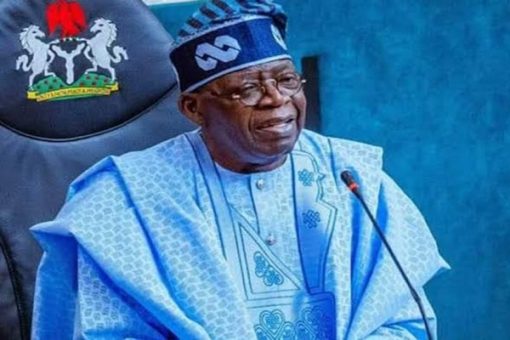
 The Presidential Working Group on the National Policing Bill on Tuesday said it had submitted the draft National Policing Bill, 2026, and 29 consequential amendment bills to the Ministry of Justice for legislative drafting review and validation.
This comes as Ogun, Delta, Plateau, Kwara and Adamawa state assemblies approved the police bill alongside Edo, Osun, Oyo, Rivers and Zamfara, which had earlier endorsed the constitutional amendments required to institute state policing.
The proposed Constitution of the Federal Republic of Nigeria, 1999 (Sixth Alteration) Bill, 2026, was transmitted to the 36 State Houses of Assembly on September 16, 2026 by the Clerk to the National Assembly, Kamoru Ogunlana, for consideration and approval.
The Sixth Alteration Bill amends section 214 of the Constitution to replace the single Nigeria Police Force with a Federal Police Service and State Police Services as part of efforts to address the country’s security challenges.
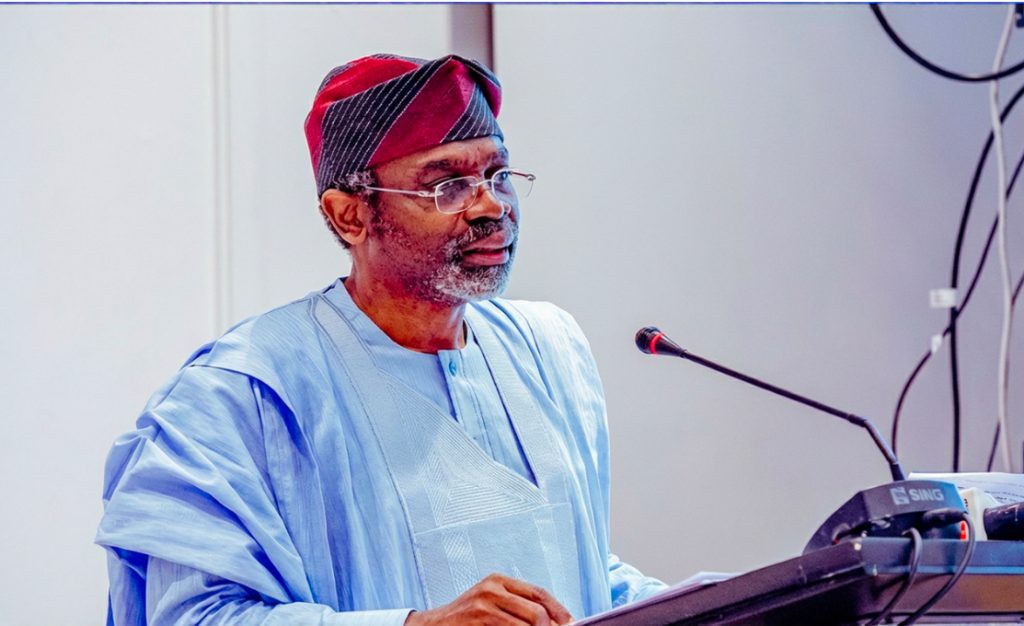
In a statement signed Tuesday by the Chief of Staff to the President and Chairman of the Working Group, Femi Gbajabiamila, the group said it had completed the drafting stage of its assignment.
The PWG explained that the draft bill was submitted to the Attorney-General of the Federation and Minister of Justice on Monday.
It said, “The submission was made on October 19, 2026, to the Honourable Attorney-General of the Federation and Minister of Justice, in line with the Working Group’s work plan.
“The ministry’s review will ensure that the bills conform to legislative drafting standards and conventions, and that they do not conflict with existing laws.
“The Ministry of Justice is expected to return the validated draft bills to the Working Group on or before Friday, 30th October 2026. The Working Group will then give the validated bills final consideration before presenting them to Mr President, thereby concluding its mandate.”
Gbajabiamila said the proposed National Policing Bill seeks to establish the constitutional and legislative framework for a dual policing structure, made up of a Federal Police Service and State Police Services.
He added that the Working Group remained committed to “a rigorous and transparent process” that would deliver a comprehensive legislative proposal for the President’s consideration and subsequent transmission to the National Assembly.
According to the former legislator, the work was proceeding alongside the ongoing consideration of the Constitution (Sixth Alteration) Bill, 2026 by the State Houses of Assembly, which “must be completed before the Bill is transmitted to the National Assembly”.
On October 15, Gbajabiamila told State House correspondents that the policing bill was “90 per cent ready” and would be transmitted to the National Assembly on October 29.
The Senate passed the bill on June 24, after which it was also passed by the House of Representatives.
Afterwards, the National Assembly sent it to the 36 State Houses of Assembly on September 16, where it must be approved by at least 24 state assemblies.
Tinubu inaugurated the seven-member Presidential Working Group on July 7, with its steering committee starting work on August 3.
He mandated it to produce a “technically robust, implementation-ready draft National Policing Bill.’’
When asked how long the review by the justice ministry would take, Kamarudeen Ogundele, the Special Assistant, Media, to the AGF, said, “Is there any rule that says that it must be done within one week, two months, three months or four months? When did we start having periods within which a case should be treated and sent for approval?
‘’I am not in the position to confirm that now. This thing has a procedure; it has a process, and due process must be followed. So, now saying that maybe it has to be done within one week or two weeks or whatever, where no law says it must be done within that period or whatever, is unnecessary,” he added.
The Senate also declined to comment on the Executive’s proposed timeline, saying it would wait until it formally receives the bills before taking a position.
The Chairman of the Senate Committee on Media and Public Affairs, Senator Yemi Adaramodu, disclosed this.
“Well, we cannot pass comment on what the Executive said until we receive correspondence from them,” he said.
Adaramodu, however, described the proposed legislation as a matter of public interest that lawmakers were determined to conclude expeditiously.
The Senate spokesman dismissed concerns over delays by state assemblies in approving the constitutional amendment, despite the expiration of the 30-day deadline set for them to submit their inputs.
He explained that the deadline was intended for state legislatures to communicate their positions, adding that the Senate would consider their responses alongside the executive’s proposals.
“All those things (state approvals) will be brought to us, and we will put them under consideration because we are still going to hold a conference to address it.
“Again, you need to understand that the 30-day deadline is not for us. It is for the states to send in their inputs. And they have been doing that,” he said.
Adaramodu expressed confidence that all states would have submitted their responses by the time the executive formally transmitted its proposals. He maintained that the process would not undermine the Senate’s commitment to passing the legislation before the end of the year.
Ogun State House of Assembly passed a resolution supporting the consideration of the 1999 Constitution of the Federal Republic of Nigeria (Sixth Alteration) Bill, 2026, on the establishment of State Police Services.
The assembly, during its sitting on Tuesday, passed the resolution, titled: ‘H.R. No. 194/OG/2025- Consideration of the Constitution of the Federal Republic of Nigeria ( 1999) (Sixth Alteration) Bill, 2026 (Establishment of State Police Services).’
The passage of the resolution followed the presentation of the report of the Ad-hoc Committee on Constitutional Review chaired by a former Speaker, Olakunle Oluomo, who presented the committee’s report on 26 clauses and sectional amendments to the Constitution.
Oluomo took the proposed amendments one after the other, with members voting in favour of all the clauses and sections contained in the amendments.
The proposed amendments covered different aspects of the bill, including the substitution, insertion and alteration of specific constitutional provisions.
The lawmaker later moved the motion for the adoption of the committee’s report, seconded by Adegoke Adeyanju and supported by all the members through a voice vote.
The House Leader, Yusuf Sherif, subsequently moved that the report be adopted as a resolution of the House, seconded by the Chief Whip, Omolola Bakare, and was unanimously supported by all the lawmakers through a voice vote.
In his remarks, the Speaker, Daisi Elemide, said, “The Assembly joined other state Houses of Assembly across the country in supporting the establishment of State Police, and this decision is historic.
“The passage of the resolution reflected the position of the lawmakers and the people of the State in supporting the establishment of State Police to strengthen security, through improved security measures in protecting the lives and property of the citizenry, thereby promoting the social well-being and economic development of the state”
Elemide later directed that a clean copy of the resolution be transmitted to the National Assembly to communicate the state’s support for the establishment of State Police Services.
Similarly, members of the Delta State House of Assembly unanimously approved the 6th Alteration Bill of the Constitution of the Federal Republic of Nigeria, 1999 (as amended) to provide for the establishment of State Police Services.
All 23 members present at plenary on Tuesday, through head count, voted in favour of the bill.
The letter, which was read on the floor by the Speaker, Emomotimi Guwor, outlined the objective of the bill, which seeks to provide a constitutional framework for the establishment of State Police Services while preserving the Nigeria Police Force as the Federal Police Service.
Leading the debate on the merits of the bill, the Majority Leader, Emeka Nwaobi, said, “The proposed amendment aims to guarantee security of lives and property through a dual policing system, allowing states to establish and fund their own police services to address rising cases of insecurity, particularly at the local level.”
Other lawmakers, who spoke in favour of the bill, affirmed their support, noting that it would strengthen local intelligence gathering, improve response to security challenges, create employment opportunities and help tackle insecurity at the grassroots.
Guwor commended the members for their support and patriotism, assuring that “the establishment of state police would go a long way in strengthening grassroots policing and creating a safer environment for investment and development to thrive in Delta State in line with the M.O.R.E Agenda of the Oborevwori administration.”
Guwor, who is also the Chairman, Conference of Speakers of State Legislatures, stated, “Distinguished colleagues, I commend you for approving the Constitution of the Federal Republic of Nigeria (Sixth Alteration) Bill, 2026, in line with section 9 sub-section (2) of the Constitution of the Federal Republic of Nigeria, 1999 (as altered).
“This is a significant step towards the establishment of State Police in Nigeria. It brings us closer to a policing system that is more responsive to our communities, improves intelligence gathering and strengthens our capacity to tackle security challenges.
“For Delta State, this reform holds great promise for protecting lives and property, sustaining peace and creating a safer environment for investment and development in line with the M.O.R.E Agenda of our amiable Governor, Sheriff Oborevwori.
“I congratulate this Honourable House on this important resolution. May our collective efforts continue to advance peace, security and good governance in Delta State and Nigeria in general.”
The speaker, thereafter, directed the Clerk of the House, Otto Aghoghophia, to communicate the resolution of the Delta State House of Assembly to the National Assembly, accordingly.
Earlier at the plenary, the House observed a one-minute silence in honour of former Governor of Delta State, Dr Emmanuel Uduaghan, who passed away on Monday.
The Adamawa State House of Assembly on Tuesday passed 24 out of 26 clauses of the state Police Bill, 2026, rejecting two clauses.
At an emergency sitting on Tuesday, the lawmakers, who had been on recess in China, spent over two hours reading each section of the Alteration Bill for members to approve or disapprove.
Speaker Bathiya Wesley, who presided over the session, directed the Clerk of the House to produce a clean copy of the approved 24 clauses and transmit them to the National Assembly.
Speaking to journalists after the sitting, the Chairman, House Committee on Information, Musa Kallam, representing Mayo-Belwa State Constituency, pointed out that state policing would help combat criminal activities in the country.
On the two rejected clauses, he disclosed that they were not properly defined and that the majority of the members were not clear on those clauses.
“Some of my colleagues were not clear on those clauses, and they decided to reject them. Since they were in the majority, there is nothing we can do.”
On the concern that governors could deploy state police against their political opponents, he clarified that the Constitutional alteration had stipulated the limit of governors’ powers in controlling state police.
“Let us not jump to the conclusion that state governors will take over when the state police take off, and if there is anything that the National Assembly feels should be amended to strengthen the state police, the Constitution will still be amended. The idea of state police is fantastic and must be sustained,” he noted.
Like Delta and Ogun, the Kwara State House of Assembly also approved the proposed amendment to the 1999 Constitution to provide a legal framework for the establishment of state police in the country.
The approval was given during Tuesday’s plenary in Ilorin after the speaker, Yakubu Danladi-Salihu, read a letter from the Clerk of the National Assembly on the proposed constitutional alteration.
The development was disclosed in a statement made available toour correspondence by the Chief Press Secretary to the speaker, Abdulkadir Yusuf.
Leading the debate on the amendment, the House Leader, Mogaji Abdulkadri, enumerated the various advantages the proposed amendment would have on the country’s policing system.
Other lawmakers who spoke on the constitutional amendment supported the proposal, saying “it would bring policing closer to the people and strengthen security across the country.”
The lawmakers affirmed that the alteration would “bring police closer to the people, thereby improving the security of lives and property of people across the country.”
Following the debate, the speaker directed the Clerk of the House, Ahmed Olayiwola, to communicate the Assembly’s approval to the National Assembly for further action.
The Plateau State House of Assembly equally endorsed the Constitution amendment bill seeking the creation of a state police, describing the proposal as timely and necessary to address the country’s security challenges.
The endorsement followed the adoption of the report of the Ad-hoc Committee constituted to scrutinise the Constitution of the Federal Republic of Nigeria, 1999 (Sixth Alteration) Bill, 2026, which was considered at plenary on Monday.
In a statement signed by the media aide to the speaker, Philip Eplong, and made available to The PUNCH on Tuesday, he said the decision was taken during Monday’s plenary session presided over by Speaker Naanlong Daniel.
Eplong’s statement read, “Presenting the committee’s report, its chairman and member representing Qua’an-Pan South Constituency, Prof. Theodore Maiyaki, said the proposed constitutional alteration was necessary in view of prevailing security challenges, the shortage of manpower in the Nigeria Police Force and the need to strengthen local policing arrangements.’’
He explained that the proposal sought to establish a constitutional framework for Federal and State Police Services, with appropriate safeguards for human rights, operational standards, accountability and coordination. The committee observed that the proposed amendment was timely, considering the need to strengthen security and improve responses to threats within communities.
The committee further noted that security remained critical to the socioeconomic development of Plateau State and other parts of the country.
It, therefore, recommended that the House supported the proposed constitutional alteration in line with the relevant legislative requirements.
Following deliberations, the House adopted the committee’s recommendations and voted in support of the proposed constitutional amendment.
The speaker commended the committee for its work and appreciated members for their patience, commitment and sacrifice in considering the important legislative matter.
The Kebbi State House of Assembly has received a bill seeking to amend the 1999 Constitution to provide for the establishment of state police services across the country.
The bill was transmitted to the Assembly by the National Assembly for consideration and approval as part of the ongoing constitutional amendment process.
The Majority Leader of the Kebbi Assembly, Faruku Aliyu Nassarawa Jega, disclosed this during Tuesday’s plenary session while reading a letter from the Clerk to the National Assembly, Kamoru Ogunlana.
The letter, dated September 16, 2026, and addressed to the Speaker of the Kebbi Assembly, Salihu Maikasuwa Dangoje, stated that the bill was passed by the Senate on June 24, 2026, and the House of Representatives on July 23, 2026.
According to the letter, the proposed legislation seeks to establish a constitutional framework for state police services while retaining the Nigeria Police Force as the federal police service.
The National Assembly urged the Kebbi Assembly to give the bill expeditious consideration and communicate its decision promptly to facilitate the completion of the constitutional amendment process.
“The leadership of the National Assembly respectfully requests that the Kebbi State House of Assembly accord the Bill expeditious consideration and communicate its resolution to the National Assembly at the earliest opportunity,” the letter stated.
It added that the request was made pursuant to Section 9(1) and (2) of the 1999 Constitution, as amended, following directives from the President of the Senate and the Speaker of the House of Representatives.
The bill has been referred to the House Committee on Internal Security for further deliberation ahead of the Assembly’s decision.
Under the constitutional amendment procedure, a proposed alteration must be approved by at least two-thirds of the 36 state Houses of Assembly before it can be presented to the President for assent.
The proposed establishment of state police has remained a major issue in Nigeria’s security debate, with proponents arguing that decentralising policing would improve responses to local security threats and strengthen community-based security efforts.
The proposal is particularly significant for states such as Kebbi, which have faced security challenges, including banditry, kidnapping and other criminal activities.
Supporters believe state police officers would be better positioned to gather intelligence, understand local security concerns and respond more quickly to emerging threats because of their proximity to the communities they serve.
However, the proposal has also raised concerns about potential political interference, abuse of power and the need for adequate safeguards to guarantee the independence, accountability and professionalism of state police services.
The Kebbi Assembly is expected to deliberate on the bill through its legislative processes before communicating its position to the National Assembly.
Murtala Adamu Diri, Press Secretary to the Speaker of the Kebbi State House of Assembly, announced the development in a statement issued on Tuesday.
Post Views: 26



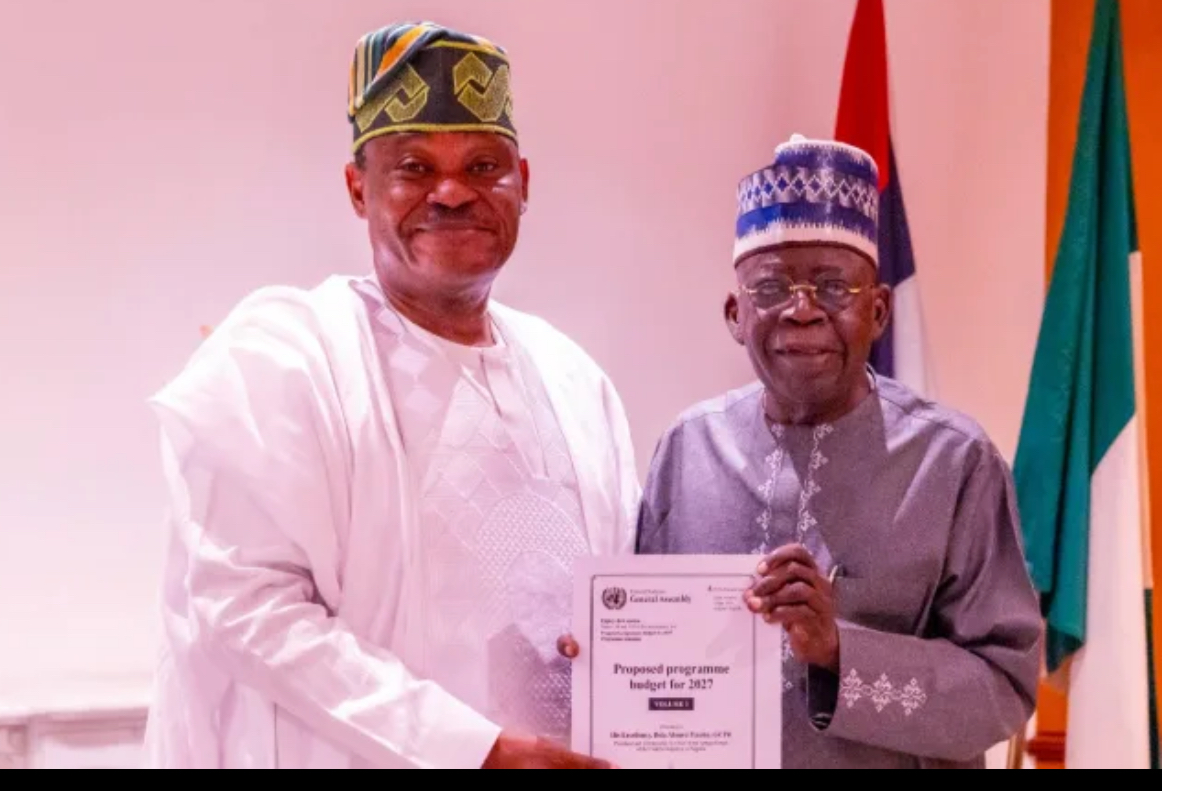
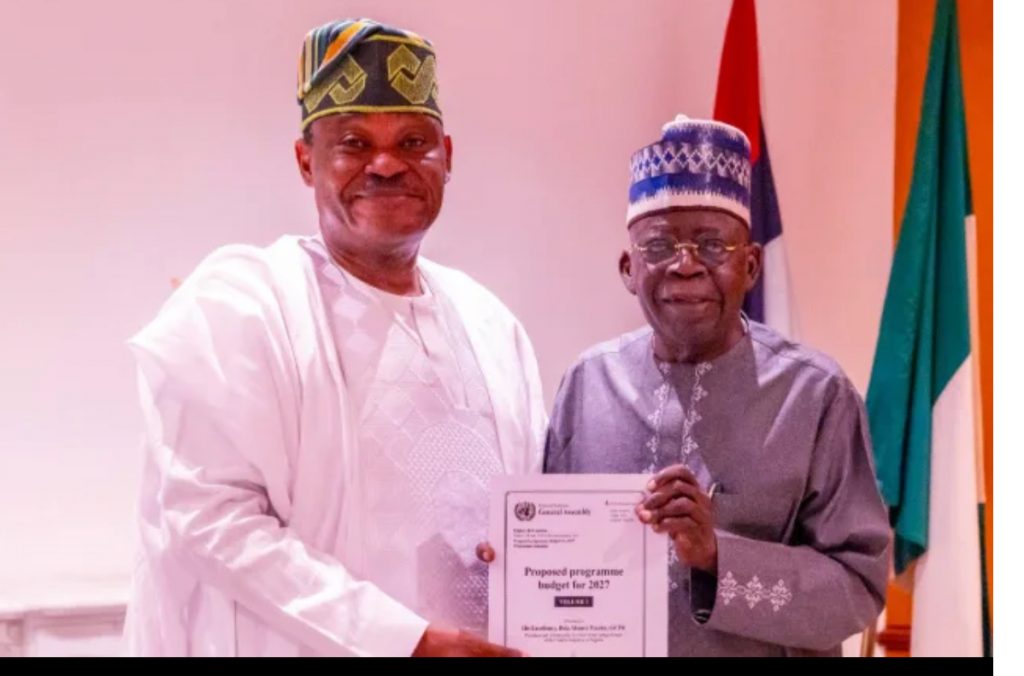 No President Bola Tinubu received in audience the Permanent Representative of Nigeria to UN, Ambassador Jimoh Ibrahim after he presented the proposed $14 billion UN budget for 2027.