
news
It’s time to end Boko Haram- Al Mustapha tells new COAS, Faruk Yahaya

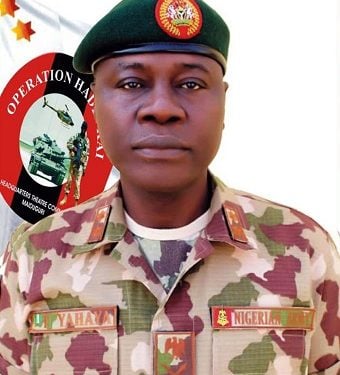 Retired Maj. Hamza Al Mustapha has advised Maj.-Gen. Faruk Yahaya, the new Chief of Army Staff (COAS), to end the Boko Haram insurgency in the shortest possible time.
Al Mustapha, who is a former Chief Security Officer (CSO) to late Gen. Sani Abacha, disclosed this to the News Agency of Nigeria (NAN) in Abuja on Sunday.
He said the new army chief must ensure speed in ending the insurgency which had led to massive destruction of lives and property.
“Delaying the fight against Boko Haram will be a great disservice to Nigeria. The earlier we crush them, the better.
“Speed is very vital, because we are not fighting a conventional war, speed matters a lot because Nigeria should recover from this speedily as much as possible.
“I know this is possible because I have done some homework,” Al Mustapha said.
The former CSO congratulated the new COAS on his appointment.
“He is our younger brother, I have prayed for him and wished him well on the appointment.
“I spoke with him and what I sent to him in a text message were prayers for him to succeed.
“There are different ways for him to succeed in overcoming the numerous security challenges bedevilling the country, ” he said.
Al Mustapha advised the new army chief to work in synergy with other security agencies to ensure success.
“My advice is that the army should not be alone because it is not a military affair alone.
“Boko Haram for example has been on for more than 20 years from my account, that is from conception to its maturity.
“If you want to contain an insurgency, every single detail of its activities should be on your palm, that is when you can say am on top of the situation.
“You have to get their sources of logistics, their electronic support and capabilities, what they do on daily basis and how they get information among others, ” he said.
Al Mustapha said the army chief must also trace the sources of arms getting into Nigeria resulting in arms proliferation.
“Our security challenge also has its root in the grand design by some powerful countries as far back as 1972 to retard Nigeria’s development.
“That’s why the country is facing security challenges from all facets at the same time.
“Our past mistakes have to do with viewing issues from narrow perspectives and that is why we must be very wide and open now,” he said.
Al Mustapha said the military must hasten its pace in tackling security challenges facing the country so it can return to barracks as soon as possible.
“We need to end all these challenges as quickly as possible, so that the military can go back to the barracks to face its primary role of protecting the territorial integrity of Nigeria.
“Internal security operation has reduced the value of the military because they are taking over the role of the police, which is a disservice.
“We have to end these crises so that the police can effectively take over their function, train and expand their capacity, ” he said. (NAN)
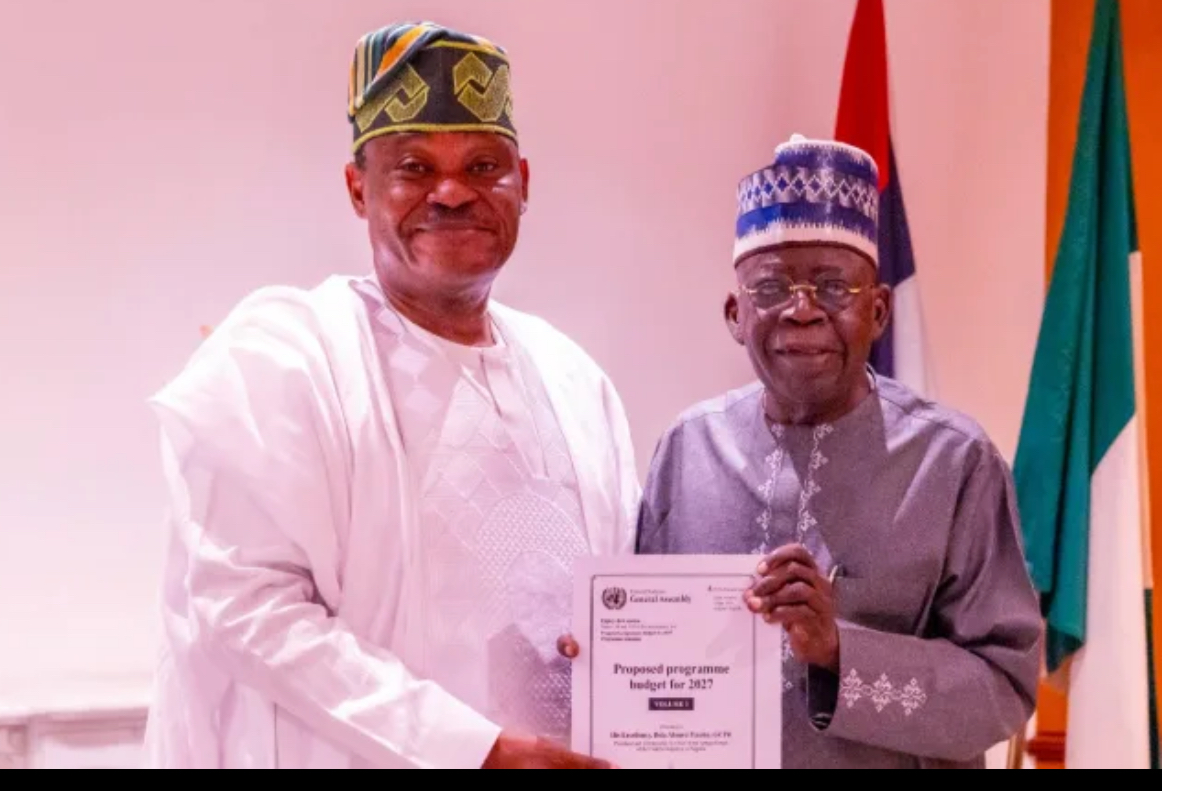
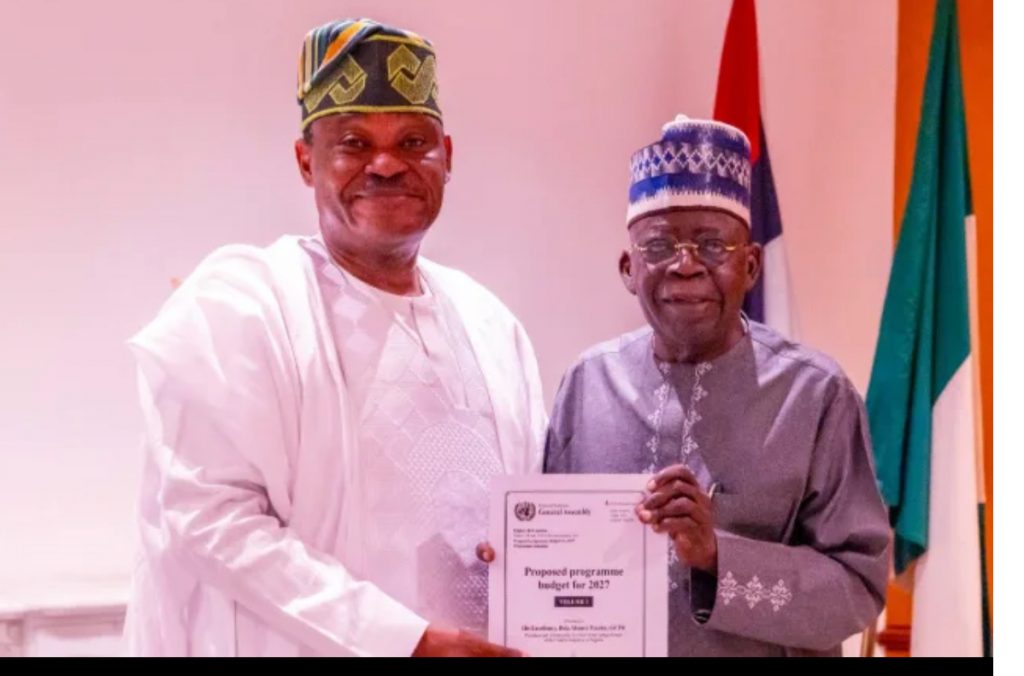 No President Bola Tinubu received in audience the Permanent Representative of Nigeria to UN, Ambassador Jimoh Ibrahim after he presented the proposed $14 billion UN budget for 2027.
President Bola Tinubu has received copies of the proposed 2027 United Nations budget from Nigeria’s Permanent Representative to the UN, Jimoh Ibrahim.
Ibrahim, who chairs the UN committee responsible for budgetary and administrative matters, presented the seven-volume document to the President at the State House, Abuja.
Speaking to journalists after the presentation, Ibrahim described the occasion as historic, saying it was the first time in 66 years that a Nigerian president had received the proposed UN budget through the process.
He said, “This is the presentation of the United Nations proposed budget for 2027 that was presented to me by the General Assembly, by the Secretary-General of the United Nations to the Fifth Committee, and that budget has seven volumes.
“So it has to be presented to my country because my country is a member of the United Nations. I share the budget at the committee, so the appropriate thing to do is to bring the budget home and deliver it to the President.
“This is the first time in 66 years that Nigeria will share budget in the committee. The first time. So I don’t know when we’re going to do that again in history.”
Ibrahim added, “President Bola Tinubu is making history to have been able to receive that budget, being the first President in 66 years that will receive such budget from the United Nations, and it’s not a small issue for a country to receive the whole UN budget.”
He said the proposed budget covered the organisation’s regular activities and peacekeeping operations, with approximately $3.4bn allocated to the regular budget and $8.5bn for peacekeeping.
Ibrahim put the total at about $14bn, although the figures he cited for the two components add up to $11.9bn.
He stressed that the document was still a proposal and had not received final approval from UN member states.
“The budget still has to be approved. This is a proposed budget. It’s at the proposed stage. You submit it to your country, and thereafter the budget is finally discussed. Figures are adjusted, and then finally the final budget is approved and spending commences,” he said.
Asked about the support Nigeria could receive from the UN, Ibrahim said discussions on the proposed budget were ongoing and declined to specify what Nigeria might benefit from it.
He also cited the construction of a $267m UN conference centre in Kenya as an example of the organisation’s investment in facilities in member states.
The proposed budget will undergo further scrutiny and adjustments before member states approve the final figures and spending begins.
news
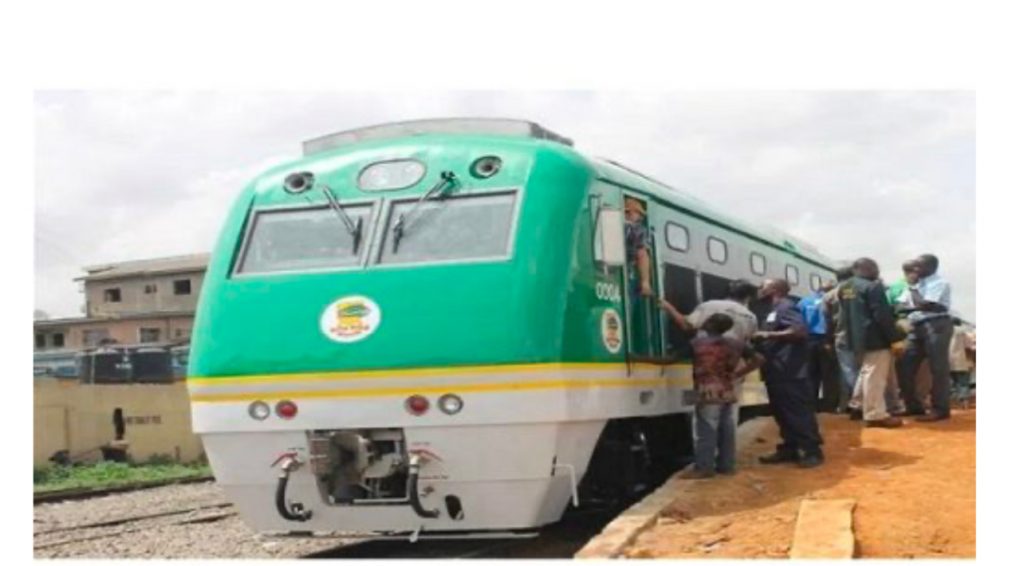
Abuja-Kaduna Train: Opeifa Denies NRC’s Involvement in Ticket Racketeering, Blames Scammers and High Demand
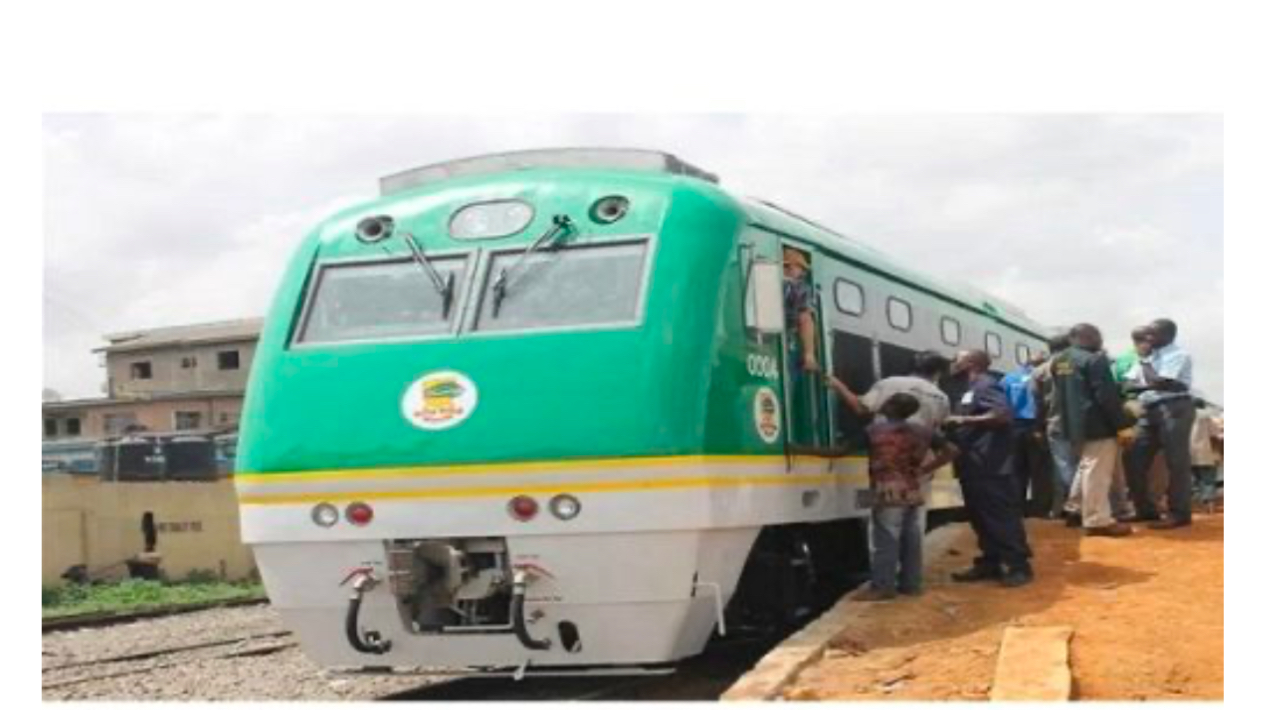
……..NRC Introduces Double Verification to Curb Racketeering
The Managing Director of the Nigerian Railway Corporation (NRC), Dr Kayode Opeifa, has denied allegations that the corporation deliberately creates artificial scarcity of train tickets on the Abuja-Kaduna Train Service (AKTS) to facilitate their resale at inflated prices through unauthorised agents.
The controversy followed a viral social media video by Instagram blogger Faizah Raji, who operates under the handle @wearegst, alleging that the corporation deliberately withholds tickets from its official electronic ticketing platform and makes them available through agents at exorbitant prices.
In the video, titled “The NRC Is Stealing Its Own Tickets to Resell,” the blogger claimed that she was unable to obtain a ticket through the official booking portal but subsequently purchased one from an agent at twice the official price.
Responding to the allegations, the NRC management described the claims linking the corporation to the alleged racketeering as misleading, insisting that the corporation does not directly buy or sell tickets on the Abuja-Kaduna corridor.
According to the management, electronic ticketing on the standard-gauge rail services operates under a Public-Private Partnership (PPP) arrangement, with private concessionaires responsible for ticket sales.
SecureID/TPS handles ticketing for the Abuja-Kaduna Train Service, while Global Software Digital Solutions (GSDS) manages the Lagos-Ibadan Train Service. Fane Warri-Itakpe Ticketing Solutions Limited is responsible for ticketing on the Warri-Itakpe Train Service.
The NRC said the concessionaires were approved by the Infrastructure Concession Regulatory Commission (ICRC) and the Federal Executive Council (FEC) before 2023.
Explaining the persistent difficulty passengers face in securing tickets, the corporation attributed the situation largely to a significant imbalance between passenger demand and the number of seats available.
According to the NRC, demand for train services on the Abuja-Kaduna corridor has exceeded available capacity by more than tenfold, putting considerable pressure on the ticketing system.
The management maintained that the reported experience of purchasing a ticket through an agent did not, in itself, establish that the corporation was responsible for creating artificial scarcity or facilitating the alleged resale.
It also warned passengers against patronising unofficial ticket agents, stressing that those who purchase tickets outside approved channels do so at their own risk.
The corporation explained that the Federal Government introduced the National Identification Number (NIN) requirement for train ticket purchases following the 2022 Abuja-Kaduna train attack, as part of measures to improve passenger identification and curb ticket racketeering.
However, it said suspected fraudsters had devised ways of obtaining multiple NINs to purchase tickets for resale to unsuspecting travellers.
To address the challenge, the NRC introduced a double-verification process in 2025, requiring passengers to undergo NIN verification and present personal identification before boarding.
The corporation said its ticketing and verification system is integrated with the database of the National Identity Management Commission (NIMC), enabling officials at Idu and Kubwa in Abuja, as well as Rigasa in Kaduna, to verify the identity and photograph associated with the NIN used to purchase a ticket.
The management, however, acknowledged that the Rigasa station in Kaduna lacks an adequate access-control system, a shortcoming it said could occasionally allow agents linked to ticket scams to overwhelm security personnel.
The introduction of a second verification process, modelled on the system used at Terminal 2 of the Murtala Muhammed International Airport in Lagos, is intended to strengthen checks and prevent passengers from travelling with tickets purchased using another person’s identity.
As part of efforts to address complaints about ticket availability, the NRC said the electronic ticketing concessionaires had been directed to improve access to their online platforms and ensure compliance with established ticketing procedures.
The corporation also reiterated that purchasing tickets from third parties using another person’s NIN or name was unacceptable, describing the practice as economic sabotage.
It stressed that passengers should book through approved portals and avoid sharing their NIN details and other personal information with agents or third parties who could exploit such information for fraudulent transactions.
The NRC management declared zero tolerance for ticket racketeering, warning that any staff member found participating in or colluding with individuals involved in the practice would face disciplinary action.
The corporation said it remained committed to protecting the integrity of its operations, improving customer service and ensuring that passengers have access to safe, affordable, reliable and convenient rail transportation.
While the allegations have renewed public debate over ticket availability and the effectiveness of the electronic ticketing system, the NRC maintained that the immediate challenges include rising passenger demand, limited seating capacity and the activities of individuals exploiting the system.
The corporation urged passengers to use only approved ticketing platforms and cooperate with verification procedures to help curb fraud and protect the railway system.
The NRC said it would continue working with relevant stakeholders to strengthen its ticketing processes and improve the passenger experience across its rail corridors.
news
Ondo Sports Council Chairman Declares 2026 ADU Unity Cup Open as Ijapo Ages FC Edges Odigbo LG FC


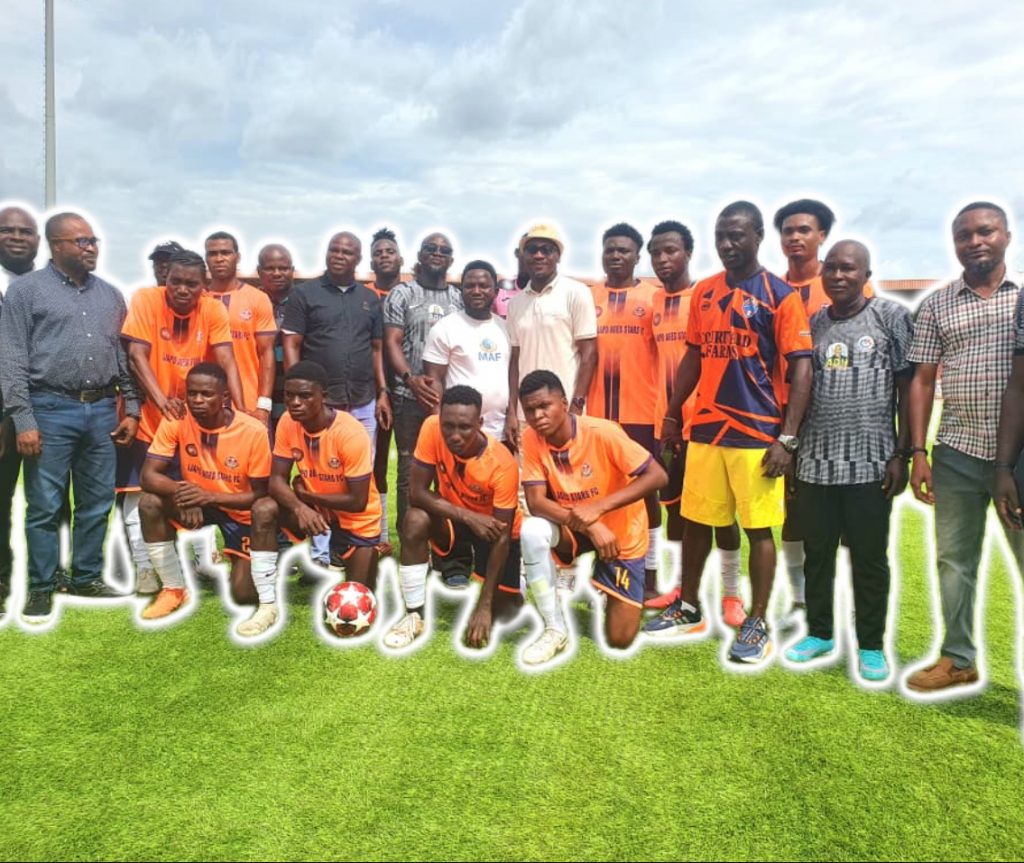 The Chairman of the Ondo State Sports Council, Hon. (Coach) Abimbola Oladimeji, has officially declared the 2026 ADU Unity Cup open, marking the commencement of another edition of the football competition aimed at promoting unity, sportsmanship and grassroots football development.
The opening ceremony attracted football enthusiasts and supporters who gathered to witness the start of the tournament and celebrate the spirit of competition among participating teams.
In the opening match, Ijapo Ages FC secured a narrow 1–0 victory over Odigbo LG FC in an entertaining encounter, giving the team a winning start to its campaign in the competition.
The ADU Unity Cup continues to provide a platform for players to showcase their talents, foster unity among communities and contribute to the development of football at the grassroots level.


-
 news6 years ago
UPDATE: #ENDSARS: CCTV footage of Lekki shootings intact – Says Sanwo – Olu
-
 lifestyle6 years ago
Former Miss World: Mixed reactions trail Agbani Darego’s looks
-
 health6 years ago
Chairman Agege LG, Ganiyu Egunjobi Receives Covid-19 Vaccines
-
 lifestyle5 years ago
Obateru: Celebrating a Quintessential PR Man at 60
-
news8 years ago
-
 news1 year ago
BREAKING: Tinubu swears in new NNPCL Board
-
 health6 years ago
UPDATE : Nigeria Records 790 new cases of COVID-19
-
 society3 years ago
Bisbam CEO, Abisola Bamidele, Bags Owu Chieftaincy Title