
brand
KPMG REPORT: FIRSTBANK REINFORCES RETAIL BANKING DOMINANCE, CREATES 150,000 INDIRECT JOBS


The unbanked and underbanked, two groups at the centre of retail banking, need to be captured for the financial system to achieve its full potential. The KPMG Nigeria Banking Industry Customer Experience Survey says customers have expectations about how their needs will be met and meeting this requires banks deploying the right network and technology. First Bank of Nigeria Limited has through its Firstmonie Agent Banking Network created over 150,000 indirect jobs for Nigerians and executed three million transactions via 45,000 agents.
Banking is no longer where you operate, but what you do. And doing more in today’s banking world requires the right tool, network and technology. Capturing the retail segment of the sector requires the right technology and product. The KPMG Nigeria has for the 13th consecutive year released the Banking Industry Customer Experience Survey, which showed banks playing formidable roles in the retail segment of the market. The retail segment of the report showed that FirstBank scored 71.8 percent, an improvement from 65 percent score in the 2018 survey.
The KPMG report showed that 53 percent of retail customers considered quality of service experience in choosing their bank, 13 percent chosen their bank based on financial stability while 12 percent chose their bank based on image and reputation.
For First Bank of Nigeria Limited, achieving these milestones did not come by chance. It took several decades of investment in the right technology, product and quality leadership.
As the oldest financial institution in the country, founded in 1894, FirstBank has over 28,000 Automated Teller Machines (ATMs), launched the first cash deposit ATM in Nigeria in 2011, has appointed over 45,000 FirstMonie Agents spread across the country, targeting 500,000 agents and operates in over 750 business locations. The bank has also created over 150,000 indirect jobs through the FirstMonie Agents scheme as at December 31, 2019.
Also, the bank’s alternative channels were the first to launch WhatsApp banking, among other milestones. Achieving the 80 percent financial inclusion target set by the Central Bank of Nigeria (CBN) will require the support of commercial banks and use of technology. First Bank of Nigeria is one of the financial institutions which have taken steps to make the target a reality by deploying technology in its operations by way of Agent Banking Network. FirstBank has expressed its commitment to continue to drive financial inclusion through its First-monie Agent Network in 99 per cent of the 774 local government areas and has processed over N2 trillion through the initiative.
The Firstmonie service provides financial/banking solutions to rural and semi-urban locations across the country. Such solutions include account opening, cash deposit, cash withdrawals, airtime purchase, and bill payments. Through this channel, the bank is committed to providing convenient services that engender and provides ease of access to banking products, thereby saving time and travel costs for users of the network. Speaking at the Firstmonie Agent Banking National Awards in Lagos, FirstBank’s Chief Executive Officer, Adesola Adeduntan said: “The initiative has witnessed several changes in the operating structure and value proposition of FirstBank
In December 2017, the bank ran a pilot test with over 400,000 transactions processed and following the success of the first run, it re-launched in 2018.”
According to Adeduntan, through Firstmonie, the bank has remained at the forefront of driving nation-wide inclusion, given our belief that access to financial services is part of lifting people out of poverty and fostering collective national economic development.
Adeduntan said: “The key strength of the bank’s services is to look at the gaps in the society and develop products and services that address the gap. As an integral part of our strategy, we believe in working with the CBN to improve financial inclusion index of the country. We would, at FirstBank, assist Nigeria to address poverty and hunger, thereby promoting security of life and property. Because when people are gainfully employed, the implication is that they will think less of crime.”
The bank’s Deputy Managing Director, Francis Shobo, noted that the agents are the most critical part of the ecosystem because they take deposits, make payments and open accounts, provide transfers and sell airtime at locations with little or no access to financial services. He said there are switches and the Nigeria Inter-bank Settlement System (NIBSS) has also supported the Firstmonie network. Shobo praised the CBN Governor Godwin Emefiele, stating that the the apex bank has made changes in regulation around agency banking. “They have allowed the programme to scale as much as it has scaled,” he said. At the event, 31 agents at the state level won N250,000 each, five agents N1 million each at the regional level and a grand prize of N2.5 million at the national level.
FirstBank Group Head, Marketing and Corporate Communications, Folake Ani-Mumuney, said the Bank has, through the First-monie initiative, empowered communities by connecting them to the financial system. She said the bank will continue to support Firstmonie agents. She said customers’ expectations were changing and that it’s the bank’s duty as a customer-focused bank to ensure that customers were provided with the means to carry out banking through any channel they desire. FirstBank has also recognised the opportunities for inclusive growth and influence of financial technology not just in banking but also business operations across industries.
One of the Firstmonie agents said: “I have been with Firstmonie since they started, and I can say that it has been a life-changing experience. I have been able to build trust of the communities around me as many workers in my area have forgotten the last time they visited any bank branch for basic banking services. I am a proud employer and as a result, my members of staff are well paid and comfortable.
“Firstmonie has created an enabling opportunity for dwellers of my immediate community and neighbouring towns to carry out banking transactions with less time, money, resources and risks as people don’t have to waste time embarking on long journeys to the city, added to the dangers of being robbed on the highway.’’ FirstBank has also partnered National Union of Road Transport Workers (NURTW). The deal seeks to leverage the human traffic and commercial activities at various motor parks across the country to ease access to financial services. FirstBank is also in partnership with Azuri Technologies Limited, an off-grid power distribution firm to make access to off-grid power easy, especially in rural communities, as well as other institutions, that seek to provide resources to cushion the effects of economic and social shocks on low income individuals. Under this deal, FirstBank and Azuri will co-brand and co-market Azuri’s solar home television product.
The pay-as-you-go customers will also pay for their solar photovoltaic (PV) system via FirstBank’s Firstmonie agents and mobile payment solution, thereby deepening financial inclusion. Banking with Technology Banking and technology are becoming inseparable. FirstBank under Adeduntan is driving growth and customer services with technology. The Financial Technology (Fintech) Summit organised by the bank was an opportunity for the bank to emphasise the need for technology in e-business, digital offering, agent banking, wholesale/ transaction banking, retail/consumer lending and Small and Medium Enterprises (SMEs) productivity. He noted that as a Tier-1 lender, which celebrated its 125th anniversary last March, the bank had been able to maintain its leadership position in the industry by leveraging technology to offer innovative solutions through its product offerings.
FirstBank is also taking advantage of the opportunities created by cash-less banking to innovate and give value to customers. The bank has introduced the Visa Multi Currency Card, an All-in One-Card and first of its kind to be offered by any financial institution in Nigeria. This card can be linked to four currencies: Naira, United States dollar, Euro and British Pounds Sterling accounts. With the Visa Multi-Currency card, FirstBank customers – within and outside Nigeria – can enjoy the luxury of having their local and foreign denominated accounts in any currency, linked to a single debit card.
Many banks have continued to make impact in the e-payment space. The Nigeria Postal Service and Fidelity Bank Plc have also entered into a collaboration to deploy modern banking services to Nigerians in 266 rural communities. The move is part of the measures to boost the level of financial inclusion in the country and reduce the number of those not yet in the formal financial system. Speaking at the launch of integrated banking services between Fidelity bank and NIPOST in Abuja, the bank said the collaboration would enable the bank to deploy all its banking services in 266 locations using NIPOST offices.
Access Bank Plc has introduced agency banking to deepen financial inclusion in Nigeria, to enable branches to focus more on complex customer obligations. A banking agent is defined as an authorised third party (a retail or postal outlet) contracted by a financial institution to process clients‘ transactions. The Head, Agency Banking, Access Bank, Michael Ogbaa, while introducing the bank’s Omni-channel agency banking application at the bank’s agency banking forum, in Lagos, on Tuesday decried that there are only 307,000 PoS terminals in Nigeria as at last July, of which only 167,000 are active.
Also, the adoption of e-transactions for customers earned Guaranty Trust Bank (GTBank), United Bank of Africa (UBA), and other eight banks N135.15 billion between January and September, last year. A look at the unaudited 2019 third-quarter reports of the banks, showed that their revenue from electronic transactions grew by 57 per cent as against the N86.312 billion they earned from the first 10 months of 2018.
brand
BANKING ON HER TOMORROW: ZENITH BANK EMPOWERS 300 GIRLS WITH EDUCATION, KNOWLEDGE AND CONFIDENCE
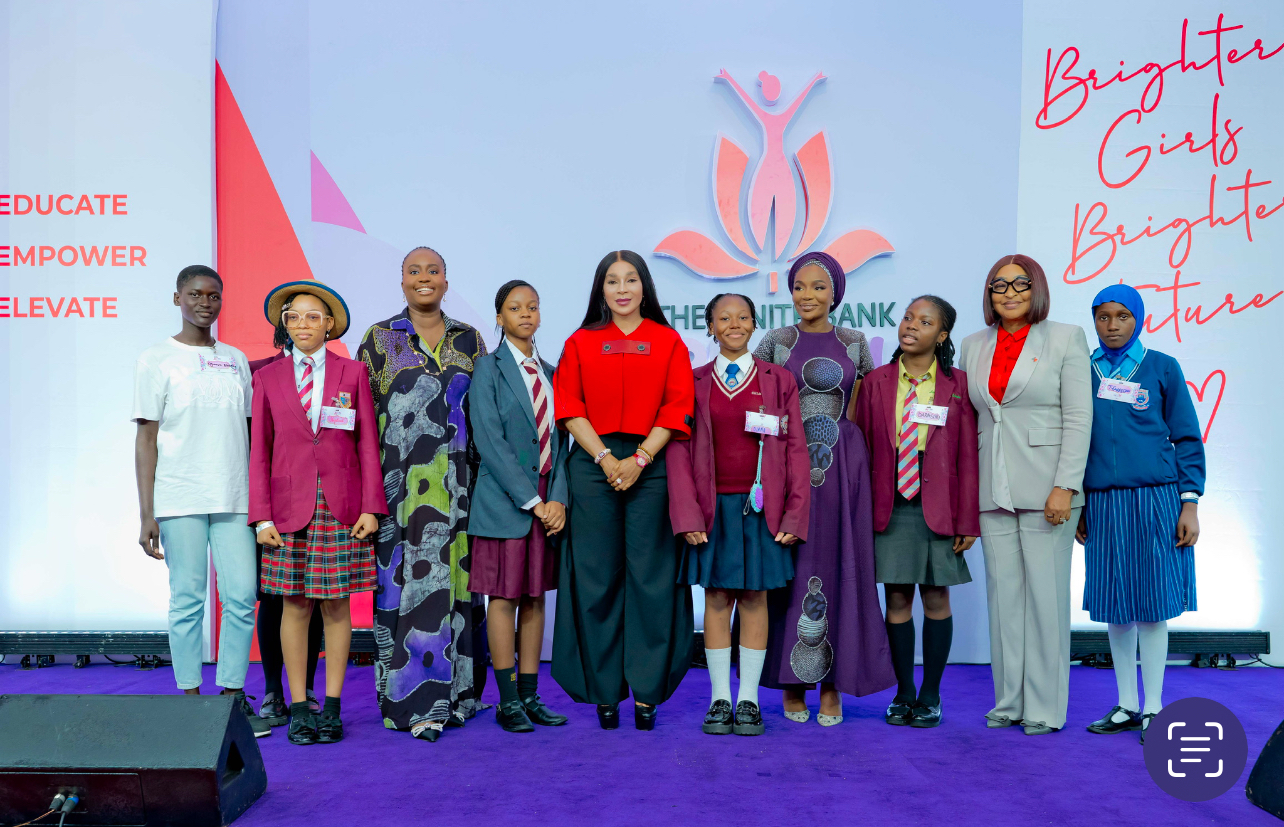

Zenith Bank Plc has launched the maiden edition of its Girl-Child Empowerment Programme, themed “Banking on Her Tomorrow,” bringing together 300 schoolgirls aged 13 to 17 from selected schools across Lagos for a day of learning, mentorship and personal development.
Held on Monday, October 12, 2026, at the Civic Centre, Victoria Island, Lagos, the programme featured sessions on finance and investment, etiquette and personal development, social media ethics, and social relationships and interactions, equipping participants with practical knowledge and skills for their personal, educational and future career journeys.
The initiative, a brainchild of the Bank’s Group Managing Director/Chief Executive Officer, Dame (Dr.) Adaora Umeoji, OON, reflects Zenith Bank’s commitment to nurturing the potential of young girls and helping them make informed choices about their futures.
In her welcome address, Dame (Dr.) Umeoji urged the participants to believe in their abilities, pursue their ambitions and remain focused and disciplined. Drawing on examples of young girls who have achieved remarkable feats, she challenged them to look beyond their present circumstances and envision the women they aspire to become.
“To all my amazing young ladies here today, each of you possesses gifts, talents, and ideas that are capable of revolutionising the world. You can revolutionise the world with your ideas,” she said.
The GMD/CEO further encouraged the girls to explore their interests and resist societal limitations, stressing the importance of taking ownership of their futures.
“Never allow gender or age to limit your goals. Whatever interests you today, explore it. Whatever you choose to pursue in life, give it your best shot,” she said.
Delivering the keynote address, Her Majesty, Olori Atuwatse III, Queen Consort of the Warri Kingdom, encouraged the girls to embrace their identities, develop resilience and use their abilities to make a positive difference in the lives of others.
Using the mangrove tree as a metaphor for resilience, she reminded the participants that challenges need not define their futures and that their worth extends beyond academic results and external expectations.
“Every time you affirm the truth about who you are, you are building confidence. Every time the tide of life goes out and you are still standing, you are building resilience. And every time you use your gifts for another person, you are discovering your purpose,” Olori Atuwatse III said.
The programme featured interactive sessions led by accomplished professionals and personalities:
Ayanime Edem, founder of The Elite Finishing School and modern etiquette educator, discussed confidence, communication, self-presentation and etiquette.
Nigerian actress and content creator Bukunmi Adeaga Ilori, popularly known as Kie Kie, addressed responsible social media use, authenticity and digital boundaries.
Representing Zenith Bank, Thelma Okonye and Adesola Adeyemo introduced the girls to saving, responsible money management and investment, highlighting the importance of developing sound financial habits early.
While Nigerian filmmaker, creative executive and educator,Praise Onyeagwalam, Director Pink, led a session on healthy relationships, self-awareness and effective communication.
The sessions encouraged active participation, giving the girls opportunities to ask questions and engage with the speakers on issues relevant to their experiences and aspirations.
The programme also featured competitions, with cash prizes totalling over ₦1 million awarded to winners. The participants received books to encourage reading and personal growth, while musical performances by Nigerian singers Qing Madi and No. 11 added to the lively atmosphere. The event was hosted by Temi Badru, public speaker, communications coach and lawyer, with Darasimi Destiny Nadi serving as mini host.
Delivering the closing remarks, Executive Director, Zenith Bank Plc, Dr. Mrs. Adobi Nwapa, highlighted the GMD/CEO’s vision for the initiative and the Bank’s commitment to sustaining its impact.
“The programme is the vision of our GMD/CEO, who conceived and championed it, demonstrating her unwavering commitment to the empowerment of the girl child. Through her leadership, she has shown the girls what is possible when a woman dares to lead. At Zenith Bank, our commitment to the girl child extends beyond today, and we will continue to nurture their aspirations through this annual initiative,” she said.
Dr. Nwapa thanked the speakers and participants for contributing to the programme’s success and encouraged the girls to apply the lessons learnt, remain confident and pursue their aspirations with determination.
The initiative builds on Zenith Bank’s longstanding commitment to advancing opportunities for women and girls through programmes including its annual International Women’s Day Seminar, the Zenith Women’s Basketball League, the Women of Honour Awards in partnership with the Ford Foundation, the Pad-a-Queen Initiative and Z-Woman, which supports women-owned businesses through business support and access to credit at discounted rates.
Through “Banking on Her Tomorrow,” Zenith Bank is extending this commitment to a younger generation, equipping girls with the knowledge, skills and confidence to pursue their ambitions and contribute meaningfully to their communities and society.


Zenith Bank Plc is set to launch the maiden edition of its Girl-Child Empowerment Programme, an initiative aimed at inspiring young girls to dream boldly, develop the skills and confidence to pursue their aspirations, and prepare for meaningful opportunities in the future.
The event, themed “Banking On Her Tomorrow,” is the brainchild of the Bank’s Group Managing Director/Chief Executive Officer, Dame Dr. Adaora Umeoji, OON, the first female GMD/CEO in Zenith Bank’s history and a strong advocate for girl-child education and empowerment. The event will be held virtually on Monday, October 12, 2026, at 11:00 a.m., a day after the International Day of the Girl Child, observed globally on October 11.
The programme, which will feature an impressive lineup of distinguished experts in various fields, seeks to provide girls with the inspiration, knowledge and practical perspectives needed to navigate their education and careers, while exposing them to opportunities in skills development, mentorship and leadership. As an annual platform, it will encourage girls to recognise their potential, broaden their aspirations and equip themselves to make informed choices about their future.
The initiative builds on Zenith Bank’s longstanding commitment to women and girls, demonstrated through programmes and platforms including the Bank’s annual International Women’s Day Seminar, its sole sponsorship of the Zenith Women’s Basketball League, the Women of Honour Awards in partnership with the Ford Foundation, and the Pad-a-Queen Initiative. These complement the Bank’s women-focused financial solutions, including the Z-Woman initiative, an empowerment programme that supports women-owned and women-led businesses through specialised funding, capacity building and networking. Together, these initiatives reflect the Bank’s broader commitment to supporting women and girls at different stages of their lives, and to contributing meaningfully to national development.
This maiden edition is open to all, with girls, parents, educators and other members of the public invited to participate. Interested participants can register via the link below. Those unable to join via Zoom can follow the live stream on Zenith Bank’s social media platforms.
brand
GTCO Plc Releases 2026 Half Year Audited Results …….. Reports Profit Before Tax of ₦603.03billion,Pays Interim Dividend of ₦1
 Guaranty Trust Holding Company Plc (“GTCO” or the “Group”) has released its Audited Consolidated and Separate Financial Statements for the period ended June 30, 2026, to the Nigerian Exchange Group (NGX) and London Stock Exchange (LSE).
The Group posted a profit before tax of ₦603.03 billion, driven by strong performance recorded on the interest and trading income lines, which grew y-o-y by 7.5% and 24.7%, respectively. The strong earningsrecorded was moderated by a ₦46.2 billion fair value loss recognized in H1–2026, limiting y-o-y growth in PBT to 0.4%.
The Group grew across its asset lines, reinforcing a balance sheet that is well structured, liquid and diversified. This growth was recorded in each jurisdiction where we operate a banking franchise, and across our Payments, Pension and Funds Management businesses.”
Group’s Total assets and shareholders’ funds closed at ₦18.6trillion and ₦3.3trillion, respectively. Capital Adequacy Ratio (CAR) remained very strong, closing at 34.9% (Bank 29.2%), and asset quality improved as evidenced by IFRS 9 Stage 3 Loans which closed at 3.5% and 4.6% % at both Bank and Group Level in H1-2026 (Bank -3.4%, Group 5.0% in FY-2025). Cost of Risk (COR) improved to 0.6% from 2.2% during the same period.
The Group’s Loan book (net) grew marginally by 0.5% from ₦3.13trillion as of December 2025 to ₦3.15trillion in June 2026, converse for improved performance on Deposit liabilities which grew by 10.3% from ₦12.87trillion to ₦14.19trillion during the same period.
Commenting on the results, the Group Chief Executive Officer of Guaranty Trust Holding Company Plc (GTCO Plc), Mr. Segun Agbaje, said; “Our half year results speak to the strength of what we have built: a resilient franchise, a strong balance sheet and a business that no longer depends on banking alone. Fair value movements weighed on reported earnings, but the core business held firm. Interest and trading income grew, deposits strengthened, and asset quality improved at Group level. The priority now is to execute with discipline and grow responsibly. Digital is our lever for scaling across Banking, Payments, Pension and Funds Management, and for building a more diversified and resilient financial services group.”
Overall, the Group continues to post one of the best metrics in the Nigerian Financial Services Industry in terms of key financial ratios i.e., Pre-Tax Return on Equity (ROAE) of 35.9%, Pre-Tax Return on Assets (ROAA) of 6.6%, Capital Adequacy Ratio (CAR) of 34.9% (Bank: 29.2%) and Cost to Income ratio of 31.5%.
GTCO Plc is a leading financial services group with operations across Africa and the United Kingdom. Renowned for its strong corporate governance, innovative financial solutions, and customer-centric approach, the Group provides a wide range of banking and non-banking services including payments, funds management, and pension fund administration. The Group is committed to delivering long-term value to stakeholders while driving growth and development across its markets


-
 news6 years ago
UPDATE: #ENDSARS: CCTV footage of Lekki shootings intact – Says Sanwo – Olu
-
 lifestyle6 years ago
Former Miss World: Mixed reactions trail Agbani Darego’s looks
-
 health6 years ago
Chairman Agege LG, Ganiyu Egunjobi Receives Covid-19 Vaccines
-
 lifestyle5 years ago
Obateru: Celebrating a Quintessential PR Man at 60
-
news8 years ago
-
 news1 year ago
BREAKING: Tinubu swears in new NNPCL Board
-
 health6 years ago
UPDATE : Nigeria Records 790 new cases of COVID-19
-
 entertainment2 years ago
Ashny Set for Valentine Special and new Album ‘ Femme Fatale’