
news
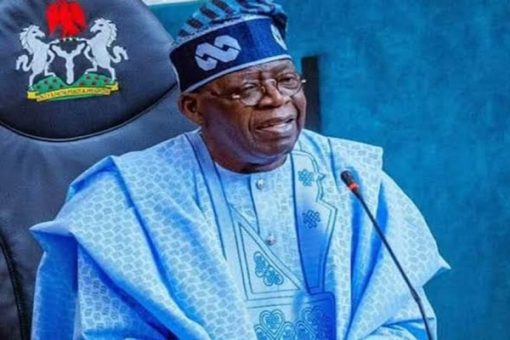
Update: Tinubu mobilizes standby force as he is reelected for a second term as ECOWAS Chairman

• Faye, Gnasingbe lead talks as Niger, Mali, B’Faso form Union of Sahel
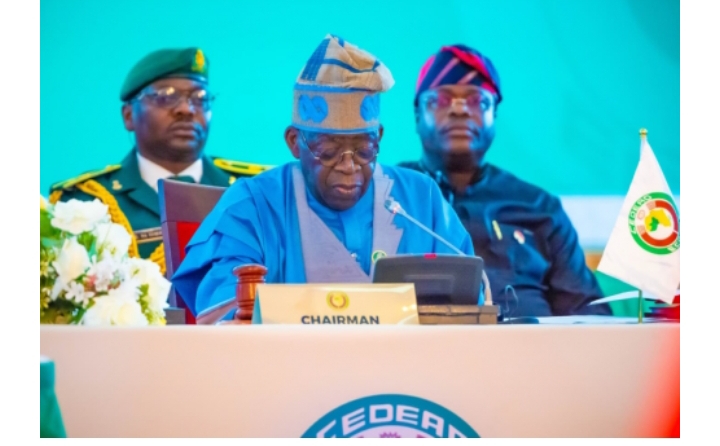
Another chapter opened yesterday in the history of the Economic Community of West African States (ECOWAS) with the re-election of President Bola Ahmed Tinubu as chairman of Heads of State and Government.
He was first elected in Guinea-Bissau on July 9 last year after just one month and a few days as Nigeria’s president.
President Tinubu immediately picked the gauntlet, promising to deepen democracy in the sub-region and push on for the formation of a standby force to enhance security in West Africa.
The unity of the 16-member body, which was threatened following the coup d’état in three member states, took a new turn.
Mali, Burkina Faso and Niger Republic, ruled by military juntas, formed the Alliance of Sahel States (AES) at the weekend.
The sub-regional body after yesterday’s 65th Ordinary Session meeting held at the State House Conference Centre, Abuja, set up a team to hold talks with them.
The ECOWAS chairman said: “I have appointed the President of Senegal, Bassirou Diomaye Faye, to please, become our Special Envoy to Burkina Faso, Mali, and Niger Republic, along with the President of Togo, Faure Gnassingbé, to do round the clock work with our brothers in Mali, Burkina Faso, and Niger Republic, and to coordinate with me and the ECOWAS Commission, where necessary.
“I have accepted to continue the service to the great members and the great minds that are committed to democratic values and our journey in the region.
“I will continue to serve our interest and build on democratic values and the structure that we inherited.”
President Tinubu urged the Heads of State and Government of ECOWAS to work towards the establishment and sustenance of a regional standby force for the security and economic advancement of the community.
He emphasised the expediency of a standby force in the face of growing security threats in the region.
‘Redeem financial obligations’
President Tinubu urged member-states to fulfil their financial commitments so that the regional body could effectively tackle security challenges.
He said substantial financial resources are crucial to the take-off of the ECOWAS Standby Force (ESF) to combat terrorism, banditry and violent extremism.
He said if member states honour their financial obligations, it would enable ECOWAS to meet the expectations and recommendations of its ministers of defence on regional security.
He said: “Let me underscore that a peaceful and secure society is essential for achieving our potential.”
He said the move to operationalise the ECOWAS Standby Force (ESF) was key to combating terrorism.
President Tinubu added: “I must emphasise that the success of this plan requires, not only strong political will but also substantial financial resources.
“We must, therefore, ensure that we meet the expectations and recommendations set forth by our ministers of Defence and Finance in order to counter the insecurity and stabilise our region.
“Member states must make extra commitment to providing resources for stabilising the region.
“To this end, I urge ECOWAS to leverage the capability of the Nigeria National Counter Terrorism Center (NCTC), which is widely acknowledged as one of the best on the continent.
“The Nigerian government has decided to declare the NCTC as a regional centre to enable all ECOWAS member states to benefit from capacity building and other related opportunities it offers.
“Your Excellencies, dear heads of state, I urge you to visit the centre before your departure and assess first-hand the facilities and the capabilities of NCTC.”
President Tinubu also urged ECOWAS member states to unite and develop innovative approaches to unlock the region’s economic potential and promote prosperity.
He acknowledged the economic hurdles hindering progress and stressed the need for partnerships, investment, and infrastructure development.
President Tinubu emphasised the importance of a conducive business environment to stimulate growth and build resilience against external aggression.
He urged member states to comply with the protocol on community levies to ensure adequate resources for the organisation’s programmes, assuring of Nigeria’s commitment not to default on its finance commitments.
President Tinubu added: “I’m also fully aware of other challenges confronting our region, especially the economic hurdles that hinder our progress to elevate our people from poverty to prosperity.
“It is imperative that we unite as a community and develop innovative approaches to unleash our vast economic potential.
“We must continue to identify and develop partnerships that promote investment in key sectors and promote regional trade.
“Furthermore, we must invest in our infrastructure and cultivate a conducive business environment to empower our community to stimulate growth and build resilience against external shock.
President of the ECOWAS Commission, Dr. Omar Alieu Touray, said the region had proved that democracy is alive because of the successful transition in Senegal, Nigeria, Guinea Bissau, Sierra Leone and Liberia.
He said: “We look forward to the consolidation of this trend in the region as we prepare for a major election in Ghana later this year.”
Touray warned that the region was still being confronted with multidimensional challenges, which seem to overshadow its modest achievements
He said: “Our region is still confronted with multiple interlocking threats, including existential works.
“These include climatic and man-made crises, leading to terrorism and violent extremism and food insecurity.
“Livelihoods continued to be threatened by illegal and unsustainable exploitation of our land, forest and marine resources.
“Governance deficit and marginalisation have strained social contracts, engendering bitter rivalries and unhealthy competition.
“To complicate the situation, our region has become the arena of geo-strategic and geo-political rivalries and the theatre of misinformation and disinformation that engenders mistrust among and within communities and undermine social cohesion.”
Touray said the Commission had commenced preparation for the 50th anniversary of the regional body.
The Commission would propose a Special Extra-ordinary Summit on the future of the Community, he added.
The President reminded them that the AU election will be held on February 25, next year.
President Tinubu said: “Our region continues to face significant security challenges, including terrorism, violence extremism and banditry.
“Currently West Africa holds the position of AU Commissioner for political affairs and security, a crucial role for our region.
“Therefore, I solicit our support for the candidacy of Ambassador Bankole Adeoye seeking re-election as the sole male candidate for this position for our region.”
AU: withdrawal not acceptable
The AU said the purported withdrawal of Burkina Faso, Mali and Niger from ECOWAS is not acceptable.
AU said it believed in the unity of ECOWAS, adding that it would support efforts to ensure the region’s prosperity.
Moussa Faki, Chairperson of AU Commission, commended the efforts of ECOWAS in addressing insecurity in the region.
Faki, who was represented by Ambassador Adeoye, also described ECOWAS as a pace-setter in security and constitutional transition of government as exemplified in the recent elections in the region.
He said: “African Union is very proud of ECOWAS. We advocate and fully support the unity of ECOWAS. The withdrawal of the three countries is not acceptable to the African Union.”
Three countries form Union of Sahel
Military rulers in Mali, Burkina Faso and Niger converged on the Nigerien capital of Niamey at the weekend to form a confederation of three Sahel states.
At their first summit since taking power in military coups, Mali, Niger and Burkina Faso leaders adopted a joint statement for a treaty to set up the confederation.
“This summit marks a decisive step for the future of our common space.
“Together, we will consolidate the foundations of our true independence, a guarantee of true peace and sustainable development through the creation of the ‘Alliance of Sahel States’ Confederation’,” Capt. Ibrahim Traore, the leader of Burkina Faso, wrote on his X handle.
He added: “The AES (Alliance of Sahel States) is full of enormous natural potential which, if properly exploited, will guarantee a better future for the people of Niger, Mali and Burkina Faso.”
Ties between the three Sahel nations and ECOWAS had deteriorated after Gen. Abdourahamane Tiani took power from elected President Mohamed Bazoum in a coup in Niger in July.
ECOWAS imposed sanctions on Niger and threatened intervention which irritated the trio.
The three countries, with a combined population of 72 million, are affected by instability caused by militant groups.
The trio is expected to cooperate on security issues and form closer economic ties.
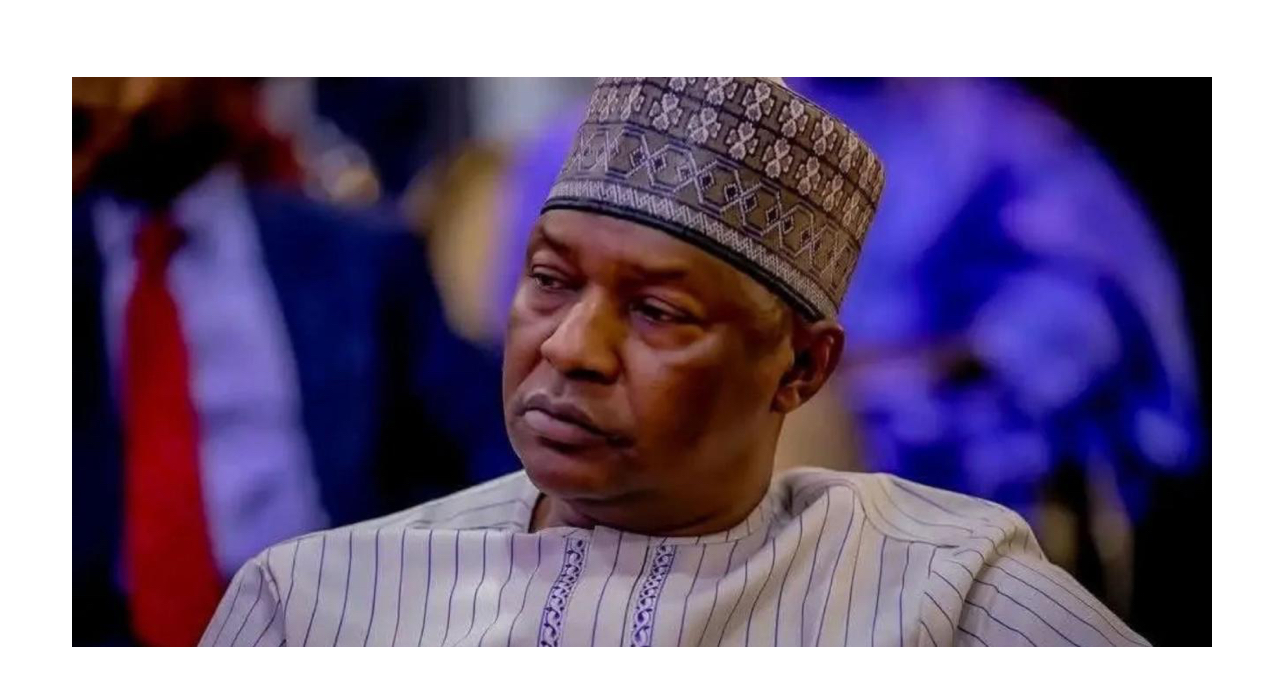
Economic and Financial Crimes Commission (EFCC) chairman Ola Olukoyede has faulted the persecution claim by the immediate-past Attorney-General of the Federation and Minister of Justice, Mallam Abubakar Malami (SAN).
He described it as unfortunate that some Nigerians were buying into the narrative when Malami’s probe started before his appointment.
Malami is standing trial alongside some family members on 16 counts of money laundering involving about N8.7 billion.
Speaking on a national television yesterday, Olukoyede dismissed Malami’s claim of vendetta against him, saying the commission has not wavered in investigating and prosecuting those suspected to have been involved in corruption cases.
“There’s nothing like that. The particular case predated my appointment. And, I didn’t give a nod to initiate proceedings until I found that we have a water-tight investigation,” he said.
The EFCC boss denied being indicted by Justice Ayo Salami’s panel.
Olukoyede said: “I challenge those making such claims of indictment against me by Justice Ayo Salami Panel to publish the report.
“Let me tell Nigerians that the commission’s investigation panel cleared me of any wrongdoing. The presidency at the time also cleared me. Also, the law enforcement agencies handed me a clean bill.
“I can say clearly that there’s no report anywhere that I’ve been involved in any fraudulent dealings, whether as the commission’s chief of staff, secretary, and now, the chairman of the commission.”
Noting that the commission, under his watch, made notable achievements last year, he said: “Our big win in 2025 was our ability to review and revive old cases that Nigerians thought were dead.
“Some of the cases affect past governors and ministers, and many such cases are in courts.
“We were able to recover assets. Nigerians are aware of the Lokogoma assets. One major recovery was a university.”
The EFCC recovered Nok University in Kachia, Kaduna, after a court ordered its final forfeiture because it was built with stolen public funds by a former civil servant.
It was converted to the Federal University of Applied Sciences,
Immediate-Past Attorney-General of the Federation and Minister of Justice, Mallam Abubakar Malami (SAN), is facing a fresh investigation over the arms and ammunition found in his house.
Newsthumb learnt that the arms were uncovered at his Kebbi country home by the operatives of the Economic and Financial Crimes Commission (EFCC) during a search.
The anti-graft agency, it was further learnt, handed them over to the Department of State Service (DSS) for a comprehensive probe because it is not within its remit to do so.
The number of arms and ammunition could not be immediately ascertained, but it was gathered that they are high in number to attract a full DSS investigation.
Malami, who was granted bail last week along with his sons – Abdulaziz, Abiru-Rahman, and others – is still in the Kuje correctional centre, having been unable to perfect his bail conditions.
But, sources said he might be taking things slowly to stall the DSS investigation into the weapons found in his house.
“The former minister is being separately investigated for allegedly having arms in his house in Birnin Kebbi. The inventory of the shock find has been handed over to the DSS.
“It is now left to Malami to explain to the DSS how he came about the arms. That’s why he is yet to perfect his bail conditions. He is holed up in prison to avoid arrest by the DSS.
“DSS operatives are within the precincts of Kuje Correctional Service to invite Malami. He got wind of their presence and raised the alarm. But the law must take its course.”
Another source within the EFCC said Malami had yet to meet his bail conditions.
“By our records, the ex-AGF is still in custody. We saw all manners of fake clips on social media on his purported arrival and rousing reception in Kebbi State,” the source said.
The source added: “The investigation into Malami’s activities during his tenure began when former EFCC Acting Chairman Ibrahim Magu was in office.
“Investigation continued through the administration of another Acting Chairman, Ibrahim Chukkol, to the present Executive Chairman. Chukkol, who works in the agency, was in charge briefly before Olukoyede’s appointment.
“There is nothing vindictive about his investigation since 2019. It is an inherited case, and the ex-AGF knows this.”
Olukoyede confirmed that he inherited the Malami case during an interview last night on a national television.
A Federal High Court in Abuja last week ordered the interim forfeiture of 57 assets linked to Malami and his two sons.
The assets have been valued at N213, 234,120,000.
The court has, however, given Malami and the sons or any other claimant a 14-day leave to show proof that the assets were legally acquired.
Failure to present legitimate claims within 14 days may lead to the permanent loss of the assets to the Federal Government.
The court’s order was based on the invocation of the Non-Conviction Asset Forfeiture Clause in the EFCC Establishment Act.
The EFCC had applied to the Federal High Court to seize the suspicious properties in Abuja, Kano, Kaduna, and Birnin-Kebbi.
news
₦213 Billion Worth of Properties Seized from Malami in Money Laundering Probe: Full List of 57 Luxury Homes and Hotels
Presiding Judge, Justice Emeka Nwite, granted the order on Tuesday, January 6, 2026, following an ex-parte motion filed by EFCC counsel, Ekele Iheanacho (SAN).
A Federal High Court in Abuja has ordered the interim forfeiture of 57 properties linked to former Attorney-General of the Federation and Minister of Justice, Abubakar Malami (SAN), and two of his sons, Abdulaziz and Abiru-Rahman Malami.
Presiding Judge, Justice Emeka Nwite, granted the order on Tuesday, January 6, 2026, following an ex-parte motion filed by EFCC counsel, Ekele Iheanacho (SAN).
The assets, valued at ₦213.2 billion, include multi-billion naira landed properties spread across Abuja, Kebbi, Kano, and Kaduna States. The court ruled that the assets are suspected to be proceeds of unlawful activity.
The 57 properties are as follows:
1. Luxury Duplex at Amazon Street, Plot No. 3011 Within Cadastral Zone, A06 Maitama; File No: AN enhancement 11352, which was purchased in December 2022 at N500, 000, 000.00 (value after enhancement at N5,950,000,000).
2. Two Winged Large Storey Building Situate at No. 3, Onitsha Crescent, Area 11,Garki, Cadastral Zone, A03, Abuja (formerly Harmonia Hotels Limited), FCT, which was purchased Dec. 2018 at N7,000,000,000.
3. Plot 683, Jabi District, Cadastral Zone B04, Comprising of a five storey Building (Now Luxurious Meethaq Hotels Ltd, Jabi with 53 rooms/suites), which was purchased in Sept. 2020 at carcass level at N850,000,000 with additional N300,000,000 to take possession (value after completion N8,400,000,000).
4. Property No. 3130 within Cadastral Zone A04, Asokoro District, FCT, Abuja, Comprising Terraces, purchased in January 2021 at N360,000,000.
5. Property No. 3 Rhine Street, Maitama, Abuja (Meethaq Hotels Limited, Maitama With 15 ROOMS), which was purchased in February 2018 at N430,000,000 (current value after rehabilitation is N12,950,000,000).
6. Plot No. 1241B, Asokoro District Zone (No. 11A Yakubu Gowon Crescent) AsokoroDistrict, which was purchased in July 2021 at N325,000,000.
7. Shop No. C82 Citiscape — Shariff Plaza, Plot 739 Cadastral Zone A07, Aminu Kano Crescent, Wuse Il, FCT, Abuja, which was purchased in March 2024 at N120,000,000.
8. No. 4 Ahmadu Bello Way, Nasarawa GRA, Kano, which was purchased in December 2022 at N300,000,000.
9. Plot 157, Lamido Crescent, Nasarawa, GRA, Kano, purchased in July 2019 with no specific amount stated.
10. A Plaza, Commercial Toilets, Laundering, Warehouse Tanks Adjacent to Birnin Kebbi Market at N100 million.
11. 100 Hectares of l;and Along Birnin Kebbi, Jega Road, which was purchased in 2020 at N100,000,000.
12. Four Bedroom Bungalow Gesse Phase, Birnin Kebbi, which was purchased in 2023 at N101,000, 000.
13. Shops Nos. A36, B3 Vegas Mall, Wuse 2, Abuja, which was purchased in July 2023 at N158,000,000.
14. No. 26, Babbi Drive, Bua Estate, Abuja, purchased in 2022 at N136,000,000.
15. No. 27, Efab Estates Avenue, 5th Avenue, 59th Crescent, Gwarimpa, Abuja, purchased in January 2016 at N120,000,000.
16. Four Bedroom/ 2 Rooms Boys Quarters at No. 10B, Doka Crescent Abakpa GRA, Kaduna, purchased in January 2018 at N40, 000, 000.00.
17. Plot No. 13, Ipent 7 Estate, Karsana District, Abuja, purchased in June 2018 at N85,000,000.
18. A Bedroom Duplex & Boys Quarters at No. 12 Yalinga Street, Off Adetokunbo Ademola Crescent, Wuse Il, Abuja, purchased in Oct. 2018 at N150,000,000.
19. Two Warehouse Shops B40 And B46, Wuse Market, Abuja, purchased in July 2020 at N50,000,000.
20. Twin Houses at Zone E, Apo Legislative Quarters, Cadastral Zone B01, Plot 14014, Gudu District, Abuja, was purchased between February and May 2017 at N250,000,000.
Properties acquired by Khadimiyya for Justice & Development Initiative at the Academic Garden City, Birnin Kebbi, sold by the Federal Housing Authority Mortgage namely.
21, 22, and 23. Nine units of three bedroom, bungalow, three units of two bedroom bungalow, and 5.4 hectares of land, which were purchased between February 2023 and September 2023 at N187,000,000, among other assets listed in the schedule.
RAYHAAN UNIVERSITY, KEBBI STATE
24. Rayhaan University Permanent Site -N56,000,000,000.00
25. Rayhaan University Temporary Site -N37,800,000,000.00
26. Rayhaan University Third Site – N2,450,000,000.00
27. Rayhaan University Vice Chancellor – N490,000,000.0
RAYHAAN AGRO ALLIED FACTORY IN KEBBI STATE
28. Factory Buildings -N4,200,000,000.00
29. Factory Machines and Plants Units -N10,500,000,000.00
30. Factory Mosque – N2,450,000,000.00
31. Rayhaan Mill Staff Quarters –
N1,487,500,000.00
32. Rayhaan Bustan Building –
N3,150,000,000.00
AZBIR ARENA KEBBI STATE
33. Azbir Hotel – N10,325,000,000.00
34. Printing Press – N1,050,000,000.00
35. Gallery –
N581,000,000.00
36. Gardens –
N392,000,000.00
37. Mosque -N252,000,000.00
38. Azbir Clothing –
N350,000,000.00
39. Azbir Pharmacy and Supermarket – N175,000,000.00
OTHER PROPERTIES HELD IN KEBBI STAT
40. Al-Afiya Energy Tanker Garage opposite Rayhaan University Health Centre, along Sani Abacha Bypass Road, Birnin-Kebbi – N2,450,000,000.00
41. Rayhaan Model Academy -N11,200,000,000.0
42. Rayhaan Primary and Secondary School –
N8,750,000,000.00
43. Rayhaan Security House, off Sani Abacha Bypass, Birnin Kebbi –
N245,700,000.00
44. Rayhaan Radio along Sani Abacha, Bypass Road, Birnin, Kebbi – N245,700,000.00
45. Uncompleted 2 Storey Complex Plaza located opposite Central Motor Park, (Eastern Park) Birnin Kebbi – N78,750,000.00
46. Amasdul Oil and Gas Ltd filling station Structure along Sani Abacha Bypass, Road, Birnin Kebbi near Jambali Automobile Workshop, Birnin Kebbi – N665,000,000.00
47. Malami Support Organization Building –
N210,000,000.00
48. ADC Kadi Malami Foundation Building – N56,000,000.00
49. Abubakar Malami SAN’s House GRA – N350,000,000.00
50. Abubakar Malami SAN’s House Behind Mobil – N490,000,000.00
51. Abdulaziz Malami (First Son’s House) at Gesse Phase II in Birnin Kebbi – N1,659,000,000.00
52. Abiru-Rahman Abubakar Malami (Second Son’s House) at Gesse Phase II in Birnin-Kebbi – N2,989,000,000.00
PROPERTIES IN KANO
53. Assets of Zeennoor Hotel at Kabuga Satellite Town, off Gwarzo Road, Kano with 131 rooms –
N11,200,000,000.00
54. Zeennoor Mosque at Kabuga, Satellite Town, off Gwarzo Road, Kano – N84,000,000.00
55. Zeennor Old Hotel Building -N280,000,000.00
56. Rayhaan Hotel, Kano Located at Plot 27/28 Opp-Aminu kano Teaching Hospital, Southern Kano (Land And Luxurious Building of more than 50 rooms, with appurtenances- N2,240,000,000.00
57. Rayhaan Gym, Kano House Comprising of a Storey Building Opposite Rayhaan Hotel – N1,225,000,000.00
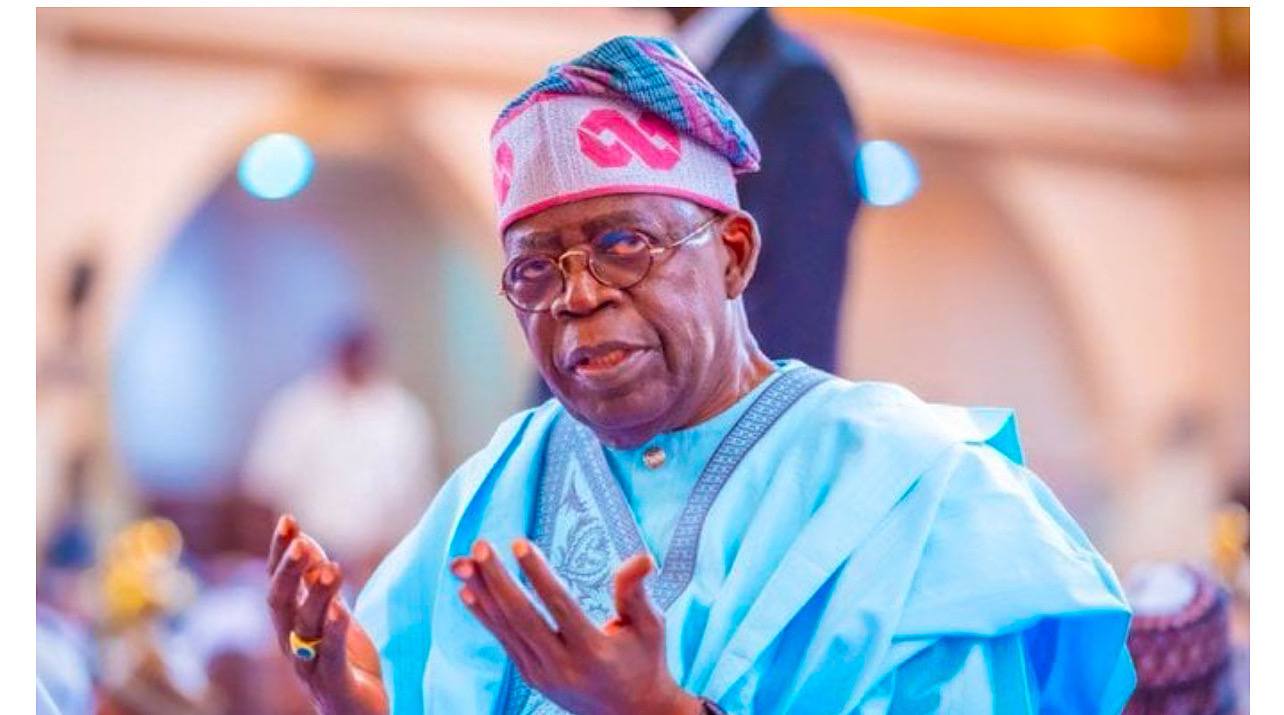
 President Bola Tinubu has declared that 2026 marks the beginning of a more robust phase of economic growth for Nigeria, pledging to drive down inflation further, strengthen foreign reserves and sustain the country’s GDP growth trajectory.
In his New Year message to Nigerians on Thursday, the President expressed confidence in the nation’s collective resolve, saying the new year would be a more prosperous one for the country, its citizens, and all who call Nigeria home.
Tinubu argued that during 2025, his administration sustained momentum on major reforms, achieved a fiscal reset and recorded steady economic progress. Despite persistent global economic headwinds, he said, Nigeria recorded tangible and measurable gains, particularly in the economy.
“These achievements reaffirm our belief that the difficult but necessary reforms we embarked upon are moving us in the right direction with more concrete results on the horizon for the ordinary Nigerian,” he stated.
The President disclosed that Nigeria closed 2025 on a strong note, with annualised GDP growth expected to exceed four per cent for the year.
Trade surpluses were maintained and greater exchange rate stability was achieved, while inflation declined steadily to below 15 per cent, in line with his administration’s target.
“In 2026, we are determined to reduce inflation further and ensure that the benefits of reform reach every Nigerian household,” he said.
Tinubu pointed to the performance of the Nigerian Stock Exchange, which, he said, posted a robust 48.12 per cent gain in 2025, consolidating its bullish run that began in the second half of 2023.
On foreign reserves, he disclosed that sound monetary policy management had seen reserves stand at $45.4bn as of December 29, 2025, providing a substantial buffer against external shocks for the Naira. He expressed optimism that this position would strengthen further in the new year.
Foreign direct investment, the President noted, was also responding positively. In the third quarter of 2025, FDI rose to $720m, up from $90m in the preceding quarter, reflecting renewed investor confidence in Nigeria’s economic direction, which global credit rating agencies, including Moody’s, Fitch, and Standard & Poor’s, had consistently affirmed and applauded.
Tinubu recalled that he recently presented the 2026 Appropriation Bill to the National Assembly, emphasising that his administration had implemented critical reforms laying a solid foundation for long-term stability and prosperity.
“With patience, fiscal discipline, and unity of purpose, Nigeria will emerge in 2026 stronger and better positioned for sustained growth,” he said.
As inflation and interest rates moderate, the President said, his administration expected increased fiscal space for productive investment in infrastructure and human capital development.
He commended states that had aligned with the national tax harmonisation agenda by adopting harmonised tax laws to reduce the excessive burden of taxes, levies, and fees on citizens and basic consumption.
The new year, Tinubu added, marks a critical phase in implementing tax reforms designed to build a fair, competitive, and robust fiscal foundation for Nigeria.
On security, the President acknowledged that the nation continues to confront threats from criminal and terrorist elements.
He disclosed that in collaboration with international partners, including the United States, decisive actions were taken against terrorist targets in parts of the Northwest on December 24.
The Armed Forces, he said, had since sustained operations against terror networks and criminal strongholds across the Northwest and Northeast.
“In 2026, our security and intelligence agencies will deepen cooperation with regional and global partners to eliminate all threats to national security. We remain committed to protecting lives, property, and the territorial integrity of our country,” the President stated.
He reiterated his belief that a decentralised policing system with appropriate safeguards, complemented by properly regulated forest guards and anchored on accountability, was critical to effectively addressing terrorism, banditry, and related security challenges.
Tinubu also announced plans to accelerate the implementation of the Renewed Hope Ward Development Programme, aiming to bring at least 10 million Nigerians into productive economic activity by empowering at least 1,000 people in each of the 8,809 wards across the country.
Through agriculture, trade, food processing, and mining, he said, the administration would stimulate local economies and expand grassroots opportunities. Investment would also continue in modernising Nigeria’s infrastructure, including roads, power, ports, railways, airports, pipelines, healthcare, education, and agriculture to strengthen food security and improve quality of life.
The President called on all Nigerians to play their part, describing nation-building as a shared responsibility that required unity of purpose, patriotism, and service with honour and integrity.
“To achieve our objectives in 2026, we must all play our part. Nation-building is a shared responsibility.
“We must stand together in unity and purpose, uphold patriotism, and serve our country with honour and integrity in our respective roles. Let us resolve to be better citizens, better neighbours, and better stewards of our nation.
“Fellow Nigerians, I wish you all a peaceful, productive, and prosperous New Year. May God continue to bless and protect our beloved country, keep our troops safe and destroy the enemies bent on disrupting our national peace, security and stability,” he stated.
Meanwhile, governors and other political leaders across the country reflected on the trials of the outgoing year, calling for unity, resilience, and renewed commitment to governance, security, and economic recovery.
Speaker of the House of Representatives, Dr Tajudeen Abbas, urged Nigerians to remain positive and hopeful about the future.
In his New Year message released on Wednesday and signed by his Special Adviser on Media and Publicity, Musa Krishi, Abbas called on citizens to look forward to 2026 with optimism and to continue working collectively for the unity and progress of the country.
Reflecting on the outgoing year, the Speaker noted that 2025, despite its challenges, recorded commendable strides in good governance and improvements in national security, particularly with the successes achieved in the fight against terrorism and banditry.
He therefore appealed to Nigerians across all divides to strengthen national cohesion and commitment to peace-building.
“In every new dawn lies a promise,” the Speaker said, as he commended Nigerians for their patience, perseverance, and contributions towards building a stronger nation.
Niger State Governor, Mohammed Bago, in a statement by the Commissioner for Information, Obed Nana, said social pressures and security challenges tested the resilience of his government in 2025.
He, however, said the state stood firm through unity, patience, and unwavering faith in his government.
Niger State experienced major security challenges in 2025, including incidents of tanker explosions which claimed many lives, boat accidents, and terrorist abductions, particularly of schoolchildren in November.
Therefore, Bago asked residents to continue to support his administration in its efforts to deliver the New Niger Agenda, anchored on good governance, security, and economic revitalisation.
“The outgoing year tested our resilience as a people, particularly in moments of security challenges and social pressures. Yet, through unity, patience, and unwavering faith in government, Niger State stood firm.
“I sincerely thank the people of Niger State for their trust, cooperation, and steadfast support at critical moments, which greatly strengthened our collective response and progress,” he said.
Bago promised that his government remained committed to transparent communication, responsive leadership, and policies that placed the welfare of citizens at the centre of governance.
A former Kaduna State Governor and chieftain of the Peoples Democratic Party, Ahmed Makarfi, urged Nigerians to remain united and resilient in the New Year. In his message issued in Kaduna on Wednesday, he acknowledged the hardships faced by citizens over the past year but expressed optimism for a better future.
According to him, Nigerians must confront the nation’s challenges together as a united people bound by shared hopes and a promising destiny.
“As we exit the year 2025, I extend warm greetings and best wishes to all Nigerians,” Makarfi said, praying that the New Year offered “a renewed opportunity to strengthen our resolve and collectively overcome our challenges.”
Senator Adetokunbo Abiru, representing Lagos East Senatorial District, called on Nigerians to embrace unity, renewal, and collective resolve as the country enters 2026. He urged sustained support for policies aimed at economic stability, inclusive growth, and grassroots development.
In his New Year message to his constituents, Lagos State, and Nigerians at large, the lawmaker described the beginning of 2026 as an opportunity for reflection and renewed commitment to progress and prosperity.
He reaffirmed his commitment to championing policies that promote economic stability and inclusive growth, stressing that development must reach every ward, community, and household across Lagos East.
Abiru therefore urged Nigerians to continue supporting the administration of President Bola Tinubu as it implemented policies targeted at strengthening the economy, improving infrastructure, expanding opportunities, and securing a more prosperous future for citizens.
The Anglican Bishop of Owo Diocese of Ondo State, Stephen Fagbemi, called on Christians and all Nigerians to embrace peace and love in the New Year.
Tinubu projects lower inflation, stronger growth in 2026 New Year address
In a New Year message delivered through the Public Relations Officer of the diocese, Banjo Abitogun, on Wednesday, the cleric expressed optimism that the New Year would be a season of high hope and fresh opportunity for Christians with “unwavering faith in God, renewed commitment to righteous living, and genuine love for one another.”
He further prayed for Nigeria, asking God to grant the nation wise leadership, economic recovery, security of lives and property, and unity among all citizens.
For its part, the Young Progressives Party has urged Nigerians not to lose faith in the democratic process ahead of the 2027 general elections, despite widespread frustration arising from past electoral experiences.
The party made the call in its New Year message issued on Wednesday in Abuja by its National Publicity Secretary, Egbeola Martins.
Public confidence in Nigeria’s electoral process sharply declined following the 2023 general elections, which were marred by widespread complaints of technical glitches, particularly the failure of the Independent National Electoral Commission’s Result Viewing Portal to upload polling unit results in real time.
The disruptions triggered protests, legal challenges and persistent allegations of manipulation, reinforcing calls for comprehensive electoral reforms to restore trust ahead of the 2027 polls.
Martins appealed to the masses to intensify civic engagement and political participation in what he described as a decisive period for Nigeria’s democracy.
According to him, years of electoral setbacks should not translate into apathy or silence in the face of poor governance.
“Though the journey has been difficult and often discouraging, surrendering our sovereignty must never translate into docility or silence in the face of bad governance.
“The YPP calls on Nigerians not to be discouraged by the experiences of previous elections.
“Rather, citizens must mobilise like never before in this penultimate election year to reclaim their power at the ballot in 2027 and vote out incompetent, corrupt and insensitive leadership. The future of our democracy depends on active participation, not apathy,” he said.
The party further urged Nigerians to begin demanding accountability from public office holders, especially in light of fiscal reforms expected to increase government revenue.
“Nigerians must begin to ask critical questions, demand answers and closely scrutinise public spending, especially with the advent of the new tax law, which is expected to widen the tax net and significantly increase government revenue.
“Democracy thrives when citizens remain vigilant and hold leaders accountable. Increased revenue without transparency, accountability and prudence will only deepen public mistrust and hardship,” he stated.
The YPP also warned against what it described as the politicisation of anti-graft agencies, insisting that selective justice undermines democracy and weakens public institutions.
“We strongly warn against the weaponisation of the Economic and Financial Crimes Commission and other anti-corruption agencies against political opponents.
“The fight against corruption must be sincere, impartial and devoid of political bias. Selective justice weakens institutions and erodes public confidence in governance,” he said.
On the newly introduced tax law, the party maintained that Nigeria’s fiscal crisis was rooted more in poor expenditure management than revenue shortfalls.
Martins criticised what he described as extravagant spending by public officials and called for accountability before full implementation of the law.
He argued, “Nigeria’s major challenge has never been revenue generation but the reckless, wasteful and opaque expenditure of public funds.
“Nigerians are not opposed to paying taxes; rather, they are deeply concerned about the lack of transparency, probity and discipline in the management of our commonwealth.
“It is unacceptable for taxpayers’ money to be used to fund religious pilgrimages, purchase private jets and yachts, procure luxury SUVs for members of the National Assembly and sustain the looting and frivolous lifestyle of a reckless political elite.”
“We therefore call on the government to urgently resolve all discrepancies associated with the new tax law before implementation.
“More importantly, those responsible for the discrepancies must be thoroughly investigated, apprehended and punished in accordance with the law,” Martins urged.
Sokoto State Governor, Ahmed Aliyu, has assured residents that his administration will consolidate on the achievements recorded in 2025 as the state steps into the new year, with renewed focus on security, education, infrastructure and economic empowerment.
In his New Year message released to journalists in Sokoto on Wednesday, the governor said 2026 would be a year of consolidation and accelerated development, guided by his administration’s nine-point Smart Innovative Agenda.
Aliyu said his government would continue to prioritise critical sectors capable of fast-tracking socio-economic growth across the state, stressing that peace and security remain central to development.
He disclosed that the state government had developed a fresh blueprint to further support security agencies in tackling banditry, especially in the 13 local government areas affected by insecurity.
“We have already drawn up a blueprint on how to further assist security agencies in the areas of logistics, intelligence gathering and intelligence sharing,” the governor said.
He urged security agencies to intensify their operations in the new year, while calling on residents, particularly those in frontline communities, to cooperate by providing timely and credible information.
Aliyu also appealed to communities to expose individuals exhibiting suspicious behaviour or living above their means, noting that community vigilance would help dismantle informant networks aiding criminal activities in rural areas.
On education and religious development, the governor announced plans to construct new Islamiyya schools and rehabilitate those in poor condition.
He added that ongoing renovations of primary, secondary and tertiary institutions would be completed, with more furniture supplied and sustained attention given to teachers’ welfare.
In infrastructure development, Aliyu said all ongoing housing projects in Wajake, Gidan Salanke and Sokoto New City, alongside rural and township road projects, would be completed before the end of the second quarter of 2026.
The governor reaffirmed his administration’s commitment to economic empowerment programmes, including NG-CARES, Ahmadu-CARES and other initiatives targeting youths and women.
He also promised improved water supply, stating that all ongoing water projects would be completed, with additional machinery provided for major water intake facilities across the state.
In agriculture, Governor Aliyu said the government would continue to support farmers with inputs and implements, adding that contracts had already been awarded for the procurement of tractors to boost mechanised farming.
The health sector, he said, would remain a priority through the renovation of health facilities and the provision of modern medical equipment across the state.
“By the grace of Almighty Allah, we will ensure the successful actualisation of all these projects in 2026,” he assured.
Governor Aliyu thanked the people of Sokoto State for their continued support and reaffirmed his commitment to good governance, while wishing residents and Nigerians a prosperous New Year.
A former Minister of Transportation, Rotimi Amaechi, urged Nigerians to hold those in authority accountable, describing responsible and people-oriented leadership as key to addressing the country’s economic and security challenges.
In his New Year message, Amaechi, a former governor of Rivers State and Transport Minister, said 2025 tested the nation’s resilience, with many families grappling with economic hardship, rising cost of living and widespread insecurity.
He called on Nigerians to use the new year as a turning point in the quest for peace, unity, improved security, economic stability and the overall well-being of the people.
According to him, citizens must collectively demand responsible, responsive, transparent and accountable leadership.
Amaechi also called for economic reforms that would lead to job creation, poverty reduction, affordable healthcare, housing and food, as well as quality education for all Nigerians.

-
 news5 years ago
UPDATE: #ENDSARS: CCTV footage of Lekki shootings intact – Says Sanwo – Olu
-
 lifestyle6 years ago
Former Miss World: Mixed reactions trail Agbani Darego’s looks
-
 health5 years ago
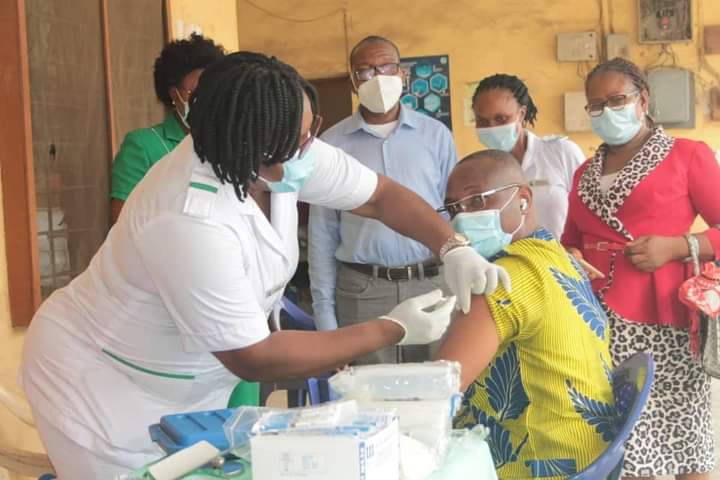
Chairman Agege LG, Ganiyu Egunjobi Receives Covid-19 Vaccines
-
 lifestyle4 years ago
Obateru: Celebrating a Quintessential PR Man at 60
-
 health6 years ago
UPDATE : Nigeria Records 790 new cases of COVID-19
-
 health6 years ago
BREAKING: Nigeria confirms 663 new cases of COVID-19
-
 entertainment12 months ago
Ashny Set for Valentine Special and new Album ‘ Femme Fatale’
-
 news8 months ago
BREAKING: Tinubu swears in new NNPCL Board