Connect with us

news

Published

on

N62.3b fraud: EFCC freezes 30 accounts of ex-NSITF boss, seizes 37 assets

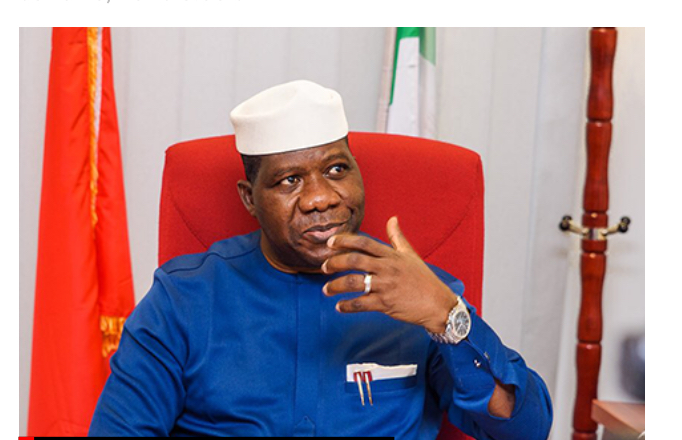
Former Chairman of the Nigerian Social Insurance Trust Fund, Dr. Ngozi Olojeme.

The Economic and Financial Crimes Commission (EFCC) has frozen 30 accounts and seized 37 assets  allegedly belonging to the former Chairman of the Nigerian Social Insurance Trust Fund, Dr. Ngozi Olojeme.

The agency had earlier linked 38 houses to Olojeme but it has obtained a court order to seize 37.

In one of the houses at No. 25, Kainji Crescent, Off Lake Chad Crescent, Maitama , Abuja, the EFCC detectives were said to have uncovered a state of the art bathroom suspected to have cost about $2m to $4million.

The EFCC is probing about N62.3billion fraud in NSITF with $48,485,127 credited to Olojeme.

The ex-NSITF, who was grilled by the EFCC in January, is still placed on administrative bail with a responsibility to report fortnightly for interaction.

But the EFCC however yesterday said Olojeme was yet to admit that she committed any fraud while in office.

She insisted that she was innocent of all the allegations against her in spite of the fact that her Account Officer, Chuka Eze has spilled the bean.

Findings by our correspondent revealed that the probe of Olojeme has reached a level for her arraignment in court by the anti-graft agency.

A top source, who spoke in confidence during an update session yesterday, said: “We have frozen 30 accounts traced to Olojeme in some banks. But our detectives discovered that she is the kind of person who does not keep huge money in these accounts. In some of these accounts, there were funds ranging from N20million to N30million, which were insignificant compared to slush funds traced to her.

“Investigation confirmed that the cash looted in NSITF was evacuated under the guise of  award of contracts. The contract sum will be paid to a company and her Account Officer will pick the raw cash and go to  Bureaus De Change(BDCs).

“The Account Officer, who has made startling revelations was actually what our detectives termed ‘clearing and forwarding’ for her.

“When we confronted her with our findings, she refused to admit committing any infractions while in office. She refused to admit having been confident that all the slush funds were withdrawn in cash.

“So far, she is ready to go through the rigours of trial. We are already seeking legal advice on whether or not she should be arraigned with other management staff of NSITF or be tried separately.

“Already, the EFCC has arraigned a former Managing Director of Nigeria Social Insurance Trust Fund (NSITF), Umar Munir Abubakar and four others for alleged diversion of N18billion out of the sum in question.

“The others are Deputy General Manager, Finance Henry Ekhasomi Sambo; General Manager, Legal Adebayo Adebowale Aderibigbe; Chief Richard U. Uche and Aderemi Adegboyega.”

Responding to a question, the source added: “We discovered a state of the art bathroom in one of her houses at No. 25, Kainji Crescent, Off Lake Chad Crescent, Maitama , Abuja. The EFCC is suspecting that the bathroom might have cost about $2m to $4million.

“At the appropriate time after final forfeiture of the mansion, Nigerians will have access to the amazing bathroom.”

Meanwhile the EFCC has secured a court order to seize 37 out of 38 houses allegedly traced to Olojeme.

The seizure followed an Interim Forfeiture Order by Justice A. I. Chikere of the Federal High Court, Abuja.

The order said in part: “An order of interim attachment/forfeiture of the asset attachment of the properties set out in the schedule attached herein.

“An Order stopping any disposal, conveyance, mortgage, lease, sale or alienation or otherwise of the properties/assets described in the schedule attached herein.

“An Order authorizing the Economic and Financial Crimes Commission to appoint competent persons/firm to manage the assets/properties listed in the schedule herein,  temporarily forfeited to the Federal Government pending the conclusion of investigation and determination of criminal charges against the suspects.

“And for such further or other orders as this honourable court may deem fit in the circumstances of this cases.

“It is hereby ordered as follows: that the order is granted as prayed.  That the order made is to last for 6 months. That no order as to cost.”

The EFCC had in a report gave the details of findings against the ex-NSITF boss.

The report said in part: “That through this process, Dr. Ngozi Olojeme, the then NSITF board chairman, has collected a total sum of $48,485,127 from Mr. Chuka Eze (her account officer at FBN), which cash he collected on her behalf being the dollar equivalent of monies paid to BDCs by NSITF contractors.

“She and others also diverted huge cash allocated for allowances of its staff and compensation to contributors. Detectives actually traced some of the NSITF funds in the personal accounts of Olojeme and the former MD, Umar Abubakar.

“For instance Abubakar and others dishonestly converted to N18billion, being contribution from the Federal Government of Nigeria as take-off grants and Employees Compensation Scheme (ECS) for MDAs.

“The said sum was diverted into personal accounts by an e-payment mandate jointly signed by Umar Munir Abubakar and Henry Ekhasomi Sambo.”

The report added: “It was discovered that the NSITF accounts in First Bank of Nigeria and other banks have witnessed a total turnover of over N62, 358,401,927 between 2012 and 2015 from the Employee Compensation Scheme contributions.

“That out of the N62bn, the Federal Government contributed N13,600,000,000 while the sum of N48,758,401,927.80 was contributed by the private sector. That there were several payments to individuals and companies from the NSITF bank accounts for purported contracts or consultancy services.

“That some individuals and companies that received these payments, in turn, transferred part of the monies directly to the NSITF officials while others transferred huge sums to bureau de change operators who changed them to dollars.”

The assets and their locations 

  • Plot R/151(No. 30A) Kingsway Road, Old GRA, Enugu. Registered at Enugu Land Registry as No. 5 Page 5 in Volume 1659
  • Parcel of land measuring 4833.241 Sq. Metres located at Uberi Bush along Mbiama Road, Yenagoa, Bayelsa State
  • Parcel of land located at Igbanadan Bush, Emeya 2 Town Ogbia LGA in Bayelsa State.
  • Properties located at 196, Melford Okilo Road, Amarata-Epie, Yenagoa, Bayelsa State
  • Properties located at No. 25, Kainji Crescent, Off Lake Chad Crescent, Maitama , Abuja.
  • Property located at Plot No. 933 Cadastral Zone B01, Gudu District, Abuja
  • All that piece/parcel of land with C of O No. DSTR 1227 and the properties therein also known Umuezeafada family land located at KM 9, Asaba-Benin Express Road, Asaba, Delta State.
  • Plot 124 Cadastral Zone A02 Wuse Known as No. 30, Tunis Street, Off Lusaka Street, Wuse Zone 6, Abuja
  • Plot 3115 Cadastral Zone A04 Asokoro, Abuja.
  • Plot 2271 Cadastral Zone E12 Orozo, Abuja.
  • All that piece of land with C of O No. DTSR638 and the properties therein also known as Plot 101, Phase 1, Block 1 Core Area, Asaba Delta State
  • All that piece /parcel of land also known as Plot 1c, 3 and 4 Phase IV, Block 111 Core Area, Asaba, Delta State with C of O No. DTSR 1194.
  • No. 20 DBS Road, Asaba, Delta State
  • House/Flat 86, 11 Crescent, Kado Estate, Abuja
  • All that Piece/parcel of land and properties therein located at Ogbe Onishe Village in Umagwu Quarters, Asaba, Oshimili South LGA of Delta State also known as Luxury Suites and Resort Hotel, located off Nnebisi Road, Asaba
  • Properties located at No. 204 Nnebisi Road, Asaba beside STANBIC IBTC Bank
  • All that piece or parcel of land and properties thereof located at Elibujor Layout, Opp DLA office, Asaba Oshimili South LGA of Delta State. NSITF office located at Asaba Benin Expressway by Nuel Ojay Junction, Asaba.
  • Plot Nos 29 and 31 of  Umonyia Ejedeofor Family Layout Ibusa Road located along Benin-Asaba Expressway, Asaba, Delta State
  • All that piece/parcel of land with C of O No. DSTR 16326 and the properties therein also known as Plots 104 and 105, Block IV, Phase V, Core Area, Asaba, Delta
  • All that piece/parcel of land with C of O, No. DSTR 55853 and the properties therein also known as Plot 34. Phase 111, Block IV, Core Area. Asaba, Delta State
  • Properties located at No. 17, Ebenuwa Street, Off Nnebisi Road, Asaba, Delta State
  • No. 3D Opolo, Old Commissioners Quarters, Yenagoa, Bayelsa State
  • All that piece/parcel of land also known as plots 7,8,11,12,15,16,19, 20,23, and 24 Phase IV, Block 111, Core Area, Asaba, Delta State with C of O No. DSTTR1194
  • All that piece/parcel of land with C of O No. DSTR15303 and the properties therein also known as Plot No. 16 Central Spine Phase IV, Asaba, Oshimili South LGA of Delta State
  • All that piece/parcel of land  with C of O No. DSTR 16325 and the properties therein also known as  Plots 109 and 110, Block IV, Phase V, Core Arae, Asaba Delta State
  • All that piece/parcel of land with C of O No. DSTR 13807 and the properties therein measuring 80.532 hectares in Aboha-Ogwashi-Uku(Layout) at Aniocha LGA. Delta State.
  • All that piece/parcel of land with C of O No. DSTR 15046 and the properties therein also known as Plots 96, 97, and 98 Layout Survey of Block 1, Bridge-Head, Asaba, Oshimili South LGA of Delta State measuring 6.684 hectares
  • All that piece/parcel of land and the properties therein located at No. 42 Lawrence Road Akintola via Okpe Road, Sapele, Delta State measuring 1274.95 Square Meters and registered at Land Registry Asaba as No. 8 at page in Vol at 8
  • All that piece/parcel of land and the properties therein located at Orugbe Bush, Emeyal 11 Town Ogbia LGA, Bayelsa measuring 3, 625.493 Square Metres.
  • All that piece/parcel of land and the properties therein located at No 6 Sir C.A. Aghara Drive off Okpanam Road by NNPC Filling Station, Asaba, Delta State
  • All that piece/parcel of land and the properties therein located at Oduke, Off Uche Nwembu Road, off Asaba-Benin Expressway, Asaba Delta State.
  • All that piece/parcel of land and the properties therein located at No. 3, Ogwa Godspower Avenue, Oshimili LGA, Asaba, Delta State.
  • All that piece/parcel of land and the properties therein located No. 11 Chiweta Street, off Ezenie Avenue, Asaba, Delta State.
  • All that piece/parcel of land and the properties therein located at James Odeta Street, Oshimili South LGA, Asaba, Delta State.
  • All that piece/parcel of land and the properties therein located at No. 8, Thomas Chukwunike Street, Oshimili South LGA, Asaba, Delta State.
  • All that piece/parcel of land and the properties therein located at No. 11 Mokolo Close, Off Summit Road, therein located at No. 8, Thomas Chukwunike Street, Oshimili
  • All that piece/parcel of land and the properties therein located at No. 11, Okadigbo Street, off Nebisi Road, Asaba, Delta State.
Continue Reading
Click to comment

Leave a Reply

Your email address will not be published. Required fields are marked *

news

Rebuilding the North-East: Inside Nigeria’s Largest Post-Conflict Recovery Experiment

Published

on

How the NEDC is attempting to turn years of devastation into a pathway for long-term development

By Michael Olukayode

For more than a decade, Nigeria’s North-East has remained a symbol of prolonged conflict and humanitarian collapse. The insurgency led by Boko Haram and its breakaway factions did far more than disrupt security—it dismantled entire communities, shattered economic systems, and altered the social and cultural foundations of a region once anchored by farming and cross-border trade.

The human cost has been staggering. More than 350,000 people are estimated to have died directly and indirectly from the conflict. Over 2.5 million individuals were forced from their homes, while at the height of the crisis, about 8.4 million people required urgent humanitarian support. Entire settlements across Borno, Adamawa, and Yobe were destroyed, leaving behind a region marked by displacement and ruin.

A System Built from Collapse

The scale of destruction prompted the establishment of the North-East Development Commission (NEDC) in 2017 under former President Muhammadu Buhari. It was created not simply as a relief agency, but as a long-term institutional response to structural breakdown across an entire region.

Early post-conflict assessments placed the cost of destruction at over $9 billion. Infrastructure losses were extensive: thousands of homes were destroyed, more than 1,400 schools were damaged or completely wiped out, and in some areas over 70 percent of health facilities became unusable. The agricultural sector—long the backbone of the regional economy—collapsed almost entirely, deepening poverty and food insecurity.

To coordinate recovery, the Commission was tasked with implementing the North-East Stabilisation and Development Master Plan (NESDMP), a blueprint designed to move the region from emergency humanitarian response into structured reconstruction and sustainable development.

From Emergency Response to Large-Scale Reconstruction

Since beginning operations, the NEDC has implemented interventions worth hundreds of billions of naira, funded through federal allocations and supported by development partners.

Its activities span all six states of the region—Borno, Adamawa, Yobe, Bauchi, Gombe, and Taraba—where thousands of projects have either been completed or are ongoing.

Across its portfolio, the Commission has:
• Built and rehabilitated thousands of housing units for displaced families
• Executed more than 1,000 infrastructure projects, including roads, schools, and healthcare centres
• Distributed millions of relief items during peak humanitarian emergencies
• Supported agricultural programmes reaching hundreds of thousands of farmers

The Managing Director/Chief Executive Officer of the Commission, Mohammed Goni Alkali, explained that the institution is now deliberately evolving its focus.

“We are transitioning from humanitarian interventions to sustainable development,” he said. “The priority is building systems that can endure beyond immediate recovery.”

He added that reconstruction must be understood beyond physical structures.

“It is not only about rebuilding infrastructure. It is about restoring livelihoods, rebuilding institutions, and restoring hope to communities,” Alkali said.

Gradual Return to Normalcy Across Communities

On the ground, signs of recovery are beginning to emerge across the region, though unevenly.

Large numbers of internally displaced persons have started returning to reconstructed communities, easing long-standing pressure on overcrowded camps. Schools that were destroyed or abandoned during the peak of the insurgency are being rehabilitated and reopened, restoring access to education for thousands of children.

Healthcare delivery has also improved, with rebuilt and newly equipped facilities expanding access, particularly in rural areas that were previously cut off. Road reconstruction projects are reconnecting isolated communities, improving movement, trade, and access to services.

The Governor of Borno State, Professor Babagana Umara Zulum, acknowledged the role of the Commission in supporting recovery efforts.

“The NEDC has played a critical role in supporting the rebuilding of communities and restoring hope to our people,” he said.

Restoring the Economic Lifeline

Before the insurgency, agriculture was the dominant economic activity in the North-East, employing a large portion of the population. The conflict disrupted farming cycles, displaced rural communities, and left vast tracts of farmland abandoned.

Recovery efforts are now focusing on reversing that collapse. Through the distribution of seeds, fertilisers, and farming equipment, as well as investments in irrigation and dry-season farming, agricultural production is gradually resuming. Small businesses and cooperatives are also receiving support to stimulate local economies.

According to Alkali, economic recovery remains central to the Commission’s strategy.

“Without livelihoods, recovery cannot be sustained,” he said. “Economic empowerment is therefore at the core of our interventions.”

Moving Away from Long-Term Aid Dependence

One of the most significant shifts emerging in the region is the gradual transition from humanitarian dependency to self-reliance.

Although millions of people still require assistance, returning communities are increasingly rebuilding their own economic and social systems as stability improves.

Former United Nations Resident and Humanitarian Coordinator in Nigeria, Matthias Schmale, noted that recovery efforts are beginning to produce measurable improvements.

“There is clear evidence that living conditions are improving and that basic services are being restored,” he said.

Security Gains and Lingering Vulnerability

Despite notable progress in stabilisation, the North-East remains fragile. Military operations have significantly degraded insurgent capabilities, but sporadic attacks continue in some areas.

The Chairman of the Governing Board of the NEDC, Major General Paul Tarfa (rtd.), stressed that development must consolidate security achievements.

“Security gains must be reinforced with development initiatives. Only then can we achieve lasting peace,” he said.

Persistent Gaps in the Recovery Process

Even with extensive interventions, major challenges remain. Millions of residents are still dependent on humanitarian assistance, unemployment among young people remains high, and environmental pressures—including climate-related shocks—continue to threaten agricultural recovery.

In addition, funding limitations remain a key constraint, with the scale of needs far exceeding available resources.

The Managing Director acknowledged these gaps but reaffirmed the Commission’s commitment.

“The level of devastation is enormous, but we are committed to working with all stakeholders to deliver sustainable recovery,” Alkali said.

A Region Still in Transition

The North-East today exists in a complex state between crisis and recovery. It remains one of Nigeria’s most vulnerable regions, but also one of its most ambitious reconstruction theatres.

What is unfolding is a slow transformation: from destruction to rebuilding, from dependency to resilience, and from emergency survival to structured development.

Former United Nations Resident and Humanitarian Coordinator in Nigeria, Matthias Schmale, noted that recovery efforts are beginning to produce measurable improvements.

“There is clear evidence that living conditions are improving and that basic services are being restored,” he said.

Observing during his tenure in the country that: “The transition is visible, but sustaining it will require long-term investment and strong collaboration.”

Conclusion: Beyond Reconstruction

The work of the North-East Development Commission goes beyond rebuilding damaged infrastructure. It represents an attempt to reimagine post-conflict recovery at scale—linking humanitarian relief with long-term development planning.

From housing and healthcare to education and livelihoods, the foundations of a new regional reality are gradually taking shape.

Yet, as stakeholders consistently emphasise, the true measure of success will not be the number of projects completed, but whether the region can sustain stability, dignity, and opportunity over time.

In the North-East, the story of recovery is no longer only about survival.

It is about building a future that once seemed impossible—and ensuring it endures.

Continue Reading

news

Breaking : Tinubu Appoints Oyedele as Finance Minister in Cabinet Shake-Up

Published

on

…Edun, Dangiwa exit FEC

…Darma named Housing minister-designate

President Bola Ahmed Tinubu has approved a minor cabinet reshuffle, effecting changes in the membership of the Federal Executive Council (FEC) with the exit of two ministers and the appointment of replacements.

The decision, conveyed in a memo signed by the Secretary to the Government of the Federation (SGF), George Akume, directed the immediate redeployment of portfolios to strengthen governance delivery.

According to a statement issued by Special Adviser to the SGF on Media and Publicity, Yomi Odunuga, Mr. Wale Edun has been relieved of his duties as Minister of Finance and Coordinating Minister of the Economy under the reshuffle.

He is to hand over to Mr. Taiwo Oyedele, who has now been elevated to the position from his previous role as Minister of State in the ministry.

Similarly, the Minister of Housing and Urban Development, Arc. Ahmed Musa Dangiwa, is to exit the cabinet, with the President naming Dr. Muttaqha Rabe Darma as ministerial nominee and minister-designate for the ministry.

The directive also mandates that Dangiwa hand over to the Minister of State in the ministry, pending Darma’s confirmation and assumption of office.

According to the memo, all handover and takeover processes are to be completed by close of business on Thursday, April 23, 2026.

Explaining the rationale for the changes, Akume said the reshuffle was designed to “strengthen cohesion, synergy in governance as well as achieve more impactful delivery on the economy to Nigerians, through the Renewed Hope Agenda.”

He added that the President exercised his constitutional powers under Sections 147 and 148 of the 1999 Constitution (as amended) in effecting the changes.

The President expressed appreciation to the outgoing ministers for their service to the nation and wished them success in their future endeavours.

Akume further conveyed the President’s assurance to cabinet members that the process of reinvigorating the government would be continuous and in line with the administration’s policy objectives.

Continue Reading

news

JUST IN: Federal Government Arraigns Suspected Coup Plotters on 13 Charges

Published

on

The Federal Government has filed a 13-count charge before the Federal High Court in Abuja against six individuals, including two retired senior military officers and a serving police inspector, over an alleged plot to wage war against Nigeria and commit acts of terrorism.

The defendants—retired Major General Mohammed Gana, retired Naval Captain Erasmus Victor, Inspector Ahmed Ibrahim, Zekeri Umoru, Bukar Goni, and Abdulkadir Sani—are scheduled to be arraigned on Wednesday, April 22, before Justice Joyce Abdulmalik.

Also listed in the charge, but said to be at large, is a former Minister of State for Petroleum Resources, Timipre Sylva.

The charge, filed on Monday by the Office of the Attorney-General of the Federation and signed by the Director of Public Prosecutions, Rotimi Oyedepo (SAN), accuses the defendants of offences ranging from treason and terrorism to failure to disclose security intelligence and money laundering linked to terrorism financing.

The prosecution alleged that the defendants conspired in 2025 “to levy war against the state to overpower the President of the Federal Republic of Nigeria,” an offence punishable under Section 37(2) of the Criminal Code.

The Federal Government further alleged that the defendants had prior knowledge of a planned treasonable act involving one Colonel Mohammed Alhassan Ma’aji and others but failed to alert authorities.

According to the charge, the defendants, “knowing that a treasonable act was intended to be committed, did not give information thereof with all reasonable despatch to either the President… or a peace officer.”

They were also accused of failing to take preventive steps, as the charge stated that they “did not use any reasonable endeavours to prevent the commission of the offence.”

Beyond treason, the defendants are facing terrorism-related charges under the Terrorism (Prevention and Prohibition) Act, 2022. Prosecutors alleged that they “conspired with one another to commit an act of terrorism in the Federal Republic of Nigeria.”

Inspector Ahmed Ibrahim and Zekeri Umoru were specifically accused of attending meetings linked to the alleged plot, “in a bid to further a political ideology which may seriously destabilise the constitutional structure of the Federal Republic of Nigeria.”

The charge also accused the defendants of providing support for terrorism, alleging that they “knowingly and indirectly rendered support” to facilitate acts of terror.

In addition, the prosecution alleged deliberate suppression of intelligence, stating that the defendants “had information which would be of material assistance in preventing the commission of the act of terrorism, but failed to disclose the information to the relevant agency as soon as practicable.”

On the financial aspect, several defendants were accused of handling funds linked to terrorism financing, in violation of the Money Laundering (Prevention and Prohibition) Act, 2022.

“indirectly retained the aggregate sum of N50,000,000, which forms part of the proceeds of an unlawful act, to wit: terrorism financing,” while Abdulkadir Sani allegedly retained N2m from a similar source.

Zekeri Umoru, according to the charge, “without going through a financial institution accepted a cash payment of the sum of N10,000,000,” and also retained an additional N8.8m suspected to be proceeds of terrorism financing.

Inspector Ahmed Ibrahim was also accused of taking possession of “the sum of N1,000,000, being part of proceeds of terrorism financing.”

The case is expected to test the Federal Government’s resolve to prosecute alleged threats to national security as proceedings commence before the Federal High Court in Abuja.

In October 2025, the Federal Government announced the cancellation of a ceremonial parade earlier scheduled to mark Nigeria’s 65th Independence Anniversary on October 1.

Days after the announcement, reports emerged linking the cancellation to an alleged coup plot. However, the Defence Headquarters dismissed the claims, insisting that the decision had no connection with any coup attempt.

Later that month, on October 31, authorities confirmed that 16 military officers had been arrested in the first week of October over the alleged plot, while two others were declared at large.

In January 2026, the Defence Headquarters confirmed that there was indeed a plan to overthrow President Bola Ahmed Tinubu.

The Director of Defence Information, Samaila Uba, said investigations carried out in line with military procedures uncovered the involvement of some personnel in the alleged coup plot.

Uba added that those implicated would be arraigned before appropriate military judicial panels.

In March, family members of the detained officers appealed to President Tinubu to ensure that the suspects were tried in an open court.

At a press conference in Abuja, wives and relatives of the detained officers also demanded access to the accused, whom they described as alleged coup masterminds.

The agitation continued in April, as families of the detained officers staged a protest at the entrance of the National Assembly, calling for a speedy trial and improved access to their relatives in custody.

Continue Reading

Trending

Copyright © 2025 Newsthumb Magazine | All rights reserved