
Uncategorized
UBA PIONEERS FINANCIAL INCLUSIVITY FOR THE VISUALLY IMPAIRED, INTRODUCES UBA BRAILLE ACCOUNT OPENING FORM

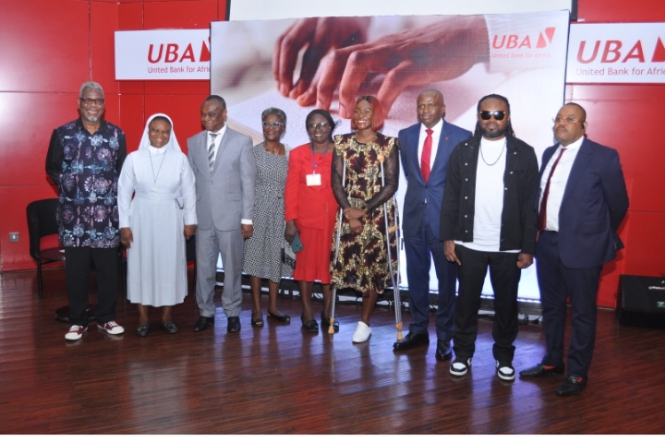
 Braille Account Opening 4: l-r: Past-Chairman, Anglo-Nigerian Welfare Association for the Blind(ANWAB), Ogie Eboigbe; Tutor, Pacelli School of the Blind, Sister Christiana Ekechukwu; Board Member, ANWAB, David Okon; Chairman, ANWAB, Ms Barbara Wey; Official, Ministry of Education, Grace Abimbola; Former, Senior Special Assistant to the Lagos State Governor on Persons Living with Disability, Adenike Oyetunde-Lawal; Executive Director, Finance and Risk Management, United Bank for Africa(UBA), Ugochukwu Nwaghodoh; Nigerian Musician and Producer, Cobhams Asuquo; and Executive Director, Group Operations, UBA, Alex Alozie, during the launch of Braille Account Opening Form for virtually impaired people, held in Lagos on Tuesday

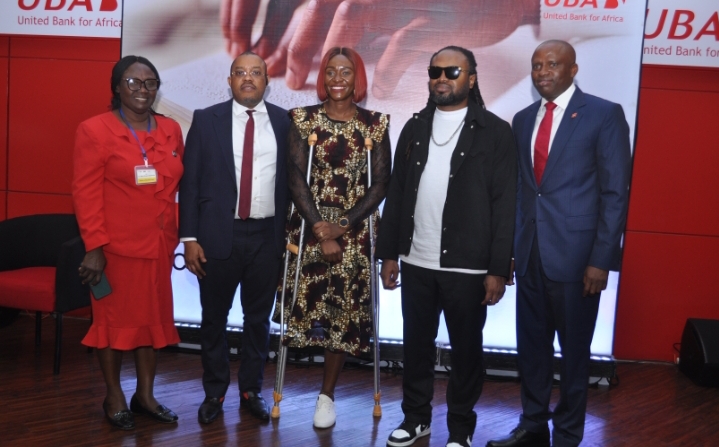
Braille Account Opening 5: Past-Chairman, Anglo-Nigerian Welfare Association for the Blind(ANWAB), Ogie Eboigbe; Tutor, Pacelli School of the Blind, Sister Christiana Ekechukwu; Board Member, ANWAB, David Okon; Chairman, ANWAB, Ms Barbara Wey; Official, Ministry of Education, Grace Abimbola; Former, Senior Special Assistant to the Lagos State Governor on Persons Living with Disability, Adenike Oyetunde-Lawal; Executive Director, Finance and Risk Management, United Bank for Africa(UBA), Ugochukwu Nwaghodoh; Nigerian Musician and Producer, Cobhams Asuquo; and Executive Director, Group Operations, UBA, Alex Alozie, flanked by Students of Pacelli School for the Blind, during the launch of Braille Account Opening Form for virtually impaired people, held in Lagos on Tuesday
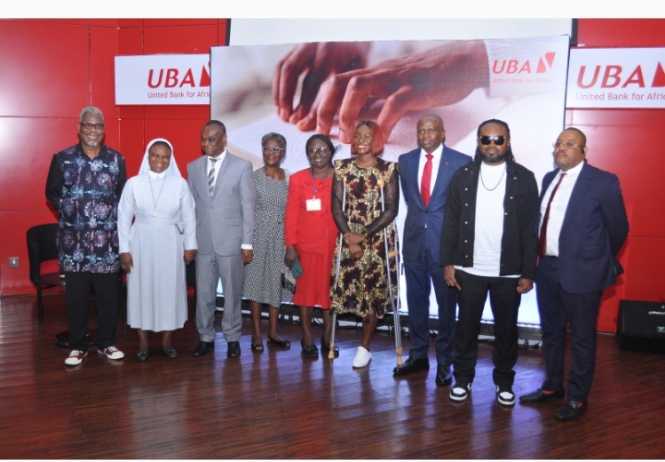
Braille Account Opening 7: l-r: Official, Ministry of Education, Grace Abimbola; Executive Director/GCOO, UBA, Alex Alozie,Board Member, ANWAB, David Okon; Former, Senior Special Assistant to the Lagos State Governor on Persons Living with Disability, Adenike Oyetunde-Lawal; Nigerian Musician and Producer, Cobhams Asuquo; and Executive Director, Finance and Risk Management, United Bank for Africa(UBA), Ugochukwu Nwaghodoh, during the launch of Braille Account Opening Form for virtually impaired people, held in Lagos on Tuesday
Africa’s Global Bank, United Bank for Africa (UBA), has launched the UBA Braille Account Opening Form, a first of its kind initiative in the Nigerian and African market, designed specifically to cater to the financial needs of the visually impaired.
Until now, this unique and special section of the society has been disadvantaged, but with this ground-breaking initiative, UBA has fully demonstrated its unwavering commitment towards providing an excellent user experience for all its customers, regardless of their individual abilities or disabilities.
The new UBA Braille Account Opening Form was launched at the UBA Head Office in Lagos on Tuesday, in an event that had in attendance key executive members of the bank and guests including Multi-Award Winner, Nigerian Musician, Producer, and Songwriter, Cobhams Asuquo, General Manager, Lagos State Office for Disability Affairs (LASODA), Dare Dairo; Former Senior Special Assistant to the Lagos State Governor on Persons Living with Disability, Adenike Oyetunde-Lawal, as well as students from the Pacelli School of the Blind.
While endorsing the laudable initiative, Award winning Music Producer, Cobhams Asuquo, described the Braille account as an innovative initiative that presents UBA as a bank with a heart that pays keen attention to the needs of the blind and disabled.
Asuquo said, “Before now, we have always been at the mercy of the reader when we want to do things like open accounts for ourselves, but this account opening form has come to solve the problem of access which has previously been a huge limiting factor for people like me who are blind. With this initiative, UBA has promoted our ideal of inclusivity and has helped to put back freedom in our hands while opening us up to the variety of opportunities and options available to us.
Continuing he said, “UBA has blazed the trail, I am beyond elated, as this new initiative will send a strong note to others to replicate the same feat and make people realise that banking services can and should be done with humanity in mind. Thank you UBA for amplifying this much needed cause, I endorse this 100 per cent and I believe it is a much needed first-step that will lead to so many others.”
Speaking earlier, UBA’s Executive Director, Finance and Risk Management, Ugo Nwaghodoh, said the bank continues to look for ways to make the physically challenged and others to be comfortable in their life-long relationship with the financial industry.
He said, “In our quest to drive all-encompassing financial inclusion, we decided to support the visually impaired by developing a Braille Account Opening form and these special customers now have the same opportunities available to our customers. The ultimate benefit is to ensure that everybody has the right to select and choose the kind of account they want to operate, and this account opening form will go a long way to ensure this.”
The UBA Braille Account Opening Form was produced with the support of Anglo-Nigerian Welfare Association for the Blind and is the first of its kind in the industry, designed specifically to cater to the needs of visually impaired individuals. With this innovative solution, UBA is empowering blind customers to independently initiate and complete the account opening process, ensuring their seamless integration into the financial system.
The General Manager, Lagos State Office for Disability Affairs; LASODA, who was also at the event, commended the entire team for conceiving the idea. He said, “I am so elated at this initiative, and I am happy to hear that this is also going to be replicated in the 19 African countries where UBA is present. I say thank you to this bank for this beautiful project. It is true that Government cannot do it all, and we are glad when we see institutions charting the course for others.”
United Bank for Africa is one of the largest employers in the financial sector on the African continent, with 35,000 employees group wide and serving over 35 million customers globally. Operating in 20 African countries and in the United Kingdom, the United States of America, France and the United Arab Emirates, UBA provides retail, commercial and institutional banking services, leading financial inclusion and implementing cutting edge technology.
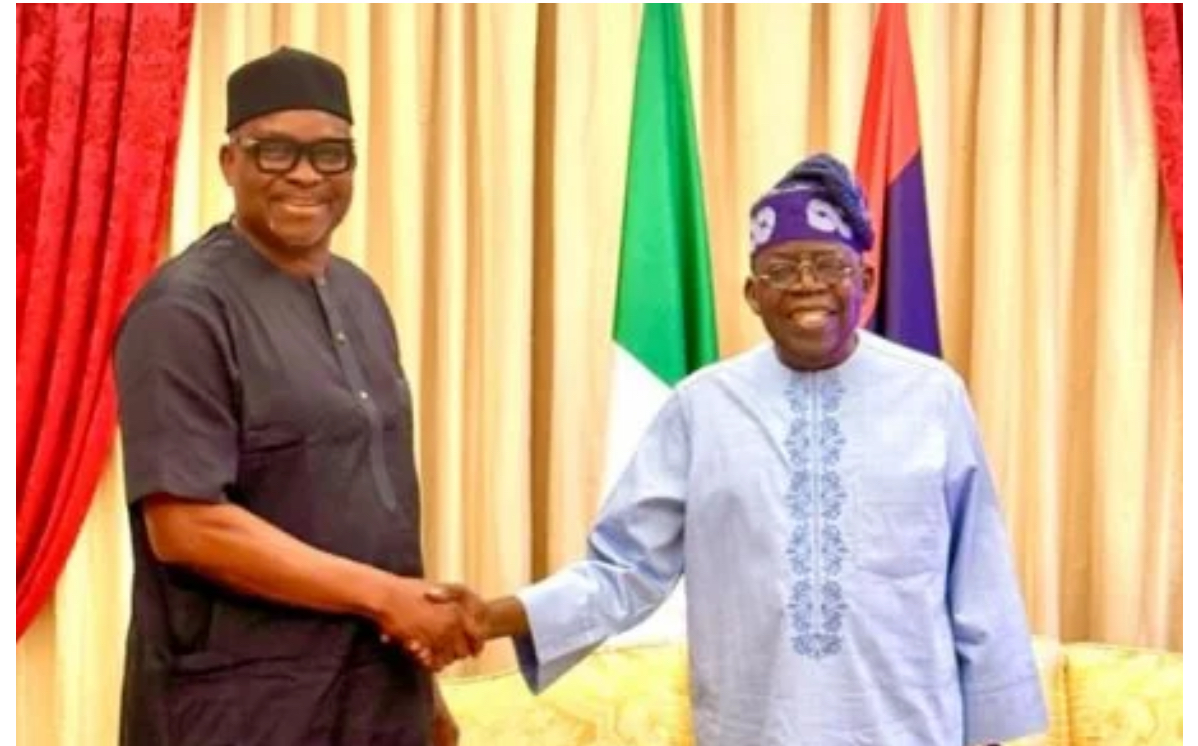
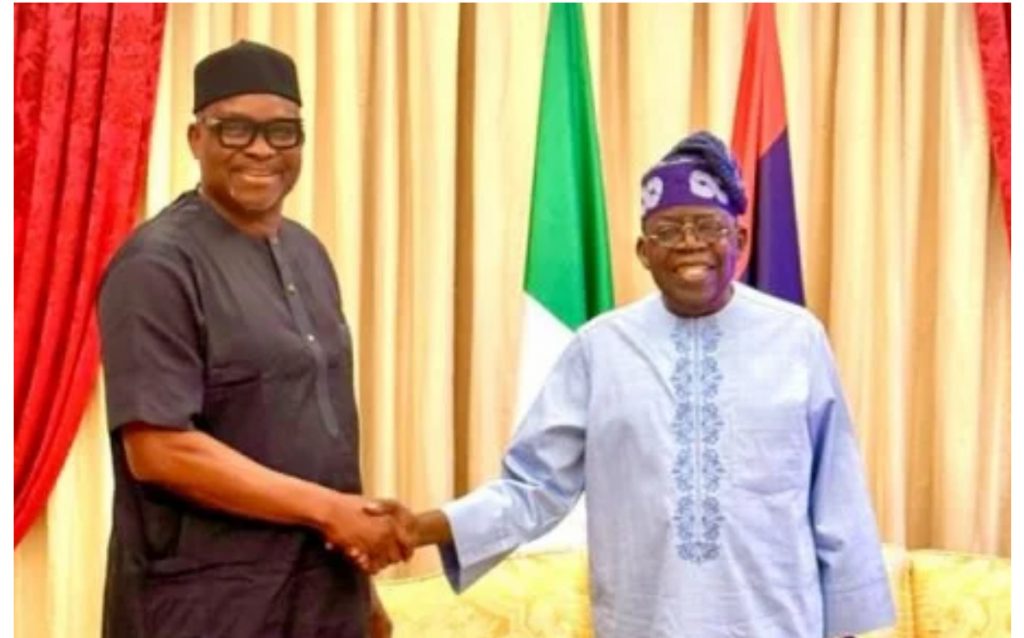
President Bola Tinubu former Ekiti State Governor, Ayo Fayose
President Bola Tinubu former Ekiti State Governor, Ayo Fayose.
President Bola Tinubu has approved the appointment of 26 persons into the boards and leadership of 10 federal government agencies and commissions, including former Ekiti State Governor, Ayo Fayose, as Chairman of the Rural Electrification Agency.
The appointments, which take immediate effect, were announced in a statement on Monday by the President’s Special Adviser on Information and Strategy, Bayo Onanuga.
“President Bola Ahmed Tinubu has announced 26 new appointments into 10 Federal Government agencies and commissions, with former governor of Ekiti State, Ayo Fayose, emerging as chairman of the Rural Electrification Agency (REA), and Major General Junaid Bindawa as chairman of the National Salary and Wages Commission,” the statement read.
The Presidency said Fayose would head the REA board alongside Alhaji Ahmadu Abubakar and Engineer Ilyasu Ibrahim Makinta as members and non-executive directors, while “the incumbent DG of the agency, Abba Abubakar Aliyu, and three executive directors previously appointed make up the remaining board members.”
Tinubu also named Major General Junaid Bindawa as Chairman of the National Salary and Wages Commission and approved eight additional appointments into the commission.
The statement added that “Former member of the House of Representatives from Lagos, Olajumoke Okoya-Thomas, is the new secretary of the commission,” while Dr Ogbole Ene Lilian, Oladele Olatubosun and Yakubu Umar Barde were appointed commissioners representing Benue, Oyo and Kaduna states respectively.
It further stated that “Dr Mai Adamu Yau, from Borno, Ginika Florence Tor (Enugu), Engineer Lawrence Okoh (Edo) and Bello Morenike Iyabode (Kogi) were appointed as members of the Commission.”
The President also redeployed Tosin Johnson Adeyanju, who previously served as Executive Secretary of the National Lottery Trust Fund, to the Revenue Mobilisation and Fiscal Commission as Secretary.
Other appointments announced include Dr Abuh Mohammed as Director-General of the National Population Commission, Dr Akinola Odeyemi as Managing Director of the Nigerian Bulk Electricity Trading Plc, Dr Anthony Inalegwu Godwin as Chairman and Chief Executive Officer of the Nigeria Atomic Energy Commission, and Engineer Julius Oloro as Chief Executive Officer of the National Centre for Agricultural Mechanisation.
According to the statement, “Engineer Julius Oloro, a former council chairman, is the new CEO of the Kwara-based National Centre for Agricultural Mechanisation (NCAM), replacing Dr A.R. Kamal, who died last January.”
Tinubu also constituted the board of the Fiscal Responsibility Commission with Dr Abdullahi Maikano Saidu as chairman.
The board members, according to the Presidency, are “Mohammed Asmau, Mohammed Aliyu Makama, Dr Suleiman Gidado, Louis O. Ndukwe, Amaechi Ugwele and Olaniyi Idowu Onikola.”
The President further appointed Shuni Muhammad Dahiru as Executive Secretary of the National Commission for Mass Literacy, Adult and Non-Formal Education, replacing Professor Shu’aibu Shehu Aliyu, who was reassigned to the Petroleum Trust Development Fund in April.
He also named Gisaor Vincent Iorja as Executive Director (Finance) of the Federal Housing Authority, replacing Mathias Byuan, who resigned to contest the Benue State governorship election.
The Presidency said “all the appointments take immediate effect.”
news
Taiwan in the Crossfire of History, Law, and Power: A Feature Analysis of Competing Claims and the One-China Question
By Michael Olukayode
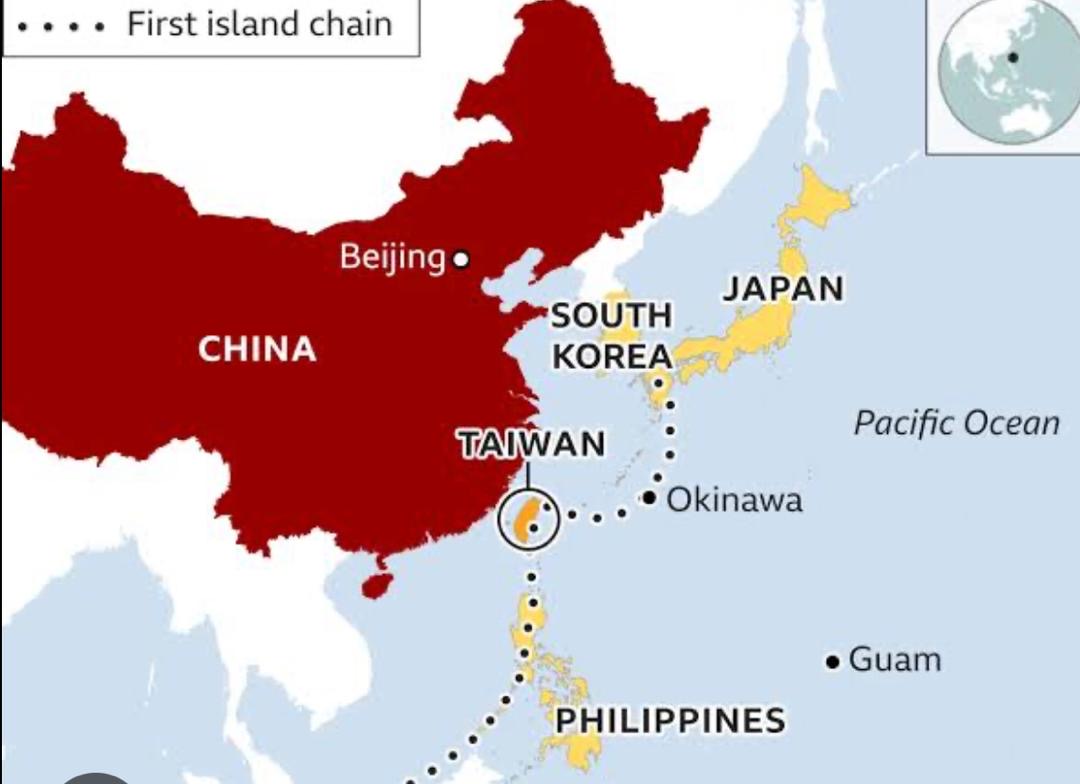
The status of Taiwan remains one of the most enduring and strategically sensitive disputes in modern international relations — a question where history, law, identity, and geopolitics collide without easy resolution. It is not merely a territorial disagreement between Beijing and Taipei; it is a layered contest over legitimacy, sovereignty, and the meaning of statehood in a shifting global order.
Across recent scholarly salons and policy interventions in Africa and beyond — particularly the Abuja media salon hosted by the China General Chamber of Commerce in Nigeria — a striking convergence has emerged around the One-China Principle, even as interpretations of its implications remain sharply contested.
The Historical Fault Line: 1949 and the Birth of Two Political Realities
The modern Taiwan question originates in the Chinese Civil War, which ended in 1949 with the Communist Party of China establishing the People’s Republic of China on the mainland while the defeated Kuomintang (KMT) government retreated to Taiwan.
As Professor Sheriff Ghali Ibrahim forcefully stated at the Abuja salon:
“Taiwan is not a sovereign entity, it has no independence and it is not a member of the United Nations.”
From Beijing’s perspective, this was not the creation of two states but the continuation of one China under different administrations.
This position aligns with the broader Chinese narrative repeatedly emphasized in diplomatic discourse, including the categorical assertion that:
“Taiwan has never been a country, was never one in the past, and will never be one in the future.”
Taiwan, however, evolved in a very different direction. Over decades, it developed into a functioning democratic polity with its own political institutions, elections, military structure, and constitutional governance.
This divergence produces what scholars describe as a central paradox: a de facto state operating with constrained de jure recognition, facing a sovereign claim from a rising global power.
The Legal Architecture: UN Resolution 2758 and Competing Interpretations
A cornerstone of Beijing’s argument is United Nations General Assembly Resolution 2758, which restored China’s seat at the United Nations in 1971.
At the Abuja salon, Professor Sheriff Ghali Ibrahim insisted:
“This resolution has explicitly established… that there is only one seat for China in the United Nations, leaving no room for ‘two Chinas’ or ‘one China, one Taiwan’.”
From this perspective, Taiwan is not a separate subject of international law but part of China whose representation is subsumed under Beijing.
Taiwan and its supporters contest this interpretation, arguing that Resolution 2758 addresses representation — not sovereignty — leaving Taiwan’s political status deliberately unresolved.
This legal ambiguity has become what many scholars now describe as structured uncertainty, sustaining diplomatic flexibility while preventing formal resolution.
Beijing’s Position: Sovereignty, Reunification, and Historical Mission
China’s position is rooted in sovereignty, territorial integrity, and national rejuvenation.
As reiterated by President Xi Jinping:
“The great tide of compatriots on both sides of the strait becoming closer, more connected and coming together will not change. This is the verdict of history.”
In Chinese official discourse, reunification is not framed as a negotiable issue but as a historical inevitability tied to national revival.
This perspective was reinforced in Abuja by African analysts who align with Beijing’s framing of sovereignty as non-negotiable, with Professor Sheriff Ghali Ibrahim emphasizing that Africa’s diplomatic alignment reflects a global consensus increasingly anchored in the One-China Principle.
Taiwan’s Position: Democracy, Identity, and De Facto Sovereignty
Taiwan’s position rests on lived political reality and democratic self-governance.
While officially still called the Republic of China, Taiwan functions as an independent political system with its own elections, judiciary, military, and constitution.
Its leadership under President Lai Ching-te emphasizes Taiwan’s distinct political identity and rejects Beijing’s sovereignty claims.
From Beijing’s perspective, this is framed as separatism. From Taiwan’s perspective, it is democratic self-determination.
The result is a deeply entrenched ideological divide: territorial integrity versus political identity.
Strategic Ambiguity and Global Power Politics
A critical dimension of the Taiwan issue is the role of external powers, particularly the United States.
Washington’s policy of strategic ambiguity — recognizing the One-China framework while maintaining unofficial relations with Taiwan — is widely seen as both stabilizing and contradictory.
At the Abuja salon, Prof. Sheriff Ghali Ibrahim and other speakers framed external engagement with Taiwan as part of what they described as “separatist encouragement,” while emphasizing African alignment with Beijing’s position.
Africa’s Diplomatic Alignment and the One-China Consensus
A recurring theme in Abuja was overwhelming African diplomatic alignment with Beijing.
As multiple presenters emphasized:
“As of May 2026, 53 out of 54 African nations adhere to the One-China policy.”
The only exception remains Eswatini.
At the salon, Prof. Sheriff Ghali Ibrahim argued that this position reflects historical continuity in African diplomacy:
“African nations have consistently stood with China on issues concerning its sovereignty and territorial integrity.”
Dr. Segun Showunmi, who is an Ace Public affairs analyst and social impact expert, with experience in governance, policy and civic engagement added that this alignment is not merely political but developmental:
“That consistency created trust and in international politics, trust often translates into investment, infrastructure, and strategic cooperation.”
The Abuja Diplomatic Intervention: China’s Official Position
A defining moment of the salon came from the representative of the Chinese state — the Counsellor of the Embassy of the People’s Republic of China in Nigeria, Ms.Dong Hairong— who reiterated Beijing’s formal position in unambiguous terms:
“There is only one China in the world, and Taiwan is an inalienable part of China.”
This intervention anchored the entire discussion within the framework of Chinese sovereignty doctrine and reinforced that diplomatic relations with China are premised on acceptance of the One-China Principle.
⸻
Prof. Sam Amadi: Strategic Ambiguity as Diplomatic Reality
Professor Sam Amadi, a policy strategist and law and governance expert, Director, Abuja School of Social and Political Thoughts,
introduced a more analytical framing, arguing that global practice is defined not by clarity but by managed contradiction.
He stated:
“The One-China principle and One-China policy are clear, but difficult to operationalise.”
He further explained:
“What we have today is strategic ambiguity… meaning they acknowledge, but at the same time, they engage.”
For Amadi, the central question for Africa is not ideological but practical:
“Should we foreclose ambiguity and advance a straight One-China principle, which will exclude all kinds of trade and engagement with Taiwan?”
His conclusion favored diplomatic exclusivity with calibrated economic engagement.
Strategic Realism: Why the Status Quo Persists
Despite rhetorical intensity, the Taiwan issue persists in its unresolved form due to structural constraints:
* China cannot accept formal separation without undermining sovereignty doctrine
* Taiwan cannot accept reunification without losing political autonomy
* The United States benefits strategically from ambiguity
* African states largely align diplomatically with Beijing while prioritizing development ties
As Professor Amadi summarized:
“We acknowledge these principles, but we go back there and also deal with Taiwan in trade… using strategic ambiguity.”
Conclusion: History as Contest, Diplomacy as Equilibrium
The Abuja salon underscored a broader truth about the Taiwan question: it is not merely a territorial dispute but a global governance dilemma.
On one side stands China’s categorical assertion, echoed in Abuja:
“There is only one China.”
On the other stands Taiwan’s democratic identity and de facto autonomy.
Between them lies a global system that simultaneously enforces principle and tolerates ambiguity.
As reflected across the Abuja interventions, including those of Prof. Sheriff Ghali Ibrahim, Dr. Segun Showunmi, Prof. Sam Amadi, and the Chinese diplomatic Counsellor, the Taiwan question endures not because it lacks answers — but because every available answer carries strategic consequences the world is unwilling to fully accept.
And so Taiwan remains what it has become in the 21st century: not only a territorial dispute, but a permanent stress test of international order itself.
news
Update : Tinubu Set to Intensify Fight Against Terrorists and Bandits with Establishment of Forest Guards
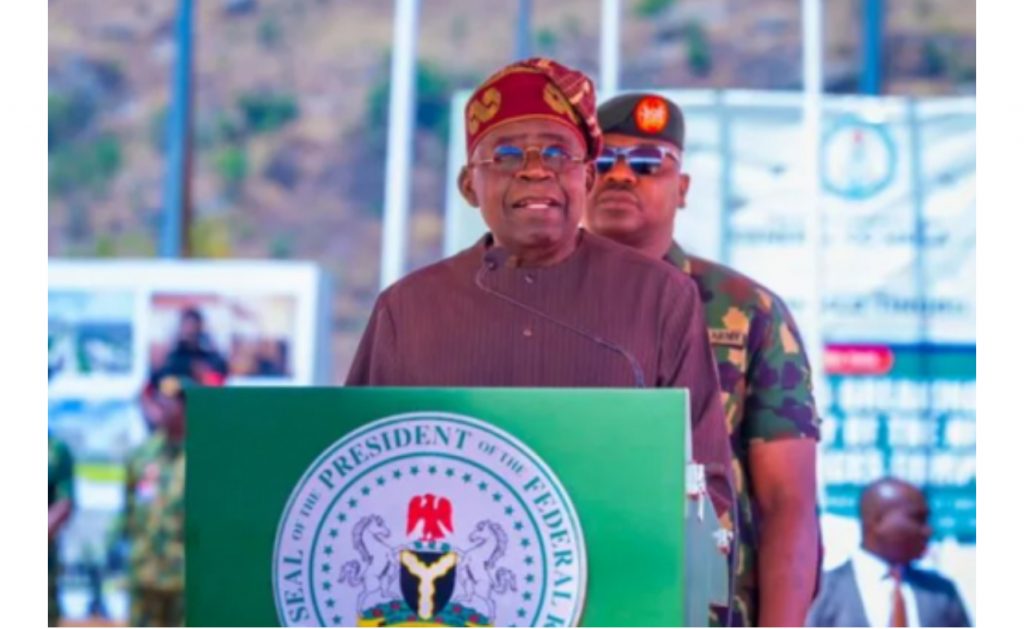 ….Thousands to be hired, trained, equipped
…..CDS: we’re deploying fresh strategies
The Federal Government is set to take the battle against terrorists and bandits to the forests.
The plan is to reclaim vast forestlands from criminal elements.
There are 1,129 documented forests.
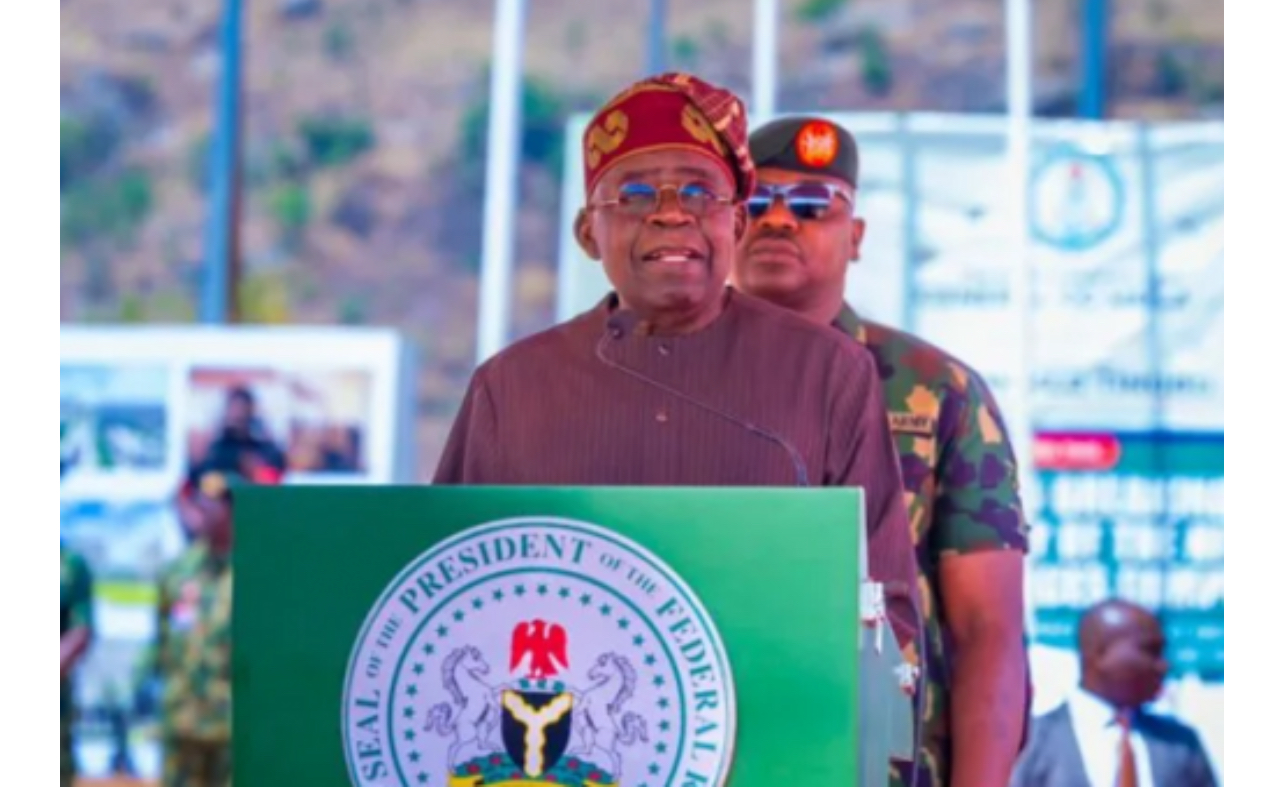
President Bola Ahmed Tinubu has approved the establishment and deployment of forest guards.
The initiative, according to Special Adviser to the President on Media and Public Communication, Mr. Sunday Dare, is intended to flush out terrorists and criminal gangs who have used forests as havens.
Dare, in a post on his verified X handle, @SundayDareSD, said the recruitment drive will be carried out by the federal and state governments.
The Office of the National Security Adviser (ONSA) and the Ministry of Environment will provide oversight, he said.
According to him, the President directed that the forest guards be professionally trained and properly armed to meet the security challenges within the country’s forests, many of which have been exploited by kidnappers, bandits, and insurgents in recent years.
President Tinubu, Dare added, reaffirmed his administration’s commitment to securing every inch of Nigerian territory, declaring that no part of the country would be abandoned to lawlessness.
“To secure the country’s forests, President Tinubu has approved the establishment of forest guards to secure Nigeria’s 1,129 forests.
“Thousands of young Nigerians are expected to be employed for the initiative.
“President Tinubu reiterated that his administration will not surrender any part of Nigeria’s territory to criminals, vowing to take back the forests,” the statement said.
This latest security initiative is part of the Tinubu Administration’s broader strategy to address the root causes of insecurity while simultaneously providing employment opportunities.
The recruitment process is expected to begin soon, with details on application and training to be jointly released by the supervising agencies, it was learnt.
The initiative, described as laudable, is also seen as a way of complementing existing security operations and environmental protection strategies.
The Northern Christian Youth Professionals (NCYP) hailed the initiative, describing it as a bold step towards ending the insecurity ravaging forested regions, according to a statement by its Chairman, Isaac Abrak.
It cautioned against the politicisation of the guards’ recruitment.
Also, the Arewa Think Tank (ATT) said it was hopeful that the forest guards would boost security.
In a statement by its Convener, Muhammad Alhaji Yakubu, it said: “We must say with the air of pride and satisfaction that we now have a President who is very close to the people, who does not detach himself from the people he is governing, who is feeling the pulse of the nation and providing remedy to it.
“We must also say that this move by Mr. President is very unprecedented and creative. We urge him to keep it up for the benefit of the people.
“We advise that the recruitment of these guards should be a collaborative security effort between the federal and state governments.”
Country Director/Principal Representative of German Initiative for Knowledge Transfer in Nigeria, Obinna Ichita, believes the forest guards will help to curb escalating insecurity across Nigeria.
Ichita, the 2023 deputy governorship candidate of the All Progressives Grand Alliance (APGA) in Abia, said that by this move, the President had further demonstrated a genuine interest in swiftly addressing the security challenges.
He is hopeful that the forest guards will flush out those suspected foreign elements and their local collaborators, who hide in forests across the country to kidnap and kill innocent people.
Yesterday, Chief of Defence Staff (CDS), General Christopher Musa, said the renewed threats by Boko Haram and the Islamic State of West Africa Province (ISWAP) should not be a cause of great concern.
Boko Haram and ISWAP have launched attacks on some military formations and communities in Borno, Yobe and Adamawa states in the Northeast.
General Musa led other security chiefs on an assessment visit to the Theatre Command North East ‘Operation Hadin Kai’.
He visited Giwa Barracks in Maiduguri, where multiple explosions occurred at the Armoury due to heat waves.
The CDS told reporters: “The pockets of renewed attacks should not be a cause of concern as the Nigerian Military and other security agencies are on top of the situation.
“Security is not a one-man business. Let me appeal to all and sundry to key into the fight against Boko Haram/ISWAP, banditry, kidnapping and all other forms of criminality for peace and development of our dear country.
“The Federal Government under the leadership of President Bola Ahmed Tinubu is very much committed to bringing lasting peace and development in all nooks and crannies.
“What we are witnessing here is an eclipse caused by pressure on terrorists in the Sahel region, forcing them to increase attacks in Nigeria, especially around the porous borders of the Lake Chad Basin.
“We are working diligently to address these challenges.
“During my recent trip to Russia, Nigeria maintained a non-aligned stance but engaged with key stakeholders ready to partner with us in this fight.
“We have procured more sophisticated weapons which will soon be deployed alongside new strategies to end the madness of terrorism.”


-
 news6 years ago
UPDATE: #ENDSARS: CCTV footage of Lekki shootings intact – Says Sanwo – Olu
-
 lifestyle6 years ago
Former Miss World: Mixed reactions trail Agbani Darego’s looks
-
 health6 years ago
Chairman Agege LG, Ganiyu Egunjobi Receives Covid-19 Vaccines
-
 lifestyle5 years ago
Obateru: Celebrating a Quintessential PR Man at 60
-
 news1 year ago
BREAKING: Tinubu swears in new NNPCL Board
-
 health6 years ago
UPDATE : Nigeria Records 790 new cases of COVID-19
-
 entertainment2 years ago
Ashny Set for Valentine Special and new Album ‘ Femme Fatale’
-
 society3 years ago
Bisbam CEO, Abisola Bamidele, Bags Owu Chieftaincy Title