
news
UNGA 2023 : Nigeria’s minerals deposit is worth $700billion,”We are ready to play an important role,” Says Alake

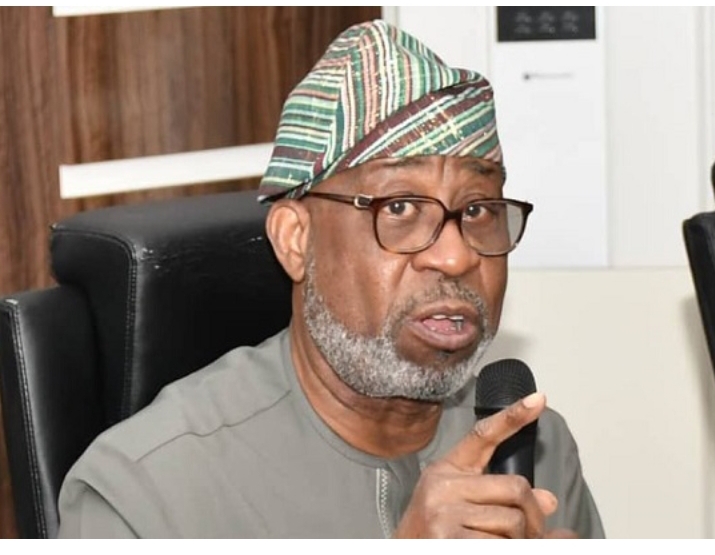
The Minister of Solid Minerals Development, Dele Alake, said Nigeria’s minerals deposit is worth $ 700 billion, saying the nation’s mineral resources make it one of the top 10 players in the energy sector.
Alake said this at a special session on the sidelines of the ongoing United Nations General Assembly (UNGA) in New York, where he added that Nigeria is ready to play an important role in meeting the global demand for critical minerals.
The minister spoke on the topic: “From critical minerals to energy transition: Africa in the driver’s seat” at the event organised by the Corporate Council of Africa.
The deputy director of information, Ministry of Solid Minerals, Alaba Balogun, made this known in a press release.
Balogun added: “Alake who was speaking at a special session on the sidelines of the ongoing United Nations General Assembly in New York, said the nation’s mineral resources make it one of the top 10 players in the energy sector.
“He said despite being behind other African countries in mining, Nigeria’s mineral deposit is valued at over $700bn with very huge potential to increase. Speaking broadly of the continent, Alake said Africa is fit for the driver’s seat of the global energy transition that will be driven by critical minerals.”
He said: “Nigeria has always occupied a special position in global energy discourse. Nigeria played a vital role as a key oil exporter during the era of hydrocarbon and became a top 10 exporter of oil. As the face of global energy changes, Nigeria once again emerges as a key supplier of gas which we know is an important energy transition fuel today. Last year in the midst of the Russia-Ukraine crisis, Nigeria was one of the top exporters of LNG to Europe and was the 6th largest LNG global exporter in 2022. As you can see, there is a clear trend, whenever Nigeria is active in the global energy space, it emerges as a top 10 global player and it will be no different with critical minerals.
“Nigeria is endowed with a vast deposit of minerals critical to our new world. In our new world mobility requires a new form of energy driven by minerals in our new electric vehicle world; technology is more mineral-dependent; our energy source will depend more on the energy converted from the sun and other sources; and energy storage is even more mineral-reliable.
“This trend does not have any reversal in sight and demand will only continue particularly as the world seeks and envisions a lower carbon future where environment, social, and governance (ESG) factors are prioritized in governance and investment decisions. Therefore, minerals are at the forefront.
“He also traced the transition from different sources of energy to the now prominent renewable sources of energy. The shift from fossil-based energy systems to renewable energy such as wind and solar has meant that minerals that were not a part of general and public parlance have become a part of everyday speech. Today, lithium for example is woven through everyday conversations, and this is only just the beginning.
“Without a doubt, minerals are a major focus of our world today, and rightly so. Nigeria is well-positioned to play an important role in our new world. Our Solid mineral sector is valued at over USD$700bn and we know there is more to be discovered. Endowed with critical minerals, Nigeria should not and dare I say, cannot be ignored.
“We may not have a strong historic mining history like some of our neighbours such as Ghana, Mali and those in the South such as South Africa, Botswana, etc. but things are about to change.”
According to him, Lithium pegmatite rocks are available in Nigeria across states such as Nasarawa, Kwara, Oyo, Abuja, Kebbi, and much more and Graphite is found in states such as Kaduna.
One of the key objectives of President Bola Tinubu’s administration according to Alake is to develop the entire value chain in-country – in the case of lithium, saying “We want to go from Ore to concentrate to lithium hydroxide to end product.”
He also listed states with rare Earth elements critical for wind turbines and EV motors as Nasarawa and Plateau.
He added: “Platinum group minerals can be seen in the middle belt such as Benue and other regions. We have nickel in Kaduna and other locations. Zinc which is vital to offshore and onshore wind power generation has been a mainstay in Nigeria and is available in Ebonyi, Nasarawa, Plateau and many other Nigerian states.
“He further added that the nation was ready for foreign investment in the solid mineral sector, with President Bola Tinubu giving it prominence.
“It is clear that Nigeria is important to the world and we are ready for investment, collaboration, and partnerships in our solid mineral sector. Our new president, President Bola Ahmed Tinubu has made the solid mineral development sector vital in his administration and we are committed to making it a key contributor to our national GDP. A lot of work has been done in the sector under former administrations and we plan to take it further. Nigeria is prime to becoming a mining destination on the continent and it will happen in our time.”
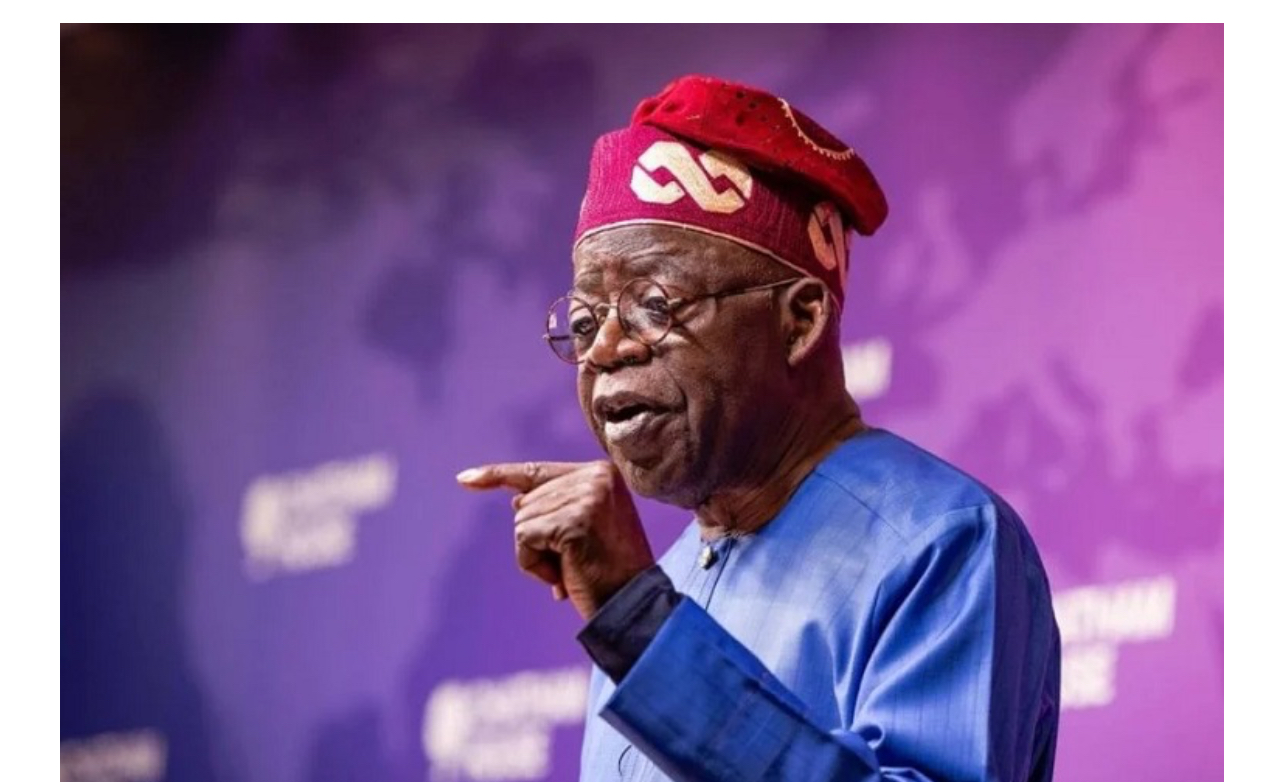
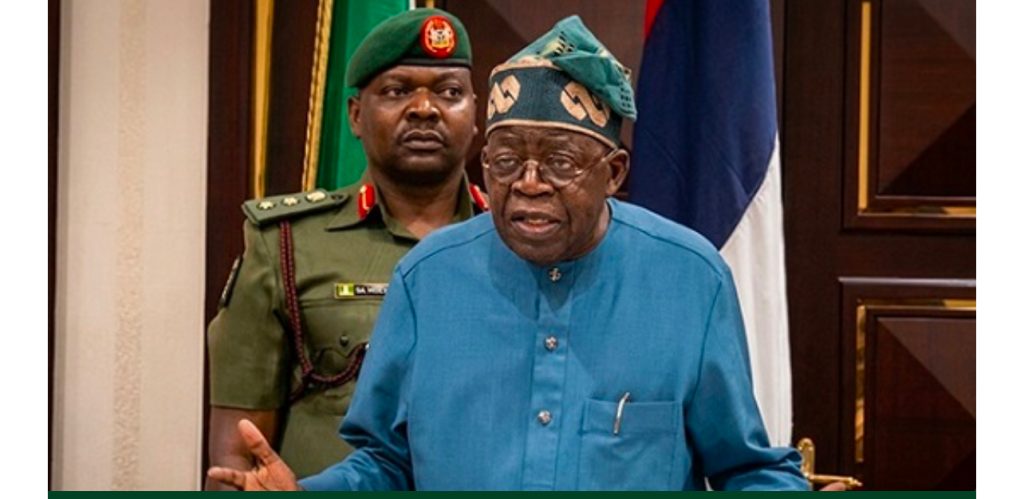
President Bola Tinubu has unveiled an investment package of more than $7 billion for the development of the Ogun State Blue Marine Special Economic Zone and the Gateway Deep Seaport, describing the projects as a major step towards strengthening Nigeria’s maritime economy and attracting foreign investment.
In a statement by his Spokesman, Bayo Onanuga, on Thursday, the President spoke in Paris, France, during the signing of Memoranda of Understanding between the Ogun State Government and DP World, a global ports and logistics operator, for the development of the projects.
Tinubu assured domestic and foreign investors that the Federal Government would continue to provide regulatory clarity, policy stability and a predictable business environment to support long-term investments in Nigeria.
“The agreements before us bring together vision, expertise, capital and execution capacity. I particularly welcome DP World, one of the world’s leading port and logistics operators,” the President said.
He added that the Federal Government would provide the necessary regulatory and institutional support to ensure that the projects moved seamlessly from agreements to implementation.
According to the President, the agreements are expected to attract an initial investment of more than $7 billion into the Nigerian economy and create over 50,000 direct jobs when fully developed, alongside additional indirect employment opportunities.
Tinubu said the projects would also generate non-oil export earnings and contribute to Nigeria’s economic diversification.
“This is economic diversification made tangible. This is industrialisation made visible. This is Renewed Hope in action,” he said.
The proposed Gateway Deep Seaport at Ogun Waterside will have a four-kilometre berth and an 18-
metre draft. The facility is expected to help decongest the Lagos port corridor and ease pressure on the Apapa and Tin Can Island ports.
The president said the deeper draft would enable the port to accommodate larger vessels while providing a competitive gateway for trade within Nigeria and across the African Continental Free Trade Area.
He noted that the proposed Ogun State Blue Marine Special Economic Zone would cover about 10,000 hectares and would be integrated with the deep seaport to support manufacturing, processing, exports and logistics.
“The Gateway Deep Seaport is the critical infrastructure that will support the zone’s viability. A port moves cargo; a port integrated with a special economic zone helps to build an economy. Each reinforces the other,” Tinubu said.
He said the Federal Government would facilitate road, rail and power connectivity to the projects, while strengthening investment security and the maritime domain and removing unnecessary bureaucratic obstacles.
The president also linked the projects to the Lagos-Calabar Coastal Highway, describing the Ogun section of the road as a critical transport connection for the emerging industrial and maritime corridor.
“The Lagos–Calabar Coastal Highway is central to this corridor’s commercial viability,” he said, adding that the 28-kilometre Ogun section of the 700-kilometre highway was scheduled for completion before the end of the year.
Tinubu said the port and industrial zone would also form part of a wider strategic corridor linking the proposed Nigerian Navy Operating Base and Dockyard with the OK LNG Project.
The President commended Ogun State Governor Dapo Abiodun and his administration for securing the land and structuring the investment framework.
“I commend Governor Dapo Abiodun and the government and people of Ogun State for securing the land, structuring the investment framework and reducing project risks for global investors,” he said.
Governor Abiodun led the Ogun State delegation at the signing ceremony, which also included state commissioners and other senior officials.
Senior representatives of DP World, the Nigerian Ports Authority and SkyKapital were also present at the event.
Tinubu urged Ogun State and the investors to maintain the momentum created by the agreements and move quickly towards implementation.
“Nigeria lies at the heart of West African trade. Yet, our strategic advantage has been constrained by port congestion, inadequate draft capacity and logistics bottlenecks that increase the cost of doing business. These projects respond directly to those constraints,” he said.
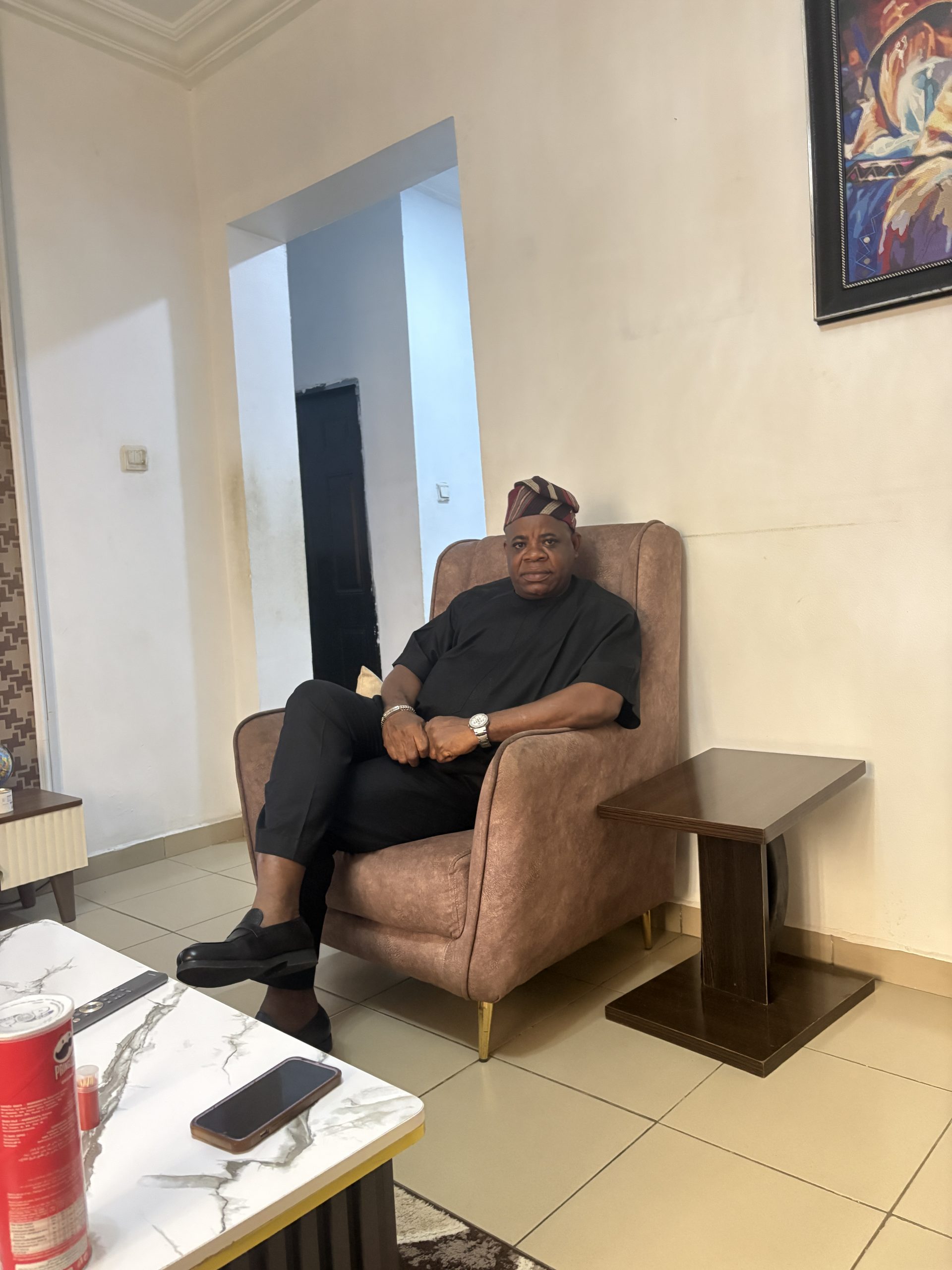
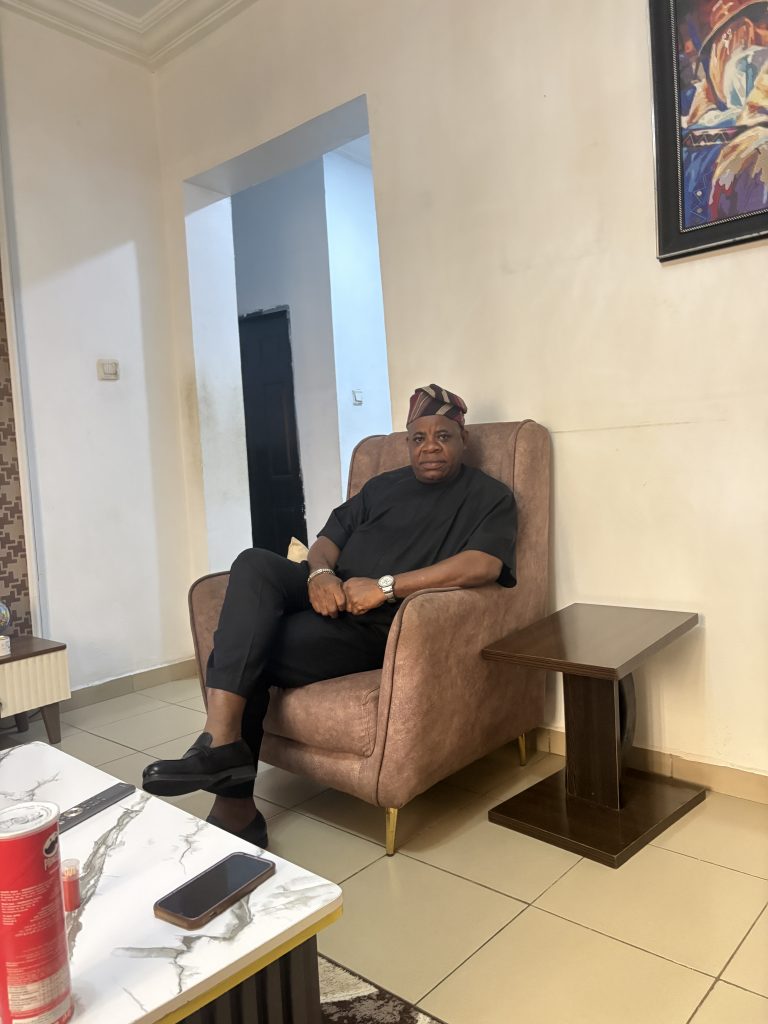
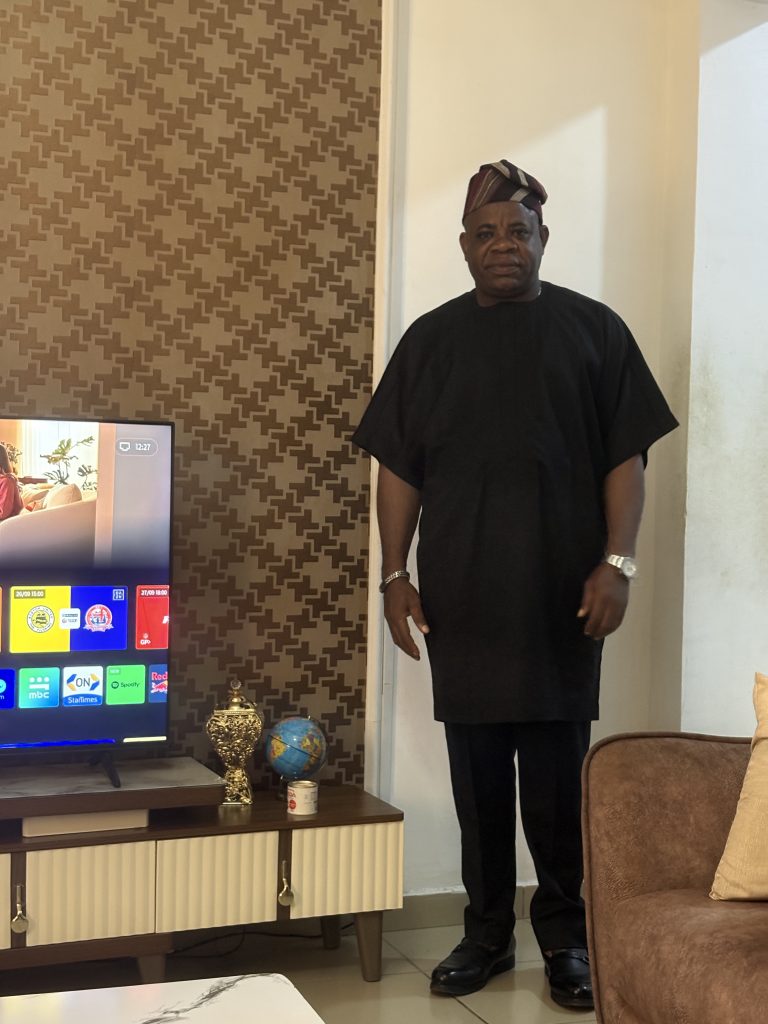 Today, I celebrate myself and give all glory and thanks to Almighty God for the gift of life and for bringing me this far. I am grateful for the opportunity to be alive, healthy, peaceful, happy, and prosperous.
As I celebrate another year today, I pray for greater blessings, wisdom, good health, peace, success, and abundant prosperity in the years ahead.
May this new chapter of my life be filled with joy, favour, wonderful opportunities, and fulfilment of my heart’s desires.
Happy Birthday to me! 🥳🎉
Congratulations to me on this special day. 🙏❤️🎂
I wish myself many more happy and prosperous returns. Cheers to a beautiful new year of my life! 🥂🎉
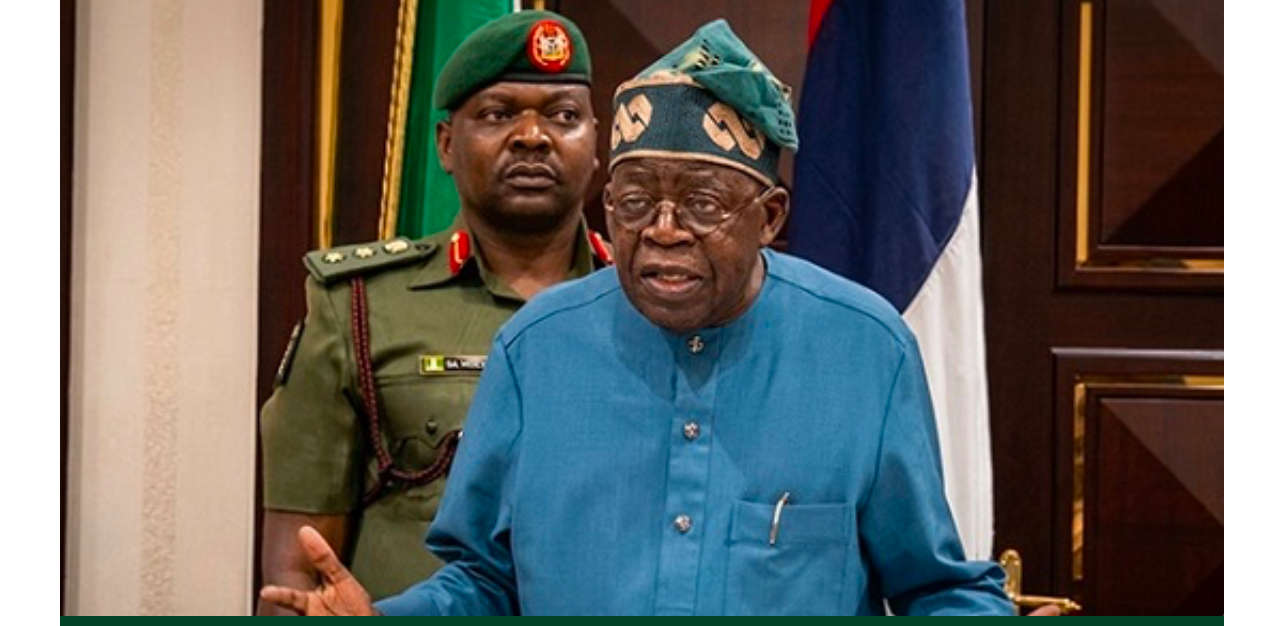
The International Chamber of Commerce tribunal in Paris has ruled in favour of Nigeria in the arbitration brought by Sunrise Power and Transmission Company Limited over the Mambilla Hydroelectric Power Project in Taraba State.
President Bola Tinubu, in a statement issued on Thursday by his Special Adviser on Information and Strategy, Bayo Onanuga, said the tribunal rejected the claims by Sunrise.
The company had sought $680m from Nigeria as a settlement sum and interest in relation to a separate arbitration in which it is claiming more than $2.7bn in compensation and interest over disputes surrounding the development of the 3,960-megawatt Mambilla project.
However, the tribunal, as reported by The Cable, also dismissed Sunrise’s claim for $400m arising from the 2020 settlement agreement, according to the details of the award reported on Thursday.
It further ordered Sunrise and its promoter, Leno Adesanya, to reimburse Nigeria 75 per cent of its legal fees and expenses, amounting to $11.82m.
The tribunal also reportedly declared that Adesanya was bound by the arbitration agreement with Nigeria under the settlement agreement and its addendum and that it had jurisdiction over Nigeria’s counterclaim against him and his firm.
In the statement, Tinubu said the ruling demonstrated the government’s determination to defend the country’s interests.
“This latest decision affirms the Nigerian State’s determination not to succumb to predatory and exploitative claims by corrupt local and international entities and their enablers and funders,” he said.
The President commended the Attorney-General of the Federation and Minister of Justice, Lateef Fagbemi, and officials of the Federal Ministry of Justice for their role in the case.
He also commended former President Olusegun Obasanjo and the late former President Muhammadu Buhari, who testified in the arbitration.
“I also commend the FRN defence team, led by Ms Elizabeth Oger-Gross and Mr Tolu Obamuroh, both of Paul Hastings LLP, for their professional and excellent defence of the country.
“I commend the patriotism and support of former President Olusegun Obasanjo, GCFR, and late President Muhammadu Buhari, GCFR, who testified in the case, which dated back to an illegal 2003 contract to build a 3,050-megawatt hydroelectric plant in Taraba State under a build-operate-transfer model.
“The Federal Executive Council never authorised the contract. I thank the other witnesses in this case, including former Ministers Babatunde Raji Fashola, SAN, and Suleiman Adamu, and the experts, for their active participation in defending Nigeria’s interest in the arbitration,” the statement read.
“I want to assure you that while our country remains committed to partnering with genuine investors and honouring its legal obligations, it will continue to defend all opportunistic claims instituted against our commonwealth strongly.
“Today’s ICC ruling clears the single biggest legal hurdle that has paralysed the Mambilla hydro power project for years,” Tinubu said.
The dispute dates back to an agreement under which Sunrise claimed it had been awarded the contract to construct the Mambilla project.
The company commenced arbitration against Nigeria at the ICC International Court of Arbitration in October 2017, seeking about $2.354bn over an alleged breach of contract.
The parties later entered into a settlement agreement in 2020, under which Nigeria was to pay Sunrise $200m.
A subsequent dispute arose after the government did not make the payment, leading to another arbitration in which Sunrise sought $400m, comprising the $200m settlement sum and a $200m default payment.
In Thursday’s award reported by The Cable, the tribunal rejected Sunrise’s claim that Nigeria had breached its obligations under the settlement agreement and its addendum.
It also rejected the company’s demand for the $400m settlement and default sums.
The Cable reported that the tribunal fixed the arbitration costs at $1.6565m, with Sunrise and Adesanya responsible for 75 per cent and Nigeria for 25 per cent. Of the $11.82m in legal fees and expenses awarded to Nigeria, $2.5m is to be recovered from funds held in escrow by the ICC, while the remaining $9.32m is payable by Sunrise and Adesanya, with interest at 10 per cent annually, compounded annually, from notification of the final award until payment.


-
 news6 years ago
UPDATE: #ENDSARS: CCTV footage of Lekki shootings intact – Says Sanwo – Olu
-
 lifestyle6 years ago
Former Miss World: Mixed reactions trail Agbani Darego’s looks
-
 health6 years ago
Chairman Agege LG, Ganiyu Egunjobi Receives Covid-19 Vaccines
-
 lifestyle5 years ago
Obateru: Celebrating a Quintessential PR Man at 60
-
 news1 year ago
BREAKING: Tinubu swears in new NNPCL Board
-
 health6 years ago
UPDATE : Nigeria Records 790 new cases of COVID-19
-
 entertainment2 years ago
Ashny Set for Valentine Special and new Album ‘ Femme Fatale’
-
 health6 years ago
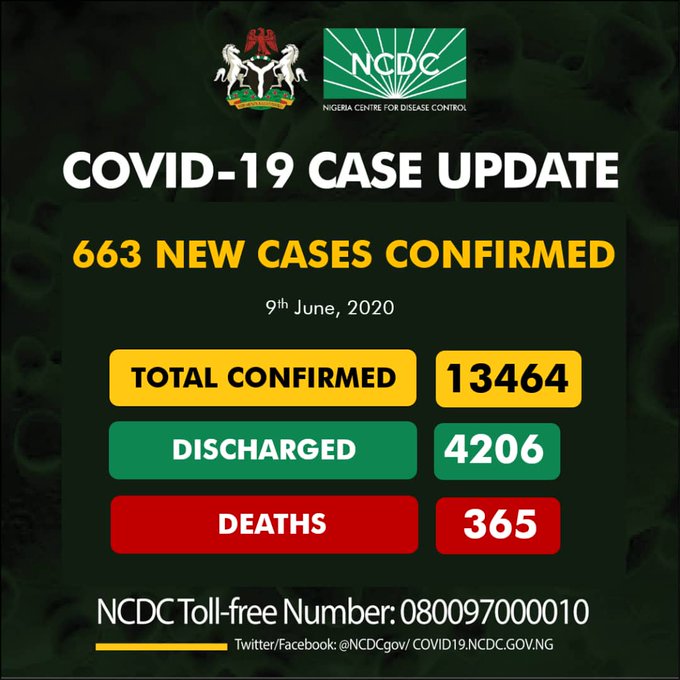
BREAKING: Nigeria confirms 663 new cases of COVID-19