
news
Seizure of Presidential jets : FG not under contractual obligation, Says Onanuga

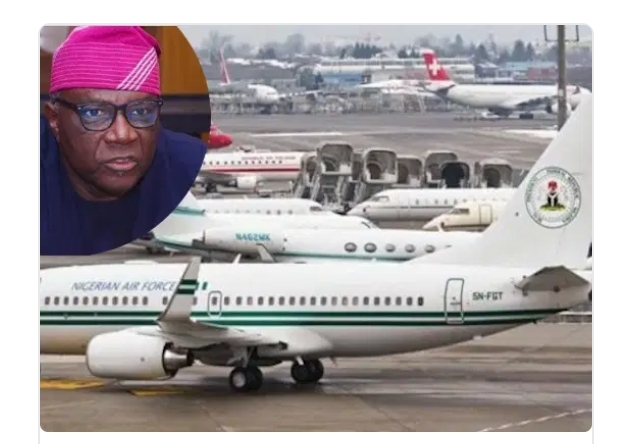
The Presidency yesterday moved against Chinese firm, Zhongshan Fucheng Industrial Investment Company, over the seizure of three presidential jets on the order of the Judicial Court of Paris, France.
It also dismissed court orders against Ogun State Government, which led to the seizure of the three presidential jets, as an attempt to strip Nigeria of her assets.
Consequently, both the federal and Ogun State governments are making frantic efforts to vacate the orders obtained by the Chinese company on March 7, 2024, and August 12, 2024, respectively, with a view to securing the release of the planes.
This is reminiscent of the order obtained by Process and Industrial Development Limited, P&ID, in London to secure $11 billion judgment debt from Nigeria, which the Federal Government eventually got vacated.
Background to the Zhongshan Fucheng Case
A contract between Ogun State and Zhongshan to manage a free-trade zone was executed in 2007 but the parties entered into a dispute in 2015, and arbitration began in 2016.
By 2019, it was learned that the arbitration hearing had been concluded, as the Arbitral Panel awarded over $60 million against the Federal Government of Nigeria, a co-defendant, when all Zhongshan had done was build a perimeter fence around the free-trade zone.
Based on legal advice, Ogun State Government was said to have resolved to resist enforcement of the award. It was also gathered that the resistance was successful in eight different jurisdictions, as there are pending appeals against recognition orders issued in both the US and UK.
Ogun State, it was learned, also engaged Zhongshan in settlement discussions on reasonable terms. The last meeting, which held in September 2023 in London, lasted for three days and was attended by several officials of Ogun State, including Governor Dapo Abiodun and the Attorney-General/Minister of Justice, Prince Lateef Fagbemi.
Zhongshan’s initial reasonable readiness to consider Ogun State’s offer was surprisingly reversed by the second day when it insisted on government paying the full arbitration debt.
It was learned that this led to a breakdown of the mediation, with parties agreeing to meet again in the first quarter of this year.
Since then, Zhongshan, Newsthumb learned, had been evasive and instead, embarked on a series of enforcement proceedings, which the legal team appointed by the FGN and Ogun State successfully opposed.
In cases similar to the present one, where Zhongshan obtained an ex-parte order, Ogun State successfully set aside the orders, it was learned.
Ogun State has not given up on a reasonable settlement option, with the most recent being a letter sent to Zhongshan last week.
Zhongshan, it was gathered, only responded after obtaining this latest illegal order.
Claiming that the Federal Government was never served any notice of the two cases in the Judicial Court of Paris which gave orders on March 7, 2024, and August 12, 2024, respectively, the Presidency said it is working with Ogun State Government to discharge what it descried as a frivolous order.
Special Adviser to the President on Information and Strategy, Bayo Onanuga, who disclosed this in a statement yesterday, said: ‘’The Presidency is aware of the various failed attempts by a Chinese company, Zhongshan Fucheng Industrial Investment Co. Limited, to take over offshore assets of the Federal Government of Nigeria through subterfuge.
‘’Ogun State Government, on Thursday (yesterday), faulted the judicial process that led to the provisional attachment of three Nigerian government-owned aircraft in France by the Judicial Court of Paris on March 7 and August 2, 2024.
‘’The Federal Government is not under any contractual obligation with the company. The case in which Zhongshan is trying to use every unorthodox means to strip our offshore assets is between the company and Ogun State Government.
“The Federal Government is aware of efforts being made by the Ogun State Government to reach an amicable resolution to the matter.
‘’It must be said without any equivocation that Zhongshan has no solid ground to demand restitution from Ogun State Government, based on facts regarding the 2007 contract between the company and the state government to manage a free-trade zone.
‘’When the contract with Ogun State was revoked in 2015, the company had only erected a perimeter fence on the land earmarked for a free trade zone.
“While the Attorney-General of the Federation and Minister of Justice are working with the Ogun State Government on an amicable resolution, Zhongshan obtained two orders from the Judicial Court of Paris, dated March 7, 2024, and August 12, 2024, without any notice being duly served on the Federal Government of Nigeria and Ogun State Government.
‘’This arm-twisting tactic by the Chinese company is the latest in a long list of failed moves to attach Nigerian government-owned assets to foreign jurisdictions.
“Material facts in the transaction between Ogun State Government and Zhongshan point to another P&ID case in which unscrupulous and questionable individuals falsely present themselves as investors with the sole objective of cheating and scamming governments in Africa.
‘’Undoubtedly, Zhongshan withheld vital information and misled the Judicial Court in Paris into attaching the Nigerian government’s presidential jets, which are on routine maintenance in France.
‘’The use and nature of the presidential jets as assets of a sovereign entity whose assets are protected by diplomatic immunity forbid any foreign court from issuing an order against them.
‘’We are convinced the Chinese company misled the Judicial Court of Paris regarding the use and nature of the assets it seeks to attach and did not fully disclose to the court as required by law.
“This same Chinese company had tried to enforce its questionable judgment in the UK and USA but failed. Like the P&ID case, foreign companies are trying to defraud Nigeria with the collaboration of some bureaucrats.
“Zhongshan appeared to have sold the judgment they got to a venture capitalist seeking to make money by embarrassing the Federal Government and President Bola Tinubu.
“We want to assure Nigerians that the Federal Government is working with Ogun State Government to discharge this frivolous order in Paris immediately.
“Nigerian government will always work to protect our national assets from predators and shylocks who masquerade as investors.
Ogun moves to vacate seizure order, faults fraudulent legal process by Zhongashan
Reacting to the court order yesterday, Ogun State Government faulted the judicial process that led to the provisional attachment of three Nigerian government-owned aircraft in France by the Judicial Court of Paris.
In a statement by the Special Adviser to the Governor on Media and Strategy, Kayode Akinmade, Ogun State Government described the latest development as the new antics by the Chinese company to appropriate Nigerian assets in foreign jurisdictions, as past efforts had continually failed.
The statement described the legal process as nothing but a total charade with fraudulent notion, adding that the company deliberately concealed the litigation from both the Nigerian government and Ogun State, as well as their legal counsel before hurriedly securing orders of seizure.
It added that the company must have misled the Judicial Court of Paris as to the use and nature of the assets it sought to attach and not made full disclosure to the court as required by law.
According to the statement, Ogun State, alongside the Federal Government, has already taken immediate action to ensure that those provisional attachments are lifted quickly, even as it accused the company of reneging on earlier discussion for an amicable resolution of the case.
The state government also likened the case to that of P&ID, describing it as very unfortunate case of unscrupulous individuals masquerading as foreign investors with the sole aim of defrauding Ogun State and Nigeria at large.
The statement read: “On August 14, 2024, the attention of the Ogun State Government was drawn to the provisional attachment of three Nigerian government-owned aircraft in France by the Chinese company, Zhongshan Fucheng Industrial Investment Co. Ltd. (Zhongshan).
‘’Ogun State also learned of two orders of the Judicial Court of Paris dated March 7, 2024, and August 12, 2024, respectively, both obtained by Zhongshan without notice being duly given to the Federal Government or Nigeria, Ogun State or their legal counsel.
“This is the latest in a series of ill-advised attempts by Zhongshan to attach Nigerian-owned assets in foreign jurisdictions, none of which have to date led to the recovery of any sums from Nigeria.
“Each of the three aircraft is used solely for sovereign purposes and as such are immune from attachment under international and French laws.
“In obtaining the provisional attachments, Zhongshan deliberately withheld information from the Federal Government of Nigeria, Ogun State and their legal counsel.
“Just like the P&ID case, this is another unfortunate case of unscrupulous individuals masquerading as foreign investors with the sole aim of defrauding Ogun State and Nigeria.
“It should be recalled that the underlying contract between Ogun State and Zhongshan was executed in 2007, 12 years before the present administration, for the management of a free-trade zone. The parties entered into a dispute in 2015 with arbitration commencing in 2016.
“By 2019, when the current State Administration took office, the hearing at the arbitration had been all but concluded. The Arbitral Panel awarded over 60 million USD against the Federal Government of Nigeria (FGN) which was a co-Defendant, when all Zhongshan had done was to build a perimeter fence around the free-trade zone. Needless to say, this was a bad/unfair decision.
“The present state administration could not in all good conscience allow such an unconscionable and baseless decision, which would dissipate the commonwealth of the good people of Ogun State.
“Accordingly, and based on erudite legal advice, this administration resolved to resist enforcement of the award. The resistance was successful in eight different jurisdictions. Currently, there are pending appeals against recognition orders issued in both the US and UK.’’
……Era of shared prosperity begins, Tinubu assures
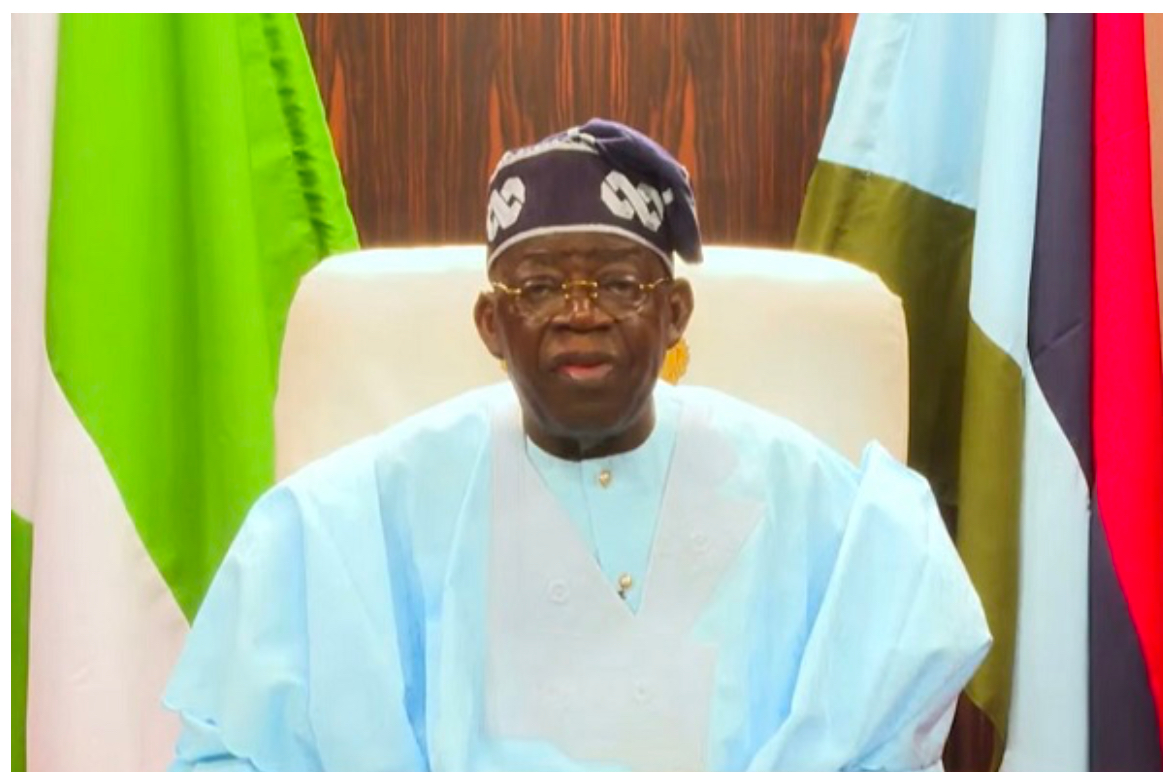
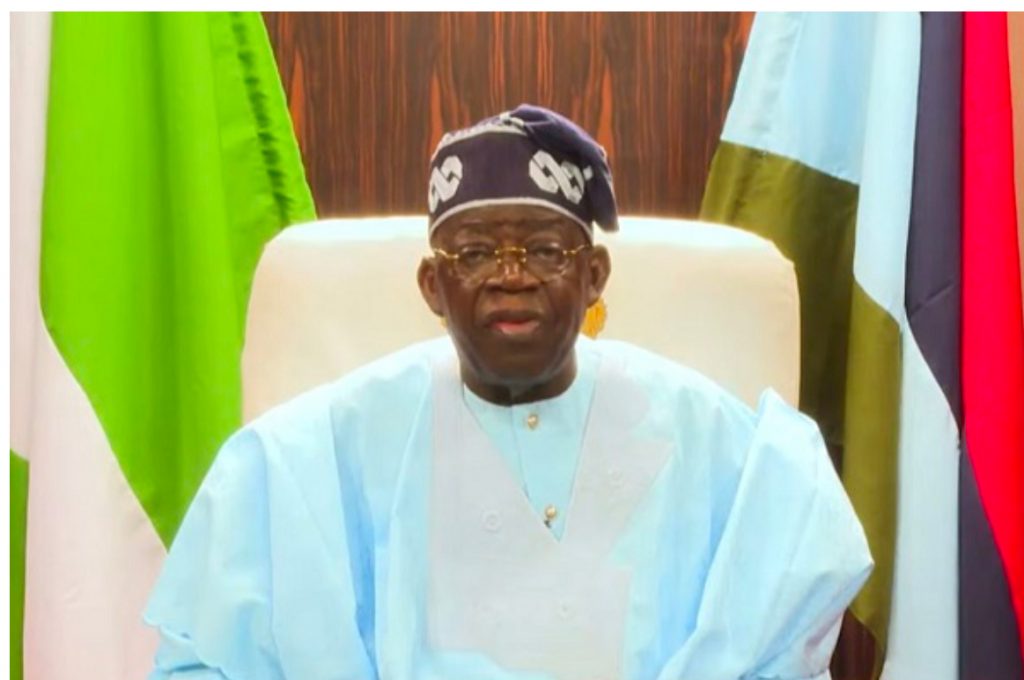
Nigeria has reached a turning point in its economic recovery, President Bola Ahmed Tinubu declared.
He said the period of painful reforms has accomplished its purpose, and the country is now entering what he described as an “age of prosperity”.
Tinubu, in his Independence Day address to Nigerians marking the country’s 66th anniversary this morning, said the central task of his administration would henceforth shift from correcting structural economic distortions to ensuring that the gains of the reforms translate into lower living costs, jobs, increased production and broadly shared prosperity.
“The age of reform has done its work. Now begins the age of prosperity.
“An age in which the promise of this great nation must finally become the lived experience of Nigerians from all walks of life”, the President said.
He said the government’s immediate priority in the new phase would be to bring down the cost of living by reducing the cost of producing and transporting food and other goods consumed by Nigerians.
Tinubu, who likened the state of the economy his administration inherited in 2023 to a cancer patient requiring painful treatment, said the government had completed what he called the “emergency treatment” of the economy and repaired its foundations.
“My fellow Nigerians, we have reached a turning point.
“The emergency treatment is over. The foundation has been repaired. The central economic task before us has changed. For three years, our overriding purpose was to correct our nation’s course.
“Now, our purpose is simple: shared and widespread prosperity,” he said.
The President said the prosperity being envisaged was not merely about headline economic growth or improved statistics, but about creating conditions under which Nigerians could afford food and transportation, access education and healthcare, secure productive employment and confidently plan their future.
He said his administration would pursue increased agricultural production through mechanised irrigation, dry-season farming, improved access to seeds and fertiliser, greater mechanisation and investment in storage and transportation.
According to him, ongoing investments in roads, railways and ports would also reduce the cost of moving produce and manufactured goods from farms and factories to markets.
“Our logic is simple. When a farmer produces more cheaply, when fewer crops are lost between the farm and the market, when a manufacturer spends less on electricity, when a truck reaches its destination faster, and when the business environment fosters fair competition, all those savings will ultimately find their way into the price of goods in the market,” he said.
Tinubu said job creation, enterprise development and industrial expansion would also be placed at the centre of government policy, with greater emphasis on gas-powered industries, revival of manufacturing centres, digital connectivity and improved access to infrastructure and finance.
The President said the country must convert its huge youthful population into an engine of economic production by equipping young people with skills demanded by employers and creating conditions for Nigerian businesses to expand.
“I want to see more Nigerians making things. I want to see more Nigerian farms feeding our cities and supplying our factories. I want to see Nigerian businesses selling Nigerian goods to the whole world. I want young Nigerians building unicorns and creating opportunities for others here at home,” he said.
Defending the economic reforms undertaken since his assumption of office, Tinubu rejected calls for a reversal of some of the policies, particularly subsidies, arguing that the measures did not create Nigeria’s economic weaknesses but were introduced to confront them.
The President compared previous economic management approaches to administering painkillers to a cancer patient instead of treating the underlying disease.
“For too long, Nigeria’s leaders chose morphine while praying for a miracle that never came.
“They focused on symptoms while allowing the disease to take hold deep within the fabric of our society. We spent enormous sums sustaining inefficient arrangements that were never intended to last. We hid from difficult truths and passed the consequences from one generation to the next,” he said.
Tinubu acknowledged that the reforms imposed hardship on Nigerians, saying their “side effects were real,” but insisted that Nigerians must distinguish between what he described as the medicine and the disease.
“Our reforms did not create the weaknesses in our economy. They confronted them.
“Now, as certain influential but regressive voices would have us abandon the treatment and return ourselves to the abuse of addictive subsidies, we must resist their siren song. We must remember why we began this journey and how far we have already come,” he said.
The President said three and a half years after the reforms began, the country’s economic outlook had improved, citing economic growth of more than four per cent this year, contributions from both oil and non-oil sectors, declining oil theft, falling inflation, improved foreign reserves and greater stability in the foreign exchange market.
He also said Nigeria recorded its highest non-oil export revenue in 2025, exceeding $6 billion, adding that increased foreign direct investment and private sector activity reflected improving confidence in the economy.
While acknowledging that millions of Nigerians were still struggling with food, school fees, healthcare, transportation and other basic needs, Tinubu said the government would continue strengthening support for vulnerable households while pursuing policies capable of lifting people permanently out of poverty.
He said the National Social Register was being improved to ensure assistance reached those genuinely in need, while programmes such as the Nigerian Education Loan Fund and the Nigerian Consumer Credit Corporation, CREDICORP, were designed to broaden access to education and essential assets.
According to him, the government would also work with states and local governments to strengthen primary healthcare, basic education and other public services relied upon by low-income Nigerians.
“These programmes are not substitutes for prosperity. They are a bridge to aid our nation’s citizens on their path towards it. Our objective is not to manage poverty more efficiently.
“We will defeat it,” Tinubu declared.
He admitted that reversing decades of poverty, low productivity, inadequate infrastructure and weak institutions would take time, discipline, sustained economic growth and the creation of millions of productive opportunities.
“We cannot erase in four years what accumulated over generations. But we can change its course. We can build an economy that steadily lifts people out of poverty while ensuring that those who remain vulnerable are not abandoned along the way,” he said.
Reflecting on Nigeria’s 66 years of independence, Tinubu paid tribute to generations of Nigerians who had kept faith with the country despite war, military rule, economic crises, insecurity and political upheavals.
He also praised farmers, traders, teachers, entrepreneurs and members of the Armed Forces and security agencies, saying their sacrifices had sustained the country through difficult periods.
The President said Nigeria’s founding fathers fought not merely for a flag, anthem or international recognition, but for Nigerians to have the freedom to determine their destiny and build a country capable of providing opportunity, dignity and a better life.
He urged Nigerians not to retreat from the difficult choices already made, expressing confidence that the sacrifices of recent years would eventually translate into improved living standards.
“Nigeria has corrected its course. We have passed through our own Red Sea. This is not the time to look back. Let us go forward together, with faith in ourselves, faith in our country, and faith that the sacrifices we have made will yield their reward,” Tinubu said.
Describing the country’s desired destination as a “Promised Land” of abundance, opportunity and broadly shared prosperity, the President said the foundations for that future had already been laid.
“Our destination is in sight. Our foundations are strong. Our direction is clear. So let us go forward. No looking back,” he declared.

President Bola Tinubu has returned to Nigeria after spending about four weeks in Europe. Government
The presidential aircraft carrying the President landed at the Presidential Wing of the Murtala Muhammed International Airport at about 6:22 p.m. on Tuesday.
Journalists at the airport were restricted from taking visuals of the President’s arrival as the aircraft made its way to the terminal.
Tinubu departed Nigeria on August 30 for London, then travelled to Paris, where he held engagements with French President Emmanuel Macron, including a dinner. Government
His return marks the end of his extended stay abroad; the President is expected to participate in activities marking Nigeria’s 66th Independence Anniversary on October 1st.
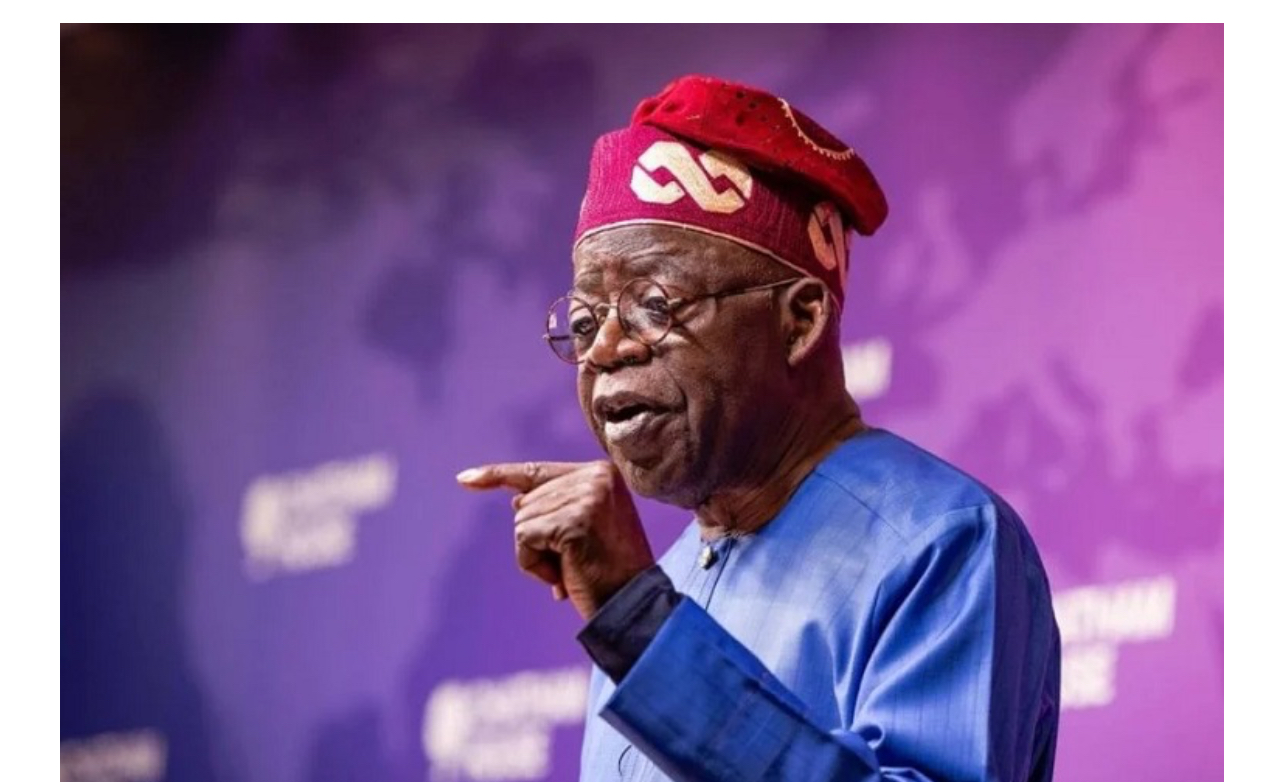
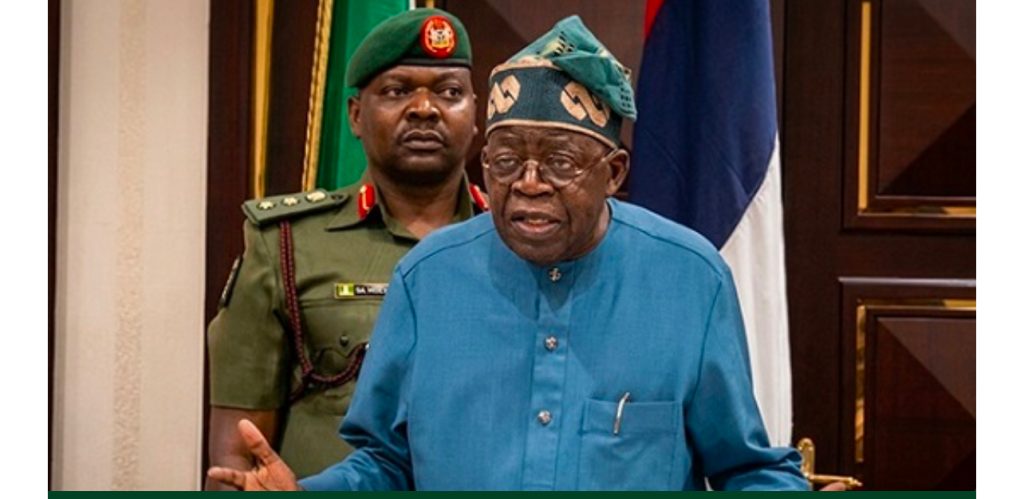
President Bola Tinubu has unveiled an investment package of more than $7 billion for the development of the Ogun State Blue Marine Special Economic Zone and the Gateway Deep Seaport, describing the projects as a major step towards strengthening Nigeria’s maritime economy and attracting foreign investment.
In a statement by his Spokesman, Bayo Onanuga, on Thursday, the President spoke in Paris, France, during the signing of Memoranda of Understanding between the Ogun State Government and DP World, a global ports and logistics operator, for the development of the projects.
Tinubu assured domestic and foreign investors that the Federal Government would continue to provide regulatory clarity, policy stability and a predictable business environment to support long-term investments in Nigeria.
“The agreements before us bring together vision, expertise, capital and execution capacity. I particularly welcome DP World, one of the world’s leading port and logistics operators,” the President said.
He added that the Federal Government would provide the necessary regulatory and institutional support to ensure that the projects moved seamlessly from agreements to implementation.
According to the President, the agreements are expected to attract an initial investment of more than $7 billion into the Nigerian economy and create over 50,000 direct jobs when fully developed, alongside additional indirect employment opportunities.
Tinubu said the projects would also generate non-oil export earnings and contribute to Nigeria’s economic diversification.
“This is economic diversification made tangible. This is industrialisation made visible. This is Renewed Hope in action,” he said.
The proposed Gateway Deep Seaport at Ogun Waterside will have a four-kilometre berth and an 18-
metre draft. The facility is expected to help decongest the Lagos port corridor and ease pressure on the Apapa and Tin Can Island ports.
The president said the deeper draft would enable the port to accommodate larger vessels while providing a competitive gateway for trade within Nigeria and across the African Continental Free Trade Area.
He noted that the proposed Ogun State Blue Marine Special Economic Zone would cover about 10,000 hectares and would be integrated with the deep seaport to support manufacturing, processing, exports and logistics.
“The Gateway Deep Seaport is the critical infrastructure that will support the zone’s viability. A port moves cargo; a port integrated with a special economic zone helps to build an economy. Each reinforces the other,” Tinubu said.
He said the Federal Government would facilitate road, rail and power connectivity to the projects, while strengthening investment security and the maritime domain and removing unnecessary bureaucratic obstacles.
The president also linked the projects to the Lagos-Calabar Coastal Highway, describing the Ogun section of the road as a critical transport connection for the emerging industrial and maritime corridor.
“The Lagos–Calabar Coastal Highway is central to this corridor’s commercial viability,” he said, adding that the 28-kilometre Ogun section of the 700-kilometre highway was scheduled for completion before the end of the year.
Tinubu said the port and industrial zone would also form part of a wider strategic corridor linking the proposed Nigerian Navy Operating Base and Dockyard with the OK LNG Project.
The President commended Ogun State Governor Dapo Abiodun and his administration for securing the land and structuring the investment framework.
“I commend Governor Dapo Abiodun and the government and people of Ogun State for securing the land, structuring the investment framework and reducing project risks for global investors,” he said.
Governor Abiodun led the Ogun State delegation at the signing ceremony, which also included state commissioners and other senior officials.
Senior representatives of DP World, the Nigerian Ports Authority and SkyKapital were also present at the event.
Tinubu urged Ogun State and the investors to maintain the momentum created by the agreements and move quickly towards implementation.
“Nigeria lies at the heart of West African trade. Yet, our strategic advantage has been constrained by port congestion, inadequate draft capacity and logistics bottlenecks that increase the cost of doing business. These projects respond directly to those constraints,” he said.

-
 news6 years ago
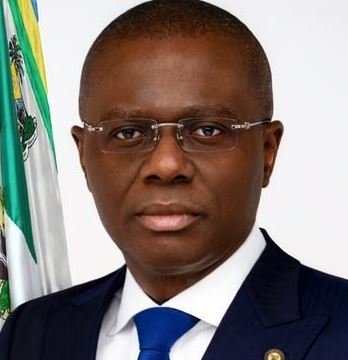
UPDATE: #ENDSARS: CCTV footage of Lekki shootings intact – Says Sanwo – Olu
-
 lifestyle6 years ago
Former Miss World: Mixed reactions trail Agbani Darego’s looks
-
 health6 years ago
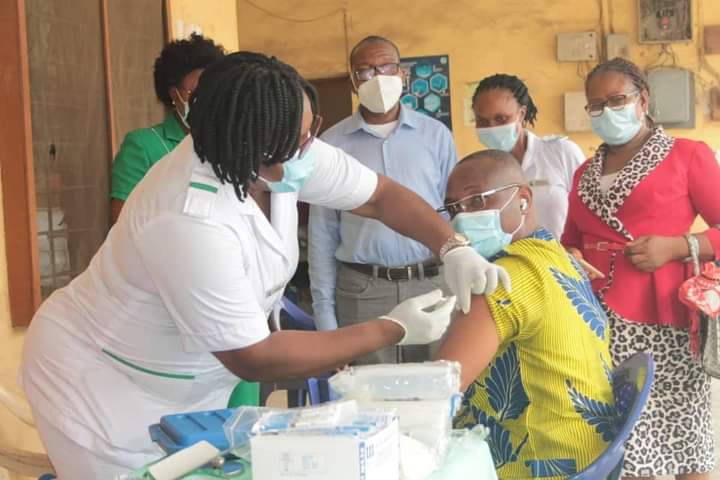
Chairman Agege LG, Ganiyu Egunjobi Receives Covid-19 Vaccines
-
 lifestyle5 years ago
Obateru: Celebrating a Quintessential PR Man at 60
-
 news1 year ago
BREAKING: Tinubu swears in new NNPCL Board
-
 health6 years ago
UPDATE : Nigeria Records 790 new cases of COVID-19
-
 entertainment2 years ago
Ashny Set for Valentine Special and new Album ‘ Femme Fatale’
-
 society3 years ago
Bisbam CEO, Abisola Bamidele, Bags Owu Chieftaincy Title