Connect with us

news

BREAKING: Tinubu honours Abiola, Kudirat, Soyinka, Onanuga others in State of the Nation address

Published

on

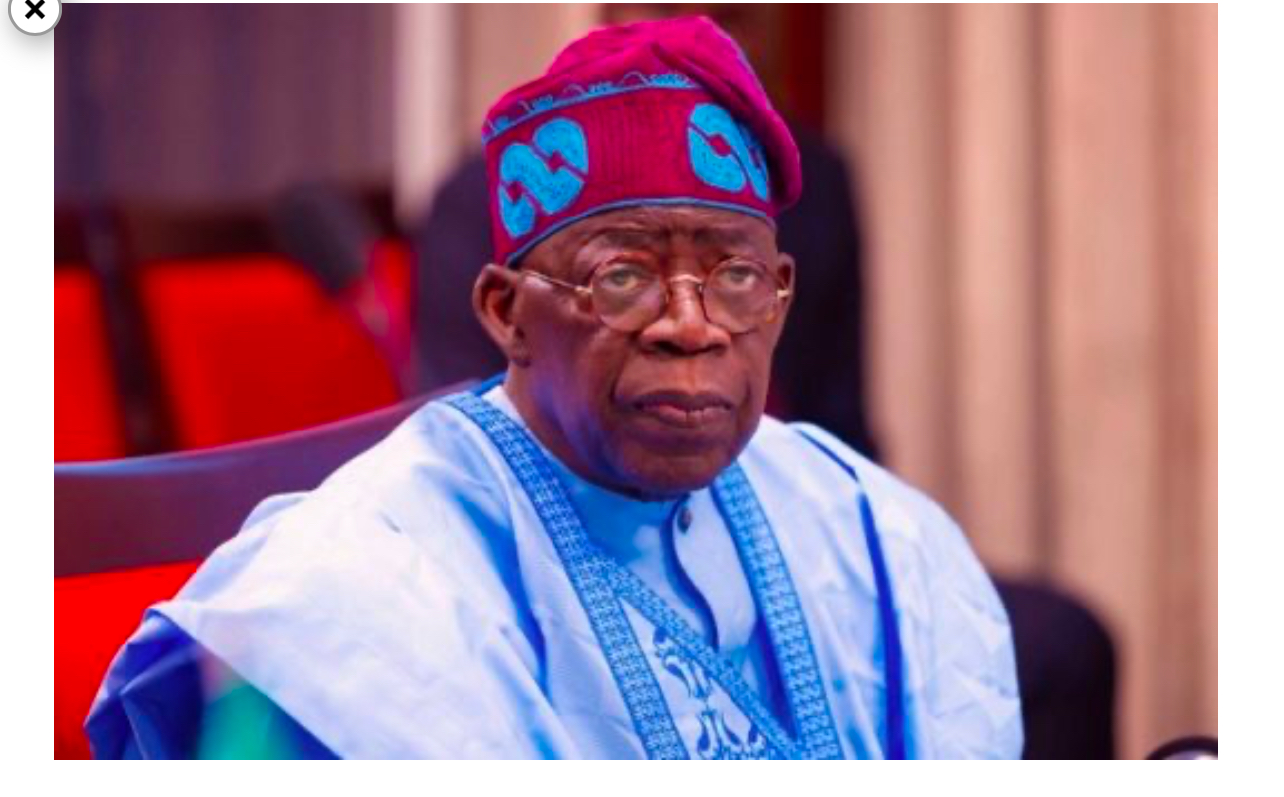
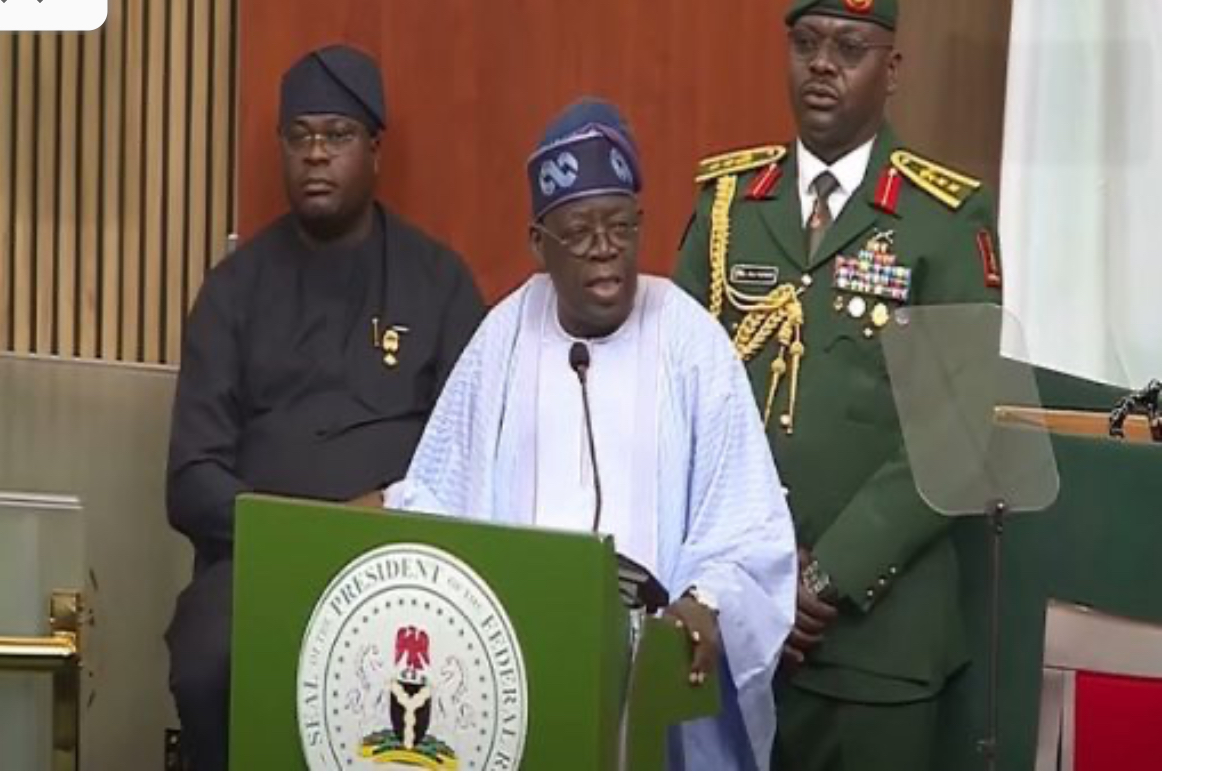
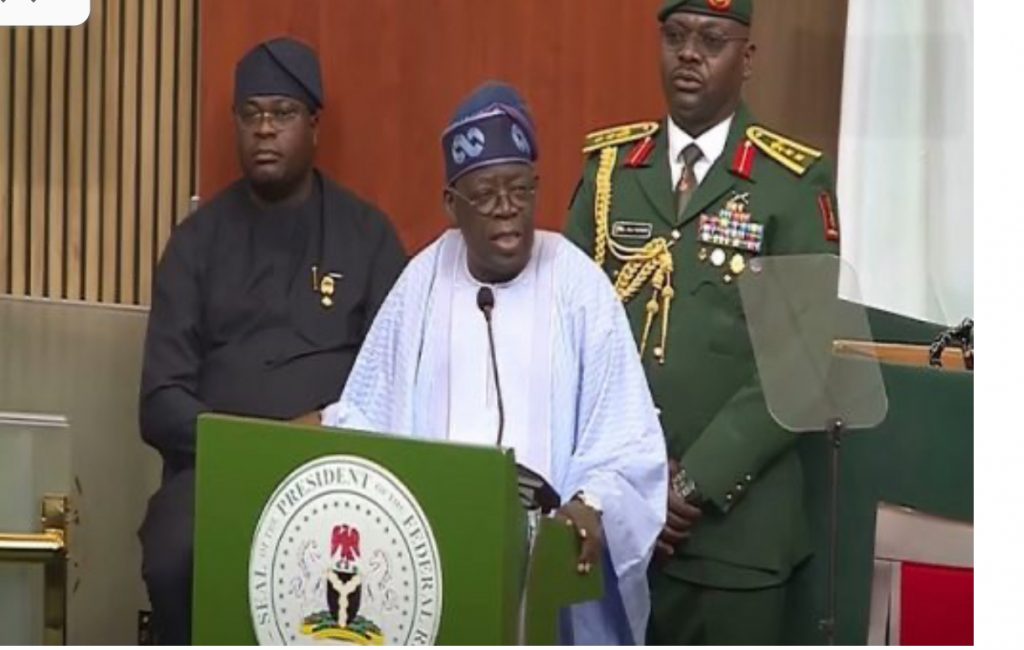
President Bola Ahmed Tinubu has conferred national honours on more than 80 Nigerians—both living and deceased—during his inaugural State of the Nation address in honour of this year’s Democracy Day.

The President, who reeled the names out with other messages while addressing a joint session of the National Assembly to mark 26 years of uninterrupted democratic rule in Nigeria on Thursday, also announced the granting of full pardon to the heroes of the Ogoni Struggle, identified as the Ogoni nine.

The president used the solemn occasion to commemorate key figures in the June 12 pro-democracy movement, notably Chief Moshood Kashimawo Olawale Abiola, his late wife Alhaja Kudirat Abiola, and environmental rights activist Ken Saro-Wiwa.

Alhaja Kudirat Abiola was posthumously awarded the Commander of the Federal Republic (CFR) for her role in resisting military rule, a struggle that ultimately led to her assassination. Tinubu described her as the “heroine of the June 12 struggle.”

Also honoured was the late Major General Shehu Musa Yar’Adua, who received the Grand Commander of the Federal Republic (GCFR), the highest national honour typically reserved for heads of state.

He was recognised for mobilising political resistance to military rule and advancing democratic reforms.

Other posthumous recipients included key figures in Nigeria’s pro-democracy movement: Professor Humphrey Nwosu (CON), who chaired the National Electoral Commission during the 1993 elections; Rear Admiral Ndubuisi Kanu (CON); Pa Alfred Rewane (CFR); Bagauda Kaltho (OON); Chima Ubani (OON); Dr. Beko Ransome-Kuti (CON); Chief Alao Aka-Bashorun (CON); and Chief Frank Kokori (CON), among others.

The list extended to civil rights advocates, journalists, politicians, and unionists who lost their lives in the pursuit of justice and democracy.

Honourees included Emma Ezeazu, Bamidele Aturu, Fredrick Fasehun, Professor Festus Iyayi, Dr. John Yima Sen, Alhaja Gambo Sawaba, Dr. Edwin Madunagu, Dr. Alex Ibru, Chief Bola Ige, Pa Reuben Fasoranti, Senator Ayo Fasanmi, Senator Polycarp Nwite, and Dr. Nurudeen Olowopopo.

In a move described as symbolic of national reconciliation, Tinubu posthumously recognised Ken Saro-Wiwa and his fellow environmental activists known as the Ogoni Nine, who were executed in 1995 under the regime of General Sani Abacha.

Saro-Wiwa was awarded the Commander of the Order of the Niger (CON), while Saturday Dobee, Nordu Eawo, Daniel Gbooko, Paul Levera, Felix Nuate, Baribor Bera, Barinem Kiobel, and John Kpuine were each awarded the Officer of the Order of the Niger (OON).

The President further announced that he would invoke his constitutional powers to grant a full state pardon to the Ogoni Nine and others, whose names will be released following consultations with the National Council of State.

Living icons of democratic activism and intellectual freedom were also celebrated. Nobel Laureate Professor Wole Soyinka was awarded the Grand Commander of the Order of the Niger (GCON), while renowned journalism scholar Professor Olatunji Dare received the Commander of the Order of the Niger (CON).

Related NewsProminent journalists and media pioneers were similarly honoured: Kunle Ajibade (OON), Nosa Igiebor (OON), Dapo Olorunyomi (OON), Bayo Onanuga (CON), Ayo Obe (OON), Dare Babarinsa (CON), and Seye Kehinde (OON).

Among the human rights lawyers and activists honoured were Femi Falana, SAN (CON), Barrister Felix Morka (CON), Barrister Ledum Mitee (CON), and Professor Shafideen Amuwo (CON).

Other notable recipients included Bishop Matthew Hassan Kukah (CON), Senator Shehu Sani (CON), Governor Uba Sani (CON), Senator Tokunbo Afikuyomi (CON), Honourable Labaran Maku (OON), Dr. Tunji Alausa (CON), Mr. Nick Dazang (OON), Hon. Abdul Oroh (OON), Barrister Luke Aghanenu (OON), Odia Ofeimun (CON), Hon. Olawale Osun (CON), Dr. Amos Akingba (CON), and Professor Segun Gbadegesin (CON).

Further commendations went to Professor Julius Ihonvbere, Professor Bayo Williams, Senator Abu Ibrahim, Professor Bolaji Akinyemi, Dr. Kayode Shonoiki, and Senator Ameh Ebute, who were also recognised with honours ranging from Commander to Grand Commander of the Federal Republic.

Veteran journalist and Vanguard Newspapers founder Uncle Sam Amuka Pemu was honoured with a Commander of the Order of the Niger (CON), a day before his 90th birthday.

President Tinubu also formally decorated the current presiding officers of the National Assembly, who had previously received national honours:

Senate President Godswill Obot Akpabio (GCON)

Speaker of the House of RepresentativesTajudeen Abbas (GCON)

Deputy Senate President Barau Jibrin (CFR)

Deputy Speaker Benjamin Kalu (CFR)

“The honours were not just symbolic, but a national acknowledgment of those who defended truth, fought repression, and expanded Nigeria’s democratic space”, Tinubu said.

He called on Nigerians, particularly political leaders, to uphold the values of the June 12 movement in their actions and policies.

“We must rededicate ourselves to the ideals of June 12: freedom, transparent and accountable government, social justice, active citizen participation, and a just society where no one is oppressed”, he said.
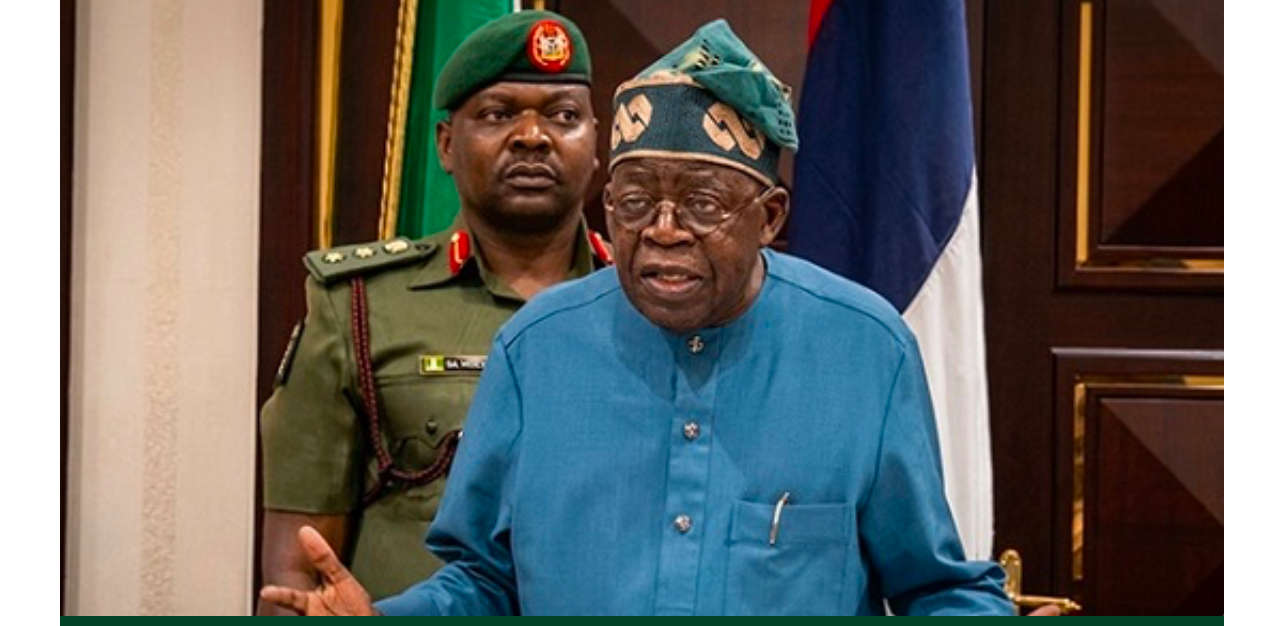
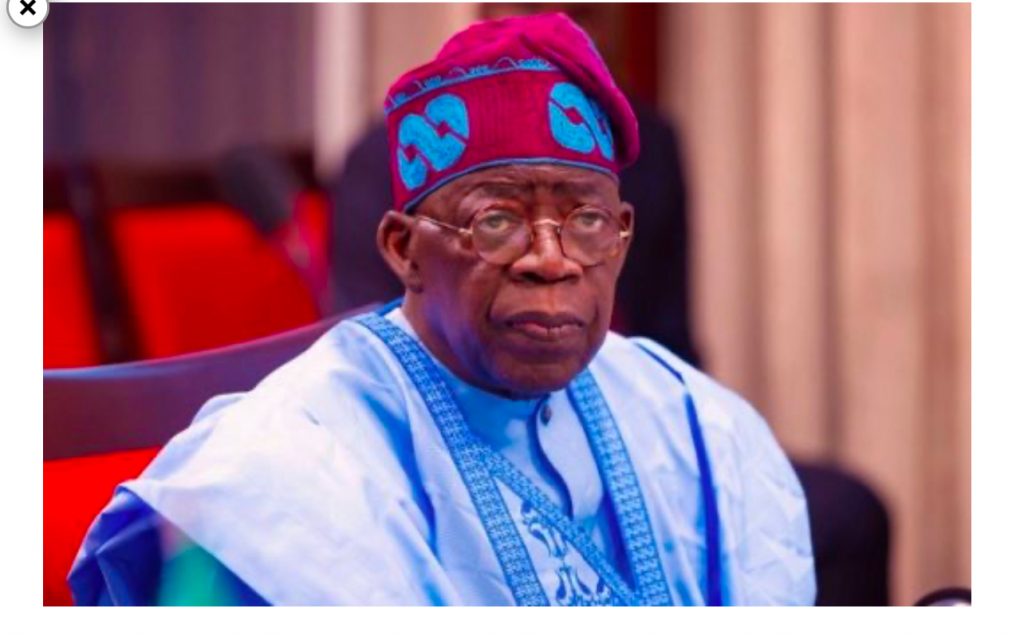
President Tinubu concluded his address with a call for national reflection and progress, urging the country to move beyond symbolic recognition and build a future anchored on the sacrifices of past heroes.


Continue Reading
Click to comment

Leave a Reply

Your email address will not be published. Required fields are marked *

news

Alleged Coup Attempt Against Tinubu, Fraud Charges: Sylva Faces Possible Arraignment in Absentia

Published

on

Former Bayelsa State Governor, Timipre Sylva, has yet to return to the country months after his Abuja residence was raided by operatives of the Defence Intelligence Agency.

It was reported that the raid was connected with investigations into the alleged coup attempt against President Bola Tinubu.

Our correspondence gathered that Sylva, who was also declared wanted by the Economic and Financial Crimes Commission over alleged $14,859,257 fraud, might be arraigned in absentia for financial crimes.

Top officers of the Department of State Services and the EFCC told one of our correspondents that the International Criminal Police Organisation and other Nigerian partners in the war against crime were currently trailing the former governor.

The Defence Headquarters had, in October 2025, dismissed reports of a coup attempt, despite the arrest and detention of 16 officers accused of sponsoring the plot.

The DHQ, in a statement by its Director of Defence Information, Brig Gen Tukur Gusau, on October 18, 2025, denied a Sahara Reporters story linking the detention of the officers to a failed coup and the cancellation of the October 1 Independence Day parade.

Gusau described the report as “intended to cause unnecessary tension and distrust among the populace.”

“The ongoing investigation involving the 16 officers is a routine internal process aimed at ensuring discipline and professionalism within the ranks. An investigative panel has been duly constituted, and its findings will be made public,” he said.

However, last Monday, the military backtracked, confirming that there was indeed a plot to topple Tinubu’s administration.

Presenting the outcome of investigations on the detained officers, the new Director of Defence Information, Maj Gen Samaila Uba, said the findings identified several officers with cases to answer over allegations of plotting to overthrow the government.

He said, “The findings identified a number of officers with allegations of plotting to overthrow the government, which is inconsistent with the ethics, values and professional standards required of members of the AFN.”

He noted that those indicted would be formally arraigned before relevant military judicial panels to face trial in line with the Armed Forces Act and other applicable service regulations.

Following the arrest of the 16 military officers, Sylva’s Abuja residence was raided on October 25, 2025, by operatives of the DIA.

Sylva was out of the country at the time his house was raided, but his younger brother, Paga, who serves as his Special Assistant on Domestic Affairs, along with his driver, was arrested during the operation.

Also, the former governor was declared wanted on November 10, 2025, over an alleged case of “conspiracy and dishonest conversion” of $14,859,257, part of funds injected by the Nigerian Content Development and Monitoring Board into Atlantic International Refinery and Petrochemical Limited for the construction of a refinery.

However, Sylva’s Special Assistant on Media and Public Affairs, Julius Bokoru, dismissed reports linking his principal to the coup plot, describing them as baseless and politically motivated.

He described the reports as the handiwork of “desperate and self-seeking politicians seeking to actualise their ambitions ahead of the 2027 elections.”

In a statement, Bokoru condemned the EFCC’s action, noting that the former minister was undergoing medical examination in the UK and would honour the commission’s invitation upon his return to Nigeria.

However, three months after being declared wanted, Sylva has yet to return to the country.

Our Findings revealed that the EFCC had alerted Interpol to facilitate the arrest of the former governor.

Although the Interpol spokesperson in Nigeria, Benjamin Hundeyin, who also doubles as the Force Public Relations Officer, neither answered calls nor responded to messages sent to his phone, top security officers, including DSS and police personnel, said Interpol was involved in efforts to apprehend Sylva.

“Interpol was contacted immediately after the former governor was declared wanted. Apart from the EFCC, the service is also after him. He can’t hide forever. He should submit himself for investigation if he is indeed innocent.

“Nnamdi Kanu was out of the country for a while, thinking he was off the radar. But where is he today? We will also get Sylva,” said a DSS operative knowledgeable about the matter.

Similarly, an EFCC officer, who spoke  with our correspondence on condition of anonymity because he was not authorised to speak on the matter, disclosed that Sylva would be arraigned.

“He is still on our wanted list. We are looking for the right time to arraign him. However, investigations are ongoing. We are building our case against him and, when concluded, he will be charged,” the source said.

Asked if the commission would proceed to court before his apprehension, the source said Sylva could be arraigned in absentia.

“It is possible, and the law makes provision for it. However, we have not concluded that this is the option we will take. But legally, it is possible,” he added.

Speaking with one of our correspondents, another EFCC operative urged the former governor to turn himself in.

“When a suspect of such status is declared wanted, all our partners around the world are placed on notice. Wherever he is, he will be traced. The right thing to do is to turn yourself in,” he added.

However, when contacted last Thursday, Sylva’s spokesperson declined to comment on the matter.

“Given the confirmation by the Defence Headquarters, this is now a national security matter. I am not in a position to comment on speculations, travel or investigations. Relevant authorities are best placed to speak when appropriate,” Bokoru said in a text message.


Continue Reading

news

Nigeria and Türkiye Agree to Accelerate Trade, Energy and Defence Partnerships, Says Tinubu

Published

on

President Bola Tinubu says Nigeria and Türkiye have agreed to fast-track cooperation in trade, energy and defence to boost jobs, investment and shared prosperity.

The President disclosed this on Tuesday via his official X handle during his ongoing State Visit to Ankara, Türkiye.

Tinubu said discussions with Turkish President Recep Tayyip Erdoğan focused on deepening bilateral relations and delivering tangible economic benefits for citizens of both countries.

“President Recep Tayyip Erdoğan and I reaffirmed our shared ambition, which speaks directly to jobs, investment and opportunity for our people,” the President said.

He said both leaders agreed on the need to expand trade volumes and remove structural barriers limiting business growth between Nigeria and Türkiye.

“We are creating a clear pathway to a five-billion-dollar trade volume between Nigeria and Türkiye,” Tinubu stated.

The President described the talks as practical and forward-looking, driven by mutual interests and shared regional and global responsibilities.

“Our conversations were practical and forward-looking: trade and investment, energy, education, defence cooperation, peace and security,” he said.

Tinubu announced the establishment of a Joint Economy and Trade Committee to drive implementation of agreements and attract fresh investments.

“The creation of a Joint Economy and Trade Committee will unlock new flows of capital,” the President noted.

He said the committee would also support industrial growth, technology transfer and stronger private sector participation.

Tinubu welcomed President Erdoğan’s acknowledgement of Nigeria’s ongoing reforms, especially in the energy and investment sectors.

“I welcome President Erdoğan’s recognition of Nigeria’s reform momentum, particularly in the energy sector,” he said.

The President said the renewed confidence reflected Nigeria’s commitment to transparency, stability and sustainable economic growth.

“We are determined to build an economy that works for everyone, including the most vulnerable,” Tinubu added.

On regional security, Tinubu reaffirmed Nigeria’s responsibility to promote peace and stability across Africa.

“Nigeria will continue to play its role in peace and stability in Africa,” the President said.

He said Türkiye’s expertise in counter-terrorism and defence cooperation would strengthen collective responses to emerging security threats.

“Türkiye’s experience and readiness to cooperate in training, intelligence sharing and counter-terrorism strengthen our resolve,” he stated.

Tinubu said nine bilateral agreements were exchanged at the end of the meetings between both leaders.

The agreements cover defence, education, media cooperation, diaspora policy, trade facilitation, social development and institutional collaboration.

“Nigeria remains open for serious partnership. Open to trade without barriers, ideas, skills and investment that create value and shared prosperity,” he said.

Tinubu reaffirmed Nigeria’s commitment to inclusive growth, peaceful coexistence and active global engagement.

“We are building an inclusive economy. We are strengthening peace. Nigeria will continue to engage the world with confidence and clarity,” Tinubu said.

Continue Reading

news

Strengthening Cultural Leadership to Eliminate Violence Against Women and Girls

Published

on

Op-Ed | By Maxime Houinato

As Africa stands at a crossroads in the fight against violence targeting women and girls, the continent’s traditional leaders hold a uniquely powerful key to unlocking lasting change. Their influence—rooted in culture, authority and community trust—positions them not just as custodians of heritage, but as essential partners in redefining norms, protecting rights and leading a continental shift toward safety, dignity and equality for every woman and girl.

In the coming week, traditional leaders from across Africa will meet in Lagos to explore how culture can advance dignity, safety, and equality. Their convening could not be timelier. Violence against women and girls remains widespread, underreported, and a major obstacle to achieving Agenda 2063 and the SDGs. Recent UN and WHO findings confirm that intimate partner and sexual violence persist at alarming levels, underscoring the need for strong, locally led prevention and accountability.
This important convening in Lagos is made possible through the valued support and partnership of the Ford Foundation, whose long-standing commitment to gender justice, human rights, and community-led solutions continues to strengthen efforts across Africa to end violence against women and girls.
Sub-Saharan Africa records some of the world’s highest rates of intimate partner violence, with studies showing that over 40% of women surveyed have experienced emotional, physical, or sexual abuse. Regional data platforms confirm that both lifetime and recent intimate partner violence remain alarmingly common. The effects also span generations: research across 37 African countries links mothers’ experiences of violence to higher risks of illness, undernutrition, and even death among children under five, highlighting IPV as a major threat to child survival and public health.
Where culture must evolve
Africa has made notable strides, yet harmful practices still put millions of girls at risk. West and Central Africa remain the global epicentre of child marriage: nearly 60 million women and girls in the region were married before 18, with Nigeria bearing the largest absolute numbers. These figures, drawn from UNICEF’s databases, remind us that while progress is possible, it is not guaranteed without sustained, community-anchored change.
There are bright spots. In Kenya, the latest Demographic and Health Survey shows FGM prevalence fell to about 15% in 2022, down from 21% in 2014, a testament to policy commitment and local norm change. Yet prevalence remains extremely high among several communities, and sustained vigilance is required to prevent medicalisation or cross-border practices.
Nigerian realities, African momentum
Nigeria mirrors the continental picture: national surveys and administrative data point to widespread physical, sexual and emotional violence, with thousands of cases reported to authorities each year, figures that almost certainly undercount the true burden. The Government’s National GBV Data Collation Tool is an important step toward standardising reporting and improving coordination; scaling it nationwide and linking it to survivor-centred services will save lives.
Encouragingly, the upcoming Conference of African Traditional Leaders in Lagos, already drawing commitments from eminent leaders, signals growing recognition that cultural authority can be mobilised to protect women and girls. UN Women’s work with traditional councils across Africa has shown that when custodians of culture publicly denounce harmful practices, backed by evidence and community dialogue, norms shift and laws gain legitimacy. It is why we helped catalyse platforms like the Council of Traditional Leaders of Africa to champion the abandonment of child marriage and FGM.
Law works best when culture leads
Africa’s legal architecture has advanced. The Maputo Protocol, our continental bill of women’s rights, has spurred reforms, and the African Commission recently moved to develop a Model Law to accelerate domestication and harmonisation across countries. These instruments matter: they provide standards, remedies and budgets. But their power is realised when interpreted through community values that affirm women’s dignity.
Evidence from the Spotlight Initiative, the EU-UN partnership with the African Union, shows that multi-sector, locally-led approaches can reduce harmful practices, strengthen services, and improve prevention. Traditional and religious leaders who champion public declarations, alternative rites of passage, and community bylaws help convert state law into lived practice.
A practical agenda for traditional leaders
I urge traditional leaders to make clear, practical commitments that have been proven to drive change: publicly and repeatedly denounce harmful practices such as child marriage, widowhood rites and FGM, backing declarations with community bylaws aligned with national law; promote survivor-centred justice in customary systems through strong referral pathways, bans on forced reconciliation, and proper case documentation; safeguard girls’ childhoods by ensuring birth and marriage registration, enforcing 18 as the minimum age of marriage, and supporting re-entry to school for married or parenting girls; encourage alternative rites of passage and positive models of masculinity that reject violence; and use their influence to push for stronger laws, adequate funding, and community engagement to address all forms of violence against women and girls.
Culture is not a relic; it is a living promise we renew with each generation. As guardians of that promise, Africa’s traditional leaders can be the champions of a continental transformation: from harmful silence to protective speech, from permissive norms to zero tolerance. If we act with urgency and unity, a life free from violence can become every African woman’s and girl’s lived reality.

Maxime Houinato is the UN Women Regional Director for West and Central Africa, providing strategic leadership across 24 countries to advance gender equality, strengthen women’s rights, and accelerate the elimination of violence against women and girls. In this role, he guides UN Women’s regional programmes on women’s economic empowerment, governance and political participation, humanitarian action, and the prevention and response to gender‑based violence.

Continue Reading

Trending

Copyright © 2025 Newsthumb Magazine | All rights reserved