
politics
Ex-governors in political wilderness after 2019 polls

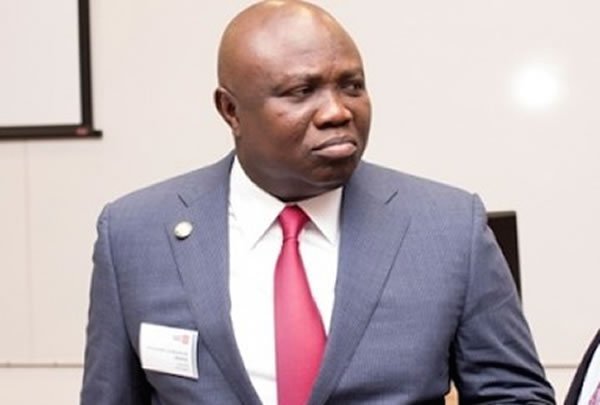

So also is the nomination of candidates for ministerial slots in President Muhammadu Buhari’s cabinet. But it has been different strokes for different folks with respect to the political class. While many are savouring the joy of victory, others are writhing in the agony of defeat. The latter is particularly the case with former governors who either lost their re-election bids or lost their bids to move to the Senate after spending their mandatory two terms. Below are some of the former governors who may have to remain in political wilderness in the next few years because they were also not lucky enough to secure places in the new Buhari cabinet.
Akinwunmi Ambode

His is a classic instance of the instability of human conditions. Until late last year when words filtered out that former Lagos State governor, Akinwunmi Ambode, had stepped on the banana peel, the conclusion of every pundit was that he was good for a second term as governor, based on the physical structures he had built in the state.
But all that changed with the news that some influential members of the ruling All Progressives Congress (APC) in the state were not happy with the manner he handled the matter of refuse disposal and the alleged poor treatment he meted out to them. The reality of the issue, which began like a piece of unfounded rumour, dawned on his admirers when the party conducted its governorship primaries on October 2 last year and the incumbent governor, Babajide Sanwo-Olu, emerged as the party’s flag bearer for the 2019 governorship election.
With the party’s ticket lost and Sanwo-Olu emerging victorious at the governorship poll, the grapevine began to buzz with the rumour that President Muhammadu Buhari was considering Ambode as a replacement for the governor of Central Bank, Godwin Emefiele, whose tenure was drawing to a close. The rumour became stronger when Ambode successfully brought President Buhari to Lagos in April for the commissioning of some of his administration’s projects. But any hope of Ambode becoming the governor of the apex bank vanished like vapour when President Buhari announced the renewal of Emefiele’s tenure as CBN governor on May 2.
With the dream of Ambode becoming the governor of Central Bank also gone, members of his political camp hinged their hope on his appointment into Buhari’s cabinet as Nigerians waited with bated breath for the release of the President’s ministerial list. Admirers of the former governor just could not contemplate the possibility of Ambode not making the list after the initial disappointments, particularly with the ministerial slots increased from the usual 36 to 42. It turned out a huge shock, however, that the list was released without Ambode’s name on it.
Thus the former governor was edged out of a second term, denied the chance to become the governor of the Central Bank and skipped on Buhari’s list of ministers. The question on the lips of his admirers now is where does he go from here?
Abiola Ajimobi

If he had his way, Senator Abiola Ajimobi would by now be wearing the tag of the senator representing Oyo South after two terms as Oyo State governor. That, however, was not to be as Ajimobi who contested the senatorial district’s election on the platform of the All Progressives Congress (APC), was defeated by the candidate of the Peoples Democratic Party (PDP), Dr. Kola Balogun.
It was one of the shocking outcomes of the 2019 general elections that a sitting governor who had spent eight years in office could not muster the needed influence to win election into the same Senate seat he had occupied before he became governor. His undoing, many people believed, was his face-off with the Olubadan of Ibadan, Oba Saliu Adetunji, whose chiefs Ajimobi upgraded to Obas in a move interpreted by many as a deliberate ploy to whittle down the power and influence of the monarch.
The move appeared not to have gone down well with many prominent sons and daughters of Ibadan who saw it as a direct invitation to anarchy in the traditional set up of Africa’s second largest city. The PDP in the state did not only make a political capital of the anger the move provoked in the city to win the governorship election, it also saw the candidate of the opposition party winning the senatorial election at Ajimobi’s expense.
Many admirers of the former governor who had thought that President Muhammadu Buhari would compensate him with a ministerial appointment were disappointed to see that his name was conspicuously missing from the list. But Ajimobi himself has said that reclaiming his senatorial mandate through the courts is more important to him than a ministerial appointment. While his admirers are hoping for a positive outcome of the legal battle, Ajimobi will remain in political wilderness until the deed is done.
Abdulaziz Yari

Former Zamfara State governor, Abdulaziz Yari’s case was that of a beautiful dream on the verge of reality truncated by a gang of brutal misadventures. He had contested election into the Senate during the 2019 National Assembly elections and won by a wide margin, only for the Supreme Court to declare his election and those of other candidates of the All Progressives Congress (APC) in the state void.
In the unprecedented judicial pronouncement, the apex court awarded the governorship, National Assembly and state assembly elections held in the state to the candidates of the Peoples Democratic Party (PDP) because the primaries that produced the candidates of the All Progressives Congress (APC), who actually won the highest number of votes at the polls, were deemed a nullity.
The Supreme Court decision affected Governor Yari who had earlier been declared by the Independent National Electoral Commission (INEC) as the winner of the Zamfara West Senatorial election. Yari had polled 153,626 votes while Lawal Hassan of the PDP scored 69,293 votes. But with the apex court’s ruling, Hassan took over as the senator-elect for Zamfara West Senatorial District.
The development has since truncated Yari’s dream of joining the upper chamber of the National Assembly while he also missed out on President Muhammadu Buhari’s ministerial list.
Muhammed Abubakar

For the immediate past governor of Bauchi State, Alhaji Muhammed Abubakar, the recent governorship election in the state ended in a triple loss. Abubakar did not only lose the first round of the governorship election in the state, he also lost the supplementary election while his bid to secure victory through the courts also ended in a loss.
The governor, who sought re-election on the platform of the All Progressives Congress (APC), had been defeated by the candidate of the Peoples Democratic Party (PDP), Bala Mohammed, who polled 469,512 votes in the March 9 election against his own 465,453 votes.
Abubakar had got a reprieve from the ruling of a federal high court in Abuja which granted his request for suspension of the collation of the remaining results. But that could only delay the reality for a short spell as the court later struck out the governor’s application with the result that in the results that were later announced, the PDP candidate polled 6,376 votes while the governor followed closely with 5,117 votes.
Abubakar had ridden on the back of the Buhari tsunami that swept through the north during the 2015 elections to become the governor of the state, but he was said to have fallen out with many of the state’s stakeholders soon after he assumed office. Many APC stalwarts in the state were also believed to have worked against his re-election because they were aggrieved by the process through which Abubakar emerged as the party’s flag bearer. His failure to pay the pensions and gratuities of retired civil servants in the state was also believed to have contributed to his failure at the poll.
Unfortunately, he was not one of the APC members nominated by President Muhammadu Buhari for ministerial appointment, leaving his supporters to wonder what is next for the former Bauchi governor.
Abdulfatah Ahmed

Before the 2019 elections, the immediate past governor of Kwara State, Alhaji Abdulfatah Ahmed, had his sight set on the Senate seat for Kwara South. Long before the elections, Ahmed’s senatorial election had received the blessings of his political godfather and former Senate President, Dr. Bukola Saraki, but the loss of a supplementary election in Ahmed’s own Ekiti/Oke Ero/Isin/Irepodun federal constituency by the PDP candidate he backed as governor changed the equation.
The defeat, coming at the height of intense political rivalry between the Saraki-led PDP and former Information Minister Lai Muhammed-led APC in the state, naturally moved Saraki to high dudgeon. Enraged by the defeat of Ahmed’s candidate in the supplementary election and fearing that Ahmed himself might not have the clout to win the senatorial election against the rampaging political machinery of the APC in the state, Saraki withdrew the former governor’s senatorial ticket and gave it to a candidate he felt could win the election and save him and PDP further embarrassment.
Although Ahmed said the decision to withdraw his senatorial ticket had nothing to do with the loss of the by-election, its import is that Ahmed, who was already on the verge of completing his second term as governor, could not retire into the Senate as he had planned to. That coupled with the fact that he has a very little chance of being offered a federal appointment means he is in for a long spell in political wilderness.
Jibrila Bindow

Given the manner the All Progressives Congress (APC) swept the polls in Adamawa State in the 2015 general elections, not many people would imagine that the then governor, Jibrila Bindow, would lose his re-election bid in 2019. But by time the 2019 governorship election ended, Bindow was roundly defeated by Umar Fintiri, the candidate of the Peoples Democratic Party (PDP).
His major undoing, analysts believed, was his concentration of efforts on urban renewal while the rural populace accused the governor of abandoning them as their farm produce were regularly destroyed by criminals. This coupled with Fintiri’s popularity and the internal wrangling within the APC in the state spelt doom for Bindow and APC in the state.
Signs of trouble had emerged a few days to the governorship election when 10 political parties who had earlier entered into a pact with Bindow announced the withdrawal of their support for his re-election bid.
The governorship candidates of the 10 political parties under the auspices of New Generation Governorship Forum (NGGF) told reporters in Yola that they were withdrawing their support for Bindow over his failure to work with their advice and ensure good governance in the state.
At the end of the election, which had to go into a rerun, Fintiri got 9,081 votes to raise his 367,471 in the main election to 375,552, while Bindow could only get 1,391 in the rerun to raise his initial 334,995 votes to 336,386.
Ibrahim Dankwambo

After two terms in office as the governor of Gombe State, having won the elections on the ticket of the Peoples Democratic Party (PDP), Ibrahim Dankwambo sought to push his luck further in the 2019 elections for a seat in the Senate to represent Gombe North. His ambition was, however, halted by the candidate of the All Progressives Congress (APC), Saidu Alkali.
The candidate of the Peoples Democratic Party (PDP) lost in four of the local government areas in the senatorial district in the National Assembly elections conducted on February 23, with Alkali scoring 152,546 votes while Dankwambo garnered 88,016.
Dankwambo was first elected Gombe governor in 2011 and won re-election in 2015. He contested in the primary election for the PDP’s presidential ticket in 2018 but finished in the fifth position as Atiku Abubakar, the candidate of the PDP in the last presidential election clinched the ticket.
With his fine run of form halted by Alkali, Dankwambo is guaranteed a place in political wilderness in the next few years.
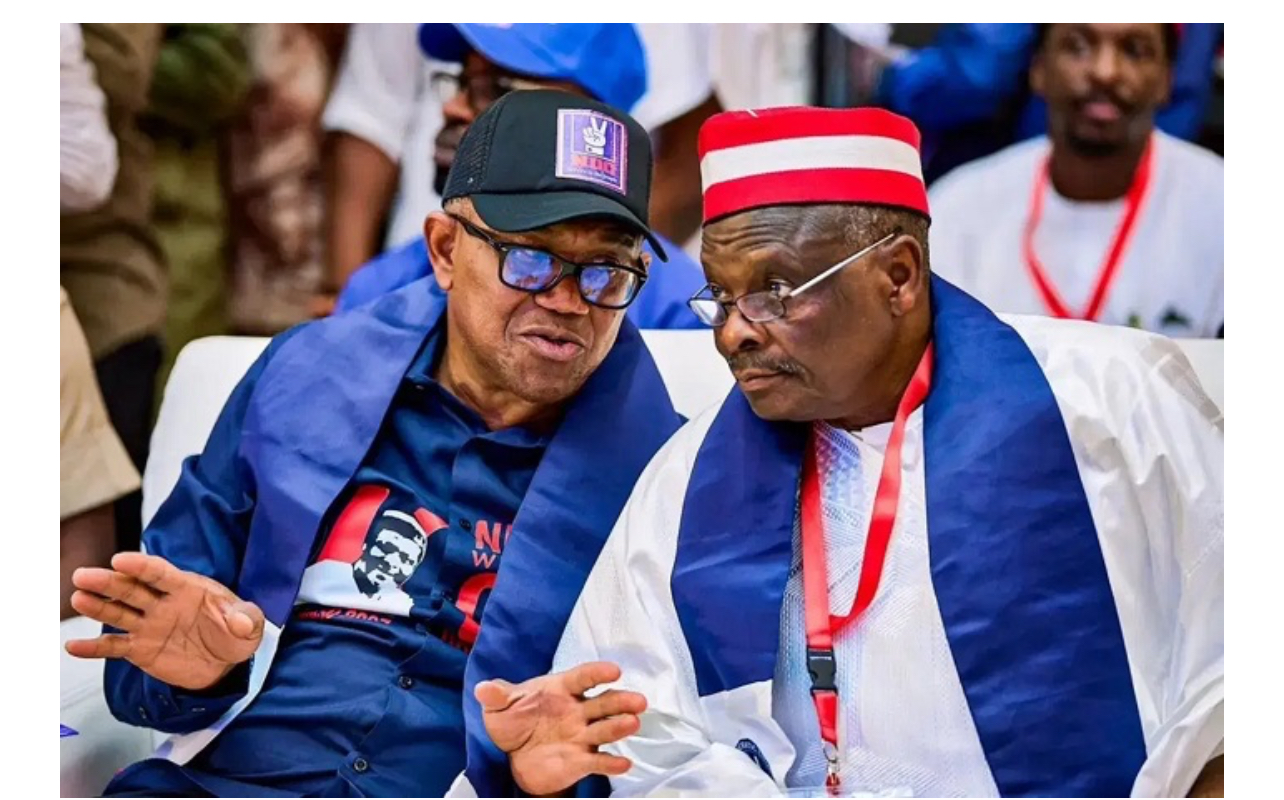

 The OK (Obi/Kwankwaso) Movement has declared that it will maintain its independent identity while mobilising support for the Nigeria Democratic Congress (NDC) and its candidates ahead of the 2027 general election. NigerianNews Updates
Movement’s leader John Ughulu said the group remained committed to its original mission of securing the election of former Anambra State Governor Peter Obi and erstwhile Kano State Governor Rabiu Musa Kwankwaso.
Speaking in an interview, Ughulu dismissed suggestions that the movement’s decision to campaign independently would undermine its support for the NDC, insisting that the focus should be on achieving a common political objective.
“What difference does it make when we campaign on parallel lines? The most important thing is that we have one objective,” he said.
Asked whether the movement had decided to retain its independent status rather than formally integrate into the NDC campaign structure, Ughulu said its position had not changed.
“We have always been independent, and there is nothing wrong in that. We are campaigning for NDC party’s candidates. I will appreciate we leave it like that,” he added.
He urged members and supporters to remain guided by the principles upon which the movement was established, stressing that its political mission remained unchanged.
“The members of the OK Movement work on the principles upon which we formed the movement. The mission to bring His Excellency Peter Obi and His Excellency Senator Rabiu Musa Kwankwaso is sacrosanct,” Ughulu said.
His remarks underscore the movement’s intention to retain its organisational independence while supporting the NDC’s electoral ambitions, particularly its presidential candidate, Obi, in the 2027 contest.
The disagreement between the NDC and the OK Movement followed the movement’s announcement of a 59-member Presidential Campaign Council to mobilise support for the party’s presidential candidate, Peter Obi, and his running mate, Senator Rabiu Musa Kwankwaso, ahead of the 2027 general election.
The NDC leadership rejected the arrangement, insisting that only the party’s National Working Committee (NWC) had the authority to constitute and announce its official campaign council.
The party also maintained that support groups must operate within its recognised organisational framework rather than establish parallel structures.
NDC National Leader Senator Seriake Dickson reinforced this position, arguing that political movements supporting the party’s candidates should complement, not compete with the party’s machinery.
The OK Movement, however, resisted the party’s position, insisting that its support for the NDC candidates should not be interpreted as an obligation to surrender its independently established structures.
Ughulu maintained that the movement had its own leadership, membership and organisational framework, which it was unwilling to dissolve or merge into the party.
The disagreement escalated after the NDC disowned the movement’s campaign council and referred Ughulu to its disciplinary organ over alleged disregard for party authority.
Despite the controversy, the movement has maintained that it will continue to mobilise support for Obi and other NDC candidates while retaining its independent identity.
politics
Breaking : Imo West Senatorial Race: Court Orders INEC to Recognise Okorocha, Bars Uzodimma from Claiming APC Ticket
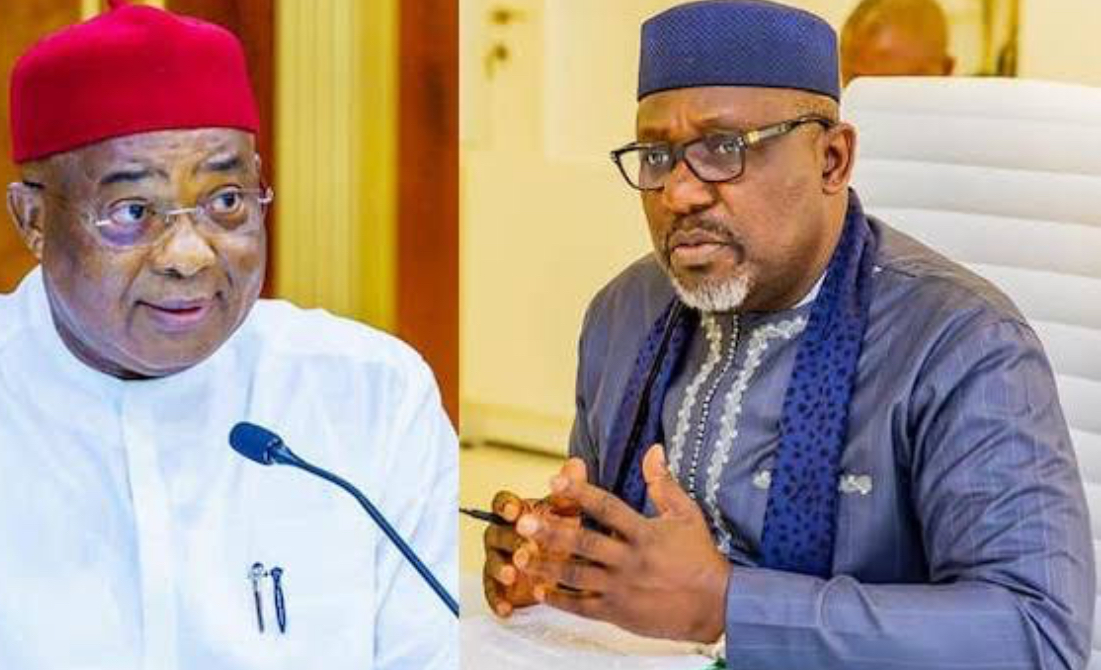
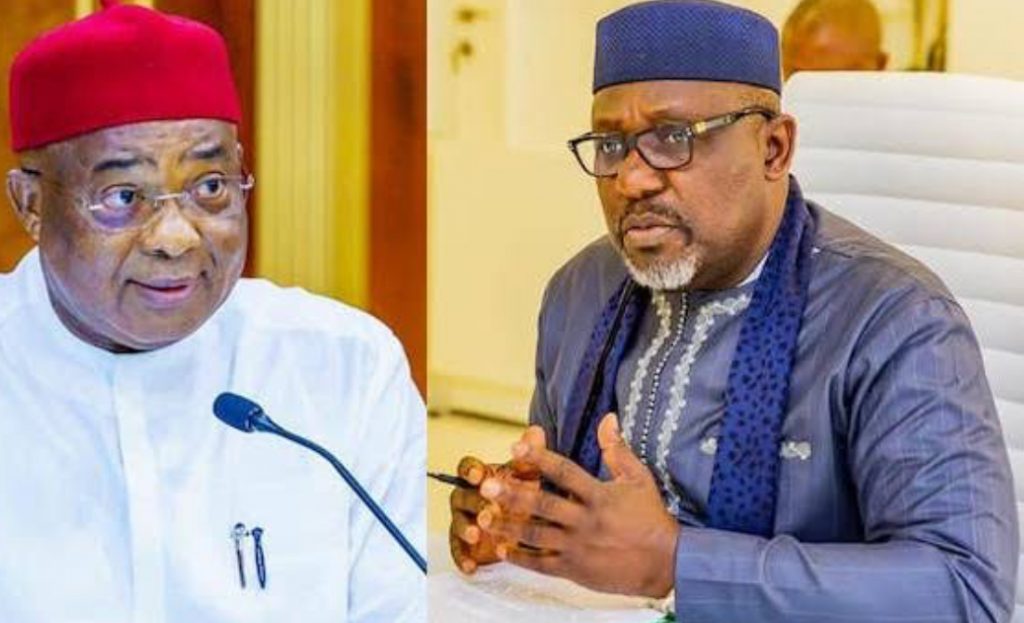
A court has reportedly ordered the Independent National Electoral Commission (INEC) to publish the name of former Imo State Governor, Rochas Okorocha, as the winner of the All Progressives Congress (APC) senatorial primary for Imo West Senatorial District.
The court also reportedly directed Imo State Governor, Hope Uzodimma, to stop presenting himself as the APC candidate for the Imo West Senatorial District seat.
The ruling concerns the dispute over the APC senatorial ticket for Imo West, with the court’s directives addressing the recognition of the party’s candidate and the publication of the relevant details by INEC.
The development could have significant implications for the political contest in Imo West, depending on the terms of the judgment and any subsequent legal proceedings.
politics
Breaking : INEC Confirms Oyebanji’s Re-election in Ekiti, First Consecutive Governorship Victory Since 1999
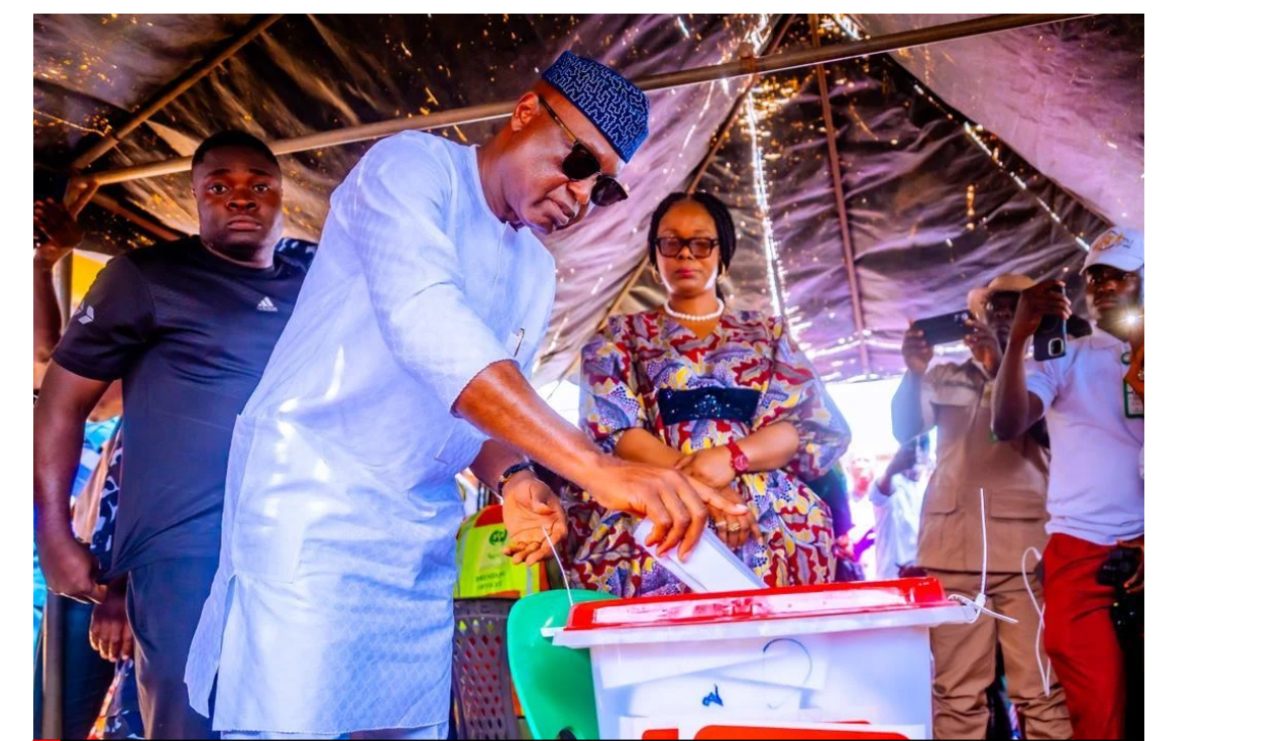
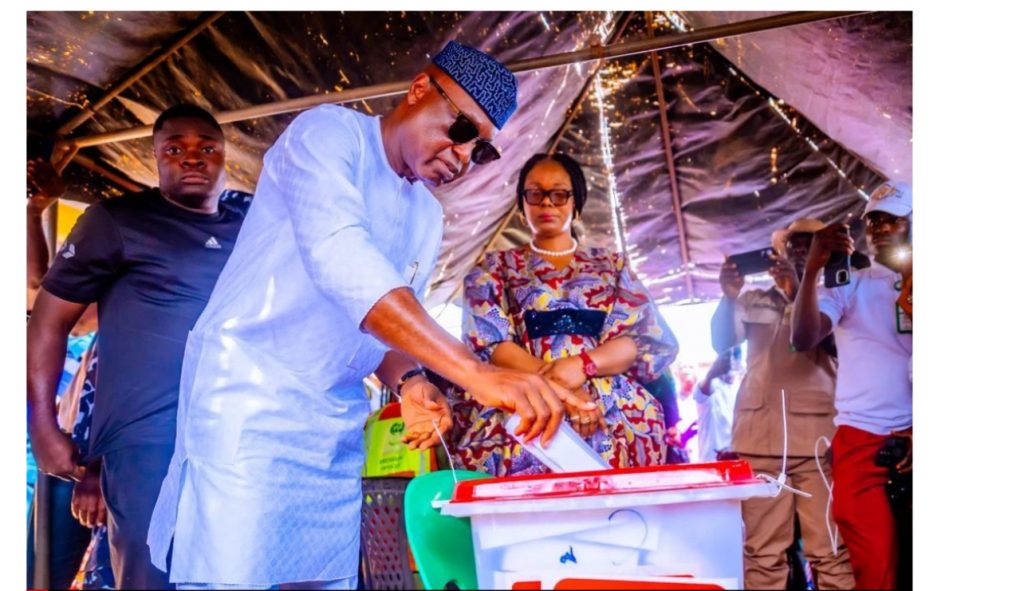 Governor Biodun Oyebanji casting his vote at his Okeelele Unit 003
The Independent National Electoral Commission has declared the All Progressives Congress candidate, Governor Biodun Oyebanji, the winner of the Ekiti State governorship election held on Saturday.
The governor was re-elected after polling 319,224 votes over his closest rivals in the opposition Peoples Democratic Party, Olumayokun Oluyede and African Democratic Congress, Dare Bejide, across the state’s 16 local governments.
The Returning Officer for the election, Prof Adenike Oladiji, who is the Vice Chancellor of Federal University of Technology, Akure, announced the results in the early hours of Sunday at the INEC’s headquarters on Iyin Road in Ado-Ekiti, the state capital.
Oladiji said, “Therefore, I, Adenike, am the returning officer for the 2026 Ekiti governorship election…Oyebanji Abiodun Abayomi, having satisfied the requirements of the law, is hereby declared the winner and stands re-elected.”
While the APC polled 319,224 votes, the PDP candidate polled 40, 533 votes, and the ADC candidate amassed 12,872 votes.
There are 988,251 registered voters, and 384,940 are accredited.
Out of the 382,109 votes cast, the total valid votes in the election were 375, 777.
According to INEC result, the PDP candidate, who hails from Ikere Ekiti, lost in his Ikere Local Government area.
While the APC and its candidate, Oyebanji, scored 8,742 votes, the PDP, which came second in the LGA, garnered 2,051 votes.
Below are the full results of the governorship election as collated at the State Collation Centre from the 16 LGAs on Sunday.
Efon Local Govt
Collation officer: Prof. Joseph Ojo
ADC – 201
APC – 8742
PDP – 2051
Ijero LG
Collation Officer: Prof. Olaniran Akanni
ADC – 2026
APC – 25506
PDP – 2479
Ikere LG
Collation Officer: Prof. Kehinde Jayeoba
ADC – 245
APC – 11116
PDP – 9872
Emure LG
Collation Officer: Prof Emmanuel Oluwafemi
ADC -732
APC – 14325
PDP – 851
Ekiti South West
Collation Officer: Prof. Kola Oladunmoye
ADC – 1076
APC – 14705
PDP – 1800
Ido/Osi
Collation Officer: Prof. Otalobi Akintunde
ADC – 561
APC – 17901
PDP – 1449
Ekiti West
Collation Officer: Prof Bolaji Stephen
ADC – 674
APC – 28258
PDP – 3644
Ado LG
Collation Officer: Prof. Toye Fasinmirin
ADC – 1054
APC – 38026
PDP – 3817
Ilejemeje LG
Collation Officer: Prof. Kehinde Mogaji
ADC – 579
APC – 8984
PDP – 1243
Ise/Orun LG
Collation Officer: Dr John Isa
ADC – 365
APC – 12907
PDP – 1627
Oye LG
Collation Officer: Prof. Jide Popoola
ADC – 998
APC – 18975
PDP – 2891
Moba LG
Collation Officer: Prof. Suleiman Adegboyega
ADC – 994
APC – 20500
PDP – 1572
Ayekire/Gbonyin LG
Collation Officer: Prof. Oso Bamidele
ADC – 314
APC – 17133
PDP – 1563
Ikole LG
Collation Officer: Prof. Sadiat Adifala
ADC – 812
APC – 26508
PDP – 750
Irepodun/Ifelodun LGA
Collation Officer: Prof. Michael Adeyemi
ADC – 511
APC – 29278
PDP – 2119
Ekiti East LGA
Collation Officer: Prof. Olabode Olatunbosun
ADC – 1730
APC – 26359
PDP – 2795


-
 news6 years ago
UPDATE: #ENDSARS: CCTV footage of Lekki shootings intact – Says Sanwo – Olu
-
 lifestyle6 years ago
Former Miss World: Mixed reactions trail Agbani Darego’s looks
-
news8 years ago
-
 health6 years ago
Chairman Agege LG, Ganiyu Egunjobi Receives Covid-19 Vaccines
-
 lifestyle5 years ago
Obateru: Celebrating a Quintessential PR Man at 60
-
 news1 year ago
BREAKING: Tinubu swears in new NNPCL Board
-
 society3 years ago
Bisbam CEO, Abisola Bamidele, Bags Owu Chieftaincy Title
-
 health6 years ago
UPDATE : Nigeria Records 790 new cases of COVID-19