
brand
Post Covid19: Global Leaders at UBA Africa Day Conversations Seek Path To Economic Recovery



…Global co-operation needed to stem global depression
 |
|
Global leaders at the second edition of United Bank for Africa (UBA) African Day Conversations, have emphasised the need for meaningful collaborations between governments and the private sector as a panacea for the quick recovery of the economy of the African continent post Covid-19.
The leaders which included the President of Liberia, H.E George Weah; United States Senator Chris Coons; the President & Chairman of the Board of Directors of the African Export–Import Bank (AFREXIMBANK), Professor Benedict Okey Oramah; President, International Committee of the Red Cross (ICRC), Peter Maurer; President spoke on Monday at the virtual Leadership Panel which was moderated by the Chairman, UBA Plc, Tony Elumelu.
Other leading voices who made up the panel were the Founder, Africa CEO Forum, Amir Ben Yahmed; the Secretary-General of the African Caribbean and Pacific Group of States (ACP), H.E George Chikoti; Administrator, United Nations Development Program (UNDP), Achim Steiner and Donald Kaberuka.
While moderating, Elumelu, who is also the Founder of the Tony Elumelu Foundation, spoke on the need to mobilise everyone and explained the necessity to discover a more fundamental solution to Africa’s challenges through collaborative efforts.
“This is the time for us to deal with the situation we have and also forge a better situation for everyone, acting again collectively,” he said. “This is not the time for finger pointing but for collaborative effort by governments and organizations to fight the pandemic globally.”
Continuing, Elumelu pointed out that all hands must be on deck if the African continent is to have a quick recovery from the pandemic, adding “There is need to flatten the curve, we need global co-operation to stem global depression. Africa requires a large stimulus package, and we need long-term solutions to prevent a cycle of debt.”
In his submission, the Liberian President, George Weah, established how collaborations worked in his government in an attempt to stem the sufferings brought about the coronavirus pandemic.
“In Liberia we have taken measures to ease the financial burden on vulnerable business in the informal sector by providing small loan assistance to SMEs and traders. In addition, we are working with commercial banks to manage the repayment of loans as well as to create stimulus packages for citizens.”
On his part, US, Senator Chris Coons, said, “It is important to take a moment to look at how African leaders have reacted to the pandemic. In order for us to recover from this pandemic, we must develop a vaccine that is free and affordable and freely distributed so that full economic activities can return. There are ways we can invest in debt relief, invest in infrastructure and human development. This is no time to be looking backwards. We recognise the power of collective collaboration on the continent.
While pointing out that the pandemic poses an opportunity for Africa to be independent and promote its growth and development as a people without external help; Prof. Benedict Okey Oramah, on his part, said COVID 19 has taught Africa that there comes a time when every group of people will fend for themselves.
He called for the swift implementation of the African Continental Free Trade Area (AfCFTA) agreement, adding, “The priority of government should be to make sure that the AfCFTA gets implemented without delay. If there was any doubt about the importance of that agreement, this pandemic has told us that this is the way to go.
Continuing, Oramah said, “The pandemic has shown so many weaknesses we have across our continent. We know that hunger is looming if we do not do anything. If we allow hunger to take over from the COVID 19 pandemic, we will begin to see political problems filling in. For Africa the problems go beyond health challenges to other areas such as food supply. Hunger is looming and if action is not taken, Africa will see political problem. Africa has become the epicenter of the economic devastation that this pandemic has unleashed upon us.”
While disclosing that Afrexim has made available $200million to supply fertilizers and grains amongst others across Africa, the Afrexim boss added that “If Africa allows hunger takeover the people, it will see an increase in insecurity, which will take a long time to overcome.”
George Chikoti of ACP, said that the huge task of economic recovery on the continent, rests on both the government and the private sector. “The responsibility of COVID-19 does not rest on the government alone, the private sector needs to play a big role in lifting the burden of the pandemic. African governments need to accept the support of the Private Sector in alleviating the impact of the COVID-19 pandemic in Africa,” he said.
“We have been able to release $25m to all member states. One of the major challenges is to make sure that in all countries, we have agricultural activity and high productivity. What we should learn from the impact of this pandemic is that the international community can look at how well they can fund all these initiatives that come from our countries, Chikoti added.
Achim Steiner of the UNDP noted that Digital connectivity is very essential as it is a crucial opportunity to connect all schools across the continent, adding that emphasis on Healthcare is also very important. “Digital connectivity is very crucial to connect schools to the internet. We need to address inequality; also, the virus has put a spotlight on Africa’s healthcare system. Africa needs to look at intermediate strategies like micro-insurance to ramp up this sector. Healthcare has the ability to make a large percentage of the occupation fall into extreme poverty.
“What we need to look at is to find a way for government as a regulator and also as an investor, to leverage private sector investment into these areas” Steiner said.
Peter Maurer, President, ICRC, said there is the need to look at pandemics as part of a broader health system which needs stabilisation; A lot of vulnerable populations in Africa have been heavily infected by the pandemic. “We must do more than life-saving. This pandemic has illustrated the weakness of health, water, sanitation and social systems, and we have to heavily invest into the stabilization of these systems.
Throwing more light on this, Maurer said, “Two things need to follow after live saving during the pandemic. First, the pandemic has illustrated the weak situation of health, water and food systems and we need to heavily invest both by the public and private sectors to stabilize the health sector. Secondly, investment has always gone into the more developed parts of Africa and not the fragile parts. We need Private Public Partnerships and investments by multi-corporate institutions to develop these areas’ he noted.
Amir Yahmed said the crisis is going to be a super accelerator of already existing trends. “We have to get away from the commodity driven model which has failed in creating prosperity. Secondly, self-reliance should be one of the major objectives. The pandemic is wake up call for Africa – Creating new streams of revenue and self-reliance by the African continent”
“We need to use this crisis to take Africa to the next level. This crisis is going to be a super accelerator of already existing trends. I think it has to be a wake-up call for us to attain goals we haven’t reached. Create new revenues for the economy. We also need to attain self-reliance. Self reliance is an important goal. Africa manufactures [only] 2% of what it produces. We need to use this crisis to take Africa to the next level. Invest in digital infrastructure, digital education, agriculture is another opportunity we need to grab. We need to get the AFCTA working,” Yamed said.
Donald Kaberuka on his part opined that “What we need (for this crisis) is something unusual, it is not business as usual. It is not marginal action, it is radical action.”
|
||||||||||||||||||||||||||||||||||
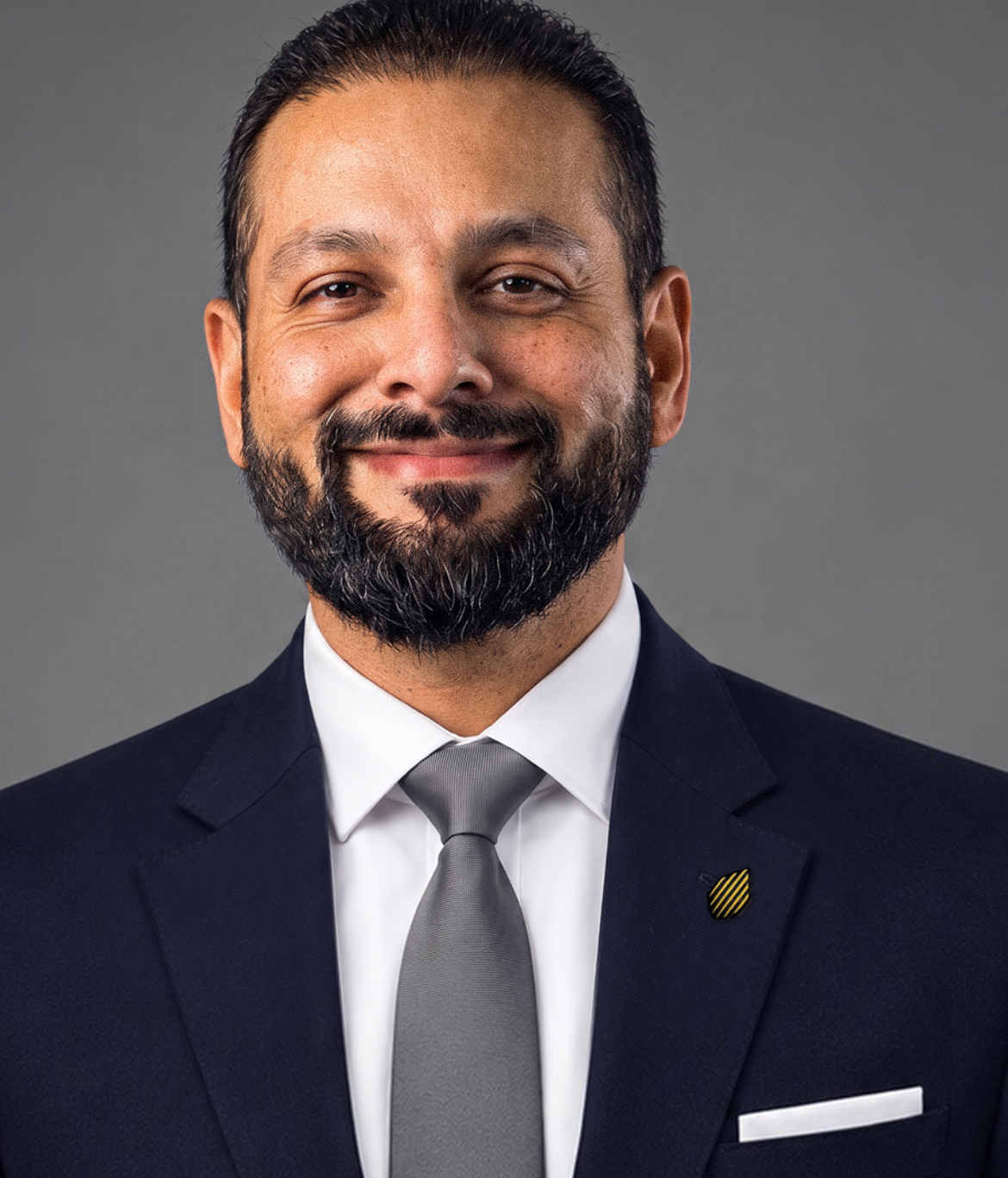
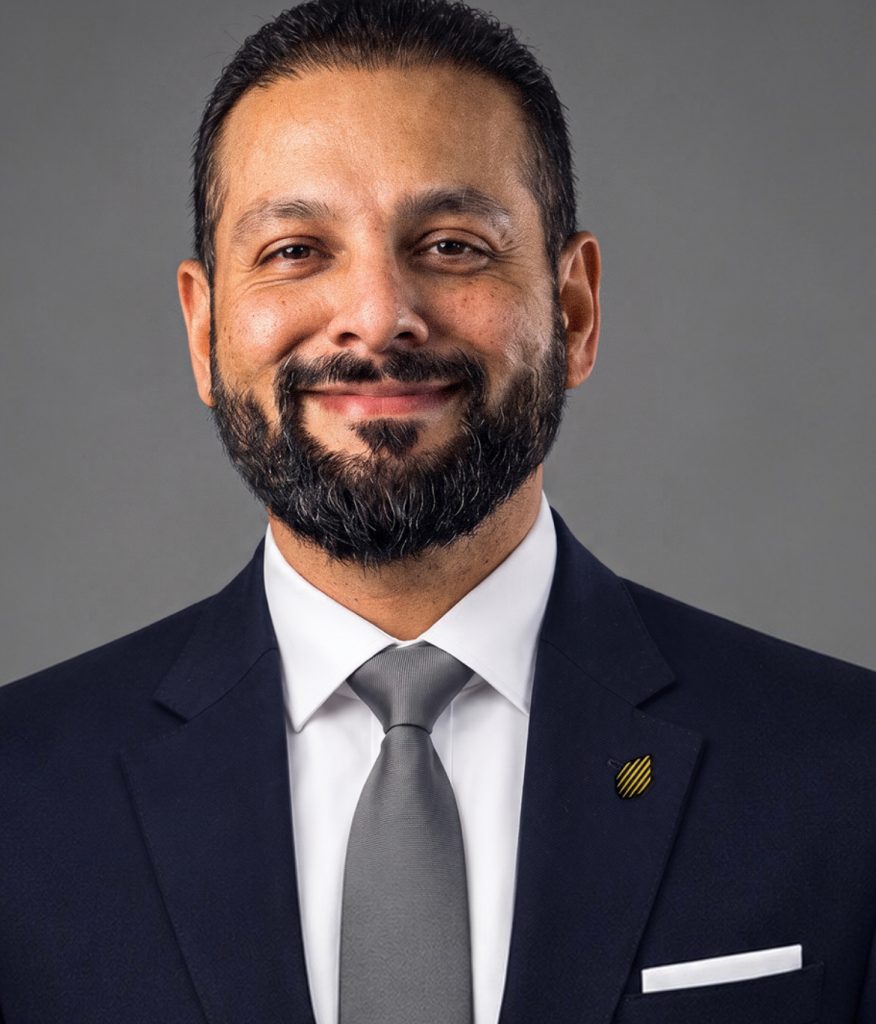 The Alternative Bank Limited (Alt Bank) has announced the appointment of Gul Khan as Managing Director and Chief Executive Officer following approval by the Central Bank of Nigeria (CBN). He succeeds Hassan Yusuf, the Bank’s founding Managing Director.
Khan brings more than 25 years of international financial services experience, having worked in Europe, America, Asia, Middle East & Africa. Most recently he served as Chief Executive Officer and Board Director of I&M Bank Kenya and was Group Head of Products for Airtel Money, the fintech business across 14 markets in Africa. He alsopreviously served as Global Head of Retail Banking and Wealth Management at HSBC Amanah, the Group’s non-interest banking business. His career also includes executive leadership roles with banks in UAE, Egypt and Qatar giving him experience across established banking institutions and technology-led financial services businesses.
Commenting on the appointment, Muhtar Bakare, Chairman of Alternative Bank, said “Gul’s expertise in non-interest banking and his leadership experience across African financial services position him well to lead Alternative Bank through its next phase of growth. The Board is confident in his ability to build on the Bank’s foundations and broaden its reach, while maintaining the strong governance and commercial discipline essential to long-term success.”
Khan will work with the Board and management team to guide the Bank’s next phase of growth. Outlining his priorities, he said:
“The opportunity is to make Alt Bank the preferred choice for consumers and businesses in Nigeria. That means understanding what customers need, whether acquiring productive assets or growing their businesses, and providing solutions that are relevant and they can use with ease. I look forward to working with colleagues to build on Alt Bank’s progress and earn our customers’ continued trust.”
Alt Bank met the CBN’s revised minimum capital requirement for national non-interest banks well ahead of the regulatory deadline. The Bank has also completed its migration to MIZAN, a core banking platform designed for non-interest financial institutions. Its strengthened capital base and investment in technology support its capacity to finance business growth and develop products that meet the needs of its customers.
The Alternative Bank is part of Sterling Financial Holdings Company Plc, a diversified Nigerian financial services group. Backed by the Group’s institutional strength, governance framework and commitment to innovation, the Bank continues to advance its mission of expanding access to non-interest financial solutions for individuals and businesses across Nigeria.
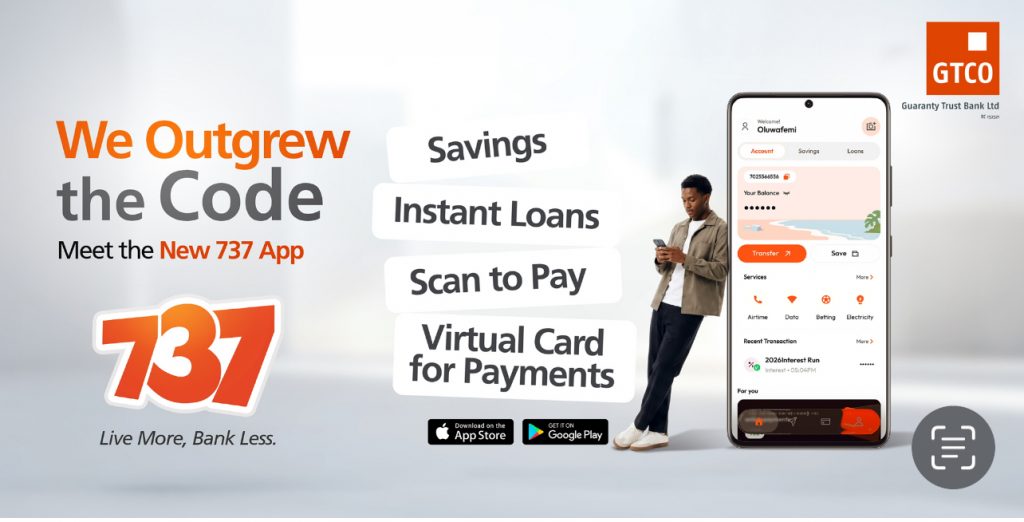 Guaranty Trust Bank Limited (“GTBank”), the banking subsidiary of Guaranty Trust Holding Company Plc (“GTCO” or “the Group”), today announced the launch of the 737 App designed around the evolving financial needs, digital habits and everyday experiences of young Nigerians. The launch further reaffirms GTBank’s longstanding commitment to building financial solutions that empowers the younger generation.
For GTBank, engaging the younger generation goes beyond providing access to banking services. It is about understanding how young people live, work, connect, spend and plan for the future, and developing solutions that fit these realities. This commitment has shaped the bank’s product innovation over the years, from GTCrea8, which offers young people free banking services, to a growing suite of digital solutions that make managing money easier, faster and more accessible.
The 737 App represents another deliberate step in this journey. Recognising that young people are increasingly mobile-driven, digitally connected and accustomed to managing different aspects of their lives from their phones, GTBank has developed an application that fits into the lifestyle of the young average Nigerian, experiencing life more and banking less. I
The 737 App uses customers’ phone numbers as their account numbers, making account details easier to remember and share. It also offers free virtual Naira Mastercard for online payments on international platforms such as Amazon, Netflix, Spotify and AliExpress. Its Scan to Pay feature enables faster transfers by eliminating manual account entry, while savings tools support future goals. Customers can also access instant loans and conveniently pay for airtime, data and utility bills.
Commenting on the launch, the Managing Director of GTBank, Mrs Miriam Olusanya, said: “We recognise that younger generations have an evolving relationship with money and financial services. They are technology-driven, digitally connected and increasingly intentional about how they spend, save and pursue their ambitions. Our responsibility is to understand these changing behaviours and translate them into financial solutions that fit seamlessly into their lifestyles. The 737 App reflects this commitment, bringing together the convenience, speed and accessibility they expect, while providing the tools to support their financial aspirations and plan for the future.”
She added: “This reflects the Group’s broader commitment to continuously innovate around the needs of the younger generation. Over the years, we have remained deliberate about creating products and opportunities that make financial services more accessible, relevant and rewarding for young people, empowering them to pursue their ambitions and make the most of life.”
The 737 App is available for download on the Google Play Store and Apple App Store, with a seamless digital onboarding process for both new and existing customers.


Zenith Bank Plc has awarded ₦190 million to 13 winners across three innovation competitions at the sixth edition of its flagship technology event, Zenith Tech Fair 2026: Future Forward 6.0, reinforcing its commitment to nurturing innovation, accelerating digital advancement and empowering the next generation of African technology leaders.
Held virtually for the first time on Thursday, November 5, 2026, under the theme, “AI: Embrace or Extinct,” the event brought together technology leaders, entrepreneurs, innovators, policymakers and participants from across the world to explore the transformative potential of Artificial Intelligence (AI) and its implications for businesses, economies and society. The ₦190 million prize pool is the largest in the history of the Tech Fair, further demonstrating the Bank’s growing investment in technology and innovation.
The 2026 edition featured three competitions: the Hackathon, Startup Pitch Competition and the newly introduced Future Innovators Challenge. Together, they attracted over 3,000 submissions from developers, entrepreneurs and secondary school students seeking to showcase innovative solutions and secure funding to advance their ideas.
In the Hackathon category, Team Solo emerged overall winner, receiving ₦35 million, while 10x Brains secured second place with ₦20 million. Rumour Hunters came third with ₦15 million, while Òmìnira and Team Avera emerged fourth and fifth, receiving ₦10 million each.
In the Startup Pitch Competition, Cutstruct Technology Limited clinched first place with ₦35 million, followed by Sproutly, which received ₦20 million. PharmaRun secured third place with ₦15 million, while AUI BRAND and ProDevs completed the top five, receiving ₦10 million each.
The Future Innovators Challenge, introduced to encourage technology-driven creativity and problem-solving among secondary school students, produced three winners. Caleb British International School emerged first, receiving ₦5 million, while Queen of the Rosary College, Onitsha, came second with ₦3 million. Regina Pacis International School secured third place with ₦2 million.
Among the winning solutions, Cutstruct Technology Limited’s LiveVend platform is transforming construction procurement by connecting developers and contractors with suppliers. Sproutly uses financial technology to simplify school payments, while PharmaRun makes access to authentic medications more convenient through its network of pharmacies. Caleb British International School’s ReLearn platform, which won the Future Innovators Challenge, redistributes used textbooks to students in underserved communities, making learning materials more affordable and accessible.
Beyond the financial rewards, the winners will benefit from a six-week mentorship and incubation programme, providing expert guidance and practical support to refine their solutions, strengthen their business models and scale their innovations.
In his welcome remarks, the Founder of Zenith Bank Plc, Jim Ovia, CFR, reaffirmed his vision of empowering young people through technology and nurturing innovators capable of making a global impact. He said: “My vision is to continue empowering young people through technology, with the hope that one day we will produce individuals who make an impact on the scale of Bill Gates, Steve Jobs and Jeff Bezos.”
In her opening address, the Group Managing Director/Chief Executive Officer of Zenith Bank Plc, Dame Dr Adaora Umeoji, OON, highlighted the urgency of embracing Artificial Intelligence and adapting to the rapidly evolving technology landscape. She noted that the Bank’s commitment to innovation is reflected in its investments in digital infrastructure, products and services, including its Zenith Intelligent Virtual Assistant (ZIVA). She also highlighted the role of the Bank’s fintech subsidiary, FinoPay, in developing the SMART AfCFTA Portal to facilitate intra-African trade.
Speaking on Africa’s role in the global AI revolution, she declared: “The next generation of global AI champions can and should come from Africa.” She further challenged participants to embrace emerging technologies, stating: “Do not fear AI. Embrace it. Whether you are developing a solution for a farm, clinic, classroom or factory, dare to think big, build ethically and create scalable solutions.”
The Governor of Lagos State, His Excellency, Mr. Babajide Sanwo-Olu, commended Zenith Bank’s contribution to technological advancement, saying: “Over the years, Zenith Bank has been a strong driver and enabler of innovation, using technology to advance solutions and raise expectations for its employees, stakeholders and the wider business community.”
He also reaffirmed the Lagos State Government’s commitment to the technology ecosystem, stating: “We are also committed to supporting and promoting the technology ecosystem, creating opportunities for innovation and ensuring that Lagos remains at the forefront of this important area of development.”
The Honourable Minister of Innovation, Science and Technology, Dr Kingsley Tochukwu Udeh, SAN, represented by the Director-General of the National Space Research and Development Agency (NASRDA), Professor Matthew Adepoju, commended the Bank’s investment in technology and youth empowerment. He emphasised the importance of public-private collaboration in translating innovation into economic opportunities, stating: “When government and the private sector work in the same direction, ideas become products, products become businesses, and businesses create jobs for our people.”
The Tech Fair featured a distinguished line-up of technology leaders and industry experts, with Zach Kass, former Head of Go-to-Market at OpenAI, delivering the keynote address. Examining the evolution of AI and the emergence of autonomous agents, Kass challenged participants to consider the place of human judgement and values in an increasingly automated world. He said: “We are approaching a world in which we will have to ask ourselves, regularly and seriously: what do we want to keep human, and what are we willing to automate?”
Other speakers included Mike Ogbalu III, Managing Director/CEO of the Pan-African Payment and Settlement System (PAPSS); Deniz Oran, Head of Payment Partnerships at Google for EMEA; Jane Egerton-Idehen, Managing Director/CEO of Nigerian Communications Satellite Limited (NIGCOMSAT); Kashifu Inuwa Abdullahi, Director-General of the National Information Technology Development Agency (NITDA); and Chinwe Uzoho, Regional Managing Director, West Africa, Network International. Sessions were moderated by Victoria Rubadiri, CNN Correspondent, alongside other industry experts.
Conceived by the Bank’s Founder, Jim Ovia, CFR, the Zenith Tech Fair reflects his vision of empowering young Nigerians through technology and nurturing innovators capable of developing solutions with global relevance. Over the years, it has evolved into a platform connecting ideas, talent, investment and opportunities, while giving emerging technology businesses the resources and exposure to grow.
Previous winners have gone on to develop solutions with practical applications across different sectors. They include JumpnPass, which developed a self-checkout solution for retail; CreditChek, which uses AI and open banking to streamline credit verification; TrustLoop, winner of the 2025 Hackathon with its digital identity verification solution; and Cubbes Technologies Limited, winner of the 2025 Startup Pitch Competition with its AI-powered educational technology platform.
With the introduction of the Future Innovators Challenge, Zenith Bank is extending this support to secondary school students, recognising the importance of identifying and nurturing technology talent early. Through the Tech Fair and its broader technology-driven initiatives, the Bank continues to invest in the people, ideas and businesses shaping Africa’s digital economy, providing innovators with the funding, mentorship and opportunities to turn promising ideas into impactful solutions.


-
 news6 years ago
UPDATE: #ENDSARS: CCTV footage of Lekki shootings intact – Says Sanwo – Olu
-
 lifestyle6 years ago
Former Miss World: Mixed reactions trail Agbani Darego’s looks
-
news8 years ago
-
 health6 years ago
Chairman Agege LG, Ganiyu Egunjobi Receives Covid-19 Vaccines
-
 lifestyle5 years ago
Obateru: Celebrating a Quintessential PR Man at 60
-
 news1 year ago
BREAKING: Tinubu swears in new NNPCL Board
-
 society3 years ago
Bisbam CEO, Abisola Bamidele, Bags Owu Chieftaincy Title
-
 health6 years ago
UPDATE : Nigeria Records 790 new cases of COVID-19