
brand
THE MAKING OF A CSR MASTERSTROKE: AN X-RAY OF FIRSTBANK’S YEOMAN EFFORT TO MOVE ONE MILLION CHILDREN TO E-LEARNING


 The rabbit hole of uncertainty, confusion and fear that pupils and their parents fell into in the dying days of March when the country was in lockdown was best captured in a Saturday Sun feature of May 16, titled, “COVID-19: Troubles of e-Learning.”
The story catalogues the challenges that erupted out of the disruption caused by the coronavirus pandemic, the fears and frustrations brewed by the new abnormality foisted on the world, the pessimism that pervaded the globe from developed to underdeveloped countries and the possibilities that blew up in the aftermath in the education stratosphere.
With the new order of social distancing, self-isolation, government-enforced quarantine and the ubiquitous lockdown, the prospect of indefinite stay at home until at least an elusive vaccine is found, loomed. This precipitated a distress as never seen before in the education space.
Yet, a panacea was at hand: Digital learning, though hitherto given scant attention. But crossing into that nirvana was an uphill task, especially, in this part of the world. Why: The existence of a huge digital deficit both in infrastructure and the requisite skill.
The dilemma confronting parents, pupils and tutors are multi-dimensional as illustrated by these three vignettes from the story:
Oko Odinakachi, a student of Abia State University, faced frustration on two fronts: her institutions dillydallying about adopting the e-learning strategy on the one hand; her little faith in digital learning, on the other hand. “I was on the verge of writing my first-semester examination. How possible can we do that digitally when there are issues with even JAMB CBT here in our country?”
A father whose daughter, a student of Federal Government College Shagamu preparing for her Senior School Certificate Exam, was compelled to seek a suitable e-learning portal because WAEC advised students to be studious during the lockdown as they’d be going straight into the exam hall at short notice as soon as the pandemic is over. The search led him to an online WAEC Preparatory Class that demanded payment for requisite online resources. “One subject is N1, 500, four subjects N4, 500 and six subjects cost at N6, 500. I didn’t go further because of the fee, which I think is exorbitant, given the current state of the country,” he complained. He joined the rank of other parents who raised concerns over exploitation by mercenaries masquerading as e-learning groups.
Abolade Kunle, a JSS3 student was aware of the government-sponsored tutorial on the radio but he was unable to enjoy the benefits: “We don’t have a radio set in the house. I use my dad’s phone once in a while but he doesn’t allow me to use it all the time,” he railed. A related drawback was cited by one of his teachers at the public school in Mushin: “In the past five weeks, we have had barely three days of electricity supply. It is not every parent that can afford a generator. Is it not when you have electricity supply that the children can watch [government educational programme on] the television?”
The absence of curative or prophylactic breakthrough against the virus meant that academic activities would remain in limbo, while pupils and their parents are faced with the undaunted possibility of a long spell at home. The prospect of a long lull of academic inactivity struck a palpable fear that fueled the scramble unto digital learning platforms as educationists and institutions across the country experimented with remote learning, albeit on a trial-and-error basis. The efforts were at best tangled; the process muddled; the result ineffective. Even, for students of tertiary institutions, the online class was to many a Lala-land.
With the option inevitably narrowed down to digital learning, a Catch-22 situation evolved. Who’s going to make it happen? How? When?
Best foot forward
Eventually, the first foot forward––and indeed the best one––came and it was from First Bank of Nigeria Limited.
The bank, a leading financial inclusion services provider, announced its intention to roll out an innovative e-learning initiative on the heels of its philanthropic contribution of the sum of one billion naira to the Coalition Against COVID-19 (CACOVID), a private-sector task force that partners the Federal Government, the Nigeria Centre for Disease Control (NCDC) and the World Health Organisation (WHO) to combat the coronavirus in Nigeria.
In the months to come, the bank’s effort would resonate forcefully in the education space. The reason for this was not farfetched. Since responsiveness remains a cornerstone of Corporate Social Responsibility, when it is timely, it becomes a major coup. The severity of the pandemic required “uncomfortable, transformative responsiveness,” not the usual CSR response where organisations choose and design responsiveness on their own terms, described by Wayne Visser in Evolution and Revolution of Corporate Social Responsibility, as “when giving is easy and cheque-writing does nothing to upset their commercial applecart.”
Taking on the e-learning challenge head-on was an self-assigned project for which the bank was not under any compulsion to undertake. That it volunteered to tackle the challenge is an indication of the largeness of its CSR aorta.
Suffice to say that a handful of digital learning initiatives exist before the advent of the Covid-19 lockdown; the First Bank effort, however, resonates louder because it has a measurable stated goal: Moving one million pupils into e-learning platform.
A response apt and adequate
Lagos State’s prompt response to the pandemic included the immediate shutdown of schools. By March 25 (four days before Lagos State went into total lockdown on the order of the President), the First Bank initiative was rolled out, and it inalienably took the optics of “the” response to the glitch caused to the education system by the coronavirus pandemic.
First Bank went into collaboration with Lagos State Government and an indigenous mobile learning platform, Robert and John Limited, whose trademark Roducate e-solution, a comprehensive curriculum-based education, is a cornucopia for a broad spectrum of students.
Having powered similar projects in the past, Robert and John was an obvious best in the e-learning business, a fact reinforced by First Bank CEO, Adesola Adeduntan: “In searching for the best fit solution, several options were considered by educators and teachers from the state and First Bank over the last couple of weeks before adjudging Roducate the offering from Robert and John, an innovative technology firm, to be the best of all reviewed.”
Is Roducate the Rosette stone of online learning? The facts were in its favour. Its claim of being the “most comprehensive e-learning platform in Nigeria and indeed Africa” is justified on its curriculum-based education for primary, secondary, and tertiary students. Moreover, ;it has been active in the e-learning space as far back as 2014 and has perfected the mechanics of effective digital learning, winning endorsements along the way from NUC, NERDC, JAMB and Lagos State Ministry of Education.
And by tweaking its blueprint, it came up with an e-learning mother lode––lecture notes, assignments, mock exams, videos, podcasts, and educational games––a rich vein of contents for primary, secondary and tertiary institutions, structured in consonance with the government-accredited curriculum. From the interactive tutorial videos to the innovative feature that enables the learner to take notes for quick reference, it was a whole new experience and an enjoyable learning process.
Suffice to reiterate that the First Bank/LASG Roducate is not the first of its kind; before it, there was Glo Mobile Tutor (since 2014) and UBA LEARN (unveiled in 2018) amongst others. However, certain factors gave it an edge.
The comparative advantage
The CSR takeaways from the initiative are writ large in what makes it different from others––in other words, its comparative advantages.
On the first count, the effort surfaced at a time of need, a time when there was an urgent need to close the gap caused by the disruption in children education due to schools closure following the Covid-19 lockdown. In one fell swoop, a solution materialised that provided succour for all, from kindergartens kids to grad-year students of tertiary institutions.
Secondly, while it is indeed a rolling scheme, it nevertheless came with specific number goal of one million pupils to be empowered with digital learning; this calibrated objective makes the intervention easy to evaluate, compared to other similar initiatives.
Thirdly, the biggest boon: subscription-free.
Consider what this means to parents such as the one cited in Sun story who had to shell out approximately N6, 000 for his daughter to access the needed resources. With the First Bank initiative, students simply get on the platform by registering free at https://www.firstbanknigeria.com/e-learning/.
And then the masterstroke: the enhanced offline feature of the initiative. It means students can study offline without having to bear the burden of buying data. What’s more, First Bank gave further impetus by providing 20, 000 devices that came preloaded with the curriculum.
Elaborating on the low-end devices preloaded with Roducate offline content, Adeduntan disclosed that “the phones have SIMs and limited data tied, only, to the Roducate learning product.”
Kayode Abayomi, the spokesperson for Lagos State Ministry of Education, further hit the nail on the head.
“The devices are efficient and fit for purposes for all students especially indigent students given the fact that data consumption of most e-learning solutions has been a major stumbling block for the majority of students and teachers alike,” he said.
Its fourth edge is from its collaborative nature. One of First Bank’s collaborators on the project is a partner with leverage in the education space: the Lagos State Government. That made a big difference, as it gave the initiative authority and legitimacy that immediately gained traction.
In return, the initiative was well-appreciated by Lagos State Governor Sanwo-Olu: “It is not out of place that we are witnessing more infusion of technology in learning and this intervention by First Bank could not have come at a better time.”
Lastly, the First Bank e-learning project took care of both the short-term and the long-term interest of Nigeria in the digital race. Beyond the exigency of the moment, which was to get the children into learning mode, the intervention took on the imperative of helping young Nigerians develop relevant skills in emerging technologies, thereby enhancing their competitiveness in the interconnected world of today.
How? Via two other initiatives, both partnerships with IBM (that schooled youths in coding Artificial Intelligence, cloud, internet of things, blockchain, data science, analytics and cybersecurity) and Curious Learning (which offers academic contents for pre-learning and early-stage children aged 3-8 through self-guided learning apps). These two threw open the door of digital technology and made available for free the opportunities to transform them into tech geeks.
Taking responsibilities
For organisations with a sense of CSR, Covid-19 was an opportunity that was too good to miss. Where and how they responded depend on their preexisting corporate responsibility culture, their focus, the heft of their commitment.
Adeduntan said of the First Bank initiative: “We are warmed by the fact that different organisations have risen to the various challenges and are supporting in areas such as health and welfare, and we feel the peculiar needs of our children and youth must not be left out and have therefore elected to focus on contributing to solving the current education challenge.”
He said further: “It is a responsible approach to empower them, given that they are our future and the foundation to build our country to greatness. By partnering on this, we are solving a problem for families and our future.”
In September, schools re-opened, and education activity, deflated for months, gradually regains shape and gathers momentum. The number of students enrolled on the platform has increased significantly. The big question: is it going to be one of those projects that got abandoned after the ovation died down? Or is it likely to be sustained?
The cue is in the stated goal of the initiative. FirstBank has placed on itself the onus to continue to build on the effort and to give the needed impetus that will accelerate the achievement of the set goal of 1,000, 000 registered children in record time. It is expected that FirstBank will sustain the race to the finishing line.
brand
AUBA Commences Comtempt Proceedings Against WEMPCO Directors over Alleged Disobidence of Court Order


Mr. Lewis Tung and his brother Robert Tung
The Federal High Court, presided over by Honourable Justice Aluko, has granted an application by United Bank for Africa (UBA) Plc for substituted service of Form 49 on directors of Wempco named as alleged contemnors in the case of UBA v. Wempco.
The application forms part of proceedings seeking to determine whether the named individuals disobeyed an order of the court and whether they should be committed to prison for contempt.
The directors named as alleged contemnors are Lewis Shui Ngor Tung, Phillip Shui Chei Tung, M.A. Ola Yusuf, Tung Lawrence Blake, Aali Aare Hadji Tokunbo, Paul Shui Po Tung, Tung Robert, C.L. Ip and Taiwo Alli.
In advancing the application, counsel to UBA argued that service of Form 49 on the alleged contemnors was necessary to enable them to appear before the court and show cause why an order of committal should not be made against them.
He also argued that the Directors of Wempco and some members of staff took illegal steps in an attempt to disobey the Order of Court.
The court’s decision to grant substituted service provides a procedural step towards bringing the notice to the attention of the individuals concerned in accordance with the court’s directions.
Form 49 is a notice requiring an alleged contemnor to show cause why an order of committal to prison should not be made against them for alleged disobedience of a court order.
The Federal High Court had earlier made an Order of Mareva Injunction and appointed a Receiver/Manager over some of the Assets of Wempco following the indebtedness of Wempco to UBA in the sum of N61,445,695,993.76 (Sixty One Billion FourHundred and Forty-Five Million Six Hundred and Ninety Five Thousand, Nine Hundred and Ninety Three Naira, Seventy Six Kobo).
 A Lagos State High Court, last Thursday, granted interim preservative orders of Mareva Injunction against Vitol SA – a Switzerland based Energy Trading company, and four other shipping companies in favour of United Bank for Africa Plc.
The bank alleged Vitol of wrongful release of cargoes of petroleum products which were consigned to the order of United Bank for Africa Plc in the Bills of Lading.
Addressing the Court, Bode Olanipekun, SAN, lead counsel for United Bank for Africa, urged the Court to grant the interim preservative orders against Vitol and the other shippers.
In a ruling on the application, the presiding judge, Honourable Justice K. A. Jose (Mrs.) granted three prayers in UBA’s application, including requests to restrain the dissipation of assets and dealings with funds up to the disputed amount by Vitol S.A.
“Prayers 1–3 are granted as prayed against the 2nd Respondent only,” the judge ruled.
The application was brought pursuant to Order 43 Rule 1 of the High Court of Lagos State (Civil Procedure) Rules 2019 and the Lagos State High Court Practice Direction No. 2 of 2019.
UBA is seeking to contend in the substantive proceedings that Vitol SA and the owners of the vessels, are liable for alleged conversion, misrepresentation and negligence arising from the non-delivery of the petroleum products.
UBA also cited 34 financial institutions and public agencies, including commercial banks, merchant banks, microfinance banks, the Nigerian Ports Authority and the Nigeria Customs Service, in connection with the application.
In an affidavit supporting the application, UBA’s Group Head of Recoveries and Remedial Management, Anthony Chilaka, stated that the bank issued a letter of credit for the benefit of Vitol SA to facilitate a petroleum products transactions.
UBA alleged that the cargo was transported to Nigeria and that the vessels’ masters issued several bills of lading.
The bank further alleged that Vitol subsequently endorsed the bills of lading “to the order of” UBA and handed over the original copies to it.
UBA maintained that the endorsement entitled it to take possession of the cargo upon completion of the voyage.
However, Chilaka stated that the bank had not received the gasoil despite the completion of the voyage.
“The applicant has not been given possession of the gasoil despite completion of the voyage,” the affidavit stated.
UBA alleged that the cargo was instead, applied to the use of another party, contending that the respondents’ failure to deliver it amounted to conversion and negligence.
The bank argued that the respondents had obligations arising from the transaction and the endorsement of the shipping documents, which it claimed were not fulfilled.
The bank alleged that the cargoes associated with those transactions were also diverted to the use of other parties after their voyages, rather than delivered to UBA.
brand
BANKING ON HER TOMORROW: ZENITH BANK EMPOWERS 300 GIRLS WITH EDUCATION, KNOWLEDGE AND CONFIDENCE
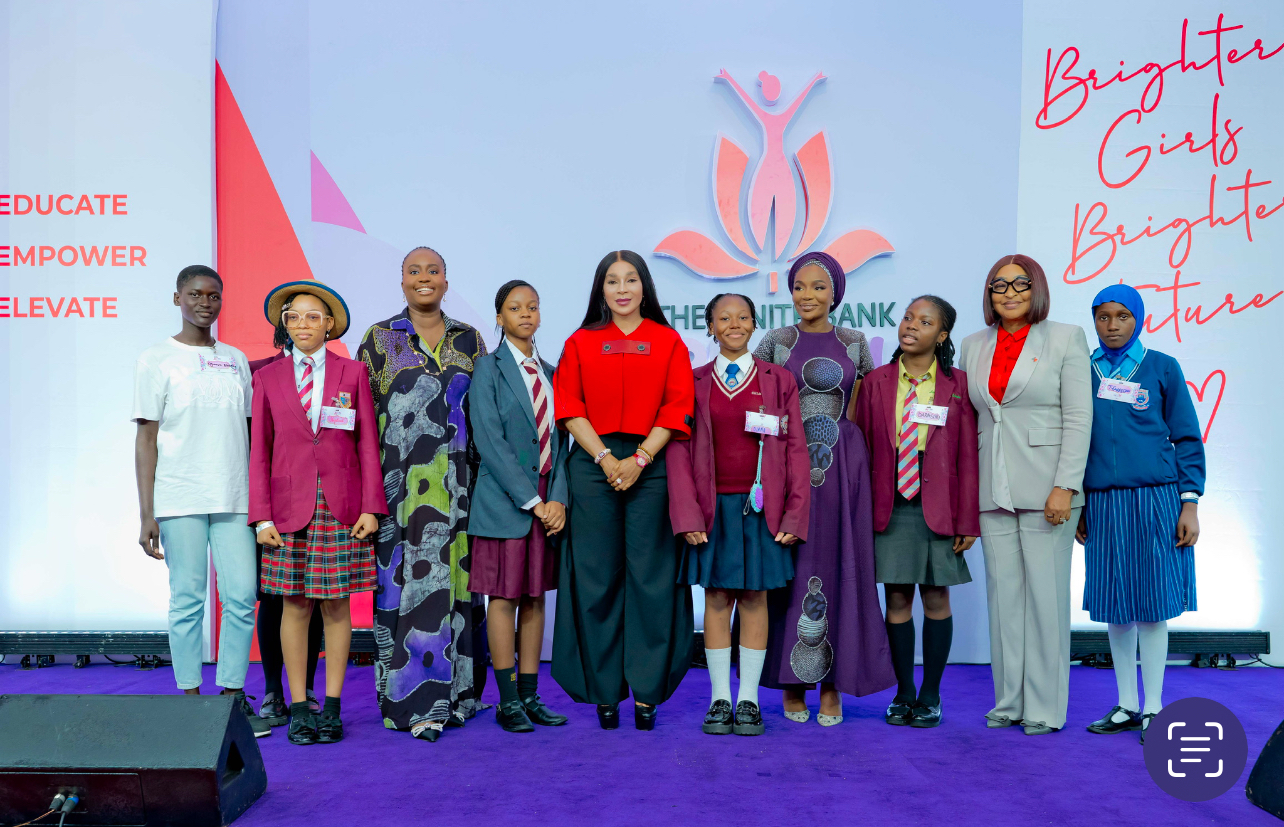
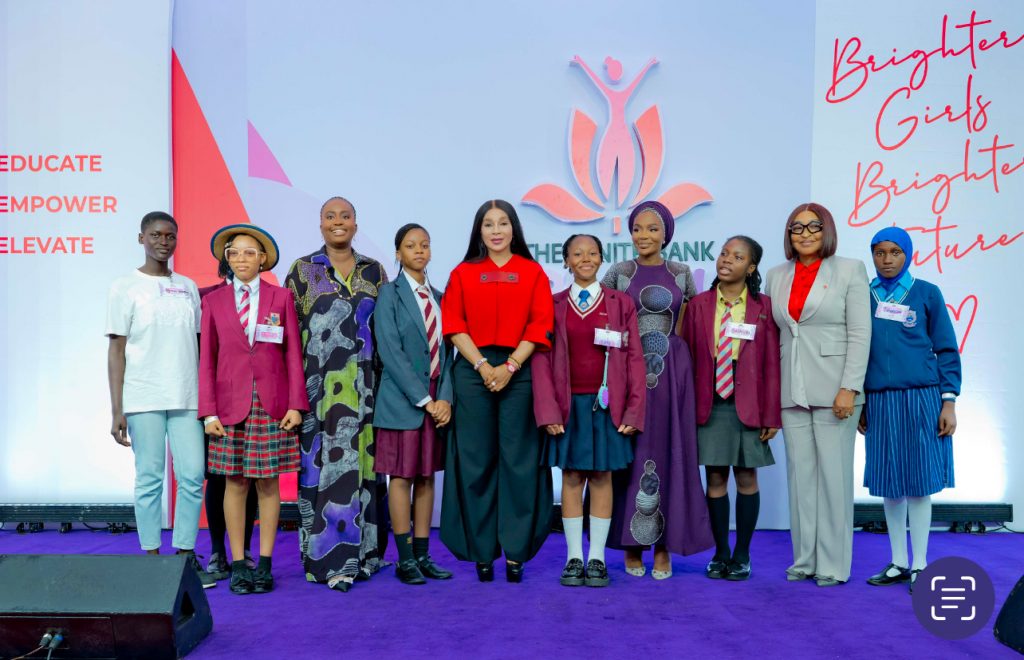
Zenith Bank Plc has launched the maiden edition of its Girl-Child Empowerment Programme, themed “Banking on Her Tomorrow,” bringing together 300 schoolgirls aged 13 to 17 from selected schools across Lagos for a day of learning, mentorship and personal development.
Held on Monday, October 12, 2026, at the Civic Centre, Victoria Island, Lagos, the programme featured sessions on finance and investment, etiquette and personal development, social media ethics, and social relationships and interactions, equipping participants with practical knowledge and skills for their personal, educational and future career journeys.
The initiative, a brainchild of the Bank’s Group Managing Director/Chief Executive Officer, Dame (Dr.) Adaora Umeoji, OON, reflects Zenith Bank’s commitment to nurturing the potential of young girls and helping them make informed choices about their futures.
In her welcome address, Dame (Dr.) Umeoji urged the participants to believe in their abilities, pursue their ambitions and remain focused and disciplined. Drawing on examples of young girls who have achieved remarkable feats, she challenged them to look beyond their present circumstances and envision the women they aspire to become.
“To all my amazing young ladies here today, each of you possesses gifts, talents, and ideas that are capable of revolutionising the world. You can revolutionise the world with your ideas,” she said.
The GMD/CEO further encouraged the girls to explore their interests and resist societal limitations, stressing the importance of taking ownership of their futures.
“Never allow gender or age to limit your goals. Whatever interests you today, explore it. Whatever you choose to pursue in life, give it your best shot,” she said.
Delivering the keynote address, Her Majesty, Olori Atuwatse III, Queen Consort of the Warri Kingdom, encouraged the girls to embrace their identities, develop resilience and use their abilities to make a positive difference in the lives of others.
Using the mangrove tree as a metaphor for resilience, she reminded the participants that challenges need not define their futures and that their worth extends beyond academic results and external expectations.
“Every time you affirm the truth about who you are, you are building confidence. Every time the tide of life goes out and you are still standing, you are building resilience. And every time you use your gifts for another person, you are discovering your purpose,” Olori Atuwatse III said.
The programme featured interactive sessions led by accomplished professionals and personalities:
Ayanime Edem, founder of The Elite Finishing School and modern etiquette educator, discussed confidence, communication, self-presentation and etiquette.
Nigerian actress and content creator Bukunmi Adeaga Ilori, popularly known as Kie Kie, addressed responsible social media use, authenticity and digital boundaries.
Representing Zenith Bank, Thelma Okonye and Adesola Adeyemo introduced the girls to saving, responsible money management and investment, highlighting the importance of developing sound financial habits early.
While Nigerian filmmaker, creative executive and educator,Praise Onyeagwalam, Director Pink, led a session on healthy relationships, self-awareness and effective communication.
The sessions encouraged active participation, giving the girls opportunities to ask questions and engage with the speakers on issues relevant to their experiences and aspirations.
The programme also featured competitions, with cash prizes totalling over ₦1 million awarded to winners. The participants received books to encourage reading and personal growth, while musical performances by Nigerian singers Qing Madi and No. 11 added to the lively atmosphere. The event was hosted by Temi Badru, public speaker, communications coach and lawyer, with Darasimi Destiny Nadi serving as mini host.
Delivering the closing remarks, Executive Director, Zenith Bank Plc, Dr. Mrs. Adobi Nwapa, highlighted the GMD/CEO’s vision for the initiative and the Bank’s commitment to sustaining its impact.
“The programme is the vision of our GMD/CEO, who conceived and championed it, demonstrating her unwavering commitment to the empowerment of the girl child. Through her leadership, she has shown the girls what is possible when a woman dares to lead. At Zenith Bank, our commitment to the girl child extends beyond today, and we will continue to nurture their aspirations through this annual initiative,” she said.
Dr. Nwapa thanked the speakers and participants for contributing to the programme’s success and encouraged the girls to apply the lessons learnt, remain confident and pursue their aspirations with determination.
The initiative builds on Zenith Bank’s longstanding commitment to advancing opportunities for women and girls through programmes including its annual International Women’s Day Seminar, the Zenith Women’s Basketball League, the Women of Honour Awards in partnership with the Ford Foundation, the Pad-a-Queen Initiative and Z-Woman, which supports women-owned businesses through business support and access to credit at discounted rates.
Through “Banking on Her Tomorrow,” Zenith Bank is extending this commitment to a younger generation, equipping girls with the knowledge, skills and confidence to pursue their ambitions and contribute meaningfully to their communities and society.


-
 news6 years ago
UPDATE: #ENDSARS: CCTV footage of Lekki shootings intact – Says Sanwo – Olu
-
 lifestyle6 years ago
Former Miss World: Mixed reactions trail Agbani Darego’s looks
-
 health6 years ago
Chairman Agege LG, Ganiyu Egunjobi Receives Covid-19 Vaccines
-
news8 years ago
-
 lifestyle5 years ago
Obateru: Celebrating a Quintessential PR Man at 60
-
 news1 year ago
BREAKING: Tinubu swears in new NNPCL Board
-
 health6 years ago
UPDATE : Nigeria Records 790 new cases of COVID-19
-
 society3 years ago
Bisbam CEO, Abisola Bamidele, Bags Owu Chieftaincy Title