
brand
BAFI Awards: FirstBank’s COVID-19 response sets the pace in CSR for other financial institutions



By Aniekan Ezekiel
From the publisher of BusinessDay, Frank Aigbogun’s welcome address at the recently held BusinessDay’s Banks and other Financial Institutions (BAFI) Awards came the following words: ‘The year 2020 has been a most interesting year. The economy and communities have been managed by disruptions imposed by COVID-19. Yet financial services have shown uncommon responsiveness and compassion towards customers and communities.’ Indeed, this has been an unusual year, no thanks to the coronavirus pandemic, but it has been a year defined as much by COVID-19 and its associated disruptions and difficulties as by the unprecedented response in kindness by corporate Nigeria.
BusinessDay’s BAFI Awards recognised achievements in a number of separate categories, each of which was worth its weight in gold. However, it could be argued that in this year of COVID-19, any recognition that took into account and was informed by the awardee’s COVID-related activities was probably the most significant of the awards/categories. It is against this backdrop that the recipient of the CSR Bank of the Year award at the BAFI Awards should be celebrated and projected as a model other corporate should emulate. And it came as no surprise that the bank that considers its destiny to be intertwined with Nigeria’s and whose commitment to nation building largely informs its approach to corporate responsibility and sustainability (CR&S), was so crowned as CSR Bank of the Year at the BAFI Awards.
The award was a well-deserved recognition for the exemplary role played by First Bank of Nigeria Ltd, Nigeria’s leading financial services provider, in support of the government and individuals’ as well as its own efforts to deal with the impact of COVID-19. Before the BAFI Awards, and, undoubtedly, proof that the award was not a fluke, CSR Reporters had named FirstBank as the 2020 Philanthropic Financial Institution of the Year in recognition of the bank’s social responsibility in the areas of e-learning and empowerment of SMEs in Nigeria. These CSR awards took cognisance of FirstBank’s unparalleled contributions to CSR, particularly through its e-learning initiative delivered in collaboration with partners from within and outside the continent, such as IBM, UNESCO and Robert & John, and the Lagos State Government.
Whilst different organisations rose to the various challenges resulting from COVID-19 crisis and were supporting in areas such as health and welfare, FirstBank chose and developed the e-learning initiative. FirstBank felt strongly that the peculiar needs of children and the youth risked being neglected at a time of unprecedented crises – with schools being closed, parents losing jobs, businesses shutting down, government revenues shrinking, health care resources being over-stretched, economic conditions worsening, etc. The bank therefore kicked off an initiative to move one million students to e-learning, alongside its partners, to minimise the disruption to the their education resulting from the prolonged closure of schools across Nigeria and ensure that they remain fully engaged during the difficult period, so they can continue to learn and compete favourably with their peers across the world. Over 140,000 students have benefitted from the e-learning initiative.
Focusing on key elements that resonated with its brand, such as dynamism, innovation and nation building, FirstBank’s e-learning initiative is an innovative and dynamic approach to learning which is not only a suitable and resourceful solution at this time, but also one that is intertwined with perhaps the next century’s likely digital approach to learning, especially with the addition of courses such as coding and robotics, which can usher students into the era of the Fourth Industrial Revolution and prepare them for jobs of the future. The e-learning initiative also aligns with the bank’s key focus area in its CSR framework – education. Education remains the single largest beneficiary of FirstBank’s enormous investments in CSR. Currently, 10 universities and three secondary schools enjoy FirstBank’s infrastructure projects; 10 universities are endowed with professorial chairs by the bank; and over 80,000 students in over 80 secondary schools in Nigeria have benefitted from financial literacy, and entrepreneurial and career counselling provided through FirstBank-sponsored programmes. Education consistently attracts the bank’s keenest attention from year to year. This is because FirstBank believes that education – quality and relevant education – remains the bedrock of any society and that when children are properly educated, the nation is enabled and global citizens who provide groundbreaking solutions for the continent and the world at large, are produced.
FirstBank’s partnership with IBM on the e-learning initiative, is making available to students the Digital-Nation Africa program, an online youth-focused learning programme that enables innovation and skills development on emerging technologies The IBM Digital- Nation Africa aims to provide African youth with effective digital literacy. The Platform seeks to enable African citizens, entrepreneurs and communities with the knowledge, tools and skills to innovate, design, develop and launch their own digital skills. It also helps African citizens enhance their digital skills to best meet the needs of the job market.
DNA provides a broad range of courses for various levels of digital literacy, from providing an introduction to the key emerging technologies beneficial for all, through an integrated innovator section to a focused skills enablement section where users can understand the skills and demands of the market and gain proven skills to enhance their job prospects. In addition, it provides free access to practical exercises and to allow for new ideas to be brought to life through focus areas such as Artificial Intelligence, Coding, Cloud, Internet of Things, Blockchain, Data Science and Analytics, and Cyber Security. There are currently nearly 14,000 registrants on the program, which is promoting opportunities to learn skills of the future.
The partnership with Curious Learning is designed to reach smartphone users using available curated and tested literacy and numeracy apps – with free access provided to these apps. Curious learning is delivering academic-based content for students aged three to eight through a number of mobile applications designed to empower these young children in a fun, self-guided learning process through exploration and curiosity to help them with their cognitive skills at a fundamental level. Examples of these apps are Feed the Monster and Read with Akili. Efforts are in place through Curious Learning to ensure the e-learning initiative swiftly moves across the country to school children and individuals with the need to promote the pursuit of knowledge, irrespective of age. This is critical in identifying with the roles of children at securing the future of any country.
Another partnership in FirstBank’s e-learning initiative is the one with Lagos State Government and Robert & John, an Edu-tech company that owns Roducate. The Roducate e-learning platform, structured in line with the government’s accredited curriculum for primary, secondary and tertiary schools across various fields of academic endeavours, such as science, commercial and arts, includes tutorial videos to reinforce the learning engagement, as well as assignments and mock exams to test students’ knowledge and progress in the course of studying. Learning on the platform also enables note taking for quick reference, and to foster extra-curricular activities, provides exciting features to make learning exciting and fun, such as podcasts and various games like brain pulse, monster munch etc. which allows students to play with one another online, thereby building relationships and promoting interactive learning.
So far FirstBank has provided 20,000 low-end devices preloaded with Roducate offline (presented to Lagos State Government for distribution to students) and enabled over 120,000 free sign-ups, on the Roducate e-learning platform, with the ultimate goal being to empower at least one million students. ‘This [e-learning] solution,’ according to Dr Adesola Adeduntan, Chief Executive Officer of FirstBank, ‘will see Lagos State offer children in the lower bracket, who may not have access to devices or data from home, affordable smart phones preloaded with the curriculum. The phones have SIMs and limited data tied, only, to the Roducate learning product, which means the recipients cannot browse, encouraging safe learning, but they can still submit tests, mock exams, etc.’ Dr Adeduntan, who encouraged parents and guardians to have their children and wards registered so their educational development is not held back, noted that the initiative is ‘in keeping with who we are at FirstBank, [where] our commitment to self-development and continuous improvement is never far from our thinking.’ In addition, FirstBank is a member of the Global Education Coalition led by UNESCO which is a platform for collaboration and exchange to protect the right of education during this unprecedented disruption and beyond.
Furthermore, in a bid to support SMEs operating in the education sector, FirstBank created a matching fund scheme of ₦5 billion LSETF-FirstEdu Loan, in partnership with the Lagos State Employment Trust Fund (LSETF). The scheme is designed to cushion the impact of Covid-19 pandemic on low-cost private schools by providing loans to them at an attractive interest rate. At the launch of the scheme, the Managing Director/CEO of FirstBank, Dr Adesola Adeduntan said: ‘At FirstBank we recognise the indelible role played by the education sector in the growth of any economy and this underscores our partnership with Lagos State Government for continuous development of the education services in Lagos State and the nation as a whole. The commitment by the Lagos State Government – including this partnership – to enable schools is quite commendable as this will mitigate the challenges caused by the lockdown on the education sector following the COVID-19 pandemic.’
Woven into the fabric of society for over 126 years, overcoming challenges and remaining a dominant player in Nigeria’s financial services landscape, FirstBank has been partnering and supporting various sustainable activities towards the continued growth of its host communities and the nation at large. As a responsible corporate organisation committed to supporting all its stakeholders in the most sustainable manner possible, the bank has partnered various state governments through the private sector-led Coalition Against COVID-19 (CACOVID) intervention with a view to promoting the readiness and efficiency of health care professionals and other compatriots at the forefront of fighting the pandemic. Beyond Nigeria, FirstBank’s sub-Saharan African subsidiaries have also been involved. So far they have made donations amounting to US$173,000 in cash and kind towards alleviating the impact of COVID-19 on the continent.
According to BusinessDay, the BAFI Awards, convened annually to recognise and celebrate organisations that have achieved excellence in the delivery of their financial services across the entire client and customer spectrum, is adjudged the most rigorous, prestigious and transparent awards programme in the industry. Since its inception in 2014, when the first edition held, its organisers, BusinessDay has implemented an audit-based approach in the evaluation process, meticulously reviewing each shortlisted company’s financial reports, commissioned customer perception surveys and analyst opinion, then comparing these with its competition in a longitudinal study. The BAFI Awards have become established as the benchmark of distinction for institutions in the financial services sector. Its rising popularity among leaders in the banking, investing, insurance, and asset management subsectors have earned the BAFI Awards a reputation as ‘the only recognition you deserve’.
The BAFI Awards is backed by the BusinessDay Research and Intelligence Unit (BRIU). Nominations for the BAFI Awards are the culmination of a rigorous review process. The BRIU and an independent panel of judges evaluate more than two hundred and fifty institutions and benchmark them against their global peers using several indices in a thorough evaluation process. Nominees are assessed for their vision, execution and market leading propositions. The BAFI award categories cut across banking, insurance, capital markets, investment, pension funds, trustees, registrars, stockbroking and private equity. This year’s event where FirstBank won Best CSR Bank of the Year (and a second award – Best Mobile Banking App), was themed: Interpreting an Irrational Year: Coping, Adjusting and Thriving in a Wicked Learning Environment.
brand
AUBA Commences Comtempt Proceedings Against WEMPCO Directors over Alleged Disobidence of Court Order


Mr. Lewis Tung and his brother Robert Tung
The Federal High Court, presided over by Honourable Justice Aluko, has granted an application by United Bank for Africa (UBA) Plc for substituted service of Form 49 on directors of Wempco named as alleged contemnors in the case of UBA v. Wempco.
The application forms part of proceedings seeking to determine whether the named individuals disobeyed an order of the court and whether they should be committed to prison for contempt.
The directors named as alleged contemnors are Lewis Shui Ngor Tung, Phillip Shui Chei Tung, M.A. Ola Yusuf, Tung Lawrence Blake, Aali Aare Hadji Tokunbo, Paul Shui Po Tung, Tung Robert, C.L. Ip and Taiwo Alli.
In advancing the application, counsel to UBA argued that service of Form 49 on the alleged contemnors was necessary to enable them to appear before the court and show cause why an order of committal should not be made against them.
He also argued that the Directors of Wempco and some members of staff took illegal steps in an attempt to disobey the Order of Court.
The court’s decision to grant substituted service provides a procedural step towards bringing the notice to the attention of the individuals concerned in accordance with the court’s directions.
Form 49 is a notice requiring an alleged contemnor to show cause why an order of committal to prison should not be made against them for alleged disobedience of a court order.
The Federal High Court had earlier made an Order of Mareva Injunction and appointed a Receiver/Manager over some of the Assets of Wempco following the indebtedness of Wempco to UBA in the sum of N61,445,695,993.76 (Sixty One Billion FourHundred and Forty-Five Million Six Hundred and Ninety Five Thousand, Nine Hundred and Ninety Three Naira, Seventy Six Kobo).
 A Lagos State High Court, last Thursday, granted interim preservative orders of Mareva Injunction against Vitol SA – a Switzerland based Energy Trading company, and four other shipping companies in favour of United Bank for Africa Plc.
The bank alleged Vitol of wrongful release of cargoes of petroleum products which were consigned to the order of United Bank for Africa Plc in the Bills of Lading.
Addressing the Court, Bode Olanipekun, SAN, lead counsel for United Bank for Africa, urged the Court to grant the interim preservative orders against Vitol and the other shippers.
In a ruling on the application, the presiding judge, Honourable Justice K. A. Jose (Mrs.) granted three prayers in UBA’s application, including requests to restrain the dissipation of assets and dealings with funds up to the disputed amount by Vitol S.A.
“Prayers 1–3 are granted as prayed against the 2nd Respondent only,” the judge ruled.
The application was brought pursuant to Order 43 Rule 1 of the High Court of Lagos State (Civil Procedure) Rules 2019 and the Lagos State High Court Practice Direction No. 2 of 2019.
UBA is seeking to contend in the substantive proceedings that Vitol SA and the owners of the vessels, are liable for alleged conversion, misrepresentation and negligence arising from the non-delivery of the petroleum products.
UBA also cited 34 financial institutions and public agencies, including commercial banks, merchant banks, microfinance banks, the Nigerian Ports Authority and the Nigeria Customs Service, in connection with the application.
In an affidavit supporting the application, UBA’s Group Head of Recoveries and Remedial Management, Anthony Chilaka, stated that the bank issued a letter of credit for the benefit of Vitol SA to facilitate a petroleum products transactions.
UBA alleged that the cargo was transported to Nigeria and that the vessels’ masters issued several bills of lading.
The bank further alleged that Vitol subsequently endorsed the bills of lading “to the order of” UBA and handed over the original copies to it.
UBA maintained that the endorsement entitled it to take possession of the cargo upon completion of the voyage.
However, Chilaka stated that the bank had not received the gasoil despite the completion of the voyage.
“The applicant has not been given possession of the gasoil despite completion of the voyage,” the affidavit stated.
UBA alleged that the cargo was instead, applied to the use of another party, contending that the respondents’ failure to deliver it amounted to conversion and negligence.
The bank argued that the respondents had obligations arising from the transaction and the endorsement of the shipping documents, which it claimed were not fulfilled.
The bank alleged that the cargoes associated with those transactions were also diverted to the use of other parties after their voyages, rather than delivered to UBA.
brand
BANKING ON HER TOMORROW: ZENITH BANK EMPOWERS 300 GIRLS WITH EDUCATION, KNOWLEDGE AND CONFIDENCE
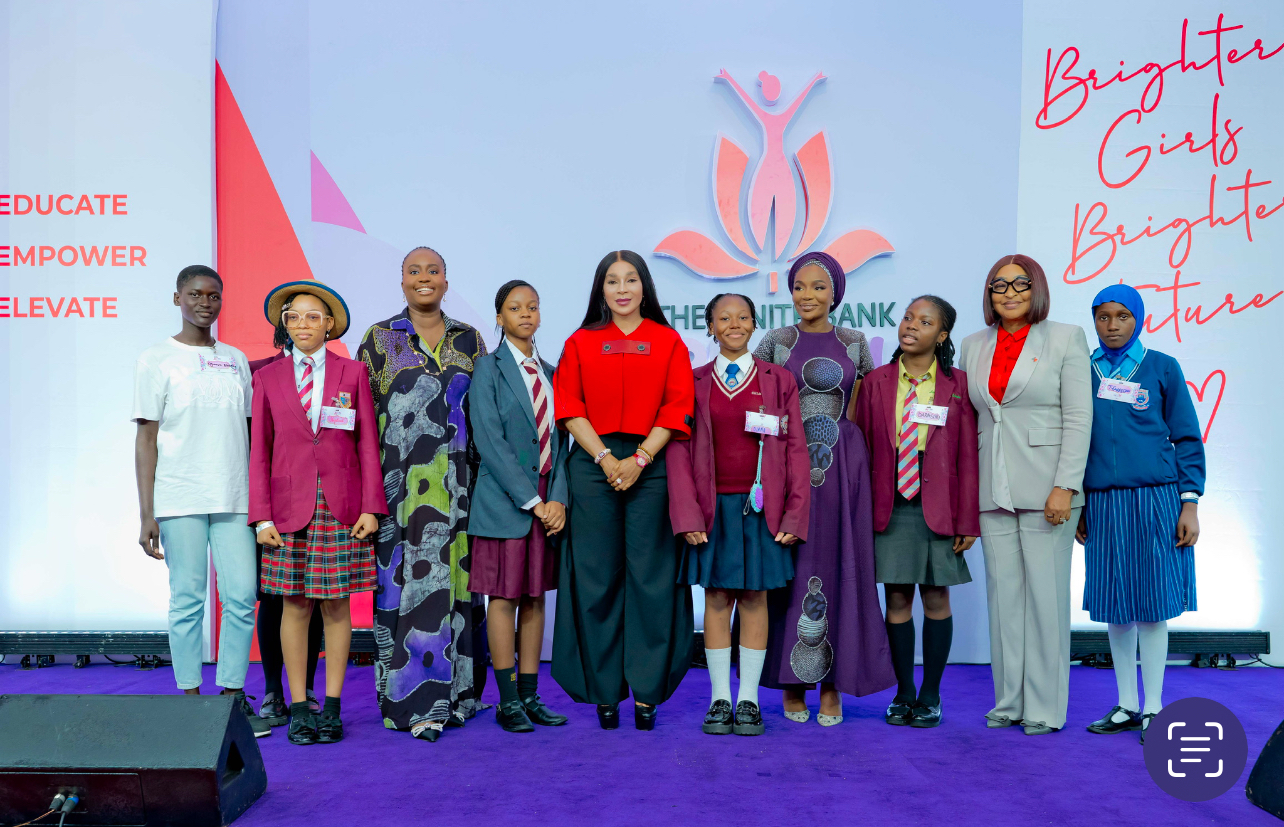
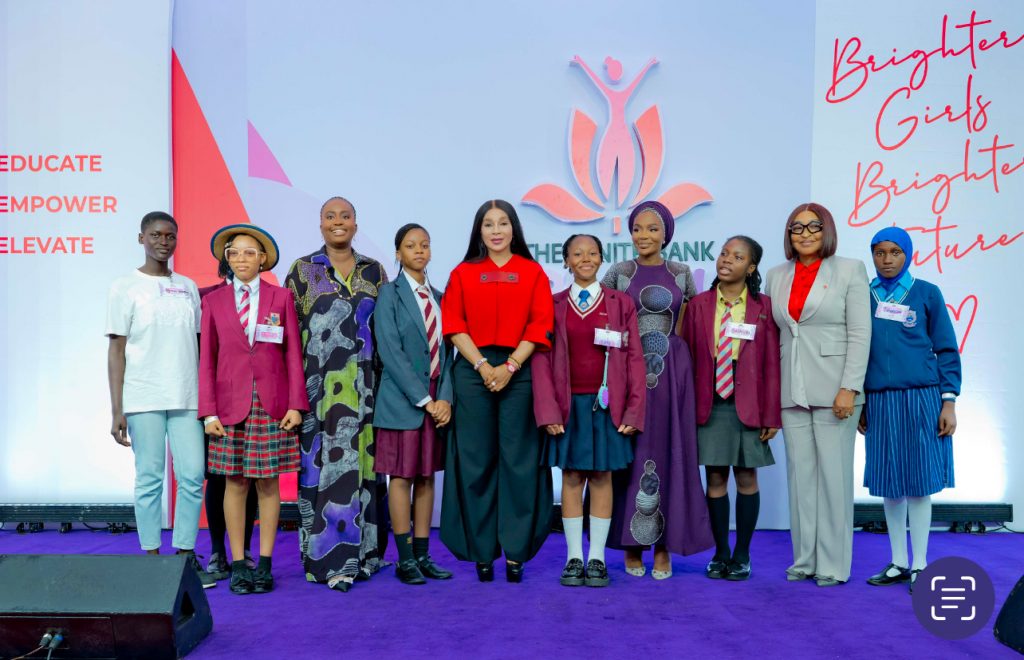
Zenith Bank Plc has launched the maiden edition of its Girl-Child Empowerment Programme, themed “Banking on Her Tomorrow,” bringing together 300 schoolgirls aged 13 to 17 from selected schools across Lagos for a day of learning, mentorship and personal development.
Held on Monday, October 12, 2026, at the Civic Centre, Victoria Island, Lagos, the programme featured sessions on finance and investment, etiquette and personal development, social media ethics, and social relationships and interactions, equipping participants with practical knowledge and skills for their personal, educational and future career journeys.
The initiative, a brainchild of the Bank’s Group Managing Director/Chief Executive Officer, Dame (Dr.) Adaora Umeoji, OON, reflects Zenith Bank’s commitment to nurturing the potential of young girls and helping them make informed choices about their futures.
In her welcome address, Dame (Dr.) Umeoji urged the participants to believe in their abilities, pursue their ambitions and remain focused and disciplined. Drawing on examples of young girls who have achieved remarkable feats, she challenged them to look beyond their present circumstances and envision the women they aspire to become.
“To all my amazing young ladies here today, each of you possesses gifts, talents, and ideas that are capable of revolutionising the world. You can revolutionise the world with your ideas,” she said.
The GMD/CEO further encouraged the girls to explore their interests and resist societal limitations, stressing the importance of taking ownership of their futures.
“Never allow gender or age to limit your goals. Whatever interests you today, explore it. Whatever you choose to pursue in life, give it your best shot,” she said.
Delivering the keynote address, Her Majesty, Olori Atuwatse III, Queen Consort of the Warri Kingdom, encouraged the girls to embrace their identities, develop resilience and use their abilities to make a positive difference in the lives of others.
Using the mangrove tree as a metaphor for resilience, she reminded the participants that challenges need not define their futures and that their worth extends beyond academic results and external expectations.
“Every time you affirm the truth about who you are, you are building confidence. Every time the tide of life goes out and you are still standing, you are building resilience. And every time you use your gifts for another person, you are discovering your purpose,” Olori Atuwatse III said.
The programme featured interactive sessions led by accomplished professionals and personalities:
Ayanime Edem, founder of The Elite Finishing School and modern etiquette educator, discussed confidence, communication, self-presentation and etiquette.
Nigerian actress and content creator Bukunmi Adeaga Ilori, popularly known as Kie Kie, addressed responsible social media use, authenticity and digital boundaries.
Representing Zenith Bank, Thelma Okonye and Adesola Adeyemo introduced the girls to saving, responsible money management and investment, highlighting the importance of developing sound financial habits early.
While Nigerian filmmaker, creative executive and educator,Praise Onyeagwalam, Director Pink, led a session on healthy relationships, self-awareness and effective communication.
The sessions encouraged active participation, giving the girls opportunities to ask questions and engage with the speakers on issues relevant to their experiences and aspirations.
The programme also featured competitions, with cash prizes totalling over ₦1 million awarded to winners. The participants received books to encourage reading and personal growth, while musical performances by Nigerian singers Qing Madi and No. 11 added to the lively atmosphere. The event was hosted by Temi Badru, public speaker, communications coach and lawyer, with Darasimi Destiny Nadi serving as mini host.
Delivering the closing remarks, Executive Director, Zenith Bank Plc, Dr. Mrs. Adobi Nwapa, highlighted the GMD/CEO’s vision for the initiative and the Bank’s commitment to sustaining its impact.
“The programme is the vision of our GMD/CEO, who conceived and championed it, demonstrating her unwavering commitment to the empowerment of the girl child. Through her leadership, she has shown the girls what is possible when a woman dares to lead. At Zenith Bank, our commitment to the girl child extends beyond today, and we will continue to nurture their aspirations through this annual initiative,” she said.
Dr. Nwapa thanked the speakers and participants for contributing to the programme’s success and encouraged the girls to apply the lessons learnt, remain confident and pursue their aspirations with determination.
The initiative builds on Zenith Bank’s longstanding commitment to advancing opportunities for women and girls through programmes including its annual International Women’s Day Seminar, the Zenith Women’s Basketball League, the Women of Honour Awards in partnership with the Ford Foundation, the Pad-a-Queen Initiative and Z-Woman, which supports women-owned businesses through business support and access to credit at discounted rates.
Through “Banking on Her Tomorrow,” Zenith Bank is extending this commitment to a younger generation, equipping girls with the knowledge, skills and confidence to pursue their ambitions and contribute meaningfully to their communities and society.


-
 news6 years ago
UPDATE: #ENDSARS: CCTV footage of Lekki shootings intact – Says Sanwo – Olu
-
 lifestyle6 years ago
Former Miss World: Mixed reactions trail Agbani Darego’s looks
-
news8 years ago
-
 health6 years ago
Chairman Agege LG, Ganiyu Egunjobi Receives Covid-19 Vaccines
-
 lifestyle5 years ago
Obateru: Celebrating a Quintessential PR Man at 60
-
 news1 year ago
BREAKING: Tinubu swears in new NNPCL Board
-
 health6 years ago
UPDATE : Nigeria Records 790 new cases of COVID-19
-
 society3 years ago
Bisbam CEO, Abisola Bamidele, Bags Owu Chieftaincy Title