
brand
FinTech 5.0: Evaluating How FirsBank Strengthens Collaboration *to drive financial inclusion


 It was Sir Isaac Newton, in his letter to Robert Hooke in 1675, who wrote the now-famous quote: “If I have seen further (than others), it is by standing on the shoulders of giants.
The shoulders of giants Sir Newton referred to has to do with leverage provided by the discoveries and experiences of people who have gone before or walked that same path earlier, that pave the way for and enable other people and a new generation to take things to a totally new dimension.
The truth is, giants whose shoulders provide such leverage to the next generation can be found in various fields and various nations. In Nigeria, for example, such giants exist in various fields and they are known and recognised.
Take the fintech (financial technology) space in Nigeria, where one bank is known to have stood as a giant with very broad shoulders, having capacities that have been built up and accumulated over 127 continuous years. Every year since 2016 (apart from 2017 when it was implementing ideas from 2016, including a Digital Innovation Lab), this well-recognised bank has provided a platform for the most robust engagement of the fintech industry in Nigeria. Tagged Fintech Summit, the annual engagement has continued to help in catalysing the fintech sector to ever-higher levels from year to year.
Held in Lagos the commercial capital of Nigeria and arguably the fintech capital of Africa, given Nigeria’s status as the leading nation in the fintech space in Africa, the annual FirstBank Fintech Summit has attracted an average of a thousand participants, who are mostly fintech owners, workers and enthusiasts, yearly. Last year’s Summit, Fintech Summit 4.0 with the theme,
“How Blockchain and Artificial Intelligence will Disrupt Fintech in Nigeria”, however, drew an unprecedented number of participants – over 6,000 from across 52 different countries. It was the first virtual Summit due to the restrictions imposed because of the COVID-19 pandemic and it featured as keynote speaker Silicon Valley-based innovator of international repute, Chinedu Echeruo, who founded HopStop that was later sold to Apple for US$1 billion. Imagine the inspiration, dreams and aspirations young people soak up while listening to speakers with such a profile.
Far from being one-directional – with all the talk flowing from only the speaker to the audience – the yearly Summit is actually a platform for multidimensional engagement involving various stakeholders in the fintech industry – operators, regulators, investors, enthusiasts, fintech journalists and writers, bankers, et cetera.
It offers an unequalled opportunity for networking among fintech and other stakeholders, leading to opportunities for collaboration within the community. For small businesses and start-ups powered by FirstBank’s support, the annual Summit has been a veritable platform for showcasing them. The platform has also served for the announcement of policy initiatives coupled with pronouncements that provide clarifications to policy. This is due to invitations extended to regulators and the important role they are assigned in conversations facilitated during the Summit.
The Summit that preceded last year’s, i.e., the third edition of Fintech Summit 3.0 held in 2019, featured another heavyweight in Nigeria’s fintech industry, Victor Asemota, founder of Swifta Systems & Services, as keynote speaker. The theme “Banking + Tech = Solving Real Problems”, included panel sessions featuring experts with over two hundred combined years of experience in both the financial and technological industries.
They applied their knowledge, expertise and experience to address challenges in the technologically-driven business world, structured in terms of Solving Business Problems; Solving Regulatory, Security and Legal Problems; and Solving Lifestyle Problems. At the end of the Summit, participants must have felt that the Summit delivered on the confidence the Chief Executive Officer of FirstBank, Adesola Adeduntan, had expressed when he remarked in his welcome address, “I am optimistic that every organisation represented here will be empowered to provide services with greater speed and solve real societal problems to the advantage of the Nigerian populace through the insights that will be gained from this event.“
Fintech Summit 3.0 had built on the success of the second edition, Fintech Summit 2.0 held in 2018, which had “The Future of Banking – The Role of Artificial Intelligence (AI) and Big Data” as a theme. Adia Sowho, the Managing Director of Mines in Nigeria, had, as the first keynote speaker, stressed the importance of collaboration between legacy banks and fintechs in the overall good of their shared financial services space. The Deputy Managing Director of FirstBank, Gbenga Shobo, had, in his welcome address, said that FirstBank was committed to finding the right balance in its approach in supporting the budding fintech industry. It is gratifying that the bank has since found that right balance and pushed ahead enthusiastically with the continual annual engagement that is its yearly Fintech Summit.
For those who like to bring up the argument that deposit money banks (DMBs) and fintech are rivals competing in the same space for the same customers and wonder why FirstBank, a leading deposit money bank, would itself be involved in efforts to catalyse the fintech industry, they need to wake up and smell the coffee.
FirstBank is continuously evolving and staying on the cutting edge of technology in order to better serve its customers, who are themselves evolving and adapting to newer and more efficient and convenient technologies as they become available.
And FirstBank is on a journey to a future where it is happy, in the spirit of the African tradition of Ubuntu, to take all fintech along with it. In the words of another famous quote, “The sky is too big for two [or many] big birds flying in it to collide.” FirstBank believes there is ample room for all players – deposit money banks, fintech, et cetera – to fulfil their unique roles.
Therefore, collaboration, not competition, is FirstBank’s watchword. And FirstBank considers fintech partners in progress in its avowed commitment to driving financial inclusion.
FirstBank’s own evolution and the transition is causing some people to question its continuous classification by the Central Bank as a deposit money bank (with a preponderance of bricks-and-mortar banking operations) rather than a digital bank. And the reasons for their argument cannot be easily waved aside. In 2020, for example, over 85 per cent of the banking transactions that were required by customers of FirstBank were performed on the bank’s self-service channels.
That means customers of the bank only needed the attention of the bank’s staff or branches for just 15 per cent of all the banking transactions they required in 2020. There are now as many as over 16 million customers between FirstBank’s digital channels of online banking (called FirstOnline), mobile banking (christened FirstMobile) and USSD banking (called *894# quick banking).
Between FirstOnline and FirstMobile, a growth of 21 per cent in the user base was experienced in 2020. Customers on both platforms conducted approximately 256 million transactions worth N15.7 trillion in the same year. FirstOnline, as of June 2021, had an impressive 597,466 customers on the service, a 17 per cent growth on the previous year and 578,292 transactions per month, averaging a value of N388 billion per month.
For FirstMobile, besides the impressive gain in numbers, it gained recognition as “Best Mobile Banking App” at the Global Finance Best Digital Bank Awards, for providing excellent self-service through its user-friendly app. FirstMobile had, as of June 2021, 4,596,203 users on the platform, which is a nine per cent growth on the previous year and an average of 27,730,830 transactions every month. While these numbers point to the giant statue of the bank, none of it excites FirstBank as much as Firstmonie, because of its invaluable role in driving financial inclusion at the grassroots level, one of FirstBank’s overriding commitments.
Firstmonie, the agent banking network of FirstBank, currently has over 130,000 agents across the country, making it the largest bank-led agent network anywhere in Africa. As the foremost financial inclusion service in the country, it has achieved over 750 million transactions worth N15 trillion (about US$30 billion) processed from inception to date.
Over 295 million of those transactions with a total value of N6.65 trillion were processed in 2020 alone – the same year COVID-19 caused widespread disruptions across the globe. Firstmonie agency banking scheme has empowered agents across all Local Government Areas in the country, providing employment to thousands of people.
FirstBank through the Firstmonie platform further supports the fintech industry via partnership collaborations with local and international fintechs. All these are geared towards expanding financial inclusion and providing a variety of services to customers of the bank with giant shoulders that customers and fintechs can stand on to see further.
As for Sir Isaac Newton, the giant of a scientist whose famous quote began this piece, if he could read us from the grave, he would feel very proud today to see that celebrated line from his 1675 letter being aptly used to represent the relationship that exists between the broad, energetic and dynamic shoulders of Nigeria’s banking behemoth, FirstBank, and the rapidly emerging beautiful bride of Nigeria’s economic sectors, the fintech industry. This relationship climaxes every year in the annual Fintech Summit and the forthcoming Fintech Summit 5.0 promises to take the relationship to a whole new dimension.
brand
AUBA Commences Comtempt Proceedings Against WEMPCO Directors over Alleged Disobidence of Court Order

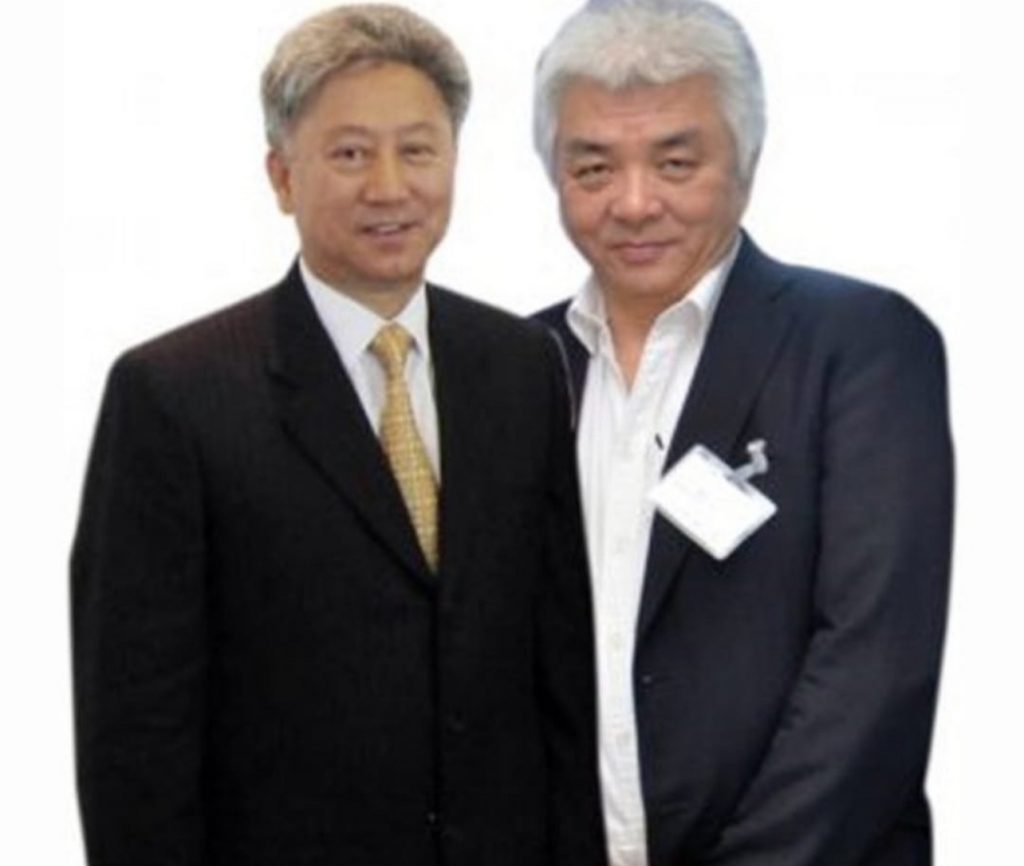
Mr. Lewis Tung and his brother Robert Tung
The Federal High Court, presided over by Honourable Justice Aluko, has granted an application by United Bank for Africa (UBA) Plc for substituted service of Form 49 on directors of Wempco named as alleged contemnors in the case of UBA v. Wempco.
The application forms part of proceedings seeking to determine whether the named individuals disobeyed an order of the court and whether they should be committed to prison for contempt.
The directors named as alleged contemnors are Lewis Shui Ngor Tung, Phillip Shui Chei Tung, M.A. Ola Yusuf, Tung Lawrence Blake, Aali Aare Hadji Tokunbo, Paul Shui Po Tung, Tung Robert, C.L. Ip and Taiwo Alli.
In advancing the application, counsel to UBA argued that service of Form 49 on the alleged contemnors was necessary to enable them to appear before the court and show cause why an order of committal should not be made against them.
He also argued that the Directors of Wempco and some members of staff took illegal steps in an attempt to disobey the Order of Court.
The court’s decision to grant substituted service provides a procedural step towards bringing the notice to the attention of the individuals concerned in accordance with the court’s directions.
Form 49 is a notice requiring an alleged contemnor to show cause why an order of committal to prison should not be made against them for alleged disobedience of a court order.
The Federal High Court had earlier made an Order of Mareva Injunction and appointed a Receiver/Manager over some of the Assets of Wempco following the indebtedness of Wempco to UBA in the sum of N61,445,695,993.76 (Sixty One Billion FourHundred and Forty-Five Million Six Hundred and Ninety Five Thousand, Nine Hundred and Ninety Three Naira, Seventy Six Kobo).
 A Lagos State High Court, last Thursday, granted interim preservative orders of Mareva Injunction against Vitol SA – a Switzerland based Energy Trading company, and four other shipping companies in favour of United Bank for Africa Plc.
The bank alleged Vitol of wrongful release of cargoes of petroleum products which were consigned to the order of United Bank for Africa Plc in the Bills of Lading.
Addressing the Court, Bode Olanipekun, SAN, lead counsel for United Bank for Africa, urged the Court to grant the interim preservative orders against Vitol and the other shippers.
In a ruling on the application, the presiding judge, Honourable Justice K. A. Jose (Mrs.) granted three prayers in UBA’s application, including requests to restrain the dissipation of assets and dealings with funds up to the disputed amount by Vitol S.A.
“Prayers 1–3 are granted as prayed against the 2nd Respondent only,” the judge ruled.
The application was brought pursuant to Order 43 Rule 1 of the High Court of Lagos State (Civil Procedure) Rules 2019 and the Lagos State High Court Practice Direction No. 2 of 2019.
UBA is seeking to contend in the substantive proceedings that Vitol SA and the owners of the vessels, are liable for alleged conversion, misrepresentation and negligence arising from the non-delivery of the petroleum products.
UBA also cited 34 financial institutions and public agencies, including commercial banks, merchant banks, microfinance banks, the Nigerian Ports Authority and the Nigeria Customs Service, in connection with the application.
In an affidavit supporting the application, UBA’s Group Head of Recoveries and Remedial Management, Anthony Chilaka, stated that the bank issued a letter of credit for the benefit of Vitol SA to facilitate a petroleum products transactions.
UBA alleged that the cargo was transported to Nigeria and that the vessels’ masters issued several bills of lading.
The bank further alleged that Vitol subsequently endorsed the bills of lading “to the order of” UBA and handed over the original copies to it.
UBA maintained that the endorsement entitled it to take possession of the cargo upon completion of the voyage.
However, Chilaka stated that the bank had not received the gasoil despite the completion of the voyage.
“The applicant has not been given possession of the gasoil despite completion of the voyage,” the affidavit stated.
UBA alleged that the cargo was instead, applied to the use of another party, contending that the respondents’ failure to deliver it amounted to conversion and negligence.
The bank argued that the respondents had obligations arising from the transaction and the endorsement of the shipping documents, which it claimed were not fulfilled.
The bank alleged that the cargoes associated with those transactions were also diverted to the use of other parties after their voyages, rather than delivered to UBA.
brand
BANKING ON HER TOMORROW: ZENITH BANK EMPOWERS 300 GIRLS WITH EDUCATION, KNOWLEDGE AND CONFIDENCE
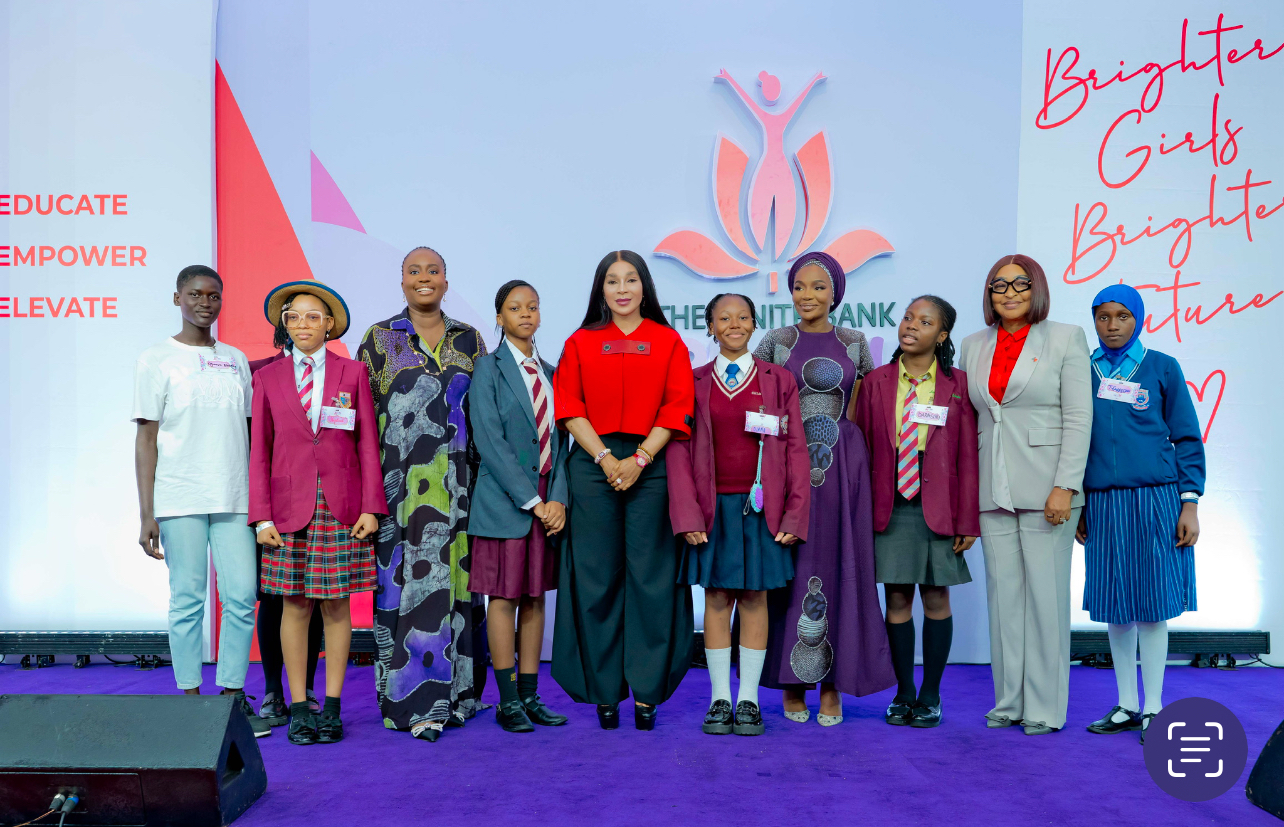

Zenith Bank Plc has launched the maiden edition of its Girl-Child Empowerment Programme, themed “Banking on Her Tomorrow,” bringing together 300 schoolgirls aged 13 to 17 from selected schools across Lagos for a day of learning, mentorship and personal development.
Held on Monday, October 12, 2026, at the Civic Centre, Victoria Island, Lagos, the programme featured sessions on finance and investment, etiquette and personal development, social media ethics, and social relationships and interactions, equipping participants with practical knowledge and skills for their personal, educational and future career journeys.
The initiative, a brainchild of the Bank’s Group Managing Director/Chief Executive Officer, Dame (Dr.) Adaora Umeoji, OON, reflects Zenith Bank’s commitment to nurturing the potential of young girls and helping them make informed choices about their futures.
In her welcome address, Dame (Dr.) Umeoji urged the participants to believe in their abilities, pursue their ambitions and remain focused and disciplined. Drawing on examples of young girls who have achieved remarkable feats, she challenged them to look beyond their present circumstances and envision the women they aspire to become.
“To all my amazing young ladies here today, each of you possesses gifts, talents, and ideas that are capable of revolutionising the world. You can revolutionise the world with your ideas,” she said.
The GMD/CEO further encouraged the girls to explore their interests and resist societal limitations, stressing the importance of taking ownership of their futures.
“Never allow gender or age to limit your goals. Whatever interests you today, explore it. Whatever you choose to pursue in life, give it your best shot,” she said.
Delivering the keynote address, Her Majesty, Olori Atuwatse III, Queen Consort of the Warri Kingdom, encouraged the girls to embrace their identities, develop resilience and use their abilities to make a positive difference in the lives of others.
Using the mangrove tree as a metaphor for resilience, she reminded the participants that challenges need not define their futures and that their worth extends beyond academic results and external expectations.
“Every time you affirm the truth about who you are, you are building confidence. Every time the tide of life goes out and you are still standing, you are building resilience. And every time you use your gifts for another person, you are discovering your purpose,” Olori Atuwatse III said.
The programme featured interactive sessions led by accomplished professionals and personalities:
Ayanime Edem, founder of The Elite Finishing School and modern etiquette educator, discussed confidence, communication, self-presentation and etiquette.
Nigerian actress and content creator Bukunmi Adeaga Ilori, popularly known as Kie Kie, addressed responsible social media use, authenticity and digital boundaries.
Representing Zenith Bank, Thelma Okonye and Adesola Adeyemo introduced the girls to saving, responsible money management and investment, highlighting the importance of developing sound financial habits early.
While Nigerian filmmaker, creative executive and educator,Praise Onyeagwalam, Director Pink, led a session on healthy relationships, self-awareness and effective communication.
The sessions encouraged active participation, giving the girls opportunities to ask questions and engage with the speakers on issues relevant to their experiences and aspirations.
The programme also featured competitions, with cash prizes totalling over ₦1 million awarded to winners. The participants received books to encourage reading and personal growth, while musical performances by Nigerian singers Qing Madi and No. 11 added to the lively atmosphere. The event was hosted by Temi Badru, public speaker, communications coach and lawyer, with Darasimi Destiny Nadi serving as mini host.
Delivering the closing remarks, Executive Director, Zenith Bank Plc, Dr. Mrs. Adobi Nwapa, highlighted the GMD/CEO’s vision for the initiative and the Bank’s commitment to sustaining its impact.
“The programme is the vision of our GMD/CEO, who conceived and championed it, demonstrating her unwavering commitment to the empowerment of the girl child. Through her leadership, she has shown the girls what is possible when a woman dares to lead. At Zenith Bank, our commitment to the girl child extends beyond today, and we will continue to nurture their aspirations through this annual initiative,” she said.
Dr. Nwapa thanked the speakers and participants for contributing to the programme’s success and encouraged the girls to apply the lessons learnt, remain confident and pursue their aspirations with determination.
The initiative builds on Zenith Bank’s longstanding commitment to advancing opportunities for women and girls through programmes including its annual International Women’s Day Seminar, the Zenith Women’s Basketball League, the Women of Honour Awards in partnership with the Ford Foundation, the Pad-a-Queen Initiative and Z-Woman, which supports women-owned businesses through business support and access to credit at discounted rates.
Through “Banking on Her Tomorrow,” Zenith Bank is extending this commitment to a younger generation, equipping girls with the knowledge, skills and confidence to pursue their ambitions and contribute meaningfully to their communities and society.


-
 news6 years ago
UPDATE: #ENDSARS: CCTV footage of Lekki shootings intact – Says Sanwo – Olu
-
 lifestyle6 years ago
Former Miss World: Mixed reactions trail Agbani Darego’s looks
-
news8 years ago
-
 health6 years ago
Chairman Agege LG, Ganiyu Egunjobi Receives Covid-19 Vaccines
-
 lifestyle5 years ago
Obateru: Celebrating a Quintessential PR Man at 60
-
 news1 year ago
BREAKING: Tinubu swears in new NNPCL Board
-
 health6 years ago
UPDATE : Nigeria Records 790 new cases of COVID-19
-
 society3 years ago
Bisbam CEO, Abisola Bamidele, Bags Owu Chieftaincy Title