
brand
FIRSTBANK’S SMECONNECT PORTAL COULD BE THE DIFFERENTIATOR FOR SMES IN NIGERIA


 Over a hundred years since banks came into Nigeria, services rendered to small and medium scale businesses were limited to core banking services and transactions. However, those that cared to look further were able to stand the test of time, reinventing themselves with cutting edge financial services that remain key to sustaining its relevance to not just its host communities but the global community. Based on findings from extensive engagements with customers, internal and external surveys and reports by SMEDAN, Efina and NBS, First Bank of Nigeria Limited has been deliberate in ensuring that SMEs thrive and grow their businesses as SMEs can access and enjoy the convenience of its industry-leading financial services. FirstBank thus launched the SMEConnect portal to congregate value-adding propositions & services for SMEs on a single platform for easy access. The value propositions and services on the SMEConnect portal educate and equip SMEs to combat challenges like poor business structure, lack of infrastructure, low market penetration, limited access to information and professional services, inconsistent government policies and others that might stifle their growth. For example, lack of capacity is one of the most indicted reasons for business failure or stunted growth in business. The SMEconnect portal connects business owners to resources and information to educate them on structuring and better managing their businesses. The platform houses webinars on various important topics to help educate SMEs and build the required capacity. The blog section of the portal has interesting and informative content like: Tips for Building and maintaining good customer relationships; Remaining in business after Covid-19; How to scale up; How to successfully separate a financial business account from a personal business account; as well as Creating a Micropension scheme for MSMEs etc. FirstBank also runs varying degrees of entrepreneurship programs and activities through pieces of training, workshops, seminars, business clinics and webinars, and the events are displayed on the portal for business owners to access. It is known that over 60% of businesses fail in their first year, not only because of capacity constraints, access to finance is another reason they fail. The SMEConnect portal connects businesses to resources and finances by providing information on the various finance options available to registered users. There is a section of the portal that breaks down the steps to accessing finance for businesses, to simple actions such as opening either savings or domiciliary accounts After all, what would be the essence of all the education and capacity building if the business owner is still unable to access finances and other resources. SMEs that have an account with FirstBank can access direct and indirect funding throughout the business life cycle via grants, debt/loans, and equity. In addition to other benefits, the platform connects SMEs to Market, Resources, Infrastructure, Talent for business development, Policy and Advocacy, giving them all they need to move to the next stage of their business growth. The portal also integrates SMEs into large distribution networks by connecting them to customers, distributor channels, suppliers, and large corporates. There are also productivity tools such as the Business Diagnostic tool that helps check the health of a business as well a pool of professionals like accountants, lawyers, digital marketers, consultants and business coaches, which SMEs can tap into. Some of these value-adding solutions are free, and for the few that are not, they come at substantially discounted rates. As the premier Bank in West Africa, First Bank has exceeded the expectation of what its services to individuals and businesses ought to be. The SMEConnect portal is one of First Bank’s initiatives to promote the sustainability of SMEs by exposing them to the knowledge and resources they need to grow their business. One of the most exciting features businesses get on the SMEConnect portal is the Business Diagnostic Tool earlier mentioned, it is a 15-minute survey where SMEs are asked questions about their business and at the end, get a customised report for their business. This is ordinarily, a service that business owners pay consultants to get, but First Bank has made it available for free even to businesses that do not have an account with them. There are special offers for SMEs that are registered and have an account with First Bank, and an opportunity to be listed on the portal. You can find businesses listed across different industries like education/training, manufacturing, trade, agriculture, hospitality, transportation/logistics, telecommunications, ICT, healthcare and fitness, sports, FMCG, financial services, media/entertainment, food, real estate, engineering/construction, oil & gas, fashion/beauty, and services. These registered businesses get to showcase their products/services for free, interact with customers and other SMEs, have an opportunity to attend free monthly capacity building workshops, seminars and webinars; and get exclusive discounts on business development resources such as booking a business coach. As more businesses sign up and use the SMEConnect portal, it is possible to see a future where Nigerian businesses break even, thrive, and grow amidst challenges.
brand
BANKING ON HER TOMORROW: ZENITH BANK EMPOWERS 300 GIRLS WITH EDUCATION, KNOWLEDGE AND CONFIDENCE
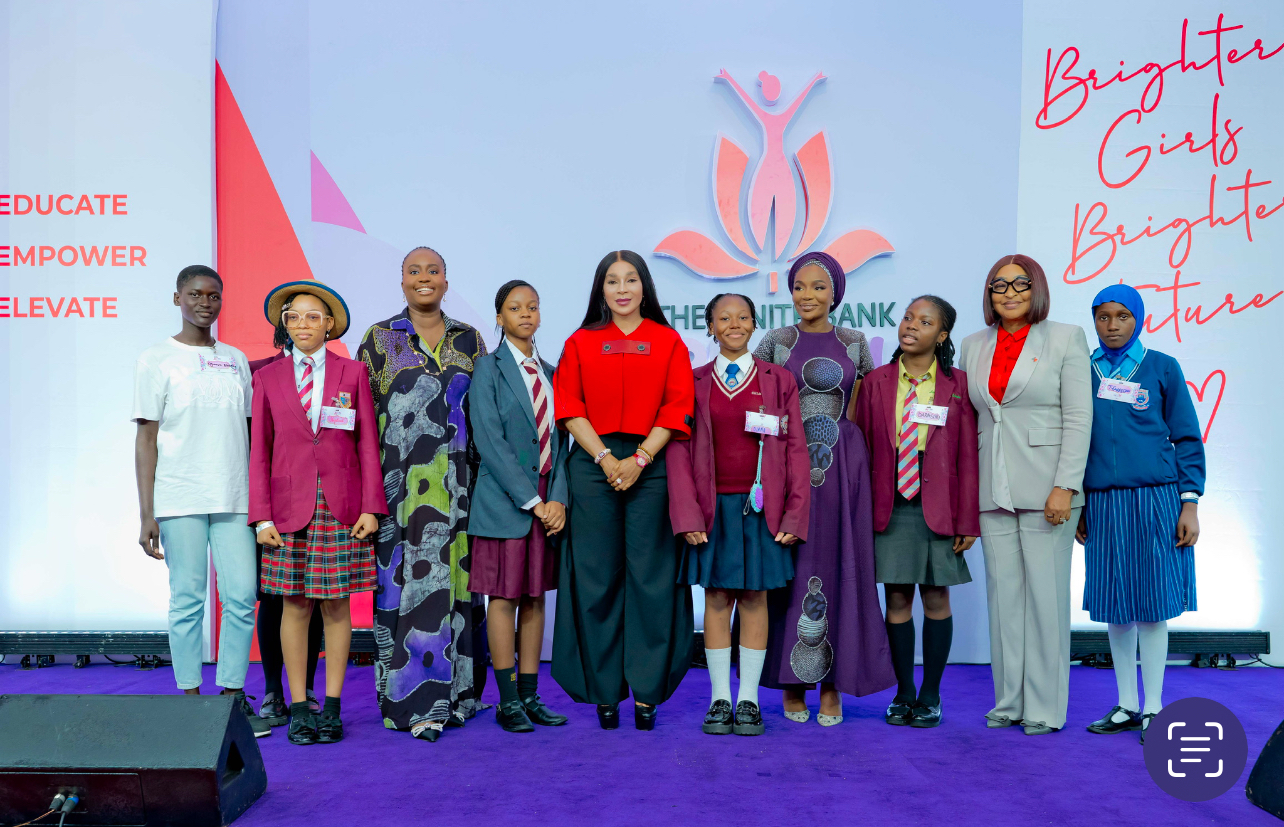
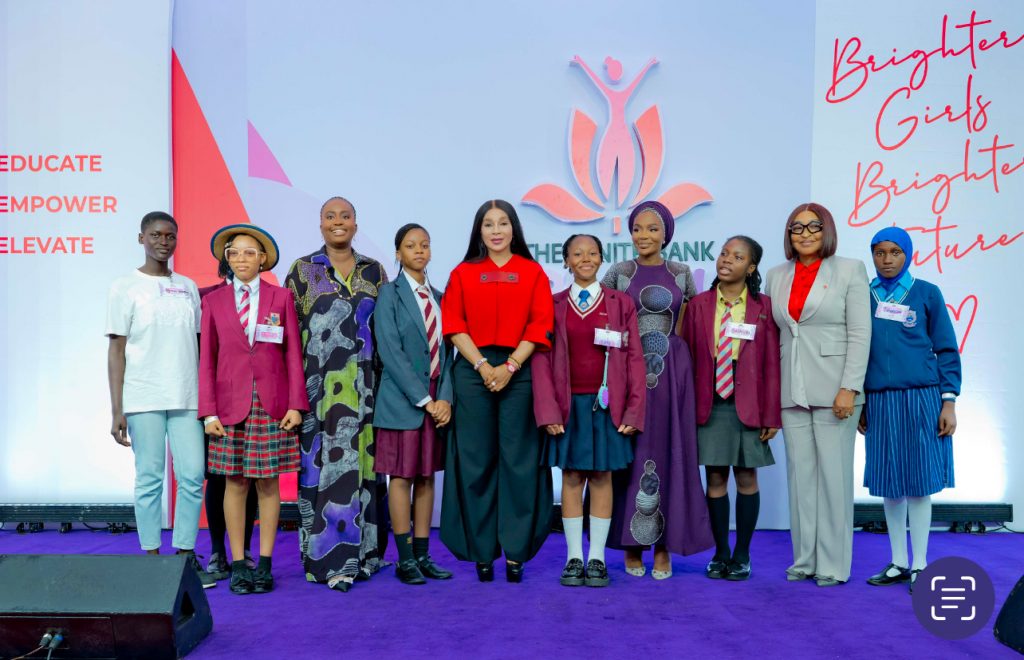
Zenith Bank Plc has launched the maiden edition of its Girl-Child Empowerment Programme, themed “Banking on Her Tomorrow,” bringing together 300 schoolgirls aged 13 to 17 from selected schools across Lagos for a day of learning, mentorship and personal development.
Held on Monday, October 12, 2026, at the Civic Centre, Victoria Island, Lagos, the programme featured sessions on finance and investment, etiquette and personal development, social media ethics, and social relationships and interactions, equipping participants with practical knowledge and skills for their personal, educational and future career journeys.
The initiative, a brainchild of the Bank’s Group Managing Director/Chief Executive Officer, Dame (Dr.) Adaora Umeoji, OON, reflects Zenith Bank’s commitment to nurturing the potential of young girls and helping them make informed choices about their futures.
In her welcome address, Dame (Dr.) Umeoji urged the participants to believe in their abilities, pursue their ambitions and remain focused and disciplined. Drawing on examples of young girls who have achieved remarkable feats, she challenged them to look beyond their present circumstances and envision the women they aspire to become.
“To all my amazing young ladies here today, each of you possesses gifts, talents, and ideas that are capable of revolutionising the world. You can revolutionise the world with your ideas,” she said.
The GMD/CEO further encouraged the girls to explore their interests and resist societal limitations, stressing the importance of taking ownership of their futures.
“Never allow gender or age to limit your goals. Whatever interests you today, explore it. Whatever you choose to pursue in life, give it your best shot,” she said.
Delivering the keynote address, Her Majesty, Olori Atuwatse III, Queen Consort of the Warri Kingdom, encouraged the girls to embrace their identities, develop resilience and use their abilities to make a positive difference in the lives of others.
Using the mangrove tree as a metaphor for resilience, she reminded the participants that challenges need not define their futures and that their worth extends beyond academic results and external expectations.
“Every time you affirm the truth about who you are, you are building confidence. Every time the tide of life goes out and you are still standing, you are building resilience. And every time you use your gifts for another person, you are discovering your purpose,” Olori Atuwatse III said.
The programme featured interactive sessions led by accomplished professionals and personalities:
Ayanime Edem, founder of The Elite Finishing School and modern etiquette educator, discussed confidence, communication, self-presentation and etiquette.
Nigerian actress and content creator Bukunmi Adeaga Ilori, popularly known as Kie Kie, addressed responsible social media use, authenticity and digital boundaries.
Representing Zenith Bank, Thelma Okonye and Adesola Adeyemo introduced the girls to saving, responsible money management and investment, highlighting the importance of developing sound financial habits early.
While Nigerian filmmaker, creative executive and educator,Praise Onyeagwalam, Director Pink, led a session on healthy relationships, self-awareness and effective communication.
The sessions encouraged active participation, giving the girls opportunities to ask questions and engage with the speakers on issues relevant to their experiences and aspirations.
The programme also featured competitions, with cash prizes totalling over ₦1 million awarded to winners. The participants received books to encourage reading and personal growth, while musical performances by Nigerian singers Qing Madi and No. 11 added to the lively atmosphere. The event was hosted by Temi Badru, public speaker, communications coach and lawyer, with Darasimi Destiny Nadi serving as mini host.
Delivering the closing remarks, Executive Director, Zenith Bank Plc, Dr. Mrs. Adobi Nwapa, highlighted the GMD/CEO’s vision for the initiative and the Bank’s commitment to sustaining its impact.
“The programme is the vision of our GMD/CEO, who conceived and championed it, demonstrating her unwavering commitment to the empowerment of the girl child. Through her leadership, she has shown the girls what is possible when a woman dares to lead. At Zenith Bank, our commitment to the girl child extends beyond today, and we will continue to nurture their aspirations through this annual initiative,” she said.
Dr. Nwapa thanked the speakers and participants for contributing to the programme’s success and encouraged the girls to apply the lessons learnt, remain confident and pursue their aspirations with determination.
The initiative builds on Zenith Bank’s longstanding commitment to advancing opportunities for women and girls through programmes including its annual International Women’s Day Seminar, the Zenith Women’s Basketball League, the Women of Honour Awards in partnership with the Ford Foundation, the Pad-a-Queen Initiative and Z-Woman, which supports women-owned businesses through business support and access to credit at discounted rates.
Through “Banking on Her Tomorrow,” Zenith Bank is extending this commitment to a younger generation, equipping girls with the knowledge, skills and confidence to pursue their ambitions and contribute meaningfully to their communities and society.
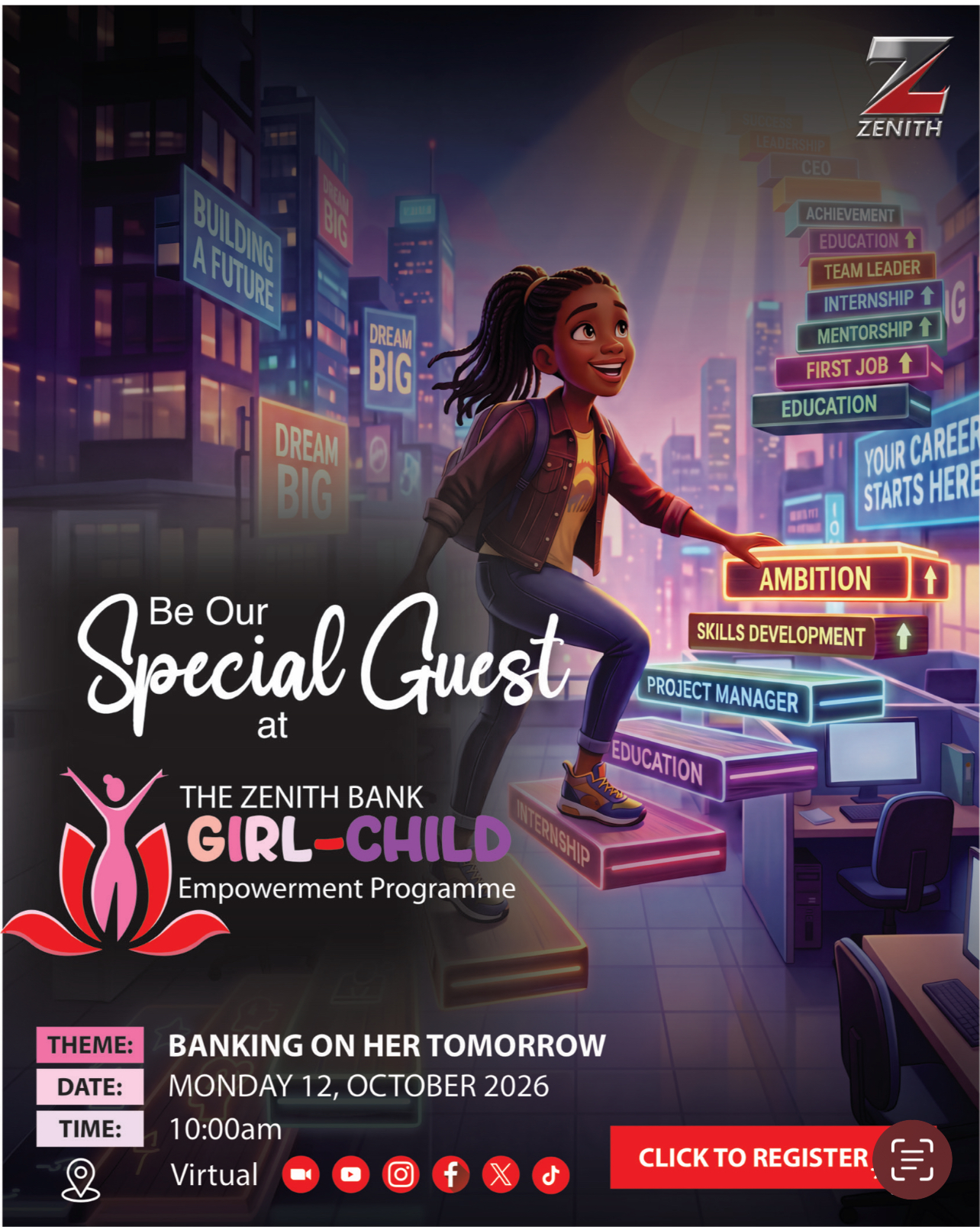
Zenith Bank Plc is set to launch the maiden edition of its Girl-Child Empowerment Programme, an initiative aimed at inspiring young girls to dream boldly, develop the skills and confidence to pursue their aspirations, and prepare for meaningful opportunities in the future.
The event, themed “Banking On Her Tomorrow,” is the brainchild of the Bank’s Group Managing Director/Chief Executive Officer, Dame Dr. Adaora Umeoji, OON, the first female GMD/CEO in Zenith Bank’s history and a strong advocate for girl-child education and empowerment. The event will be held virtually on Monday, October 12, 2026, at 11:00 a.m., a day after the International Day of the Girl Child, observed globally on October 11.
The programme, which will feature an impressive lineup of distinguished experts in various fields, seeks to provide girls with the inspiration, knowledge and practical perspectives needed to navigate their education and careers, while exposing them to opportunities in skills development, mentorship and leadership. As an annual platform, it will encourage girls to recognise their potential, broaden their aspirations and equip themselves to make informed choices about their future.
The initiative builds on Zenith Bank’s longstanding commitment to women and girls, demonstrated through programmes and platforms including the Bank’s annual International Women’s Day Seminar, its sole sponsorship of the Zenith Women’s Basketball League, the Women of Honour Awards in partnership with the Ford Foundation, and the Pad-a-Queen Initiative. These complement the Bank’s women-focused financial solutions, including the Z-Woman initiative, an empowerment programme that supports women-owned and women-led businesses through specialised funding, capacity building and networking. Together, these initiatives reflect the Bank’s broader commitment to supporting women and girls at different stages of their lives, and to contributing meaningfully to national development.
This maiden edition is open to all, with girls, parents, educators and other members of the public invited to participate. Interested participants can register via the link below. Those unable to join via Zoom can follow the live stream on Zenith Bank’s social media platforms.
brand
GTCO Plc Releases 2026 Half Year Audited Results …….. Reports Profit Before Tax of ₦603.03billion,Pays Interim Dividend of ₦1
 Guaranty Trust Holding Company Plc (“GTCO” or the “Group”) has released its Audited Consolidated and Separate Financial Statements for the period ended June 30, 2026, to the Nigerian Exchange Group (NGX) and London Stock Exchange (LSE).
The Group posted a profit before tax of ₦603.03 billion, driven by strong performance recorded on the interest and trading income lines, which grew y-o-y by 7.5% and 24.7%, respectively. The strong earningsrecorded was moderated by a ₦46.2 billion fair value loss recognized in H1–2026, limiting y-o-y growth in PBT to 0.4%.
The Group grew across its asset lines, reinforcing a balance sheet that is well structured, liquid and diversified. This growth was recorded in each jurisdiction where we operate a banking franchise, and across our Payments, Pension and Funds Management businesses.”
Group’s Total assets and shareholders’ funds closed at ₦18.6trillion and ₦3.3trillion, respectively. Capital Adequacy Ratio (CAR) remained very strong, closing at 34.9% (Bank 29.2%), and asset quality improved as evidenced by IFRS 9 Stage 3 Loans which closed at 3.5% and 4.6% % at both Bank and Group Level in H1-2026 (Bank -3.4%, Group 5.0% in FY-2025). Cost of Risk (COR) improved to 0.6% from 2.2% during the same period.
The Group’s Loan book (net) grew marginally by 0.5% from ₦3.13trillion as of December 2025 to ₦3.15trillion in June 2026, converse for improved performance on Deposit liabilities which grew by 10.3% from ₦12.87trillion to ₦14.19trillion during the same period.
Commenting on the results, the Group Chief Executive Officer of Guaranty Trust Holding Company Plc (GTCO Plc), Mr. Segun Agbaje, said; “Our half year results speak to the strength of what we have built: a resilient franchise, a strong balance sheet and a business that no longer depends on banking alone. Fair value movements weighed on reported earnings, but the core business held firm. Interest and trading income grew, deposits strengthened, and asset quality improved at Group level. The priority now is to execute with discipline and grow responsibly. Digital is our lever for scaling across Banking, Payments, Pension and Funds Management, and for building a more diversified and resilient financial services group.”
Overall, the Group continues to post one of the best metrics in the Nigerian Financial Services Industry in terms of key financial ratios i.e., Pre-Tax Return on Equity (ROAE) of 35.9%, Pre-Tax Return on Assets (ROAA) of 6.6%, Capital Adequacy Ratio (CAR) of 34.9% (Bank: 29.2%) and Cost to Income ratio of 31.5%.
GTCO Plc is a leading financial services group with operations across Africa and the United Kingdom. Renowned for its strong corporate governance, innovative financial solutions, and customer-centric approach, the Group provides a wide range of banking and non-banking services including payments, funds management, and pension fund administration. The Group is committed to delivering long-term value to stakeholders while driving growth and development across its markets


-
 news6 years ago
UPDATE: #ENDSARS: CCTV footage of Lekki shootings intact – Says Sanwo – Olu
-
 lifestyle6 years ago
Former Miss World: Mixed reactions trail Agbani Darego’s looks
-
 health6 years ago
Chairman Agege LG, Ganiyu Egunjobi Receives Covid-19 Vaccines
-
 lifestyle5 years ago
Obateru: Celebrating a Quintessential PR Man at 60
-
news8 years ago
-
 news1 year ago
BREAKING: Tinubu swears in new NNPCL Board
-
 health6 years ago
UPDATE : Nigeria Records 790 new cases of COVID-19
-
 society3 years ago
Bisbam CEO, Abisola Bamidele, Bags Owu Chieftaincy Title