
news
Magu kicks as AGF refuses to appear before panel

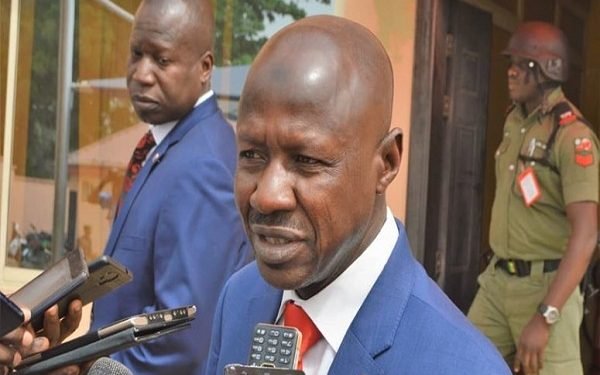
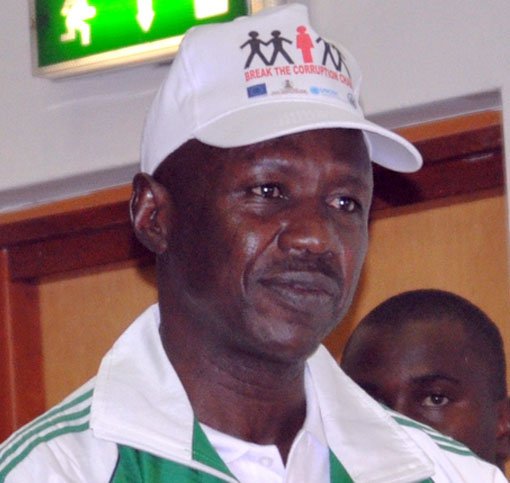
But Magu, according to his defence team, was shocked the Minister of Justice and Attorney-General of the Federation, Mr. Abubakar Malami (SAN) refused to honour the invitation of the panel.
Malami, who was subpoenaed by the commission, said his non-appearance is constitutional
He faulted the wordings of the invitation sent to him by the panel.
Malami said the terms and wordings of the invitation extended to him were against constitutional provisions.
According to a source in the defence team, if the AGF refuses to appear, Magu will ask Salami panel to declare all the allegations against him as frivolous.
The source said he who alleges must prove beyond reasonable doubt.
The top source said: “It was a strange and bizarre twist of events as Malami refused to appear before the Judicial Commission of Inquiry headed by the retired President of the Court of Appeal, Justice Ayo Salami despite a subpoena issued to him by the Chairman of the Judicial Panel of Inquiry set up by President Muhammadu Buhari to investigate the allegations he leveled against the Acting Chairman of the Economic and Financial Crimes Commission, Mr. Ibrahim Magu.
“Magu had consistently requested the opportunity to confront his accuser before the Panel including an opportunity to be given the allegations leveled against him by the Attorney-General of the Federation.
“Malami failed to appear before the commission to substantiate the allegations he leveled against Magu in the memo he wrote to President Muhammadu Buhari which was the basis upon which the Judicial Commission of Inquiry was set up by the President.
“However, upon conclusion of presentation of witnesses before the Commission of Inquiry, Magu was called upon to present his defence which he has done by presenting a volumes of written responses to all the allegations against him backed by numerous exhibits and truck load of documents showing his achievements as the Acting chairman of the EFCC.
‘’There were also official documents showing that no recovered assets was missing or diverted to personal use for his benefit or those of his close associates.
“Magu had also requested before the Tribunal to issue subpoenas to certain persons to appear before the Judicial Commission of Inquiry to give evidence in support of their allegations and to be cross-examined upon such wild and unsubstantiated allegations.
“In line with Magu’s request, Justice Ayo Salami who is the Chairman of the Judicial Commission of Inquiry signed and issued a subpoena to the Attorney-General of the Federation, Mr. Abubakar Malami (SAN), at the instance of Magu to come and substantiate the allegations he made against him.
“In the said subpoena, it was stated as follows; “You are hereby commanded in the name of the President of the Federal Republic of Nigeria to appear before the Judicial Commission of Inquiry to give evidence in respect of your allegations against Mr. Ibrahim Magu”.
The defence team source however alleged that Malami wrote Salami’s panel that his allegations against Magu were official and he could not have come to Salami’s panel to face the suspended EFCC chairman.
The source added: “But instead of appearing before the Judicial Commission of Inquiry, Malami wrote a letter in disobedience to the subpoena issued for him to appear on the authority of the President of the Federal Republic of Nigeria.
“He said he would not appear as a witness. He hinged his refusal on the fact that he only made charges against Magu based on the petitions he received against him in his office.”
As at press time, Magu’s defence team has rejected Malami’s excuse for not honouring the panel’s subpoena.
The source said: “The above excuse is untenable and is clearly contempt of judicial authority and shows total disregard for the authority of President Muhammadu Buhari on whose authority the subpoena was issued requesting his appearance before the Judicial Commission of Inquiry.
“A few weeks back, Malami had taken to the media boasting to the whole world that he would appear before the Judicial Commission of Inquiry if summoned to do so.
“Now that the opportunity has been presented, he is shying away from that call because his allegations cannot be substantiated with facts or any shred of credible evidence.
“The position of the law is clear, whenever a petitioner refuses to substantiate his petition before the appropriate authority, such a petition is declared to be frivolous.
“Now that the main accuser of Magu has refused to appear before the Judicial Commission of Inquiry, the world waits with bated breath to see what justice Ayo Salami Judicial Commission of Inquiry will report to President Muhammadu Buhari.”
In his reaction, the Attorney-General of the Federation, Mr. Abubakar Malami(SAN) said his non-appearance before Salami’s panel is constitutional.
He said his allegations against Magu were purely constitutional and not based on ulterior motive.
Malami made the clarifications in a statement through his Special Assistant on Media and Public Relations,Dr. Umar Jibrilu Gwandu.
The statement said: “The Attorney-General of the Federation and Minister of Justice, Abubakar Malami, SAN has said that his non-appearance at Justice Ayo Salami Panel of Inquiry probing the suspended Chairman of the Economic and Financial Crimes Commission, Ibrahim Magu, was purely Constitutional and not based on any ulterior motive.
“The Office of the Attorney-General of the Federation and Minister of Justice said the appearance or otherwise of the Attorney General of the Federation and Minister of Justice, Abubakar Malami (SAN) to serve as a witness in any investigation should be a constitutional matter.
“In establishing propriety or otherwise of the presence of the Attorney-General of the Federation and Minister of Justice whose responsibility is to hold constitutional order one must root same within the constitutional provisions.
“The terms and wordings of invitation extended to the Attorney-General of the Federation and Minister of Justice by Justice Ayo Salami’s Panel of inquiry against Magu runs contrary to the Constitutional provisions.
“The Office of the Attorney-General of the Federation and Minister of Justice is by the provision of the Constitution and extant laws empowered to serve supervisory role. In the case of the Economic and Financial Crimes Commission (EFCC), the Attorney-General of the Federation and Minister of Justice has been discharging the role effectively.”
news
Abuja-Kaduna Train: Opeifa Denies NRC’s Involvement in Ticket Racketeering, Blames Scammers and High Demand
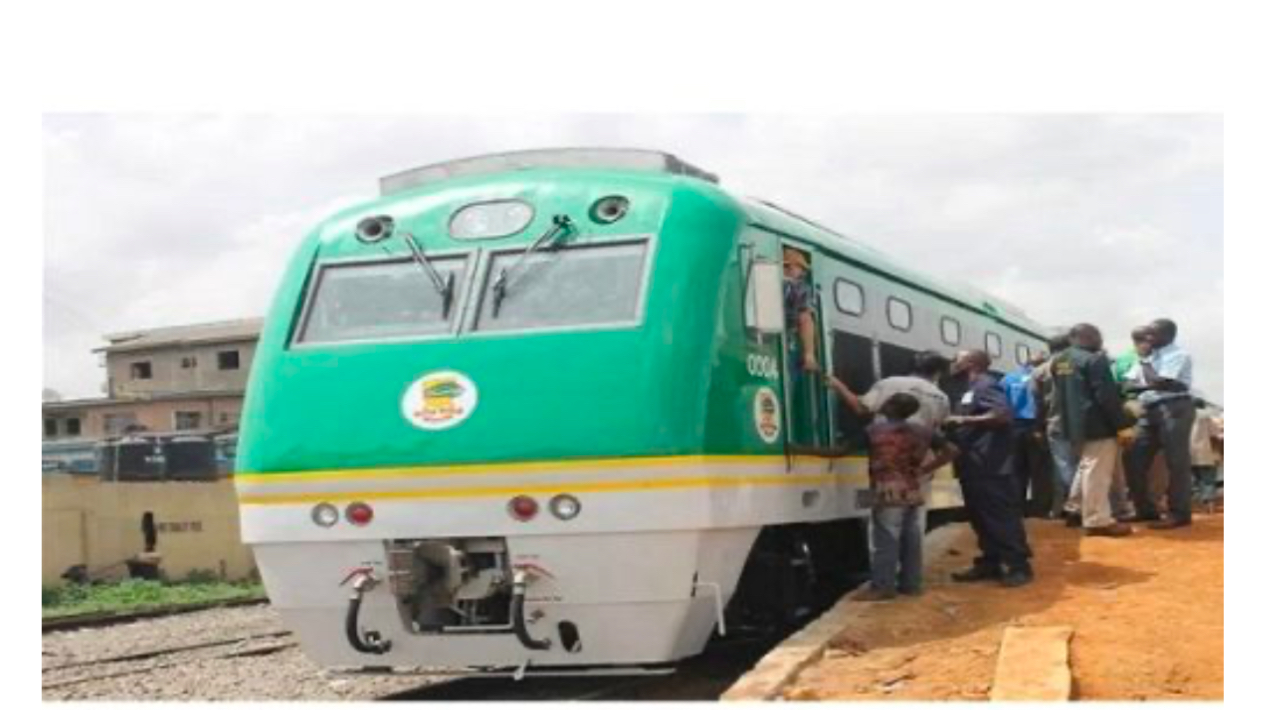
……..NRC Introduces Double Verification to Curb Racketeering
The Managing Director of the Nigerian Railway Corporation (NRC), Dr Kayode Opeifa, has denied allegations that the corporation deliberately creates artificial scarcity of train tickets on the Abuja-Kaduna Train Service (AKTS) to facilitate their resale at inflated prices through unauthorised agents.
The controversy followed a viral social media video by Instagram blogger Faizah Raji, who operates under the handle @wearegst, alleging that the corporation deliberately withholds tickets from its official electronic ticketing platform and makes them available through agents at exorbitant prices.
In the video, titled “The NRC Is Stealing Its Own Tickets to Resell,” the blogger claimed that she was unable to obtain a ticket through the official booking portal but subsequently purchased one from an agent at twice the official price.
Responding to the allegations, the NRC management described the claims linking the corporation to the alleged racketeering as misleading, insisting that the corporation does not directly buy or sell tickets on the Abuja-Kaduna corridor.
According to the management, electronic ticketing on the standard-gauge rail services operates under a Public-Private Partnership (PPP) arrangement, with private concessionaires responsible for ticket sales.
SecureID/TPS handles ticketing for the Abuja-Kaduna Train Service, while Global Software Digital Solutions (GSDS) manages the Lagos-Ibadan Train Service. Fane Warri-Itakpe Ticketing Solutions Limited is responsible for ticketing on the Warri-Itakpe Train Service.
The NRC said the concessionaires were approved by the Infrastructure Concession Regulatory Commission (ICRC) and the Federal Executive Council (FEC) before 2023.
Explaining the persistent difficulty passengers face in securing tickets, the corporation attributed the situation largely to a significant imbalance between passenger demand and the number of seats available.
According to the NRC, demand for train services on the Abuja-Kaduna corridor has exceeded available capacity by more than tenfold, putting considerable pressure on the ticketing system.
The management maintained that the reported experience of purchasing a ticket through an agent did not, in itself, establish that the corporation was responsible for creating artificial scarcity or facilitating the alleged resale.
It also warned passengers against patronising unofficial ticket agents, stressing that those who purchase tickets outside approved channels do so at their own risk.
The corporation explained that the Federal Government introduced the National Identification Number (NIN) requirement for train ticket purchases following the 2022 Abuja-Kaduna train attack, as part of measures to improve passenger identification and curb ticket racketeering.
However, it said suspected fraudsters had devised ways of obtaining multiple NINs to purchase tickets for resale to unsuspecting travellers.
To address the challenge, the NRC introduced a double-verification process in 2025, requiring passengers to undergo NIN verification and present personal identification before boarding.
The corporation said its ticketing and verification system is integrated with the database of the National Identity Management Commission (NIMC), enabling officials at Idu and Kubwa in Abuja, as well as Rigasa in Kaduna, to verify the identity and photograph associated with the NIN used to purchase a ticket.
The management, however, acknowledged that the Rigasa station in Kaduna lacks an adequate access-control system, a shortcoming it said could occasionally allow agents linked to ticket scams to overwhelm security personnel.
The introduction of a second verification process, modelled on the system used at Terminal 2 of the Murtala Muhammed International Airport in Lagos, is intended to strengthen checks and prevent passengers from travelling with tickets purchased using another person’s identity.
As part of efforts to address complaints about ticket availability, the NRC said the electronic ticketing concessionaires had been directed to improve access to their online platforms and ensure compliance with established ticketing procedures.
The corporation also reiterated that purchasing tickets from third parties using another person’s NIN or name was unacceptable, describing the practice as economic sabotage.
It stressed that passengers should book through approved portals and avoid sharing their NIN details and other personal information with agents or third parties who could exploit such information for fraudulent transactions.
The NRC management declared zero tolerance for ticket racketeering, warning that any staff member found participating in or colluding with individuals involved in the practice would face disciplinary action.
The corporation said it remained committed to protecting the integrity of its operations, improving customer service and ensuring that passengers have access to safe, affordable, reliable and convenient rail transportation.
While the allegations have renewed public debate over ticket availability and the effectiveness of the electronic ticketing system, the NRC maintained that the immediate challenges include rising passenger demand, limited seating capacity and the activities of individuals exploiting the system.
The corporation urged passengers to use only approved ticketing platforms and cooperate with verification procedures to help curb fraud and protect the railway system.
The NRC said it would continue working with relevant stakeholders to strengthen its ticketing processes and improve the passenger experience across its rail corridors.
news
Ondo Sports Council Chairman Declares 2026 ADU Unity Cup Open as Ijapo Ages FC Edges Odigbo LG FC


 The Chairman of the Ondo State Sports Council, Hon. (Coach) Abimbola Oladimeji, has officially declared the 2026 ADU Unity Cup open, marking the commencement of another edition of the football competition aimed at promoting unity, sportsmanship and grassroots football development.
The opening ceremony attracted football enthusiasts and supporters who gathered to witness the start of the tournament and celebrate the spirit of competition among participating teams.
In the opening match, Ijapo Ages FC secured a narrow 1–0 victory over Odigbo LG FC in an entertaining encounter, giving the team a winning start to its campaign in the competition.
The ADU Unity Cup continues to provide a platform for players to showcase their talents, foster unity among communities and contribute to the development of football at the grassroots level.
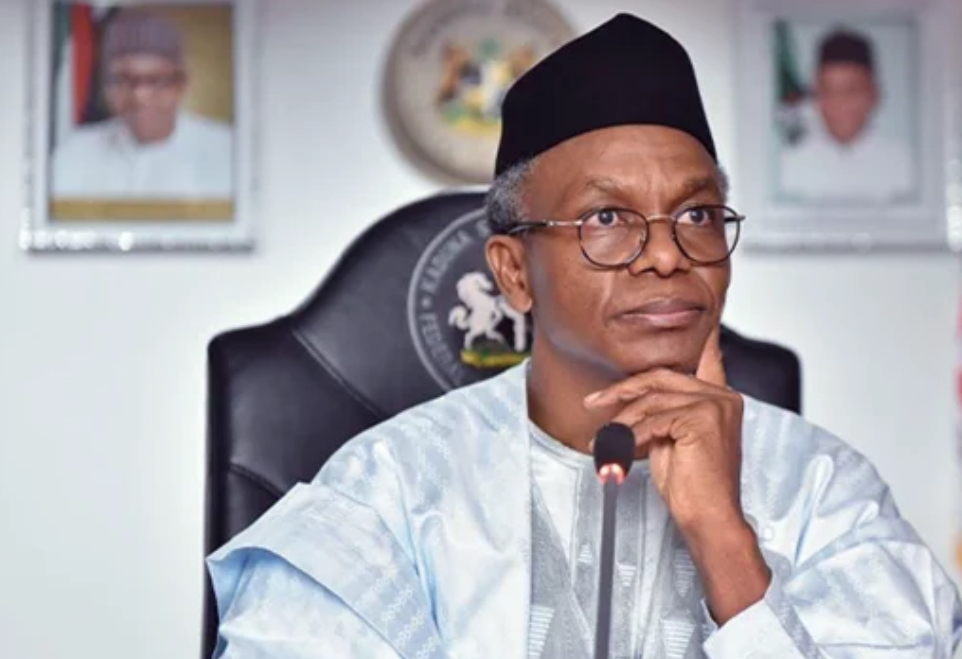
A forensic investigator with the State Security Service, Segun Kayode, on Tuesday alleged that former Kaduna State Governor, Nasir El-Rufai, and some of his associates earmarked $600,000 to settle officials of the Economic and Financial Crimes Commission and intermediaries.
Kayode, the first prosecution witness in the ongoing trial, made the allegation while testifying before the Kaduna State High Court sitting in Kawo, Kaduna, presided over by Justice Darius Khobo.
The witness said $500,000 and $100,000 were allegedly set aside for the payments, adding that forensic audio recordings captured conversations involving El-Rufai and some of his suspected associates.
According to him, the recorded conversations centred on alleged efforts to frustrate an EFCC investigation into a company identified as Singularity.
Kayode named a Senior Advocate of Nigeria, AU Mustapha (SAN); Jimi Lawal; and Bashir El-Rufai among those allegedly mentioned in the conversations.
He told the court that Mustapha and Lawal were allegedly directed to meet one Ahmadu Sule to obtain a template previously used to liquidate another company, with the intention of applying a similar process to Singularity.
The investigator further alleged that the discussions included plans to liquidate the company in Nigeria and Mauritius, where it was reportedly under investigation by the Nigerian Financial Intelligence Unit.
Kayode also alleged that the recordings contained discussions about preventing the EFCC from investigating IHS, which he said was listed on the New York Stock Exchange.
The allegations were presented as part of the prosecution’s evidence against the former governor.
The proceedings lasted nearly eight hours, from 12:26 pm to 8:18 pm, with about two hours devoted to playing the recorded conversations.
Add us to your Preferred Sources
Earlier, El-Rufai’s lead counsel, Paul Erokoro (SAN), objected to Kayode’s testimony, arguing that the witness’s name and summary of evidence were not included in the prosecution’s proof of evidence.
Erokoro argued that the omission undermined his client’s right to a fair hearing, insisting that the defence was entitled to know the evidence it was expected to answer.
However, counsel for the Independent Corrupt Practices and Other Related Offences Commission, Ayodeji Adedipe (SAN), told the court that Kayode was a subpoenaed witness and that the omission did not automatically render his testimony inadmissible.
Adedipe said the subpoena was issued and signed by the court on June 30, 2026, adding that the defence would have the opportunity to cross-examine the witness.
The prosecution counsel also cited judicial authorities in support of his argument.
In his response, Erokoro maintained that the issue was not whether the witness could testify but whether the defence had been adequately informed to prepare for his evidence.
He relied on Section 210 of the applicable Administration of Criminal Justice Law, 2017, and argued that the prosecution should have served the subpoena on the defence.
In its ruling, the court acknowledged that the witness’s name and summary of evidence were absent from the proof of evidence but held that the records showed he had been subpoenaed.
Justice Khobo ruled that the omission did not automatically make the testimony inadmissible, provided the defence was allowed to cross-examine the witness.
The judge consequently overruled the objection and directed Kayode to continue his testimony.
After the witness submitted a hard copy of his findings to the court clerk, the defence complained that the document should have been served earlier to enable it to study the contents.
The judge, however, ruled that the defence could obtain a certified true copy of the document admitted as Exhibit One for examination.
The court adjourned the case until November 30 and December 1, 2026, for continuation of the cross-examination, following agreement by the prosecution and defence.
Our correspondence reported that El-Rufai arrived at the court premises at about 11:50 am, ahead of the scheduled noon hearing, amid tight security.
He was accompanied by the African Democratic Congress governorship candidate in Kaduna State, Isa Ashiru.
His appearance followed an order by Justice Khobo directing the ICPC to produce him in court for the resumed proceedings.
The previous sitting was adjourned on Monday after the former governor was absent following information that he had requested access to his personal physician to review medical test results.
The resumed hearing came days after the Court of Appeal in Kaduna dismissed El-Rufai’s appeal challenging the refusal of bail by the state high court.
In its judgment delivered on October 9, the appellate court upheld the lower court’s decision, ruling that the former governor had failed to establish sufficient grounds to warrant interference with the refusal of bail.
El-Rufai has been in ICPC custody since February 18, 2026, over allegations of financial misconduct linked to his administration of Kaduna State between 2015 and 2023.
The Kaduna State House of Assembly had petitioned the ICPC over the alleged diversion and mismanagement of more than N423bn in public funds during his eight-year administration.
The former governor is facing multiple cases involving allegations of money laundering, abuse of office, fraud and other financial offences before different courts.
He has denied wrongdoing and pleaded not guilty to the charges. The allegations remain subject to judicial determination.


-
 news6 years ago
UPDATE: #ENDSARS: CCTV footage of Lekki shootings intact – Says Sanwo – Olu
-
 lifestyle6 years ago
Former Miss World: Mixed reactions trail Agbani Darego’s looks
-
 health6 years ago
Chairman Agege LG, Ganiyu Egunjobi Receives Covid-19 Vaccines
-
 lifestyle5 years ago
Obateru: Celebrating a Quintessential PR Man at 60
-
news8 years ago
-
 news1 year ago
BREAKING: Tinubu swears in new NNPCL Board
-
 health6 years ago
UPDATE : Nigeria Records 790 new cases of COVID-19
-
 entertainment2 years ago
Ashny Set for Valentine Special and new Album ‘ Femme Fatale’