news
Symbolic gestures to tangible cooperation, Air Peace clearance, Oil giant Petrobras return is key gain of Tinubu’s Brazil visit, Says Onanuga

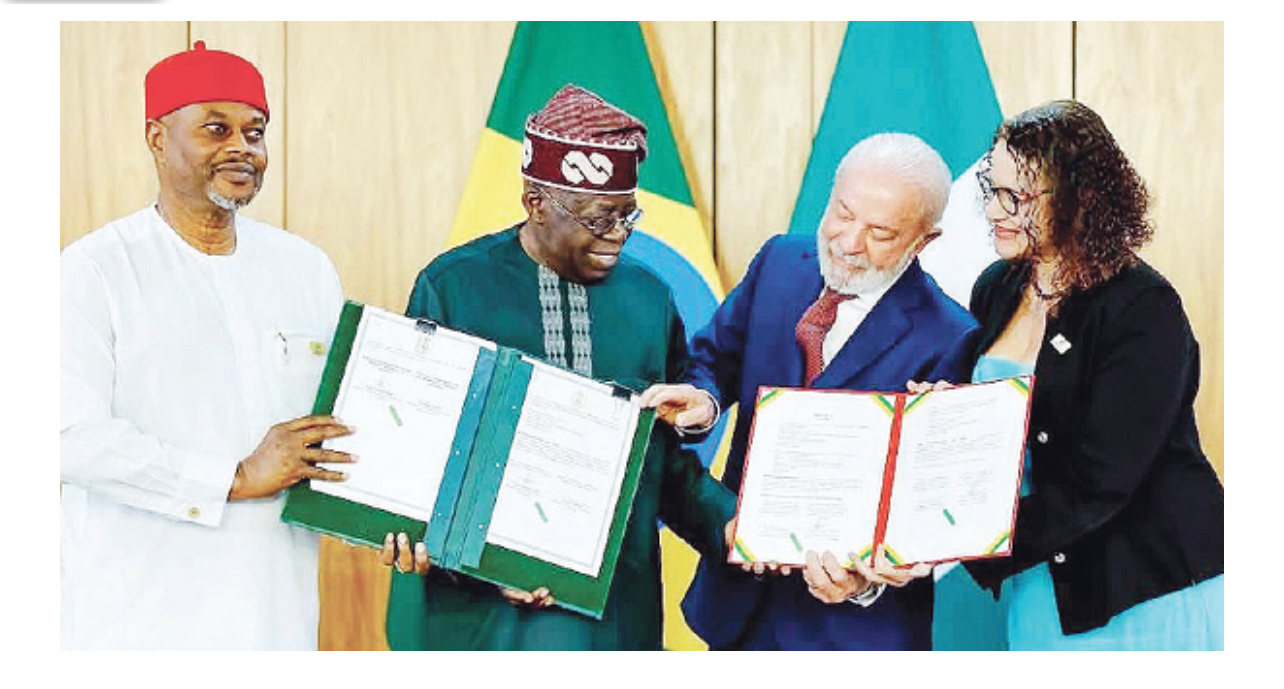
 ……Air Peace clearance for Lagos-Sao Paulo direct flights excites President
The return of Brazil’s oil giant, Petrobras, to Nigeria’s upstream is a major breakthrough recorded by President Bola Ahmed Tinubu’s two-day state visit to the largest economy in South America, Minister of Information and National Orientation Mohammed Idris said yesterday.
Besides, Nigeria’s largest airline, Air Peace, was given the right to commence Lagos-Sao Paulo flights to underscore the renewed economic and cultural ties between the two countries.
Sao Paulo is Brazil’s economic powerhouse and largest city.
Air Peace Chief Executive Officer, Allen Onyema, said the airline would deploy a Boeing 777 from its fleet to service the route.
A symbolic flight was planned for last night.
These agreements are part of the Memoranda of Understanding (MoUs) signed by the two countries during the President’s third visit to Brazil in less than one year.
His two earlier visits were on invitations extended to Nigeria by G-20 and BRICS.
“Air Peace is now cleared to run flights between Lagos and Sao Paulo”, Brazilian President, Luiz Inácio Lula da Silva, declared to the excitement of President Tinubu at a joint news conference at the Palácio do Planalto in Brasília to round off the visit.
According to Presidential spokesman, Bayo Onanuga, President Tinubu said the resumption of Petrobras’ operations five years after it halted joint ventures in Nigeria, would reignite economic cooperation in the energy sector.
“We have the largest gas repository. So, I don’t see why Petrobras doesn’t join as a partner in Nigeria as soon as possible. I appreciate President Lula’s promise that this will be done as soon as possible,” Tinubu said.
The President praised his Brazilian counterpart for committing to revitalising the partnership between the two nations.
“Nigeria’s economic space remains a virgin land, full of opportunities for Brazilian companies,” Tinubu said, while acknowledging Embraer’s role in boosting local airline operations through plans for a service centre in Nigeria to support maintenance and repairs.
Reflecting on his past engagements in Brazil, Tinubu urged a shift from symbolic gestures to tangible cooperation.
“Honourable Ministers of both countries, members of the Brazil Business Group, I have listened carefully to my friend, President Lula. We had a lengthy discussion. We talked about history and about African and Brazilian heritage.
“We tried to see why we are not at the level we wanted. We have allowed some problems and activities in the past to deter us from making progress and fulfilling our promises. But today, we say that is the end of that,” he said.
Tinubu stressed Nigeria’s readiness to partner Brazil in technology transfer, food security, renewable energy, and manufacturing.
“Today, we are fighting and working hard to bring our sovereignty to the level of expectation that we, as a nation, the most populous, the most dynamic country, share with Brazil. We need to share—technology transfer, energy, economy — so Brazil can continue to widen opportunities for us to embrace Africa. Africa is the new frontier,” he said.
The President also called for knowledge sharing in pharmaceuticals, saying “we have elevated this promise to the path of reality, as you have seen in various MOUs. I don’t know why the manufacturing of generic drugs, which Brazil has done deeply and far, cannot be in Nigeria.
“I don’t see why the technological superiority of Brazil is not shared with Africa. We assured each other that only we can develop our economies to help our sovereignty”, President Tinubu said.
Highlighting the reforms at home, Tinubu assured Brazilian investors of a new era in Nigeria’s economy.
“The reforms I’ve embarked upon since I took over in Nigeria have been very impactful. It was initially painful, but today the result is blossoming. It’s getting clearer to the people. We have more money for the economy, and there will be no more corruption.
“We have the governor of the Central Bank of Nigeria here. You don’t have to know him before getting the foreign exchange you need. The speculators are out. In our currency market, the door is open for businesses,” he said.
President Lula described the renewed Brazil–Nigeria engagement as timely in an era of rising protectionism.
“At a time when protectionism and unilateralism have returned, Nigeria and Brazil reaffirm their bet on free trade and productive integration. We continue to be dedicated to building a world of peace, free from hegemonic impositions.
“There are many possibilities for synergy between the world’s two largest countries with black populations. Agriculture and livestock, oil and gas, fertilisers, aircraft, and machinery, among others, represent wide avenues for cooperation.
“Increasing direct connections between Nigeria and Brazil is another essential step to strengthen the ties between our societies. We have approved the launch of a direct flight, to be operated by Nigeria’s largest airline company, Air Peace, between Lagos and São Paulo,” he said.
The following MoUs were signed between the two countries:
*Bilateral Air Services Agreement by Nigeria’s Minister of Aviation and Aerospace Development, Festus Keyamo, and Brazil’s Minister of Ports and Airports, Silvio Costa Filhos.
*Diplomatic Training Cooperation and MoU on political consultations were signed by Minister of State for Foreign Affairs of Nigeria, Ambassador Bianca Odumegwu-Ojukwu, and her Brazilian counterpart, Ambassador Mauro Vieira.
Nnaji, and Brazil’s Luciana Santos.
*The Managing Director of Nigeria’s Bank of Agriculture, Ayo Sotinrin, and Brazil’s Minister for National Bank for Economic and Social Development (BNDES), Aluísio Mercadante, signed an MOU for cooperation on trade and investment promotion, harmonising efforts to expand agricultural financing, investment, and joint projects.
Nigeria is currently Brazil’s 49th largest export destination, with trade between both countries reaching $2.1 billion in 2024.
Following the agreements, President Tinubu attended a state luncheon, hosted at the Itamaraty Palace.
Mohammed Idris: BASA to deepen ties
Minister of Information and National Orientation, Mohammed Idris, described the Bilateral Air Services Agreement (BASA) signed between Nigeria and Brazil as a significant breakthrough that will reconnect the two countries economically, socially, and culturally.
He described BASA as representing more than aviation.
“The 350 years of slavery between Africa and Brazil is being looked at again by the two leaders. And one way of looking at it is to ensure there is now a reconnection – economic, financial, social, cultural, whichever sphere. I think this is the best way to really go past what has happened during the period of slavery,” the minister said.
He noted that President Tinubu’s fourth meeting with President Lula in just over a year underscored the growing partnership between the two nations, which he said would also benefit Africa.
The minister said immediate “quick wins” from the agreement were already being realised, with a symbolic flight planned from Brazil to Abuja at midnight on Tuesday.
He noted that the direct link would reduce travel time between the two countries from more than 24 hours through European routes to about seven hours.
“Once this becomes commercially viable, it will not just enhance trade between the two countries, it will also improve the cultural and social cooperation that already exists,” he added.
Onyema, who described the BASA agreement as “a milestone,” said: “We cannot start daily flights for now, but we want to start with three weekly flights. As we go on, we develop the route and we’re going to increase the frequency. We told the Brazilians that we want to do Lagos, Rio, São Paulo and back to Lagos”.
The Air Peace chief emphasised that aviation would serve as a catalyst for unlocking the economic potential of both nations.
“The Brazilian economy is the largest in Latin America. The Nigerian economy is one of the largest in Africa. They need to tap into this. But without aviation, it’s very, very difficult for some of these things to be actualised,” Onyema said.
Boeing 777 for route
Speaking in an interview, Onyema said: “Nigerian aviation is grateful to President Tinubu for all he has been doing for the industry.
Air Peace has had long relation with Brazil as the biggest customer to Brazillian airplane maker, Embraer.
Air Peace signed a firm order for 13 Embraer E195-E2 jets in 2019, with the delivery of the first aircraft in early 2021. This was part of a larger agreement that included purchase rights for 17 additional aircraft of the same type, bringing the total potential order to 30 jets. The airline is the first African carrier to operate this new generation of Embraer aircraft.
Besides buying aeroplanes, Air Peace is fine-tuning strategies for the setting up of an aircraft maintenance facility in Nigeria.
Embraer, a few years ago, unveiled plans to establish an MRO (Maintenance, Repair, and Overhaul) facility in Nigeria, in partnership with Air Peace. This initiative is part of a broader maintenance deal with the Nigerian airline to provide local maintenance support for its growing fleet of Embraer aircraft, aiming to conserve foreign exchange for airlines and create jobs in Nigeria.
As one of Nigeria’s biggest flag carriers , Air Peace is designated on Lagos/ London, Dubai, Johannesburg, Tel Aviv, China, Mumbai, Antigua and Barbuda,
Air Peace serves 20 major cities in Nigeria and many regional destinations throughout West Africa (Accra, Dakar, Douala Freetown, Banjul, and Monrovia.
Petróleo Brasileiro S.A., better known by and trading as the portmanteau Petrobras, is a Brazilian majority state-owned multinational corporation in the petroleum industry headquartered in Rio de Janeiro. The company’s name translates to Brazilian Petroleum Corporation — Petrobras.
Petrobras began operations in Nigeria in 1998 in the deep waters off the Niger Delta. It sold its stakes more than 10 years ago to raise cash for domestic projects. Since then, Nigeria has been working to address some of the problems that have limited oil and gas output.
Petrobras stopped business in Nigeria five years ago.
The company was ranked #71 in the 2023 Fortune Global 500 list. In the 2023 Forbes Global 2000, Petrobras was ranked as the 58th-largest public company in the world.
Petrobras was created in 1953 under the government of Brazilian president Getúlio Vargas with the slogan “The Oil is Ours”. It was given a legal monopoly in Brazil.
In 2000, Petrobras set a world record for oil exploration in deep waters, reaching a depth of 1,877 metres (6,158 ft) below sea level. In 2002, Petrobras acquired the Argentine company Perez Companc Energía (PECOM Energía S.A.) from the Perez Companc Family Group and its family foundation for $1.18 billion.
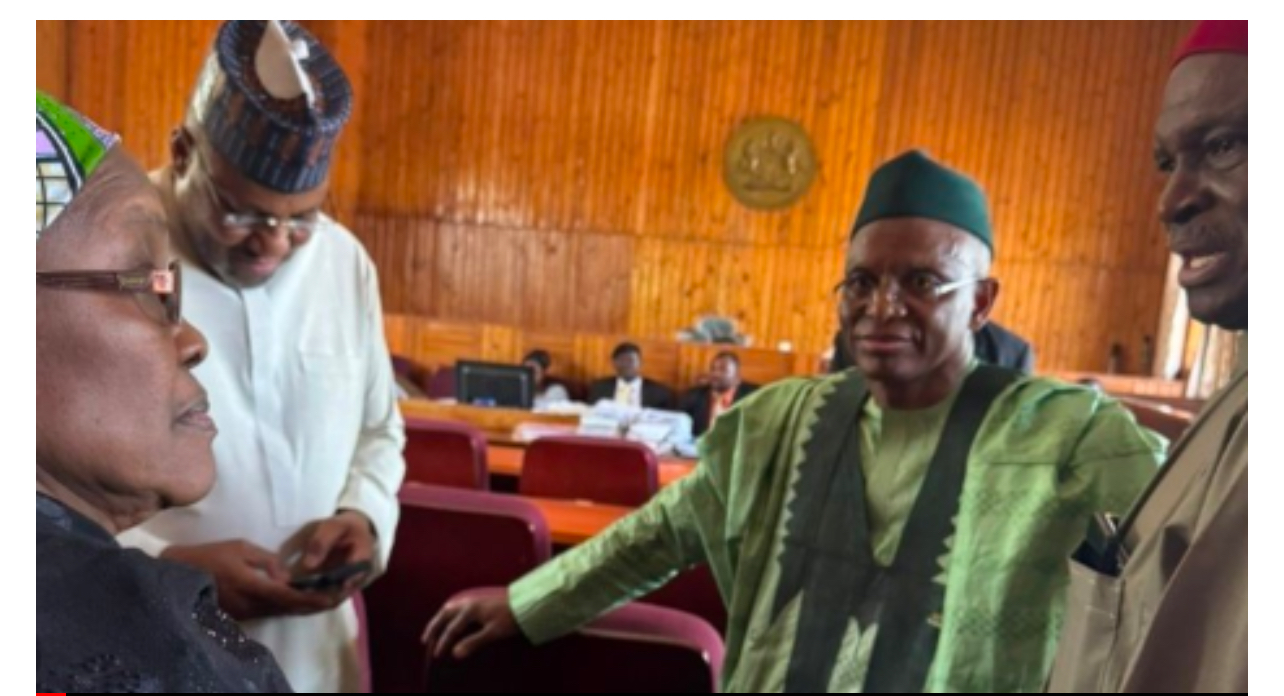
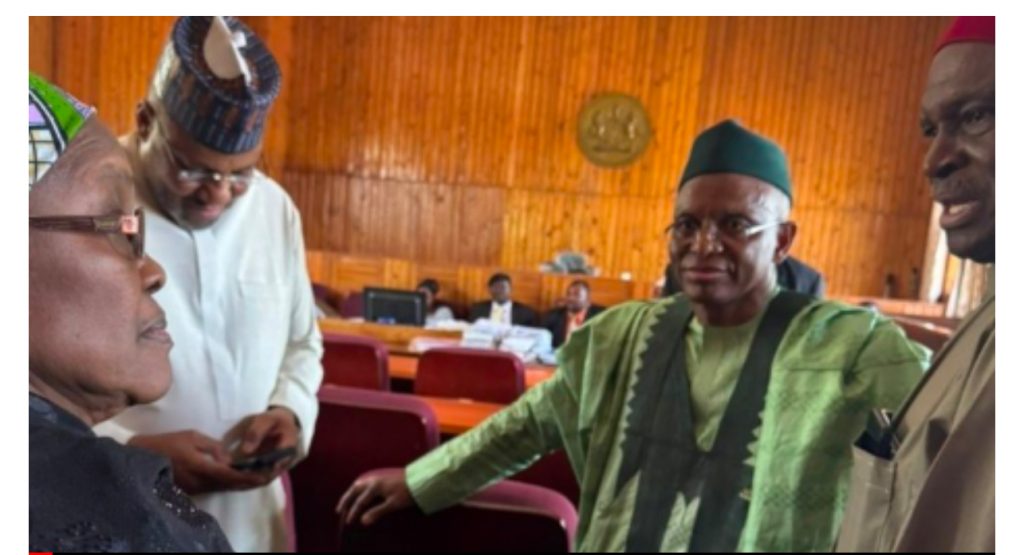
Security presence surged around the Federal High Court in Kaduna on Tuesday as operatives from multiple agencies were deployed ahead of the arraignment of former Kaduna State Governor, Nasir El-Rufai, over alleged corruption-related offences.
By about 7:00 a.m., heavily armed personnel of the Department of State Services, Nigeria Police Force, Mobile Police Force, and Nigeria Security and Civil Defence Corps had taken positions at strategic locations leading to the court complex situated within the old Nigerian Defence Academy area.
Access roads to the venue witnessed restrictions, forcing vehicles into a single lane from the Ungwan Sarki axis through Kawo and triggering early morning gridlock.
The heavy security followed a prior notice by the Independent Corrupt Practices and Other Related Offences Commission that it would arraign El-Rufai on Tuesday, March 24, 2026, before the Federal High Court sitting in Kaduna.
In a statement issued by its Head of Media and Public Communications, John Odey, the commission said the former governor would be docked alongside one Joel Adoga in suit number FHC/KD/73/2026.
The agency explained that the charges against the defendants include alleged conversion, unlawful possession of public property, and money laundering.
“The Independent Corrupt Practices and Other Related Offences Commission is set to arraign the former Governor of Kaduna State, Malam Nasir El-Rufa’i, and one Joel Adoga at the Federal High Court of Nigeria in the Kaduna Judicial Division on Tuesday, March 24, 2026. The charges range from conversion of and possession of public property to money laundering,” the statement read.
It further disclosed that another case, marked KDH/KAD/ICPC/01/26, had been instituted against El-Rufai and one Amadu Sule before a Kaduna State High Court.
According to the commission, the state charges border on abuse of office, fraud, intent to commit fraud, and conferring undue advantage.
“Similarly, another charge against Malam Nasir El-Rufa’i and one Amadu Sule has been filed before a Kaduna State High Court in the Kaduna Judicial Division. The charges range from abuse of office and fraud to intent to commit fraud and conferring undue advantage, among others,” the statement added.
The ICPC said both cases were filed on March 18, 2026, adding that a date for arraignment in the state court would be announced later.
It also insisted that El-Rufai had been properly served, stressing its adherence to due process and the rule of law.
The development came amid growing pressure from stakeholders, including the African Democratic Congress, which called for his immediate release or arraignment, describing his continued detention without formal charges as unconstitutional.
In the same vein, the Muslim Rights Concern criticised his prolonged detention, while members of his family also alleged a breach of his fundamental rights.
El-Rufai was first arrested by the Economic and Financial Crimes Commission on February 16, 2026, granted bail two days later, and subsequently re-arrested by the ICPC.
He has remained in the custody of the anti-graft agency since then, pending his arraignment.
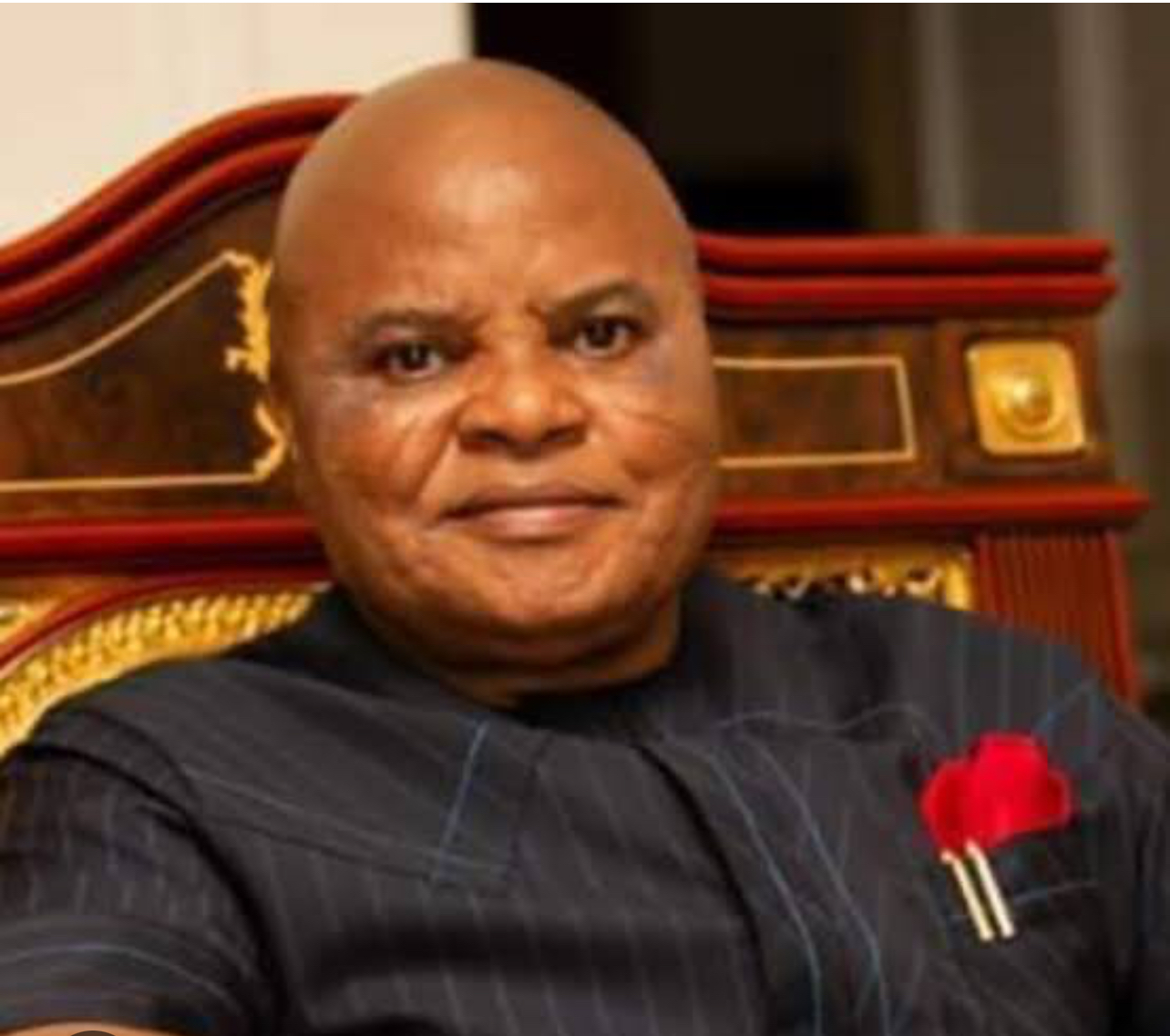
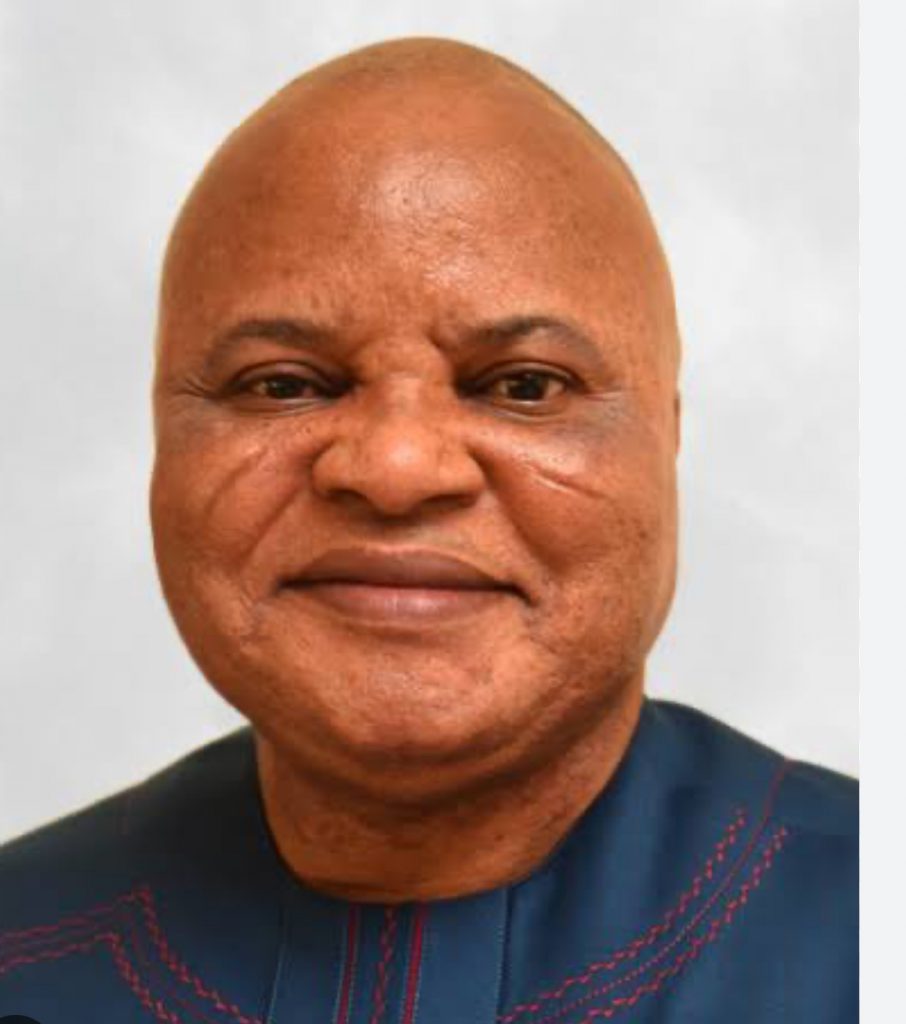
Senator Ifeanyi Araraume, a prominent chieftain of the All Progressives Congress (APC), has extended warm felicitations to Muslims in Nigeria and across the globe on the joyous occasion of Eid-el-Fitr.
In a statement to mark the end of Ramadan, Araraume highlighted the significance of the month long period of spiritual reflection, fasting, and devotion. “As Muslims gather with loved ones to share in the festivities, I join in the cheer, wishing everyone a blessed and peaceful Eid,” he said.
The Senator expressed profound appreciation to Muslim Nigerians for their contributions to the nation’s growth, describing their faith, resilience, and patriotism as beacons of hope. “Your unwavering commitment to Nigeria’s progress is truly commendable,” he stated.
As the country navigates its current challenges, Araraume called for unity, understanding, and collective effort. “Let us embrace the spirit of Eid, forgiveness, generosity, and kindness, to build a brighter future for ourselves and generations to come,” he urged.
Araraume also extended solidarity to President Bola Tinubu, a distinguished Muslim and the leader of APC, praising his visionary leadership and dedication to nation building. “President Tinubu’s commitment to serving Nigeria has been exemplary, and we assure him of our continued support,” he said.
Reaffirming the APC’s commitment to national prosperity, Araraume emphasized that the values of compassion, unity, and progress embodied by Eid align deeply with the party’s ethos. “As we mark this occasion, we reaffirm our dedication to creating a Nigeria where faith and ethnic background are not barriers to success,” he concluded.
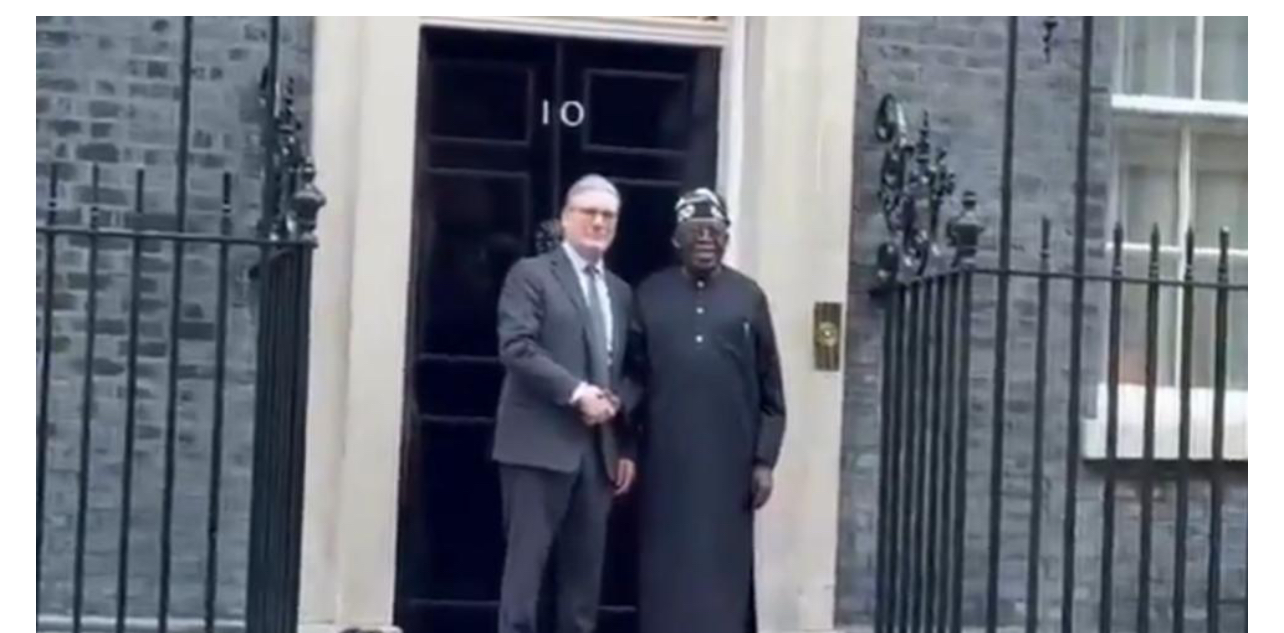
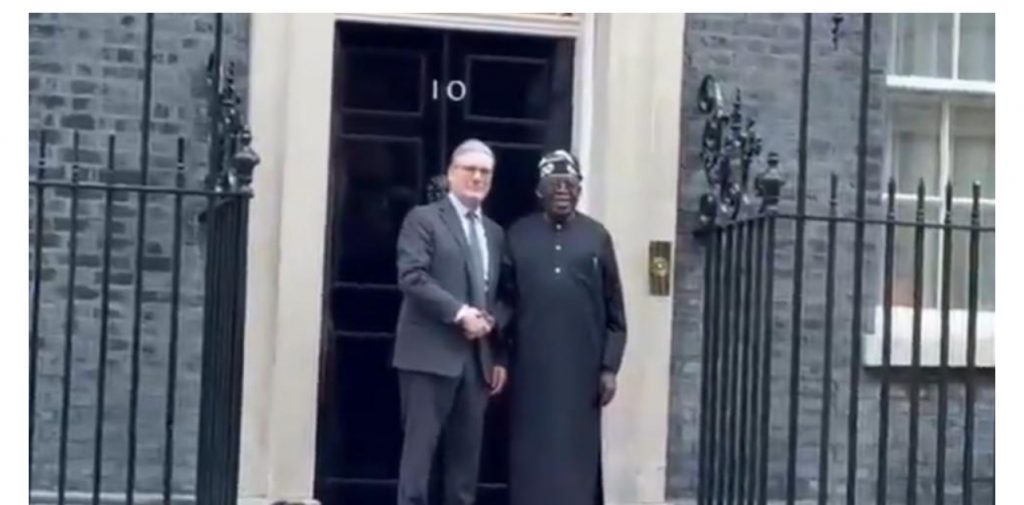
President Bola Tinubu is currently meeting with United Kingdom Prime Minister Keir Starmer in a high-level bilateral engagement aimed at strengthening ties between Nigeria and Britain.
A statement by the Special Adviser to the President on Information and Strategy, Bayo Onanuga, on Monday, said the meeting will culminate in the signing of various Memoranda of Understanding and agreements, including those on trade, investment, defence, and cultural cooperation.
The statement said the meeting reinforces Nigeria’s commitment to deepening bilateral relations, attracting foreign investment, and modernising key infrastructure to support economic growth.
It added that a major highlight of the visit was the signing of a £746 million financing agreement between UK Export Finance, the Nigerian Ports Authority, and the Federal Ministry of Finance.
Morning Recap: Nigeria, Britain set for fresh security alliances, Saudi Arabia declares Friday Eid-el-Fitr, other top stories
The statement said the deal will fund the refurbishment of two key maritime infrastructures — the Lagos Port Complex (Apapa Quays) and the Tin Can Island Port Complex.
The President and the First Lady had earlier been the guests of their Majesties King Charles III and Queen Camilla at Windsor Castle.
Tinubu was accompanied by a high-profile delegation, including Senate President Godswill Akpabio; Attorney General and Minister of Justice, Prince Lateef Fagbemi; Minister of Solid Minerals, Dele Alake; Minister of Information and National Orientation, Idris Mohammed; and Minister of State for Foreign Affairs, Ambassador Bianca Ojukwu.
Other members of the delegation include Minister of Finance and Coordinating Minister of the Economy, Wale Edun; Minister of Industry, Trade and Investment, Dr. Jumoke Oduwole; Minister of Culture and Creative Economy, Hannatu Musawa; Minister of Communications and Digital Economy, Bosun Tijani; Minister of Defence, Gen. Christopher Musa; National Security Adviser, Malam Nuhu Ribadu; and Director-General of the National Intelligence Agency, Mohammed Mohammed.

-
 news5 years ago
UPDATE: #ENDSARS: CCTV footage of Lekki shootings intact – Says Sanwo – Olu
-
 lifestyle6 years ago
Former Miss World: Mixed reactions trail Agbani Darego’s looks
-
 health5 years ago
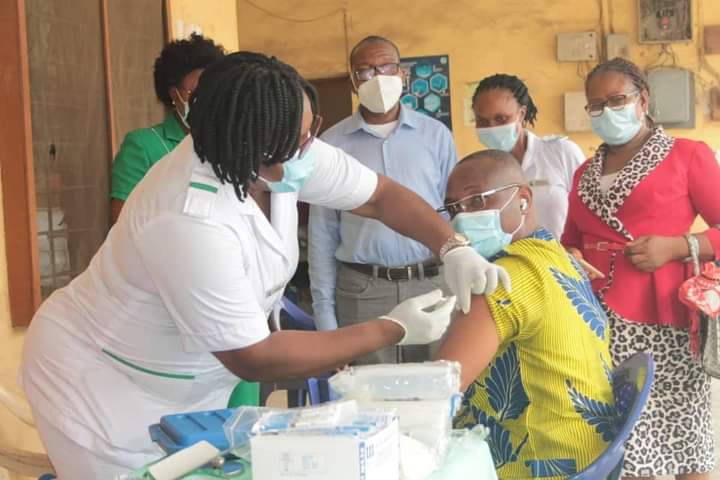
Chairman Agege LG, Ganiyu Egunjobi Receives Covid-19 Vaccines
-
 lifestyle5 years ago
Obateru: Celebrating a Quintessential PR Man at 60
-
 health6 years ago
UPDATE : Nigeria Records 790 new cases of COVID-19
-
 health6 years ago
BREAKING: Nigeria confirms 663 new cases of COVID-19
-
 entertainment1 year ago
Ashny Set for Valentine Special and new Album ‘ Femme Fatale’
-
 news10 months ago
BREAKING: Tinubu swears in new NNPCL Board