news
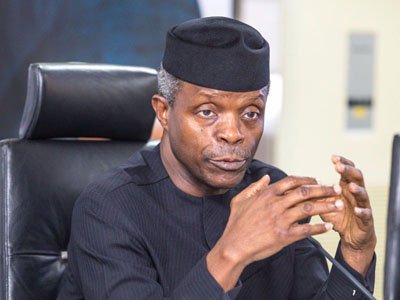
Theft of public funds wrecking educational, health sectors — Osinbajo

 …laments fight against corruption stalled without severe consequences
I didn’t write memo seeking to leave APC — Osinbajo
VICE President Yemi Osinbajo, on Tuesday, blamed the slow developmental pace of the country’s educational and health sectors on continuous theft of public funds.
This was as he said all efforts invested overtime to fight corruption may never yield any result if not backed with severe consequences.
Osinbajo spoke at the public presentation of the Integrity Club and Zero Tolerance Club Manuals organised by the Economic and Financial Crimes Commission, EFCC, held at Model Secondary School, in Abuja.
The Integrity Club and Zero Tolerance Club Manuals is an initiative by the EFCC to serve as an instrument to inculcate the spirit of integrity and to serve as guidance in raising a more ethically grounded generation of Nigerians.
He said: “Today when you hear yahoo, yahoo, you will find out that there are people who justify it, saying it is because they don’t have money or it is because they are bored that’s why they are into it. No, that’s not true. There are many poor young people all over the world in different countries.
“The difference is the consequence. If you know that you will be caught and dealt with, you will not do it and you must also recognise that it destroys the reputation of your country and that reputation is important because you want to go abroad to study; because you want to do business abroad and do business with people. If the only thing people have ever heard is that these people are 419. If that’s the only reputation that there is, you are in trouble.
“Every public officer who steals robs the Nigerian society of funds, of health care, and education. Every time a public officer steals money whether the man is from your tribe or from your village or not because people excuse stealing when it comes from their own part of the world, and say it is ok after all it is my brother or sister but never forget that everybody, every public officer that steals money makes it very difficult for you to access good education, good health care, good roads, etc because public money is not for private pockets, it is meant for the public good, it is meant for public infrastructure. So, anybody pocketing public resources does harm to the country and the future and to all of the young people in our country.”
He, therefore, called on the Nigerian youths to join in the fight against corruption, pointing out that they are significant players in the nation’s developmental process.
“So, I want to say to the young people here in particular that you represent the army that must fight corruption, not because it seems like a nice thing to do, no, because your future depends on it.
“The reputation of your country is all that you will have in the next few years. Whatever you want to do, it is that reputation and those who destroy the reputation of the country are not doing you good. They are doing you a great evil. You must ensure that you join the army to fight corruption, to fight dishonesty because it is simply dangerous. Not just for you but for the entire society and for the future”, he said.
On his part, the Executive Chairman, EFCC, Abdurasheed Bawa, during his remarks said it was imperative for school children to get acquainted with issues concerning economic and financial crimes.
He added that the Integrity Club and Zero Tolerance Club Manuals would not only imbue a culture of integrity in the formative years of youths and children but would expose them to the need for honesty, transparency and accountability in their dealings.
He said: “The choice of school children and youths as torch-bearers in this important crusade is informed by the fact that they are not ely vulnerable to the effects of economic and financial crimes but retain the potential of breaking with the past years of decadence, to deliver the much cherished destiny of our nation as a corrupt-free society.
“Consequently, we have designed programmes and activities aimed at nurturing a culture of integrity in the formative years of this young population. Two of such programmes are the EFCC Integrity Club for primary schools and the Zero Tolerance Club for tertiary institutions.
“The Clubs are designed not only to improve children and youth understanding and sensitivity to the issues of economic and financial crimes but as a deliberate intervention to imbue them with values which underpin integrity, honesty, transparency and accountability to influence their behavior and character formation.
“Some of the activities through which we have sought to achieve this value orientation include but are not limited to the following rules: plays, visual arts, creative writing, poetry, games, dramas, lectures, workshops, music shows, road walks, etc.”
He, however, called for partnership with States Education Boards by mandating all the schools under their supervision to establish EFCC integrity clubs.
He extended partnership calls to Vice Chancellors, Rectors and Provosts of Universities, Polytechnic and Colleges of Education across the country.
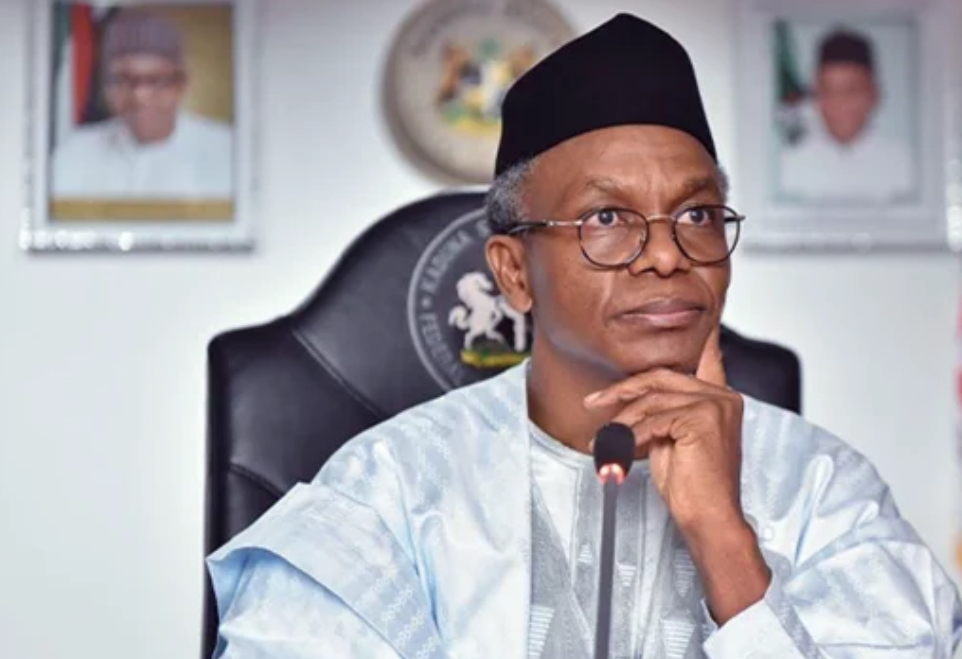
A forensic investigator with the State Security Service, Segun Kayode, on Tuesday alleged that former Kaduna State Governor, Nasir El-Rufai, and some of his associates earmarked $600,000 to settle officials of the Economic and Financial Crimes Commission and intermediaries.
Kayode, the first prosecution witness in the ongoing trial, made the allegation while testifying before the Kaduna State High Court sitting in Kawo, Kaduna, presided over by Justice Darius Khobo.
The witness said $500,000 and $100,000 were allegedly set aside for the payments, adding that forensic audio recordings captured conversations involving El-Rufai and some of his suspected associates.
According to him, the recorded conversations centred on alleged efforts to frustrate an EFCC investigation into a company identified as Singularity.
Kayode named a Senior Advocate of Nigeria, AU Mustapha (SAN); Jimi Lawal; and Bashir El-Rufai among those allegedly mentioned in the conversations.
He told the court that Mustapha and Lawal were allegedly directed to meet one Ahmadu Sule to obtain a template previously used to liquidate another company, with the intention of applying a similar process to Singularity.
The investigator further alleged that the discussions included plans to liquidate the company in Nigeria and Mauritius, where it was reportedly under investigation by the Nigerian Financial Intelligence Unit.
Kayode also alleged that the recordings contained discussions about preventing the EFCC from investigating IHS, which he said was listed on the New York Stock Exchange.
The allegations were presented as part of the prosecution’s evidence against the former governor.
The proceedings lasted nearly eight hours, from 12:26 pm to 8:18 pm, with about two hours devoted to playing the recorded conversations.
Add us to your Preferred Sources
Earlier, El-Rufai’s lead counsel, Paul Erokoro (SAN), objected to Kayode’s testimony, arguing that the witness’s name and summary of evidence were not included in the prosecution’s proof of evidence.
Erokoro argued that the omission undermined his client’s right to a fair hearing, insisting that the defence was entitled to know the evidence it was expected to answer.
However, counsel for the Independent Corrupt Practices and Other Related Offences Commission, Ayodeji Adedipe (SAN), told the court that Kayode was a subpoenaed witness and that the omission did not automatically render his testimony inadmissible.
Adedipe said the subpoena was issued and signed by the court on June 30, 2026, adding that the defence would have the opportunity to cross-examine the witness.
The prosecution counsel also cited judicial authorities in support of his argument.
In his response, Erokoro maintained that the issue was not whether the witness could testify but whether the defence had been adequately informed to prepare for his evidence.
He relied on Section 210 of the applicable Administration of Criminal Justice Law, 2017, and argued that the prosecution should have served the subpoena on the defence.
In its ruling, the court acknowledged that the witness’s name and summary of evidence were absent from the proof of evidence but held that the records showed he had been subpoenaed.
Justice Khobo ruled that the omission did not automatically make the testimony inadmissible, provided the defence was allowed to cross-examine the witness.
The judge consequently overruled the objection and directed Kayode to continue his testimony.
After the witness submitted a hard copy of his findings to the court clerk, the defence complained that the document should have been served earlier to enable it to study the contents.
The judge, however, ruled that the defence could obtain a certified true copy of the document admitted as Exhibit One for examination.
The court adjourned the case until November 30 and December 1, 2026, for continuation of the cross-examination, following agreement by the prosecution and defence.
Our correspondence reported that El-Rufai arrived at the court premises at about 11:50 am, ahead of the scheduled noon hearing, amid tight security.
He was accompanied by the African Democratic Congress governorship candidate in Kaduna State, Isa Ashiru.
His appearance followed an order by Justice Khobo directing the ICPC to produce him in court for the resumed proceedings.
The previous sitting was adjourned on Monday after the former governor was absent following information that he had requested access to his personal physician to review medical test results.
The resumed hearing came days after the Court of Appeal in Kaduna dismissed El-Rufai’s appeal challenging the refusal of bail by the state high court.
In its judgment delivered on October 9, the appellate court upheld the lower court’s decision, ruling that the former governor had failed to establish sufficient grounds to warrant interference with the refusal of bail.
El-Rufai has been in ICPC custody since February 18, 2026, over allegations of financial misconduct linked to his administration of Kaduna State between 2015 and 2023.
The Kaduna State House of Assembly had petitioned the ICPC over the alleged diversion and mismanagement of more than N423bn in public funds during his eight-year administration.
The former governor is facing multiple cases involving allegations of money laundering, abuse of office, fraud and other financial offences before different courts.
He has denied wrongdoing and pleaded not guilty to the charges. The allegations remain subject to judicial determination.
Ok
The Federal Government has announced ten new measures to reduce the pain Nigerians feel from high fuel prices. It insists, however, that none of them brings back the old fuel subsidy for everyone.
The measures were presented by the Federal Ministry of Finance at a press briefing on Thursday, 8 October 2026, titled “Fuel Prices and the Subsidy Question.” The government admitted its earlier steps fell short. According to the presentation, “These measures do not fully relieve the pressure households feel today, so the government is going further.”
The government described the new package as “Help that is targeted, temporary and affordable.” In plain terms, the help is meant for those who need it most, will not last forever, and is designed so that the country can pay for it.
Cheaper petrol and more cash support
The first measure is a discount on petrol sold at NNPC filling stations. The discount will last for the next 30 days, and public transporters, such as commercial bus and taxi operators, will get priority. The government hopes this will help keep transport fares from rising further.
The government also plans to increase cash transfers to vulnerable households. Small businesses will get cheaper loans, known as subsidised credit, to help them cope with higher running costs.
Steps to keep pump prices steady
To protect Nigerians from sudden jumps in world oil prices, the government will sell crude oil in advance to local refineries. This is expected as oil production rises and crude previously committed to other purposes becomes available. The presentation says this will shield “pump prices from global swings.” ShopAfrican Art
The government will also introduce what it calls price modulation. Under this plan, a negotiated limit of ₦1,350 per litre will apply to the ex-gantry price (the price at the depot) or the landing cost (the cost of bringing the fuel into the country). The limit will be reviewed every month, so it can change as conditions change.
A National Strategic Fuel Reserve will also be set up. Fuel from the reserve will be released “under published rules when disruption or hoarding threatens supply.” This means the government can step in when fuel becomes scarce or when marketers hold back products to push up prices.
Lowering the cost of transport and doing business
The government says part of what Nigerians pay for transport comes from illegal charges on the roads. It will work with state governments under the 2025 tax laws to rein in road taxes that push up fares.
It will also speed up the rollout of compressed natural gas (CNG) as a cheaper alternative to petrol, again working with the states. Transporters who benefit from cheaper fuel are expected to “pass savings on in lower fares” to passengers.
Other steps target the cost of goods and services more broadly. The government will cut regulatory costs, described as red tape, that “feed into the price of goods and services.” It will also ease traffic in cities to save fuel, and it will use NIPOST address codes to reduce the cost of moving goods from one place to another.
One measure has not yet been decided. The government is considering an excess profit tax on operators it says exploit consumers. If it goes ahead, the money raised will fund transport support and vouchers for low-income earners.
No return to blanket subsidy
The ministry ended the presentation with a clear message, “None of these measures restores a blanket subsidy.” The government is therefore not returning to the old system, where fuel was sold cheaply to everyone. It says its new approach will reach “the people who need help without putting the wider economy at risk.”
The announcement comes as many households as possible, and businesses struggle with the high cost of transport, food, and other goods linked to fuel prices. How much relief Nigerians feel will depend on how quickly and effectively these measures are carried out, and whether transporters and marketers pass the benefits on to consumers.
news
Nigeria Emerges as Africa’s Biggest Climber in Investment Risk Ranking on Back of Tinubu’s Economic Reforms
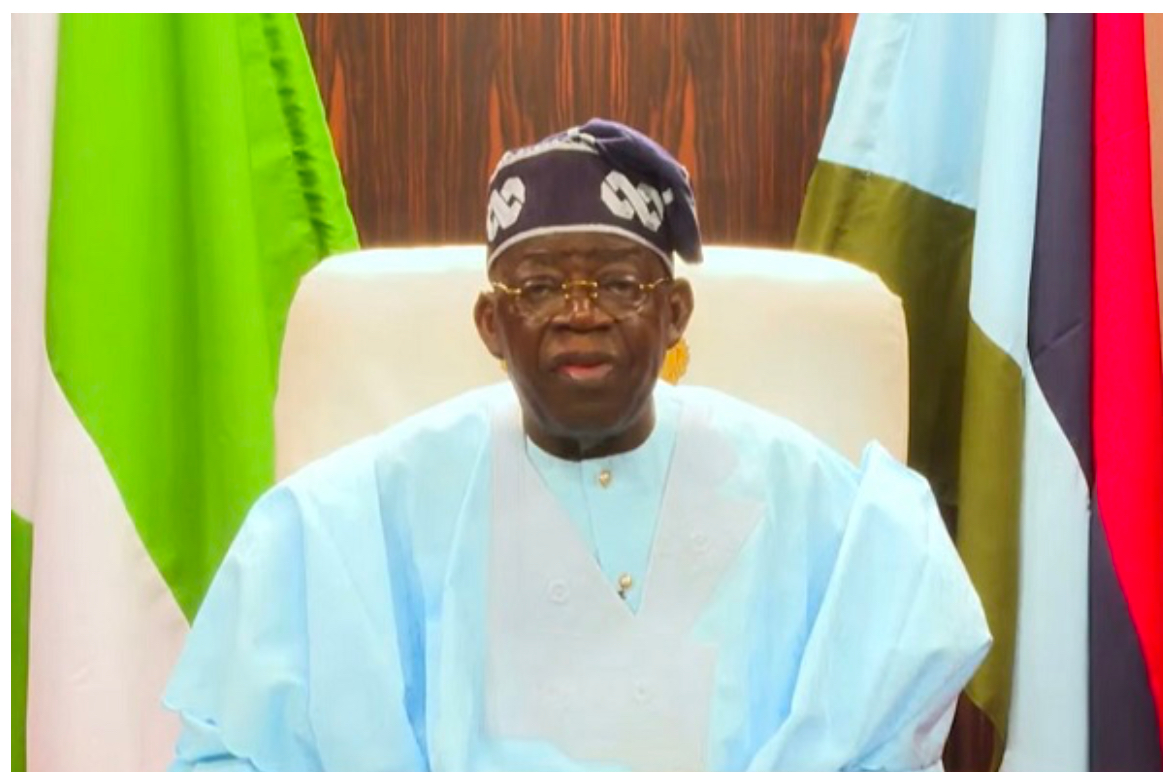
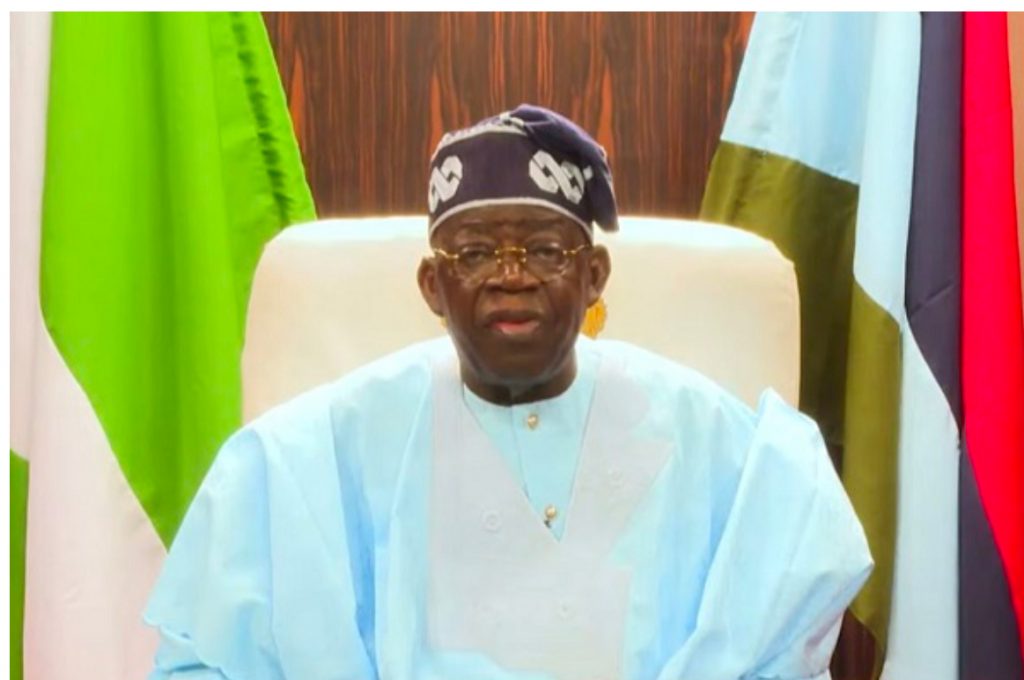
Nigeria has emerged as the biggest climber in Africa’s latest investment risk ranking, rising four places to eighth position as economic reforms implemented by President Bola Tinubu improved the country’s relative attractiveness to investors, a new report by Bloomberg has stated.
Nigeria overtook Rwanda, Tanzania, Kenya and Namibia in the 2026 Bloomberg Economics Investment Risk-O-Meter, which assesses the relative investability of 19 African economies.
Bloomberg, in the report released on Monday, said Nigeria’s improvement was driven by stronger performance in three of the five indicators used in the assessment: economic strength, fiscal strength and external vulnerability.
“Nigeria was the biggest climber in a ranking of Africa’s most investable markets, propelled by President Bola Tinubu’s economic reforms, according to the findings of the latest edition of An Investor’s Guide to Africa.
“The continent’s biggest oil producer and refiner rose four places to eighth in the 2026 Bloomberg Economics Investment Risk-O-Meter, overtaking Rwanda, Tanzania, Kenya and Namibia as it improved in three of the five metrics assessed by the gauge: economic strength, fiscal strength and external vulnerability,” Bloomberg reported.
The development puts Nigeria among the biggest gainers on the continent, despite ongoing concerns about the country’s high public debt, cost of living, inflation, infrastructure deficit and foreign exchange pressures.
Mauritius emerged as the most investable African market in the latest ranking, while Botswana fell two places. South Africa, which topped the ranking in the previous edition, also dropped one place following a weaker economic growth outlook.
Nigeria’s improved position comes more than three years after Tinubu assumed office and embarked on a series of major economic reforms aimed at restructuring the country’s fiscal and monetary environment.
Add to Preferred Sources
Among the most significant measures were the removal of the petrol subsidy, reforms to the foreign exchange market and changes to electricity tariffs.
The Federal Government has repeatedly defended the reforms as necessary to address distortions that had weighed on public finances, discouraged investment and placed pressure on foreign exchange reserves.
However, the policies have also increased economic hardship for households and businesses, particularly through higher transport, food and energy costs. Despite the adjustment pains, Nigeria’s economy has continued to expand during the period under review.
Real Gross Domestic Product growth rose from 2.54 per cent in the third quarter of 2023 to 3.46 per cent in the fourth quarter of that year.
The economy subsequently grew by an average of 3.19 per cent in 2024 before accelerating to 3.85 per cent in 2025, its strongest annual performance within the period covered by the assessment.
Growth stood at 3.89 per cent in the first quarter of 2026, bringing the average quarterly growth between the third quarter of 2023 and the first quarter of 2026 to about 3.46 per cent.
The stronger growth performance has come alongside efforts by the government to increase revenue, reduce fiscal leakages and attract investment into critical sectors of the economy.
Nigeria’s improved position in the Bloomberg ranking, however, comes against the backdrop of a substantial increase in public debt.
Data from the Debt Management Office showed that Nigeria’s total public debt stood at N87.38tn as of June 30, 2023, shortly after Tinubu took office. By December 31, 2025, the figure had risen to N159.28tn. This represents an increase of N71.90tn, or about 82.3 per cent, in two and a half years.
The increase was driven by new borrowing, foreign exchange adjustments and the securitisation of certain legacy obligations, according to the DMO.
The development is significant for a country that has struggled for years to attract sufficient foreign capital because of concerns over exchange-rate instability, policy uncertainty, weak infrastructure, insecurity and limited fiscal space.
The reforms under the Tinubu administration have sought to address some of these constraints by allowing market forces a greater role in determining fuel prices, foreign exchange rates and electricity tariffs.
The foreign exchange reforms, in particular, were designed to reduce multiple exchange rates and improve transparency in the currency market, while the removal of the petrol subsidy was intended to reduce the government’s fiscal burden.
The electricity tariff reforms were also aimed at improving the financial viability of the power sector and encouraging investment by allowing electricity prices for some customer categories to better reflect supply costs.
Nigeria’s rise in the Bloomberg ranking therefore marks an improvement in its relative position among African investment destinations, even as investors continue to monitor the sustainability of its reforms, debt burden and economic growth.


-
 news6 years ago
UPDATE: #ENDSARS: CCTV footage of Lekki shootings intact – Says Sanwo – Olu
-
 lifestyle6 years ago
Former Miss World: Mixed reactions trail Agbani Darego’s looks
-
 health6 years ago
Chairman Agege LG, Ganiyu Egunjobi Receives Covid-19 Vaccines
-
 lifestyle5 years ago
Obateru: Celebrating a Quintessential PR Man at 60
-
 news1 year ago
BREAKING: Tinubu swears in new NNPCL Board
-
 health6 years ago
UPDATE : Nigeria Records 790 new cases of COVID-19
-
 entertainment2 years ago
Ashny Set for Valentine Special and new Album ‘ Femme Fatale’
-
 society3 years ago
Bisbam CEO, Abisola Bamidele, Bags Owu Chieftaincy Title