
brand
UBA: A Bank of Many Firsts, in pursuit of Customer Satisfaction


United Bank for Africa Plc has carved a niche for itself and continues to stand out as the leading Pan-African financial institution, consistent in introducing numerous first rate innovative products with customer satisfaction in mind. To this end, the bank has invested significantly in cutting edge technology in a bid to boost its overall services to customers. The development is a further demonstration of the bank’s unalloyed commitment to ensuring premium services as well as reaffirming its dominance across Africa.
In a bid to reinforce its commitment to first-rate experience, the lender introduced Leo the Chat Banker in 2018 and did not rest on its oars as it innovated with more firsts launching on facebook, in 2019 and on WhatsApp, following which it created Leo Apple Business Chat’ for Ios on iPhone and iPad. A feat its peers are yet to replicate, even though some banks like Diamond Bank now merged with Access Bank tried with Ada and StanbicIBTC Bank’ Sami. First Bank and GT Bank also launched on WhatsApp. They were all unable to replicate the success story of UBA’s Leo.
Recently, UBA has again raised the bar, with another first of its kind, that is currently setting the pace in the digital banking space. The New UBA mobile App, launched in March is a one stop shop for all banking transactions like never seen before on the African continent and is already a massive success with customers who have embraced the app wholeheartedly with more than 200,000 downloads since its launch in March. A testament to the excellent unique offerings imbued in the new mobile app.
The new app, which is a total upgrade from the former app, has new features including four amazing themes and a more amazing graphical interface, just as it has another never-been-seen before feature where it blurs your account balance when you cover your phone’s censor.
Armed with benefits and features designed to give its customers increased control and accessibility to carry out transactions with ease, UBA Digital Banking Group Head, Kayode Ishola, said the app has been tailor-made to give customers what they want, how and in the way they want it. He made this disclosure during a recent virtual press parlay with both local and international media, adding that a lot of investment in cutting edge technology and attention to details was put into the new mobile app.
According to him, the new UBA Mobile App is “your personal finance manager built with a distinctive user interface that will change the face of banking. “With this app, we are reimagining banking as our engagement has moved from being channel-based to being platform-based.
“The speed of the platform has been made to match the speed of light as we have cut down significantly on the number of processes expected to carry out your transactions. Interestingly, we have worked towards creating behavioural insight for our customers and working around this to address the real needs of our customers using the Omni channel platform and running on our open digital platform, which is very interactive and armed with lifestyle services. It is sleek and trendy with seamless user interface”, he added.
On the security features of the app, UBA’s Group Chief Information Officer, Onyebuchi Akosa, said the new platform will revolutionise the way banking services are offered as it will deliver increased personalised banking via a watertight and highly-effective security system.
He said: “The new app has also been built with the best-in-purchase security features and has been modelled appropriately to ensure that all the features are working properly to secure transactions maximally. It is also important to mention that the bank took into consideration the virtually impaired, and thus has used voice recognition as a channel for transaction which suits both convenience and the visually impaired customers.”
Head, UBA SME Banking, Sampson Aneke, on his part noted that the app has been created with a high-level of intelligence because it can work based on frequent transactions.
He added that “it can also speak to the specific country where it is being used as the new mobile app runs concurrently in the 20 countries of UBA’s operation interacting in the different languages and cultures in line with the specific needs and regulation of the country in focus. This all-encompassing platform which boasts of a new user interface because of its sleek, modern nature of delivering seamless experience across several devices; can be used as a budgeting tool, loan application and also allows customers view their expenses according to their various categories such as the amount spent on data within a particular period.”
Beyond lip service, the bank, which is known for its culture of excellent service, has continuously innovated all of its business segments, whilst delivering top-notch operational efficiencies and best-in-class customer service. Over the years, the reward for creating such superior value has come in form of customer satisfaction and numerous local and international awards, thus consolidating their leadership position in Africa. For the bank, those awards are evidence of the diligent execution of its strategic initiatives geared towards customer service fulfillment.
Social Impact
Beyond the multiple zeros that are the underlying goal of every financial institution, UBA is also big on social impacts and customer satisfaction, the latter being a requisite for a rewarding year for the bank. Through its UBA Foundation, its CSR arm that is committed to being a socially responsible company and role model for all businesses in Africa, the foundation is committed to the socio-economic betterment of the communities in which the bank operates, focusing on development in the areas of education, environment, economic empowerment and special projects. The UBA Foundation was incorporated in January 2004.
The bank performs all these social functions while maintaining a sound pedigree as an institution that helps millions across the continent meet their financial goals. In fact, as one of the oldest surviving financial institutions in Nigeria, UBA holds a distinctive position as a general wealth distributor, which makes its financial performance more profound and impactful.
With about 274,000 shareholders, about 72 per cent holding between one and 10,000 ordinary shares, UBA has the most diversified shareholders’ base. It is also one of the most actively traded stocks at the Nigerian stock market, and a major influence in the traditionally most active banking sector. A total of 6.95 billion ordinary shares of UBA were traded at the stock market in 2020 while the bank’s share price rose by 21 per cent, more than a double of average return of 10.1 per cent recorded by the NSE Banking Index.
With more than 21 million customers and 1,000 business offices and customer touch points in 20 African countries, UBA is a systemically important, tier one financial institution. Despite the disruptions caused by the COVID-19 pandemic, the group remained a major developmental partner for its host communities, environment and economy as it donated N5.10 billion to various corporate social responsibility (CSR) initiatives during the year, through its foundation.
Impressive Performance
Despite the challenges the year brought including the COVID-19 pandemic, the bank’s performance stood out- while the deposit base increased by 48.1 percent, the bank’s profit before tax rose to N131.9 billion compared with N111.3 billion in 2019; profit after tax rose by 27.7 per cent to N113.8 billion compared with N89.1 billion in 2019 and earnings per share thus rose by 26.8 per cent from N2.52 in 2019 to N3.20 in 2020.
A further breakdown showed that the total assets last year leapt two spaces to N7.70 trillions from N5.62 trillion in 2019, about 37 per cent increase. The balance sheet performance is reflective of the overall performance outlook for the pan-African banking group. Market pundits are placing a “buy” note on UBA on the heels of the 2020 performance. UBA has the highest upside potential among the five stocks recommended by Cowry Asset Management Limited as the stock market reopened.
The 12-month report showed that gross earnings rose by 10.8 per cent to N620.4 billion in 2020 compared with N559.8 billion recorded in the corresponding period of 2019. The overall top-line performance was driven by growths across the income lines. Interest incomes had grown from N404.83 billion in 2019 to N427.86 billion in 2020.
Net interest income stood at N259.47 billion in 2020 as against N221.88 billion in 2019, fees and commission incomes also rose from N110.56 billion in in 2019 to N126.94 billion in 2020 while net trading and foreign exchange income increased from N37.63 billion to N59.45 billion. Further segmented analysis showed the continuing growth and profitability of the group’s non-Nigerian subsidiaries, providing diversification that helped to cushion and insulate the group from market fluctuation.
Meanwhile, the “Rest of Africa”-other African subsidiaries excluding the main Nigerian market, saw turnover growth from N166.27 billion in 2019 to N232.06 billion in 2020, repeating the same trend in pre-tax profit, which rose from N52.15 billion to N75.12 billion. The group also recorded increased incomes and profit across its business lines with corporate banking, retail and commercial banking and treasury and financial markets recording N201.02 billion, N214.39 billion and N204.96 billion respectively in 2020 as against N181.4 billion, N193.46 billion and N184.95 billion respectively in 2019.
The businesses also sustained improved profit. Corporate banking netted N62.32 billion in 2020 as against N47.9 billion in 2019. Retail and commercial banking recorded net profit of N30.23 billion as against N24.36 billion while net profit on treasury and financial marker dealings improved from N16.23 billion in 2019 to N21.22 billion in 2020.
On the cost side, operating expenses grew by 10.1 per cent to N249.8 billion, as against N217.2 billion in 2019, well below average inflation rate of 13.2 per cent for the year, thus reflecting the bank’s cost effectiveness. Despite the challenging business environment during the COVID-19 pandemic and the resultant effect on economies globally, the bank’s profit before tax rose to N131.9 billion compared with N111.3 billion in 2019. Profit after tax rose by 27.7 per cent to N113.8 billion compared with N89.1 billion in 2019. Earnings per share thus rose by 26.8 per cent from N2.52 in 2019 to N3.20 in 2020.
The balance sheet also showed that UBA recorded a remarkable 24 per cent growth in loans to customers at to N2.6 trillion while customer deposits increased by 48.1 per cent to N5.7 trillion, compared with N3.8 trillion recorded in the corresponding period of 2019, reflecting increased customer confidence, enhanced customer experience, successes from the ongoing business transformation programme and the further deepening of its retail banking franchise. While the paid up capital remained unchanged at N17.1 billion, total equity funds rose from N597.98 billion in 2019 to N724.15 billion in 2020, driven mainly by increase in retained earnings and other reserves.
Management Outlook
Re-echoing the stance of analysts on the strong performance of the bank despite the global pandemic, UBA Group Managing Director, Mr. Kennedy Uzoka said last year was important for the UBA Group, as it gained further market share in most of its countries of operation.
According to him, the bank ended a very challenging year on a reassuring note as shown by double-digit growth in both top and bottom lines. Despite the tumultuous impact of the pandemic globally and across UBA’s 23 countries of operation, the group created N519 billion additional loans as it continued to support customers and their businesses.
He outlined that customer deposits grew 48.1 per cent to N5.7 trillion, driven primarily by additional N1.8 trillion in retail deposits, assuring that as a global bank, UBA remains well capitalised and determined to successfully drive financial inclusion on the continent through innovative products and vast network.
He pointed out that the bank’s capital adequacy and liquidity ratios came in at 22.4 per cent and 44.3 per cent were well above the respective regulatory minimum of 15.0 per cent and 30 per cent.
“Our primary strategy will continue to focus on providing excellent services from our customers’ standpoint, putting the customer first always. Looking ahead, I am inspired by the achievements we have made since the launch of our transformation programme. We have expanded market share considerably across the geographies where we operate and are consolidating our digital banking leadership in Africa. We will continue to leverage our diversified business model and dedicated workforce to further strengthen our position as ‘Africa’s Global Bank,” Uzoka said.
Group Chief Financial Official, United Bank for Africa (UBA) Plc, Ugo Nwaghodoh said the persistent low interest rate environment in 2020 exerted significant downward pressure on margins, notwithstanding, the bank’s interest income for the year grew by 5.7 per cent to N427.9 billion, driven by 8.2 per cent and 7.5 per cent year-on-year growth on interest income on loans and investment securities respectively.
Essentially, the 2020 performance no doubt shows the resilience of the uniquely diversified operating model of the UBA, and brings to bear the gains from continuing investments in its pan-African outlook. Analysts are optimistic the group will sustain its growth trajectory, given expected improvements in national and global environments in 2021.
I
Nigerians at home and in the diaspora seeking to participate in the landmark Initial Public Offering (IPO) of Dangote Petroleum Refinery and Petrochemicals can subscribe conveniently through Zenith Bank, a receiving bank for the historic transaction and a designated electronic application channel for the offer. Subscription is open through the Zenith Bank website, the Zenith mobile app, internet banking, USSD, corporate internet banking and any Zenith Bank branch nationwide.
Across all of these channels, anchored by Zenith Bank’s network of 456 branches and 84 cash centres, investors enjoy a secure, fast and reliable route into the offer from anywhere in the world, at any hour. Whether the application begins on a phone in London, a laptop in Houston or across the counter of a Zenith banking hall in Lokoja, the path to ownership opens with a few taps and carries the investor smoothly through to completion. Every subscription is linked to the investor’s Bank Verification Number, a seal of identity and security that accompanies each application from submission to allotment. It is service the Zenith way: first-time and seasoned investors alike enjoy a straightforward and fully protected process, and the quiet confidence that their stake in history is processed through Zenith Bank.
Applications open on Monday, 14 September 2026 and run for 30 days, closing on Tuesday, 13 October 2026. According to the prospectus, the shares are offered at ₦525 each, with a minimum subscription of 10 shares, or ₦5,250. The offer seeks to raise ₦2.15 trillion, the largest equity offering ever undertaken on the African continent, and the prospectus further provides that retail investors who subscribe and hold their shares may qualify for bonus shares under the Retail Investor Incentive Programme, subject to regulatory approvals.
Zenith Bank stands ready to make participation effortless for investors who choose to take part. Nigeria’s largest bank by Tier-1 capital and the country’s most profitable bank, Zenith has built its reputation on combining scale with innovation, and that strength is now at the service of every investor in this offer. This is proven ground for the bank: Zenith Bank’s own most recent public offering was executed mainly through digital channels, a demonstration of digital readiness built on the bank’s robust digital infrastructure. That infrastructure has since been strengthened further through a comprehensive technological overhaul, positioning Zenith to serve its retail customers with the same excellence long enjoyed by its corporate clients, precisely the capability an offer of this scale demands.
Within the wider transaction, Quantum Zenith Capital & Investments Limited serves among the joint issuing houses, while Zenith Bank itself provides the secure and dependable channels through which applications are received and processed. Having successfully taken its own landmark offer to the market through digital channels, Zenith brings that same tested infrastructure and experience to the largest equity offering in African history. It is the same combination of financial strength, digital excellence and customer devotion that has earned Zenith Bank recognition year after year as one of Africa’s foremost financial institutions, trusted by millions of customers and by the corporates and governments behind the continent’s biggest transactions.
For over three decades, Zenith Bank has been the trusted gateway to Nigeria’s defining financial moments, and its channels are open for this one. Investors who wish to participate can fund their Zenith Bank account and subscribe through any of the bank’s platforms before the offer closes on 13 October 2026.
Please note that the details of the offer are provided in the prospectus and guided by extant regulations. Zenith Bank serves as a Receiving Bank and electronic application channel for this offer. Investors are advised to carefully read the Prospectus and, where appropriate, seek independent professional advice before making any investment decision.
brand
ZENITH BANK’S 10TH INTERNATIONAL TRADE SEMINAR SETS OUT STRATEGIES TO SCALE NIGERIA’S NON-OIL EXPORTS
Zenith Bank Plc hosted the 10th edition of its International Trade Seminar on Non-Oil Export on Tuesday, 25 August 2026, marking a decade of sustained advocacy for the diversification of Nigeria’s economy. The virtual event brought together policymakers, regulators, exporters, manufacturers, investors and development partners from across Africa and beyond, all focused on one question: how Nigeria can earn more from what it sells to the world.
Held under the theme “Unlocking Value and Harnessing Growth”, the seminar examined how Nigeria can move beyond exporting raw commodities to building competitive value chains, strengthening trade infrastructure and financing, and deepening the sector’s contribution to sustainable economic growth.
In her welcome address, the Group Managing Director/Chief Executive Officer of Zenith Bank Plc, Dame (Dr.) Adaora Umeoji, OON, paid tribute to the Bank’s Founder, Dr. Jim Ovia, CFR, whose vision gave birth to the seminar in 2015, and urged participants to turn Nigeria’s improving export numbers into lasting economic value.
In her words: “Our theme, ‘Unlocking Value and Harnessing Growth’, is not just a slogan. It speaks to the opportunities before us and the need to translate our collective efforts into sustainable economic value. According to the Nigerian Export Promotion Council, Nigeria’s non-oil exports reached a record $6.1 billion in 2025, up 11.5 per cent from the $5.46 billion recorded in 2024, and a remarkable leap from the $612 million recorded a decade earlier. Through our partnership with the African Continental Free Trade Area Secretariat, we have commenced the development of the SMARTAfCFTA portal, and our integration with the Pan-African Payment and Settlement System is making cross-border business easier for our customers. Wherever our exporters need to reach, Zenith Bank will reach with them.”
She commended His Excellency, President Bola Ahmed Tinubu, GCFR, for the structural reforms creating a more enabling environment for businesses, and the Central Bank of Nigeria, under Governor Olayemi Cardoso, for reforms that have improved foreign exchange stability and market confidence. “As we build on the progress recorded so far,” she added, “it is important that, as a nation, we accelerate growth by creating more value locally and exporting finished products, rather than just raw materials.”
Delivering the keynote address, the Honourable Minister of Industry, Trade and Investment, Dr. Jumoke Oduwole, MFR, called for deeper trade and investment reforms, a better export environment and wider market access within Africa and beyond. “The question before us now is not simply how to export more, but how to retain more value in Nigeria from everything we export,” she said. “Our focus at the Ministry is straightforward: produce more competitively in Nigeria, process more in Nigeria, connect Nigerian businesses to bigger markets, and ensure that the financing, infrastructure and trade systems exist to help them scale. In July, I assumed the chair of the AfCFTA Council of Ministers, and I see at first hand that the opportunity before us goes beyond the size of the African market of over 1.4 billion people and approximately $3.4 trillion in GDP. It is about enabling Nigerian firms to sell more products, reach more markets and deepen regional value chains. Nigeria’s role as an AfCFTA digital trade co-champion further positions us to help shape how this market evolves, particularly as digital trade creates new pathways for Nigerian businesses to reach customers across the continent.” She urged financial institutions to go beyond financing export transactions to financing export capability, and encouraged Nigerian businesses to prepare for intra-African trade by investing in productivity, quality and skills.
In his presentation, the Chair of the Board of Directors of the Fund for Export Development in Africa (FEDA) and immediate past President/Chairman of Afreximbank, Professor Benedict Oramah, GCON, argued that the moment demands new thinking. “The theme chosen for this 10th edition is both apt and timely,” he said. “The global economy is experiencing unprecedented levels of entropy. I do not raise this to alarm us. I raise it because a unique opportunity lies ahead of us that may well pave the way to Africa’s ascendance. The question is no longer whether Africa can attract enough external capital and external demand to power its growth. The question is whether Africa, and Nigeria within it, can build her own internal demand, participate effectively in global supply chains, build the capacity to finance her own trade and industries, and create her own markets.” He commended Zenith Bank and its leadership for advancing Nigeria’s non-oil export agenda over the past decade.
The Founder and Executive Chair of Plot Enterprise Ghana Limited, Mrs Patricia Poku-Diaby, made the case for transformation plainly. “Let us make no mistake: the future of our economy will not be determined simply by what we grow or what we mine, but by what we transform,” she said. “We need to move from being suppliers of raw materials to becoming producers, processors, manufacturers, exporters and owners of strong African brands. Our focus should be on creating more value before our products leave our shores.”
Speaking on the Nigeria-United Kingdom trade relationship, the UK Minister of State at the Ministry of Housing, Communities and Local Government, the Rt. Hon. Florence Eshalomi, MP, represented by Ms Mujina Kaindama, Head of Trade Policy for UK Business, Innovation, Science and Trade, commended the Bank for the platform. “The trade relationship between the United Kingdom and Nigeria is one of immense importance and even greater potential,” she said. “Nigeria is home to extraordinary entrepreneurial talent, innovation and creativity. One of the most promising opportunities lies not simply in increasing exports, but in increasing the value of those exports: moving further up the value chain, processing raw materials, developing branded products and creating higher-value manufactured and agricultural goods. In doing so, Nigerian businesses can unlock greater returns, create jobs and build sustainable economic growth.”
The Secretary-General of the African Continental Free Trade Area Secretariat, His Excellency Wamkele Mene, placed the private sector at the centre of the continent’s economic restructuring. “The private sector is at the heart of the fundamental restructuring of Africa’s economy that all of us want to see,” he said, “and the seminar Zenith Bank has convened strikes at the heart of that objective: reducing the reliance of exports on unprocessed commodities and accelerating industrialisation and value addition in Africa. The success of the AfCFTA will ultimately be measured not by how many protocols and legal instruments have been signed, but by the extent to which our private sector can leverage the AfCFTA to access new markets, scale their investment and scale their productive capacity to create jobs across the continent.”
The seminar featured two panel sessions. The public sector panel brought together Mr Abubakar Bello, Managing Director of the Nigerian Export-Import Bank (NEXIM), represented by Mr Hope Nyongo, Technical Adviser; Mr Adewale Adeniyi, MFR, Comptroller-General of the Nigeria Customs Service; Dr Abubakar Dantsoho, Managing Director/CEO of the Nigerian Ports Authority, represented by Mr Adebowale Lawal, Ports Manager, Lagos Ports Complex; Ms Aderinola Shonekan, Director, Trade and Exchange Department, Central Bank of Nigeria; Mrs Nonye Ayeni, Executive Director/CEO of the Nigerian Export Promotion Council; and Mr Adekunle Ajai, General Manager, Neroli Technologies. The panellists committed to improving trade facilitation, customs efficiency, logistics reform, trade advocacy and exporters’ access to funding.
The private sector panel featured Alhaji Adeniji Adeyemi, MD/CEO of Starlink Global & Ideal Limited; Alhaji Sada Ladan-Baki, Group Executive Director, International Trade and Export, Dangote Group; Mr Bamidele Ayemibo, Senior Consultant, 3T Impex Trade Centre; Mr Mobolaji Salako, Managing Director, Terra Aqua Environmental Consultancy Nigeria Limited; Mr Ramzi Taher, Managing Director, RMM Global Company Limited; Mrs Oluyemisi Iranloye, Founder/Managing Director, Psaltry International; and Chief (Mrs) Chinwe Ezenwa, MD/CEO, Lelook Nigeria Limited. Their discussions centred on trade barriers, value creation and addition, competitiveness, product certification, market intelligence and the structured financing needed to scale non-oil exports.
The Zenith Bank International Trade Seminar on Non-Oil Export was launched in 2015 to drive dialogue and action around Nigeria’s non-oil export potential. Ten years on, the Bank continues to champion the sector’s growth by opening up market opportunities and backing exporters with financing, incentives and practical support.
The 2026 edition streamed live on Zoom, YouTube, Instagram, Facebook, X and TikTok, drawing thousands of participants from 97 countries. The tenth edition closed the way the first began a decade ago: with a commitment to give Nigerian businesses the tools, partnerships and capital they need to compete in regional and global markets.
brand
ZENITH BANK TO BRING GLOBAL TRADE LEADERS TOGETHER AT 10TH INTERNATIONAL TRADE SEMINAR ON NON-OIL EXPORTS


Zenith Bank Plc will host the 10th edition of its International Trade Seminar on Non-Oil Export on Tuesday, 25 August 2026, bringing together leading policymakers, regulators, exporters, manufacturers, investors and other key stakeholders to explore practical strategies for unlocking value and accelerating growth in Nigeria’s non-oil export sector.
Themed “Unlocking Value and Harnessing Growth in Non-Oil Export”, the virtual seminar will examine how Nigeria can move beyond exporting raw commodities to build globally competitive value chains, expand market access, strengthen trade infrastructure and financing, and deepen the contribution of non-oil exports to sustainable economic growth.
The high-level event will feature an impressive line-up of guest speakers, including the Secretary-General of the African Continental Free Trade Area (AfCFTA) Secretariat, H.E. Wamkele Mene; the Chief Executive Officer of Plot Enterprise Ghana Limited, Mrs Patricia Poku-Diaby; and the immediate past President and Chairman of the Board of Directors of the African Export-Import Bank (Afreximbank), Professor Benedict Oramah.
The seminar will also convene leading voices from the public and private sectors in two panel discussions. The first panel, dedicated to public sector perspectives, will bring together key stakeholders driving Nigeria’s trade, export, investment and economic development agenda. It will feature the Managing Director/Chief Executive of the Nigerian Export-Import Bank (NEXIM Bank), Mr Abba Bello; the Comptroller-General of the Nigeria Customs Service, Mr Adewale Adeniyi; the Director, Trade and Exchange Department, Central Bank of Nigeria, Ms Aderinola Shonekan; the Executive Secretary/Chief Executive Officer of the Nigerian Investment Promotion Commission (NIPC), Mrs Aisha Rimi; and the Executive Director/Chief Executive Officer of the Nigerian Export Promotion Council (NEPC), Mrs Nonye Ayeni.
The second panel, focused on private sector perspectives, will feature the Managing Director/Chief Executive Officer of Starlink Global & Ideal Limited, Alhaji Adeniji Adeyemi; the Group Executive Director, Dangote Group, Alhaji Sada Ladan-Baki; Senior Consultant at 3T Impex Trade Centre, Mr Bamidele Ayemibo; the Managing Director of Terra Aqua Environmental Consultancy Nigeria Limited, Alhaji Mobolaji Salako; the Managing Director/Chief Executive Officer of RMM Global, Mr Ramzi Taher; and the Managing Director/Chief Executive Officer of Lelook Nigeria Limited, Chief Mrs Chinwe Ezenwa.
The discussions will offer practical perspectives on trade facilitation, export financing, customs and port efficiency, regulation, market access, and the competitiveness of Nigerian businesses in regional and global markets.
A key focus of the seminar will be the African Continental Free Trade Area and its potential to open up a larger market for Nigerian goods and services while deepening intra-African trade. With the AfCFTA offering businesses access to a market of more than one billion people, the discussions will examine how Nigerian enterprises can leverage regional integration, build competitive value chains and seize emerging opportunities across the continent.
Zenith Bank has consistently championed conversations around trade and economic development. It remains at the forefront of efforts to support businesses seeking to participate more effectively in regional and international commerce. The Bank has also partnered with the AfCFTA Secretariat on initiatives to facilitate cross-border trade and expand access to opportunities across Africa.
Now in its 10th edition, the Zenith Bank International Trade Seminar has evolved into a leading platform for high-level dialogue on Nigeria’s trade and export ecosystem. Over the years, the seminar has brought together government, regulators, businesses, financial institutions, and other stakeholders to examine emerging trends, identify challenges, and proffer practical solutions to strengthen Nigeria’s position in global commerce.
The 2026 edition will build on this legacy, convening some of the most influential voices shaping Nigeria’s trade, investment and economic landscape around one critical question: how can Nigeria unlock greater value from its non-oil exports and translate its vast productive potential into sustainable economic growth?
The seminar will be held virtually and streamed live on Zoom, YouTube, Instagram, Facebook, X, and TikTok, enabling participants in Nigeria and around the world to join the conversation. Interested participants can register at www.zenithbank.com/exportsem


-
 news6 years ago
UPDATE: #ENDSARS: CCTV footage of Lekki shootings intact – Says Sanwo – Olu
-
 lifestyle6 years ago
Former Miss World: Mixed reactions trail Agbani Darego’s looks
-
 health6 years ago
Chairman Agege LG, Ganiyu Egunjobi Receives Covid-19 Vaccines
-
 lifestyle5 years ago
Obateru: Celebrating a Quintessential PR Man at 60
-
 news1 year ago
BREAKING: Tinubu swears in new NNPCL Board
-
 health6 years ago
UPDATE : Nigeria Records 790 new cases of COVID-19
-
 entertainment2 years ago
Ashny Set for Valentine Special and new Album ‘ Femme Fatale’
-
 health6 years ago
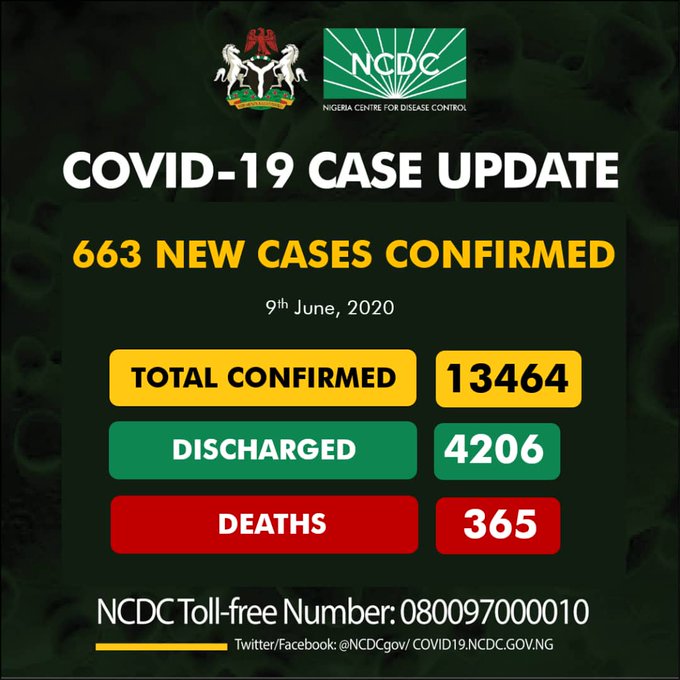
BREAKING: Nigeria confirms 663 new cases of COVID-19