
brand
“Ways and Means advances of N10trn for FG development finance funds will no longer be granted.”, Says CBN Boss

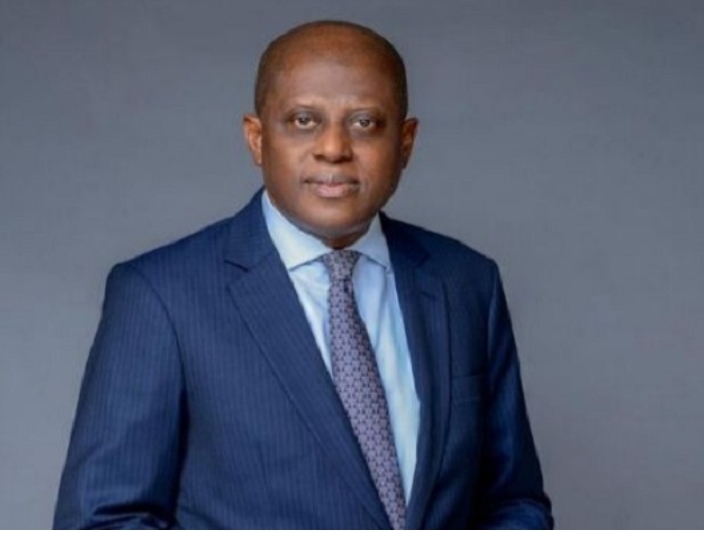
 The Governor of the Central Bank of Nigeria (CBN), Olayemi Cardoso on Friday, February 9, said the apex bank will no longer grant Ways and Means Advances to the federal government unless the outstanding balance is settled.
The apex bank also said it has halted “quasi-fiscal measures” of over N10 trillion it pays under the guise of development finance interventions.
Cardoso revealed these when he appeared before the joint Senate Committee on Banking, Insurance and Other Financial Institutions, Finance, and National Planning to address critical concerns related to exchange rates and inflationary pressures in the economy.
Minister of Finance and Coordinating Minister for the Economy, Olawale Edun, the Minister of Budget and National Planning, Atiku Bagudu, and the Minister of Agriculture, Abubakar Kyari were also at the interactive session with the lawmakers.
Ways and Means Advances is a loan facility through which the Central Bank of Nigeria finances the federal government’s budget deficits.
Last December, the National Assembly approved the securitization of the outstanding debit balance of N7.3 trillion of the Ways and Means Advances in the Consolidated Revenue Fund (CRF) of the Federal Government.
In March 2022, the Debt Management Office (DMO) announced that the Federal Government had borrowed a total of N18.16 trillion from the Central Bank.
The debt as of then was more than 40 percent of the money supply in the economy.
During the session with the Senate, Cardoso did not state whether the Federal Government had exceeded the allowable threshold of Ways and Means Advances.
But he insisted that the apex bank would not be a part of the Ways and Means agreement with the Federal Government again if it failed to repay all the outstanding debts it incurred through the Ways and Means Advances.
The CBN governor said its position was in line with section (38) of the CBN Act (2007).
Cardoso said that the payment of the outstanding balance of the Ways and Means Advances would help to curtail inflation in the country.
Cardoso said: “I am pleased to note the Fiscal Authorities efforts in discontinuing Ways and Means Advances. This is also in compliance with section (38) of the CBN Act (2007).
“The Bank is no longer at liberty to grant further Ways and Means Advances to the Federal Government until the outstanding balance as of December 31, 2023, is fully settled.
“The Bank must strictly adhere to the law limiting advances under Ways and Means to five percent of the previous year’s revenue.
“We have also halted quasi-fiscal measures of over N10trillion by the Central Bank of Nigeria under the guise of development finance interventions which hitherto contributed to flooding excess Naira and raising prices to the levels of Inflation we are grappling with today.
“The CBN’s adoption of the inflation-targeting framework involves clear communication and collaboration with fiscal authorities to achieve price stability, potentially leading to lowered policy rates, stimulating investment, and creating job opportunities.
“Our MPC (Monetary Policy Committee) meeting on the 26th and 27th of February is also expected to review the situation and take further decisions on these important issues.
Bank chiefs okay CBN’s reforms
“Inflationary pressures are expected to decline in 2024 due to the CBN’s inflation-targeting policy, aiming to rein in inflation to 21.4 percent in the medium term, aided by improved agricultural productivity and easing global supply chain pressures”.
On Foreign Exchange Management, the CBN boss said the nation’s “foreign exchange market is currently facing increased demand pressures, causing a continuous decline in the value of the naira.
“Factors contributing to this situation include speculative forex demand, inadequate forex supply increased capital outflows, and excess liquidity.
“The shift to a market-driven exchange rate was intended to create a stable macroeconomic environment and discourage currency hoarding.
“However, short-term volatilities are attributed to arbitrage and speculation.
“To address exchange rate volatility, a comprehensive strategy has been initiated to enhance liquidity in the FX markets.
“This includes unifying FX market segments, clearing outstanding FX obligations, introducing new operational mechanisms for BDCs and IMTOs, enforcing the Net Open Position limit, Open Market Operations, and adjusting the remunerable Standing Deposit Facility cap among others.
“These measures, aimed at ensuring a more market-oriented mechanism for exchange rate determination, will boost foreign exchange inflows, stabilize the exchange rate, and minimize its pass-through to domestic inflation.”
He insisted that the measures have already started yielding early results with “significant interest from Foreign Portfolio Investors (FPIs) that have already begun to supply the much-needed foreign exchange to the economy.”
He added: “For example, upwards of $1 billion in the last few days came in to subscribe to the Nigeria Treasury Bill auction of N1trillion which saw an oversubscription earlier this week.
“Our measures aimed at improving USD supply into the Nigerian economy have significant potential in taming the volatility of the exchange rates.
“However, for these measures to be sustainable, we must as a country, moderate our demand for FX.”
He told the lawmakers that what has negatively impacted the exchange rate was the simultaneous decrease in the supply of, and increase in the demand for, US Dollars.
“It is also clear that the task of stabilizing the exchange rate, while an official mandate of the CBN, would necessitate efforts beyond the Bank itself.
“It will also include actions by corporations and individuals to reduce our frequent demand for the dollar for business and personal needs.
“I would like to underscore the importance of the ongoing collaboration between the Fiscal and Monetary authorities and particularly progress made with the Minister of Finance, Minister of Budget and National Planning, and the Minister of Agriculture on tackling a number of the issues challenging our economy today,” Cardoso said.
brand
BANKING ON HER TOMORROW: ZENITH BANK EMPOWERS 300 GIRLS WITH EDUCATION, KNOWLEDGE AND CONFIDENCE
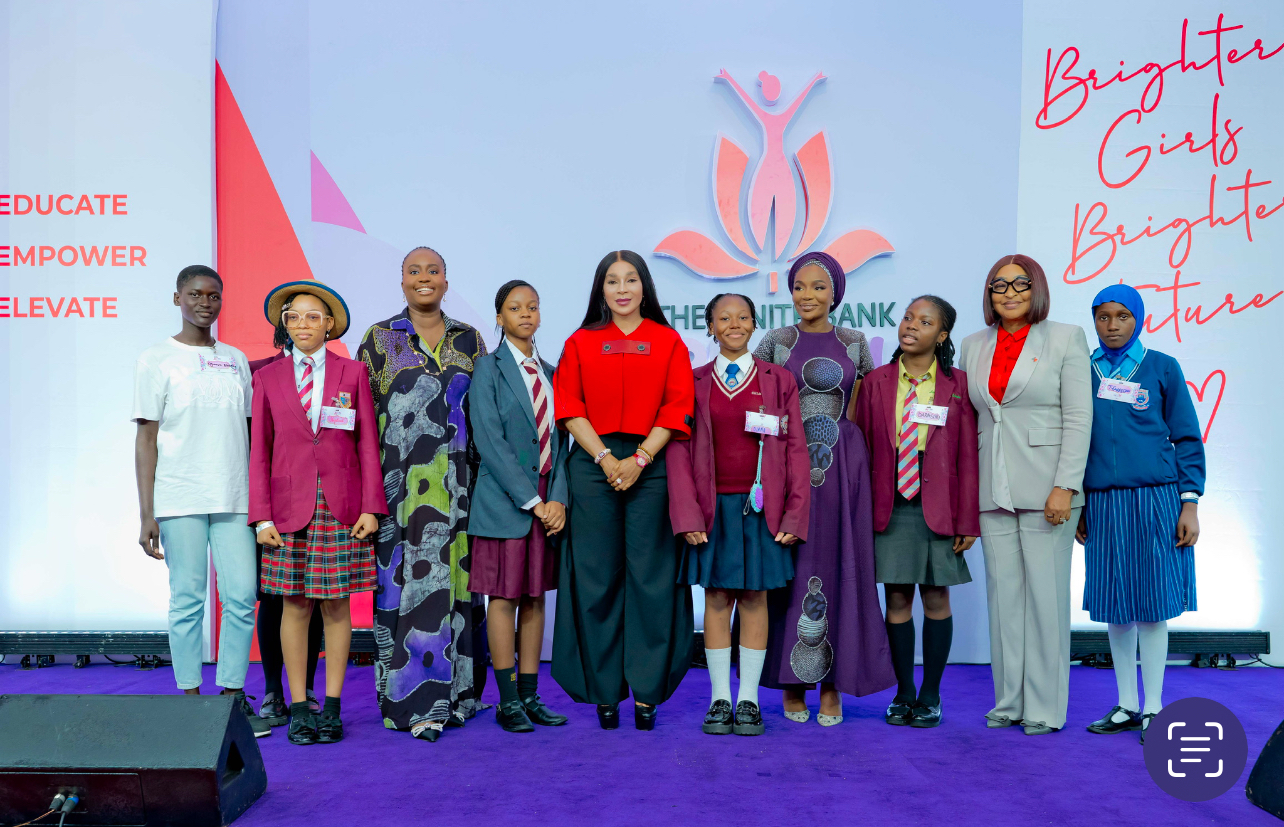
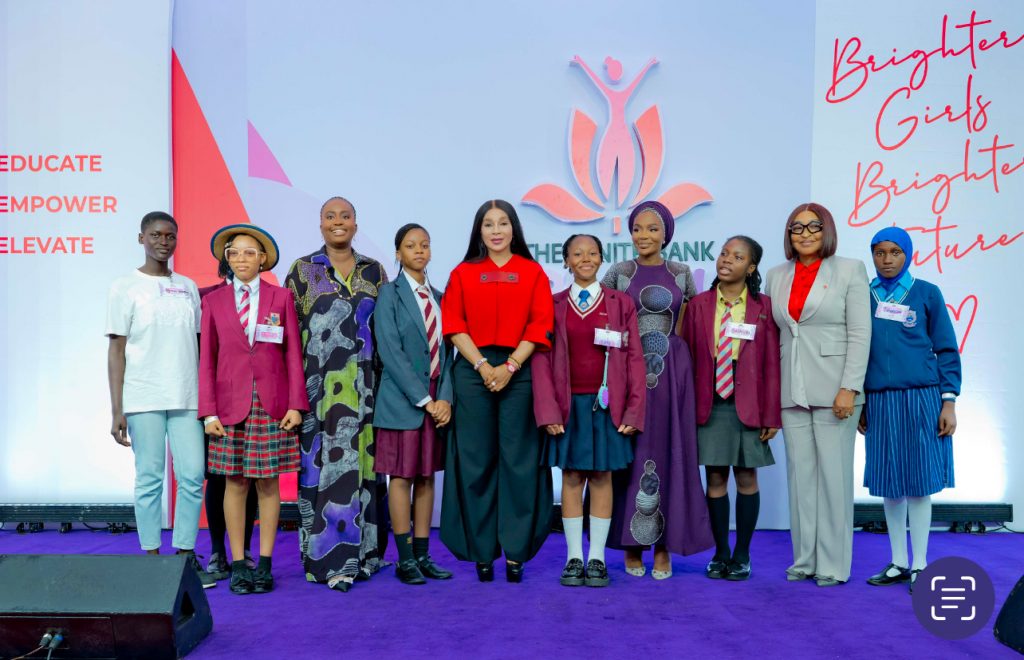
Zenith Bank Plc has launched the maiden edition of its Girl-Child Empowerment Programme, themed “Banking on Her Tomorrow,” bringing together 300 schoolgirls aged 13 to 17 from selected schools across Lagos for a day of learning, mentorship and personal development.
Held on Monday, October 12, 2026, at the Civic Centre, Victoria Island, Lagos, the programme featured sessions on finance and investment, etiquette and personal development, social media ethics, and social relationships and interactions, equipping participants with practical knowledge and skills for their personal, educational and future career journeys.
The initiative, a brainchild of the Bank’s Group Managing Director/Chief Executive Officer, Dame (Dr.) Adaora Umeoji, OON, reflects Zenith Bank’s commitment to nurturing the potential of young girls and helping them make informed choices about their futures.
In her welcome address, Dame (Dr.) Umeoji urged the participants to believe in their abilities, pursue their ambitions and remain focused and disciplined. Drawing on examples of young girls who have achieved remarkable feats, she challenged them to look beyond their present circumstances and envision the women they aspire to become.
“To all my amazing young ladies here today, each of you possesses gifts, talents, and ideas that are capable of revolutionising the world. You can revolutionise the world with your ideas,” she said.
The GMD/CEO further encouraged the girls to explore their interests and resist societal limitations, stressing the importance of taking ownership of their futures.
“Never allow gender or age to limit your goals. Whatever interests you today, explore it. Whatever you choose to pursue in life, give it your best shot,” she said.
Delivering the keynote address, Her Majesty, Olori Atuwatse III, Queen Consort of the Warri Kingdom, encouraged the girls to embrace their identities, develop resilience and use their abilities to make a positive difference in the lives of others.
Using the mangrove tree as a metaphor for resilience, she reminded the participants that challenges need not define their futures and that their worth extends beyond academic results and external expectations.
“Every time you affirm the truth about who you are, you are building confidence. Every time the tide of life goes out and you are still standing, you are building resilience. And every time you use your gifts for another person, you are discovering your purpose,” Olori Atuwatse III said.
The programme featured interactive sessions led by accomplished professionals and personalities:
Ayanime Edem, founder of The Elite Finishing School and modern etiquette educator, discussed confidence, communication, self-presentation and etiquette.
Nigerian actress and content creator Bukunmi Adeaga Ilori, popularly known as Kie Kie, addressed responsible social media use, authenticity and digital boundaries.
Representing Zenith Bank, Thelma Okonye and Adesola Adeyemo introduced the girls to saving, responsible money management and investment, highlighting the importance of developing sound financial habits early.
While Nigerian filmmaker, creative executive and educator,Praise Onyeagwalam, Director Pink, led a session on healthy relationships, self-awareness and effective communication.
The sessions encouraged active participation, giving the girls opportunities to ask questions and engage with the speakers on issues relevant to their experiences and aspirations.
The programme also featured competitions, with cash prizes totalling over ₦1 million awarded to winners. The participants received books to encourage reading and personal growth, while musical performances by Nigerian singers Qing Madi and No. 11 added to the lively atmosphere. The event was hosted by Temi Badru, public speaker, communications coach and lawyer, with Darasimi Destiny Nadi serving as mini host.
Delivering the closing remarks, Executive Director, Zenith Bank Plc, Dr. Mrs. Adobi Nwapa, highlighted the GMD/CEO’s vision for the initiative and the Bank’s commitment to sustaining its impact.
“The programme is the vision of our GMD/CEO, who conceived and championed it, demonstrating her unwavering commitment to the empowerment of the girl child. Through her leadership, she has shown the girls what is possible when a woman dares to lead. At Zenith Bank, our commitment to the girl child extends beyond today, and we will continue to nurture their aspirations through this annual initiative,” she said.
Dr. Nwapa thanked the speakers and participants for contributing to the programme’s success and encouraged the girls to apply the lessons learnt, remain confident and pursue their aspirations with determination.
The initiative builds on Zenith Bank’s longstanding commitment to advancing opportunities for women and girls through programmes including its annual International Women’s Day Seminar, the Zenith Women’s Basketball League, the Women of Honour Awards in partnership with the Ford Foundation, the Pad-a-Queen Initiative and Z-Woman, which supports women-owned businesses through business support and access to credit at discounted rates.
Through “Banking on Her Tomorrow,” Zenith Bank is extending this commitment to a younger generation, equipping girls with the knowledge, skills and confidence to pursue their ambitions and contribute meaningfully to their communities and society.
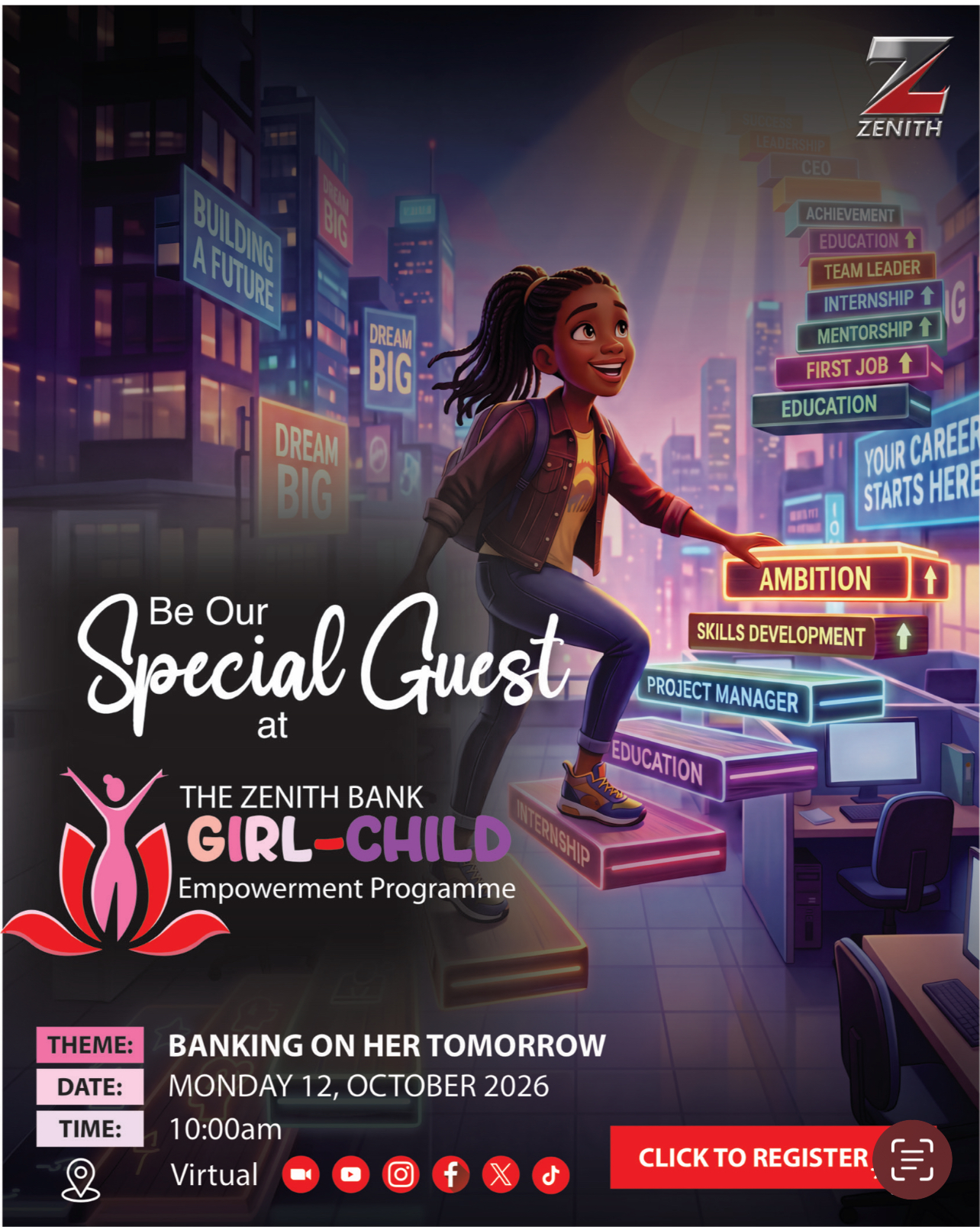
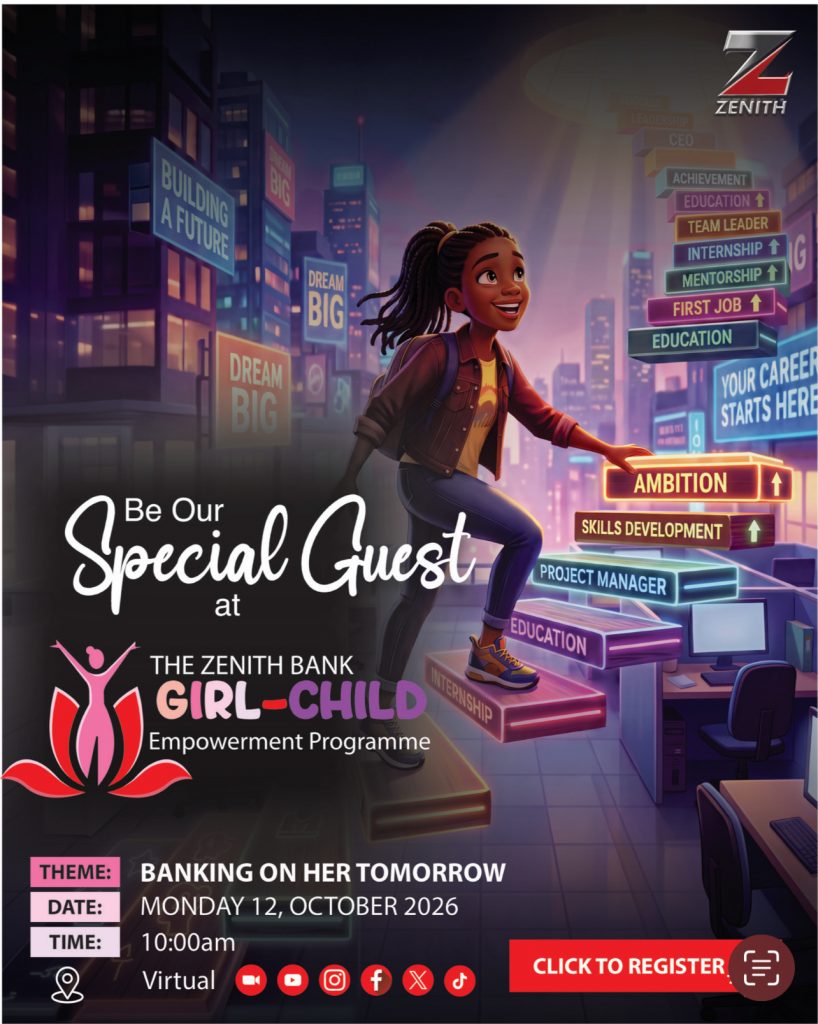
Zenith Bank Plc is set to launch the maiden edition of its Girl-Child Empowerment Programme, an initiative aimed at inspiring young girls to dream boldly, develop the skills and confidence to pursue their aspirations, and prepare for meaningful opportunities in the future.
The event, themed “Banking On Her Tomorrow,” is the brainchild of the Bank’s Group Managing Director/Chief Executive Officer, Dame Dr. Adaora Umeoji, OON, the first female GMD/CEO in Zenith Bank’s history and a strong advocate for girl-child education and empowerment. The event will be held virtually on Monday, October 12, 2026, at 11:00 a.m., a day after the International Day of the Girl Child, observed globally on October 11.
The programme, which will feature an impressive lineup of distinguished experts in various fields, seeks to provide girls with the inspiration, knowledge and practical perspectives needed to navigate their education and careers, while exposing them to opportunities in skills development, mentorship and leadership. As an annual platform, it will encourage girls to recognise their potential, broaden their aspirations and equip themselves to make informed choices about their future.
The initiative builds on Zenith Bank’s longstanding commitment to women and girls, demonstrated through programmes and platforms including the Bank’s annual International Women’s Day Seminar, its sole sponsorship of the Zenith Women’s Basketball League, the Women of Honour Awards in partnership with the Ford Foundation, and the Pad-a-Queen Initiative. These complement the Bank’s women-focused financial solutions, including the Z-Woman initiative, an empowerment programme that supports women-owned and women-led businesses through specialised funding, capacity building and networking. Together, these initiatives reflect the Bank’s broader commitment to supporting women and girls at different stages of their lives, and to contributing meaningfully to national development.
This maiden edition is open to all, with girls, parents, educators and other members of the public invited to participate. Interested participants can register via the link below. Those unable to join via Zoom can follow the live stream on Zenith Bank’s social media platforms.
brand
GTCO Plc Releases 2026 Half Year Audited Results …….. Reports Profit Before Tax of ₦603.03billion,Pays Interim Dividend of ₦1
 Guaranty Trust Holding Company Plc (“GTCO” or the “Group”) has released its Audited Consolidated and Separate Financial Statements for the period ended June 30, 2026, to the Nigerian Exchange Group (NGX) and London Stock Exchange (LSE).
The Group posted a profit before tax of ₦603.03 billion, driven by strong performance recorded on the interest and trading income lines, which grew y-o-y by 7.5% and 24.7%, respectively. The strong earningsrecorded was moderated by a ₦46.2 billion fair value loss recognized in H1–2026, limiting y-o-y growth in PBT to 0.4%.
The Group grew across its asset lines, reinforcing a balance sheet that is well structured, liquid and diversified. This growth was recorded in each jurisdiction where we operate a banking franchise, and across our Payments, Pension and Funds Management businesses.”
Group’s Total assets and shareholders’ funds closed at ₦18.6trillion and ₦3.3trillion, respectively. Capital Adequacy Ratio (CAR) remained very strong, closing at 34.9% (Bank 29.2%), and asset quality improved as evidenced by IFRS 9 Stage 3 Loans which closed at 3.5% and 4.6% % at both Bank and Group Level in H1-2026 (Bank -3.4%, Group 5.0% in FY-2025). Cost of Risk (COR) improved to 0.6% from 2.2% during the same period.
The Group’s Loan book (net) grew marginally by 0.5% from ₦3.13trillion as of December 2025 to ₦3.15trillion in June 2026, converse for improved performance on Deposit liabilities which grew by 10.3% from ₦12.87trillion to ₦14.19trillion during the same period.
Commenting on the results, the Group Chief Executive Officer of Guaranty Trust Holding Company Plc (GTCO Plc), Mr. Segun Agbaje, said; “Our half year results speak to the strength of what we have built: a resilient franchise, a strong balance sheet and a business that no longer depends on banking alone. Fair value movements weighed on reported earnings, but the core business held firm. Interest and trading income grew, deposits strengthened, and asset quality improved at Group level. The priority now is to execute with discipline and grow responsibly. Digital is our lever for scaling across Banking, Payments, Pension and Funds Management, and for building a more diversified and resilient financial services group.”
Overall, the Group continues to post one of the best metrics in the Nigerian Financial Services Industry in terms of key financial ratios i.e., Pre-Tax Return on Equity (ROAE) of 35.9%, Pre-Tax Return on Assets (ROAA) of 6.6%, Capital Adequacy Ratio (CAR) of 34.9% (Bank: 29.2%) and Cost to Income ratio of 31.5%.
GTCO Plc is a leading financial services group with operations across Africa and the United Kingdom. Renowned for its strong corporate governance, innovative financial solutions, and customer-centric approach, the Group provides a wide range of banking and non-banking services including payments, funds management, and pension fund administration. The Group is committed to delivering long-term value to stakeholders while driving growth and development across its markets


-
 news6 years ago
UPDATE: #ENDSARS: CCTV footage of Lekki shootings intact – Says Sanwo – Olu
-
 lifestyle6 years ago
Former Miss World: Mixed reactions trail Agbani Darego’s looks
-
 health6 years ago
Chairman Agege LG, Ganiyu Egunjobi Receives Covid-19 Vaccines
-
 lifestyle5 years ago
Obateru: Celebrating a Quintessential PR Man at 60
-
 news1 year ago
BREAKING: Tinubu swears in new NNPCL Board
-
 health6 years ago
UPDATE : Nigeria Records 790 new cases of COVID-19
-
news8 years ago
-
 entertainment2 years ago
Ashny Set for Valentine Special and new Album ‘ Femme Fatale’