
A major breakthrough may have been achieved Thursday by those agitating for the creation of state police.
The Federal Government threw its back behind the agitation saying that creation of state police is clearly the way to go in the face of multifaceted security challenges in the country.
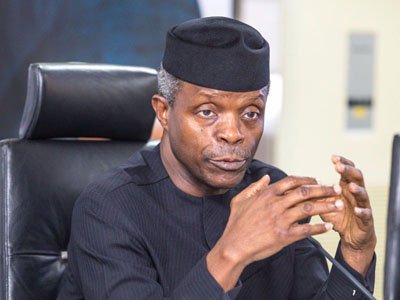
Vice President, Professor Yemi Osinbajo, stated government’s new thinking on the security architecture of the country at a summit on national security organised by the Senate in Abuja.
Osinbajo’s pronouncement on the need to create state police, which received spontaneous applause from participants at the summit, came as Senate President, Abubakar Bukola Saraki, told the gathering that the sharp increase in murderous violence, over and above the relatively manageable level of insecurity that has plagued the country for some time, jolted the Senate out of any last vestiges of complacency or denial of the challenge.
Saraki noted that there can be no denying the horrific reality in many parts of the country today.
He lamented that people who should be neighbours are turning on one another and taking up arms.
For him, “these attacks and reprisal attacks are an intolerable cycle of hell that must be broken. Killings, kidnappings, mayhem and general lawlessness cannot be the new normal. We must take this country back and restore order.”
Saraki noted that though there was no doubt that Nigerians possess the capacity to change the narrative, to end the violence and bring succor, what is required is the political will.
Saraki said: “The coming together of the Executive and Legislative arms of government for this discussion about security is a pointer to the seriousness of the situation, and our determination to tackle the problem. The Summit is also unique, because never before have we had such an inclusive platform for appraising security-related matters in this country.
“The spike in the bloodletting over the New Year period injected another note of urgency into the matter, and further served to augment the mandate of the Committee, whose members suspended their recess to conduct a fact-finding visit to Benue State, scene of one of the recent killings.
“It was envisaged that the Summit would provide a platform for critically examining the problem of insecurity, to help collate views and ideas in aid of the search for solutions. It is most reassuring to see us all here – people together – coming together to come up with a national response to a grave problem confronting our nation.
“To the Executive, I say this: you cannot do it alone – and this is why we are all here to join efforts. It is all hands on deck. No one person, organisation or arm of government can single-handedly tackle the hydra-headed monster of insecurity. The Constitution makes it clear that the safety of lives and property of citizens is the responsibility of government. We in government must therefore do everything in our power to ensure that Nigerians are safe from harm, and their livelihoods and belongings protected.
“Permit me to observe that those who are in this room have the capacity to bring about a change in this situation, to end the violence and bring succour. We have the capacity. But, do we have the political will? I daresay political will is what is required; and it is my hope that we shall marshal it as a legitimate instrument against this problem. Indeed, there is no reason why that should not be the case. This is not a Summit to trade blames – in no way is this a blame game. Neither is it convened so that any person or entity can take credit. We just want solutions. Solutions only. That is all Nigerians require of us.
“It is expected that at the end of our deliberations and submissions, we will have a more profound understanding of the nature of the crisis; as well as a realistic assessment of the strengths and weaknesses of our security assets. We should also have a more accurate assessment of challenges to the current disposition of the Nigerian state – through the level of preparedness of all its law and order agencies to security threats.
Let me add that this Summit should help us achieve some consensus around what needs to be done, in the short term as well as in the long term, to bring comfort and relief to those affected, and assurances of security throughout the country.
“Distinguished ladies and gentlemen, we would have failed in our responsibility if – by the end of this Summit – we didn’t succeed in triggering higher levels of collaboration and cooperation among all stakeholders, of a character that can be sustained and placed at the service of the nation. This spirit of collaboration and cooperation is, therefore, key.”
The Senate President said that Summit programme has been designed to allow full and unfettered discussion.
All participants, he said, are encouraged to be forthright in expressing their views, and show commitment to the need for solution.
“Let me reiterate that we are not here to indict anybody. This is not an indictment, it is not to lay blame or point fingers, and it is not to take credit for what goes well. This process is very much solutions-driven. In order for us to ameliorate the current difficulties, therefore, it is important that people speak frankly.
“In that vein, let me say to those who will make contributions during the sessions: please, do not be on the defensive. Nobody is on trial here. Let us make our submissions with openness, in good faith and with an attitude that is forward-looking. When all is said and done, this is a worthy exercise, for the good of Nigeria, and we should all strive to do our best, – and that work begins at this Summit.
“What our country needs at this time is leadership that will work to douse the flames and reduce tension in the land. It is essential that we lower the barriers in our actions and rhetoric, and refrain from playing politics with a crisis situation in which Nigerian lives are being lost, tragically and needlessly, on a regular basis,” Saraki said.
On his own, Prof. Osinbajo said, “The nature of our security challenges are complex and known. Securing Nigeria’s over 900,000sq km and its 180 million people requires far more men and material than we have at the moment. It also requires a continuous reengineering of our security architecture and strategy. This has to be a dynamic process.
“For a country of our size to meet the one policeman to 400 persons prescribed by the United Nations would require triple our current police force; far more funding of the police force and far more funding of our military and other security agencies.
“We cannot realistically police a country the size of Nigeria centrally from Abuja. State police and other community policing methods are clearly the way to go.”
The Vice President added that Nigeria must intensify existing collaboration with her neighbours in the Chad Basin by strengthening security especially at border communities to prevent the movement of small arms and disarming armed pastoralists and other bandits who go through the borders day after day.
He warned that the country must avoid the danger of allowing the crisis to degenerate into religious or ethnic conflict which he said is the responsibility of political, religious and all other facets of the country’s leadership.
On the upsurge of killings, the Vice President noted that the recent incidents of killings across the country are a reminder that there is no room for complacency in the task of securing Nigeria.
Osinbajo said: “This is against the backdrop of the remarkable improvements we have recorded on the most dreaded security challenge we had at a time – the fight against Boko Haram.
“In 2015 when the Buhari administration came on board, much of the North Eastern Nigeria lay in the shadows of the terrorist group. In two and half years since then, our military has done a remarkable job of reclaiming Nigerian territories, rescuing tens of thousands of civilians and routing the Boko Haram. Today, the group is a shadow of itself and has resorted to suicide bombings and other attacks on soft targets in a desperate attention seeking.
“Boko Haram was by no means the only security challenge that we inherited when we took office 2015. Cattle rustling, pronounced especially in the North West of Nigeria, clashes between farmers and herdsmen in the North Central region; militant activities in the South South and parts of the South West, ethnic agitation in the South East region; there was also the Islamic Movement of Nigeria in the Northern Nigeria increasingly emboldened to challenge the authority of the state.
“I want to say that because of the spread and because of the diversity of these threats, the nation’s security architecture was over stretched as our security became engaged on different battle fronts at the same time.”
He noted that the Federal Government has since assuming office prioritized the anti-terrorism campaign in the North East “and understandably, Boko Haram has receded in public consciousness.”
He noted that in 2017, the Global Terrorism Index reported that deaths by terrorism dropped by 80 per cent in Nigeria.
He however acknowledged that other security threats have of course move up to take the place of Boko Haram.
“This does not mean that the challenges are newly emerging; what is new is our approach and our determination to contain these threats to protect the lives and property of Nigerians. This determination can mostly be seen in the way that our security forces in particular, have dealt with Boko Haram and several of the threats of the country,” Osinbajo said.
The Vice President said that since the beginning of the year following the massacre in Guma, Gwer and Logo local governments in Benue State, the issue of herdsmen and farmers clashes have dominated the public space.
Every Nigerian, he said, is entitled to adequate security from government of their livelihoods.
He said, “Government fails in that responsibility often but I must say, never deliberately. Every killing diminishes us as people; every killing undermines the authority of the state. This is why the saying sometimes that because the President is Fulani he has ignored the killings by herdsmen is both untrue and unfair.
“In any event, the herdsmen and farmer clashes resulting in deaths has been with us for at least two decades and I have been working with him for three years now and I do not know any other issue that has given him more concern or on which he has spent more time than this particular issue?
“What then is being done. The approach of the government has been to deploy more mobile police force to flash points and also, both the Army and Air Force. The Nigeria Army units in Benue State for example have consistently maintained Forward Operating Bases at the flash areas in Guma, Logo, Katsina Alla and Agatu LGAs.
“The operation has a genetic name, Operation Zenda . The Army has in the last few days scaled up its personnel and equipment in Agatu, Guma, Katsina Alla and Logo LGAs . The Army has also recently deployed troops to Awe and Tunga LGAs of Nasarawa State in order to monitor and block the gaps in areas believed to have been used at flash points by armed herdsmen to attack communities in Benue State.”
He noted that next week as earlier been announced, the Nigeria Army will flag off Exercise Ayan Akpatuma to checkmate the activities of armed bandits on Benue, Taraba and environs.
He said that generally, the security forces have performed creditably given the resources available to them.
Osinbajo noted that the problem is that in some of the worst cases of killings, the security agencies were simply not there in time.
He said that whenever that happens as was the case of Logo and Guma as well as in Mambilla last year, the failure to protect the lives of citizens is inexcusable and cannot be rationalized by the security apparatus of government in any way.
Osinbajo quoted President Muhammadu Buhari to have said over the Benue killings “I am a soldier, I have seen death in warfare but the callous killing of innocent people especially women and children is cowardly and despicable in the extreme and it must be prevented or stopped and the perpetrators must be punished”.
He noted that in his statement of commiseration to the Governor of Benue State President Buhari said “This is one attack too many, and everything must be done to provide security for the people in our rural communities, I have ordered the security agencies to find and capture the perpetrators, they must face justice.”
Osinbajo said that anyone who has seen the viciousness of the killings, and the wantonness of the damage to property, is bound to be stupefied by the horror.
“I was in in Dong village in Adamawa, where herdsmen had attacked the village and killed many. But the vicious killing of Fulani women and children in the same local government in Adamawa State is worthy of mention.
The Vice President said that one thread running through all of the security challenges in Nigeria is the proliferation of light arms and small weapons.
“This age-old problem appears to have intensified in recent years on account of the fall of the Libyan Government under Muammar Gaddafi in 2011. These events unleashed large numbers of well-trained fighters, as well as the contents of Gaddafi’s armories,” he said.
He noted that because they know that the security solution is only one dimension of a multifaceted issue, government is also working with the State Governments and Local Communities.
He said, “In January the Ministers of Interior and Agriculture, on behalf of the President, met with the affected State Governors, and Security and Intelligence Agencies, to discuss workable solutions.
“The President and I have at various times this year held Stakeholder Meetings to bring all concerned parties to the table and discuss ways of ensuring peace and security.
“On January 15, President Buhari met with Benue political, traditional and religious leaders. A week ago, I met with traditional leaders from the Batta and Bachama Communities of Adamawa State. I also met with Fulani groups, the Myetti Allah and several other such groups.
“These meetings and consultations are crucial; human beings have not yet to my knowledge, developed another way of reaching understanding aside from dialogue. There can and will be no lasting peace without dialogue, and that there can never be too much dialogue regarding a matter that involves the safety of the lives and property of Nigerians.
On farmers/herders clashes, Osinbajo said that they are also, with the collaboration of States, and the Governors of Benue, Plateau, Adamawa and along with seven other Governors, have constituted the working group which being chaired by him, where they have been seeking to proffer solutions to some of the problems associated with farmer/herdsmen clashes, but in particular, how to ensure that there is a plan for cattle breeding and rearing which takes into account, contemporary methods of doing so in other parts of the world.
He noted that also in collaboration with the States and other stakeholders, “we have been developing solutions to the issues of resource scarcity which is at the heart of the conflicts – the increasing competition for grazing land and water heightened by climate change.
He said that all stakeholders agreed that “we must now develop new ideas to prevent clashes between herdsmen and farmers; in particular enabling the cows and herders to become more sedentary.”
He added that it is obvious that the physical movement of cattle in an endless journey on the move must now begin to take a different shape.
The country, he said, cannot afford it even from the economic perspective, there must be another way.
He said “We believe when cattle is sedentary, it will improve the productivity of the cattle. Our beef cattle Sokoto Gudali adds 0.5 Kg per day while the Brahma in Brazil which is bred in a ranch adds 2.5kg per day. Our dairy cows produce 1 litre per day, whereas in other parts of Africa, there is production of almost 15 – 20 litres per day.
“There is also a clear sense which I think must be appreciated, that the Federal government cannot dictate to States what to do with their land. This is so because the Land Use Act of 1978 puts land under the control of Governors on behalf of their States. Also, the Supreme Court in the case of Attorney General of Lagos State versus the Attorney General of the Federation in 2004, held that use of land resources and permits for such use, lie firmly in the hands of State Governments. Even for use of Federal lands in the States according to the Supreme Court, building or development control permit must be sought from the Governors of the States.
“However in several States, especially in the North, there are duly gazetted grazing reserves. A majority of these grazing reserves are degraded and are without pasture or water especially in the dry season.
“Grazing routes leading to these reserves must also be secured. The grazing reserves to be effective and operate effectively, should operate as ranches or livestock production centres on a commercial basis. The ranches will have adequate water from boreholes, salt points and pasture.
“The locations would serve both as forage points, but also centres for providing extension services to boost animal care, feeding and veterinary facilities, and even abattoirs. Because the ranches are commercial ventures, cattle owners will pay for its use.
‘It is important to note that by and large, in consultation with stakeholders, all agree that where adequate provision is made on a commercial basis, there is no reason why there won’t be cooperation to use those ranches because there are both economic and social benefits for everyone, including herders.
“Aside from States that have gazetted grazing areas, so far about 13 States have agreed to allocate 5,000 hectares of land for the ranching or livestock production. We must emphasis that in arriving at any of these decisions in the States, the States, Federal Government and all of the Stakeholders have to seat together and work out solutions that will benefit everyone. This cannot be done by fear or force, people have to work together to ensure that there is adequate consultations.
“Let me reiterate, that on no account will any lands be seized or forcefully taken to create these ranches or grazing areas. All insinuations to that effect should be disregarded. No one is giving land to herdsmen, as is being falsely alleged. Instead, it is in our view that States that are willing and which have set aside land for development should cooperate with willing investors into commercially viable, government-supported ranches or livestock production centres for commercial use.”
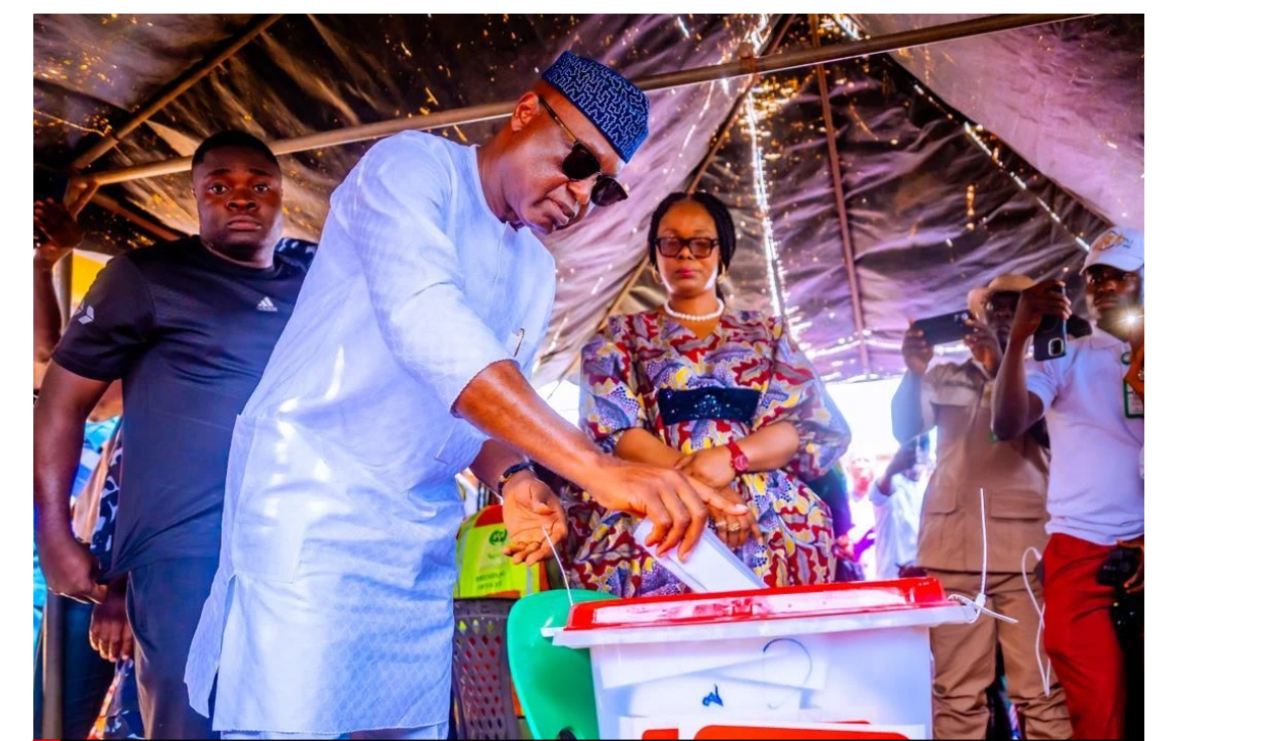
 Governor Biodun Oyebanji casting his vote at his Okeelele Unit 003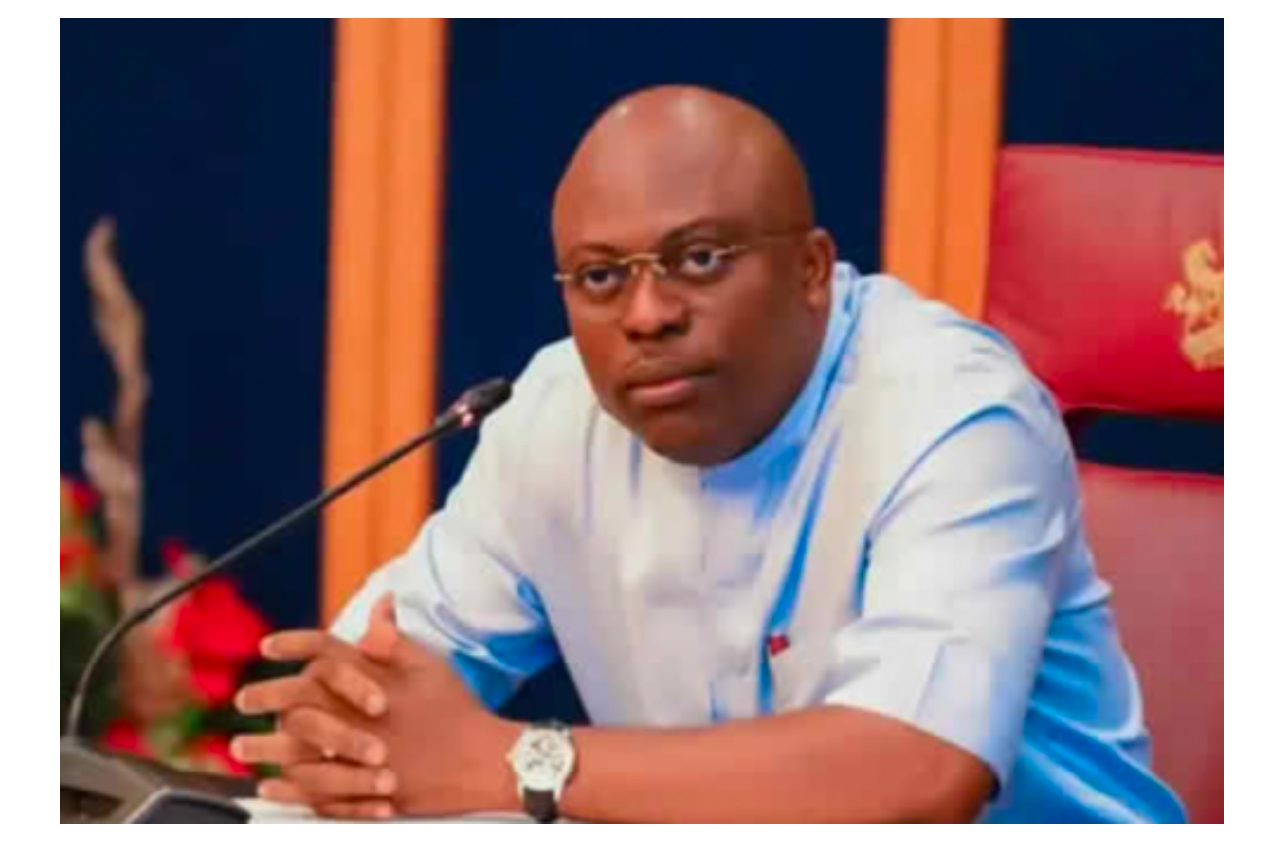
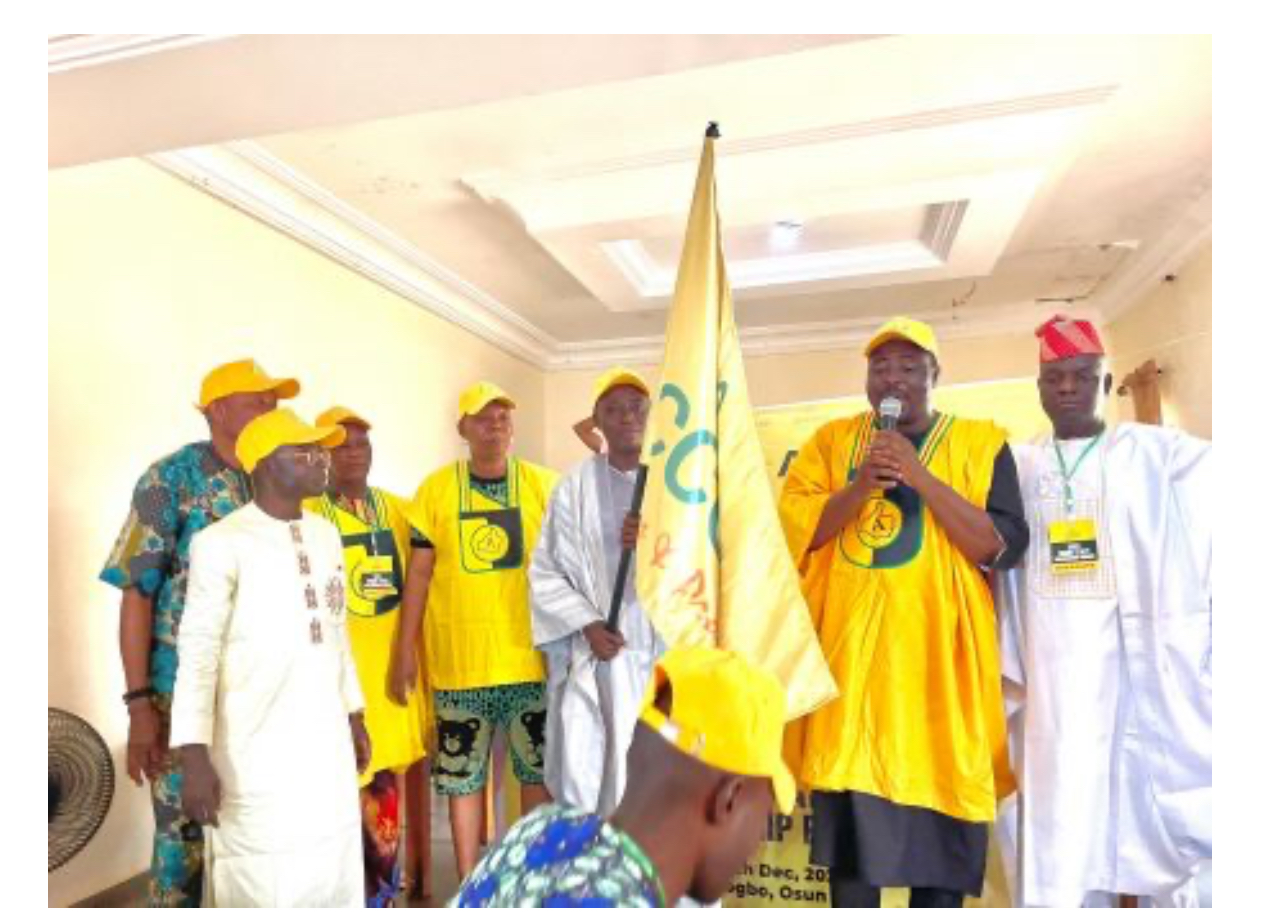
 A faction of the Accord Party has produced Clement Bamigbola as its governorship candidate for the 2026 Osun State election, just four days after the emergence of Governor Ademola Adeleke as the party’s flagbearer.