
news
THE MENTION OF THE NAME, PERE OF OLODIAMA CLAN, EVOKES UGLY MEMORIES

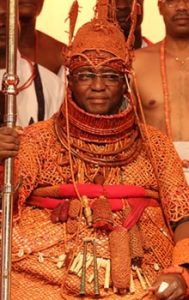
In 1986, one Timothy Ofunama, issued a statement saying that Gelegele belonged to Ijaw and that the Oba of Benin had no jurisdiction over it in the welcome address I presented when Omo N’Oba Ewuare II visited Obazuwa on January 28, I enumerated some of the provocative acts of the Ijaws. We wish to state some of them here again.
In 1985, Philips Oil Company established business in Ughoton. It built a Flow Station in Gelegele. Ijaw fishermen, who lived in stilt-houses around the swamps, came out and began to supply labour to the company. Many of the Benin youths in Ughoton and Gelegele had left the villages in search of a better life in the City. When they heard of the new company and the job opportunities if offered, they returned home to seek employment. The Ijaws were not happy at their return. They feared they would displace them (the Ijaws) in competition for jobs. Suddenly, they attacked the returnees. The attack was so violent and widespread that the government setup an administrative panel, headed by Mr. S. Jamgbadi, a Senior District Officer, to look into it. Part of the panel’s report reads:
“… it is however established that the Ijaws have been resident in Gelegele for many years and that during these years they have acquired landed property and cultivate farms but from the facts in evidence they qualify as TENANTS on the land their long period of occupation notwithstanding…”
The Ijaws were not done yet with agitation. They agitated again, the same year, against Philips Company itself. The cause of the agitation was that the company also gave employment to non-Iyaw persons. Government again set up an inquiry to look into the crisis. Part of the panel’s report reads:
“… The inquiry further revealed that the claims by the Ijaws to the monopoly of employment provided by the oil company are not only unpatriotic but also preposterous. The Ijaws have no right whatsoever to prevent the oil company from employing persons of their choice; they should stop threatening the oil company from employing other persons who are not Ijaw…”
On Thursday, November 20, 1986, as said earlier, Timothy Ofunama, in the publication in the Nigerian Observer said that Gelegele belonged to Ijaw and that the Oba of Benin had no jurisdiction over it. The government reacted to the publication through a press statement issued by the Honourable Commissioner for Local Government, Engr. Enoch Ejofodomi. I reproduce the statement here in full.
1. My attention has been drawn to a publication at page 4 of the Nigerian Observer Newspaper of Thursday, 20th November, 1986 titled “Public Notice” and credited to one Timothy Ofunama who styled himself as the “Ama-Okosuwei of Gelegele”. In which he gave the impression that the traditional administration of Gelegele was under the “Pere of Olodiama Clan” and other Ijaw Chiefs in Ovia Local Government Area of Bendel State.
2. From records available in my Ministry, there is no chieftaincy title known as the “Pere of Olodiama Clan” in Ovia Local Government Area. Also there are no chieftaincy titles known as “Ama-Okosuwei of Gelegele” and “Amanana-Owei of Gelegele”, as claimed in the above mentioned publication. In this regards the Government couldn’t have appointed anybody to these non-existent chieftaincy stools.
3. The author of the above mentioned vexations publication also gave the impression that the Oba of Benin has no right to confer the chieftaincy title of “Okao of Gelegele” on Chief I. Iyonmahari and that Gelegele and some other Ijaw towns in Ovia Local Government Area are not under the jurisdiction of the Oba of Benin. In this regard, my Ministry wants to make it abundantly clear that the Oba of Benin who is the traditional paramount ruler in Benin kingdom is the Prescribed Authority for Oredo, Orhionmwon and Ovia Local Government Areas by virtues of Bendel State Legal Notice 44 of 1979 published in the Bendel State Legal Notice 44 of 1979 published in the Bendel State of Nigeria Extraordinary Gazette No. 51. Vol. 16 of 28th, September, 1979; He therefore acted within his constitutional powers: as the prescribed Authority for the area ‘when he appointed Chief I. Iyonmahan as the Okao of Gelegele. It is also pertinent to point out that Gelegele in Ovia Local Government Area is part and parcel of Bini land under the jurisdiction of the Oba of Benin having regard to the judgment of the Supreme Court of Nigeria delivered on 11th August, 1983 which made it clear that the land known as Gelegele belongs to the Binis.
4. In the light of the foregoing, Government sews the action of Timothy Ofunama who calls himself the “Ama-Okosuwei of Gelegele” as an attempt to incite the law abiding Ijaw citizens in Gelegele against their host as capable of causing serious disaffection among the entire community in that part of Ovia Local Government Area. I want to stress that Government will not tolerate that state of affairs which is capable of jeopardizing the peace, order and good government in the area.
5. For the purpose of clarification, it is considered necessary to inform the general public that it is not only contemptuous to reopen an issue on which the Supreme Court had already delivered judgment but that it is also unlawful for anyone to call himself a chief or allow himself to be so called or addressed if he has not been conferred with a chieftaincy title by a competent authority and has not been registered by the Ministry of Local Government as a Chief.
6. Finally, I want to warn that all those who are party to the aforementioned publication should desist forthwith from parading themselves either as traditional rulers or as traditional chiefs as the penalty for their actions under Sections 20 and 26 of the Traditional Rulers and Chiefs Law, 1979 is imprisonment for six months and two years respectively without an option of a fine.
(Engr. Enoch Ejofodomi)
Commissioner for Local Government
Ministry of Local Government
Benin City.
10th December 1986
The Ijaws still claim ownership of Gelegele. Yet, the question of who owns Gelegele had gone through litigation and had long been settled.
At the High Court of Justice, Benin, in suit B/44/1970, Judgment was delivered in favour of Benins by Honourable Justice Ekeruche on December 22, 1978. Part of the judgment reacts.
“…finally, I enter judgment in this case as follows: for the avoidance of all doubts, argument or controversy, I hear say unequivocally, that Gelegele village and its environs and bushes are Benin land. They do not belong to the Ijaws of Gelegele as owners. The Ijaws are tenants of His Highness Akenzua II the Oba of Benin. Apart from above, the plaintiffs’ claims are dismissed in their entirety”.
Dissatisfied with the judgment, the Ijaws went to the Court of Appeal, Benin. The court dismissed their appeal and delivered judgment in favour of Benin. The lead judgment was read by Honourable Justice Abdul Ganiyu Agbaje on December 16, 1981.
Still on satisfied, they headed for the Supreme Court. In Suit SC. 131/1/1982, Honourable Justice, Muhamadu Lawani Uwais (CJN) and four (4) others, on August 19, 1983 also dismisses their appeal and up-held the judgment of the lower courts. The CJN concluded thus:
“… For three reasons I am of the opinion that the appellants’ argument in support of the sole ground of appeal should be discountenanced. The appeal therefore fails and it is dismissed with N300.00 costs to the respondents. The decision of the Federal Court of Appeal is affirmed…”
The Supreme Court awarded costs against the Ijaws. Despite these judgments, the various reports and government statements, the Ijaws still claim ownership of Gelegele!
In 1987, they attacked Benin indigenes in Iko and Isekiri and Urhobo settlers there. They destroyed the Ogua-edion in Iko, they moved up-hill, to Ikonoke and unleashed mayhem. Benin indigenes in Ikonoke and in Ikonugboghodo fled, giving room to the Ijaws to entrench themselves in both places. At that time and up till the early 90s, one Pa Igbinosun, a Benin man, was the Odionwere of Iko, they have forayed into Agbomoba, Ozomu, Igbobi, Ekete, Ite, Orogo, Ewudu, Abiala, Eki-ohuan (now known as Ekewan), Okomu and Gelegele. They maim the Benin people in these communities and destroy their properties.
In June 2011, we, offered a parcel of land to Edo State government for the erection of a model school block. The Government sent a team led by the Permanent Secretary, Ministry of Education, then Mrs. Idaho is now the Head of Service. In anticipation of the inspection, we directed Obazuwa boys to demarcate the plot. As the boys were measuring it, Ijaws militants descended on them with machetes, guns, and clubs. Without any provocation, they brutalized the boys and abducted two of them. Obazuwa boys were unnamed and defenseless.
We sent an S.O.S to the Governor who directed his Chief of Staff, then Barr. Osarodion Ogie, to take up the matter with the Commissioner of Police. The Police Commissioner promptly dispatched a team of policemen from Evbotubu Police Station to rescue the abducted boys. He sent another team from SARS to arrest the militants who brutalized the boys, destroyed their motorcycles and a car. Those arrested were charged to Okada Magistrate’s Court where the case is still pending up till now.
In order to strengthen their claim of ownership of Gelegele, they have now coined names, Gelegelegbene and Gelegele-ama. These names are new. In all their previous write-ups and the dispatches by early European visitors. Gelegele had always been known and spelt as Gelegele. The use of Gelegelegbene and Gelegele-ama which they have only recently coined is ludicrous and intellectually dishonest.
Our people got judgment in the Supreme Court 34 years ago. Now they want to claim their judgment right. Those who were driven away from their homeland, Abiala, and Ikon’oke, want to return home. They want to erect a house in Gelegele for the Okao of Gelegele who was installed there by the Oba of Benin.
The Edo State Ijaws are bellicose, belligerent, militant, quarrelsome and unfriendly. They are fighting the Itsekiris in Warri; they are fighting the Urhobos, the Ibibios and the Ilajes. They are claiming land whereas they traditionally live in swamps along the coastal areas in houses they build on stilts.
The so-called Beni-Ebe, Toru-Ebe Kengama and Abadi States which they requested the Senate to create for them in 2009, traverses the whole of the Nigerian coastline, encroaching of Benin, Ibibio, Ilaje and Itsekiri territories.
We plead for your support in curbing the Ijaw aggressiveness and in enforcing the Supreme Court Judgment for which the Ijaws have rudely insulted the highest court in the Country, Honourable Justice, and the Chief Justice of Nigeria whom they contemptuously described as fraudulent.
This press statement was endorsed by HRH Prince Edun Akenzua, MFR, FNGE, Ogie-Obazuwa and six other Enigie for on behalf of 48 communities in the affected areas in the Benin Kingdom.
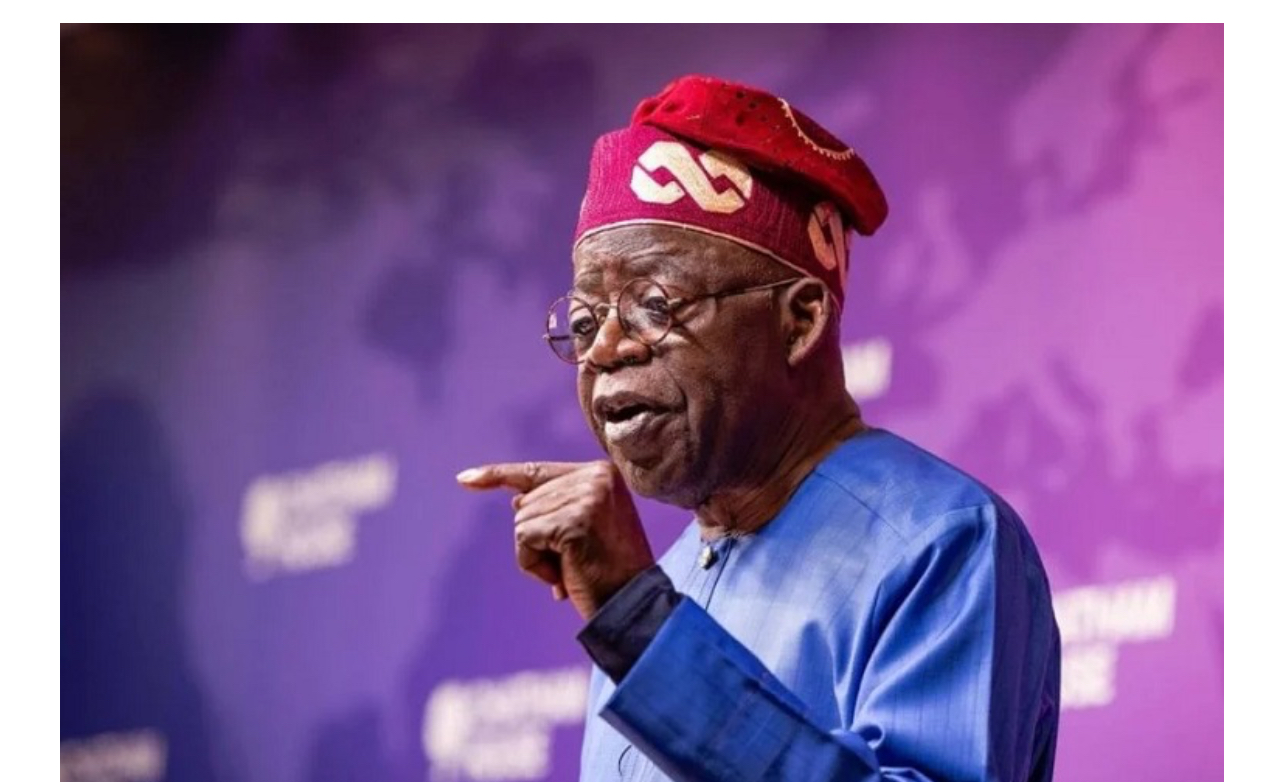
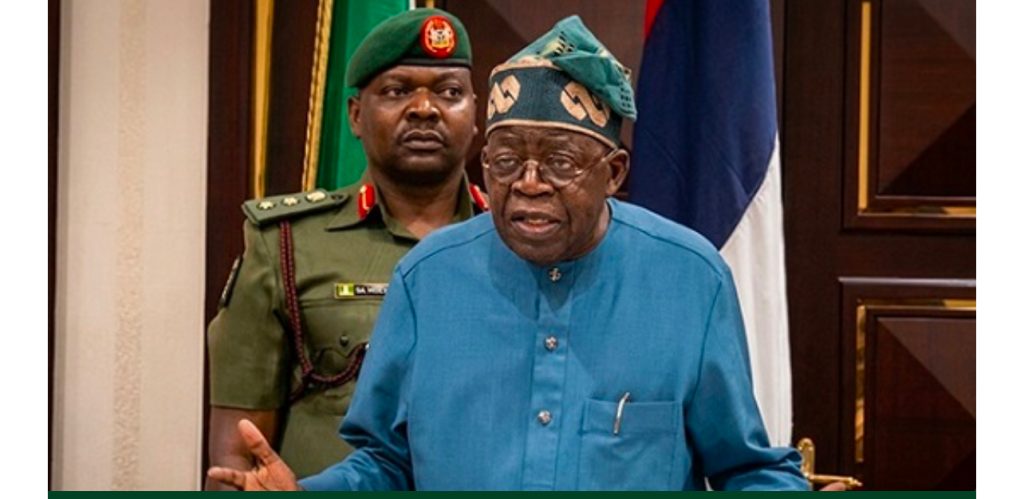
President Bola Tinubu has unveiled an investment package of more than $7 billion for the development of the Ogun State Blue Marine Special Economic Zone and the Gateway Deep Seaport, describing the projects as a major step towards strengthening Nigeria’s maritime economy and attracting foreign investment.
In a statement by his Spokesman, Bayo Onanuga, on Thursday, the President spoke in Paris, France, during the signing of Memoranda of Understanding between the Ogun State Government and DP World, a global ports and logistics operator, for the development of the projects.
Tinubu assured domestic and foreign investors that the Federal Government would continue to provide regulatory clarity, policy stability and a predictable business environment to support long-term investments in Nigeria.
“The agreements before us bring together vision, expertise, capital and execution capacity. I particularly welcome DP World, one of the world’s leading port and logistics operators,” the President said.
He added that the Federal Government would provide the necessary regulatory and institutional support to ensure that the projects moved seamlessly from agreements to implementation.
According to the President, the agreements are expected to attract an initial investment of more than $7 billion into the Nigerian economy and create over 50,000 direct jobs when fully developed, alongside additional indirect employment opportunities.
Tinubu said the projects would also generate non-oil export earnings and contribute to Nigeria’s economic diversification.
“This is economic diversification made tangible. This is industrialisation made visible. This is Renewed Hope in action,” he said.
The proposed Gateway Deep Seaport at Ogun Waterside will have a four-kilometre berth and an 18-
metre draft. The facility is expected to help decongest the Lagos port corridor and ease pressure on the Apapa and Tin Can Island ports.
The president said the deeper draft would enable the port to accommodate larger vessels while providing a competitive gateway for trade within Nigeria and across the African Continental Free Trade Area.
He noted that the proposed Ogun State Blue Marine Special Economic Zone would cover about 10,000 hectares and would be integrated with the deep seaport to support manufacturing, processing, exports and logistics.
“The Gateway Deep Seaport is the critical infrastructure that will support the zone’s viability. A port moves cargo; a port integrated with a special economic zone helps to build an economy. Each reinforces the other,” Tinubu said.
He said the Federal Government would facilitate road, rail and power connectivity to the projects, while strengthening investment security and the maritime domain and removing unnecessary bureaucratic obstacles.
The president also linked the projects to the Lagos-Calabar Coastal Highway, describing the Ogun section of the road as a critical transport connection for the emerging industrial and maritime corridor.
“The Lagos–Calabar Coastal Highway is central to this corridor’s commercial viability,” he said, adding that the 28-kilometre Ogun section of the 700-kilometre highway was scheduled for completion before the end of the year.
Tinubu said the port and industrial zone would also form part of a wider strategic corridor linking the proposed Nigerian Navy Operating Base and Dockyard with the OK LNG Project.
The President commended Ogun State Governor Dapo Abiodun and his administration for securing the land and structuring the investment framework.
“I commend Governor Dapo Abiodun and the government and people of Ogun State for securing the land, structuring the investment framework and reducing project risks for global investors,” he said.
Governor Abiodun led the Ogun State delegation at the signing ceremony, which also included state commissioners and other senior officials.
Senior representatives of DP World, the Nigerian Ports Authority and SkyKapital were also present at the event.
Tinubu urged Ogun State and the investors to maintain the momentum created by the agreements and move quickly towards implementation.
“Nigeria lies at the heart of West African trade. Yet, our strategic advantage has been constrained by port congestion, inadequate draft capacity and logistics bottlenecks that increase the cost of doing business. These projects respond directly to those constraints,” he said.
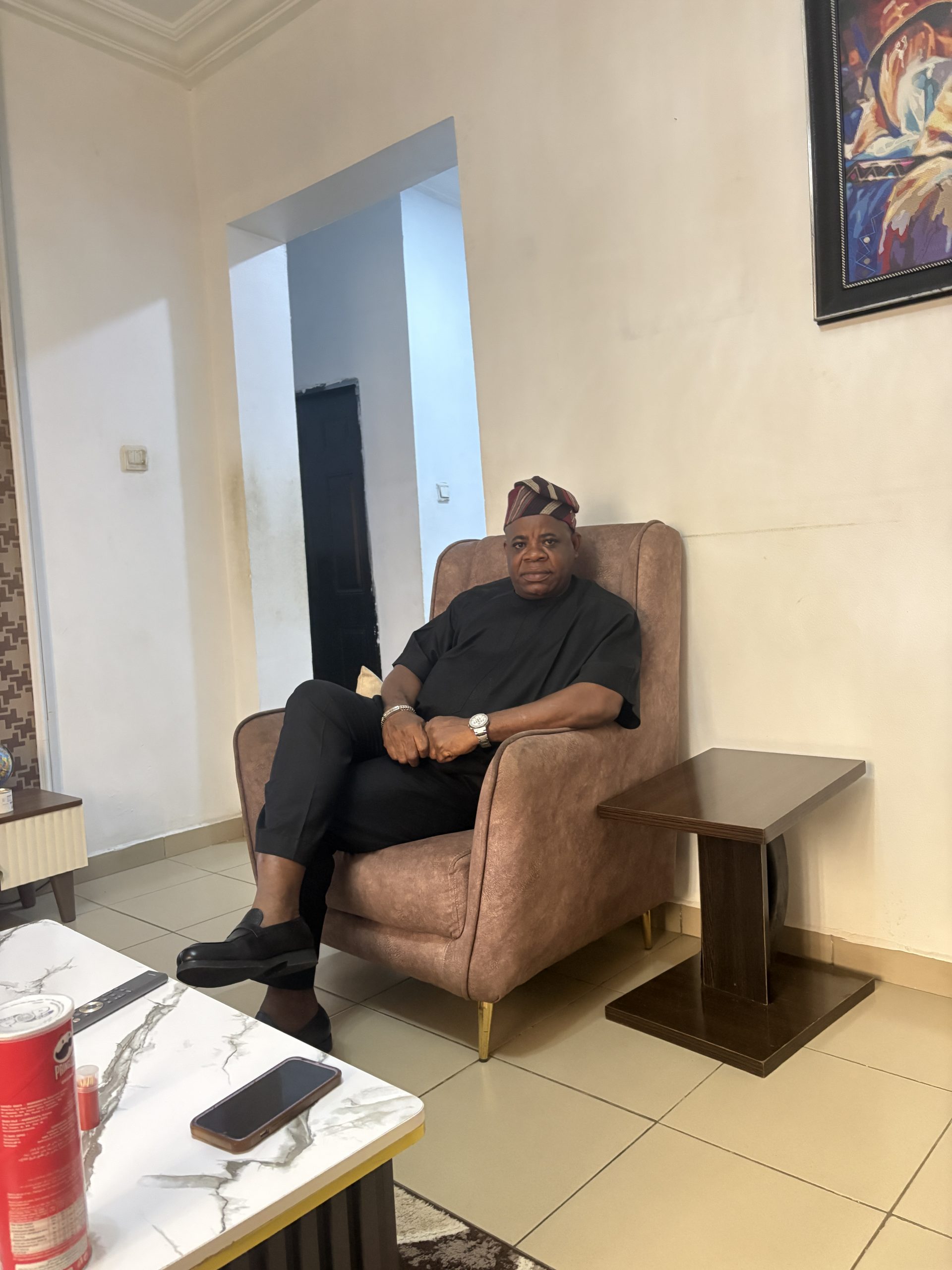
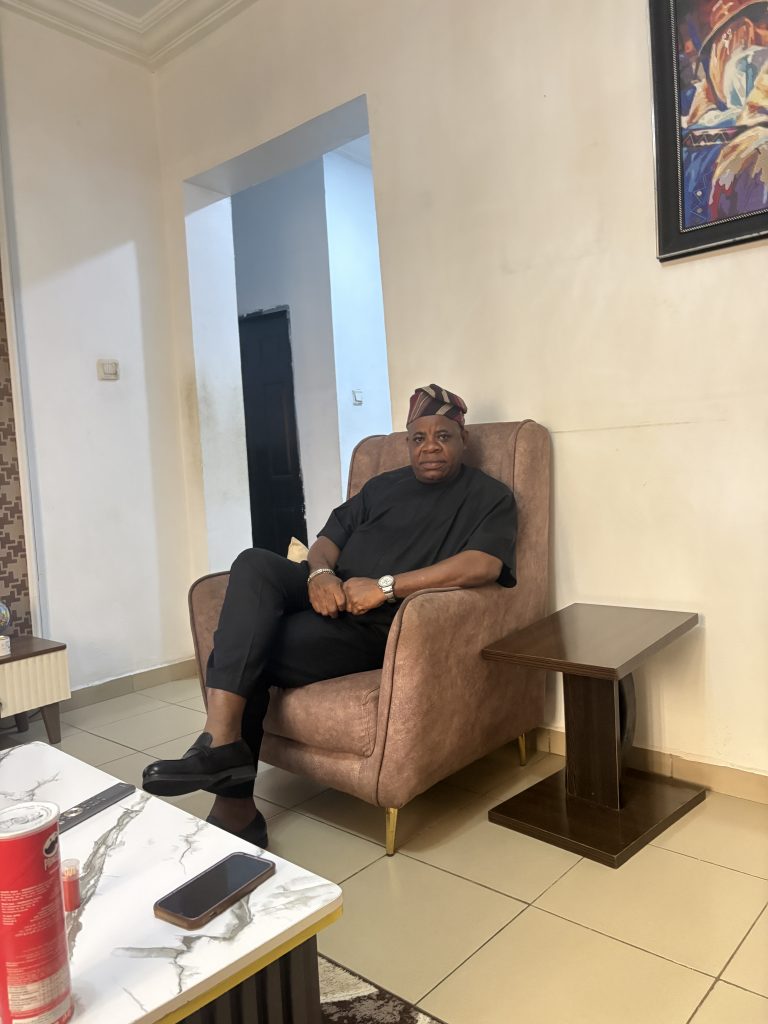
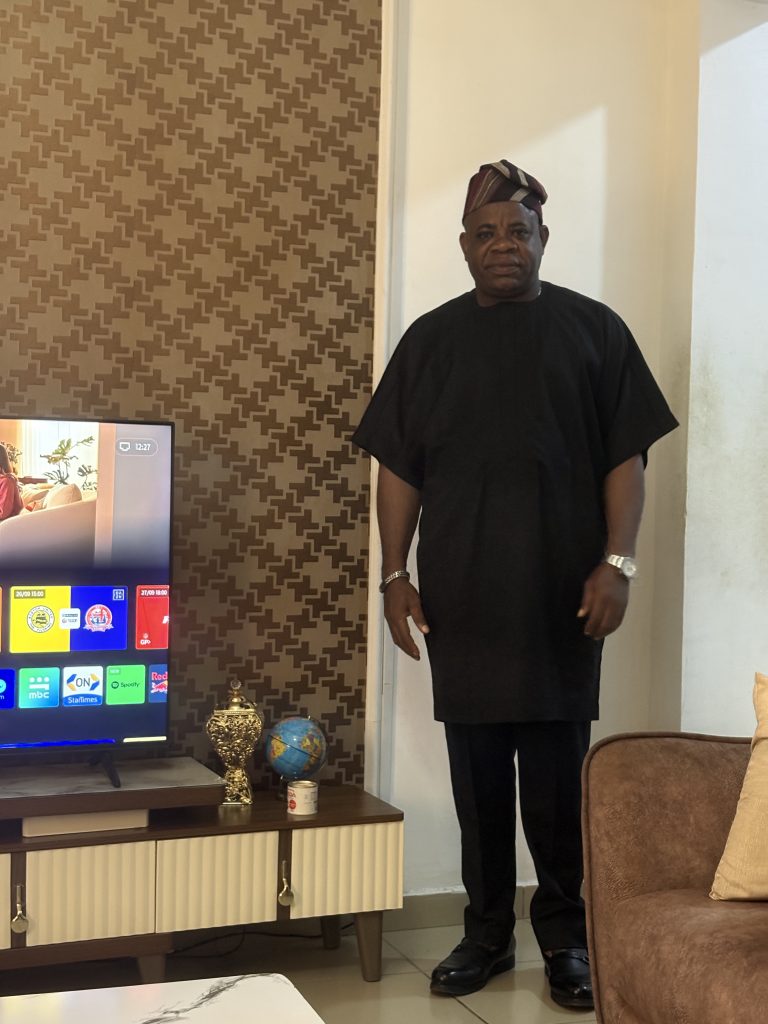 Today, I celebrate myself and give all glory and thanks to Almighty God for the gift of life and for bringing me this far. I am grateful for the opportunity to be alive, healthy, peaceful, happy, and prosperous.
As I celebrate another year today, I pray for greater blessings, wisdom, good health, peace, success, and abundant prosperity in the years ahead.
May this new chapter of my life be filled with joy, favour, wonderful opportunities, and fulfilment of my heart’s desires.
Happy Birthday to me! 🥳🎉
Congratulations to me on this special day. 🙏❤️🎂
I wish myself many more happy and prosperous returns. Cheers to a beautiful new year of my life! 🥂🎉
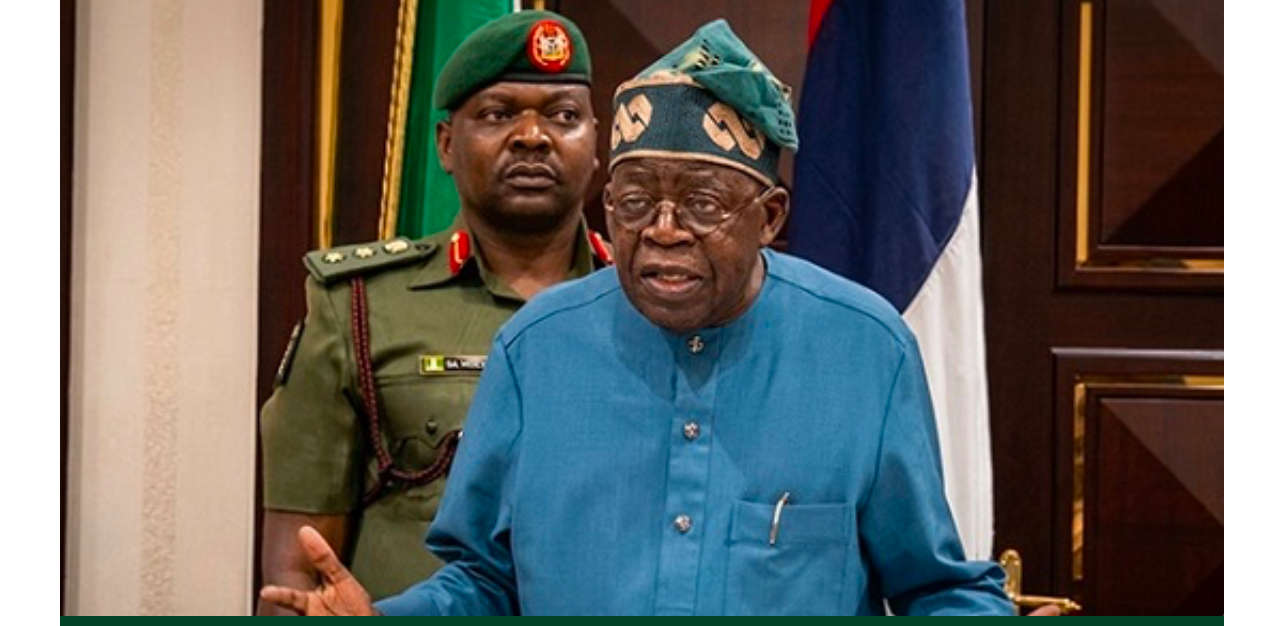
The International Chamber of Commerce tribunal in Paris has ruled in favour of Nigeria in the arbitration brought by Sunrise Power and Transmission Company Limited over the Mambilla Hydroelectric Power Project in Taraba State.
President Bola Tinubu, in a statement issued on Thursday by his Special Adviser on Information and Strategy, Bayo Onanuga, said the tribunal rejected the claims by Sunrise.
The company had sought $680m from Nigeria as a settlement sum and interest in relation to a separate arbitration in which it is claiming more than $2.7bn in compensation and interest over disputes surrounding the development of the 3,960-megawatt Mambilla project.
However, the tribunal, as reported by The Cable, also dismissed Sunrise’s claim for $400m arising from the 2020 settlement agreement, according to the details of the award reported on Thursday.
It further ordered Sunrise and its promoter, Leno Adesanya, to reimburse Nigeria 75 per cent of its legal fees and expenses, amounting to $11.82m.
The tribunal also reportedly declared that Adesanya was bound by the arbitration agreement with Nigeria under the settlement agreement and its addendum and that it had jurisdiction over Nigeria’s counterclaim against him and his firm.
In the statement, Tinubu said the ruling demonstrated the government’s determination to defend the country’s interests.
“This latest decision affirms the Nigerian State’s determination not to succumb to predatory and exploitative claims by corrupt local and international entities and their enablers and funders,” he said.
The President commended the Attorney-General of the Federation and Minister of Justice, Lateef Fagbemi, and officials of the Federal Ministry of Justice for their role in the case.
He also commended former President Olusegun Obasanjo and the late former President Muhammadu Buhari, who testified in the arbitration.
“I also commend the FRN defence team, led by Ms Elizabeth Oger-Gross and Mr Tolu Obamuroh, both of Paul Hastings LLP, for their professional and excellent defence of the country.
“I commend the patriotism and support of former President Olusegun Obasanjo, GCFR, and late President Muhammadu Buhari, GCFR, who testified in the case, which dated back to an illegal 2003 contract to build a 3,050-megawatt hydroelectric plant in Taraba State under a build-operate-transfer model.
“The Federal Executive Council never authorised the contract. I thank the other witnesses in this case, including former Ministers Babatunde Raji Fashola, SAN, and Suleiman Adamu, and the experts, for their active participation in defending Nigeria’s interest in the arbitration,” the statement read.
“I want to assure you that while our country remains committed to partnering with genuine investors and honouring its legal obligations, it will continue to defend all opportunistic claims instituted against our commonwealth strongly.
“Today’s ICC ruling clears the single biggest legal hurdle that has paralysed the Mambilla hydro power project for years,” Tinubu said.
The dispute dates back to an agreement under which Sunrise claimed it had been awarded the contract to construct the Mambilla project.
The company commenced arbitration against Nigeria at the ICC International Court of Arbitration in October 2017, seeking about $2.354bn over an alleged breach of contract.
The parties later entered into a settlement agreement in 2020, under which Nigeria was to pay Sunrise $200m.
A subsequent dispute arose after the government did not make the payment, leading to another arbitration in which Sunrise sought $400m, comprising the $200m settlement sum and a $200m default payment.
In Thursday’s award reported by The Cable, the tribunal rejected Sunrise’s claim that Nigeria had breached its obligations under the settlement agreement and its addendum.
It also rejected the company’s demand for the $400m settlement and default sums.
The Cable reported that the tribunal fixed the arbitration costs at $1.6565m, with Sunrise and Adesanya responsible for 75 per cent and Nigeria for 25 per cent. Of the $11.82m in legal fees and expenses awarded to Nigeria, $2.5m is to be recovered from funds held in escrow by the ICC, while the remaining $9.32m is payable by Sunrise and Adesanya, with interest at 10 per cent annually, compounded annually, from notification of the final award until payment.


-
 news6 years ago
UPDATE: #ENDSARS: CCTV footage of Lekki shootings intact – Says Sanwo – Olu
-
 lifestyle6 years ago
Former Miss World: Mixed reactions trail Agbani Darego’s looks
-
 health6 years ago
Chairman Agege LG, Ganiyu Egunjobi Receives Covid-19 Vaccines
-
 lifestyle5 years ago
Obateru: Celebrating a Quintessential PR Man at 60
-
 news1 year ago
BREAKING: Tinubu swears in new NNPCL Board
-
 health6 years ago
UPDATE : Nigeria Records 790 new cases of COVID-19
-
 entertainment2 years ago
Ashny Set for Valentine Special and new Album ‘ Femme Fatale’
-
 health6 years ago
BREAKING: Nigeria confirms 663 new cases of COVID-19