Connect with us

news

Youths to Obasanjo: Atiku should drop Obi or lose

Published

on

Atiku
Ex-governor: I’m eminently qualified to be running mate

Atiku Abubakar got yesterday a complex challenge on his presidential bid —he should drop running mate Peter Obi or lose.

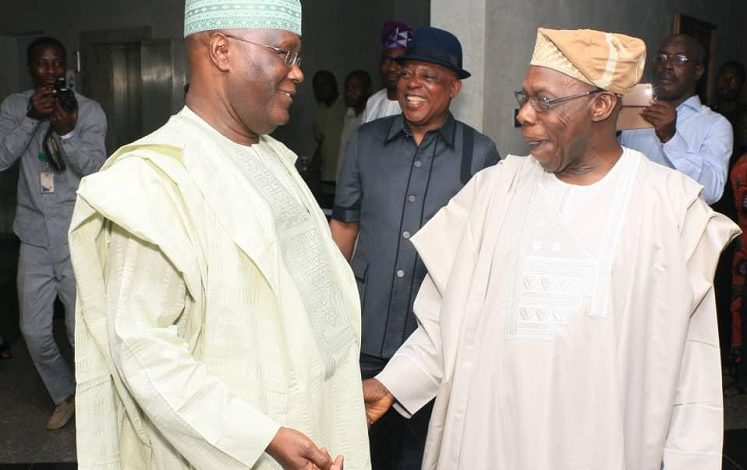
Some youths in the North visited former President Olusegun Obasanjo to table the knotty request.

The Northern Youths Leaders Forum (NYLF) advised  the presidential candidate of the Peoples Democratic Party (PDP) to review the  choice of Obi, if he hopes to earn the North’s support.

The group, which prides itself as the apex  body of 46 youth organisations in the North, threatened to mobilise its over six million members against the PDP and its presidential candidate, if Atiku failed to take its advice.

The national chairman of the group,  Comrade Elliot Afiyo, who spoke on Tuesday  in Abeokuta, the Ogun State capital, after a meeting with former President Olusegun Obasanjo on Monday night, claimed that the body had been instrumental to the electoral victories of successive presidents since 1999. It claimed to have played a major role in incumbent President Muhammadu Buhari’s victory and it also played a critical role in the reconciliation between Atiku and Obasanjo.

According to Afiyo, the group had equally intimated  the former President of their position on Atiku’s running mate.

It was not immediately clear yesterday what Obasanjo, who has just ended a long feud with Atiku and endorsed him, told the youths.

He said the Obi’s choice was causing friction in the Southeast, which  is largely responsible for the impending defection of the Deputy Senate President, Ike Ekweremandu, from the PDP.

He added that Obi is strongly viewed as anti-north and a major sponsor of the Indigenous People of Biafra (IPOB).

According to him, over 70 percent of Emirs and other traditional rulers in the North will not support Atiku’s choice of running mate and maintained that  PDP will fail to produce the next president, if the party eventually flies the Atiku/Obi ticket.

Afiyo advised PDP to pick Atiku’s running mate from Southsouth. He suggested that either Rivers State Governor Nyesom Wike or his Bayelsa State counterpart, Seriake Dickson, should be considered.

Afiyo said: “Atiku is an experienced politician, and he knows what happened and as a northern Nigerian, he cannot ignore that group. I have spoken to almost all the Southeast governors and they told me that they remained in PDP because of their governorship elections and after their governorship elections, they will vote somewhere, not PDP.

“And for us to ignore the stakeholders, it is political suicidal, so we must agree with that fact. That was what we told Obasanjo yesterday, that as far as we want to Atiku to succeed, he has no alternative than to drop Peter Obi and with the contention between Peter Obi’s group and Ike Ekeremadu’s group, it is not political convenient again to pick a running mate from the Southeast.

Because whichever group you pick from, the other group will work against them.

“Then, in the North, we consider Peter Obi as anti-North. This is no sentiment. Apart from the way he treated the northeners when he was the governor of Anambra State, we consider him as a bonafide member and major sponsor of IPOB.

“In fact, 70 percent of emirs, traditional rulers from the North will not support Peter Obi as the vice president.

“We don’t work on sentiment. As I have told you before, our group staked our lives in 2015 for Buhari. Personally, I was placed under house arrest for two weeks throughout the extension of the presidential election in 2015. I was fighting with the hope that Buhari would change things but there is a cabal and Buhari is completely caged.

“Also, mind you, Atiku is not a saint, anyone that becomes president, there must be a cabal, so we need a vice president that will tell the cabal ‘no’ and Peter Obi doesn’t have the courage and boldness to be the vice president to challenge the authorities. But if Atiku fails to heed our warning, then, APC will win. Buhari will win hands down because we cannot support a failure. We will work for APC.”

Obi’s spokesman Valemtine Obienyen dismissed the claims by the group. He said Obi’s choice had been well received.

He added: “Why protest in Ota? Who is behind the protest? What does the project intend to achieve? Is it true that the planning of the protest was revealed almost a week ago? Why is it that when you have failed to see any fault in Obi, you are bent on inventing one?  These are necessary questions which any sincere inquirer will deem appropriate to start with.

He said: “ We do not need such  distraction now. What we need is joining of hands together as we collectively seek solutions to our problems.

“All those that knew Obi very well for what he did in the past, both in his private business and governance of Anambra State and thereafter,  wrote eulogies of him. Researchers went to work. After careful and painstaking analyses of his past, they submitted that he is humble, hardworking, knowledgeable about the economy, aware of the myriad of problems of the country, detribalised and a believe in the unity of the country .

Since leaving office, Obi has been busy visiting schools all over the country, from Cross River to Sokoto. Obi has been busy diagnosing the problems of the country and offering solutions. Obi has been busy preaching the unity of the country and how good governance will solve the problems in Nigeria, caused by cumulative years of leadership failure that make the protest under review suspicious and, in fact, an attempt to give the dog a bad name in order to hang it.”

Continue Reading
Click to comment

Leave a Reply

Your email address will not be published. Required fields are marked *

news

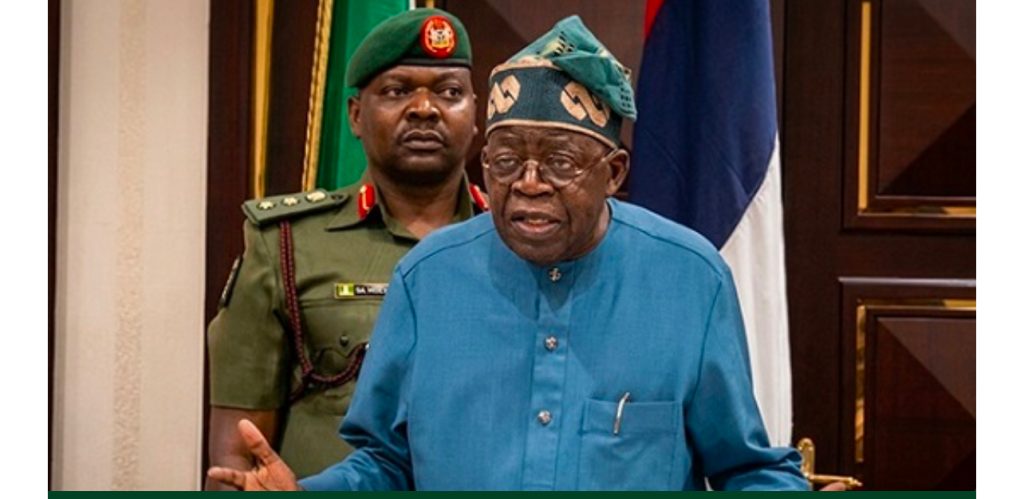
Tinubu Announces $20bn FDI Inflow, Signals Growing Investor Confidence

Published

on

……..APM Terminals pledges $600m

Speaking during a panel session at the ongoing Africa CEO Forum, President Tinubu attributed the inflow to reforms aimed at improving transparency, efficiency, and investor confidence in the country.

He said his administration’s policies were positioning Nigeria as an open and competitive destination for investment.

“In Nigeria, we’ve attracted nearly $20 billion in direct investment this year because we are efficient, transparent, and open for business,” President Tinubu said.

He said that Nigeria would no longer permit the export of raw minerals without local value addition, noting that the country possesses the capacity to manufacture products such as electric vehicle batteries from its mineral resources.

He said: “With our metals, we can produce batteries for cars. The private sector brings capital and expertise, but government must de-risk and create the enabling environment. That partnership is how Africa moves forward”.

He also canvassed for stronger economic integration across the continent, urging African countries to move beyond rhetoric and fully activate the African Continental Free Trade Area (AfCFTA).

According to him, Africa needs to put its money where its mouth is and build a new relationship with its own resources.

“We have the African Continental Free Trade Area—it must not sit on the shelf. It needs to be activated properly through collaboration and effective use of resources, not by working in silos,” President Tinubu said.

He advocated an “Africa First” approach to development, insisting that African resources should primarily benefit the continent through local processing and manufacturing.

“We don’t want scavengers and extractors. We want partners who process and manufacture locally,” President Tinubu said.

Speaking on industrialisation, President Tinubu cited the success of the Dangote Refinery as proof that Africa could undertake large-scale projects with the right support framework.

According to him, Nigeria overcame years of dependence on imported petroleum products after supporting the establishment of the refinery through policy backing, credit support, and licensing approvals.

He said: “Today Nigeria is a net exporter of PMS, aviation fuel, and other products. Dangote is supplying aviation fuel across Africa and to European airlines”.

He also called for reforms to intra-African trade and financial systems, questioning the continent’s reliance on foreign currencies for trade transactions.

In Rwanda, Tinubu pitches Nigerian business case to Africa
Tinubu appoints Laniyi DG of Women Development Centre
“If you produce in Nigeria, you can trade in naira. Why should African trade depend on dollars? That adds cost and instability,” President Tinubu said.

He proposed the establishment of an African commodity exchange platform that would enable direct trade among the continent’s 54 countries.

On the issue of mobilising African capital for development, President Tinubu said governments must create stable legal and policy environments capable of attracting long-term investment.

He said: “Capital is cowardly. It needs transparency, accountability, and stability”.

He also advocated the creation of an African credit rating agency, arguing that existing global rating institutions do not adequately understand African markets and risks.

“The big American agencies dominate 95 per cent of the market, but they don’t understand our risks and opportunities,” President Tinubu said.

He noted that in addressing Africa’s digital infrastructure deficit, Nigeria is laying 19,000 kilometres of fibre optic cables nationwide to expand connectivity and support the digital economy.

“That’s how we bring lessons to children, connect families, and enable traders,” President Tinubu said.

He added that Africa must invest beyond basic telecommunications and build full digital infrastructure systems, including data processing, storage, artificial intelligence, and e-commerce capabilities.

He said: “We need to fund Africa’s shift from basic telecoms to AI and e-commerce”.

He further expressed optimism that the AfCFTA would eventually boost intra-African trade, despite political and structural barriers currently slowing integration efforts.

He said: “Pan-Africanism can’t remain a slogan. It has to be lived”.

He also urged African leaders to strengthen regional alliances and economic cooperation in response to global economic shocks and geopolitical uncertainties.

“If Europe can build alliances and move forward, so can we. Africa has everything we need here. What we require is good policy and the will to act.

“We don’t want our children dying at sea trying to reach elsewhere. We have the resources. We just need to help each other and push together. That is the only way to build an inclusive and prosperous Africa,” President Tinubu said

Continue Reading

news

Obasa Saga : Desmond Elliot Nearly Ruined My Chief of Staff Appointment — Gbajabiamila Reveals

Published

on

Femi Gbajabiamila, Chief of Staff to President Bola Tinubu, has disclosed that he almost lost his position last year due to the alleged involvement of actor-turned-politician Desmond Elliot in the political crisis that rocked the Lagos State House of Assembly during the speakership tussle involving Mudashiru Obasa.

Speaking in a video widely circulating on social media on Thursday, Gbajabiamila narrated how Tinubu summoned him to his residence in Abuja at the height of the Obasa impeachment saga.

According to the CoS, the president confronted him over intelligence reports linking Elliot, who represents Surulere Constituency I in the Lagos State House of Assembly, to efforts to destabilise the state legislature.

“I almost lost my job as Chief of Staff last year because of Desmond Elliot. Mr. President called me to his house in Abuja during the Lagos Speaker Obasa saga. He said, ‘I hear this Desmond is your boy, the one we gave you,’ and I said, ‘Yes, sir.’ He is one of the people causing problems in the Lagos House of Assembly,” Gbajabiamila stated.

Gbajabiamila further revealed that he had to defend Elliot against the allegations.

“Immediately I said to Mr. President, no, no, no. Desmond is not part of them.

“I haven’t even spoken to him. I didn’t know whether he was part of that. I said, no, he’s not part of them.”

According to him, Tinubu said, “I’m telling you from intelligence that he is part of them. Go and tell him to retrace his steps. This is what Mr. President told me. I said, yes, sir.”

He said he called the lawmaker to inform him of the development.

“I called him. That’s what I told him. Just like the President, this is what he said.

“If you are one of these people, if you are part of them, get out of there.”

He added that the Director-General of the Department of State Services also contacted him regarding his and Elliot’s alleged involvement.

“Three days later, the Director General of DSS called me and said there’s a problem. Your name is being mentioned all over the place.

“That you are the one behind, you are supporting Desmond in this event. Of course, the President will not believe that Desmond would do such a thing and I will not know what it sounds like.

“I told the DSS, I’m going to have to talk to Desmond.”

“I told him, I’m going to have to talk to Desmond. He has not done anything. I called him again.”

The Chief of Staff said he asked Elliot to issue a statement vindicating himself of the allegation, which he allegedly did not till date.

The Obasa impeachment saga erupted on January 13, 2025, when a majority of the Lagos State House of Assembly impeached the long-serving Speaker while he was vacationing in the United States.

Lawmakers accused him of gross misconduct, abuse of office, high-handedness, poor leadership, persistent lateness to sessions, and alleged financial impropriety/mismanagement of Assembly funds.

His deputy, Mojisola Meranda, was immediately elected as the new Speaker, becoming the first female to occupy the position.

Obasa rejected the impeachment as illegal and unconstitutional, insisting due process was not followed.

The crisis triggered weeks of tension, court cases, parallel claims to leadership, and interventions by APC national leaders and Tinubu.

It was eventually resolved when Meranda resigned, paving the way for Obasa’s reinstatement as Speaker.

The incident comes amid growing resistance to the lawmaker’s bid for a fourth term in the Lagos State House of Assembly.

Continue Reading

news

APC Launches Reps Primaries, Embraces All-Inclusive Screening Approach — Morka

Published

on

Abbas, Kalu, Ihonvbere, Doguwa, Faleke, Obasa, Amaewhule, others in race for tickets
Primaries to pick candidates of the All Progressives Congress (APC) for next year’s elections begin tomorrow.

Aspirants for House of Representatives tickets will take the first shots across the 360 constituencies.

As of last night, the party’s national secretariat was busy coordinating reports from screening centres, while appeal committees also sat to consider different cases as they arose.

“The process is tough, and the schedule is tight,” a member of the party’s National Working Committee (NWC) told The Nation.

The party assured its members that, despite the logistical difficulties, the process would proceed as planned.

Leading lights of the party, which controls an overwhelming majority in the Green Chamber, such as Speaker Abbas Tajudeen, Deputy Speaker Benjamin Kalu, House Leader Prof. Julius Ihonvbere, spokesman Akin Rotimi, long-standing member Ado Doguwa, Finance Committee Chairman James Abiodun Faleke, former minister Nkeiruka Onyejeocha, Chijioke Edoga and Leke Abejide, who defected from the African Democratic Congress (ADC), are among those seeking tickets to return.

Among those seeking a return to the House are Bimbo Daramola (Ekiti), Kafilat Ogbara (Lagos), Oluwole Oke (Osun) and Donald Ojogo (Ondo).

There are also high-profile lawmakers from state Houses of Assembly bidding to move to the House of Representatives.

These include Speakers Mudashiru Obasa (Lagos) and Martins Amaewhule (Rivers).

National Publicity Secretary Felix Morka said the date fixed for the intra-party selection is sacrosanct.

The screening of the contenders has set the stage for what is largely expected to be direct primaries and, in some cases, consensus arrangements.

According to the APC guidelines, direct primaries should be adopted where consensus agreements fail.

Sources said the panel cleared all aspirants from Lagos, Ondo, Ekiti, Enugu and Rivers states.

However, a source said members of the Appeal Committee were at the Treasures Suites in Abuja handling last-minute petitions arising from the screening exercise.

According to the source, governors still hold the ace, having been saddled by the party with negotiating the “mode of primary” best suited for their respective states.

A senior party official confirmed that the committee refused to bow to external interference.

He said despite intense lobbying and “pressure from opponents,” the screening panels opted for an all-inclusive approach.

The source added: “No aspirant was disqualified. I was part of the team that handled Lagos, Ondo, Ekiti, Enugu and Rivers states, and I am sure that all the aspirants were cleared.

“There was pressure to disqualify some, but the screening committee stood its ground.”

The party’s National Working Committee (NWC) reviewed the report of the screening committee on Tuesday and yesterday.

While the official results have not been formally gazetted, sources at the party’s headquarters confirmed that the reports have been ratified.

Already, the NWC has dispatched primary election committees to the states to liaise with governors for rancour-free shadow elections that will produce acceptable candidates.

A member of the NWC reiterated the party’s resolve to adhere to the revised schedule of activities and timetable.

He said: “We have done everything possible for the primaries to be held as scheduled.”

Emphasising that the timetable would not change, Morka said the clarification became necessary following misleading reports.

He said the primaries will be held as follows: senatorial, May 18; House of Assembly, May 20; governorship, May 21; and presidential, May 23.

Continue Reading

Trending

Copyright © 2025 Newsthumb Magazine | All rights reserved