Connect with us

politics

Senate splits over passage of 2019 elections order bill

Published

on


Senate election

In what order should the 2019 elections be conducted?

This was the bone of contention among senators at plenary yesterday during debate on the report of the conference committee which harmonised the grey areas to the amendments to the Electoral Act.

The House of Representatives passed the bill without hitch.

Some members of both chambers of the National Assembly constituted the committee.

Section 25(i) of the amendment bill, which places the National Assembly poll first in the sequence of elections sparked the row.

The bill was passed and concurred with by both chambers of the National Assembly before it went for harmonisation.

It is in the process of being sent to President Muhammadu Buhari for assent.

Under the bill, the governorship and Houses of Assembly elections come after the National Assembly poll. The presidential election comes last.

Senators, who kicked against the bill, said it was self-serving and targeted at the President Muhammadu Buhari’s re-election bid.

But those in support faulted them, saying it was not the first time in the nation’s history that National Assembly polls would be coming first in the order of elections.

They noted that in 1979 under military regime, the Senatorial election was held on July 7; presidential election, August 17,  adding that in 1992 the House of Representatives and Senatorial elections were held on July 7; presidential election, June 12, 1993.  In 1999, they said the Houses of Assembly, House of Representatives and Senatorial elections were held on February 20, and presidential election February 27.

At plenary, Senator Abdullahi Adamu’s argument against the bill was truncated by Senate President Bukola Saraki.

Adamu led nine other senators out of the chambers to address reporters. The group said the amendment was in bad faith.

Speaking one after the other, they picked holes in the bill, saying it was skewed against the President.

They said the amendment was hasty and uncalled for and must not be allowed to stand.

According to the senators, the bill sought to usurp the constitutional role of the Independent National Electoral Commission (INEC) on the fixing of election dates.

The senators also faulted the process leading to the amendment.

They claimed that only 36 of the 360-member House of Representatives passed the bill.

The number, they said, was not up to the quorum required to pass a bill in the National Assembly.

They alleged that the conference committee report of the Senate and House of Representatives on the bill was not signed by some members, including Senator Suleiman Nazif (Bauchi North), its chairman.

Nazif is also the Senate committee chairman on INEC.

The Adamu group expressed worry over the financial implications of running three staggered elections instead of two.

The present harsh economic situation in the country can hardly accommodate elections in three stages, the group claimed.

They argued for the retention of the 2015 order of elections, where the presidential and National Assembly polls were held simultaneously as the first in the sequence.

In a swift reaction, Nazif, at a separate briefing, told the protesting senators that politics is dynamic, adding that laws are reviewed in line with prevailing circumstances.

He dismissed the group’s claim that the bill was targeted at the President, saying it was unfair to make such insinuation.

According to him, the amendment went through due process in both the Senate and the House of Representatives, before it was referred to the conference committee for harmonisation.

Nazif said the committee, comprising members from both chambers scrutinised the bill and consulted wide before submitting its report.

Nazif debunked the group’s claim that he did not sign the report.

He displayed a copy of the bill where he and others signed the document.

The senator expressed surprise at what he described as his colleagues belated opposition to the bill, saying the amendment was “extensively debated” by the Senate before it was passed.

Buttressing the action of the committee, which approved the amendment, he quoted Order 87 (c) of the Senate rules which says:

”The conference committee shall deliberate only on areas of disagreement between the Senate and the House of Representatives. The conference committee shall not insert in its report any matter not committed to it by either the Senate or House of Representatives nor shall it be in order to strike out from the bill, matter agreed to by the Senate or House of Representatives.”

To them, there was nothing novel in what the National Assembly did.

Among the protesting senators are Abu Ibrahim (Katsina South); Ali Wakil (Bauchi South); Abdullahi Gumel (Jigawa North West); Ibrahim Kurfi (Katsina Central); Yahaya Abdullahi (Kebbi North); Binta Garba Masi (Adamawa North); Ovie Omo-Agege (Delta Central); Andrew Uchendu (Rivers East); and Benjamin Uwajimogu (Imo North).

The senators claimed to be 59 in all, saying others could not join them because they were attending to official matters at other locations.

Reporters’ request for their full list was not met by the senators by press time.

One of them, Senator Andrew Uchendu, noted that the amendment was in conflict with Section 132 of the Constitution which gave INEC the power to fix dates for elections.

The Rivers State lawmaker said the country had enormous problems to contend with and should be spared of additional problems.

Senator Omo-Agege, who called for division of the House at plenary, was overruled by Saraki.

He insisted that the amendment was contrary to constitutional provisions.

Chairman, Senate Committee on Media and Public Affairs, Senator Aliyu Sabi Abdullahi said there was nothing personal about the amendment, adding that it was done in the country’s interest as well as to deepen democracy.

He said those opposed to the amendment were exercising their democratic right but insisted that the right thing should always be done.

The National Assembly, Abdullahi said, was working to strengthen the electoral process and  also to ensure the conduct of credible elections in the country.
Continue Reading
Click to comment

Leave a Reply

Your email address will not be published. Required fields are marked *

politics

Ughulu: Campaigns OK Movement’s Position on Independence Remains Unchanged Amid NDC Crisis

Published

on

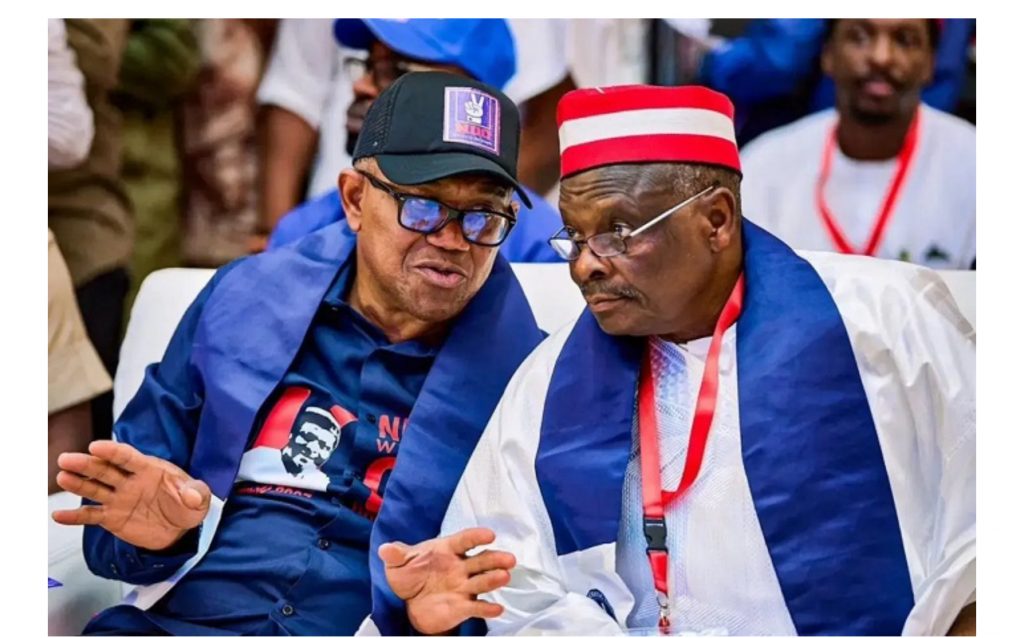
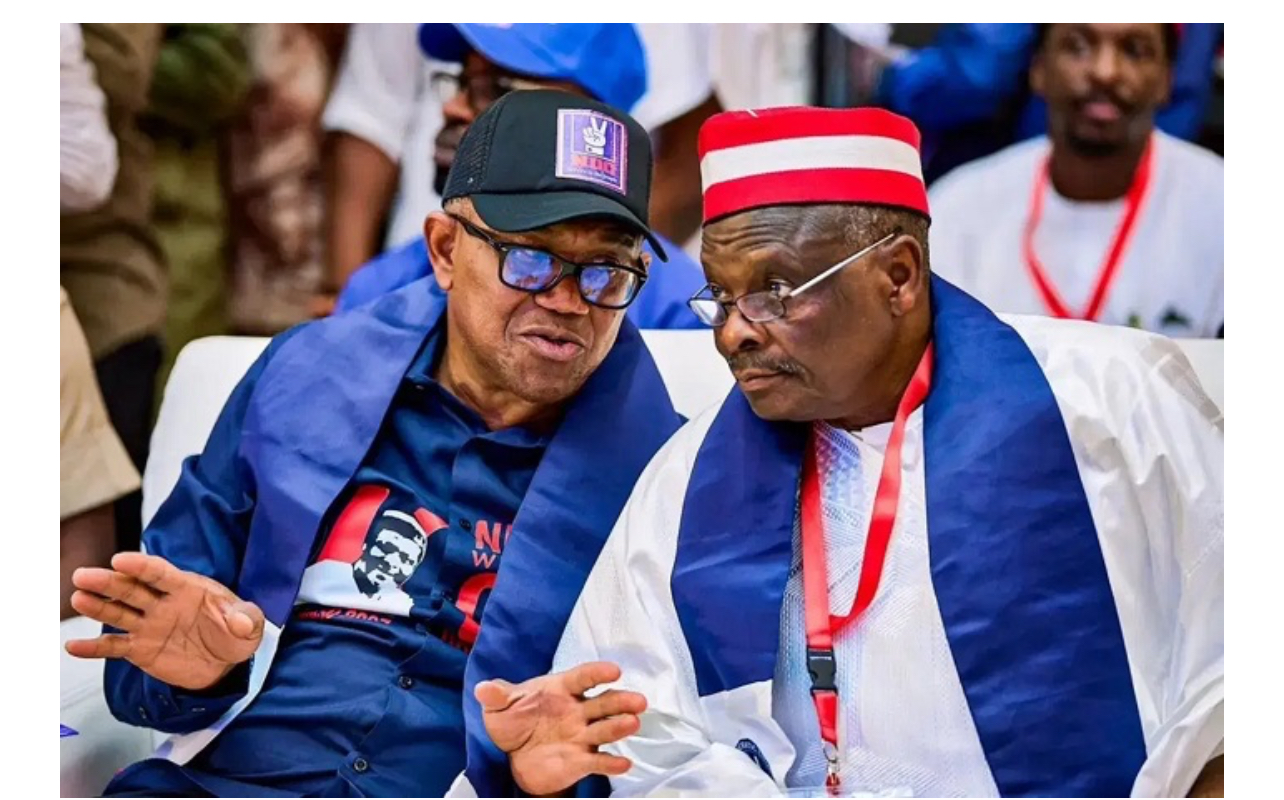
The OK (Obi/Kwankwaso) Movement has declared that it will maintain its independent identity while mobilising support for the Nigeria Democratic Congress (NDC) and its candidates ahead of the 2027 general election. NigerianNews Updates
Movement’s leader John Ughulu said the group remained committed to its original mission of securing the election of former Anambra State Governor Peter Obi and erstwhile Kano State Governor Rabiu Musa Kwankwaso.

Speaking in an interview, Ughulu dismissed suggestions that the movement’s decision to campaign independently would undermine its support for the NDC, insisting that the focus should be on achieving a common political objective.

“What difference does it make when we campaign on parallel lines? The most important thing is that we have one objective,” he said.

Asked whether the movement had decided to retain its independent status rather than formally integrate into the NDC campaign structure, Ughulu said its position had not changed.

“We have always been independent, and there is nothing wrong in that. We are campaigning for NDC party’s candidates. I will appreciate we leave it like that,” he added.

He urged members and supporters to remain guided by the principles upon which the movement was established, stressing that its political mission remained unchanged.

“The members of the OK Movement work on the principles upon which we formed the movement. The mission to bring His Excellency Peter Obi and His Excellency Senator Rabiu Musa Kwankwaso is sacrosanct,” Ughulu said.

His remarks underscore the movement’s intention to retain its organisational independence while supporting the NDC’s electoral ambitions, particularly its presidential candidate, Obi, in the 2027 contest.

The disagreement between the NDC and the OK Movement followed the movement’s announcement of a 59-member Presidential Campaign Council to mobilise support for the party’s presidential candidate, Peter Obi, and his running mate, Senator Rabiu Musa Kwankwaso, ahead of the 2027 general election.

The NDC leadership rejected the arrangement, insisting that only the party’s National Working Committee (NWC) had the authority to constitute and announce its official campaign council.

The party also maintained that support groups must operate within its recognised organisational framework rather than establish parallel structures.

NDC National Leader Senator Seriake Dickson reinforced this position, arguing that political movements supporting the party’s candidates should complement, not compete with the party’s machinery.

The OK Movement, however, resisted the party’s position, insisting that its support for the NDC candidates should not be interpreted as an obligation to surrender its independently established structures.

Ughulu maintained that the movement had its own leadership, membership and organisational framework, which it was unwilling to dissolve or merge into the party.

The disagreement escalated after the NDC disowned the movement’s campaign council and referred Ughulu to its disciplinary organ over alleged disregard for party authority.

Despite the controversy, the movement has maintained that it will continue to mobilise support for Obi and other NDC candidates while retaining its independent identity.

Continue Reading

politics

Breaking : Imo West Senatorial Race: Court Orders INEC to Recognise Okorocha, Bars Uzodimma from Claiming APC Ticket

Published

on

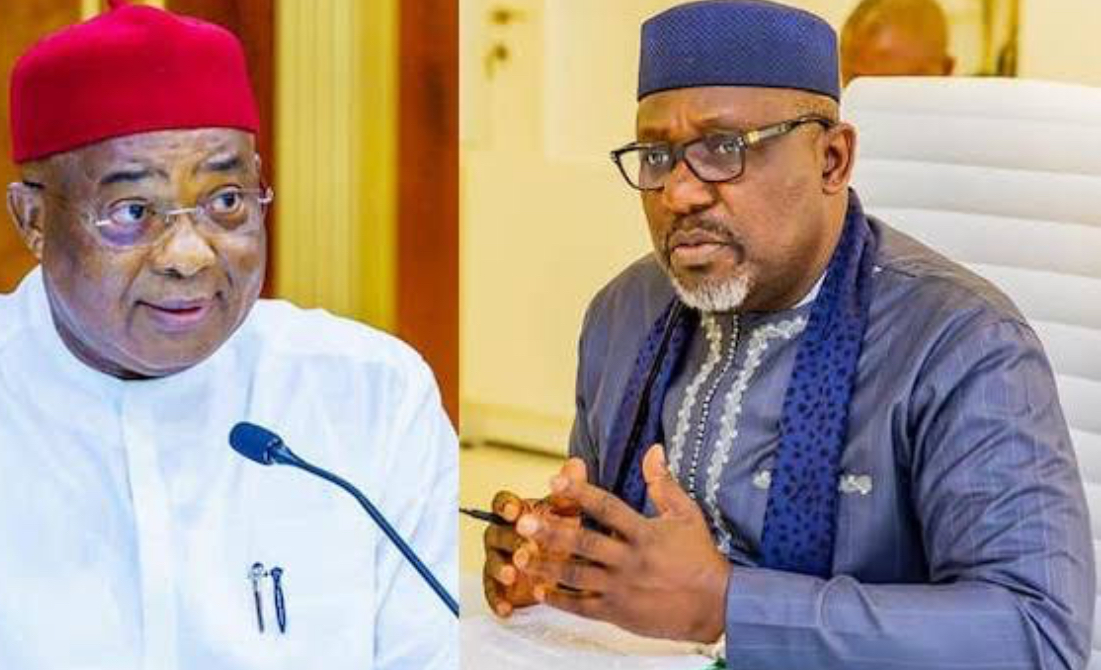
A court has reportedly ordered the Independent National Electoral Commission (INEC) to publish the name of former Imo State Governor, Rochas Okorocha, as the winner of the All Progressives Congress (APC) senatorial primary for Imo West Senatorial District.

The court also reportedly directed Imo State Governor, Hope Uzodimma, to stop presenting himself as the APC candidate for the Imo West Senatorial District seat.

The ruling concerns the dispute over the APC senatorial ticket for Imo West, with the court’s directives addressing the recognition of the party’s candidate and the publication of the relevant details by INEC.

The development could have significant implications for the political contest in Imo West, depending on the terms of the judgment and any subsequent legal proceedings.


Continue Reading

politics

Breaking : INEC Confirms Oyebanji’s Re-election in Ekiti, First Consecutive Governorship Victory Since 1999

Published

on

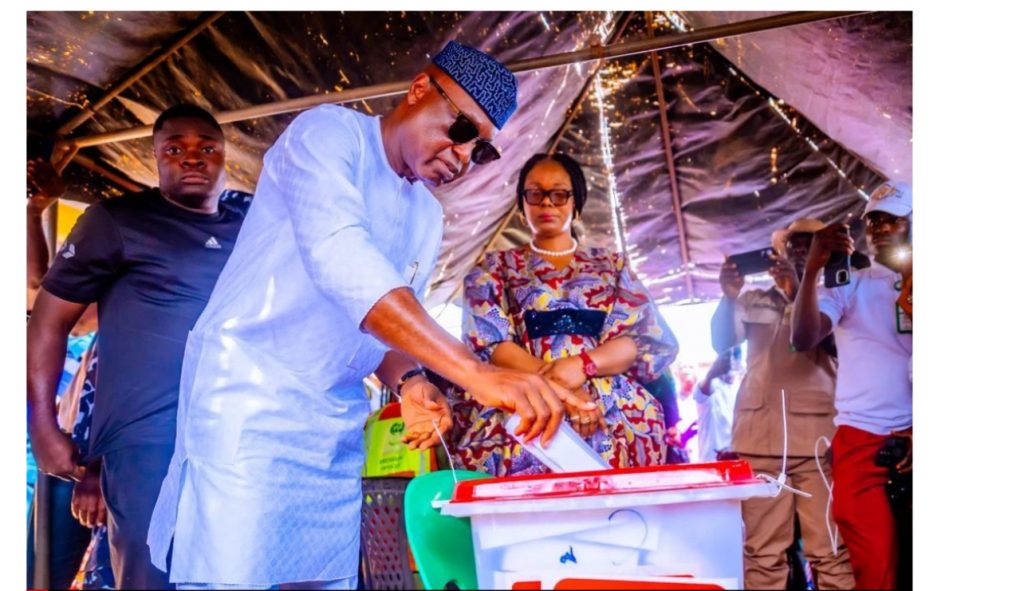
Governor Biodun Oyebanji casting his vote at his Okeelele Unit 003

The Independent National Electoral Commission has declared the All Progressives Congress candidate, Governor Biodun Oyebanji, the winner of the Ekiti State governorship election held on Saturday.

The governor was re-elected after polling 319,224 votes over his closest rivals in the opposition Peoples Democratic Party, Olumayokun Oluyede and African Democratic Congress, Dare Bejide, across the state’s 16 local governments.

The Returning Officer for the election, Prof Adenike Oladiji, who is the Vice Chancellor of Federal University of Technology, Akure, announced the results in the early hours of Sunday at the INEC’s headquarters on Iyin Road in Ado-Ekiti, the state capital.

Oladiji said, “Therefore, I, Adenike, am the returning officer for the 2026 Ekiti governorship election…Oyebanji Abiodun Abayomi, having satisfied the requirements of the law, is hereby declared the winner and stands re-elected.”

While the APC polled 319,224 votes, the PDP candidate polled 40, 533 votes, and the ADC candidate amassed 12,872 votes.

There are 988,251 registered voters, and 384,940 are accredited.

Out of the 382,109 votes cast, the total valid votes in the election were 375, 777.

According to INEC result, the PDP candidate, who hails from Ikere Ekiti, lost in his Ikere Local Government area.

While the APC and its candidate, Oyebanji, scored 8,742 votes, the PDP, which came second in the LGA, garnered 2,051 votes.

Below are the full results of the governorship election as collated at the State Collation Centre from the 16 LGAs on Sunday.

Efon Local Govt

Collation officer: Prof. Joseph Ojo

ADC – 201
APC – 8742
PDP – 2051

Ijero LG

Collation Officer: Prof. Olaniran Akanni

ADC – 2026
APC – 25506
PDP – 2479

Ikere LG

Collation Officer: Prof. Kehinde Jayeoba

ADC – 245
APC – 11116
PDP – 9872

Emure LG

Collation Officer: Prof Emmanuel Oluwafemi

ADC -732
APC – 14325
PDP – 851

Ekiti South West

Collation Officer: Prof. Kola Oladunmoye

ADC – 1076
APC – 14705
PDP – 1800

Ido/Osi

Collation Officer: Prof. Otalobi Akintunde

ADC – 561
APC – 17901
PDP – 1449

Ekiti West

Collation Officer: Prof Bolaji Stephen

ADC – 674
APC – 28258
PDP – 3644

Ado LG

Collation Officer: Prof. Toye Fasinmirin

ADC – 1054
APC – 38026
PDP – 3817

Ilejemeje LG

Collation Officer: Prof. Kehinde Mogaji

ADC – 579
APC – 8984
PDP – 1243

Ise/Orun LG

Collation Officer: Dr John Isa

ADC – 365
APC – 12907
PDP – 1627

Oye LG

Collation Officer: Prof. Jide Popoola

ADC – 998
APC – 18975
PDP – 2891

Moba LG

Collation Officer: Prof. Suleiman Adegboyega

ADC – 994
APC – 20500
PDP – 1572

Ayekire/Gbonyin LG

Collation Officer: Prof. Oso Bamidele

ADC – 314
APC – 17133
PDP – 1563

Ikole LG

Collation Officer: Prof. Sadiat Adifala

ADC – 812
APC – 26508
PDP – 750

Irepodun/Ifelodun LGA

Collation Officer: Prof. Michael Adeyemi

ADC – 511
APC – 29278
PDP – 2119

Ekiti East LGA

Collation Officer: Prof. Olabode Olatunbosun

ADC – 1730
APC – 26359
PDP – 2795

Continue Reading

Trending

Copyright © 2025 Newsthumb Magazine | All rights reserved