
Connect with us

news

Amotekun: Southwest states gear up for take-off

Published

on

– Set to recruit personnel – Osun plans to engage 720 – Public hearing on harmonised bill holds in all six states Monday

The Western Nigeria Security Network otherwise known as Operation Amotekun has inched closer to take-off as the states prepare to recruit operatives for the outfit.
Various states in the region have also acquired operational vehicles including motorcycles as well as communication gadgets among other logistics, and also secured the offices for their operations.

Osun State alone is expected to employ 720 personnel.

The Houses of Assembly have already prioritised the passing of the bill and are only waiting for inputs from more stakeholders at public hearings to be held across the states next week.

In Oyo State, the government has donated a building in Ibadan to serve as the operational headquarters of the security outfit in the state. The building is located in Iyaganku area of the capital city.

The area also houses the Criminal Investigations Department (CID) of the Nigeria Police Force (NPF) and the Southwest Zonal Headquarters of the Economic and Financial Crimes Commission (EFCC).

Besides, the state has also procured over 20 patrol vans, several buses and motorcycles to be used by Amotekun corps in all the nooks and crannies of the state.

The Chief Press Secretary to Governor Seyi Makinde, Mr Taiwo Adisa, confirmed the preparedness of the state for the take-off of the agency, saying that the building and vehicles had also been equipped with security and communication gadgets.

Adisa said the general template for Amotekun’s operation was ready, pointing out that the passage of the bill by the House of Assembly would clear the way for its implementation.

He added that recruitment and related activities would commence after the bill has been passed into law.

The Oyo State House of Assembly has slated public hearing on Amotekun bill for Monday, February 24.

Once the bill is passed and assented to by the governor, the security agency will take off.

It is entitled Bill for a Law to Establish the Oyo State Security Network Agency and Amotekun Corps to assist in maintaining Law and Order in Oyo State and related matters.

The Assembly had pledged accelerated hearing for the bill in line with the joint commitment of the six Houses of Assembly in the Southwest Region.

Osun earmarks Olajokun Park for Amotekun operational base

The Osun State Government plans to use the Hassan Olajokun Park at Gbongan Junction in Ayedade Local Government Area as the operational base of the Osun State Security Network Agency and Amotekun Corps.

The Chief Press Secretary to the state governor, Mr. Ismail Omipidan, said on the phone yesterday that although government is considering engaging about 720 operatives, the exact number of employees, entry qualifications and other details will be determined by the provisions of the bill.

But he said the government had not procured more operational vehicles apart from the 20 Hilux vans it contributed to the pool of the regional security outfit.

Recruitments for Amotekun begin soon in Ekiti

The Ekiti State Government said yesterday that the recruitment of personnel into the State’s Amotekun Corps would commence as soon as possible.

The Chief Press Secretary to the Governor, Yinka Oyebode, told The Nation that the recruitment exercise would commence once the bill was signed into law.

The bill was passed into law penultimate Friday by the State House of Assembly.

According to Oyebode, the recruitment exercise would be thorough to ensure that only people of impeccable character and unquestionable integrity are recruited, saying the composition of the personnel would determine the success of the security outfits.

He said: “You are aware that the House of Assembly just passed the bill, which is still awaiting governor Fayemi’s assent.

“So, Mr. Governor’s assent will come any moment from now. And it’s after his assent that the issue of recruitment will follow. It’s then several other things will be unfolded because they are operational matters.

“Definitely, the headquarters will be in Ado-Ekiti but the base may not be made known now. The full details will be made known after the governor’s assent.”

He said the state has already procured 20 vehicles and other security gadgets to aid the work of the outfit.

Ogun Assembly seeks insurance cover for corps

Members of the Ogun State House of Assembly are keen to provide for ‘befitting and compulsory insurance cover’ for personnel of Amotekun Corps in the bill now before them.

The Bill “HB.NO 035/OG/2020- seeks to Establish the Ogun State Security Network Agency and Amotekun Corps to assist in maintaining law and order in the State and for connected purposes.

The legislators, while debating the bill, said it was targeted at devising a community policing scheme to complement and collaborate with existing security agencies.

They added that the Amotekun Corps, when operational, would reduce crimes to the barest minimum in the state, the South West and the nation at large.

The Chief Press Secretary to Governor Dapo Abiodun, Kunle Somorin, told The Nation in Abeokuta that until the process for the establishment of the corps was concluded and the contents of the bill determined, it would amount to guess work to say what should be the qualifications of those that would be recruited into the corps or the take-off date.

But he was confident that by next week, significant progress would have been made, and when the Bill is passed by the state legislators and subsequently signed into law by the Governor, everything about Amotekun Corps in Ogun State would take a definite shape.

Lagos to amend Neighbourhood Safety Corps law to create Amotekun corps

The Lagos State House of Assembly on Thursday commenced the process of amending the Lagos State Neighbourhood Safety Corps Agency Law 2019 to accommodate a section for Amotekun Corps.

The House took the first and second reading of the bill at plenary on Thursday and committed the bill to the Committee on Information, Publicity, Security and Strategy to report back to the House sine die

The House is to hold public hearing on the bill on Monday.

The Amotekun Corps, when operational, is to take charge of security at borders, forests, highways and the nooks and crannies of the state to ensure protection against hoodlums, kidnappers, cattle rustlers, bandits, etc.

The Corps can also collaborate with other security platforms in neighbouring states to ensure strengthening of security network in Lagos and such other states.

The Clerk of the House, Mr. Azeez Sanni, had informed the House that he received a letter from the state’s Commissioner for Justice, Hon. Moyosore Onigbanjo, on Wednesday on the amendment of the Lagos State Neighbourhood Safety Corps Agency Law (LNSC), 2019.
The House subsequently took the first and second reading of the Bill entitled a House of Assembly Bill No. 5 Lagos State Neighbourhood Safety Corps (LNSC) Amendment Bill 2020 and for connected purposes.

The Majority Leader of the House, Hon. Sanai Agunbiade (Ikorodu 1)  said that the bill though  an executive one , was predicated on the private member bill that established LNSC, which he said has been working well.

Agunbiade added that the bill incorporated the concept of a more dynamic and strengthened security platform than what currently obtains in Lagos State before.

He said: “The law only needs amendment to energise and strengthen the law owing to various challenges currently confronting the state and the South West region.

“It tries to create a unit out of the LNSC to be referred to as Amotekun Corps to take charge of security in certain areas such as in the forest, highway and other places to protect us against hoodlums, cattle rustling, kidnappers, herdsmen, bandits and others.

“The Amotekun corps is to take charge of security in borders, forest, highways, nooks and crannies of the state to be sure we are protected against hoodlums, herdsmen, cattle rustlers, kidnappers, bandits etc.”

The bill provides for a commander for Amotekun Corps who will be a retired police or army officer, and would bear arms with the approval of the police. “They will cooperate with other security platforms in Ondo, Oyo, Ogun, Ekiti and Osun States,” he said.

Ondo set to pass bill on Monday

The Ondo State House of Assembly is expected to pass the Amotekun Security bill on Monday.

The lawmakers   cut short their recess last Tuesday to expedite fast track the passing of the bill.

It was committed to the House Committee on Security on Wednesday following a robust debate on the benefits of the bill when passed into law.

The clerk of the Assembly, Bode Adeyelu, had earlier read a letter from the executive on the need to establish the security agency in order to assist in maintaining law and order across the state.

Speaker of the House, Bamidele Oleyelogun commended his colleagues for cutting short their recess for the second time to attend to state matters.

The Speaker urged them to give the bill the desired attention in view of its benefits to the people.

Also, the Majority leader of the House, Jamiu Maito noted that the bill when passed into law would assist in reducing social vices in the state.

The bill was then committed to the House Committee on Security for proper scrutiny.

A public hearing on the bill is to be held on Monday to receive more contributions from the public.

Governor Akeredolu through his Special Adviser on security matter, Alhaji Dokumo said recruitment of personnel for the outfit will commence any moment from now.

Already, the state government had purchased 20 Vehicles and 100 Motorcycles for the use of the security outfit personnel.

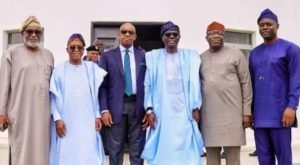
The Western Nigeria Security Network was launched in Ibadan by Governors in the South West States, on January 9, as a way of confronting security challenges in the zone.
Continue Reading
Click to comment

Leave a Reply

Your email address will not be published. Required fields are marked *

news

REA Targets 3.7GW Solar Manufacturing to Bridge Nigeria’s Power Deficit

Published

on

The Rural Electrification Agency (REA) has unveiled plans to establish 3.7 gigawatts (GW) of local solar photovoltaic (PV) panel manufacturing capacity by the end of 2027 as Nigeria intensifies efforts to expand electricity access and reduce dependence on imported renewable energy equipment.

Managing Director of the agency, Engr. Abba Aliyu, disclosed the initiative in Abuja during a benchmarking visit by officials of the Zanzibar Utilities Regulatory Authority (ZURA).

He said the agency is encouraging Chinese solar manufacturers to establish production facilities in Nigeria, noting that locally assembled solar panels are already being exported from Lagos to neighbouring Ghana.

According to him, the planned manufacturing expansion will significantly reduce imports while strengthening Nigeria’s renewable energy value chain. Aliyu attributed the rapid global growth of renewable energy to falling prices of solar panels and lithium batteries, saying technological innovation has made off-grid electricity the most cost-effective solution for millions of underserved communities.

He said Nigeria’s electricity access rate currently stands at 61.2 per cent, leaving about 80 million people without reliable power supply.

To address the challenge, REA has adopted a least-cost electrification strategy that determines the most suitable technology for each community rather than relying solely on national grid expansion.

The agency has mapped more than 700,000 communities nationwide, with plans to serve about 45 per cent through solar home systems, 31 per cent through mini-grids and the remaining 24 per cent through grid extension.

Aliyu added that REA has developed one of Africa’s most extensive geospatial electricity databases, covering more than 51,000 health facilities, 11,000 markets, thousands of schools, factories, dams, electricity feeders and existing mini-grids to support investment planning.

He noted that the agency’s interventions also target underserved communities receiving less than six hours of electricity daily. The REA boss warned that electricity demand would continue to rise sharply as Nigeria’s population grows, more sectors become electrified and emerging technologies such as artificial intelligence and data centres consume increasing amounts of power.

Continue Reading

news

Budget Office Explains PFIPC Allocation, Says Agency Emerged During Buhari Administration

Published

on

•Explains how PFIPC was allocated money in the budget.

The Budget Office of the Federation (BOF) yesterday explained that the Presidential Foreign Intervention Promotion Council (PFIPC), which the presidency declared as fake and is currently being investigated by the Independent Corrupt Practices Commission, ICPC, had its origin in the last administration of late President Muhammadu Buhari.

The Director-General of the Budget Office, Mr. Tanimu Yakubu who provided the explanation in a statement, after appearing before members of the House of Representatives, in Abuja said the PFIPC’s institutional origin was premised on the Presidential Economic Advisory Council inaugurated by President Muhammadu Buhari on October 9, 2019. He also explained how the fake agency was allocated money in the 2026 budget.

His words, “PEAC/PFIPC did not enter the 2026 Budget merely because it asked for funds. The Council had its origin in the Presidential Economic Advisory Council inaugurated during the administration of the late President Muhammadu Buhari on October 9, 2019. By the time preparation of the 2026 Budget began, official instruments had already been issued by the institutions charged with those functions.

“The Office of the Accountant-General of the Federation had assigned an administrative code to the PFIPC. The Office of the Head of the Civil Service of the Federation had approved an authorised establishment and a recruitment waiver. The applicable public-service salary structure also existed. These instruments did not come from the Budget Office. They came to it.

“The Budget Office did not create the Council. It did not assign its code. It did not approve its establishment. It did not grant its recruitment waiver. It received official instruments and did what the law required of it: it measured their fiscal effect.”

Mr. Tanimu further explained that the Council submitted a personnel estimate of N3.850 billion for the 2026 Fiscal Year and that his Office had to reduce that figure to N802.978 million, using the authorised establishment, the approved recruitment waiver, the applicable public-service salary structure and the extant costing methodology

According to the D-G, “Council later submitted a personnel estimate of N3,850,935,000.00. That estimate did not form the basis of the Budget Office’s recommendation. The Budget Office disregarded it and made an independent calculation using only the authorised establishment, the approved recruitment waiver, the applicable public-service salary structure and the extant costing methodology.

“That calculation produced N802,978,783.00. This was not a concession to the Council. It was the Budget Office’s own fiscal judgment. It was the amount placed in the Executive Budget proposal and later appropriated.

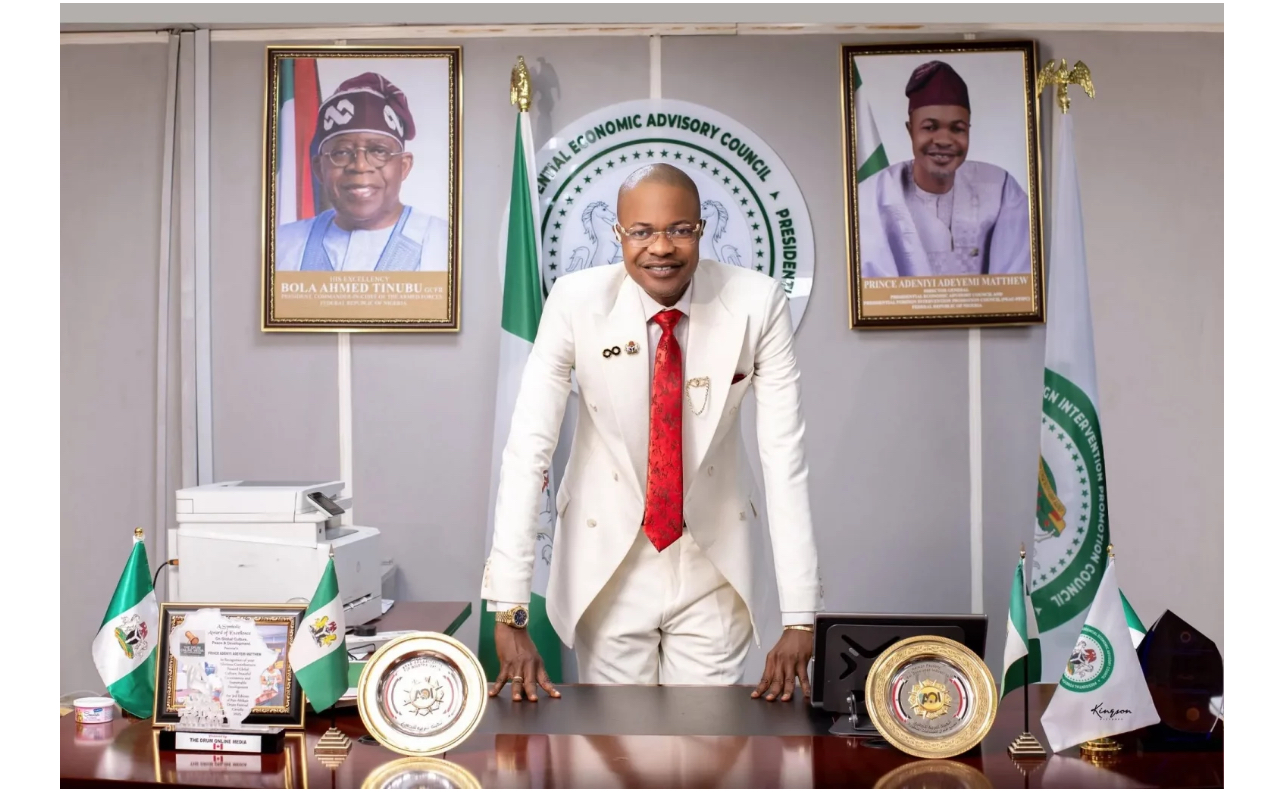
Mr Yakubu said that the Council could not receive the approved funds for personnel because its promoter, Prince Adeyemi Adeniyi could not secure Financial Clearance, an instrument that confirms that necessary fiscal and regulatory had been met.

He said, “Financial Clearance is the point at which a personnel provision may begin to acquire legal force as expenditure. It is not a routine letter. It is the confirmation that the fiscal and regulatory conditions for recruitment have been met. Until it is issued, the figure remains in the budget. It does not create staff. It does not open payroll. It does not produce salary. The Budget Office did not issue Financial Clearance for PEAC/PFIPC because the conditions were incomplete.

“The 2026 Appropriation Bill did not become law until Presidential Assent on 31 March 2026. Before that date, the Budget Office could cost the proposal. It could not grant final Financial Clearance against a bill that had not yet become law.

“After assent, a further condition remained outstanding. The National Salaries, Incomes and Wages Commission had not confirmed that the proposed staffing and remuneration arrangements complied with its prescribed template and the approved public-service compensation framework.

“The Budget Office could calculate the cost. It could not open the gate. There was therefore no Financial Clearance. There was no lawful recruitment. There was no payroll enrollment. There was no salary payment.”

The D-G added, “The personnel provision was N802,978,783.00. It represented 61.63 per cent of the total appropriation of N1,302,978,783.00. It has sometimes been described as though the Council could have received the whole amount and spent it at will. That description is false.

“Personnel appropriations are not paid to agencies as lump sums. After every legal condition has been met, salaries are paid month by month. The money moves electronically into the designated bank accounts of verified employees enrolled on the Federal Government payroll.

“The institution does not receive the annual personnel provision as cash under its control. Even in a lawful process, the Council would not have received N802,978,783.00 in one payment. The money would have gone over twelve months to individual employees. That process never began. No Financial Clearance was issued. No recruitment took place. No payroll record was created. No salary became due. Not one kobo of the personnel provision could lawfully have been drawn. Not one kobo was drawn. There is no personnel expenditure to recover because there was no personnel expenditure.”

The PFIPC controversy became public on June 11, 2026, when the Chief of Staff to the president, Mr Femi Gbajabiamila, declared the Council as fake and petitioned the law enforcement agencies.

However, at a press conference on June 26, the Director General of the PFIPC, Prince Adeniyi Adeyemi faulted the presidency’s disclaimer. He alleged that Gbajabiamila received N400 million through a proxy and demanded an additional N200 million to secure his appointment — an allegation which the Chief of Staff denied and has sued him to court claiming N15b as damages for defamation. Adeyemi is currently in custody after he was arrested by the police in connection with the PFIPC scandal and alleged forgery.

Before his arrest, Adeyemi claimed he personally approached officials of the budget office to seek the inclusion of the Council in the federal government’s budget.

Recently, Central Bank of Nigeria (CBN) confirmed that it opened two domiciliary accounts linked to the PFIPC on the directive of the Office of the Accountant-General of the Federation (OAGF).

The apex bank, however, said the accounts, one denominated in United States dollars and the other in British pounds sterling, were never funded or operated.

Continue Reading

news

BREAKING: Trump Applauds Tinubu’s Fight Against Terrorism, Pledges Continued US Backing

Published

on

United States President Donald Trump has commended President Bola Tinubu for what he described as his decisive leadership in tackling terrorism and insecurity in Nigeria, particularly attacks targeting Christian communities.

Trump conveyed the praise in a letter dated July 6, 2026, the contents of which were made public on Wednesday in a statement issued by the President’s Special Adviser on Information and Strategy, Bayo Onanuga.

In the letter, titled “President Trump lauds President Tinubu’s decisive leadership against terrorists,” the US President applauded Tinubu’s efforts to confront security challenges and reaffirmed Washington’s commitment to supporting Nigeria’s counter-terrorism operations.

“Thank you for your thoughtful letter. Your kind words mean a great deal to me, and I appreciate your decisive leadership on behalf of the Nigerian people.

“I applaud your resolve to tackle the issues plaguing your nation, especially the violence affecting Christian communities, and it is a true honour to stand with you in the fight against terrorists and to make the Federal Republic of Nigeria stronger and more prosperous,” Trump wrote.

Trump described the relationship between the United States and Nigeria as increasingly important amid growing security challenges across West Africa.

“The United States-Nigeria relationship is crucial at a time when conflict has spread across West Africa and around the world. We both share a mutual goal of confronting terrorism in all its forms, and our historic US-Nigeria 2026 Defence Cooperation Roadmap has established a robust framework to accomplish this feat,” he stated.

The US President also highlighted ongoing defence cooperation between both countries, noting that American Special Operations Forces had been deployed to assist Nigeria’s military.

“I am proud to have deployed the United States Special Operations Forces—among the most elite military units anywhere in the world—to equip the brave men and women in the Armed Forces of Nigeria with the skills, tools and intelligence they need to protect your homeland and ensure the safety and security of citizens, particularly those of faith who have been under attack.

“I look forward to our continued discussions over the course of my Presidency,” Trump added.

According to the Presidency, Nigeria and the United States have expanded security cooperation in recent months following the establishment of a Joint Working Group co-chaired by the National Security Advisers of both countries.

The collaboration has centred on intelligence sharing, military training and coordinated operations against terrorist groups.

The statement noted that one of the key outcomes of the partnership was the joint operation carried out on May 16 against ISIS hideouts in the Lake Chad region, which reportedly led to the killing of the group’s senior leader, Abubakar Al-Minoki, along with several of his lieutenants.

The Presidency also disclosed that the US Assistant Secretary of State for Africa, Frank Garcia, visited Abuja last week, where he held talks with senior Nigerian officials and pledged to deepen bilateral cooperation in security and other strategic sectors.

Continue Reading

Trending

Copyright © 2025 Newsthumb Magazine | All rights reserved