
news
How Laolu Martins, Bukka Hut Boss Committed Suicide After Losing A Bet Review!

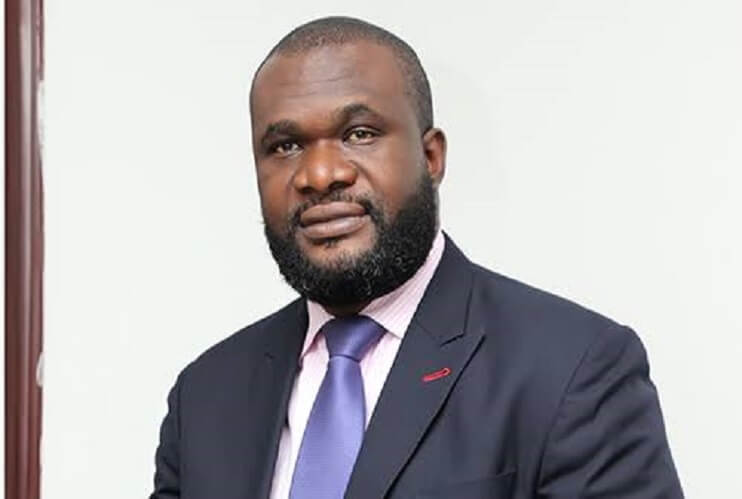
.On Wednesday, September 28, 2022 will not be forgotten in a hurry as it was a very sad day as a very sad day for family members, friends and well wishers of one of the owners of a popular restaurant chain, Bukka Hut, Laolu Martins as he reportedly committed suicide in the early hours of the day.
While many were still confused about his sudden death, a renowned theatre producer and investment banker, Joseph Edgar, aka The Duke of Shomolu confirmed that the CEO of NISL Ventures slipped into depression after losing a bet.
The family of Laolu Martins said in a statement that was released on Wednesday that the quintessential banker with over 21 years of experience in investment banking, corporate banking, stockbroking, asset management and pension fund management, died in the evening of Tuesday, September 27, 2022.
“We hereby solicit the support and understanding of everyone as the family grieves the loss of our beloved Laolu in our privacy.
“Our kind request is that you support the family – wife, children, aged mother and father and his siblings with your prayers at this difficult time.
“Further announcements will be made by the family,” the statement said.
Martins started his career with PricewaterhouseCoopers in 1999.
He joined Investment Banking & Trust Company Plc now Stanbic IBTC Bank Plc where he served in the Financial Control and Trade Finance/Foreign Operations units of the Bank before being seconded to Stanbic IBTC Asset Management Ltd where at various times he was Financial Controller, Head Asset Management and lastly Head Stockbroking.
He later resigned in 2005 to join Shell Nig. CPFA Ltd, the Fund Manager of the Shell Companies in Nigeria Pensions Scheme where he was Head, Investments up till 2008 when he resigned to join Nigeria International Security Limited, NISL, an independent financial services firm specialising in investments within the Nigerian space.
In a tribute titled; “Laolu Martins – sad end to a beautiful life,” Edgar wrote:
“I just got a call from my sister Ore. Edgar see what i am seeing o. Pls check if its true.
“It was a post about Laolu. He was said to have committed suicide at 3am this morning in Lekki.
“I screamed. Made a call and confirmed the incident.
“They said he had taken a bet against the dollar and with this rubbish going on in the forex markets he lost big time and may have slipped into a depression leading to this.
“These are not confirmed but what is confirmed is that Laolu is no more.
“Laolu was brilliant. A stockbroker, Asset Manager and an Investment banker.
“I first met him while he was at Shell Trustees. He was a brilliant Fund manager who used to give me business.
“I was then in BGL and had pencilled down Shell Trustees, First Trustees and NPA Superannuation Fund to break
“I had broken the other two with First Trustees where the super brilliant Ekure was the MD and NPA where the late man about town Henry Abebe was head
“But Shell was tough. You cdnt even enter their office talkless of breaking anything.
“So, i got Laolu’s email and sent him a passionate mail telling him why he needed my services if he was going to make a mark at Shell.
“He replied and gave me an appointment and there started a beautiful friendship.
“I watched him grow. Saw him aquire NISL and go into the Fast Food business with his partners as they opened Buka Hut all over the place.
“He started supporting my plays and he will be calling me to ask if i wont come for sponsorship since his money was ‘small’.
“Then i stopped hearing from him. Calls where not returned but i didn’t mind since i could see that he was doing well.
“They had just opened a new outlet at keffi and i was proud of him and his people
“Then i went to eat Afang at the new Just Afang restaurant in Ikoyi beside his office and branched to ask him to join me.
“He wasn’t in the office and still didnt take my calls so i left him since i didnt even knw the cost of the Afang bf i go and shoot myself
“So you can imagine my shock as i hear this story this morning. This last night o, Laolu jumped and left.
“Whatever has led to this, is really not worth it. But then again, people have different constitutions and mental aptitude
“This is why we must be kind to each other. Reach out, call people ask after their well being
“Much more importantly. If you have a problem, shout. Ask for help, seek advice. Dont be quiet shout.
“If Buhari with all the problem of this country on his head is still seating comfortably in Aso rock with tootpick in his mouth, why would you now with your own small problem come and jump
“This is really sad. Really really sad.
“Kai. May his soul rest in peace.”
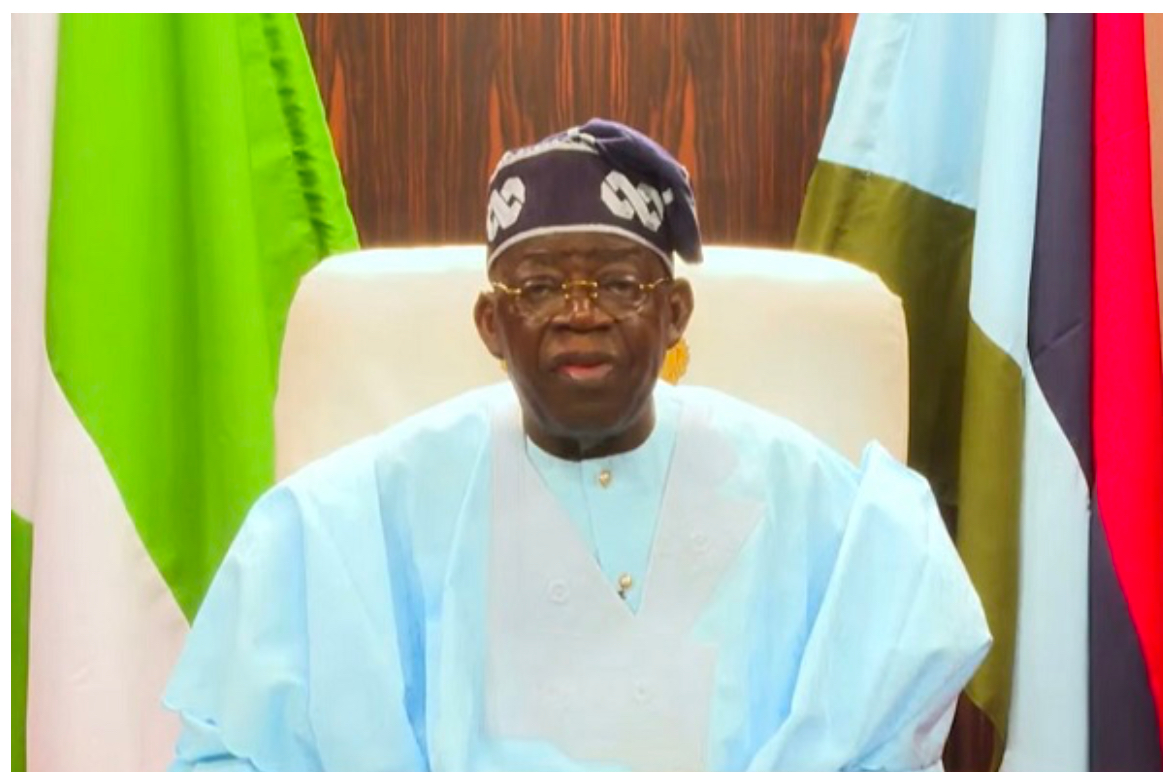
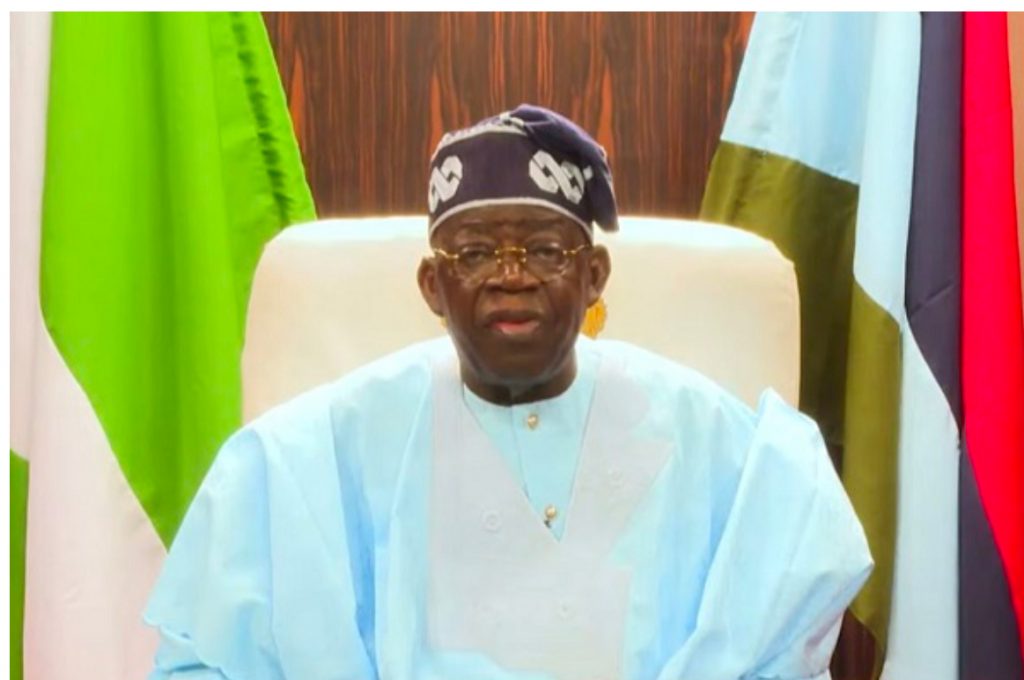 President Bola Ahmed Tinubu is expected back in Abuja this evening after concluding a six-day stay in Lagos, the Presidency announced on Monday.
The President will depart Lagos for the Federal Capital Territory after a visit during which he participated in activities marking Nigeria’s 66th Independence Day anniversary and held other engagements. SahelSecurity Report
Tinubu arrived in Lagos on Tuesday, September 29, following his annual holiday in London and Paris.
While in Lagos, the President addressed Nigerians on October 1 to mark the country’s 66th Independence Day anniversary.
Later that day, he attended the national premiere of MKO, a documentary chronicling the life, political struggle, and legacy of the late Chief Moshood Kashimawo Olawale Abiola, as well as the historic June 12 pro-democracy struggle.
Powered by VidCrunch
The premiere was held at the Wole Soyinka Centre for Culture and Creative Arts in Lagos.
Special Adviser to the President on Information and Strategy, Bayo Onanuga, confirmed the President’s return to Abuja in a State House statement issued on Monday.
“President Bola Ahmed Tinubu will depart Lagos for Abuja this evening after his six-day visit to the former seat of government,” Onanuga said.
……Era of shared prosperity begins, Tinubu assures
Nigeria has reached a turning point in its economic recovery, President Bola Ahmed Tinubu declared.
He said the period of painful reforms has accomplished its purpose, and the country is now entering what he described as an “age of prosperity”.
Tinubu, in his Independence Day address to Nigerians marking the country’s 66th anniversary this morning, said the central task of his administration would henceforth shift from correcting structural economic distortions to ensuring that the gains of the reforms translate into lower living costs, jobs, increased production and broadly shared prosperity.
“The age of reform has done its work. Now begins the age of prosperity.
“An age in which the promise of this great nation must finally become the lived experience of Nigerians from all walks of life”, the President said.
He said the government’s immediate priority in the new phase would be to bring down the cost of living by reducing the cost of producing and transporting food and other goods consumed by Nigerians.
Tinubu, who likened the state of the economy his administration inherited in 2023 to a cancer patient requiring painful treatment, said the government had completed what he called the “emergency treatment” of the economy and repaired its foundations.
“My fellow Nigerians, we have reached a turning point.
“The emergency treatment is over. The foundation has been repaired. The central economic task before us has changed. For three years, our overriding purpose was to correct our nation’s course.
“Now, our purpose is simple: shared and widespread prosperity,” he said.
The President said the prosperity being envisaged was not merely about headline economic growth or improved statistics, but about creating conditions under which Nigerians could afford food and transportation, access education and healthcare, secure productive employment and confidently plan their future.
He said his administration would pursue increased agricultural production through mechanised irrigation, dry-season farming, improved access to seeds and fertiliser, greater mechanisation and investment in storage and transportation.
According to him, ongoing investments in roads, railways and ports would also reduce the cost of moving produce and manufactured goods from farms and factories to markets.
“Our logic is simple. When a farmer produces more cheaply, when fewer crops are lost between the farm and the market, when a manufacturer spends less on electricity, when a truck reaches its destination faster, and when the business environment fosters fair competition, all those savings will ultimately find their way into the price of goods in the market,” he said.
Tinubu said job creation, enterprise development and industrial expansion would also be placed at the centre of government policy, with greater emphasis on gas-powered industries, revival of manufacturing centres, digital connectivity and improved access to infrastructure and finance.
The President said the country must convert its huge youthful population into an engine of economic production by equipping young people with skills demanded by employers and creating conditions for Nigerian businesses to expand.
“I want to see more Nigerians making things. I want to see more Nigerian farms feeding our cities and supplying our factories. I want to see Nigerian businesses selling Nigerian goods to the whole world. I want young Nigerians building unicorns and creating opportunities for others here at home,” he said.
Defending the economic reforms undertaken since his assumption of office, Tinubu rejected calls for a reversal of some of the policies, particularly subsidies, arguing that the measures did not create Nigeria’s economic weaknesses but were introduced to confront them.
The President compared previous economic management approaches to administering painkillers to a cancer patient instead of treating the underlying disease.
“For too long, Nigeria’s leaders chose morphine while praying for a miracle that never came.
“They focused on symptoms while allowing the disease to take hold deep within the fabric of our society. We spent enormous sums sustaining inefficient arrangements that were never intended to last. We hid from difficult truths and passed the consequences from one generation to the next,” he said.
Tinubu acknowledged that the reforms imposed hardship on Nigerians, saying their “side effects were real,” but insisted that Nigerians must distinguish between what he described as the medicine and the disease.
“Our reforms did not create the weaknesses in our economy. They confronted them.
“Now, as certain influential but regressive voices would have us abandon the treatment and return ourselves to the abuse of addictive subsidies, we must resist their siren song. We must remember why we began this journey and how far we have already come,” he said.
The President said three and a half years after the reforms began, the country’s economic outlook had improved, citing economic growth of more than four per cent this year, contributions from both oil and non-oil sectors, declining oil theft, falling inflation, improved foreign reserves and greater stability in the foreign exchange market.
He also said Nigeria recorded its highest non-oil export revenue in 2025, exceeding $6 billion, adding that increased foreign direct investment and private sector activity reflected improving confidence in the economy.
While acknowledging that millions of Nigerians were still struggling with food, school fees, healthcare, transportation and other basic needs, Tinubu said the government would continue strengthening support for vulnerable households while pursuing policies capable of lifting people permanently out of poverty.
He said the National Social Register was being improved to ensure assistance reached those genuinely in need, while programmes such as the Nigerian Education Loan Fund and the Nigerian Consumer Credit Corporation, CREDICORP, were designed to broaden access to education and essential assets.
According to him, the government would also work with states and local governments to strengthen primary healthcare, basic education and other public services relied upon by low-income Nigerians.
“These programmes are not substitutes for prosperity. They are a bridge to aid our nation’s citizens on their path towards it. Our objective is not to manage poverty more efficiently.
“We will defeat it,” Tinubu declared.
He admitted that reversing decades of poverty, low productivity, inadequate infrastructure and weak institutions would take time, discipline, sustained economic growth and the creation of millions of productive opportunities.
“We cannot erase in four years what accumulated over generations. But we can change its course. We can build an economy that steadily lifts people out of poverty while ensuring that those who remain vulnerable are not abandoned along the way,” he said.
Reflecting on Nigeria’s 66 years of independence, Tinubu paid tribute to generations of Nigerians who had kept faith with the country despite war, military rule, economic crises, insecurity and political upheavals.
He also praised farmers, traders, teachers, entrepreneurs and members of the Armed Forces and security agencies, saying their sacrifices had sustained the country through difficult periods.
The President said Nigeria’s founding fathers fought not merely for a flag, anthem or international recognition, but for Nigerians to have the freedom to determine their destiny and build a country capable of providing opportunity, dignity and a better life.
He urged Nigerians not to retreat from the difficult choices already made, expressing confidence that the sacrifices of recent years would eventually translate into improved living standards.
“Nigeria has corrected its course. We have passed through our own Red Sea. This is not the time to look back. Let us go forward together, with faith in ourselves, faith in our country, and faith that the sacrifices we have made will yield their reward,” Tinubu said.
Describing the country’s desired destination as a “Promised Land” of abundance, opportunity and broadly shared prosperity, the President said the foundations for that future had already been laid.
“Our destination is in sight. Our foundations are strong. Our direction is clear. So let us go forward. No looking back,” he declared.

President Bola Tinubu has returned to Nigeria after spending about four weeks in Europe. Government
The presidential aircraft carrying the President landed at the Presidential Wing of the Murtala Muhammed International Airport at about 6:22 p.m. on Tuesday.
Journalists at the airport were restricted from taking visuals of the President’s arrival as the aircraft made its way to the terminal.
Tinubu departed Nigeria on August 30 for London, then travelled to Paris, where he held engagements with French President Emmanuel Macron, including a dinner. Government
His return marks the end of his extended stay abroad; the President is expected to participate in activities marking Nigeria’s 66th Independence Anniversary on October 1st.


-
 news6 years ago
UPDATE: #ENDSARS: CCTV footage of Lekki shootings intact – Says Sanwo – Olu
-
 lifestyle6 years ago
Former Miss World: Mixed reactions trail Agbani Darego’s looks
-
 health6 years ago
Chairman Agege LG, Ganiyu Egunjobi Receives Covid-19 Vaccines
-
 lifestyle5 years ago
Obateru: Celebrating a Quintessential PR Man at 60
-
 news1 year ago
BREAKING: Tinubu swears in new NNPCL Board
-
 health6 years ago
UPDATE : Nigeria Records 790 new cases of COVID-19
-
 entertainment2 years ago
Ashny Set for Valentine Special and new Album ‘ Femme Fatale’
-
 society3 years ago
Bisbam CEO, Abisola Bamidele, Bags Owu Chieftaincy Title