
news
Concern in Nigeria Especially Gombe State over scarcity of husbands for single women


In September 2013, hundreds of single women led by Suwaiba Isa stormed the streets of Gusau, the capital of Zamfara State, protesting scarcity of husbands for more than 8,000 of them. A similar protest earlier planned by Hajiya Altine Abdullahi for widows and unmarried Kano women in August 2009 was averted by Kano State Government which quickly arranged mass wedding for 1,000 women in the state.
It had looked as if the trend was restricted to the Northwest part of the country and the Muslim population until a pastor in one of the churches in Gombe State raised concern over their unmarried ladies’ choice of men from outside the region, especially the Southwest part of the country who came to take their women away.
Reports say that 60 per cent of the non-indigene population in Gombe State is made of people from the Southwest part of the country, who the Oba of Yoruba in Gombe, Abdulrahim Alao Yusuf, said have been living in the area for more than 150 years.
At 35, Godiya Adamu is yet to find a husband; a situation she blamed on her inability to find a man who is serious about marriage.
“What would I do? I can’t force myself on men if they do not come,” she said, revealing that she had been in about five relationships without meaningful results before she eventually gave up. “As far as I am concerned, life continues with or without a husband,” she said.
On her part, Abigail, a mother of two, said she deliberately chose to be a single mother so that she might have peace of mind. “I live in my own house in this Gombe with my children. I am their mother and their father,” she said.
Abigail said she chose to be single because she could not play the second fiddle in a marriage.
She said: “I have friends who prefer that the man should not make their existence known to the wife at home and they are comfortable with it.
“What I want to say is that one should go for whatever will make one happy. There is nothing new again under the sun.
Esther, a 45-year-old single lady, said the new trend now is for ladies to go out of their state and culture to marry. “I was in a wedding where a pastor here in the North complained bitterly that Yoruba men are taking their girls away. He said when they marry them, they don’t stay in Gombe but take them to their part of the country.
“So I said why will this not be so because some of the young men that you see out there are into drug addiction, and who wants to marry a drug addict?
“The truth is many of them are not serious. It is not only men that are looking for decent and serious ladies, ladies too are also seeking decent men to marry, and that to me is scarce right now in this generation.”
For Amina, a Fulani woman, her problem was that she had education. She said she had discovered that many men in the North are reluctant to marry educated women. “Probably because they felt it might not be easy for them to have control over such a woman. So to me, the option is of course to remain single and be both the mother and father to my children.”
Rev. Adamu Dauda of ECWA Gospel Church Gombe said when he noticed that the situation was becoming alarming, he called for a meeting with all the youths in the church.
He said: “I lead a congregation of over 1,500 members out of which we have over 800 youths. During the meeting, we discovered that out of the 800 youths, 487 were not married, so I began to take the initiative to talk to them one on one.
“The shocking discovery is that some of the ladies told me that nobody had proposed to them. Then I asked, did you not see anyone that you liked? Some said yes, but they could not go to the man because it is against African culture. That is the area we are now looking into.
“If a lady likes a man, why not go to the man herself? If that will give you better results, why not? Because I can tell you for sure that the church is already getting overwhelmed.”
Rev. Dauda also blamed the situation on the inability of many young men to use their hands to make ends meet because they are thinking of white collar jobs and other privileges that will come through the government.
He said: “You would believe me that the economy of our country is in serious problem. Many people are struggling. People would tell you that they have spent two or three days without cooking in their homes. In other words, they are looking for what to eat.
“They would come to the church and plead, and because we are one family, the church encourages giving and supporting one another.
“Today, most of our children, especially the boys, graduated and have nothing to do. When you ask them, they would say they are looking for government jobs. Many of them have failed to use their hands to make ends meet. They are thinking of white collar jobs and other privileges that will come through government but these are not forthcoming.
“Since they have no job, they have no means of taking care of wives. Many of them you can see walking on the streets with their files instead of taking vocational jobs where they can earn money and make themselves employers of labour.”
He said another reason for the delay in marriage for many men and women is modernization, which he said has led to trial marriage, which he said is directly opposite to African culture.
He said: “In those days, because you could not touch a woman before you married her, it encouraged a man to desire to marry. But what is happening today is not good for the ears at all.
“If they could try marriage before they get married then what would prompt them to want to marry again? Because what they are looking for in marriage, they can get it outside marriage.”
He also blamed some of the women for living care-free life. “Some of the women do not have self control, and if you do not have self control, somebody will come and get what he wants to get from you and find his way out. Then another person will come and it goes on like that in a vicious circle. At the end of the day you find out that nobody wants to marry you.
“Hardly will such a lady find a man to marry her, because even if a man is not decent and not faithful, he is looking for a faithful woman to marry. Once a man hears so much about you concerning indecency and other things, they will go away and not want to stay with such a woman.
“Another factor is on the side of the parents. Most parents do not want their daughter to marry until she attains a certain level of education. In those days, after secondary school, a girl can get married and then both husband and wife can go and struggle together and they will be whatever they want to be together. But today, the parents will say she will not marry until she obtains first degree.
“Another thing is that some parents also do select for their children, saying they should wait for a well established family with the hope that marriage with their daughter will get them out of poverty, and the lady will keep on waiting. Parents’ intervention in issues of marriage is causing a lot of problems.”
The Chief Imam of Government House Mosque in Gombe, Sheik Dr. Zakariya Hajiya, blamed the scarcity of husbands for women in the state on poverty. According to him, the huge expenses of marriage for men with regard to the bride, her family, mosques and churches have become a huge burden on them. He said the biting economic situation occasioned by the COVID-19 pandemic and the security challenges in the Northeast region have further worsened the situation.
He said: “The expenses on those things like dowry, clothes, necklaces, kitchen appliances, bed, television, refrigerator and other household appliances, which a would-be husband would provide for both the bride, her family and faith houses, are so huge for him.
“Another problem is the death of many men due to insurgency which have turned many women into widows and with children to cater for. The situation is further compounded by the huge number of widows of soldiers and policemen who died in the fight against insurgency in the Northeast.
“These women are also part of the society. Most of the time, men are victims of insurgency attacks, banditry, kidnapping and the rest. In fact, recently, men have become vulnerable and endangered species in our society as a result of these crises in different parts of the country.
“So, scarcity of husband, which leads to delay in marriages for women, is not limited to the Northeast; it is all over. And it is also not limited to women in Islam; it also affects Christians too.”
Another factor raised by Zakariya is the fact that most women of nowadays do not want to play the second fiddle or allow their husbands to marry another woman after them.
“This is another big problem, especially for polygamists. Some women even killed their husbands for marrying or trying to marry another woman. Yes, it is as bad as that, but it is a deviation from the teachings of Islam.
“Islam allows a man to marry as many as four wives. But these days, once you marry a woman, they hardly agreed for another woman to be married after them. Except you have a very strong hold on a woman, it could be very frustrating to put two or more of them under the same roof.
“Some, apart from trying to kill their husbands, even take him to court for divorce. It is as bad as that.”
He said the society is facing a huge problem in this regard now because the scarcity of husband is forcing many women into fornication, adultery and even prostitution in order to survive.
“Some of these women are even the ones approaching men now because they are looking for means of survival.”
He explained further that most women who prevent their husbands from marrying another woman have forgotten that they also have female children.
“Some of them even have as many as four, five or more daughters at home. If you marry one off and that one did not allow her husband to marry another woman, who will marry her sisters?” he asked.
This, according to him, is what many women who are against polygamy do not understand.
He said: “I am a teacher, and I know that girls in schools outnumber boys. It also means that the population of girls is more than boys.”
But the Statistician General of the Gombe State Bureau of Statistics, Hammed Gidado, would not agree with Sheik Zakariya. Gidado said there is no empirical statistics on ground to support the notion that there are more women than men and that is why there is scarcity of husbands or delayed marriage for women.
To him, available statistics showed that male children still outnumber fema le children, according to latest population statistics.
He said: “There is no empirical statistics on ground to support the notion that there are more single ladies than single men in Gombe State for now. However this could be true on assumption.
“There are five factors which could be responsible for this. First is the spiritual cost of marriage. If you are doing it according to Islamic marriage, it will not go through without cost. The same also applies to church wedding. The pastor and the Mallam will get something.
“Secondly, the parents will do K’aya hauri or lepe in Hausa, and this will involve buying clothes, boxes, jewellery, etc. The minimum you have to spend on this is nothing less than N200,000. Those are on the side of the person getting married.
“But the cost is even more on the side of the parents who have to buy bed, refrigerator, television, carpet, furniture, cooking utensils and other domestic tools to use at home. So the expenses are even more on the side of the parents.
“These are extreme costs which can run into not less than N600,000 or more than a million naira.
“Another is the cost of reception for invited guests at the wedding. You have to provide food for people. If you are popular, you will expect not less than 100 guests. The cost of what they will eat and drink is more than the dowry.
“In Islamic law, dowry is now pegged at a minimum of N25,000. If you put all these costs together, you will discover that it is one of the things deterring people from getting married.
“Another aspect that is neither cultural or religious is the issue of courtship or trial marriage, where a would-be husband and wife will live together and do everything that is expected in marriage. By the time they eventually get married in a matter of three to six months, they go for divorce.
“Another thing is the issue of death among men. When a husband dies, the wife becomes a widow and the number of single women increases. However, these are assumptions; there are no empirical statistics to back it up.”
Gidado however said the upsurge in single women occurs more in the urban areas than rural areas and it is not restricted to Gombe State. He added that in rural areas, a lady could marry up to three or four times.
“But if it is in urban areas, like Ibadan or Lagos, or Kano, Kaduna, Port Harcourt and Abuja, who will marry her? In those urban areas, a lady could live up to 50 years without having a husband. Whenever it comes to the issue of marriage, what will be going on in the mind of the man is where would I get money? Especially now that everyone is looking for white kola job and government cannot provide job for everybody.
“Even when you get the job, the minimum wage is N30,000. Can you manage a home on N30,000 per month? There are also contemporary issues which are not religious, cultural or traditional.”
Gidado concluded that “this issue, sadly, appears to have no solution. Because even when government intervened and carried out mass weddings, many of the women ended up marrying another woman’s husband and the marriage may not last more than six months.”
He said the worrisome aspect is the rate of divorce which is borne out of contemporary issues and is now a common phenomenon all over the country.
“In the South-south and Southeast, ladies now stay away completely from marriage for life. If it is children, they can get their own children and remain single parents. This however is not according to our culture and religion in the North.”
news
Nigeria Emerges as Africa’s Biggest Climber in Investment Risk Ranking on Back of Tinubu’s Economic Reforms
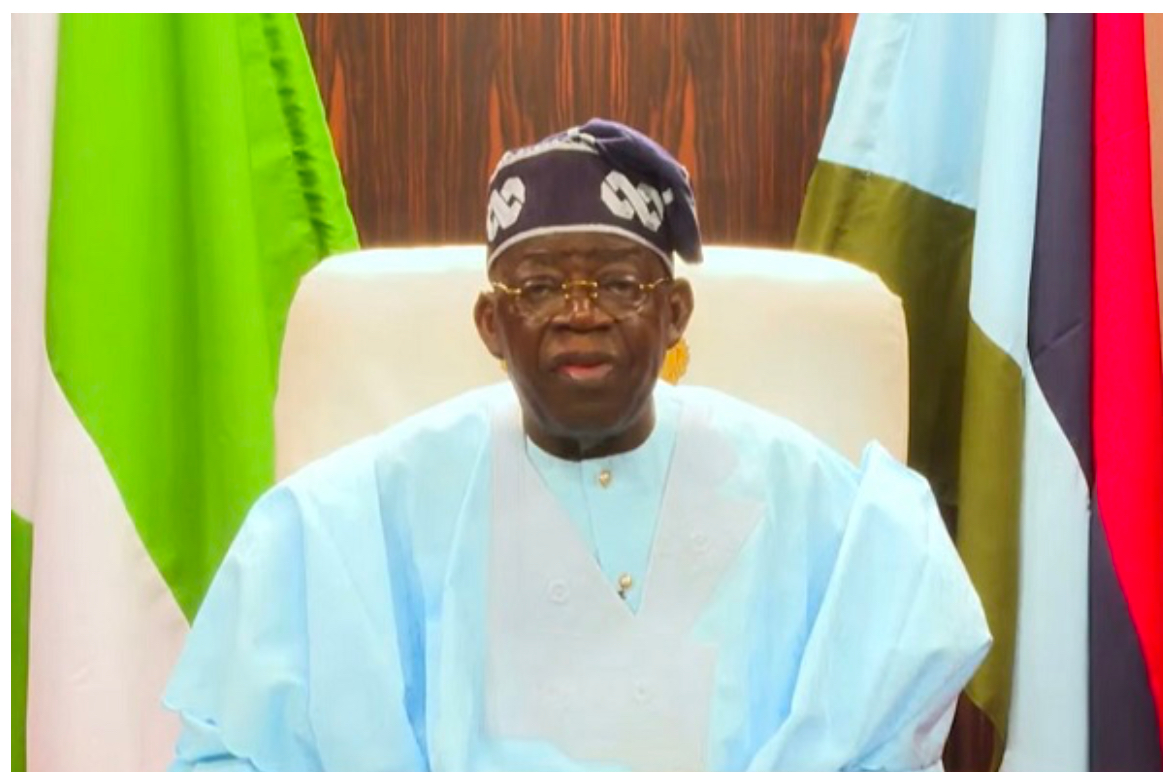
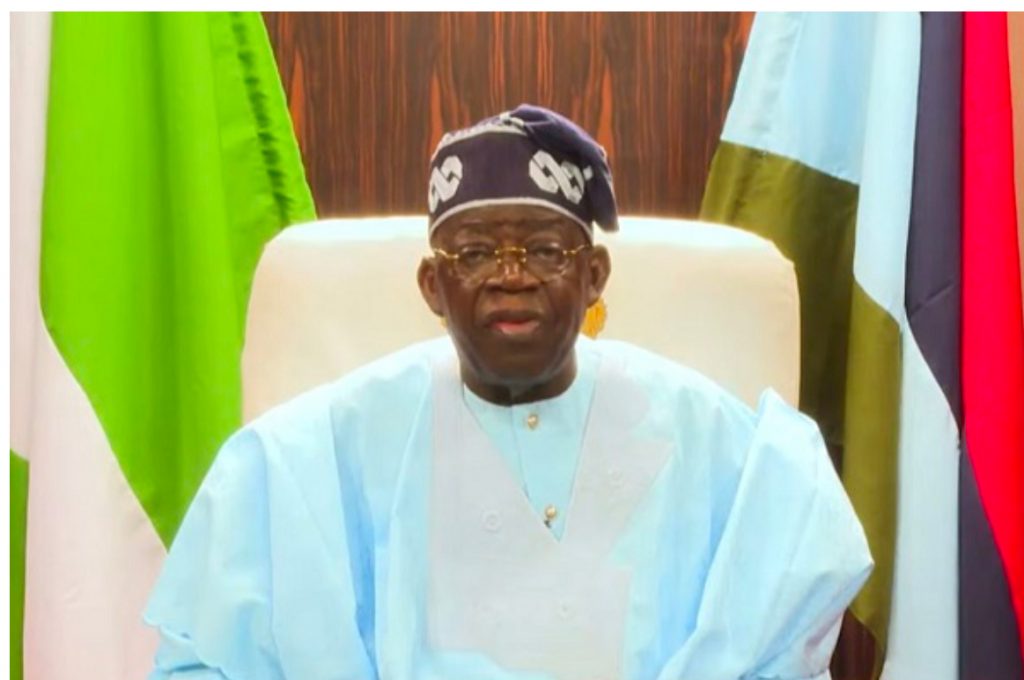
Nigeria has emerged as the biggest climber in Africa’s latest investment risk ranking, rising four places to eighth position as economic reforms implemented by President Bola Tinubu improved the country’s relative attractiveness to investors, a new report by Bloomberg has stated.
Nigeria overtook Rwanda, Tanzania, Kenya and Namibia in the 2026 Bloomberg Economics Investment Risk-O-Meter, which assesses the relative investability of 19 African economies.
Bloomberg, in the report released on Monday, said Nigeria’s improvement was driven by stronger performance in three of the five indicators used in the assessment: economic strength, fiscal strength and external vulnerability.
“Nigeria was the biggest climber in a ranking of Africa’s most investable markets, propelled by President Bola Tinubu’s economic reforms, according to the findings of the latest edition of An Investor’s Guide to Africa.
“The continent’s biggest oil producer and refiner rose four places to eighth in the 2026 Bloomberg Economics Investment Risk-O-Meter, overtaking Rwanda, Tanzania, Kenya and Namibia as it improved in three of the five metrics assessed by the gauge: economic strength, fiscal strength and external vulnerability,” Bloomberg reported.
The development puts Nigeria among the biggest gainers on the continent, despite ongoing concerns about the country’s high public debt, cost of living, inflation, infrastructure deficit and foreign exchange pressures.
Mauritius emerged as the most investable African market in the latest ranking, while Botswana fell two places. South Africa, which topped the ranking in the previous edition, also dropped one place following a weaker economic growth outlook.
Nigeria’s improved position comes more than three years after Tinubu assumed office and embarked on a series of major economic reforms aimed at restructuring the country’s fiscal and monetary environment.
Add to Preferred Sources
Among the most significant measures were the removal of the petrol subsidy, reforms to the foreign exchange market and changes to electricity tariffs.
The Federal Government has repeatedly defended the reforms as necessary to address distortions that had weighed on public finances, discouraged investment and placed pressure on foreign exchange reserves.
However, the policies have also increased economic hardship for households and businesses, particularly through higher transport, food and energy costs. Despite the adjustment pains, Nigeria’s economy has continued to expand during the period under review.
Real Gross Domestic Product growth rose from 2.54 per cent in the third quarter of 2023 to 3.46 per cent in the fourth quarter of that year.
The economy subsequently grew by an average of 3.19 per cent in 2024 before accelerating to 3.85 per cent in 2025, its strongest annual performance within the period covered by the assessment.
Growth stood at 3.89 per cent in the first quarter of 2026, bringing the average quarterly growth between the third quarter of 2023 and the first quarter of 2026 to about 3.46 per cent.
The stronger growth performance has come alongside efforts by the government to increase revenue, reduce fiscal leakages and attract investment into critical sectors of the economy.
Nigeria’s improved position in the Bloomberg ranking, however, comes against the backdrop of a substantial increase in public debt.
Data from the Debt Management Office showed that Nigeria’s total public debt stood at N87.38tn as of June 30, 2023, shortly after Tinubu took office. By December 31, 2025, the figure had risen to N159.28tn. This represents an increase of N71.90tn, or about 82.3 per cent, in two and a half years.
The increase was driven by new borrowing, foreign exchange adjustments and the securitisation of certain legacy obligations, according to the DMO.
The development is significant for a country that has struggled for years to attract sufficient foreign capital because of concerns over exchange-rate instability, policy uncertainty, weak infrastructure, insecurity and limited fiscal space.
The reforms under the Tinubu administration have sought to address some of these constraints by allowing market forces a greater role in determining fuel prices, foreign exchange rates and electricity tariffs.
The foreign exchange reforms, in particular, were designed to reduce multiple exchange rates and improve transparency in the currency market, while the removal of the petrol subsidy was intended to reduce the government’s fiscal burden.
The electricity tariff reforms were also aimed at improving the financial viability of the power sector and encouraging investment by allowing electricity prices for some customer categories to better reflect supply costs.
Nigeria’s rise in the Bloomberg ranking therefore marks an improvement in its relative position among African investment destinations, even as investors continue to monitor the sustainability of its reforms, debt burden and economic growth.
President Bola Ahmed Tinubu is expected back in Abuja this evening after concluding a six-day stay in Lagos, the Presidency announced on Monday.
The President will depart Lagos for the Federal Capital Territory after a visit during which he participated in activities marking Nigeria’s 66th Independence Day anniversary and held other engagements. SahelSecurity Report
Tinubu arrived in Lagos on Tuesday, September 29, following his annual holiday in London and Paris.
While in Lagos, the President addressed Nigerians on October 1 to mark the country’s 66th Independence Day anniversary.
Later that day, he attended the national premiere of MKO, a documentary chronicling the life, political struggle, and legacy of the late Chief Moshood Kashimawo Olawale Abiola, as well as the historic June 12 pro-democracy struggle.
Powered by VidCrunch
The premiere was held at the Wole Soyinka Centre for Culture and Creative Arts in Lagos.
Special Adviser to the President on Information and Strategy, Bayo Onanuga, confirmed the President’s return to Abuja in a State House statement issued on Monday.
“President Bola Ahmed Tinubu will depart Lagos for Abuja this evening after his six-day visit to the former seat of government,” Onanuga said.
……Era of shared prosperity begins, Tinubu assures
Nigeria has reached a turning point in its economic recovery, President Bola Ahmed Tinubu declared.
He said the period of painful reforms has accomplished its purpose, and the country is now entering what he described as an “age of prosperity”.
Tinubu, in his Independence Day address to Nigerians marking the country’s 66th anniversary this morning, said the central task of his administration would henceforth shift from correcting structural economic distortions to ensuring that the gains of the reforms translate into lower living costs, jobs, increased production and broadly shared prosperity.
“The age of reform has done its work. Now begins the age of prosperity.
“An age in which the promise of this great nation must finally become the lived experience of Nigerians from all walks of life”, the President said.
He said the government’s immediate priority in the new phase would be to bring down the cost of living by reducing the cost of producing and transporting food and other goods consumed by Nigerians.
Tinubu, who likened the state of the economy his administration inherited in 2023 to a cancer patient requiring painful treatment, said the government had completed what he called the “emergency treatment” of the economy and repaired its foundations.
“My fellow Nigerians, we have reached a turning point.
“The emergency treatment is over. The foundation has been repaired. The central economic task before us has changed. For three years, our overriding purpose was to correct our nation’s course.
“Now, our purpose is simple: shared and widespread prosperity,” he said.
The President said the prosperity being envisaged was not merely about headline economic growth or improved statistics, but about creating conditions under which Nigerians could afford food and transportation, access education and healthcare, secure productive employment and confidently plan their future.
He said his administration would pursue increased agricultural production through mechanised irrigation, dry-season farming, improved access to seeds and fertiliser, greater mechanisation and investment in storage and transportation.
According to him, ongoing investments in roads, railways and ports would also reduce the cost of moving produce and manufactured goods from farms and factories to markets.
“Our logic is simple. When a farmer produces more cheaply, when fewer crops are lost between the farm and the market, when a manufacturer spends less on electricity, when a truck reaches its destination faster, and when the business environment fosters fair competition, all those savings will ultimately find their way into the price of goods in the market,” he said.
Tinubu said job creation, enterprise development and industrial expansion would also be placed at the centre of government policy, with greater emphasis on gas-powered industries, revival of manufacturing centres, digital connectivity and improved access to infrastructure and finance.
The President said the country must convert its huge youthful population into an engine of economic production by equipping young people with skills demanded by employers and creating conditions for Nigerian businesses to expand.
“I want to see more Nigerians making things. I want to see more Nigerian farms feeding our cities and supplying our factories. I want to see Nigerian businesses selling Nigerian goods to the whole world. I want young Nigerians building unicorns and creating opportunities for others here at home,” he said.
Defending the economic reforms undertaken since his assumption of office, Tinubu rejected calls for a reversal of some of the policies, particularly subsidies, arguing that the measures did not create Nigeria’s economic weaknesses but were introduced to confront them.
The President compared previous economic management approaches to administering painkillers to a cancer patient instead of treating the underlying disease.
“For too long, Nigeria’s leaders chose morphine while praying for a miracle that never came.
“They focused on symptoms while allowing the disease to take hold deep within the fabric of our society. We spent enormous sums sustaining inefficient arrangements that were never intended to last. We hid from difficult truths and passed the consequences from one generation to the next,” he said.
Tinubu acknowledged that the reforms imposed hardship on Nigerians, saying their “side effects were real,” but insisted that Nigerians must distinguish between what he described as the medicine and the disease.
“Our reforms did not create the weaknesses in our economy. They confronted them.
“Now, as certain influential but regressive voices would have us abandon the treatment and return ourselves to the abuse of addictive subsidies, we must resist their siren song. We must remember why we began this journey and how far we have already come,” he said.
The President said three and a half years after the reforms began, the country’s economic outlook had improved, citing economic growth of more than four per cent this year, contributions from both oil and non-oil sectors, declining oil theft, falling inflation, improved foreign reserves and greater stability in the foreign exchange market.
He also said Nigeria recorded its highest non-oil export revenue in 2025, exceeding $6 billion, adding that increased foreign direct investment and private sector activity reflected improving confidence in the economy.
While acknowledging that millions of Nigerians were still struggling with food, school fees, healthcare, transportation and other basic needs, Tinubu said the government would continue strengthening support for vulnerable households while pursuing policies capable of lifting people permanently out of poverty.
He said the National Social Register was being improved to ensure assistance reached those genuinely in need, while programmes such as the Nigerian Education Loan Fund and the Nigerian Consumer Credit Corporation, CREDICORP, were designed to broaden access to education and essential assets.
According to him, the government would also work with states and local governments to strengthen primary healthcare, basic education and other public services relied upon by low-income Nigerians.
“These programmes are not substitutes for prosperity. They are a bridge to aid our nation’s citizens on their path towards it. Our objective is not to manage poverty more efficiently.
“We will defeat it,” Tinubu declared.
He admitted that reversing decades of poverty, low productivity, inadequate infrastructure and weak institutions would take time, discipline, sustained economic growth and the creation of millions of productive opportunities.
“We cannot erase in four years what accumulated over generations. But we can change its course. We can build an economy that steadily lifts people out of poverty while ensuring that those who remain vulnerable are not abandoned along the way,” he said.
Reflecting on Nigeria’s 66 years of independence, Tinubu paid tribute to generations of Nigerians who had kept faith with the country despite war, military rule, economic crises, insecurity and political upheavals.
He also praised farmers, traders, teachers, entrepreneurs and members of the Armed Forces and security agencies, saying their sacrifices had sustained the country through difficult periods.
The President said Nigeria’s founding fathers fought not merely for a flag, anthem or international recognition, but for Nigerians to have the freedom to determine their destiny and build a country capable of providing opportunity, dignity and a better life.
He urged Nigerians not to retreat from the difficult choices already made, expressing confidence that the sacrifices of recent years would eventually translate into improved living standards.
“Nigeria has corrected its course. We have passed through our own Red Sea. This is not the time to look back. Let us go forward together, with faith in ourselves, faith in our country, and faith that the sacrifices we have made will yield their reward,” Tinubu said.
Describing the country’s desired destination as a “Promised Land” of abundance, opportunity and broadly shared prosperity, the President said the foundations for that future had already been laid.
“Our destination is in sight. Our foundations are strong. Our direction is clear. So let us go forward. No looking back,” he declared.


-
 news6 years ago
UPDATE: #ENDSARS: CCTV footage of Lekki shootings intact – Says Sanwo – Olu
-
 lifestyle6 years ago
Former Miss World: Mixed reactions trail Agbani Darego’s looks
-
 health6 years ago
Chairman Agege LG, Ganiyu Egunjobi Receives Covid-19 Vaccines
-
 lifestyle5 years ago
Obateru: Celebrating a Quintessential PR Man at 60
-
 news1 year ago
BREAKING: Tinubu swears in new NNPCL Board
-
 health6 years ago
UPDATE : Nigeria Records 790 new cases of COVID-19
-
 entertainment2 years ago
Ashny Set for Valentine Special and new Album ‘ Femme Fatale’
-
 society3 years ago
Bisbam CEO, Abisola Bamidele, Bags Owu Chieftaincy Title