Connect with us

news

Court rejects FG’s request for arrest warrant against Ekweremadu

Published

on

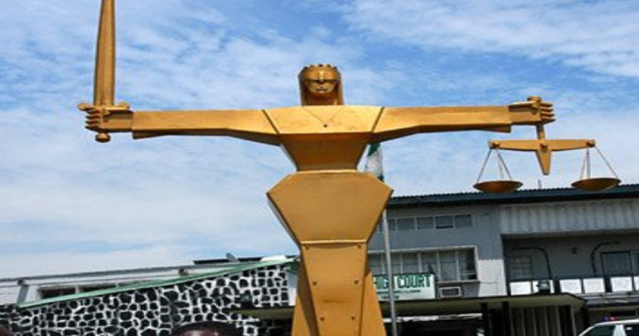
The Federal High Court in Abuja on Thursday turned down the request by the Federal Government to issue an arrest warrant against the Deputy Senate President, Ike Ekweremadu.

The Special Presidential Investigation Panel for the Recovery of Public Property had, on behalf of the Federal Government, urged the court to order the arrest of Ekweremadu following the absence of the senator, who was scheduled to be arraigned on Wednesday on charges of non-declaration of assets.

The prosecuting counsel, Mr. Celcus Ukpong, informed the judge, Justice Binta Nyako, that two counts of failure to declare assets were filed against the senator on May 11, 2018.

Ukpong said the summons for the arraignment scheduled for Wednesday had been served on the Deputy Senate President, but he chose to ignore it.

He said, “He decided not to obey the summons. We, therefore, apply for a bench warrant to be issued against him.”

But responding, Ekweremadu’s lawyer, Chief Adegboyega Awomolo (SAN), urged the court to disregard the application for a bench warrant to be issued against his client.

He informed the court that his client had, on November 1, 2018, filed a motion challenging the competence of the charges and the jurisdiction of the court to entertain the case.

Awomolo argued that without first resolving the application, the matter could not proceed to stage of arraignment.

He cited some Supreme Court decisions to back his contention.

Ekweremadu’s properties targeted for interim forfeiture comprised nine in Abuja, two in London, eight in Dubai, and three in Florida, USA.

Following its findings on the allegedly undeclared assets, the panel, in May this year, filed two counts against Ekweremadu, alleging in one of the counts in the case marked FHC/ABJ/CR/62/2018, that upon notice to declare his assets in the manner prescribed by the SPIPRPP, the Deputy Senate President “refused” to make the declaration “without reasonable excuse.”

In the second count, the prosecution alleged that the defendant “neglected to declare” his assets “without reasonable excuse upon the notice to declare” his assets “in the manner prescribed by the Special Presidential Investigation Panel for the Recovery of Public Property”.

The alleged offences were said to be contrary to and punishable under Section 3(3)(1)(a) of the Recovery of Public Property (Special Provision) Act 2004.
Continue Reading
Click to comment

Leave a Reply

Your email address will not be published. Required fields are marked *

news

APC Unveils 2027 Presidential Campaign Council, Yari Emerges DG, Uzodimma Secretary – Onanuga

Published

on

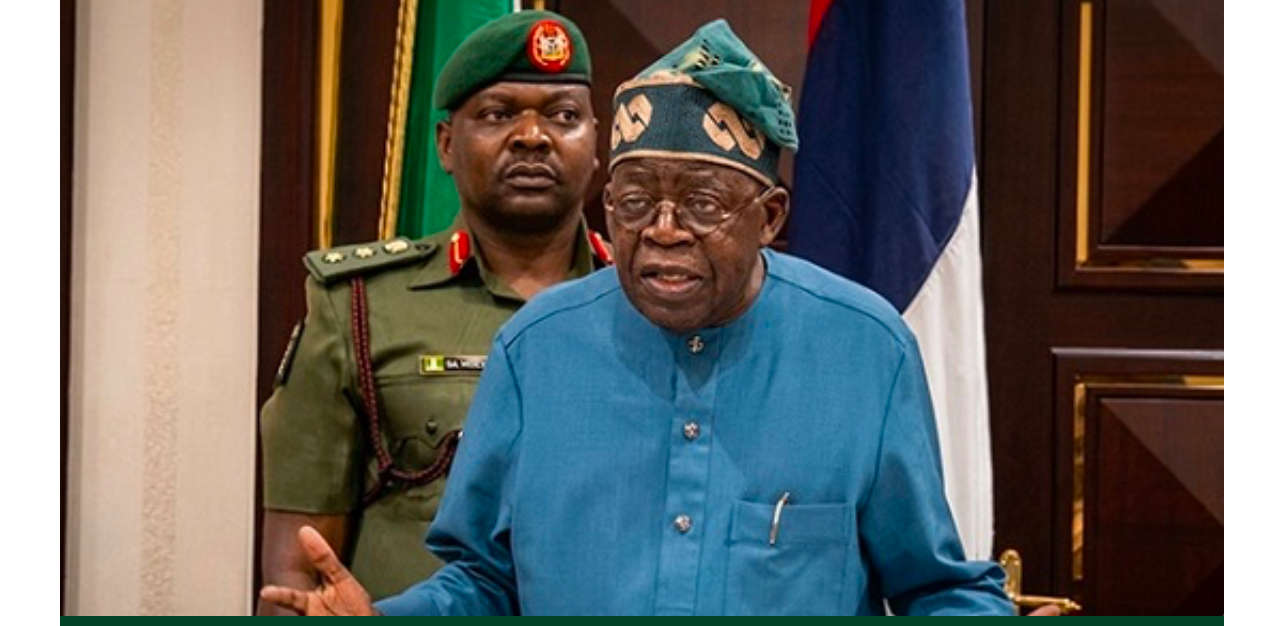
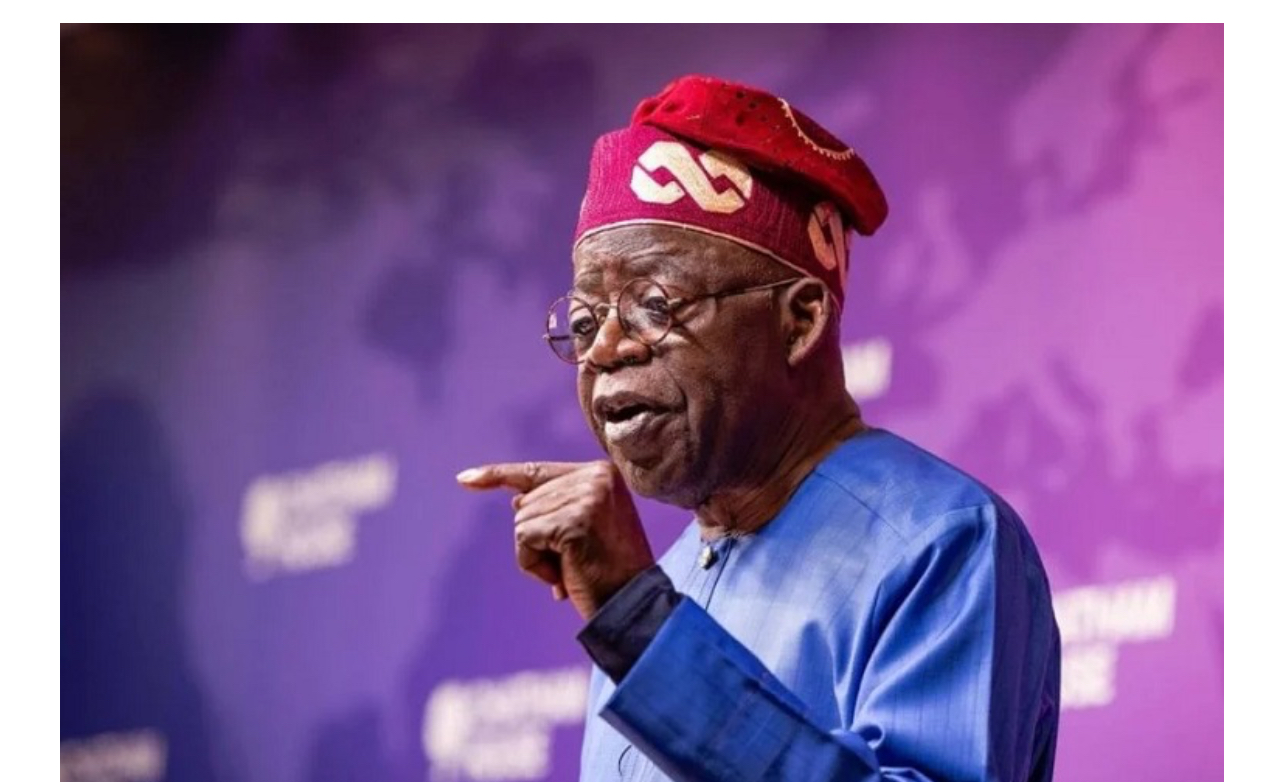
President Bola Ahmed Tinubu and Vice President Kashim Shettima will serve as chairman and vice chairman of the APC Presidential Campaign Council, according to the list released Saturday morning.

Party Chairman Professor Nentawe Yilwatda will also serve as vice chairman, while former Zamfara State governor Senator Abdulaziz Yari will serve as the director-general of the campaign.

Governor Hope Uzodimma will serve as secretary of the campaign council. APC National Secretary, Senator Ajibola Bashiru and Hadiza Bala-Usman will serve as deputy and assistant secretaries.

The chairman of the campaign Council, President Tinubu, will work with a body of advisers comprising Chief Bisi Akande, Chief Segun Osoba, Senator Rochas Okorocha, Senator Abdullahi Adamu, and Senator Florence Ita Giwa.

Senate President Godswill Akpabio, Speaker Tajudeen Abass, and Governor Mai Mala Buni of Yobe State have been assigned as deputy director-generals for the campaign in the south and the north. They will work with Senator Bamidele Opeyemi and Senator Jibril Barau in the two zones.

Senator Adams Oshiomhole will serve as deputy director-general in charge of mobilisation, while the President’s Chief of Staff will serve as deputy director-general for administration.

James Abiodun Faleke, who played a pivotal role in the 2022/2023 campaign, has returned as deputy director-general for election planning, coordination and monitoring.

Faleke will work with zonal directors, with Senator Olushola Adeyeye in the South West, Dr Ngozi Olejeme in the South South, Senator Uche Ekwunife in the South East, Muntaqha Rabe in the North West, Ahmed Muhammed Ketso in the North Central, and Senator Sani Danladi in the North East.

Ms Stella Okotete, Engineer Abdullahi Garba Ramat and Audu Maikori will serve as secretaries of the election planning directorate.

Muiz Adeyemi Banire will lead the legal directorate as director, with Dr Liman Hassan and Babatunde Ogala as deputies. Other members are Prince Lateef Fagbemi, former governor Ibrahim Shema, Worgu Boms and Dr Kingsley Tochukwu Udeh.

The Minister of Information and National Orientation, Mohammed Idris Malagi, will serve as the coordinating director for media and Strategic Communication, along with Dele Alake, Bayo Onanuga, and Lanre Issa-Onilu. The media directorate also includes Tunde Rahman, Sunday Dare, Daniel Bwala, and Felix Morka, who have been assigned as coordinating deputy directors.

Abdulaziz AbdulAziz will work with three others, Temitope Ajayi, Arabinrin Aderonke, and Frederick Nwabufor, as coordinating secretaries of the media directorate. Segun Dada will serve as Director, New Media, the same role he performed in 2022. Solomon Arowolo will serve as Secretary, New Media.

The campaign has also appointed five spokespersons, led by Dele Alake. Other spokespersons are Alwan Hassan, Ayobami Oyalowo, Kemi Asekun-Shittu and Adamu Fanda.

President Tinubu has charged all council members to work tirelessly to deliver victory for the party in the January 2027 elections. He has also encouraged the leaders of the various directorates to reach out to other party members who may not have been formally listed to join their crucial efforts.

“We have delivered on our campaign promises and set our country on a path of economic progress. We are definitely out of the dark tunnel and are now at the cusp of reaping the benefits of a prosperous economy that will benefit all Nigerians. As we march into the campaign season, we have many achievements to trumpet—let us confidently showcase our record and inspire hope in every corner of our nation. Let us soundly defeat all those forces who plan to take our country backwards.”


Continue Reading

news

BREAKING: Fake Agency Scandal: Tinubu Suspends Three Perm Secs, Orders Arrest

Published

on

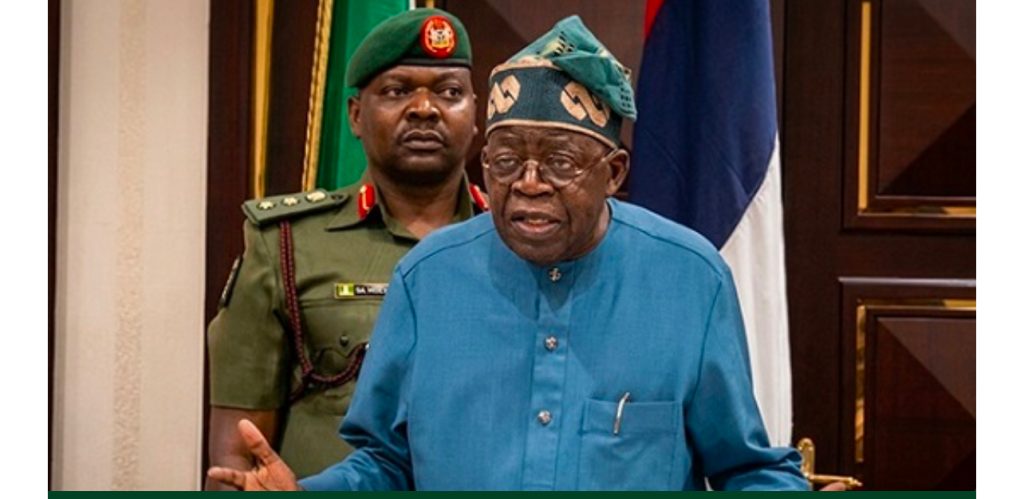
President Bola Tinubu has ordered the immediate arrest of one George Buchi Nwabueze and the suspension of three permanent secretaries over the discovery of another fake agency operating within the Office of the Secretary to the Government of the Federation.

They include M.S. Danjuma, Nadungu Gagare, and Richard P. Pheelangwah.

Chairman of the Independent Corrupt Practices and Other Related Offences Commission, Dr Musa Aliyu, SAN disclosed this to State House correspondents on Friday after briefing the President for the second time in two days, following an earlier meeting on Thursday.

Aliyu said the newly uncovered fake office, operating under the name “National Brands Development and Made-in-Nigeria Special Project Office,” had been illegally allocated office space within the premises of the OSGF, contrary to extant laws and without presidential authorisation.

He said, “Upon further briefing by ICPC to Mr President on the ongoing investigations into the fake Presidential Foreign Intervention Promotion Council and procedural weaknesses in the public service, the Independent Corrupt Practices and Other Related Offences Commission has uncovered another fake agency and office operating under the name National Brands Development and Made-in-Nigeria Special Project Office, which has been illegally allocated office space within the premises of the Office of the Secretary to the Government of the Federation,” Aliyu said.

He said the discovery emerged in the course of the commission’s broader investigation, as earlier directed by President Tinubu, and identified the promoter of the fake office as one Prince George Buchi Nwabueze, who was found to be operating under multiple aliases.

“The fake agency office, National Brands Development and Made in Nigeria Special Project Office, was promoted by one George Buchi Nwabueze, with active suspected collaborators in the Office of the Secretary to the Government of the Federation, contrary to extant laws and without authorisation of the President of the Federal Republic of Nigeria.

“The promoter was discovered to also operate under four other variations of his name: George Nathan, George Nathan Nwabueze, Honourable George Buchi Nwabueze, Prince George Buchi Nwabueze and George Nwabueze,” Aliyu said.

He revealed that the ICPC had engaged the Office of the Secretary to the Government of the Federation to ascertain vital information relating to the fake office under investigation, and had comprehensively briefed the President on the new developments.

“I have briefed Mr President comprehensively on these new developments. ICPC will continue with its investigations accordingly,” he said.

Aliyu said following the discovery, “Mr President has directed as follows: the immediate arrest of Prince George Buchi Nwabueze; the immediate suspension of the following permanent secretaries; M.S. Danjuma, Nadungu Gagare, and Richard P. Pheelangwah,” he said.

Friday’s development is the latest in a scandal that began with the exposure of the fictitious Presidential Foreign Intervention Promotion Council, whose self-styled Director-General, Adeniyi Adeyemi Matthew, is currently facing prosecution on charges of forgery and impersonation.

The ICPC’s interim report, submitted to the President on August 6 after a 30-day investigation, had earlier disclosed the existence of two other fictitious bodies, the FCT Investment Promotion Agency and the Foreign Investment Promotion Agency and Public-Private Partnership.

The National Brands Development and Made-in-Nigeria Special Project Office is the fourth fake agency uncovered after the PFIFC scandal since early April.

Continue Reading

news

Rebuilding Nigeria’s Railway Future: From Constraints to Greater Possibilities

Published

on


Dr. Kayode Opeifa

Every morning, thousands of Nigerians traveling between Abuja and Kaduna ask the same question: Will I get a train ticket today?

We at the Nigerian Railway Corporation (NRC) understand the frustration. More than 5,000 intending passengers compete for the limited seats available on the corridor, while the current service accommodates only a fraction of that demand.

We hear the complaints about tickets selling out quickly. We see the disappointment of passengers who log on to the booking platform only to discover that seats have been exhausted. We know that some have had to alter their plans or seek alternative means of transportation.

These concerns are legitimate, and we cannot wish them away.

But Nigerians also need to understand the operational reality. Demand for rail transportation has grown considerably, particularly on the Abuja–Kaduna corridor, while available capacity has not kept pace.

At different periods, three train sets were deployed on the route, providing substantially more daily trips. Today, one operational rake is serving the corridor, placing considerable pressure on available seats.

In the last three months, NRC management has added three coaches to the operating rake: one Executive Coach with 28 seats and two Standard Coaches with 88 seats each. The additions have increased the rake to nine coaches and created 204 extra seats for passengers on each journey.

It is an important step, but we recognise that more needs to be done.

We are working with the Federal Government and other stakeholders to address the larger requirements for restoring and expanding train services. We remain confident that the necessary interventions will be made.

Improving the railway, however, is not only about adding coaches and trains. It is also about improving the passenger experience.

Our immediate priority is to ensure that critical facilities at stations along the Abuja–Kaduna corridor including air-conditioning systems, elevators, escalators and lifts are fully functional. Passengers should not have to choose between safety, reliability and comfort.

We are equally strengthening our ticketing and passenger-verification systems. Ticket racketeering remains a concern, and our responsibility is to ensure that available seats go to genuine passengers through a transparent and secure process.

But technology cannot solve a capacity problem. Ultimately, we need more operational trains, more coaches and more trips.

The near completion of the Kano Mega Train Station along the Kaduna–Kano Railway Corridor represents more than the construction of another station. It offers a glimpse of the modern railway system Nigeria should have.

A railway station should not merely be a place where passengers board and alight. It should be a functional transportation hub designed around the needs, safety and dignity of the passenger.

The Kaduna–Kano corridor is strategically important, linking major population centres and commercial communities while strengthening rail connectivity across northern Nigeria. The Kano station is therefore part of a broader vision of a railway capable of supporting passenger mobility, freight movement and economic activity.

We know that Nigerians will judge us not by our promises but by their experience when they use our trains.

There will be operational constraints, and there will be complaints. We must listen to them. But there is also progress.

Additional coaches are being deployed where possible. Maintenance is being prioritised. Station facilities are receiving attention. Ticketing systems are being strengthened, while our engineers and technical personnel continue to keep the railway moving under challenging circumstances.

Our responsibility is to make the best use of the resources entrusted to us, improve efficiency, protect railway assets and ensure that investment in the railway delivers value to Nigerians.

For the passenger waiting at midnight to secure an Abuja–Kaduna ticket, these larger developments may seem distant. What matters is getting a seat.

That is why increasing capacity remains one of our most urgent priorities.

The additional coaches are important steps. More coaches, more trains and more reliable services must follow.

The Kano Mega Train Station is another step towards the railway system we are building for the future.

We ask for the patience of our passengers, but we do not take that patience for granted.

We owe Nigerians results. And we will continue working with the federal government and other stakeholders to build a railway system that Nigerians can depend on not only today, but for generations to come.

Opeifa is the Managing Director of the Nigerian Railway Corporation.

Continue Reading

Trending

Copyright © 2025 Newsthumb Magazine | All rights reserved