
brand
COVID 19: Decision Necessary to Sustain Business-Wigwe


He started out his career at the Coopers and Lybrand Associates, Lagos, as a management consultant. He soon got to be a Chartered Accountant and subsequently went to work at GTBank. In his time at the bank, spanning over a decade, Herbert rose through the ranks to become the Executive Director Corporate and Investment Banking.
By his admission, he had seen some ups and downs, had some fears, experienced some turbulence and has equally tasted some very good side to the bargain. “There have also been very trying times. There have been days when we’ve had to roll on the floor and pray, and just beg God that certain things shouldn’t happen, when there’s been big changes in the macro.
“There was some information about an exposure which we had. The communication was that it was not a performing loan, and it was not true. Because of the size of the loan, it could have triggered an issue. We were a much smaller institution. And our reputation, particularly in banking, could affect the overall franchise. It could affect our stakeholders, our customers, most importantly our people, because they were going to be concerned about our professional future.”
He was quite concerned, he admitted at a point in time. I was absolutely petrified of failure and would do everything possible not to find myself in certain circumstances, he said. “People ask us why we spend so much time working. Apart from the fact that we truly enjoy what we are doing, I enjoy every second of what I do, but the thought of failure is something I don’t want to dream of. So, we are perpetually seeking ways to better prepare ourselves for those difficult moments in life.
‘’There were people who thought, ‘how are these guys going to pull it together?’ There were those who thought, ‘young people don’t work together very well, they are likely to quarrel.’ Several people thought like that, some also said: ‘It’s just a matter of time, something will happen.’
‘’In fact, there were some consulting firms that said they were not going to take on our mandate because these guys are just a bit too young for what they want to do. So that was the kind of vibe that we got, adding however that there were “more days of celebration with each passing thing, each success makes us so much more confident. So, it’s been mixed feelings, on the whole, there’s so much thanksgiving to God.’’ ”
That is largely the trajectory of the corporate world. Some prepare for it, while for some others, it is thrust upon them. What one makes of it is made manifest in space of time.
Within the period that he began to toil in the banking space, Wigwe had weathered some storms no doubt. In the period he rose to become an Executive Director in GTBank, to when he and his co-traveller, Aig-Imoukhuede bought ‘little’ Access Bank, and then went on to acquire Intercontinental Bank and very lately, Diamond Bank and Transnational Bank of Kenya, Wigwe in the course of these transactions, would have taken some hard decisions, rightly so, in the line of duty. Having therefore been acquainted with these developments over time in addition to other boardroom challenges, it has become a matter of routine, doubtless, that the challenges thrown-up by the outbreak of the COVID-19, serious as they are (make no mistake about that for no sector is spared), were not expected to sweep Wigwe of his feet. He has been prepared for a time like this.
Implications of COVID-19
As pervading and dangerous the COVID-19 pandemic impacts are, they bear repetition so that no one is left in doubt as to the danger the world faces.The pandemic, not being a financial issues per se, yet its impact has consumed and crippled all businesses, the banking industry not being an exception. The global business community, be it in the developed world, developing, countries, or emerging markets have been brought to their knees. Job loses every where are numerous. In the US where data is readily available, over 30 million people have filed for unemployment benefits, while in April alone, over 20.5 million were reported to be out of jobs and still counting. Spiralling death tolls have become the new normal, medicament and health care facilities have been stretched to their limits, even at that, no one knows when this shall come to an end. Uncertainty is now the new normal.
In situations like this, corporate chiefs and political leaders are taking proactive steps and making moves in the expectation that per chance, they may strike the cord that would mitigate the devastating impact of this ravaging scourge. To do nothing is to wait for a certain death, or imminent disaster. In Britain for instance, it was announced a few weeks ago that the government has offered to stand in for workers who were asked to stay at home with a promise to underwrite their salaries for a period of three months in the first instance. Some other developed countries have also offered similar, or other alternatives. Also in the US, Congress approved a $6 billion package that entitled households to about $2,000 monthly, with a proviso that it will consider a review upward as events unfold. So far, none of these measures put forward by the developed countries is available at home, or in most third world countries, save for pronouncements of palliatives being provided here and there with no specific modus operandi of how the service is administered.

‘We’ll not sack workers’
While some have taken to laying off employees, others have put a cut on the monthly payroll, Access Bank has taken the empathetic route of trimming operating costs instead of outright workforce downsising.
Wigwe, in statement, assured that Access Bank has put in place a robust business continuity process that is enough to sustain the bank’s performance going forward, saying the bank “was well prepared for COVID-19 early enough and created ways of working from home and working with our customers. We set up links with our customers and devised ways of reaching out to them three or four times a day. This happened even before we started working with the larger society and it enabled us to start fighting this pandemic”.
He said to remain accountable to shareholders and keep the business running, it has become necessary to rationalise cost structure, including salary and even service providers. In stating the obvious, Wigwe said no business was having it easy at this time. He said top global enterprises have taken various measures to ensure that they stay afloat of the situation, pointing out that this is a time when we all need to be more understanding and work towards eradicating the virus so that we can continue living our normal lives. Sometimes, everyone has to endure some discomfort in order to ensure that no one is left behind, and this sums up the rationale behind Access Bank’s decision, because in his words, “all shareholders, including employees, deserve empathy and consideration”.
Wigwe also took the exceptional step of leading by example. He offered to cut his pay by 40 per cent over the period that the pandemic is in force, saying the measure will be graduated down the line, with the assurance that no staff member would lose their jobs because of COVID-19.
He said: “To keep to this commitment, we have made a decision at the management level to restructure salaries. This will start with me, who will have a salary restructure of 40 per cent, while other employees will have their salaries slightly reduced as well. It has become essential to take this decision in the interim, considering the economic realities and hope to reverse it as soon as economic activities become stable.
“As an employer of over 30,000 employees, our employees are our greatest assets. We understand how difficult these times are and we are determined to ensure that our staff remain in employment,” Wigwe said in the statement.
Corporate social responsibility
Access Bank has been ranked as the overall best company in Corporate Social Responsibility and Sustainability in Nigeria for the year 2019 based on a result drawn from impact assessments of 910 organizations operating in Nigeria over the last 13 years. The ranking took into cognizance Access Bank’s participation in impactful national projects, its recognitions and ratings from international award bodies, investment in CSR and sustainability.
The bank has in place a corporate strategy and philosophy which places sustainability at its core, ensuring that projects and initiatives undertaken by the bank are impactful and strategically linked with the United Nations Sustainable Development Goals. Under Wigwe’s leadership, the bank has also recorded outstanding results by undertaking several initiatives across the country.
Having launched the Nigerian Green Bond Market Development Programme in June 2018, Access Bank’s determination to promote sustainable growth through funding of projects at a lower cost of capital, led to the issuance of a N15 billion (USD41 million) corporate green bond in 2019. The issue is the first-ever Climate Bonds Initiative certified corporate green bond in Africa.
He certainly knows what it takes to be a leader. His work attitude, ethics and transparency and strategies in navigating uncharted terrain and circumstances in the global economy, have attested to him being a proven, tested and pragmatic leader. His approach to amicably resolving the challenges thrown up by the coronavirus scourge in marrying the corporate interest with those of the workforce, and leaving all interests well protected, should be commended. He rose to the challenge of the moment and proactively adopted measures to keep the financial institution going, not only that, but strong and competitive.Transparency is a strong virtue of leadership.
Clearly, one thing the ravaging pandemic has revealed, according to Barclays Bank boss, Jes Staley, is that having thousands of bank workers in big, expensive city offices, “may be a thing of the past”.
Staley pointed out that about 70,000 of Barclays’ staff members worldwide are working from home due to coronavirus lockdown measures, leading the bank to rethink its long-term strategy. So, it is not just Wigwe taking proactive and pragmatic steps to remain competitive, he is sure having a head start here by his bold and pragmatic approach.
brand
BANKING ON HER TOMORROW: ZENITH BANK EMPOWERS 300 GIRLS WITH EDUCATION, KNOWLEDGE AND CONFIDENCE
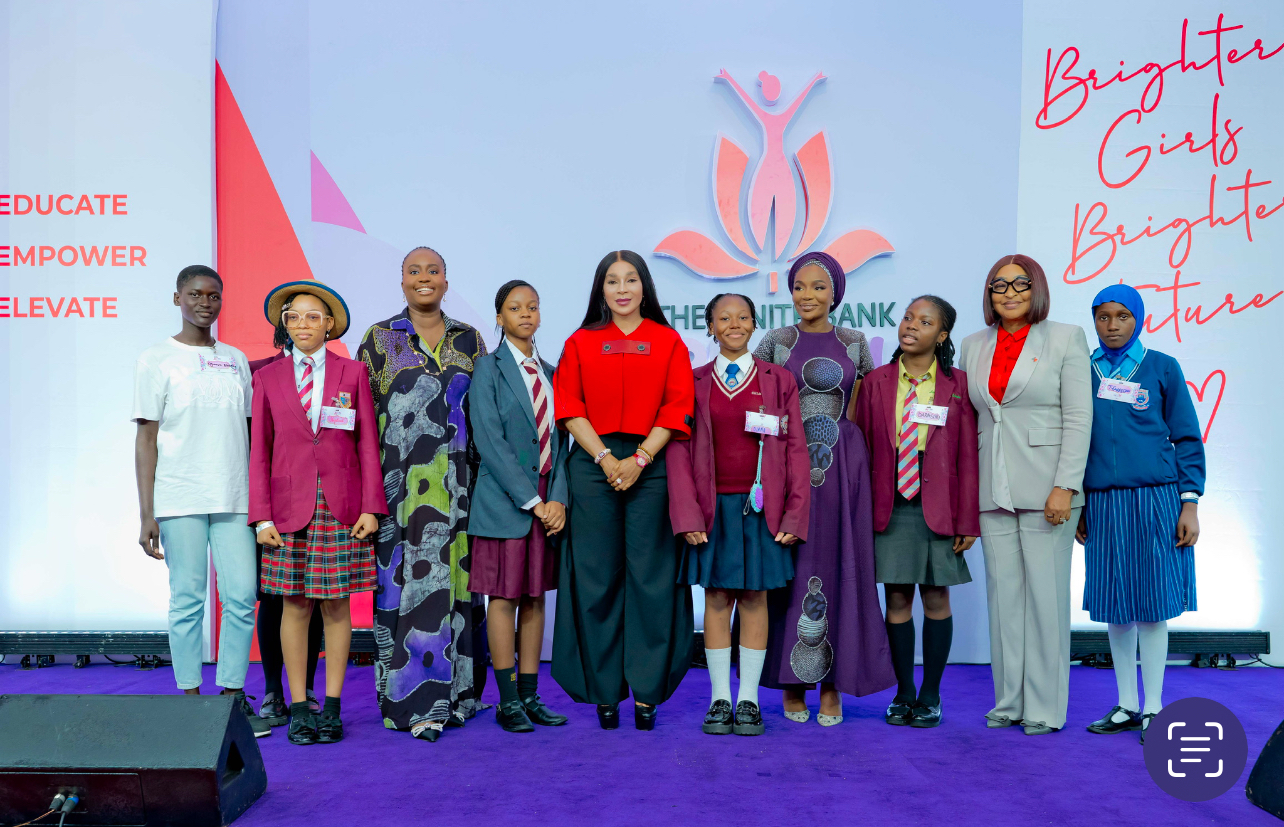

Zenith Bank Plc has launched the maiden edition of its Girl-Child Empowerment Programme, themed “Banking on Her Tomorrow,” bringing together 300 schoolgirls aged 13 to 17 from selected schools across Lagos for a day of learning, mentorship and personal development.
Held on Monday, October 12, 2026, at the Civic Centre, Victoria Island, Lagos, the programme featured sessions on finance and investment, etiquette and personal development, social media ethics, and social relationships and interactions, equipping participants with practical knowledge and skills for their personal, educational and future career journeys.
The initiative, a brainchild of the Bank’s Group Managing Director/Chief Executive Officer, Dame (Dr.) Adaora Umeoji, OON, reflects Zenith Bank’s commitment to nurturing the potential of young girls and helping them make informed choices about their futures.
In her welcome address, Dame (Dr.) Umeoji urged the participants to believe in their abilities, pursue their ambitions and remain focused and disciplined. Drawing on examples of young girls who have achieved remarkable feats, she challenged them to look beyond their present circumstances and envision the women they aspire to become.
“To all my amazing young ladies here today, each of you possesses gifts, talents, and ideas that are capable of revolutionising the world. You can revolutionise the world with your ideas,” she said.
The GMD/CEO further encouraged the girls to explore their interests and resist societal limitations, stressing the importance of taking ownership of their futures.
“Never allow gender or age to limit your goals. Whatever interests you today, explore it. Whatever you choose to pursue in life, give it your best shot,” she said.
Delivering the keynote address, Her Majesty, Olori Atuwatse III, Queen Consort of the Warri Kingdom, encouraged the girls to embrace their identities, develop resilience and use their abilities to make a positive difference in the lives of others.
Using the mangrove tree as a metaphor for resilience, she reminded the participants that challenges need not define their futures and that their worth extends beyond academic results and external expectations.
“Every time you affirm the truth about who you are, you are building confidence. Every time the tide of life goes out and you are still standing, you are building resilience. And every time you use your gifts for another person, you are discovering your purpose,” Olori Atuwatse III said.
The programme featured interactive sessions led by accomplished professionals and personalities:
Ayanime Edem, founder of The Elite Finishing School and modern etiquette educator, discussed confidence, communication, self-presentation and etiquette.
Nigerian actress and content creator Bukunmi Adeaga Ilori, popularly known as Kie Kie, addressed responsible social media use, authenticity and digital boundaries.
Representing Zenith Bank, Thelma Okonye and Adesola Adeyemo introduced the girls to saving, responsible money management and investment, highlighting the importance of developing sound financial habits early.
While Nigerian filmmaker, creative executive and educator,Praise Onyeagwalam, Director Pink, led a session on healthy relationships, self-awareness and effective communication.
The sessions encouraged active participation, giving the girls opportunities to ask questions and engage with the speakers on issues relevant to their experiences and aspirations.
The programme also featured competitions, with cash prizes totalling over ₦1 million awarded to winners. The participants received books to encourage reading and personal growth, while musical performances by Nigerian singers Qing Madi and No. 11 added to the lively atmosphere. The event was hosted by Temi Badru, public speaker, communications coach and lawyer, with Darasimi Destiny Nadi serving as mini host.
Delivering the closing remarks, Executive Director, Zenith Bank Plc, Dr. Mrs. Adobi Nwapa, highlighted the GMD/CEO’s vision for the initiative and the Bank’s commitment to sustaining its impact.
“The programme is the vision of our GMD/CEO, who conceived and championed it, demonstrating her unwavering commitment to the empowerment of the girl child. Through her leadership, she has shown the girls what is possible when a woman dares to lead. At Zenith Bank, our commitment to the girl child extends beyond today, and we will continue to nurture their aspirations through this annual initiative,” she said.
Dr. Nwapa thanked the speakers and participants for contributing to the programme’s success and encouraged the girls to apply the lessons learnt, remain confident and pursue their aspirations with determination.
The initiative builds on Zenith Bank’s longstanding commitment to advancing opportunities for women and girls through programmes including its annual International Women’s Day Seminar, the Zenith Women’s Basketball League, the Women of Honour Awards in partnership with the Ford Foundation, the Pad-a-Queen Initiative and Z-Woman, which supports women-owned businesses through business support and access to credit at discounted rates.
Through “Banking on Her Tomorrow,” Zenith Bank is extending this commitment to a younger generation, equipping girls with the knowledge, skills and confidence to pursue their ambitions and contribute meaningfully to their communities and society.


Zenith Bank Plc is set to launch the maiden edition of its Girl-Child Empowerment Programme, an initiative aimed at inspiring young girls to dream boldly, develop the skills and confidence to pursue their aspirations, and prepare for meaningful opportunities in the future.
The event, themed “Banking On Her Tomorrow,” is the brainchild of the Bank’s Group Managing Director/Chief Executive Officer, Dame Dr. Adaora Umeoji, OON, the first female GMD/CEO in Zenith Bank’s history and a strong advocate for girl-child education and empowerment. The event will be held virtually on Monday, October 12, 2026, at 11:00 a.m., a day after the International Day of the Girl Child, observed globally on October 11.
The programme, which will feature an impressive lineup of distinguished experts in various fields, seeks to provide girls with the inspiration, knowledge and practical perspectives needed to navigate their education and careers, while exposing them to opportunities in skills development, mentorship and leadership. As an annual platform, it will encourage girls to recognise their potential, broaden their aspirations and equip themselves to make informed choices about their future.
The initiative builds on Zenith Bank’s longstanding commitment to women and girls, demonstrated through programmes and platforms including the Bank’s annual International Women’s Day Seminar, its sole sponsorship of the Zenith Women’s Basketball League, the Women of Honour Awards in partnership with the Ford Foundation, and the Pad-a-Queen Initiative. These complement the Bank’s women-focused financial solutions, including the Z-Woman initiative, an empowerment programme that supports women-owned and women-led businesses through specialised funding, capacity building and networking. Together, these initiatives reflect the Bank’s broader commitment to supporting women and girls at different stages of their lives, and to contributing meaningfully to national development.
This maiden edition is open to all, with girls, parents, educators and other members of the public invited to participate. Interested participants can register via the link below. Those unable to join via Zoom can follow the live stream on Zenith Bank’s social media platforms.
brand
GTCO Plc Releases 2026 Half Year Audited Results …….. Reports Profit Before Tax of ₦603.03billion,Pays Interim Dividend of ₦1
 Guaranty Trust Holding Company Plc (“GTCO” or the “Group”) has released its Audited Consolidated and Separate Financial Statements for the period ended June 30, 2026, to the Nigerian Exchange Group (NGX) and London Stock Exchange (LSE).
The Group posted a profit before tax of ₦603.03 billion, driven by strong performance recorded on the interest and trading income lines, which grew y-o-y by 7.5% and 24.7%, respectively. The strong earningsrecorded was moderated by a ₦46.2 billion fair value loss recognized in H1–2026, limiting y-o-y growth in PBT to 0.4%.
The Group grew across its asset lines, reinforcing a balance sheet that is well structured, liquid and diversified. This growth was recorded in each jurisdiction where we operate a banking franchise, and across our Payments, Pension and Funds Management businesses.”
Group’s Total assets and shareholders’ funds closed at ₦18.6trillion and ₦3.3trillion, respectively. Capital Adequacy Ratio (CAR) remained very strong, closing at 34.9% (Bank 29.2%), and asset quality improved as evidenced by IFRS 9 Stage 3 Loans which closed at 3.5% and 4.6% % at both Bank and Group Level in H1-2026 (Bank -3.4%, Group 5.0% in FY-2025). Cost of Risk (COR) improved to 0.6% from 2.2% during the same period.
The Group’s Loan book (net) grew marginally by 0.5% from ₦3.13trillion as of December 2025 to ₦3.15trillion in June 2026, converse for improved performance on Deposit liabilities which grew by 10.3% from ₦12.87trillion to ₦14.19trillion during the same period.
Commenting on the results, the Group Chief Executive Officer of Guaranty Trust Holding Company Plc (GTCO Plc), Mr. Segun Agbaje, said; “Our half year results speak to the strength of what we have built: a resilient franchise, a strong balance sheet and a business that no longer depends on banking alone. Fair value movements weighed on reported earnings, but the core business held firm. Interest and trading income grew, deposits strengthened, and asset quality improved at Group level. The priority now is to execute with discipline and grow responsibly. Digital is our lever for scaling across Banking, Payments, Pension and Funds Management, and for building a more diversified and resilient financial services group.”
Overall, the Group continues to post one of the best metrics in the Nigerian Financial Services Industry in terms of key financial ratios i.e., Pre-Tax Return on Equity (ROAE) of 35.9%, Pre-Tax Return on Assets (ROAA) of 6.6%, Capital Adequacy Ratio (CAR) of 34.9% (Bank: 29.2%) and Cost to Income ratio of 31.5%.
GTCO Plc is a leading financial services group with operations across Africa and the United Kingdom. Renowned for its strong corporate governance, innovative financial solutions, and customer-centric approach, the Group provides a wide range of banking and non-banking services including payments, funds management, and pension fund administration. The Group is committed to delivering long-term value to stakeholders while driving growth and development across its markets


-
 news6 years ago
UPDATE: #ENDSARS: CCTV footage of Lekki shootings intact – Says Sanwo – Olu
-
 lifestyle6 years ago
Former Miss World: Mixed reactions trail Agbani Darego’s looks
-
 health6 years ago
Chairman Agege LG, Ganiyu Egunjobi Receives Covid-19 Vaccines
-
 lifestyle5 years ago
Obateru: Celebrating a Quintessential PR Man at 60
-
news8 years ago
-
 news1 year ago
BREAKING: Tinubu swears in new NNPCL Board
-
 health6 years ago
UPDATE : Nigeria Records 790 new cases of COVID-19
-
 society3 years ago
Bisbam CEO, Abisola Bamidele, Bags Owu Chieftaincy Title