Connect with us

news

ESN Commander Makes Confession On How His Group Engaged in a Killing Spree Across the Southeast Region

Published

on

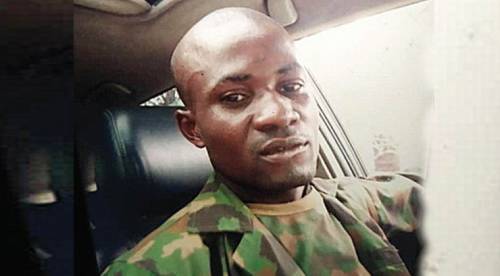
The suspect, Emeoyiri Uzorma Benjamin, alias Onye Army, was arrested by operatives of the Force Intelligence Response Team over his alleged involvement in the attacks, killing of security operatives and the destruction of government and private property in Imo State.

Benjamin also confessed to being part of the attacks on security operatives on the alleged instruction of their supreme leader, Nnamdi Kanu.

He also claimed that the heads of 10 girls caught in Imo State were used in preparing charms to fortify members of the group against police bullets.

Read Benjamin’s confession below

“I am Emeoyiri Uzorma Benjamin, also known as Onye Army. I am from Uzombe Town in Uguta  Local Government Area of Imo State, I am 28-year-old. I only attended secondary school. But I left school without writing my SSCE exams in 2014 because my father had no money.

“So, I started doing menial jobs and buying Nigeria Army forms and that of the Nigerian Navy, but I was not recruited because I was using my brother’s result. I intended to write my exam and get my result when I get drafted into the army.

“I also went to Lagos, where I secured a job as a security guard with a company that dealt in building materials. I did that job until 2017, when I relocated to my village, where I engaged in carpentry jobs.

“While I was in the village, one John, who is from my town, met me and told me he knew I was trying to join the military but advised me to join IPOB in 2019, so I started attending IPOB meetings in Orlu every Sunday. We used to have the meetings in a building close to the Teaching Hospital.

“I attended the meeting until November 2020 when Mazi Nnamdi Kanu formed the ESN and said he didn’t want any security agents in the South East and that all he wanted was just ESN operatives providing Security in the South East.

“I volunteered to join the ESN and I was trained in a camp close to the Niger Bridge, but I don’t know the name of the village. I spent two weeks in that camp with several other people who came for ESN training from several parts of the country.

“Some people had been in the camp before I joined them but I spent just two weeks in the centre. Before I went to the centre, however, I was at a Sabbath Church in Orlu owned by one Alewa Nwachuku in the Okporo area of Orlu.

“While at the camp, we were given military training and our phones were taken from us. We were not talking to Nnamdi Kanu directly, but we were receiving his instructions from our camp leaders. After our training, we were given boots and uniforms and were asked to go back to our state commanders.

“My state commander was late Ikonso, who was in charge of Imo State before his death. We were not given any money; we returned to our commanders with just the uniforms and the boots. When we got back to Imo State, I reported back to the Sabbath Church, which served as one of our camps at that time.

“Then Nnamdi Kanu ordered that he didn’t want to see any police or military checkpoint in the South East. The order was given through radio, and all the ESN State Commanders asked their fighters to comply with the orders.
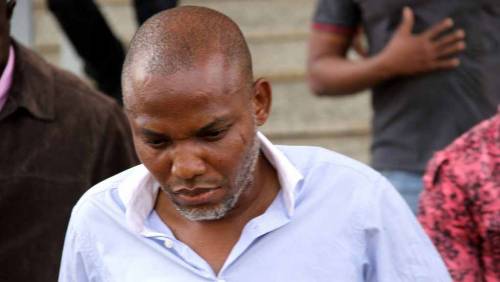
“Nnamdi Kanu said we should dismantle all checkpoints and even kill the security agents manning the checkpoints because they were killing Igbo people. I believed him and obeyed the order because I had taken an oath to obey Nnamdi Kanu, the supreme leader of IPOB.

“During our first attack, Ikonso brought two AK47 rifles while two of our members brought two locally made guns which we used to attack a police checkpoint in Orlu where we killed a police officer.

“Two of our members were also killed but the police officers ran away, abandoning their vehicle, which we burnt and took away one of the police rifles. After the operation, we all returned to the Sabbath church owned by Alewa but the police came and attacked the place.

“We then relocated to a farm belonging to one of our members in the Eele area of Awidemili, Anambra State. From there, we attacked several other police stations and checkpoints.

“Then Ikonso, Engineer Mike and Temple organized the attack at the Owerri Prisons and Imo State Police Command, where several inmates were freed and more than 50 police rifles were carted away on the instruction of Mazi Nnamdi Kanu because he said nobody deserved to be in prison.

“We came with over 100 fighters, but on our way back to our base, some soldiers attacked us and many of our fighters were killed at Ukorji area of Imo State. We carried out other attacks on security formations in Imo and Anambra states before Ikonso was killed. I was in his residence on the night he was attacked by security agents. I fought with my Ak47 rifle, but I abandoned it and escaped through the back gate when I expended all the bullets in the rifle.

“After the death of Ikonso, we went and burnt the governor’s house and killed a security man in the house in retaliation. It was Engr Mike that led us. I was part of those that shot at the gate.

“We also burnt a house in Amowmama, belonging to someone who was believed to have given the security agents information on Ikonso. Engr Mike then took us to his village in Awedemili, where we attacked a house belonging to someone he said was against our struggle and we killed two persons there.

“Mazi Nnamdi Kanu also directed us to bury Ikonso with 2,000 human heads but we have killed only 30 so far. I then relocated to Temple’s camp and Mazi Nnamdi Kanu ordered us to attack Orlu Police Division and free our fighters arrested and detained there.

“We went in 10 vehicles, over 50 fighters and we had over 30 rifles with us. I was in a white sienna and the late Dragon was in a red-coloured car, but before we got to the police station, we did a shooting display that was circulated on social media on the day we went to attack Orlu police station.

“The white and red clothes we tied on our bodies in the video were charms which we call local bulletproof and we prepared charms with the heads of 10 young girls.

“Before we proceeded to attack the Orlu Police Station, Temple and Mike brought the suggestion that we should get the girls we used for the charms and we got them here in Imo State. But before we got to the Orlu police station, an armoured police vehicle attacked us and killed 12 of our fighters and injured four.

“After we escaped from that attack, we went to our camp at Idiato to relax, waiting for further directives. They are not paying us any money; they said we are freedom fighters.

“Most of the police officers I killed were also Igbo people. I am happy that Nnamdi has been arrested. But I am begging for amnesty from the Federal Government.”
Continue Reading
Click to comment

Leave a Reply

Your email address will not be published. Required fields are marked *

news

KOGI STATE STRENGTHENS CHINA PARTNERSHIP FOR AGRO-INDUSTRIAL DEVELOPMENT AND SAPZ IMPLEMENTATION

Published

on

Kogi State has taken a significant step in advancing its international partnerships aimed at accelerating the implementation of its Special Agro-Industrial Processing Zone (SAPZ) programme.

The SAPZ initiative is a strategic agro-industrial platform designed to boost food production, enhance processing capacity, create employment opportunities, attract private sector investment, and position Kogi State as a leading agricultural and industrial hub in Nigeria.

Central to the engagement is the development of a modern agricultural science and technology industrial park in Kogi State. The project aligns with the broader SAPZ framework and is expected to drive agro-processing, facilitate agricultural technology transfer, support equipment deployment, promote enterprise incubation, strengthen logistics and cold chain systems, enhance export infrastructure, and provide sustainable power solutions.

The Kogi SAPZ structure comprises the Ajaokuta Agro-Industrial Hub, alongside Agricultural Transformation Centres in Anyigba, Alape, and Osara, as well as the Zariagi Agro-Air Hub. The programme is designed to integrate existing farmer clusters with an additional 150,000 hectares of farmland per zone, creating opportunities for large-scale, tenant-driven agricultural production.

Priority value chains under the SAPZ include rice, maize, cassava, livestock and poultry, sesame, cashew, oil palm, and greenhouse farming. The programme also incorporates critical support systems such as warehousing, cold chain logistics, power solutions, compressed natural gas (CNG), agricultural technology, equipment deployment, and agro-export infrastructure.

As part of this effort, Kogi State entered into a strategic cooperation agreement with Hezheng Holdings Group and Hezheng Digital Technology (Hezheng Innovation Valley) Co., Ltd. The agreement marks a transition from conceptual planning to implementation and reflects the State’s deliberate strategy to attract credible technical partners, industrial park operators, investors, and global business platforms into the SAPZ ecosystem.

The Kogi State delegation was led by Alhaji Yakubu Okala, FCA, Auditor General of Kogi State and Project Investment Adviser, who represented His Excellency, the Executive Governor of Kogi State. Other members of the delegation included the Honourable Commissioner for Agriculture, Hon. Ojomah Timothy; Technical Adviser to the Governor’s Office, Dr. Abdullahi Ozomata; Chief Economic Adviser to the State, Alhaji Aliyu Inda Salami; and Project Consultant/Managing Director of Pulse Engineering and Consulting Limited, Mr. David Lekan Obatolu.

During the visit, the delegation toured key Hezheng facilities, including its investment promotion centre, agricultural industry exhibition hall, global launch hall, and live-streaming incubation base. The tour provided valuable insights into Hezheng’s industrial park management model, enterprise support systems, agricultural technology integration, and cross-border market development strategies.

Deliberations between both parties focused on actionable implementation areas such as industrial park development, technology transfer, processing infrastructure, enterprise incubation, park management systems, investment mobilisation, and equipment deployment. Discussions also explored frameworks for establishing a structured and sustainable China–Kogi industrial cooperation platform.

Both sides expressed strong alignment on the project vision and implementation roadmap. In the coming months, technical and commercial workstreams will be advanced towards full project mobilisation, including preparatory activities for groundbreaking and the establishment of coordination offices in China, Kogi State, and Abuja.

This engagement underscores the commitment of the Kogi State Government to transitioning the SAPZ programme from planning to execution, while positioning the State as a competitive destination for agro-industrial investment.

Kogi State remains resolute in its vision to build a bankable and investment-ready agro-industrial ecosystem that will enhance food security, promote value addition, create jobs, strengthen farmer-market linkages, support export growth, and unlock new economic opportunities for its people.


Continue Reading

news

Rebuilding the North-East: Inside Nigeria’s Largest Post-Conflict Recovery Experiment

Published

on

How the NEDC is attempting to turn years of devastation into a pathway for long-term development

By Michael Olukayode

For more than a decade, Nigeria’s North-East has remained a symbol of prolonged conflict and humanitarian collapse. The insurgency led by Boko Haram and its breakaway factions did far more than disrupt security—it dismantled entire communities, shattered economic systems, and altered the social and cultural foundations of a region once anchored by farming and cross-border trade.

The human cost has been staggering. More than 350,000 people are estimated to have died directly and indirectly from the conflict. Over 2.5 million individuals were forced from their homes, while at the height of the crisis, about 8.4 million people required urgent humanitarian support. Entire settlements across Borno, Adamawa, and Yobe were destroyed, leaving behind a region marked by displacement and ruin.

A System Built from Collapse

The scale of destruction prompted the establishment of the North-East Development Commission (NEDC) in 2017 under former President Muhammadu Buhari. It was created not simply as a relief agency, but as a long-term institutional response to structural breakdown across an entire region.

Early post-conflict assessments placed the cost of destruction at over $9 billion. Infrastructure losses were extensive: thousands of homes were destroyed, more than 1,400 schools were damaged or completely wiped out, and in some areas over 70 percent of health facilities became unusable. The agricultural sector—long the backbone of the regional economy—collapsed almost entirely, deepening poverty and food insecurity.

To coordinate recovery, the Commission was tasked with implementing the North-East Stabilisation and Development Master Plan (NESDMP), a blueprint designed to move the region from emergency humanitarian response into structured reconstruction and sustainable development.

From Emergency Response to Large-Scale Reconstruction

Since beginning operations, the NEDC has implemented interventions worth hundreds of billions of naira, funded through federal allocations and supported by development partners.

Its activities span all six states of the region—Borno, Adamawa, Yobe, Bauchi, Gombe, and Taraba—where thousands of projects have either been completed or are ongoing.

Across its portfolio, the Commission has:
• Built and rehabilitated thousands of housing units for displaced families
• Executed more than 1,000 infrastructure projects, including roads, schools, and healthcare centres
• Distributed millions of relief items during peak humanitarian emergencies
• Supported agricultural programmes reaching hundreds of thousands of farmers

The Managing Director/Chief Executive Officer of the Commission, Mohammed Goni Alkali, explained that the institution is now deliberately evolving its focus.

“We are transitioning from humanitarian interventions to sustainable development,” he said. “The priority is building systems that can endure beyond immediate recovery.”

He added that reconstruction must be understood beyond physical structures.

“It is not only about rebuilding infrastructure. It is about restoring livelihoods, rebuilding institutions, and restoring hope to communities,” Alkali said.

Gradual Return to Normalcy Across Communities

On the ground, signs of recovery are beginning to emerge across the region, though unevenly.

Large numbers of internally displaced persons have started returning to reconstructed communities, easing long-standing pressure on overcrowded camps. Schools that were destroyed or abandoned during the peak of the insurgency are being rehabilitated and reopened, restoring access to education for thousands of children.

Healthcare delivery has also improved, with rebuilt and newly equipped facilities expanding access, particularly in rural areas that were previously cut off. Road reconstruction projects are reconnecting isolated communities, improving movement, trade, and access to services.

The Governor of Borno State, Professor Babagana Umara Zulum, acknowledged the role of the Commission in supporting recovery efforts.

“The NEDC has played a critical role in supporting the rebuilding of communities and restoring hope to our people,” he said.

Restoring the Economic Lifeline

Before the insurgency, agriculture was the dominant economic activity in the North-East, employing a large portion of the population. The conflict disrupted farming cycles, displaced rural communities, and left vast tracts of farmland abandoned.

Recovery efforts are now focusing on reversing that collapse. Through the distribution of seeds, fertilisers, and farming equipment, as well as investments in irrigation and dry-season farming, agricultural production is gradually resuming. Small businesses and cooperatives are also receiving support to stimulate local economies.

According to Alkali, economic recovery remains central to the Commission’s strategy.

“Without livelihoods, recovery cannot be sustained,” he said. “Economic empowerment is therefore at the core of our interventions.”

Moving Away from Long-Term Aid Dependence

One of the most significant shifts emerging in the region is the gradual transition from humanitarian dependency to self-reliance.

Although millions of people still require assistance, returning communities are increasingly rebuilding their own economic and social systems as stability improves.

Former United Nations Resident and Humanitarian Coordinator in Nigeria, Matthias Schmale, noted that recovery efforts are beginning to produce measurable improvements.

“There is clear evidence that living conditions are improving and that basic services are being restored,” he said.

Security Gains and Lingering Vulnerability

Despite notable progress in stabilisation, the North-East remains fragile. Military operations have significantly degraded insurgent capabilities, but sporadic attacks continue in some areas.

The Chairman of the Governing Board of the NEDC, Major General Paul Tarfa (rtd.), stressed that development must consolidate security achievements.

“Security gains must be reinforced with development initiatives. Only then can we achieve lasting peace,” he said.

Persistent Gaps in the Recovery Process

Even with extensive interventions, major challenges remain. Millions of residents are still dependent on humanitarian assistance, unemployment among young people remains high, and environmental pressures—including climate-related shocks—continue to threaten agricultural recovery.

In addition, funding limitations remain a key constraint, with the scale of needs far exceeding available resources.

The Managing Director acknowledged these gaps but reaffirmed the Commission’s commitment.

“The level of devastation is enormous, but we are committed to working with all stakeholders to deliver sustainable recovery,” Alkali said.

A Region Still in Transition

The North-East today exists in a complex state between crisis and recovery. It remains one of Nigeria’s most vulnerable regions, but also one of its most ambitious reconstruction theatres.

What is unfolding is a slow transformation: from destruction to rebuilding, from dependency to resilience, and from emergency survival to structured development.

Former United Nations Resident and Humanitarian Coordinator in Nigeria, Matthias Schmale, noted that recovery efforts are beginning to produce measurable improvements.

“There is clear evidence that living conditions are improving and that basic services are being restored,” he said.

Observing during his tenure in the country that: “The transition is visible, but sustaining it will require long-term investment and strong collaboration.”

Conclusion: Beyond Reconstruction

The work of the North-East Development Commission goes beyond rebuilding damaged infrastructure. It represents an attempt to reimagine post-conflict recovery at scale—linking humanitarian relief with long-term development planning.

From housing and healthcare to education and livelihoods, the foundations of a new regional reality are gradually taking shape.

Yet, as stakeholders consistently emphasise, the true measure of success will not be the number of projects completed, but whether the region can sustain stability, dignity, and opportunity over time.

In the North-East, the story of recovery is no longer only about survival.

It is about building a future that once seemed impossible—and ensuring it endures.

Continue Reading

news

Breaking : Tinubu Appoints Oyedele as Finance Minister in Cabinet Shake-Up

Published

on

…Edun, Dangiwa exit FEC

…Darma named Housing minister-designate

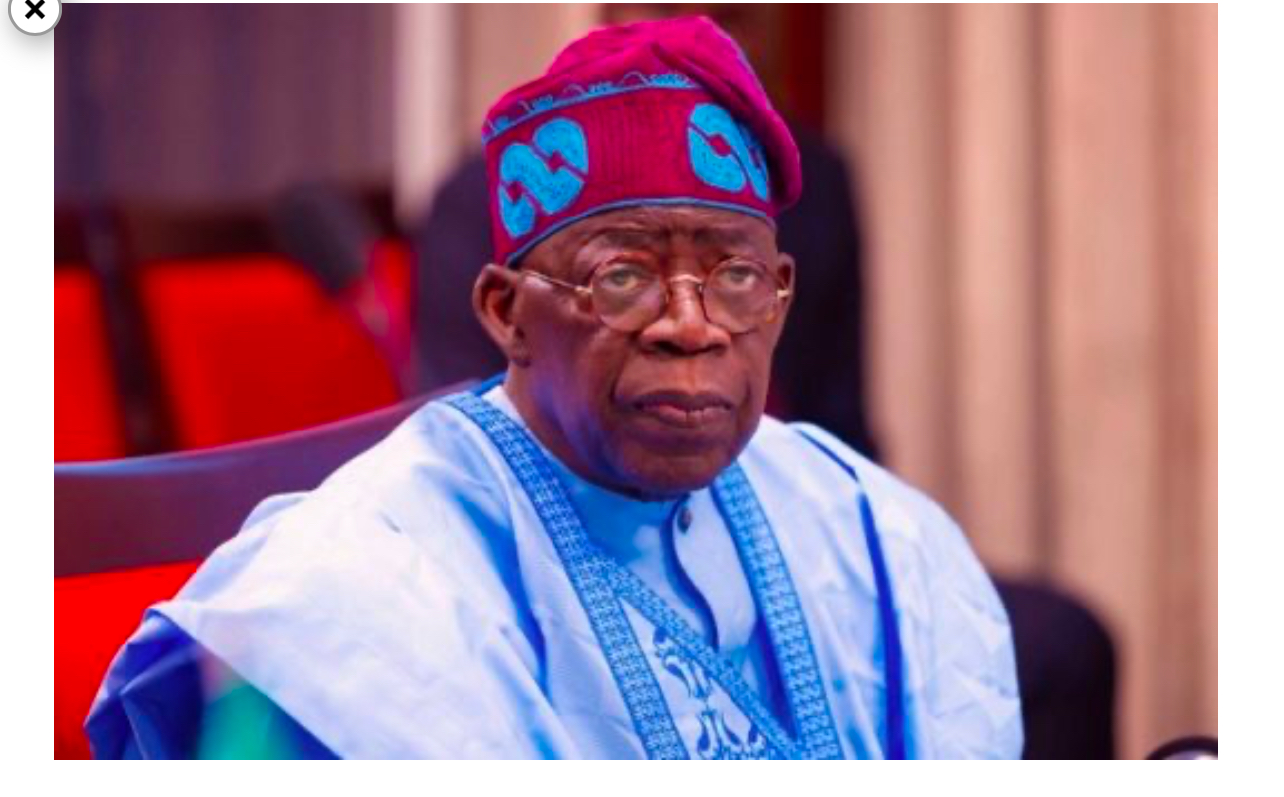
President Bola Ahmed Tinubu has approved a minor cabinet reshuffle, effecting changes in the membership of the Federal Executive Council (FEC) with the exit of two ministers and the appointment of replacements.

The decision, conveyed in a memo signed by the Secretary to the Government of the Federation (SGF), George Akume, directed the immediate redeployment of portfolios to strengthen governance delivery.

According to a statement issued by Special Adviser to the SGF on Media and Publicity, Yomi Odunuga, Mr. Wale Edun has been relieved of his duties as Minister of Finance and Coordinating Minister of the Economy under the reshuffle.

He is to hand over to Mr. Taiwo Oyedele, who has now been elevated to the position from his previous role as Minister of State in the ministry.

Similarly, the Minister of Housing and Urban Development, Arc. Ahmed Musa Dangiwa, is to exit the cabinet, with the President naming Dr. Muttaqha Rabe Darma as ministerial nominee and minister-designate for the ministry.

The directive also mandates that Dangiwa hand over to the Minister of State in the ministry, pending Darma’s confirmation and assumption of office.

According to the memo, all handover and takeover processes are to be completed by close of business on Thursday, April 23, 2026.

Explaining the rationale for the changes, Akume said the reshuffle was designed to “strengthen cohesion, synergy in governance as well as achieve more impactful delivery on the economy to Nigerians, through the Renewed Hope Agenda.”

He added that the President exercised his constitutional powers under Sections 147 and 148 of the 1999 Constitution (as amended) in effecting the changes.

The President expressed appreciation to the outgoing ministers for their service to the nation and wished them success in their future endeavours.

Akume further conveyed the President’s assurance to cabinet members that the process of reinvigorating the government would be continuous and in line with the administration’s policy objectives.

Continue Reading

Trending

Copyright © 2025 Newsthumb Magazine | All rights reserved