
news
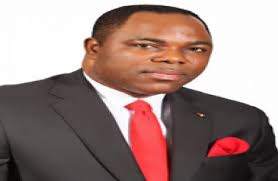
The Messy Scandal Sheet of City Lawyer, Boardroom Guru and Business Mogul, TUNDE AYENI

-How he got enmeshed in serial multi-billion Naira mess.The truth about the former Skye Bank Chairman’s N150b fraud!
.How he milked Skye Bank dry!
+How his lawyers are fighting hard with their legalese for his release
Undisputedly astute businessman but now viciously embattled Tunde Ayeni, is a lawyer, investor and astute business magnate who sits atop the boards of a handful of successful and multinational companies in Nigeria and abroad as the Chairman. Little wonder, in the year 2011, mercurial and very business-minded Ayeni, was elected the Chairman of Skye Bank,[which was formed in 2005, when five commercial banks including Tunde Ayeni’s-owned and now moribund Bond Bank, merged to create a new entity with a balance sheet in excess of ₦1 trillion. Additionally, Ayeni was also the Vice Chairman of Aso Savings & Loans after emerging the majority shareholder in 2007. He also co-founded Ocean Marinse Security (OMS), a company that provides logistical support to the Nigerian Navy. Out of his deep knack for business, Tunde Ayeni became the Vice Chairman of Integrated Energy Distribution and Marketing Ltd (IEDM) in 2013, where he led a successful bid to take control of the Ibadan and Yola Electricity Distribution Companies. This marked the first privatization of a national energy asset in Nigerian history. He is also chairman of JKK (Nigeria) Plc and Temple Resources Ltd, and sits on the boards of PPP Fluid Mechanics Limited and Hightech Procurement Limited. On July 2016, Tunde Ayeni’s many dirty financial deals were exposed. It became a veritable and ugly news item for many, as the hitherto prudent businessman was exposed and tagged a controversial personality who can no more be trusted with people’s monies. Tunde Ayeni, who had his fingers burnt when the Economic and Financial Crimes Commission arrested and detained him for alleged financial fraud running into N8 billion which he allegedly committed as the Chairman of Skye Bank now Polaris Bank. Immediately men of the EFCC got hold of Ayeni and remanded him in their custody, several allegations were rolled out against this Iyah-Gbede, Ijumu, Kogi State-born boardroom guru, Tunde Ayeni. These ranged from his free-spending and massive attitudes at parties and events, to lavishing huge amount of money on frivolities like fleet of automobiles of different makes and brands, flamboyantly spending and using his position as a bank Chairman to grant loans for close family members, cronies, friends and aides which later resulted into un-serviced loans and many other financial misappropriations. We also gathered that other companies chaired by Tunde Ayeni were not left out of this financial turmoil and flagrant abuse of office by Ayeni. The companies were also reported to have felt the heat then. For example, his then fledgling ntel, a telecoms outfit, could not meet up with the information and communication needs of Nigerians, due to scarcity of funds for its smooth take-off and rewarding operations. But the worst hit by Tunde Ayeni’s financial carelessness, recklessness and ruthlessness, was the Skye Bank. Realizing how dangerous Ayeni’s financial modus operandi could be to the well-being of the bank, the EFCC stepped briskly into the issue and pronto, Ayeni was whisked away by the anti-graft agency. Furthermore, the EFCC later filed very damning charges against Tunde Ayeni before a Federal High Court in Maitama, Abuja in the Federal Capital Territory. Ayeni was variously charged by the EFCC for mismanaging the funds of Skye Bank which thereafter, ultimately led to its collapse. Back then, the Managing Director and Chief Executive of the Nigeria Deposit Insurance Corporation, Alhaji Umaru Ibrahim, had disclosed that Ayeni and a former Skye Bank Managing Director, Timothy Oguntayo, are being investigated for their shady roles in the financial fraud that rocked the bank. While Tunde Ayeni’s investigations and cross-examinations were on-going, the Central Bank of Nigeria, NDIC and AMCON revoked the operating license of Skye Bank. This was due to the bank’s financial instability, thus necessitating the regulators to rename it Polaris Bank with a capital injection of about $2bn. 51-year-old Ayeni chaired the board of Skye Bank between the years 2010 to 2016 before his removal by the Central Bank of Nigeria (CBN). Moreover, Ayeni was also investigated for illegally injecting a whopping N3 billion (three billion naira) into the re-election campaign of former President Goodluck Jonathan. Controversial Tunde Ayeni was also accused to have used his position to obtain loans to purchase ntel, take up power distribution with the establishment of Ibadan Electricity Distribution Company and Yola Electricity Distribution Company. All these allegations were all put up against Tunde Ayeni at the Court of Law then and the Kogi-born businessman found himself in huge financial quagmire. The then AMCON Managing Director, Ahmed Kuru was said to have included Tunde Ayeni as one of the debtors of a whopping N906 billion naira. When Skye Bank was founded in 2005, the financial institution has been serially plundered by its key management figures. However, the coming on board of former Inspector General of Police, Musiliu Smith as the bank’s chairman brought a new dimension into the operation of the bank affording the financial institution to be able to plod along impressively keeping its nose as clean as whistle. But, like a twist of fate, the successor to Musiliu Smith, Tunde Ayeni a parvenu oil and gas magnate as the Chairman of the bank ushered in an era of derring-do, dodgy financial gymnastics and kamikaze deposit plundering. In a letter written then to the Acting President the new Central Bank of Nigeria- appointed Board the bank has alleged that Ayeni was indebted to the bank by a staggering and largely unrecoverable N150 billion.
In a letter written to the then Acting President the Central Bank of Nigeria- appointed Board the bank alleged that Ayeni was indebted to the bank by a staggering and largely unrecoverable N150 billion. If any Nigerian bank in contemporary times had ever been thoroughly ravaged and assaulted by its board Skye takes the lead. Two of the larger banks in the 2005 merger were EIB bank and Prudent bank run by Sola Akinfemiwa. The Central Bank of Nigeria-inspired banking sector consolidation of the time afforded these bank executives to consolidate their interests in a bigger, and what they hoped to be a more stable institution.
The consolidated banks were Prudent Bank Plc, EIB International Plc, Bond Bank Limited, Reliance Bank Limited and Co-operative Bank Plc. Ironically, Ayeni was instrumental to the evolution of the bank, as he was said to have used various bank loans to buy Mainstreet Bank for N135 billion from AMCON and merged it with Skye Bank to form a bigger franchise.
Ayeni, a constant, but highly influential figure in former President Goodluck Jonathan’s government, had spiritedly leveraged on his closeness to Jonathan, the now late former governor of Bayelsa State Deprieye Alamaesiagha and Diezane Alison-Madueke, former petroleum minister to make significant economic gains for himself through ruthless takeovers and deals, either as a proxy for the alleged triumvirate or as the main deal maker.For instance, he allegedly purchased Nitel/Mtel at $252 million, a cost well below the actual value of the moribund parastatal. According to reports, he owns the consortium that bought over Ibadan Electricity Distribution Company as well as the Yola Distribution Company, at also prices well below their intrinsic valuation. In 2012, he became the chairman of Skye Bank and significantly leveraged on his position on the board to pillage the bank to fund a bohemian lifestyle, often using the bank’s funds to make oil sector investments with uncertain prospects; a situation which a source that preferred not to be mentioned in print confided had depleted the Bank’s general reserves by a whopping N48bn. Little wonder his speculated N3 billion donation to the President Goodluck Jonathan reelection campaign caused so much anxiety among Skye Bank customers who, for fear of safety of their savings, went on panic withdrawals when the news broke.
Recently, the Management of Skye Bank Plc has reportedly written to Acting President Yemi Osinbajo, detailing how Tunde Ayeni, Chairman of the bank between 2010 and 2016, wrecked havoc on the institution. In a deluge of letters and documents, the Management listed details of how Ayeni allegedly used his office to perpetrate illegality and fraud that nearly brought the bank to its knees. The apex bank had watched the Skye Bank saga with bated breath, but after several warnings, the Central Bank of Nigeria (CBN) took over Skye Bank on July 4, 2016. Godwin Emefiele, governor of CBN, said at the time that the action followed the failure of the lender to meet the regulator’s minimum key liquidity and capital adequacy ratios.
Ayeni had resigned following the development, and CBN announced the appointment of Muhammad Ahmad as the new chairman, while Adetokunbo Abiru took over from Timothy Oguntayo as group managing director (GMD.) In a letter signed by Abiru and Ahmad, the bank presented in graphic details how Ayeni allegedly used loans from the bank to acquire major government companies. The letter was unsparing of the debauchery committed at the bank under Ayeni’s controversial chairmanship. “Upon the assumption of duty by the new board, one of the immediate concerns that needed to be addressed was to ascertain the true state of the affairs and financial position of the bank and the credibility of the IT and information systems of the bank,” the letter read. To this end, the following were undertaken: engagement of PWC does to half-year audit as of June 30, 2016. This was later extended to cover the full year to December 31, 2016.
“The engagement of KPMG to do a forensic audit of the bank’s IT platform and management information systems; and The forensic audit revealed that the bank operated two sets of financial books and this was responsible for the regulators/auditors inability to detect the massive losses and infractions, particularly the balance of N280bn in suspense accounts. The bank’s total exposure to Ayeni as of the date is about N70bn. It is clear that he used his position as the chairman of the bank to obtain inside loans well above the regulatory thresholds for the acquisition of the following government enterprises: Ibadan Electricity Distribution Company, Yola Ibadan Electricity Distribution Company and Nitel/Mtel. All the facilities are presently seriously challenged. As of today, Ayeni’s total industry indebtedness, covering both Nitel and the Electricity Distribution Companies (Discos) is estimated at about N150bn, and little, if any, of these obligations are being adequately serviced, it is doubtful that he will ever be in a position to service these loans satisfactorily.” The expository letter also hinted at another N33billion traced to Ayeni, with strong suspicion that out of this amount, N7 billion was spent on the re-election campaign of former President Goodluck Jonathan.
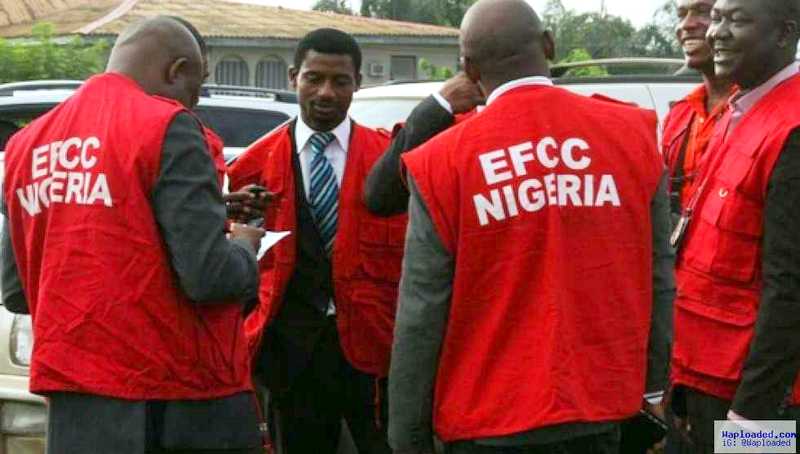
The sum of N7bn was disbursed without due process to various individuals and corporate organizations on the request of Godknows Igali, a former permanent secretary of the federal ministry of power,” it read. “The monies appear to have been spent essentially on the Jonathan-Sambo electoral campaign in 2015. That sum remains outstanding as at today. “There is ample evidence that he (Ayeni), among others, received large amounts of cash, totaling N29.5bn, from the bank, which appears to be connected to the purchase of Mainstreet Bank Limited, but which has not been accounted for. In the face of this monumental rape, the Management has appealed to the government to assist it to seize Ayeni’s assets. “The former chairman should be brought to account for his central role in many of the identified infractions,” it read. “We have been able to perfect the debenture on the fixed and floating assets of Natcom, the vehicle that was used for the acquisition of Nitel and Mtel with asset estimated at N282bn (Open market value) and N183bn (forced sale value) by Knight Frank in 2014. This will put us in a position to place the company into receivership for recovery. However, in order to come to fruition, this approach will require strong and unyielding support from the regulatory and political authorities in the country.” The management also indicted Akinsola Akinfewa, Kehinde Durosinmi-Etti and Timothy Oguntayo, all former GMDs of the bank. Other individuals listed in the petition for various acts of infraction are Femi Otedola, chairman Forte Oil Plc, Festus Fadeyi and Jide Omokore. Recall that agents of the Economic and Financial Crimes Commission (EFCC) had in the past arrested and detained Tunde Ayeni, Skye Bank’s erstwhile Chairman, over allegations that he allegedly bribed a former minister of the Federal Capital Territory (FCT), Bala Mohammed, to acquire 54 plots of land in Abuja, the Nigerian federal capital city. Two EFCC sources informed some media guys at the time, that at his arrest, he was initially reluctant to co-operate. He had earlier been investigated for playing various roles in different business deals involving former First Lady Patience Jonathan and a former head of state, Abubakar Abdulsalam, who co-owns a telecommunications company with the former bank Chairman. Already, the Management of Skye bank is reportedly seeking to take over some oil wells belonging to Jide Omokore, a businessman involved in a number of corruption cases within and outside Nigeria. The bank said Omokore is indebted to it to the tune of N110bn at an exchange rate of $1/N315. The loans in question were said to have been obtained through three companies namely: Atlantic Energy Drilling Concepts (N56 billion), Cedar Oil and Gas Ltd (N22.4 billion) and Real Bank Ltd (N31 billion.) The new management of Skye bank has claimed that the repayment of two major obligations of the oil companies is tied to the controversial strategic alliance agreements (SAAs) with the Nigerian National Petroleum Corporation (NNPC.) Atlantic Energy was awarded SAAs by the Nigerian Petroleum Development Company (NPDC) Ltd, a subsidiary of NNPC, to develop and finance production from OMLs 26, 42, 30 and 34 – four oil blocks in all – in 2011.NPDC valued its stake in the oil wells at $1.8 billion then. The Economic and Financial Crimes Commission (EFCC) has frozen the assets of Omokore over suspicion of money laundering and procurement fraud.
In the letter to the Acting President, Skye bank has appealed that the federal government grant it access to the assets that were funded with loans from the bank.
“We will require assistance for the extrication of the real estate assets that were fully funded with loans from the bank from the assets of Omokore presently under the forfeiture order from the court,” the letter read. “This will enable us have access and rights over these assets and put the bank in a position to realize the assets that form the collateral for the loans granted to Real Bank limited.” The bank also sought assistance to take control of the oil assets of Omokore.
“We will require some political intervention working with the NNPC to be able to bring this matter relating to Atlantic Energy to a quick resolution,” the letter read
Skye Bank is struggling to survive, but analysts doubt its capacity to stay afloat given deep depositor suspicion of its solvency, its high and rising interest expenses relative to interest income and its evidently narrowing net interest margin. Victor Ukpai, a Research Analyst at Focus Bank, points out that a critical problem at Skye Bank was the apparent weakness of corporate governance, ‘those that should have given oversight integrity and corporate direction were the wolves at the gate’, he notes. According to Ukpai, ‘the regulatory bodies need to be a lot more thorough and circumspect in approving board positions of banks, detailed security checks and other ancillary means of intelligence gathering should be conducted before the approval of board members, only recently two prospective members of the board of an anti corruption agency were found to be under investigation by that very same agency!’. Skye Bank may not topple over but the outlook appears bleak as the two Kogi state indigenes of Tunde Ayeni and Jide Omokore, have dealt severe blows to the banks underlying liquidity and its supporting business capital. After the whole scenario then, an FCT High Court in Maitama ordered the Economic and Financial Crimes Commission (EFCC) to immediately release the Tunde Ayeni. The then trial judge, Justice Yusuf Halilu held that the anti-graft agency had suppressed facts which misled the court into earlier granting the application, thereby, making the detention illegal. The decision of the court followed an enforcement of fundamental rights suit filed by Ayeni, through his counsel, Ahmed Raji (SAN) seeking his release from the EFCC custody. At that period, Raji told the court that there was a pending suit before the Federal High Court against Tunde Ayeni on the same subject matter and that the trial judge at the Federal High Court then, Justice Nnamdi Dimgba had in the particular case admitted his client to bail. He added that the bail condition had since been perfected. Raji added that the detention of the applicant was a breach of his fundamental human right as he went to the commission by himself on invitation. When Ayeni’s case was on at the court, several revelations were made which included that Ayeni as the then Chairman of Skye Bank in connivance with the then Managing Director and Chief Executive Officer, Timothy Oguntayo conspired at different times to steal huge cash amounting to a whopping N4,750,000:00 (Four Billion, Seven Hundred and Fifty Million Naira) and USD5,000,000 (Five Million United States Dollars) belonging to Skye Bank Plc. According to information made known to the press by the court then, this sinful act of Tunde Ayeni and Oguntayo was contrary to the provisions of Section 1(a) of the Money Laundering (Prohibition) Act 2011 (as amended) read together with Section 18 (a) of the Money Laundering (Prohibition) Act 2011 (as amended) and punishable under Section 16(2) (b) of the Money Laundering (Prohibition) Act 2011 (as amended.)” However, seeing that the issue may land him in jail and destroy his ‘hard earned’ image, Ayeni involved the services of highly respected legal practitioners like Wole Olanipekun, Dele Adesina etc. to battle for his soul. These lawyers fought tooth and nail with the EFCC and Tunde Ayeni was given a controversial bail in the sum of N50 million with two sureties in like sum then. Oguntayo, through his own counsel, Oyetola Oshobi was also given the same bail condition. This was how Tunde Ayeni’s lawyers ensure he continue to breathe free air till date even though he has lost his credibility in the comity of businessmen and boardroom tycoons both in Nigeria and the international business community. How Tunde Ayeni will escape the gulag given the monumental and ground-swelling allegations and fraudulent charges against him, will take the courts of law to do the needful legally and appropriately.
news
Abuja-Kaduna Train: Opeifa Denies NRC’s Involvement in Ticket Racketeering, Blames Scammers and High Demand
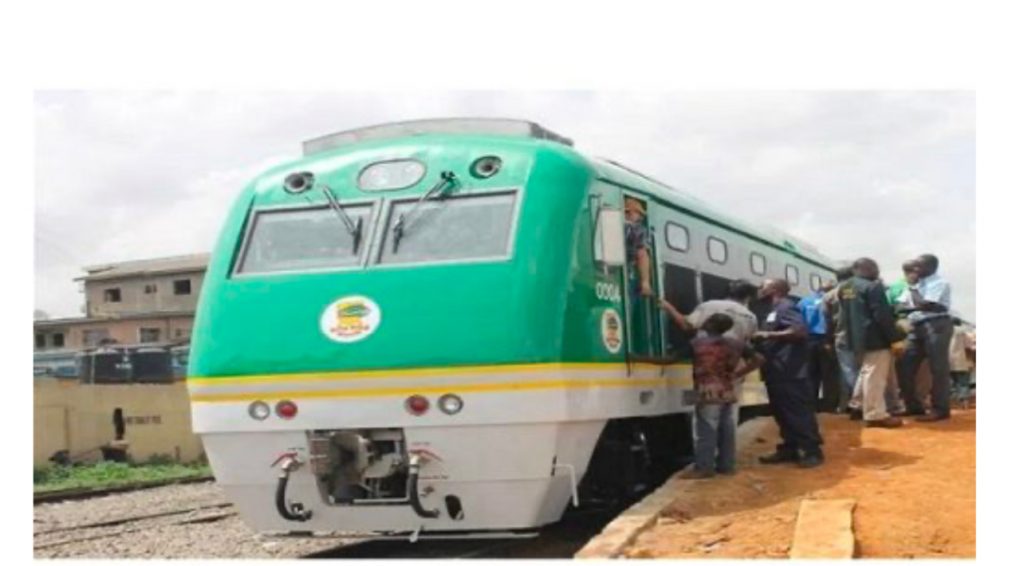
……..NRC Introduces Double Verification to Curb Racketeering
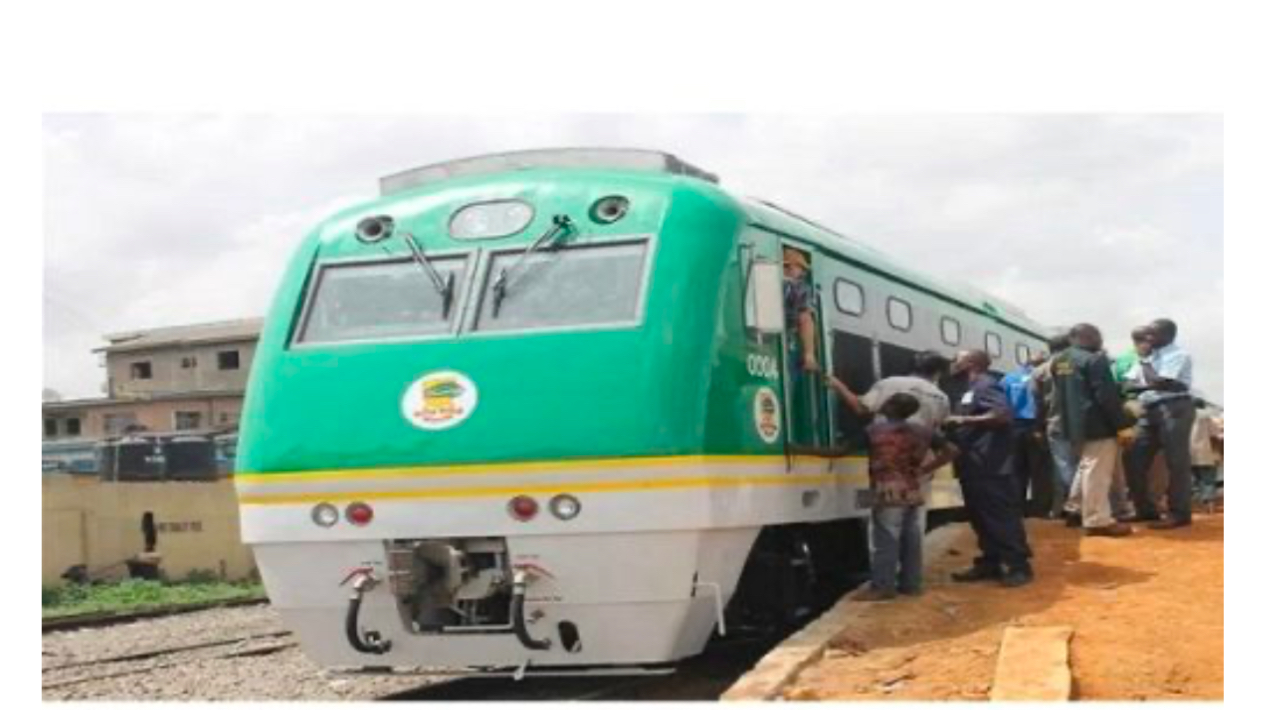
The Managing Director of the Nigerian Railway Corporation (NRC), Dr Kayode Opeifa, has denied allegations that the corporation deliberately creates artificial scarcity of train tickets on the Abuja-Kaduna Train Service (AKTS) to facilitate their resale at inflated prices through unauthorised agents.
The controversy followed a viral social media video by Instagram blogger Faizah Raji, who operates under the handle @wearegst, alleging that the corporation deliberately withholds tickets from its official electronic ticketing platform and makes them available through agents at exorbitant prices.
In the video, titled “The NRC Is Stealing Its Own Tickets to Resell,” the blogger claimed that she was unable to obtain a ticket through the official booking portal but subsequently purchased one from an agent at twice the official price.
Responding to the allegations, the NRC management described the claims linking the corporation to the alleged racketeering as misleading, insisting that the corporation does not directly buy or sell tickets on the Abuja-Kaduna corridor.
According to the management, electronic ticketing on the standard-gauge rail services operates under a Public-Private Partnership (PPP) arrangement, with private concessionaires responsible for ticket sales.
SecureID/TPS handles ticketing for the Abuja-Kaduna Train Service, while Global Software Digital Solutions (GSDS) manages the Lagos-Ibadan Train Service. Fane Warri-Itakpe Ticketing Solutions Limited is responsible for ticketing on the Warri-Itakpe Train Service.
The NRC said the concessionaires were approved by the Infrastructure Concession Regulatory Commission (ICRC) and the Federal Executive Council (FEC) before 2023.
Explaining the persistent difficulty passengers face in securing tickets, the corporation attributed the situation largely to a significant imbalance between passenger demand and the number of seats available.
According to the NRC, demand for train services on the Abuja-Kaduna corridor has exceeded available capacity by more than tenfold, putting considerable pressure on the ticketing system.
The management maintained that the reported experience of purchasing a ticket through an agent did not, in itself, establish that the corporation was responsible for creating artificial scarcity or facilitating the alleged resale.
It also warned passengers against patronising unofficial ticket agents, stressing that those who purchase tickets outside approved channels do so at their own risk.
The corporation explained that the Federal Government introduced the National Identification Number (NIN) requirement for train ticket purchases following the 2022 Abuja-Kaduna train attack, as part of measures to improve passenger identification and curb ticket racketeering.
However, it said suspected fraudsters had devised ways of obtaining multiple NINs to purchase tickets for resale to unsuspecting travellers.
To address the challenge, the NRC introduced a double-verification process in 2025, requiring passengers to undergo NIN verification and present personal identification before boarding.
The corporation said its ticketing and verification system is integrated with the database of the National Identity Management Commission (NIMC), enabling officials at Idu and Kubwa in Abuja, as well as Rigasa in Kaduna, to verify the identity and photograph associated with the NIN used to purchase a ticket.
The management, however, acknowledged that the Rigasa station in Kaduna lacks an adequate access-control system, a shortcoming it said could occasionally allow agents linked to ticket scams to overwhelm security personnel.
The introduction of a second verification process, modelled on the system used at Terminal 2 of the Murtala Muhammed International Airport in Lagos, is intended to strengthen checks and prevent passengers from travelling with tickets purchased using another person’s identity.
As part of efforts to address complaints about ticket availability, the NRC said the electronic ticketing concessionaires had been directed to improve access to their online platforms and ensure compliance with established ticketing procedures.
The corporation also reiterated that purchasing tickets from third parties using another person’s NIN or name was unacceptable, describing the practice as economic sabotage.
It stressed that passengers should book through approved portals and avoid sharing their NIN details and other personal information with agents or third parties who could exploit such information for fraudulent transactions.
The NRC management declared zero tolerance for ticket racketeering, warning that any staff member found participating in or colluding with individuals involved in the practice would face disciplinary action.
The corporation said it remained committed to protecting the integrity of its operations, improving customer service and ensuring that passengers have access to safe, affordable, reliable and convenient rail transportation.
While the allegations have renewed public debate over ticket availability and the effectiveness of the electronic ticketing system, the NRC maintained that the immediate challenges include rising passenger demand, limited seating capacity and the activities of individuals exploiting the system.
The corporation urged passengers to use only approved ticketing platforms and cooperate with verification procedures to help curb fraud and protect the railway system.
The NRC said it would continue working with relevant stakeholders to strengthen its ticketing processes and improve the passenger experience across its rail corridors.
news
Ondo Sports Council Chairman Declares 2026 ADU Unity Cup Open as Ijapo Ages FC Edges Odigbo LG FC


 The Chairman of the Ondo State Sports Council, Hon. (Coach) Abimbola Oladimeji, has officially declared the 2026 ADU Unity Cup open, marking the commencement of another edition of the football competition aimed at promoting unity, sportsmanship and grassroots football development.
The opening ceremony attracted football enthusiasts and supporters who gathered to witness the start of the tournament and celebrate the spirit of competition among participating teams.
In the opening match, Ijapo Ages FC secured a narrow 1–0 victory over Odigbo LG FC in an entertaining encounter, giving the team a winning start to its campaign in the competition.
The ADU Unity Cup continues to provide a platform for players to showcase their talents, foster unity among communities and contribute to the development of football at the grassroots level.
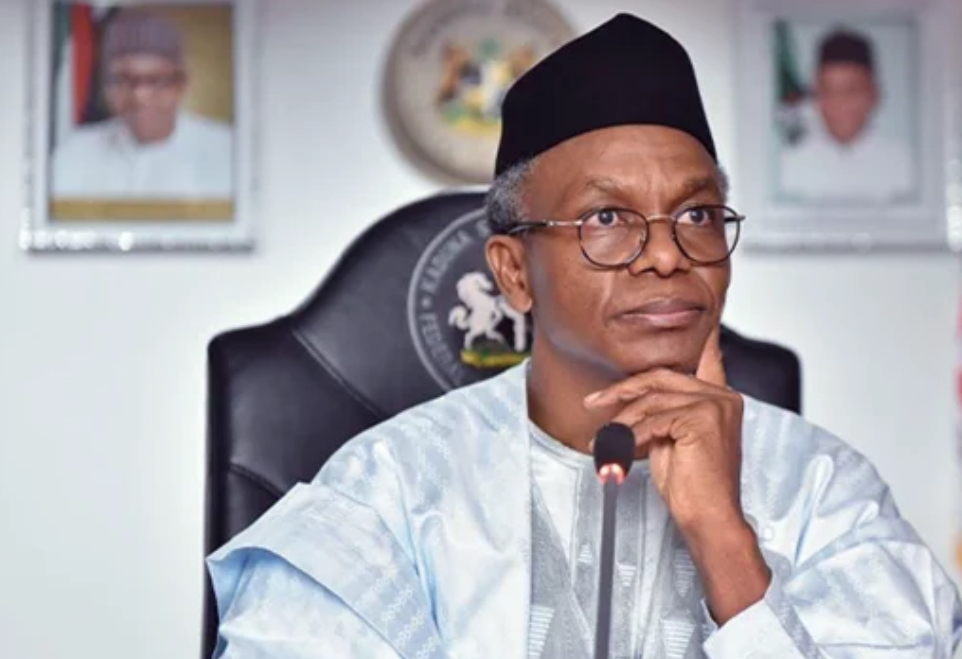
A forensic investigator with the State Security Service, Segun Kayode, on Tuesday alleged that former Kaduna State Governor, Nasir El-Rufai, and some of his associates earmarked $600,000 to settle officials of the Economic and Financial Crimes Commission and intermediaries.
Kayode, the first prosecution witness in the ongoing trial, made the allegation while testifying before the Kaduna State High Court sitting in Kawo, Kaduna, presided over by Justice Darius Khobo.
The witness said $500,000 and $100,000 were allegedly set aside for the payments, adding that forensic audio recordings captured conversations involving El-Rufai and some of his suspected associates.
According to him, the recorded conversations centred on alleged efforts to frustrate an EFCC investigation into a company identified as Singularity.
Kayode named a Senior Advocate of Nigeria, AU Mustapha (SAN); Jimi Lawal; and Bashir El-Rufai among those allegedly mentioned in the conversations.
He told the court that Mustapha and Lawal were allegedly directed to meet one Ahmadu Sule to obtain a template previously used to liquidate another company, with the intention of applying a similar process to Singularity.
The investigator further alleged that the discussions included plans to liquidate the company in Nigeria and Mauritius, where it was reportedly under investigation by the Nigerian Financial Intelligence Unit.
Kayode also alleged that the recordings contained discussions about preventing the EFCC from investigating IHS, which he said was listed on the New York Stock Exchange.
The allegations were presented as part of the prosecution’s evidence against the former governor.
The proceedings lasted nearly eight hours, from 12:26 pm to 8:18 pm, with about two hours devoted to playing the recorded conversations.
Add us to your Preferred Sources
Earlier, El-Rufai’s lead counsel, Paul Erokoro (SAN), objected to Kayode’s testimony, arguing that the witness’s name and summary of evidence were not included in the prosecution’s proof of evidence.
Erokoro argued that the omission undermined his client’s right to a fair hearing, insisting that the defence was entitled to know the evidence it was expected to answer.
However, counsel for the Independent Corrupt Practices and Other Related Offences Commission, Ayodeji Adedipe (SAN), told the court that Kayode was a subpoenaed witness and that the omission did not automatically render his testimony inadmissible.
Adedipe said the subpoena was issued and signed by the court on June 30, 2026, adding that the defence would have the opportunity to cross-examine the witness.
The prosecution counsel also cited judicial authorities in support of his argument.
In his response, Erokoro maintained that the issue was not whether the witness could testify but whether the defence had been adequately informed to prepare for his evidence.
He relied on Section 210 of the applicable Administration of Criminal Justice Law, 2017, and argued that the prosecution should have served the subpoena on the defence.
In its ruling, the court acknowledged that the witness’s name and summary of evidence were absent from the proof of evidence but held that the records showed he had been subpoenaed.
Justice Khobo ruled that the omission did not automatically make the testimony inadmissible, provided the defence was allowed to cross-examine the witness.
The judge consequently overruled the objection and directed Kayode to continue his testimony.
After the witness submitted a hard copy of his findings to the court clerk, the defence complained that the document should have been served earlier to enable it to study the contents.
The judge, however, ruled that the defence could obtain a certified true copy of the document admitted as Exhibit One for examination.
The court adjourned the case until November 30 and December 1, 2026, for continuation of the cross-examination, following agreement by the prosecution and defence.
Our correspondence reported that El-Rufai arrived at the court premises at about 11:50 am, ahead of the scheduled noon hearing, amid tight security.
He was accompanied by the African Democratic Congress governorship candidate in Kaduna State, Isa Ashiru.
His appearance followed an order by Justice Khobo directing the ICPC to produce him in court for the resumed proceedings.
The previous sitting was adjourned on Monday after the former governor was absent following information that he had requested access to his personal physician to review medical test results.
The resumed hearing came days after the Court of Appeal in Kaduna dismissed El-Rufai’s appeal challenging the refusal of bail by the state high court.
In its judgment delivered on October 9, the appellate court upheld the lower court’s decision, ruling that the former governor had failed to establish sufficient grounds to warrant interference with the refusal of bail.
El-Rufai has been in ICPC custody since February 18, 2026, over allegations of financial misconduct linked to his administration of Kaduna State between 2015 and 2023.
The Kaduna State House of Assembly had petitioned the ICPC over the alleged diversion and mismanagement of more than N423bn in public funds during his eight-year administration.
The former governor is facing multiple cases involving allegations of money laundering, abuse of office, fraud and other financial offences before different courts.
He has denied wrongdoing and pleaded not guilty to the charges. The allegations remain subject to judicial determination.


-
 news6 years ago
UPDATE: #ENDSARS: CCTV footage of Lekki shootings intact – Says Sanwo – Olu
-
 lifestyle6 years ago
Former Miss World: Mixed reactions trail Agbani Darego’s looks
-
 health6 years ago
Chairman Agege LG, Ganiyu Egunjobi Receives Covid-19 Vaccines
-
 lifestyle5 years ago
Obateru: Celebrating a Quintessential PR Man at 60
-
news8 years ago
-
 news1 year ago
BREAKING: Tinubu swears in new NNPCL Board
-
 health6 years ago
UPDATE : Nigeria Records 790 new cases of COVID-19
-
 entertainment2 years ago
Ashny Set for Valentine Special and new Album ‘ Femme Fatale’