
news
To accelerate physical and socio-economic development in Lagos and Ogun states, Governors Babajide Sanwo-Olu and Dapo Abiodun have launched a Joint Development Commission

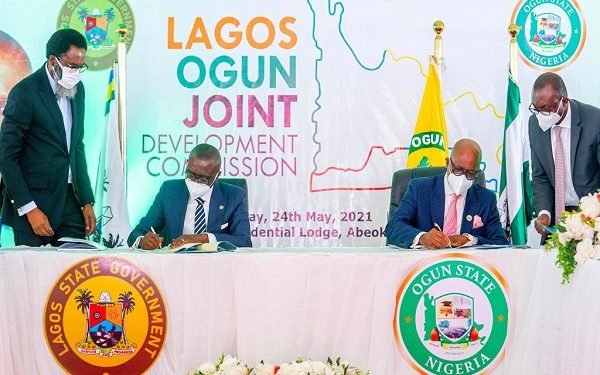
•From left: Lagos State Attorney-General and Commissioner for Justice Moyosore Onigbanjo (SAN); Sanwo-Olu; Abiodun and Ogun State Attorney-General and Commissioner for Justice Akingbolahan Adeniran during the signing of athe MoU.
In several places, the boundaries between Lagos and Ogun states have blurred so much that telling them apart is almost an exercise in futility. This reality has confronted residents of the boundary towns for a long time. Now, the governments of the two states have accepted this and are now going to develop the states together. Governors Babajide Sanwo-Olu (Lagos) and Dapo Abiodun (Ogun) have signed a Memorandum of Understanding (MoU) to this effect the Lagos-Ogun Joint Development Commission is set to make residents of the boundary areas enjoy visible development, especially in infrastructure.
The launch of the Joint Development Commission marked a new beginning in the bilateral relationship between the neighbouring states, which also share socio-cultural backgrounds. The MoU was signed at the Presidential Lodge in Ibara, Abeokuta, the Ogun State capital. The governors agreed to work on seven key areas of mutual interests, which are expected to boost security, commerce, urbanisation, infrastructure and also solve boundary disputes.
The ceremony was witnessed by Ogun State Deputy Governor Mrs. Noimot Salako-Oyedele, members of the State Executive Council of both states, royal fathers led by the Alake of Egbaland, Oba Aremu Gbadebo, State Chairman of the All Progressives Congress (APC), among other dignitaries.
The areas which the Joint Development Commission will focus on include infrastructural development (development of boundary town roads, waterworks, mass transportation); revenue and taxation (including PAYE remittances, and boundary town revenue management and collection); trade and investment and resolution of boundary disputes.
Other areas encapsulated in the MoU are security (including intelligence sharing and gathering); environmental and physical planning activities (including urban renewal, emergency and disaster management, inland waterways management and traffic management); and agriculture/food security.
Sanwo-Olu noted that his administration’s commitment in ensuring that Lagos becomes a 21st-century economy ‘makes it imperative for us to strategically collaborate with our closest neighbour, Ogun State, for the joint development of our states, the continued growth of our cities and the co-creation of value that encompasses good governance and urban regeneration.
According to him, signing the MoU was to further the relationship which began in 2005 during the tenure of former Governors Bola Tinubu (Lagos) and Segun Osoba (Ogun). He described it as “a game-changer that will transform the urban agglomeration that Lagos has become”.
He said: “We are driven by the desire to stimulate socio-economic growth, bridge development gaps and ensure that Lagos’ megacity status is complemented by pervasive infrastructural development even in boundary towns. This MoU precedes the Joint Development Commission that will be established to mutually tackle some of the issues prevalent in key economic sectors like transportation, environment, housing, health, infrastructure, and security.
“Regardless of the challenges, we are determined to build more livable and stable cities. Our goal is to build sustainable urban cities, where residents of both states have a sense of belonging, embrace participatory governance, and recognise their role in achieving solid urban economies in both states.
“In light of current global practices in managing megacities, it has become obvious that the best way to accelerate socio-economic development in Lagos and Ogun states is by embracing a more collaborative approach for growth, development, and urban sustainability.
“The Joint MoU is a sustainable development agenda under which Lagos and Ogun states will combine resources to meet our present socio-economic needs and prepare for the future. We have nothing to lose but a lot to gain by synergising efforts with Ogun State. I assure you that the stipulations of the Joint MoU will be meticulously implemented. The next step is to establish a joint committee that will implement the terms of the MoU until we are able to formally establish a Joint Development Commission with the approval of the Lagos and Ogun state Houses of Assembly.
“This is not political, but about our people. I, therefore, call for greater collaboration among the 36 states of the country. The common goal is to provide good governance and make life more meaningful for the electorate, and that should be our driving force. We must never forget that, as Nigerians, we are all interconnected, and the fastest way to accelerate socio-economic growth and create an equitable society is by uniting to combat our challenges.”
Sanwo-Olu said the next step after signing the MoU would be the establishment of a joint committee that would implement the terms of the agreement. He added that bills would also be sent to the Houses of Assembly of both states to generate statutory support for the establishment of the economic integration commission.
Abiodun described the commission as ‘a deliberate and methodical effort of two forward-thinking governors.
According to him, the bilateral agreement would have legal backing so the initiative can outlive the present and serve the people well into the future.
Abiodun was hopeful that with the agreement, it would be easier for them to rebuild the Lagos-Ota-Abeokuta and Ikorodu-Sagamu Roads since the letter asking President Muhammadu Buhari to allow them to work on the roads would now have a stronger backing.
He said: “It is undeniable that we share historical and cultural affinities and, before now, successive administrations have mouthed and attempted to have some omnibus or spatial arrangement to have Lagos and Ogun states work together. But, again, never had there been a time that this was concretised or encoded, nor was it a legally-backed structure.
“What we are signing today is a historic Memorandum of Understanding that takes cognisance of what had been envisioned, leading to the establishment of the Prof. Akin Mabogunje-committee on Redeployment of Lagos Megacity Region Plan in 2005/2006. It is a mission accomplished, and a dream come true, to put into action the thought about our states forging a common alliance to jointly tackle issues bordering on security, sanitation, traffic and transportation, waste management, water supply, land use planning, infrastructure development and maintenance, urban renewal and slum upgrading for the mutual benefit of our people and the generality of Nigerians.
“These development imperatives have to be streamlined for us to be serious and focused. This Joint Development Commission will function better to sustain these common goals, and there is no better time than now to deepen not only the relationship between our states but within any contiguous sin the country.
“This MoU is a culmination of various efforts by state and non-state actors who have seen beyond the geographical delineation of our states. We are cognizant of the fact that Ogun is the only neighbour that Lagos has, and that we are a natural overflow of Lagos. There is no way development in Lagos would not have a spiral effect or vice versa. This MoU is therefore a manifestation of the common dream that the country’s largest economy and its industrial capital are forging because both are deliberate, focused and methodical to governance.
“Before now, we had jointly written to President Muhammadu Buhari to release the Lagos-Ota-Abeokuta and Ikorodu-Sagamu Roads for us to rebuild. We believe this agreement would give that letter a stronger backing which might eventually lead to the reconstruction of these roads. Another manifestation of our working together is the Adiyan Water Works which is in Ogun State but supplies water to the people of Lagos State. It will also supply water to us soon.”
Abiodun thereafter presented Sanwo-Olu with a map of both states in plaque form, and adire, the traditional fabric of Ogun State.
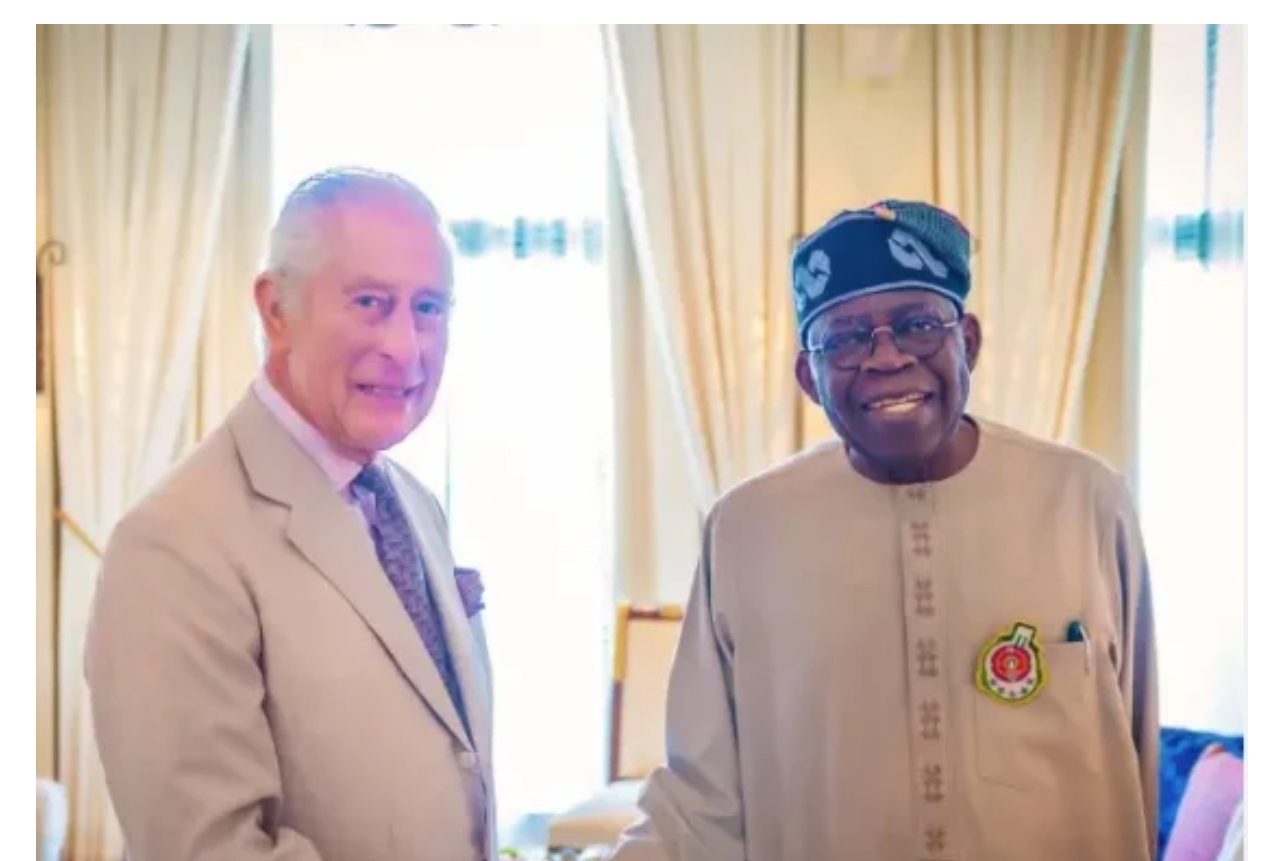
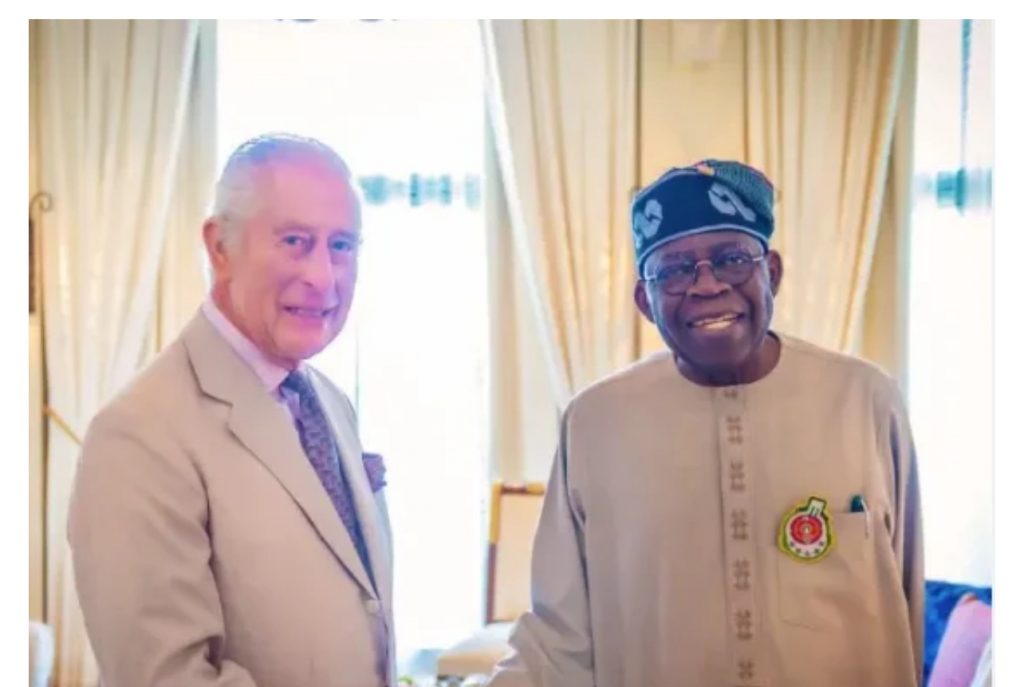
Britain will impose airspace restrictions and deploy armed police officers in Windsor next week as President Bola Tinubu arrives for a state visit hosted by King Charles III.
Tinubu is expected to begin the visit in the company of his wife Oluremi Tinubu on Wednesday, March 18, with a reception at Windsor Castle.
Thames Valley Police in a statement on its website on Wednesday, said it is working with the Royal Borough of Windsor and Maidenhead, the Royal Household and other security partners.
The force said airspace restrictions over Windsor Castle, which are in place permanently throughout the year, would be extended on Wednesday, March 18, to cover the period from 7am to 11.59pm.
Chief Superintendent Adrian Hall of Thames Valley Police’s Joint Operations Unit said the air restrictions formed part of a broader security operation for the visit.
“The air restrictions are just one part of our robust security operation for the state visit of Nigerian President Tinubu next week, with many measures you will see and others you will not..
“As a force, we have a vast amount of experience in policing Royal events in Windsor and significant planning, and preparation has gone into this event,” Hall said.
He said the force would take a strong stance in enforcing the restrictions, warning that any breach would constitute a criminal offence under the Air Navigation Order and could lead to arrest.
“We will be taking a strong stance in enforcing the restrictions; anyone who breaches them will be committing a criminal offence under the Air Navigation Order and could be arrested.”
The police chief said officers with specialist capabilities, including search teams, the Mounted Section, road policing, and armed units, would be deployed across Windsor, alongside neighbourhood policing and Project Servator resources.
“We will also be deploying numerous police officers to Windsor with specialist capabilities, including our search teams, Mounted Section, Roads Policing and armed units, while our neighbourhood and Project Servator resources will also be on the ground engaging with the public,” he said.
The authorities will also deploy an extensive closed-circuit television network, hostile vehicle mitigation barriers, and other undisclosed security measures for the event.
Hall said, “We will also be using the extensive CCTV network in Windsor, Hostile Vehicle Mitigation barriers, and many other security measures that you may not be able to see to make sure the event runs safely.”
He urged members of the public to support the security operation by remaining vigilant.
“The public plays a critical role to support us so we encourage them to report any suspicious activity or anything that does not seem quite right by calling 101 or speaking to one of our officers. If there is an immediate threat or emergency, then call 999,” Hall added.
Road closures and parking restrictions will take effect from Tuesday, March 17, with possible temporary disruption to roads in and around Windsor during the visit.
Thames Valley Police said it was being supported by the Civil Aviation Authority and National Air Traffic Services to enforce the flight restrictions. Persons with legitimate reasons for drone flying were directed to email [email protected].
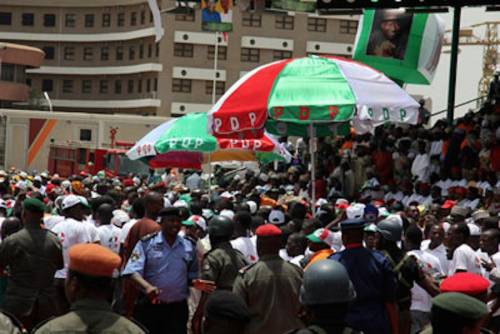
…dismisses appeal, awards N2m cost against party
The Court of Appeal in Abuja has dismissed an appeal by the Peoples Democratic Party (PDP) against the October 31 judgment by Justice James Omotosho of the Federal High Court in Abuja restraining the Independent National Electoral Commission (INEC) from recognising the outcome of the national convention planned for Ibadan, Oyo State on November 15 and 16 by the PDP.
In a unanimous judgment on Monday, a three-member panel of the appellate court resolved the four issues for determination against the PDP.
It held that the appeal by the PDP was without merit and that the Federal High Court was right to have entered the October 31 judgment and granted all the reliefs sought by the plaintiffs.
The Court of Appeal faulted the PDP’s claim that the trial court lacked jurisdiction to have heard the case on the grounds that issues involved were solely internal affairs of the party.
The court also held that the plaintiffs had the locus standi to have institutes the suit to protect their democratic rights and that the PDP was not denied fair hearing as it claimed in its appeal.
The court awarded N2million cost against the PDP for filing a frivolous appeal.
The court is yet to render its decisions in the remaining eight appeals, which include judgment and rulings
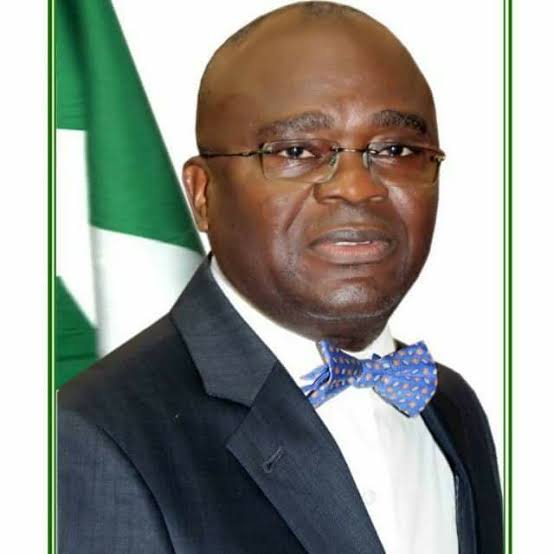
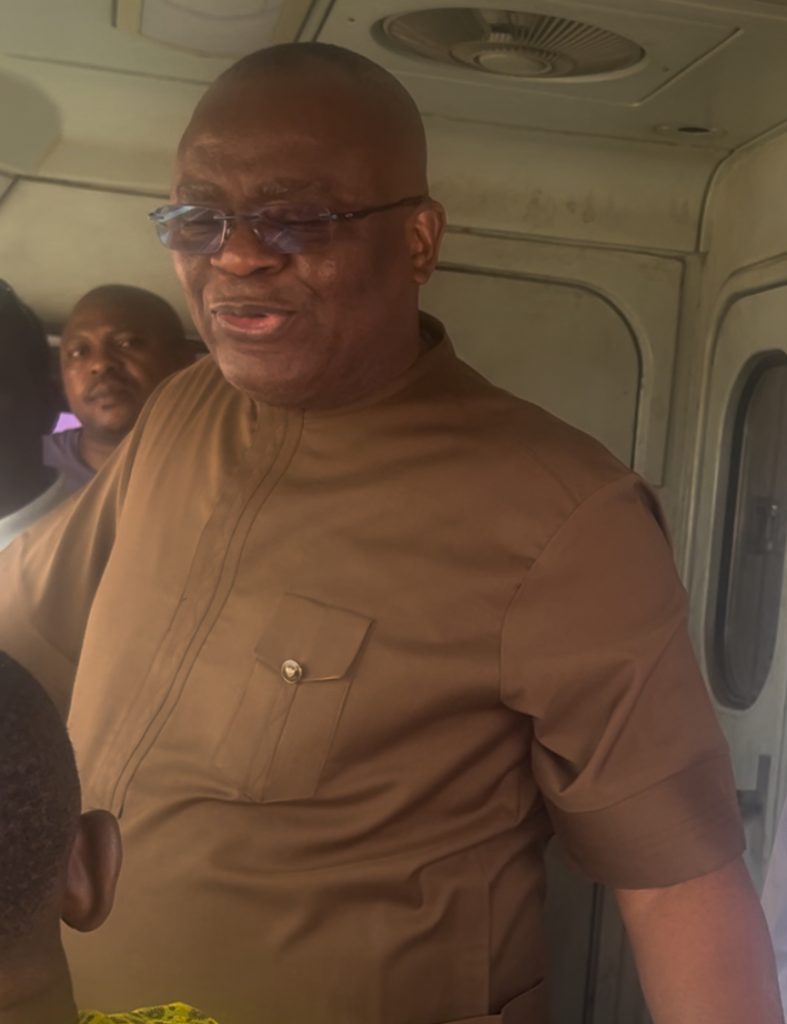 Opeifa maintained that derailments are not peculiar to Nigeria, noting that such incidents occur across advanced rail systems globally.
“Derailments are regular occurrences in the rail sector worldwide. In February alone, there were incidents in countries like Britain and others. Around the same time we experienced one, there were multiple derailments across the world,” he said.
He disclosed that in 2025, Nigeria recorded three major derailments:
• August 26 at Asham in Kaduna State
• November 1 at Abraka on the Warri–Itakpe line
• November 8 at Agbor on the same corridor
He said the NRC responded swiftly, restoring services within 24 hours in one case, while others were resolved within 21 and 28 days respectively.
Opeifa stressed that derailments can result from factors such as weather conditions, signal glitches, human error, speeding, or aging infrastructure, but noted that in Nigeria’s recent cases, there were no fatalities.
“These incidents are preventable and efforts are ongoing to minimize them. However, they should not be seen as major setbacks to the overall progress of the railway system,” he said.
On Allegations of Mismanagement
Addressing allegations of financial mismanagement within the corporation, Opeifa declined detailed comments, citing ongoing legal processes.
“When a matter is in court, it is sub judice. Allegations of corruption or mismanagement should be handled by the appropriate authorities,” he stated.
He reiterated that his priority is to reposition the NRC in line with global best practices and ensure efficient rail services for Nigerians.
Expansion, Upgrades and National Connectivity
The NRC boss said efforts are underway to restore damaged coaches and upgrade infrastructure using local engineers and technicians.
“We are bringing back the lines and retrofitting coaches. The Warri–Itakpe line is operational. The Abuja–Kaduna line is running, and we are increasing trips from two to three,” he said.
On long-term plans, Opeifa disclosed that the NRC roadmap envisions rail connectivity across major cities nationwide, subject to funding and phased execution.
He dismissed claims of abandoned projects, explaining that rail developments are capital-intensive and implemented in phases based on available resources.
He cited progress on the Lagos–Ibadan corridor—part of the larger Lagos–Kano project—as well as ongoing work on the Kano–Maradi line linking key northern cities.
Lagos–South-East, Port Connections in View
Opeifa also highlighted plans to expand connectivity between southern ports and inland cities. These include proposed links from Warri to Abuja and from Lekki Deep Sea Port to Kajola, Benin, Onitsha, and Aba, enabling both passenger and cargo movement.
Toward Modern Signaling and Faster Trains
On modernization, he said Nigeria is gradually upgrading from older narrow-gauge systems to standard-gauge infrastructure with improved signaling technology.
He noted that metro rail projects in Kaduna, Kano, and Lagos are being developed with higher signaling standards, positioning the country for faster and more efficient train services in the coming years.
“We are not yet at the highest global level, but we are moving steadily upward,” Opeifa said.


-
 news5 years ago
UPDATE: #ENDSARS: CCTV footage of Lekki shootings intact – Says Sanwo – Olu
-
 lifestyle6 years ago
Former Miss World: Mixed reactions trail Agbani Darego’s looks
-
 health5 years ago
Chairman Agege LG, Ganiyu Egunjobi Receives Covid-19 Vaccines
-
 lifestyle4 years ago
Obateru: Celebrating a Quintessential PR Man at 60
-
 health6 years ago
UPDATE : Nigeria Records 790 new cases of COVID-19
-
 health6 years ago
BREAKING: Nigeria confirms 663 new cases of COVID-19
-
 entertainment1 year ago
Ashny Set for Valentine Special and new Album ‘ Femme Fatale’
-
 news10 months ago
BREAKING: Tinubu swears in new NNPCL Board