
news
Update : “ECOWAS cannot accept this Junta ,” This is not a matter of Tinubu against Niger, Says Ivorian President

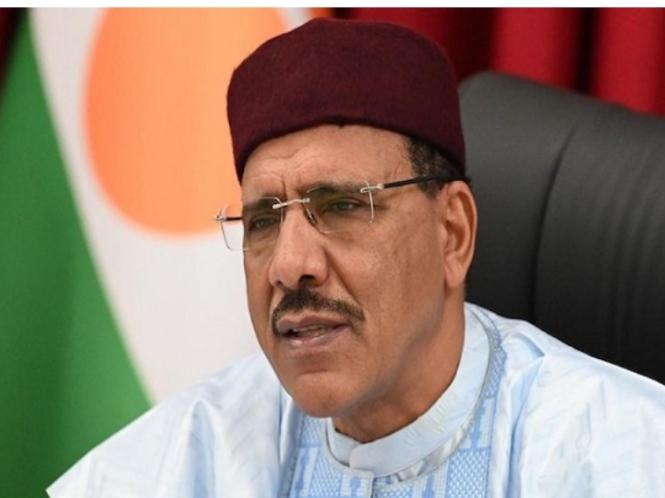
..EU, AU, ECOWAS express concern over ex-president’s poor condition in detention.
The United States and the Economic Community of West African States (ECOWAS) yesterday warned the junta in Niger Republic that it would be held accountable for the safety of ousted President Mohamed Bazoum, his family, and detained members of the government.
Secretary of State Antony Blinken and ECOWAS Commissioner for Political Affairs, Peace and Security, Ambassador Abdel-Fatau Musah issued the threats in separate statements amidst reports of ill treatment of Bazoum,members of his family and politicians who were arrested after the recent coup.
European Union (EU) foreign policy chief, Josep Borrell, and Human Rights Watch (HRW) made similar allegations and called for the immediate release of the detained people.
Expressing ‘deep concern’ for the security and well-being of Bazoum and his family,Blinken said:”We’ve also made clear to the military leaders that we will hold them responsible for his safety and well-being.”
He hailed the efforts of the Economic Community of West African States (ECOWAS) to restore democracy in Niger. The US Secretary of State said:”We talked at some length about the way forward in Niger. And we’re both focused on the same thing, which is the restoration of constitutional order.”
Bazoum suffering in detention—ECOWAS official
Shedding light yesterday on the condition of Bazoum and others in detention, the ECOWAS Commissioner for Political Affairs, Peace and Security, Ambassador Abdel-Fatau Musah, said the ex-president and his son in particular, are being held under appalling circumstances.
Musah spoke on Channels Television’s Sunrise Daily against the backdrop of threats by the putschists to kill Bazoum in the event of military intervention by ECOWAS.
The ECOWAS commissioner said: “We are going there, if need be, to rescue President Bazoum who is living in very terrible conditions today. He is being denied medical attention, he’s being denied even access to his usual food.
“His son, who is also in detention, has lost so many kilos already. They are being held in these inhumane conditions and we cannot just sit back idle and depend on the goodwill of these people who are disrupting the democratic process in the country.”
He said Thursday’s communique issued by ECOWAS “made it very clear that this junta will pay dearly if anything happens to the safety, security, or the physical integrity of Bazoum, his family, or members of his government. That was clearly done.
“We are not going to hold back because they are holding the president hostage. If they dare, if they should harm him in any way, then they are going to pay very dearly for that. So, this is a tactic.”
In his reaction EU Foreign Policy Chief, Josep Borrell, said:”Bazoum and his family, according to the latest information, have been deprived of food, electricity and medical care for several days” while Human Rights Watch (HRW) said it spoke to Bazoum, his doctor, his family lawyer, a former communications adviser and a family friend on Wednesday and Thursday.
The organization quoted Bazoum as describing the treatment of him, his wife and their 20-year-old son as ‘inhuman and cruel’.
“I haven’t had electricity since August 2 and no human contact since August 4. I’m not allowed to receive my family members (or) my friends who have been bringing food and other supplies to us,” he also said.
“My son is sick, has a serious heart condition, and needs to see a doctor. They’ve refused to let him get medical treatment.”
The ECOWAS commissioner had a similar warning for Russia on the situation in Niger.
He said ECOWAS would hold Russia to account should the Wagner Group, a private military contractor of the Eastern European nation, violate any one’s human rights in Niger.
“The Wagner Group, apparently, is in Mali today. The Malian government says this is an agreement between them and the Russian Federation,” Musah said.
“We want to take them by their word, which means any sort of action that infringes on human rights or yeah, or devastation in our region by these private military contractors, we are going to hold the other countries of our region responsible for that.”
Asked if he was referring to Russia, the ECOWAS official said: “That’s Russia — (we will hold them) responsible, diplomatically. The West African region is just not Russia.”
Musah stated that private military companies had been a feature of the African conflict scene for years.
“Private military companies were involved in Sierra Leone. They were involved in Liberia during those civil wars, long ago. And even recently in the global conflict, there has been the use of private military companies,” he said.
AU:Bazoum’s ill treatment unacceptable
The Africa Union (AU) said “such treatment of a democratically elected president” was “unacceptable”.
The union’s chairman, Moussa Faki Mahamat ,in a statement, said Bazoum was being held in “worryingly poor conditions.”
“Such treatment of a democratically elected president is unacceptable,” he said.
He pledged AU’s support to ECOWAS in its response to the coup in Niger.
Mahamat also reiterated his call for the immediate release of ousted Nigerien President Mohamed Bazoum and all members of his family and government.
President Alassane Ouattara of Côte d’Ivoire,speaking on the sidelines of Thursday’s summit of ECOWAS on the stalemate in Niger said he considered the coupists as terrorists.
But he stressed that the organisation’s decision to put a force on standby to end the military rule in Niger should not be reduced to Nigeria vs Niger issue.
He said: “ECOWAS cannot accept this. This is not a matter of Nigeria against Niger. Not at all,” he said.
“The decision that we have made — and I hope that it will be implemented immediately — is a decision of ECOWAS.”
“I personally consider this as a terrorist act and we cannot let this continue. We have to act.”
Also speaking yesterday on the Niger impasse, Senator Abdul Ningi (Bauchi Central) said there must be a joint sitting of the National Assembly for the President to deploy the Armed Forces for war anywhere.
Ningi said the Senate told President Tinubu to rule out war as part of moves to restore democracy in the Niger Republic.
He said :”He has the right to ask (for permission) but the Constitution has stipulated some conditions. For him to ask the Nigerian Armed Forces to go into a war, there needs to be a joint sitting, not only the Senate but the National Assembly.
“He sent us a letter enumerating what is happening in ECOWAS and we read it and we told him point blank that war is off the table, deal with other issues.”
He, however, said that the Senators commended the Economic Community of West Africa (ECOWAS) for their efforts in resolving the political crisis in Niger Republic.
“We even commended him. We said a coup is not something anyone will negotiate or we are comfortable with. There is nothing under or above the table that should attract a coup,” Senator Ningi noted.
Senator Ningi is the Chairman of the Northern Senators Forum, who had earlier rejected the option of military intervention in the Niger Republic.
Former Military Administrator of Bayelsa State, Colonel Edor Obi (rtd) said the decision of ECOWAS is not the right thing to do at this point.
“War has too many implications. What do they intend to achieve?”he told The Nation by phone.
He said: “One of the first principles of war is for you to define what you need to achieve. I am not clear what their mission is.
“ I know they probably would want to bring back the former president by taking out the present military junta .It may be a tricky operation if we don’t think through it properly. It may just become a prolonged operation that you don’t plan for.
“If you talk about ECOWAS, who is going to be sponsoring and financing it? We have enough of our own internal issues right now as a country. I don’t know where they will pull out troops from without creating internal gaps.”
A former Inspector – General of Police (IGP) Mike Okiro said: “Nigeria cannot afford to go into war now. We are already suffering insurgency at the highest level in Nigeria now, how can we go and spend more money, time and waste lives outside the country.
“I know that President Bola Ahmed Tinubu is the President of ECOWAS, but then he must look inwards and see if we enter this war, what will be the effect on us. Let us put our house in order before thinking of other places.”
A retired Police Commissioner Lawrence Alobi said: “The best option for me is political action and not military,because, we should not go to war with our brother country. We should try to see political solutions through negotiation. We must learn how to resolve conflict and not through war. We can start a war but we cannot end it. We should not allow any big power to push us into war. Those big powers want to sell their arms, we should embrace the ECOWAS brotherhood.
“We cannot love their country more than the people themselves. If they say that is what they want, let it be peaceful.
“The war will not do anybody any good. The war will affect Nigerians, there will be exodus of refugees from Niger to Nigeria. And we will not be able to contain it. War is not the best option for me.”
Colonel Hassan Stan Labo (rtd) said: “the junta already has a cabinet and a prime minister. They have appointed seven or eight governors for all their regions. So they have moved on and building on their administrative structure.
“ECOWAS should just stop deceiving itself that they are just coupists. It should begin to see them as an administration that has taken its footing. And to get them to listen to them, ECOWAS should address them appropriately. It should get across to them, address them appropriately and then they can negotiate a fast return to democracy. They should begin to talk of a one year or one and half year programme transition period, during which they could have elections and come up with a democratically elected leader.”
The Convener of the Future Nigeria Movement and International Constitutional Scholar, Livingstone Wechie, said a war against Niger now would not be in the best interest of Nigeria
Wechie feared that foreign military intervention could spark instability within the region.
He said:” a war today in Niger will amount to a regional confrontation and escalate further against our development. The fact that almost half of Nigeriens are Hausa speaking indicates that it may have a resistance from the northern part of Nigeria.
“It is my view as a watcher and a scholar in international constitutionalism and international Constitutional Law that the ripple effect of a standby for and a possible military intervention may plunge the entire region into an avoidable catastrophe.
“It will open the window for massive arms trade for the West. No doubt there is a struggle for control and Allegiance over Africa between Russia and China led coalition on one hand, and America, France and NATO led coalition on the other. Hence an order for a standby force is likened to a declaration of war and this sends a very disturbing signal to all interested parties.
“However, it must be stated unequivocally that it is too early in the day to resort to force in a situation where diplomatic channels have not been exhaustively explored. The question again to ask is whose interest does this military intervention serve?
“Obviously the West will be the biggest beneficiary and so both ECOWAS and the AU must watch it because the situation in Niger looks like a widely accepted development where the citizens believe it is long overdue for the status quo to be changed for the better.
“Therefore, deploying military intervention no matter the pressure from France will be a price too high to pay. The cost of a war is what West Africa cannot afford and most of the price will come from Nigeria.
A former Commissioner of Police in Imo State, Taiwo Lakanu, called for more diplomacy in resolving the impasse in Niger.
“Diplomacy is better than war.Nobody knows the outcome of war, it might escalate. There are various interests, they have countries supporting them,” he told The Nation.
“They should be persuasive and apply more diplomacy in tackling the issue in that country. We have our own internal problems. We should learn from what happened in Liberia and Sierra Leone.We lost many soldiers in the ECOMOG war.”
Burkina Faso which has been siding with the coupists in Niger has shut down one of the country’s most popular radio stations after it broadcast an interview termed insulting to Niger’s new military leaders.
Communications Minister Rimtalba Jean Emmanuel Ouedraogo announced Radio Omega’s suspension “until further notice” on Thursday .
He claimed the action was “in the higher interests of the nation.”
The radio had broadcast an interview with Ousmane Abdoul Moumouni, the spokesman of a newly-established Nigerien group campaigning to return President Mohamed Bazoum to power.
The station is part of the Omega media group owned by journalist and former foreign minister Alpha Barry.
The Burkinabe authorities had earlier suspended the French TV outlets LCI and France24 as well as Radio France Internationale and expelled the correspondents of the French newspapers Liberation and Le Monde.
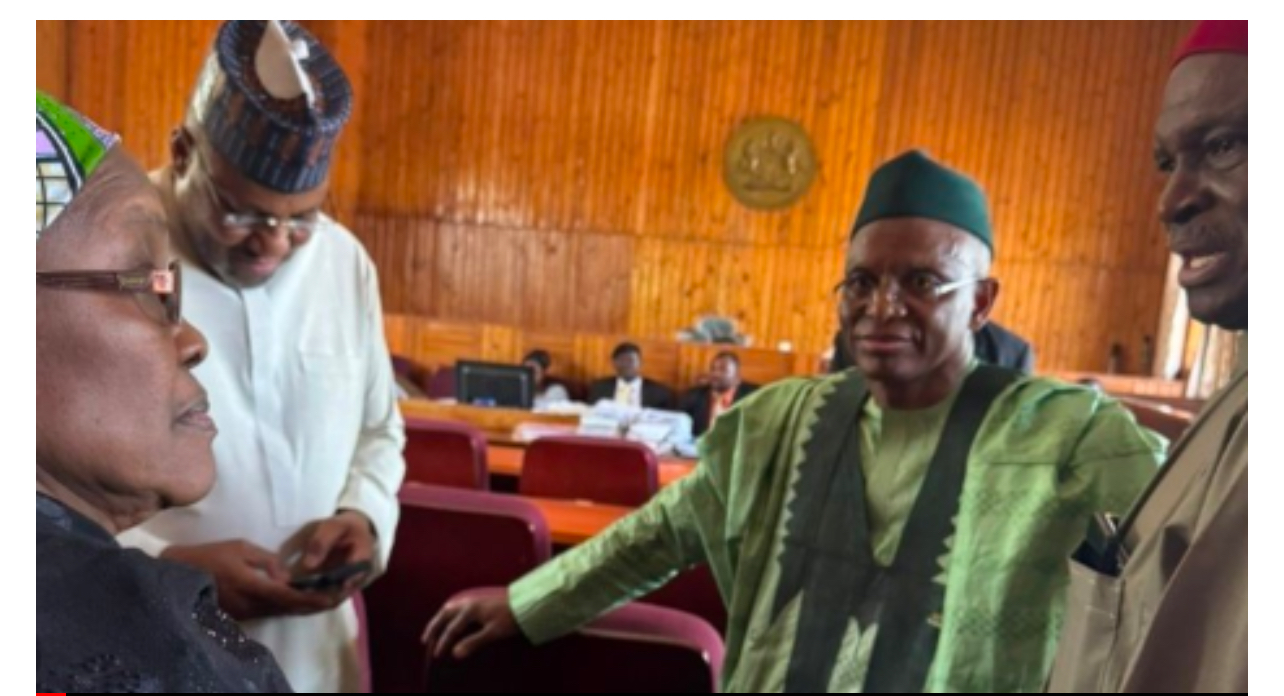
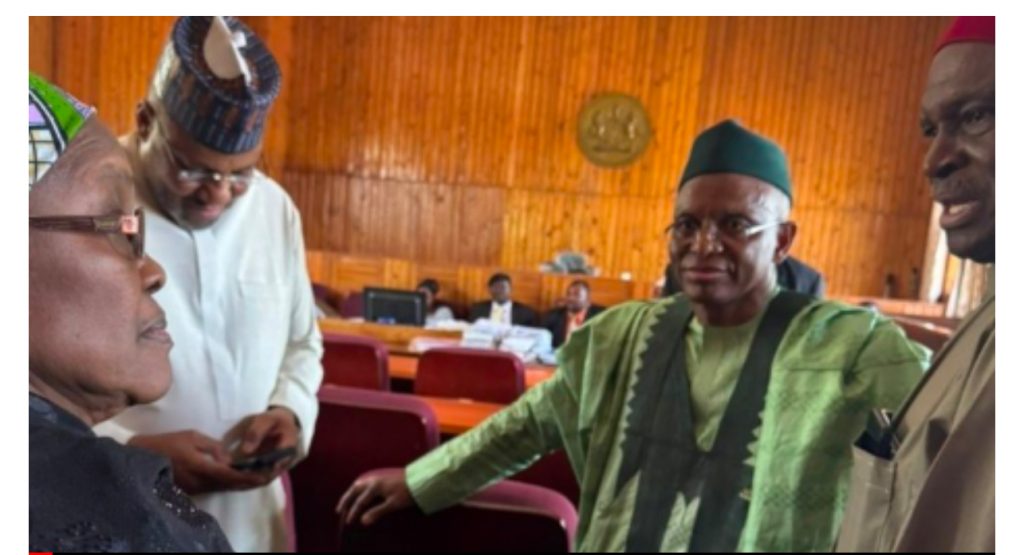
Security presence surged around the Federal High Court in Kaduna on Tuesday as operatives from multiple agencies were deployed ahead of the arraignment of former Kaduna State Governor, Nasir El-Rufai, over alleged corruption-related offences.
By about 7:00 a.m., heavily armed personnel of the Department of State Services, Nigeria Police Force, Mobile Police Force, and Nigeria Security and Civil Defence Corps had taken positions at strategic locations leading to the court complex situated within the old Nigerian Defence Academy area.
Access roads to the venue witnessed restrictions, forcing vehicles into a single lane from the Ungwan Sarki axis through Kawo and triggering early morning gridlock.
The heavy security followed a prior notice by the Independent Corrupt Practices and Other Related Offences Commission that it would arraign El-Rufai on Tuesday, March 24, 2026, before the Federal High Court sitting in Kaduna.
In a statement issued by its Head of Media and Public Communications, John Odey, the commission said the former governor would be docked alongside one Joel Adoga in suit number FHC/KD/73/2026.
The agency explained that the charges against the defendants include alleged conversion, unlawful possession of public property, and money laundering.
“The Independent Corrupt Practices and Other Related Offences Commission is set to arraign the former Governor of Kaduna State, Malam Nasir El-Rufa’i, and one Joel Adoga at the Federal High Court of Nigeria in the Kaduna Judicial Division on Tuesday, March 24, 2026. The charges range from conversion of and possession of public property to money laundering,” the statement read.
It further disclosed that another case, marked KDH/KAD/ICPC/01/26, had been instituted against El-Rufai and one Amadu Sule before a Kaduna State High Court.
According to the commission, the state charges border on abuse of office, fraud, intent to commit fraud, and conferring undue advantage.
“Similarly, another charge against Malam Nasir El-Rufa’i and one Amadu Sule has been filed before a Kaduna State High Court in the Kaduna Judicial Division. The charges range from abuse of office and fraud to intent to commit fraud and conferring undue advantage, among others,” the statement added.
The ICPC said both cases were filed on March 18, 2026, adding that a date for arraignment in the state court would be announced later.
It also insisted that El-Rufai had been properly served, stressing its adherence to due process and the rule of law.
The development came amid growing pressure from stakeholders, including the African Democratic Congress, which called for his immediate release or arraignment, describing his continued detention without formal charges as unconstitutional.
In the same vein, the Muslim Rights Concern criticised his prolonged detention, while members of his family also alleged a breach of his fundamental rights.
El-Rufai was first arrested by the Economic and Financial Crimes Commission on February 16, 2026, granted bail two days later, and subsequently re-arrested by the ICPC.
He has remained in the custody of the anti-graft agency since then, pending his arraignment.
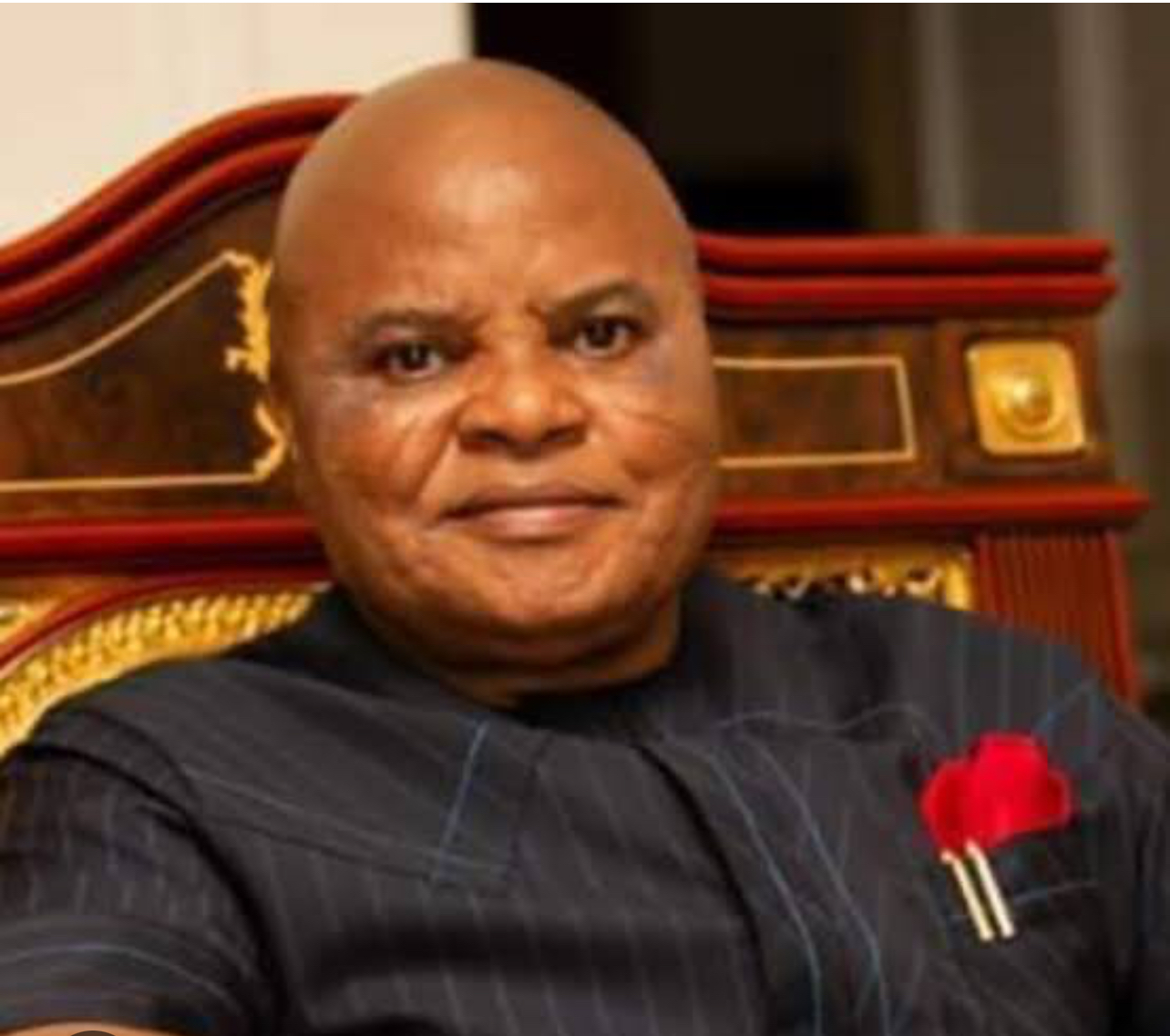
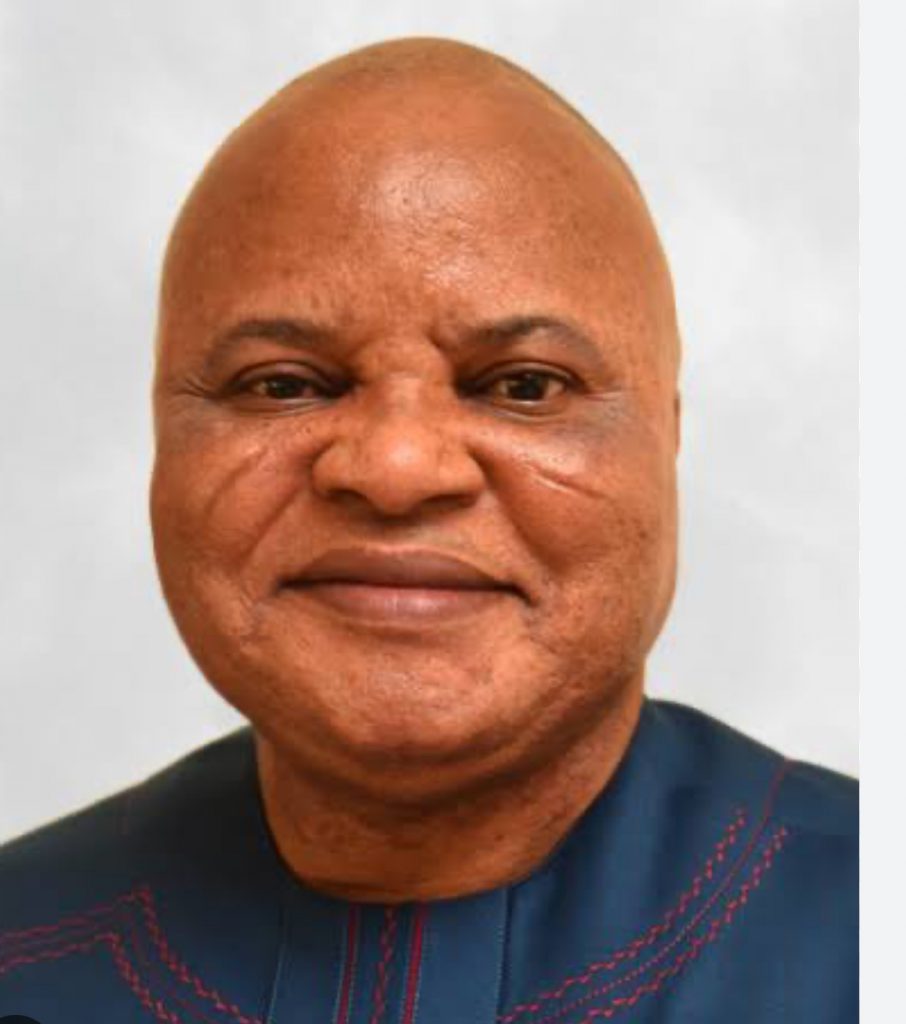
Senator Ifeanyi Araraume, a prominent chieftain of the All Progressives Congress (APC), has extended warm felicitations to Muslims in Nigeria and across the globe on the joyous occasion of Eid-el-Fitr.
In a statement to mark the end of Ramadan, Araraume highlighted the significance of the month long period of spiritual reflection, fasting, and devotion. “As Muslims gather with loved ones to share in the festivities, I join in the cheer, wishing everyone a blessed and peaceful Eid,” he said.
The Senator expressed profound appreciation to Muslim Nigerians for their contributions to the nation’s growth, describing their faith, resilience, and patriotism as beacons of hope. “Your unwavering commitment to Nigeria’s progress is truly commendable,” he stated.
As the country navigates its current challenges, Araraume called for unity, understanding, and collective effort. “Let us embrace the spirit of Eid, forgiveness, generosity, and kindness, to build a brighter future for ourselves and generations to come,” he urged.
Araraume also extended solidarity to President Bola Tinubu, a distinguished Muslim and the leader of APC, praising his visionary leadership and dedication to nation building. “President Tinubu’s commitment to serving Nigeria has been exemplary, and we assure him of our continued support,” he said.
Reaffirming the APC’s commitment to national prosperity, Araraume emphasized that the values of compassion, unity, and progress embodied by Eid align deeply with the party’s ethos. “As we mark this occasion, we reaffirm our dedication to creating a Nigeria where faith and ethnic background are not barriers to success,” he concluded.
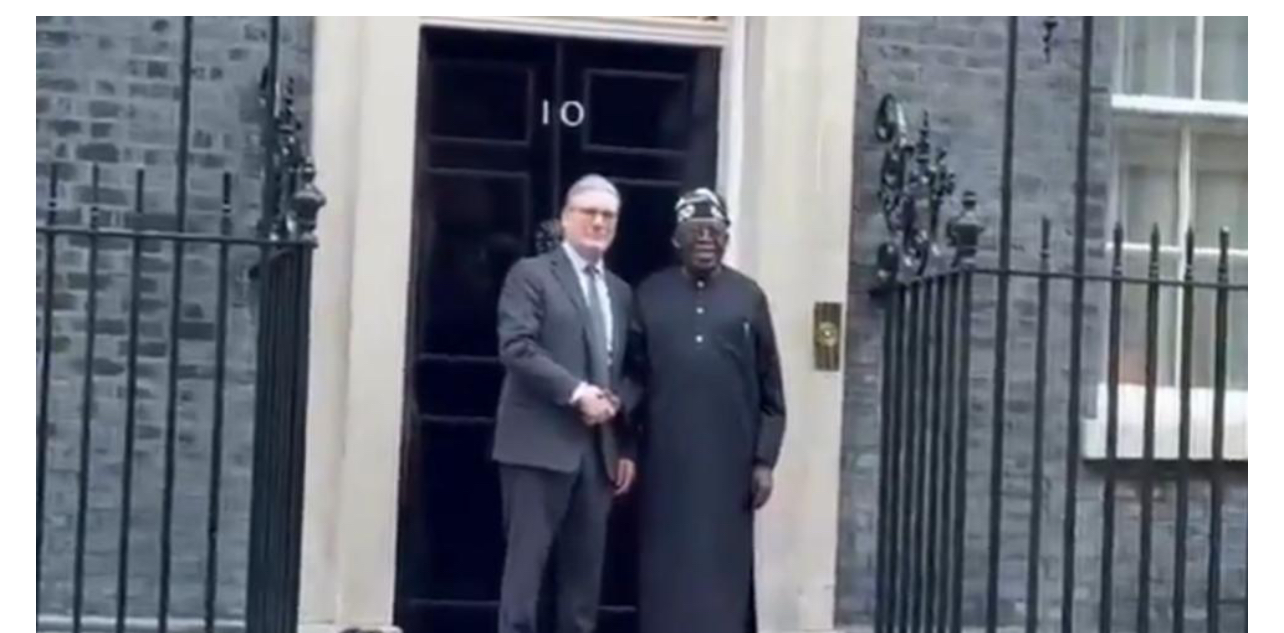
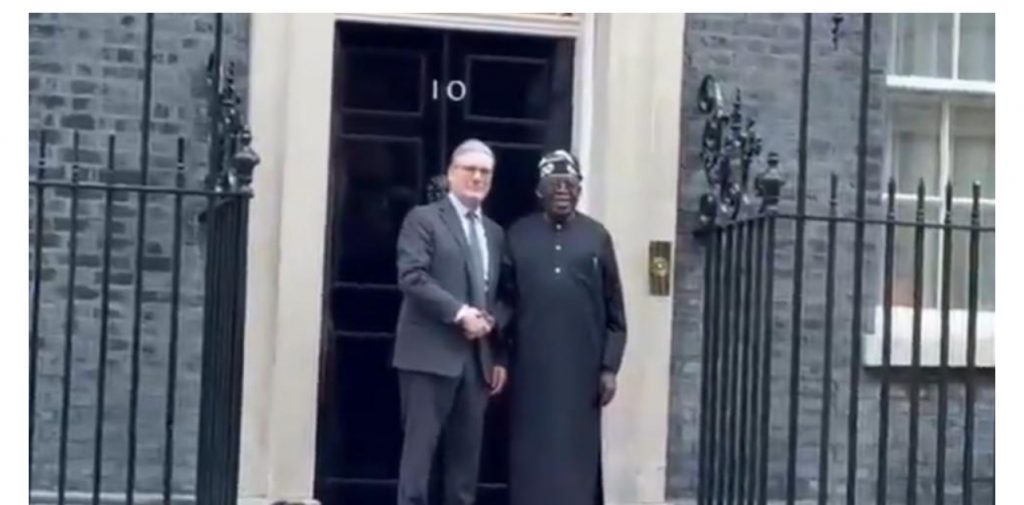
President Bola Tinubu is currently meeting with United Kingdom Prime Minister Keir Starmer in a high-level bilateral engagement aimed at strengthening ties between Nigeria and Britain.
A statement by the Special Adviser to the President on Information and Strategy, Bayo Onanuga, on Monday, said the meeting will culminate in the signing of various Memoranda of Understanding and agreements, including those on trade, investment, defence, and cultural cooperation.
The statement said the meeting reinforces Nigeria’s commitment to deepening bilateral relations, attracting foreign investment, and modernising key infrastructure to support economic growth.
It added that a major highlight of the visit was the signing of a £746 million financing agreement between UK Export Finance, the Nigerian Ports Authority, and the Federal Ministry of Finance.
Morning Recap: Nigeria, Britain set for fresh security alliances, Saudi Arabia declares Friday Eid-el-Fitr, other top stories
The statement said the deal will fund the refurbishment of two key maritime infrastructures — the Lagos Port Complex (Apapa Quays) and the Tin Can Island Port Complex.
The President and the First Lady had earlier been the guests of their Majesties King Charles III and Queen Camilla at Windsor Castle.
Tinubu was accompanied by a high-profile delegation, including Senate President Godswill Akpabio; Attorney General and Minister of Justice, Prince Lateef Fagbemi; Minister of Solid Minerals, Dele Alake; Minister of Information and National Orientation, Idris Mohammed; and Minister of State for Foreign Affairs, Ambassador Bianca Ojukwu.
Other members of the delegation include Minister of Finance and Coordinating Minister of the Economy, Wale Edun; Minister of Industry, Trade and Investment, Dr. Jumoke Oduwole; Minister of Culture and Creative Economy, Hannatu Musawa; Minister of Communications and Digital Economy, Bosun Tijani; Minister of Defence, Gen. Christopher Musa; National Security Adviser, Malam Nuhu Ribadu; and Director-General of the National Intelligence Agency, Mohammed Mohammed.


-
 news5 years ago
UPDATE: #ENDSARS: CCTV footage of Lekki shootings intact – Says Sanwo – Olu
-
 lifestyle6 years ago
Former Miss World: Mixed reactions trail Agbani Darego’s looks
-
 health5 years ago
Chairman Agege LG, Ganiyu Egunjobi Receives Covid-19 Vaccines
-
 lifestyle4 years ago
Obateru: Celebrating a Quintessential PR Man at 60
-
 health6 years ago
UPDATE : Nigeria Records 790 new cases of COVID-19
-
 health6 years ago
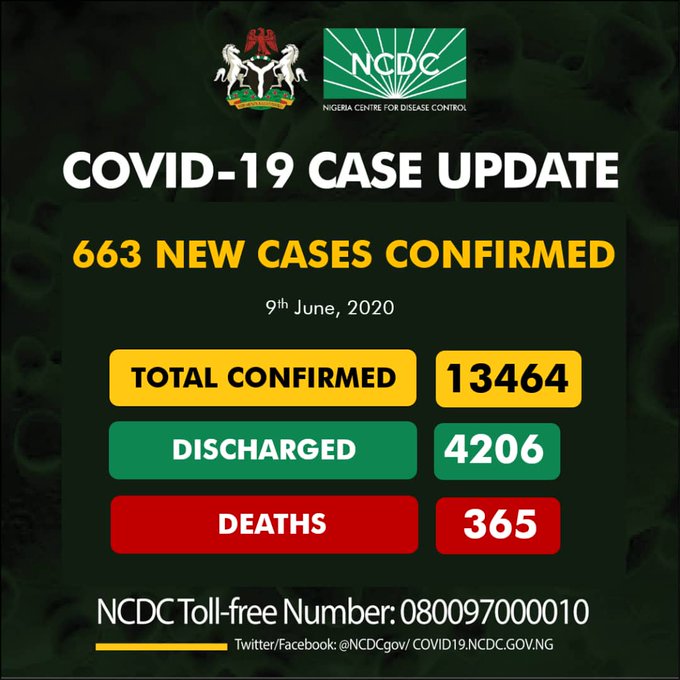
BREAKING: Nigeria confirms 663 new cases of COVID-19
-
 entertainment1 year ago
Ashny Set for Valentine Special and new Album ‘ Femme Fatale’
-
 news10 months ago
BREAKING: Tinubu swears in new NNPCL Board