
news
Update : Tinubu directs Minister to perform and restore faith in government

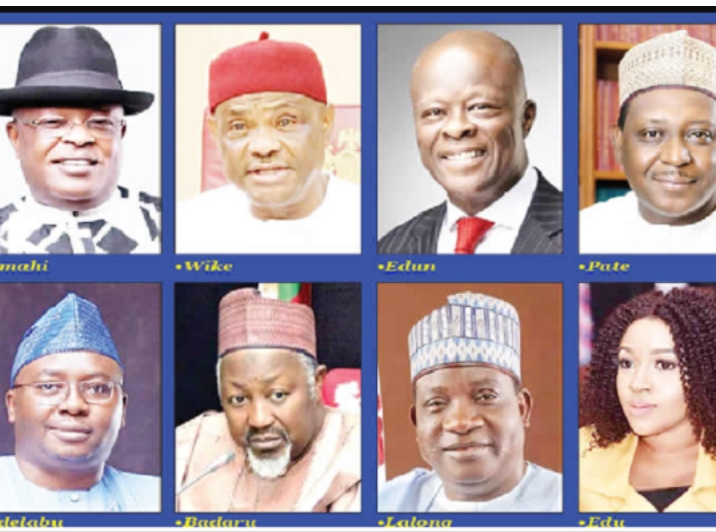
Cabinet members lay out priority areas
President demands performance, urges restoration of faith in govt
Ministers got the Presidential directive to perform and restore faith in government.
President Bola Ahmed Tinubu spoke after 45 ministers took the oath of office and oath of allegiance before him at the State House Conference Centre, Presidential Villa, Abuja, yesterday.
The ministers left the venue and hit the ground running by resuming at their various ministries.
They also spoke on how they would actualise the Renewed Hope agenda.
Coordinating Minister of the Economy, Mr. Wale Edun, assured Nigerians on resumption at the Ministry of Finance that the discomfort as a result of the government’s bold steps to reform the economy would soon be over.
Coordinating Minister for Health and Social Welfare, Prof. Mohammed Ali Pate, said he would prioritise health security and reduce medical tourism.
The Minister of the Federal Capital Territory (FCT), Nyesom Wike, promised to restore the Abuja Master Plan and step on toes in the process if necessary.
Works Minister, Dave Umahi, said he will not jettison his national outlook.
He promised to be a hands-on minister who would not allow bureaucracy to be a spoke in his wheel.
The Minister of Power, Adebayo Adelabu, said he would confront the national grid challenge and meet the universal metering of households.
Under him, he added, electricity supply will be stable and accessible.
The Minister of Solid Minerals, Dele Alake, said President Tinubu sent him to the ministry because he intended to pursue diversification.
He said: “Now if you all can sit down to analyse the global trend of economic development, you would note that hydrocarbon, that is oil, is fading out.
“The world is moving towards alternatives like gas, electric cars and the rest. So, what is the next economic growth factor? It is solid minerals.”
Marine and Blue Economy Minister, Adegboyega Oyetola, said the blue economy is estimated globally to be worth more than $1.5 trillion annually.
He said considering the size of the country’s blue economy, it should contribute to the revenue drive and provide jobs for the unemployed.
Opportunities in the sub-sector will be fully harnessed, he added.
Aviation and Aerospace Development Minister Festus Keyamo (SAN) said he would build on the existing aviation roadmap.
Interior Minister Olubunmi Tunji-Ojo warned para-military agencies against infractions, adding that internal security will be business unusual under his watch.
Humanitarian and Poverty Alleviation Minister Betta Edu explained that she will vigorously pursue the government’s goal of lifting 133 million Nigerians out of poverty.
The ministers were sworn in in nine batches of five in alphabetical order.
But priority was accorded the Attorney-General and Minister of Justice Lateef Fagbemi (SAN).
His office is the only one mentioned in the Constitution.
The invitation for oath-taking preceded the reading of the resume of the ministers.
At the end of the oath-taking, the President read his address and proceeded to take a group photograph with all 45 ministers.
The inauguration was witnessed by Vice President Kashim Shettima, Senate President Godswill Akpabio, House Representatives Speaker Tajudeen Abass, Secretary to the Government of the Federation(SGF) Senator George Akume and Chairman of the Nigeria Governors’ Forum (NGF) Abdulaziz Abdulrahman of Kwara State.
Others were governors, political leaders, family members of the ministers, and top government functionaries.
The President noted that the ministers came on board at a time when the country needed renewal and reforms across the sectors.
He said: “Nigerians expect you to hit the ground running just as we had promised them during our campaigns.
“With your inauguration today (yesterday), you have become ministers of the Federal Republic, not ministers of a particular state or region.
“Nigerians expect a lot and they deservedly want to see changes in their lives.
“You are now in the same boat with me, and they expect that their lives will take a new and better turn.”
Noting that the new ministers reflected the national diversity, the president said they were chosen because of their records in their various fields.
Tinubu said despite the ministers’ track records, he would be behind the wheels of the vehicle conveying Nigerians on the journey to a greater country while they serve as conductors.
His words: “In line with the constitutional obligations, the Senate has screened and confirmed 45 ministers who will superintend over the ministries of Federal Government in this administration of renewed hope.
“The men and women who have been sworn in have been carefully selected by me for their track record of excellence and achievement in the public and private sectors.
“They reflect the diversity of Nigeria and bring to their new role an assortment of experience and expertise to help guide the nation’s affairs and also continue to rebuild the nation and re-engineer all our finances and defects, building blocks of Nigeria today and the future.
“The challenges we face today are very daunting, yes. Amidst this evident challenge, we have the opportunity to implement long overdue reforms that will improve the operation of government, transform our nation’s economy and ensure peace, safety and prosperity for our people.
“These are the objectives that underpin the renewed hope agenda. These are the objectives that inspired the selection of a lot of these distinguished ladies and gentlemen ministers.
“Ministers of the Federal Republic of Nigeria, you are not a minister of a region or minister of a particular state.
“Since my inauguration on May 29, I have taken steps to begin implementing the agenda from which I campaigned and for which I received the mandate of the Nigerian people.
“With the inauguration of ministers today (yesterday), we are about to accelerate our governing efforts to move forward, highlighting our best aspiration for Nigerians. It is all about a great team. And I believe we have them here.
“It is the highest honour to be chosen to serve as the minister in the Federal Executive Council of our beloved Republic. With such high honour comes tremendous responsibility.
“In this moment of abundant promise and peril in equal measure, all of you who have been sworn in have been called to distinguish yourselves.
“All of you who have been sworn in have been called to distinguish yourselves. It is me who knows you. I delegate this authority, but the greatest number of Nigerians are highly expecting delivery, accountability and transparency.
“I expect that you will serve with integrity, dignity and deliver. I will hold you to that standard we all promised Nigerians.
“Your assignment begins immediately. As your country honours you by this call to service, you must each work to make yourself worthy in the eyes of God and all our nation’s people.
“Your highest obligation is to restore public faith in government so that our people can once again believe.
“I believe in you that the government can be a positive force for transformation and a vehicle for collective progress of this country.
“I congratulate you and welcome you to the administration of renewed hope. I wish you success in this new assignment.
“We must hold each other responsible. We have to do the job to meet the expectations of all Nigerians.
“As I said earlier on, you are not a minister of a particular state, colony, region or ethnic nationality. You are a Minister of the Federal Republic of Nigeria. God be with you and God bless the Federal Republic of Nigeria,”
The ministers are Attorney-General of the Federation and Minister of Justice Lateef Fagbemi (SAN); Minister of State for Labour and Employment Nkiruka Onyejeocha; Minister of State (Gas), Ministry of Petroleum Resources Ekperikpe Ekpo; Minister of State (Oil), Ministry of Petroleum Resources Heineken Lokpobiri; Minister of Women Affairs Uju Kennedy; Minister of Education Tahir Maman; Coordinating Minister of Health and Social Welfare Ali Pate; Minister of Foreign Affairs Yusuf Tuggar; Minister of Water Resources and Sanitation Joseph Utsev and Minister of Agriculture and Food Security Abubakar Kyari.
Others are Minister of Humanitarian Affairs and Poverty Alleviation Betta Edu; Minister of Sports Development John Enoh; Minister of Aviation and Aerospace Development Festus Keyamo (SAN); Minister of Works Dave Umahi and Minister of Niger Delta Development Abubakar Momoh.
Also in the new Federal Executive Council (FEC) are the Minister of Solid Minerals Development Dele Alake; Minister of Innovation Science and Technology Uche Nnaji; Minister of Transportation Alkali Sa’id; Minister of Industry, Trade and Investment, Doris Anite and Minister of Defence Mohammed Badaru.
Others are Minister of State Housing and Urban Development, Abdullahi Gwarzo; Minister of State, Federal Capital Territory (FCT) Mariya Mahmud; Minister of Housing and Urban Development Ahmed Dangiwa; Minister of Art, Culture and Creative Economy, Hannatu Musawa and Minister of Budget and Economic Planning, Atiku Bagudu.
Others are Minister of State Education Yusuf Sunumu; Minister of Steel Development Shuaibu Audu; Minister of State for Health and Social Welfare Tunji Alausa; Minister of Tourism Lola Ade-John and Minister of State, Police Affairs Imaan Sulaiman-Ibrahim.
Minister of Agriculture and Food Security, Aliyu Sabi Abdullahi; Minister of Information and National Orientation Muhammed Idris; Minister of State Environment Ishak Salako; Minister of Finance and Coordinating Minister of the Economy Wale Edun and Minister of Communications, Innovation and Digital Economy Bosun Tijani are the others.
Also sworn in are Minister of Interior Bunmi Tunji-Ojo; Minister of Marine and Blue Economy Adegboyega Oyetola; Minister of Power Adedayo Adelabu; Minister of Labour and Employment Simon Lalong and Minister of the Federal Capital Territory (FCT) Nyesom Wike.
Minister of State for Water Resources and Sanitation Bello Goronyo; Minister of State for Steel Development Maigari Ahmadu; Minister of Police Affairs Ibrahim Geidam; Minister of State for Defense Bello Matawalle and Minster of Special Duties and Intergovernmental Affairs Zephaniah Jisalo complete the 45.
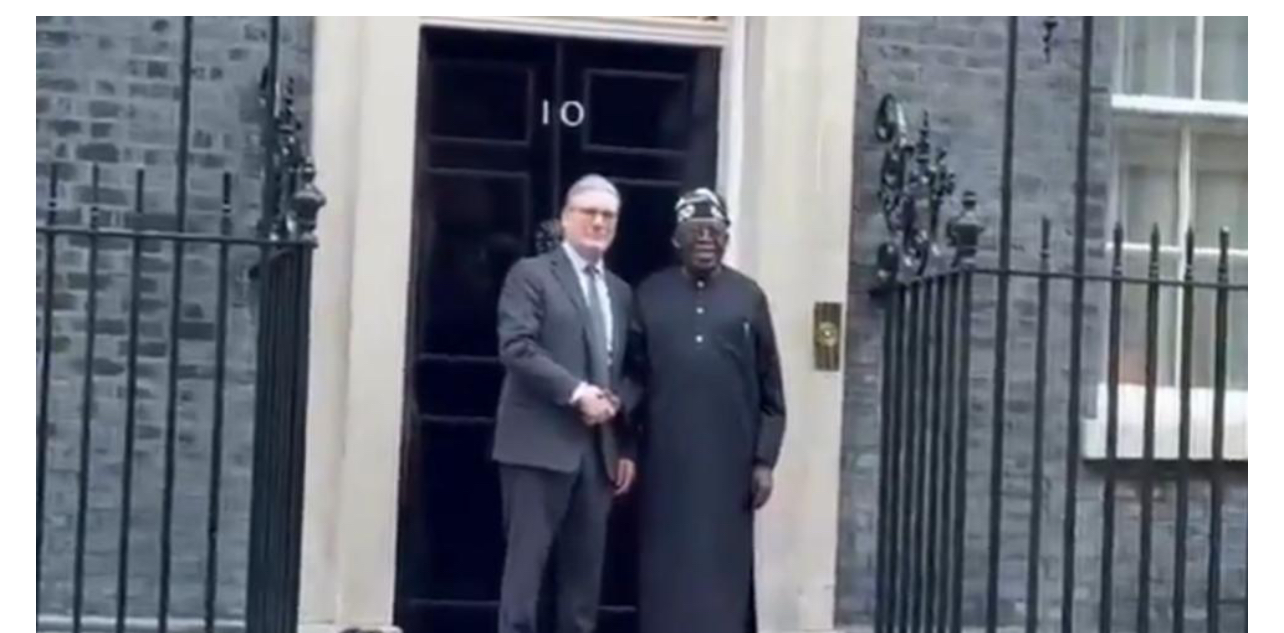
President Bola Tinubu is currently meeting with United Kingdom Prime Minister Keir Starmer in a high-level bilateral engagement aimed at strengthening ties between Nigeria and Britain.
A statement by the Special Adviser to the President on Information and Strategy, Bayo Onanuga, on Monday, said the meeting will culminate in the signing of various Memoranda of Understanding and agreements, including those on trade, investment, defence, and cultural cooperation.
The statement said the meeting reinforces Nigeria’s commitment to deepening bilateral relations, attracting foreign investment, and modernising key infrastructure to support economic growth.
It added that a major highlight of the visit was the signing of a £746 million financing agreement between UK Export Finance, the Nigerian Ports Authority, and the Federal Ministry of Finance.
Morning Recap: Nigeria, Britain set for fresh security alliances, Saudi Arabia declares Friday Eid-el-Fitr, other top stories
The statement said the deal will fund the refurbishment of two key maritime infrastructures — the Lagos Port Complex (Apapa Quays) and the Tin Can Island Port Complex.
The President and the First Lady had earlier been the guests of their Majesties King Charles III and Queen Camilla at Windsor Castle.
Tinubu was accompanied by a high-profile delegation, including Senate President Godswill Akpabio; Attorney General and Minister of Justice, Prince Lateef Fagbemi; Minister of Solid Minerals, Dele Alake; Minister of Information and National Orientation, Idris Mohammed; and Minister of State for Foreign Affairs, Ambassador Bianca Ojukwu.
Other members of the delegation include Minister of Finance and Coordinating Minister of the Economy, Wale Edun; Minister of Industry, Trade and Investment, Dr. Jumoke Oduwole; Minister of Culture and Creative Economy, Hannatu Musawa; Minister of Communications and Digital Economy, Bosun Tijani; Minister of Defence, Gen. Christopher Musa; National Security Adviser, Malam Nuhu Ribadu; and Director-General of the National Intelligence Agency, Mohammed Mohammed.
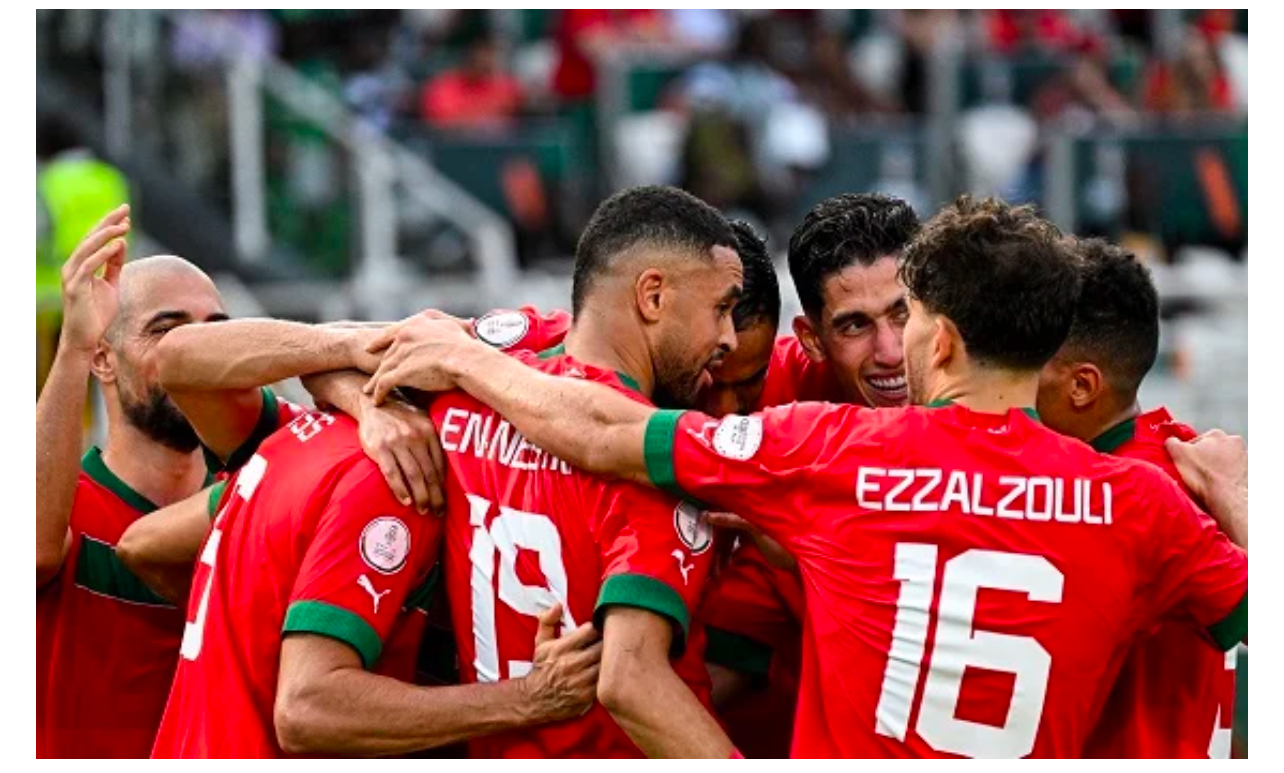
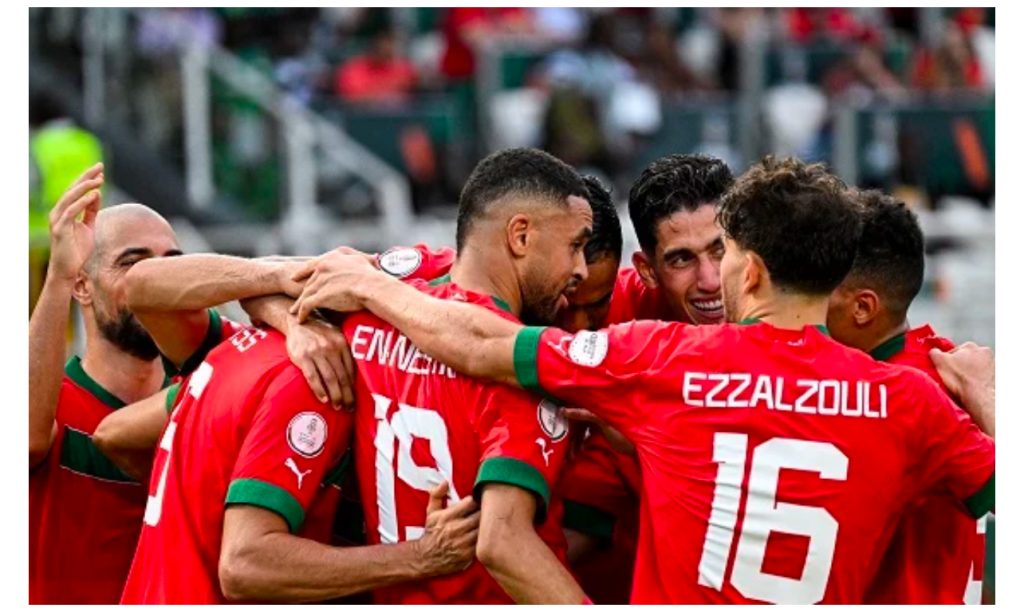
Morocco have been officially crowned champions of the 2025 Africa Cup of Nations after the CAF Appeal Board overturned the result of the final against Senegal. The decision comes after extraordinary scenes in Rabat where the Lions of Teranga walked off the pitch in protest, leading to a retrospective 3-0 forfeit victory for the host nation.
In a detailed statement, the CAF Appeal Board confirmed that the appeal lodged by the FRMF was “declared admissible in form and the appeal is upheld.” This landmark ruling effectively strips Senegal of what would have been their second continental crown, rewarding the hosts for a match that descended into chaos during extra time.
The roots of the controversy lie in a heated moment deep into stoppage time when Morocco’s Brahim Diaz went down in the box. While the referee initially waved play away, a VAR review resulted in a spot-kick for the hosts. This sparked a furious reaction from the Senegalese bench, with head coach Pape Thiaw instructing his players to return to the dressing room in a protest that lasted several minutes.
The CAF Appeal Board found that “the conduct of the Senegal team falls within the scope of Articles 82 and 84 of the Regulations of the Africa Cup of Nations.” By leaving the field of play, Senegal was deemed to have infringed on the regulations, leading to the administrative 3-0 defeat. The ruling sets aside the previous CAF Disciplinary Board decision and confirms that the protest lodged by Morocco has been fully upheld
Mo  No fewer than 26 passengers and onboard personnel sustained varying degrees of injuries following a train incident along the Abuja–Kaduna rail corridor on Monday.
The incident, which occurred at about 9:16 a.m. near Asham Station, involved the KA-2 service travelling from Rigasa to Idu. According to an interim report released by the Nigerian Railway Corporation (NRC), a loud bang was heard as the power car and a trailing locomotive collided with one of the coaches.
Preliminary findings indicate that the incident may have been caused by a fault in one or more couplers, leading to a possible disconnection within the train formation. However, authorities confirmed that none of the coaches derailed.
The train had earlier departed Rigasa Station at 7:15 a.m., arriving at Jere slightly ahead of schedule before departing a few minutes later after an additional locomotive was coupled to improve operational resilience.
Following the incident, affected components—including a locomotive, power car, and one passenger coach—were detached from the train to allow the journey to continue safely.
A total of 481 people were onboard at the time, including passengers, crew members, security personnel, vendors, cleaners, and other service providers. Of the 459 passengers booked for the trip, 429 were confirmed to have boarded.
Despite the disruption, the train resumed movement at about 9:42 a.m., arriving in Kubwa at 10:10 a.m. and terminating at Idu Station at 10:39 a.m., with an overall delay of approximately 38 minutes.
The NRC stated that injured persons included passengers, staff, and security personnel, although details of the severity of injuries were not fully disclosed.
Train services on the route were later restored the same day, with subsequent trips resuming operations, albeit with delays. The Managing Director of the NRC, Kayode Opeifa, was onboard one of the recovery services to monitor the situation.
The corporation assured the public that a full investigation is underway to determine the exact cause of the incident and to prevent future occurrences.


-
 news5 years ago
UPDATE: #ENDSARS: CCTV footage of Lekki shootings intact – Says Sanwo – Olu
-
 lifestyle6 years ago
Former Miss World: Mixed reactions trail Agbani Darego’s looks
-
 health5 years ago
Chairman Agege LG, Ganiyu Egunjobi Receives Covid-19 Vaccines
-
 lifestyle4 years ago
Obateru: Celebrating a Quintessential PR Man at 60
-
 health6 years ago
UPDATE : Nigeria Records 790 new cases of COVID-19
-
 health6 years ago
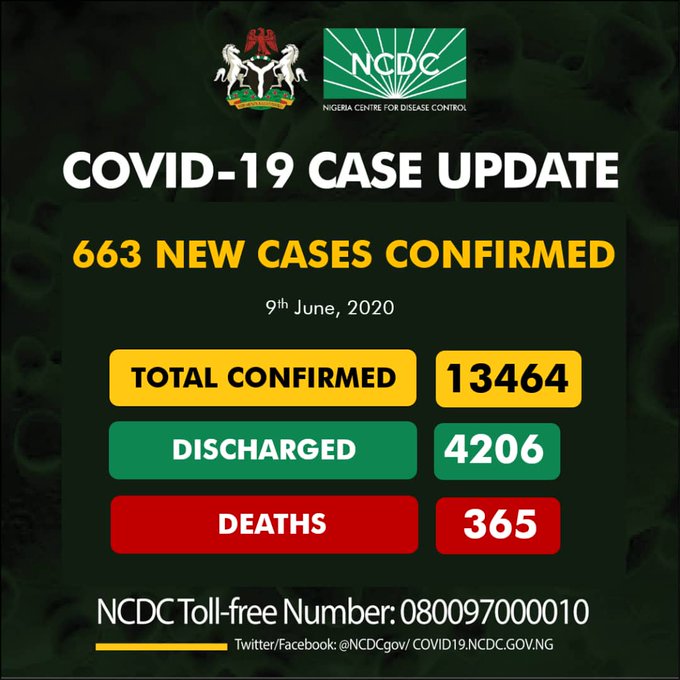
BREAKING: Nigeria confirms 663 new cases of COVID-19
-
 entertainment1 year ago
Ashny Set for Valentine Special and new Album ‘ Femme Fatale’
-
 news10 months ago
BREAKING: Tinubu swears in new NNPCL Board