Connect with us

news

Illegal Oil Deals : Federal Government says it has Begun Gathering Evidence on Government Officials Linked to the Alleged Looting of $69bn

Published

on

The Federal Government says it has begun gathering evidence on government officials linked to the alleged looting of $69bn (N28.3tn) stashed in various bank accounts in Texas, the United States.

The loot reportedly accrued from illegal oil deals involving some officials of the government-owned Nigerian National Petroleum Corporation and the Central Bank of Nigeria during the Goodluck Jonathan administration.

Our correspondence on Friday exclusively reported that an American assets recovery firm, Forensic Assets Investigation and Recovery Services LLC, discovered the $69bn loot.

Findings showed that the American company, FAIR, is a specialist in anti-corruption asset recovery working independently to trace and help repatriate money stashed away in foreign bank accounts and loot converted to real estate, luxury items, yachts and the money markets.

The firm, founded by a lawyer, Gary Riebschlager, comprises investigators, forensic accountants, bankers, and cyber experts who utilise Mutual Legal Agreements and global Financial Intelligence Units, Camden Assets Recovery Inter-Agency Network, Global Focus Point Network in Asset Recovery (Interpol), and the Stolen Asset Recovery Initiative of the World Bank.

In a January 2019 confidential memo to the Special Presidential Investigation Panel, FAIR said it could help the Federal Government recover the money if hired and compensated for its services.

Out of the loot, $9bn was reportedly traced to a Texas bank account allegedly belonging to the late National Security Adviser, General Andrew Azazi.

Azazi died in a helicopter crash in Okoroba, Nembe Local Government Area of Bayelsa State in December 2012 alongside the Governor of Kaduna State, Patrick Yakowa, and others.

Two months after FAIR wrote the SPIP, the latter wrote a letter dated March 18, 2019 to the President, Major General Muhammadu Buhari (retd), on the matter, explaining FAIR’s proposal.

SPIP stated that FAIR assured that the $9bn allegedly stolen by Azazi could be recovered within three to five months.

The SPIP’s letter to the President, with reference number SPIP/SH/2019/VOL.1/1, was titled, ‘American assets investigation and recovery company has traced a definite $9bn funds linked to the late Gen Azazi.’

The letter was signed by a former SPIP Chairman, Okoi Obono-Obla.

It read in part, “In January 2019, an American assets recovery company, Forensic Assets Investigation and Recovery Services LLC, sent a confidential memo to us stating the discovery of a definite total amount of $9bn in the State of Texas linked to the late General Azazi (former NSA), plus an additional huge amount in excess of $60bn from multiple sources of illegal sales of crude oil from Nigeria into the entire United States of America.

“Mr President, the confidential memo to us prompted our agency to seriously engage the US company to determine the veracity of the information, which resulted in an official invitation to them that they may visit us to further discuss and agree on steps needed to recover and return the funds to the Nigerian government.”

Following the overwhelming evidence provided by the assets recovery company regarding the $9bn and their capacity to recover and return the fund,  the SPIP explained that it decided to engage the American forensic experts on a face-to-face meeting scheduled for March 29, 2019.

The panel also attached a copy of the firm’s acceptance letter to its memo to the President and sought Buhari’s approval for the planned meeting with the American company.

The memo noted, “Mr President, we intend to work together with the Americans in order to secure the recovery of the definite $9bn within 3-5 months they stated and to engage them to see and recover the larger part of the estimated $60bn-$80bn stolen from Nigeria during the oil boom. Also, to engage the NNPC and the CBN in the overall recovery of those funds in the United States.

“Our prayers to the President are: To approve the engagement of the American company to recover the funds and assets in the US and to approve the support of the visiting American firm to integrate software technology in the CBN in order to trace fraud funds.

“To approve the presence of interface offices of the Special Presidential Investigation Panel in NNPC and the CBN. Your Excellency, the immediate recovery of the identified $9bn within the stated timeframe of 3-5 months will totally eliminate borrowing to fund the 2018 budget deficit and sustain the 2019 budget.”

However, two years after the SPIP notified the President of the loot, the Federal Government was said to have not taken concrete steps to recover the money.

Also, Obono-Obla had yet to conclude the recovery process when he was removed from the panel by the President and replaced by the Solicitor-General of the Federation and Permanent Secretary, Federal Ministry of Justice, Dayo Apata.

Over 400 criminal and graft cases retrieved from the SPIP by the office of the Attorney-General and Minister of Justice were also found to have been abandoned.

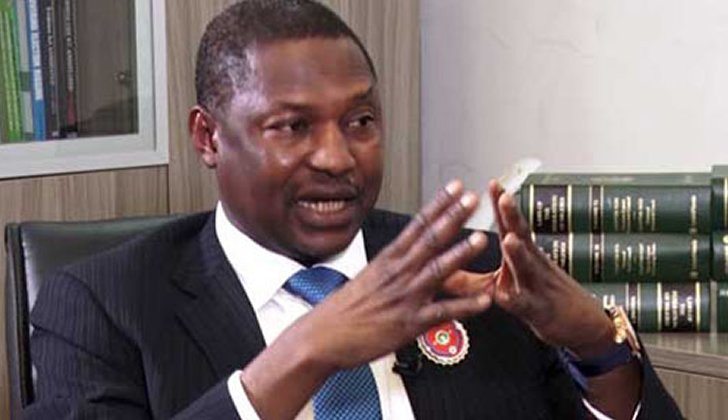
However, the Attorney General of the Federation and Minister of Justice, Abubakar Malami (SAN), on Friday told one of our correspondents that the Federal Government had swung into action with the aim of getting adequate information on the $69bn loot allegedly hidden in American banks in Texas as well as the government officials involved.

The AGF also said the relevant bank details would be traced.

Malami’s Special Assistant on Media and Public Relations, Dr Umar Gwandu, who spoke on behalf of the minister, said the government was at the information-gathering stage and would work on verifiable information.

Gwandu said, “The government has swung into action to generate adequate information on the alleged $69bn, inclusive of the Nigerians involved, incidental bank details, and actionable intelligence to enable us to deal with the matter.

“The details of the alleged lawyers involved and what information is at their disposal can also be very helpful.

Gwandu said the Buhari regime had the track record of repatriating stolen funds stashed in foreign accounts, saying it was one of the “visible and indelible” successes recorded by the regime.

He said, “The Office of the Attorney General has established a historical record of acting on cogent and verifiable information that has led to the recoveries of looted assets upon valid revelations that are subjected to integrity test by the assets recovery units of the office of the Attorney General of the Federation.

“The integrity test of information is not media-based but a process being conducted through the laid-down official process in compliance with the extant laws.

“One of the prime and uncompromising policies of the present administration under the leadership of President Muhammadu Buhari is the fight against corruption.”

 We have nothing to say now–NNPC

Meanwhile, the Group General Manager, Group Public Affairs Department, NNPC, Kennie Obateru, told one of our correspondents that the corporation had nothing to say about the allegations.

“You know the way NNPC is run, particularly on issues like this. We don’t have anything to say about it,” he stated.

However, some officials of the NNPC who spoke on condition of anonymity, expressed doubt over the authenticity of FAIR’s findings.

“What is the entire budget of the country for a company to come up with an allegation that $69bn from illegal oil deals by NNPC was traced to American accounts?” asked an official, who requested not to be named due to the nature of the matter.

The official added, “Because somebody made an allegation does not mean that it has become a fact. Proper investigations should be done.”

Besides, as of the time of filing this report, efforts to get the reactions of the CBN, Ministry of Finance, Budget, and National Planning had yet to yield positive results.

SERAP, CACOL, SAN, lawyers call for thorough probe

However, civil rights organisations, including the Socio-Economic Rights and Accountability Project and the Coalition Against Corrupt Leaders, have called on the Federal Government to conduct a thorough probe of the alleged $69bn loot in Texas banks.

He said, “The Nigerian authorities should investigate how the money got to the said accounts and hold whoever is/are responsible for it accountable so that the money does not get finally lost.”

Also, the Executive Director, CACOL, Debo Adeniran, said no stone should be left unturned in ensuring that the loot was repatriated back to the country.

“All of us should be vigilant, the media and the anti-corruption agencies, to ensure that no stone is left unturned on this matter,” he said.

Adeniran argued that the fraud happened in the first place because institutions such as the Ministry of Petroleum Resources, Office of the Accountant General, and anti-corruption agencies did not perform their duties of monitoring the receipts and expenditures of oil revenue.

He said, “There are international protocols which the Attorney General ought to have commenced but has been reluctant to do.

“The Auditor-General, Accountant General, and the minister under who it happened must answer questions.”

Also, a human rights lawyer and former General Secretary of the Committee for the Defence of Human Rights, Malachy Ugwumadu, said it was the responsibility of the government to recover stolen funds.

He said, “The government should try to avoid the pit-holes that we have all been encountering in the efforts to recover stolen funds in the past.

“Some of those pit-holes include the lengthy period of time that it takes to recover them.

“Take a look at the (Sani) Abacha loot, do you remember when Abacha ruled Nigeria?”

The lawyer advised that the issue should be tackled at the level of diplomatic engagement so that the loot would be “almost automatically” repatriated.

Meanwhile, the Convener, Coalition in Defence of Nigerian Democracy and Constitution, Dare Ariyo-Akintoye, tackled the Buhari regime, saying it had no good reputation in dealing with foreign loot recovery firms.

He said, “Ordinarily, the Buhari administration is incapable of such recoveries, but if it can swallow its pride and seek the help of global assets recovery firms, it has a chance.”

Also, a Senior Advocate of Nigeria, Mike Ozekhome, urged the government to recover the loot and use it for the benefit of Nigeria in a transparent and accountable way.

“The government should go ahead and recover the funds. It’s Nigeria’s money and it should be recovered and used for the Nigerian people. And there must be transparency and accountability in the use of the money.

“What projects is the money being used for? How is it being used? Where will it be kept first when it comes? How much is it? There must be transparency and accountability about it,” he said.

Meanwhile, when asked if the Economic and Financial Crimes Commission would investigate the graft case, the commission’s spokesperson, Wilson Uwujaren, simply said the agency doesn’t give advance notice of its investigations.

He also declined to speak further.

The Independent Corrupt Practices and Other Related Offences Commission spokesperson, Mrs Azuka Ogugua, could not be reached for comment.
 

Continue Reading
Click to comment

Leave a Reply

Your email address will not be published. Required fields are marked *

news

EFCC Extends El-Rufai’s Stay in Custody Amid ₦432bn Probe

Published

on

Former Kaduna State Governor, Nasir El-Rufai, on Tuesday spent the second night in the custody of the Economic and Financial Crimes Commission, as his lawyer, A.U Mustapha (SAN), pushes for his release on bail.

There are, however, indications that the commission may seek a remand order to extend his stay in custody to enable him to respond to questions posed by investigators handling his matter.

The former governor arrived at the EFCC headquarters in Abuja on Monday around 10 a.m. for questioning in connection with an alleged N432bn corruption probe. He was, however, detained at the commission, where investigators continued to grill him.

An official of the commission who pleaded anonymity said the anti-graft agency was considering obtaining a remand order after the expiration of the hours allowed by law to enable investigators conclude questioning him.

“Forget the speculations being peddled on social media that he has been released. He has not. El-Rufai is still with us and will be spending another night in custody.

“He is very much with us and will remain so because the investigators are considering getting a remand order after the expiration of the 48 hours allowed by law.

“The investigators need some time with him to answer questions arising from his eight years as governor in Kaduna State,” the source said.

Speaking in a telephone conversation with The PUNCH on Tuesday, El-Rufai’s counsel, Mustapha, confirmed that the former governor remained with the anti-graft agency, while insisting that his client had fully cooperated with investigators.

He described his client as a responsible citizen who is not a flight risk if granted bail.

Mustapha said, “Well, as a responsible citizen, he was invited and, true to his word, he honoured the invitation.

“As we speak, he is still with the EFCC. He is cooperating to the best of his capacity, and we hope that the EFCC, given its integrity, will be kind enough to admit him to bail because he is presumed innocent, and I am sure if he is granted bail, he will not jump bail.

“He is a responsible citizen, and everybody knows him. He came to Nigeria on his own volition. He wrote a letter that he was going to honour the EFCC invitation, and he kept his word as a man of integrity. We’re hopeful that very soon he will be granted bail.”

When asked about the specific allegations against his client, Mustapha declined to offer details.

“You’re asking the right question from the wrong person. That question can only be answered by the EFCC and not by me. I would just be speculating, and lawyers don’t do that.”

Pressed further on whether he witnessed parts of the interrogation and what it was about, Mustapha responded, “That would be prejudicial. It’s a confidential matter and not meant for public consumption.”

The EFCC’s interrogation is linked to the report of an ad hoc committee of the Kaduna State House of Assembly set up in 2024 to probe finances, loans, and contracts awarded between 2015 and 2023 during El-Rufai’s administration.

EFCC extends El-Rufai detention, Plateau indigenes killed, other top stories
Rep backs real-time electronic transmission of election results
The committee, chaired by Henry Zacharia, had alleged that several loans obtained during the period were not utilised for their intended purposes.

While presenting the report, the Speaker, Yusuf Dahiru Leman, claimed that about N423bn was allegedly siphoned under the former governor’s administration.

The committee recommended the investigation and prosecution of El-Rufai and some former cabinet members over alleged abuse of office, diversion of public funds, money laundering, contract awards without due process, and reckless borrowing.

The Assembly subsequently forwarded petitions to the EFCC and the Independent Corrupt Practices and Other Related Offences Commission.

El-Rufai has denied the allegations, describing the probe as politically motivated, and insisted that loans obtained during his tenure were properly appropriated and used for infrastructure, education, healthcare, and security.

On Monday, an EFCC source said the commission had been investigating the matter for about a year, noting that suspects are usually invited after investigations have reached an advanced stage.

“The commission has been investigating him for about a year now. As a commission, we don’t just rush to invite suspects. Persons accused are always the last; that is, after we might have done our investigation to an advanced stage.

“We are investigating him on the allegations against him by the Kaduna State Assembly,” the source said.

Meanwhile, in a separate development, the Department of State Services has filed criminal charges against El-Rufai before the Federal High Court in Abuja over alleged unlawful interception of the phone communications of the National Security Adviser, Nuhu Ribadu.

The three-count charge, marked FHC/ABJ/CR/99/2026, was filed under the Cybercrimes (Prohibition, Prevention, etc.) Amendment Act, 2024, and the Nigerian Communications Act, 2003.

According to the charge sheet, El-Rufai allegedly admitted during a February 13, 2026, appearance on Arise TV’s Prime Time Programme that he and unnamed associates unlawfully intercepted Ribadu’s communications.

Count One alleged that El-Rufai “did admit during the interview that you and your cohorts unlawfully intercepted the phone communications of the National Security Adviser, Nuhu Ribadu,” an offence said to be punishable under Section 12(1) of the Cybercrimes Amendment Act.

Count Two accused him of acknowledging knowledge of an individual involved in the alleged interception without reporting it to security agencies, while Count Three alleged that he and others still at large used technical equipment that compromised public safety and national security.

The prosecution further claimed that the alleged act, reportedly admitted during the television interview, caused “reasonable apprehension of insecurity among Nigerians.”

He is yet to be arraigned.

Continue Reading

news

Real-Time Results: Senate, House Fail to Align on INEC Powers

Published

on

Harmonisation of versions begins •Red Chamber okays e-upload to IREV

The controversy over the passage of the Electoral Act (Amendment) Bill 2026 at the Senate was laid to rest yesterday.

The Red Chamber endorsed electronic transmission of election results, without including the contentious “real-time” provision.

This was shortly before it adopted the Votes and Proceedings of the passage of the Bill, which scaled third reading on February 4, during a rowdy session.

Because the version passed by the Senate did not include “real-time” transmission, unlike the version earlier passed by the House of Representatives, a conference committee of both chambers will harmonise the bills before final approval and eventual presentation for presidential assent.

The amendment of Section 60(3), effected yesterday and passed along with other sections read by Senate President Godswill Akpabio, states: “The Presiding Officer shall electronically transmit the results from each polling unit to the INEC Result Viewing Portal, and such transmission shall be done after the prescribed Form EC8A has been signed and stamped by the Presiding Officer and countersigned by the candidates or polling agents where available at the polling unit.

“But if the electronic transmission of the result fails as a result of communication failure, and it becomes impossible to transmit the result electronically, the signed and stamped Form EC8A by the Presiding Officer, and countersigned by the candidates or polling agents where available, shall in such a case be the primary source of collation and declaration of results.”

This differs slightly from the version passed by the House of Representatives in December, which states: “The Commission shall electronically transmit the results from each polling unit to the IREV portal in real time, and each transmission shall be done simultaneously with the physical collation of results.”

The House also passed Section 60(5), which provides: “The Presiding Officer shall transmit the results, including the number of accredited voters, to the next level of collation.”

The Electoral Act 2022, under which the 2023 elections were conducted and which is in the process of being repealed, states in part under Section 60(5): “The Presiding Officer shall transfer the result, including the total number of accredited voters and the result of the ballot, in a manner as prescribed by the Commission.”

Before senators began proceedings yesterday, protesters, for the second consecutive day, gathered in front of the National Assembly to call for the passage of real-time electronic transmission of election results.

Among the protesters was the former Governor of Rivers State and immediate past Minister of Transportation, Chibuike Amaechi.

The police prevented the protesters from gaining access to the National Assembly complex.

Inside the chamber, the Senate passed the Electoral Act Amendment Bill after a heated debate in a rowdy plenary session.

At the session presided over by Senate President Godswill Akpabio, senators modified their earlier position on real-time electronic transmission of poll results.

They consequently approved a revised clause mandating electronic transmission of results from polling units to the INEC Result Viewing Portal (IREV), with a fallback mechanism in the event of network failure.

In such instances, Form EC8A, on which results are recorded, would serve as the basis for collation.

The amendment, once harmonised with the House of Representatives’ version and signed into law by the President, is expected to legalise the use of IREV in the result transmission process, unlike what obtained during the 2023 elections.

There was palpable tension in the hallowed chamber as the initial proposal to adopt the Votes and Proceedings of the previous sitting led to heated procedural disputes, which were carefully managed by Akpabio.

Outside the National Assembly, protesters continued to agitate for the inclusion of the real-time electronic uploading clause, which had been upheld in the House of Representatives’ version of the bill.

The modification followed the approval of a motion by the Senate Chief Whip, Mohammed Tahir Monguno (Borno North), titled: “Motion for Rescission on Clause 60(3) of the Electoral Act, 2022 (Repeal and Enactment) Bill, 2026.”

Moving the motion, Monguno recalled that the bill had been passed by the Senate on February 4 but said “fresh issues have emerged in respect of Clause 60(3), which require further legislative consideration to ensure the conduct of smooth, transparent and credible elections in Nigeria.”

Invoking Orders 1(b) and 52(6) of the Senate Standing Orders, 2023 (as amended), he urged the chamber to rescind its earlier decision on the clause and recommit it to the Committee of the Whole for reconsideration and passage.

Trouble began when Monguno rose to move the motion while the Senate President was reading out the rules on Votes and Proceedings.

His action triggered confusion, with many senators questioning whether the Senate could revisit a decision already taken within the same legislative session.

Some senators argued that Order 1(b) empowered the Senate to suspend normal procedure.

Following a voice vote, the chamber agreed to allow Monguno to proceed.

Monguno said ambiguity surrounding the earlier amendment, particularly the controversy over the use of the words “transfer” and “transmission” of election results, had generated public concern and required urgent legislative clarification.

He proposed a fresh amendment stipulating that presiding officers at polling units must electronically transmit results to the INEC Result Viewing Portal (IREV) after completing and signing Form EC8A.

He added that where electronic transmission fails due to communication challenges, the signed and stamped Form EC8A would serve as the primary source for collation and declaration of results.

After the motion was seconded by Senator Abba Moro, who described the development as “a victory for democracy,” the chamber descended into disorder when the Senate President declared that the voice vote had carried the amendment.

Several senators protested and invoked Order 72, which allows any senator to challenge the opinion of the presiding officer by calling for a division.

Citing Order 72, Senator Enyinnaya Abaribe demanded individual voting, triggering loud protests, shouts of points of order, and repeated calls to order by Akpabio.

At the height of the confusion, Abaribe withdrew his request for a division, a move that further unsettled the chamber.

Akpabio ruled that Abaribe’s withdrawal stood, thereby upholding the voice vote that carried the amendment.

Following the approval of the revised clause, the Senate adopted the Votes and Proceedings of the previous sitting, bringing the stormy session to a close.

African currency exchange services
To fast-track harmonisation of the Electoral Bill with the House of Representatives’ version, the Senate expanded its conference committee from nine to 12 members to match the number of conferees from the House.

Reps committee
Electoral Reform Bill at harmonisation stage, Reps say
Reps committee summons finance, agriculture ministers, auditor general
The committee is chaired by Senator Simon Bako Lalong, with Mohammed Tahir Monguno, Adamu Aliero, Orji Uzor Kalu, Abba Moro, Asuquo Ekpenyong, Aminu Iyal Abbas, Tokunbo Abiru, Adeniyi Ayodele Adegbonmire, Jibrin Isah (Echocho), Banigo Ipalibo and Onyekachi Nwebonyi as members.

Expressing optimism that the committee would conclude its work swiftly, Akpabio said: “This is a matter of urgency. If you are able to conclude within the next few days or one week, the President should be able to sign this amended Electoral Bill within this month.”

Former Vice President Atiku Abubakar, who spoke in Minna, the capital of Niger State, said electronic transmission of results would restore sanity and avert chaos.

However, he expressed doubts about the ability of the proposed law to guarantee real-time transmission.

Atiku said: “This is below the expectations of Nigerians. During the last elections, Nigerians were expecting real-time electronic transmission of election results at various levels of the election, but what we got was a mixture of electronic and manual uploading, which caused more confusion and chaos.

“It will be best if we have a single-tier electronic transmission, which is real-time electronic transmission, which is the preference of all Nigerians.”

The African Democratic Congress (ADC) stalwart urged opposition political parties to reject the Senate’s decision to allow manual uploading of election results.

He said: “We need all opposition political parties to pursue this issue. We should not allow it to rest the way they wanted it to rest today at the Senate.”

The African Democratic Party (ADP) warned of likely public distrust of the electoral process if electronic transmission is not upheld.

The party’s National Chairman, Yabagi Sani, said in a statement that “while the Senate’s reversal of its earlier rejection of electronic transmission reflects public pressure and democratic expectation, the ADP notes that a reform that does not guarantee mandatory, real-time transmission cannot restore electoral credibility.”

The ADC National Publicity Secretary, Bolaji Abdullahi, described the Senate’s modified position as a victory for the resilience, vigilance and rising political consciousness of Nigerians.

He said in a statement: “It demonstrates, in the clearest possible terms, that when citizens act with unity, clarity of purpose and resolve, they can indeed move mountains.”

The ADC credited Nigerians’ coordinated civic actions, noting: “From the street protests to the digital campaigns, the Nigerian people have once again shown that sovereignty truly belongs to them.”

Hailing the protesters, Abdullahi added: “We salute the courage and tenacity of Nigerians. We commend every citizen who raised a voice, whether online or offline, to resist legislative mischief that threatened to undermine our electoral integrity.”

A former President of the Nigerian Bar Association (NBA), Dr Olisa Agbakoba (SAN), said the adoption of real-time upload of results would engender public trust and close electoral loopholes.

He said the regulatory process must be adequately backed by law.

Agbakoba noted in a statement that the 2023 election exposed a critical gap in the electoral legal framework, recalling that despite INEC’s deployment of the IREV portal for electronic transmission of results, the Supreme Court ruled that the innovation lacked legal force.

The human rights lawyer explained that the IREV portal currently serves only for public viewing and is not admissible as evidence of results in election petitions.

He said: “The message was unmistakable: without explicit statutory provision, electronic transmission remains optional and legally inconsequential, no matter how transparent or efficient it may be.

“This legal gap creates an insurmountable evidentiary burden in election petitions.”

The Tanimu Turaki-led faction of the PDP rejected the Senate’s position on transmission of election results, describing the senators as “clever by half.”

The party’s National Publicity Secretary, Comrade Ini Ememobong, said in a statement that the addendum introduced by the Senate to allow manual transmission was a backdoor attempt to achieve the same objective as the earlier rejection.

The statement reads in part: “We have taken note of the outcome of the Senate’s reconsideration of its earlier position on the real-time electronic transmission of election results, wherein an addendum was introduced to permit manual transmission where technology is said to fail.

“We hold the firm view that this addendum is nothing more than a backdoor attempt to achieve the same objective as the earlier outright rejection, while pretending to align with the wishes of the Nigerian people.

“Manual transmission is already sufficiently provided for under the Electoral Act. The current agitation for electronic transmission is aimed at introducing a second-layer authentication mechanism that prevents the alteration of results en route to collation centres, a malpractice that has historically been the bane of Nigeria’s electoral process.

“Furthermore, it is inconceivable that the same BVAS technology, which successfully undertakes accreditation throughout an election, would suddenly become unreliable for the transmission of results and accreditation data arising from that same exercise.

“This caveat is a clear indication of the humongous fear being harboured by senators opposed to electronic transmission, particularly Senate President Godswill Akpabio, whom we reasonably suspect remains haunted by the ghost of his 2019 election loss, occasioned by the deployment of technology to curb over-voting.

“They must be reminded that Nigeria is bigger than their narrow personal and political interests.

“We therefore urge members of the Conference Committee to adopt the version of the bill passed by the House of Representatives as the harmonised position, if indeed they are committed to delivering credible elections in 2027.

“They must rise above the instincts of politicians fixated on the next election and instead focus on the sustenance of democracy and the protection of future generations.

“Should this democracy fail, the names of Senator Akpabio and all senators who voted against electronic transmission will undoubtedly occupy a conspicuous chapter in the book of infamy.

“We also call on Nigerians to remain resolute in their demand for real-time electronic transmission of election results. This is no time for excuses. This hard-won democracy is far too valuable to be left in the hands of politicians alone.”

Continue Reading

news

New Telegraph Award, Dinner Night: Ooni Is Royal Father Of The Day, Osoba Event Chair

Published

on

The Ooni of Ife, His Imperial Majesty, Oba Adeyeye Enitan Ogunwusi, Ojaja II, has accepted to be the Royal Father of the Day at the New Telegraph Awards Night/ Dinner holding at the Grand Ballroom of the Oriental Hotels, Lagos this Friday.

That is as veteran Elder journalist and former Governor of Ogun State, Aremo Olusegun Osoba, has also accepted to be the Chairman of the event.

The New Telegraph Awards Night/Dinner is a high octane event, where governors, captains of industry, banking and financial institutions and executives as well as public, private sector players and sports personalities would be honoured.

Nine state governors from across the country have confirmed their attendance at the event, with other awardees expressing delight and anticipation towards the event.

In a letter conveying his choice as the Royal Father of the Day, the Management of Daily Telegraph Publishing Company, publishers of the New Telegraph, Saturday and Sunday Telegraph titles informed the paramount ruler and the number one Yoruba king that his choice was borne out of his dedication to excellence and public good in his 10-year reign as the Paramount Ruler of the Yoruba Nation.

“Your Highness, it is important to let you know that you were chosen because of your position as not only the Paramount Ruler of one of the largest and homogenous nations in Nigeria, but also because of your dedication to service, excellence, reward and honesty in your over 10-year reign on the throne of your ancestors.

The letter was delivered to him personally by the Managing Director/Editor-in-Chief of the newspaper, Mr Ayodele Aminu. Similarly, Aremo Osoba, a former Editor-in-Chief of the Daily Times and Grand Patron of the Nigerian Guild of Editors, was chosen because of his close association with his profession, several years after serving as governor.

Osoba is ever present in the activities of journalists and editors, despite being a leading political figure in the country.

According to Aminu, Osoba reflects the dream of not only journalists but every profession because he did not forget his roots and easily identifies with his colleagues, no matter the gap in age and experience.

Continue Reading

Trending

Copyright © 2025 Newsthumb Magazine | All rights reserved