Connect with us

news

Buhari lists conditions for restructuring

Published

on

Buhari lists conditions for restructuring

…Why Nigerians in diaspora won’t vote in 2019

President Muhammadu Buhari on Monday gave conditions to be fulfilled before the government can go into restructuring of the country.

He pointed out that there should be proper definition of what Nigerians want before the government can delve into restructuring the country.

The President also noted that many Nigerians who have been calling for restructuring have been doing so without defining what the restructuring should be.

Buhari, who spoke during the interactive session with Nigerians living in France, was in the country for the Peace Forum attended by about 70 world leaders in Paris.

The Nigerian community, which was made up of Nigerian Diaspora Organization (NIDO), All Progressives Congress (APC) members in France, students and friends of Nigeria, asked the President questions ranging from restructuring, security, anti-corruption, education and opportunity for Nigerians in diaspora to vote in 2019 general elections.

The President said; “There are too many people talking lazily about restructuring in Nigeria. Unfortunately, people are not asking them individually what do they mean by restructuring? What form do they want restructuring to take?

“Do they want us to have something like the three regions we used to have? And now we have 36 states and the FCT. What form do they want? They are just talking loosely about restructuring.

“Let them define it and then we see how we can peacefully do it in the interest of Nigerians.

“They are just saying they want Nigeria restructured and they don’t have the clue of what the form the restructuring should be.

“So, anybody who talks to you about restructuring in Nigeria, ask him what he means and the form he wants it to take,” he stated.

He also gave reasons why Nigerians in diaspora might not vote in the 2019 general elections.

According to him, it will be very difficult for the Independent National Electoral Commission (INEC) to put in place structures to accommodate them with just about three months to the 2019 elections.

Noting that the increasing Nigeria population in the diaspora supports the calls for their participation in electing Nigeria leaders, he said that it might not happen in the 2019 general elections as INEC had been more focused on strengthening and consolidating on its achievements to conduct credible elections within the country.

But he said that Nigerians in diaspora would definitely participate in future elections.

Buhari said “We want to secure the Nigeria votes first before we go foreign. We are going to strengthen the Independent National Electoral Commission (INEC) to be more independent and viable ….  so that they can recruit more committed and educated Nigerians to be in charge and use technologies to get the votes from all the constituencies.

“So, with the way the economy is now, I think with the elections in three months’ time, it will be very difficult for INEC and the government to organize quality survey of those that are outside,” he said.

Responding to the question on education in Nigeria, the President said that his administration is doing its best to invest more in infrastructures, education and other sectors.

The Nigerian elites, he said, disappointed Nigeria and the Nigerian masses under the sixteen years administrations of the People’s Democratic Party (PDP).

According to him, so much waste has gone down the drain from the huge resources earned in during the PDP administrations in the country between 1999 and 2015.

He said that there was nothing to show for the earnings including the $16 billion said to have been spent on power.

He urged Nigerian elites, both at home and diaspora, to do more in contributing to the educational sector of the country, expressing surprise that the elites tolerated the fall in standards and structures of educational institutions despite the huge oil earnings.

He said; “So, really I have seen it all and I was disappointed in the Nigerian elites. What have they done in these sixteen years?”

“What do we have with our oil production down to half a million and the price per barrel went down to about $30, what could we have done with the infrastructure?

“You should find out the damage done by the main opposition now to the economy and the integrity of the country.

“So, we are now trying to improve infrastructures and do more in education and other areas.

“We are currently reviewing investments in the entire infrastructure of the country like road, rail and power, including investing more in education. We will certainly need to do more in education,’’ he said.

He added “I am doing my best now to utilize our resources to develop the country. We are already getting results on road, rail and power. My frustration is that some people still have plenty stolen money stashed in Europe, U S and other countries.’’

According to him, return of stolen assets in some safe heavens will bolster the administration’s current effort of investing more in critical infrastructure that directly impact on the livelihood of Nigerians.

He said that the war against terrorism will be reinforced with new weapons and hardware for the military

The challenge of abduction and kidnapping in some parts of the country, he said, will receive more attention with better gathering of intelligence.

According to him, God and technology in form of card readers and Permanent Voters Card (PVCs) won the Presidential elections for him in 2015 despite not succeeding in three earlier times.

“We campaigned on three key issues; security, improving the economy, and fighting corruption, and we have not been controverted by anyone that we have not recorded some results,’’ he said.

Speaking earlier, the Nigerian Ambassador to France, Dr. Modupe Irele, said that the Nigerian community in France had demonstrated high sense of responsibility, dedication and morality.

According to her, the large number of professionals had been encouraged to also contribute to the country’s development.

“Nigerians here are law abiding, peaceful and resourceful,’’ she said.

President Buhari’s commitment to change, she noted, will make Nigeria the envy of other African countries.

Speaking to journalists at the end of the interactive session, Katsina State Governor, Aminu Masari, said that it was very important for President Buhari to attend the Peace Forum in Paris.

He said “President Muhammadu Buhari has been preaching for peace, especially when he came on board, he met our country religiously and ethnically divided.

“I think it is important that he meets with other world leaders to discuss how peace can be promoted among the nations and various people of the world.

“There is no way you can promote peace where there is massive corruption. Massive corruption deprives people of development, and if there is no development, there won’t be any peace.” he said

Willy Obiano of Anambra State said that it is important for Nigeria to be emphasizing peace.

In the education sector, he said that the state has invested a lot of money into the sector in the last four years.

He said “We revamped 1482 primary and secondary schools. We have sent our teachers to Singapore and Germany for training.

“More importantly, what my administration has done in Anambra State with respect to education is to reach the … end of Anambra State.” he said

House of Reps member, Nasir Ali Ahmed, representing Nasarawa Federal constituency of Kano State, said that the interactive session was a very successful meeting.

He hoped that a lot of the Nigerians living in France will come back home to contribute their quota to Nigeria’s development.

Mrs Abike Dabiri-Erewa, a Senior Special Assistant on Diaspora Affairs, recently nominated Chairman and Chief Executive Officer of the National Diaspora Commission, who facilitated the meeting, said that a lot of Nigerians living in France are already doing many things at home for the economy.

“So, we will continue to engage with them and continue to stress the positivity about our country, Nigeria,” she said

Stressing that there are some Nigerians in prisons in France, she said that Nigerians are being encouraged to obey the laws of the land wherever they go.

She also pointed out that the new commission is not a charity organization, but aims to tap into the enormous resources of Nigerians in the diaspora.
Continue Reading
Click to comment

Leave a Reply

Your email address will not be published. Required fields are marked *

news

Fake Agency Scandal Deepens as Ministers, DGs Face Foreign Travel Hurdles

Published

on

The Federal Government has barred ministers, heads of ministries, departments and agencies and other government appointees from embarking on official foreign trips without prior approval from the Office of the Secretary to the Government of the Federation.

The government also directed the Ministry of Foreign Affairs to make evidence of valid approval from the Office of the Secretary to the Government of the Federation a mandatory requirement for processing official travel documents, including official, diplomatic and service visas for government appointees.

The directive was contained in a circular signed by the Secretary to the Government of the Federation, George Akume, and addressed to top government officials and heads of major Federal Government institutions.

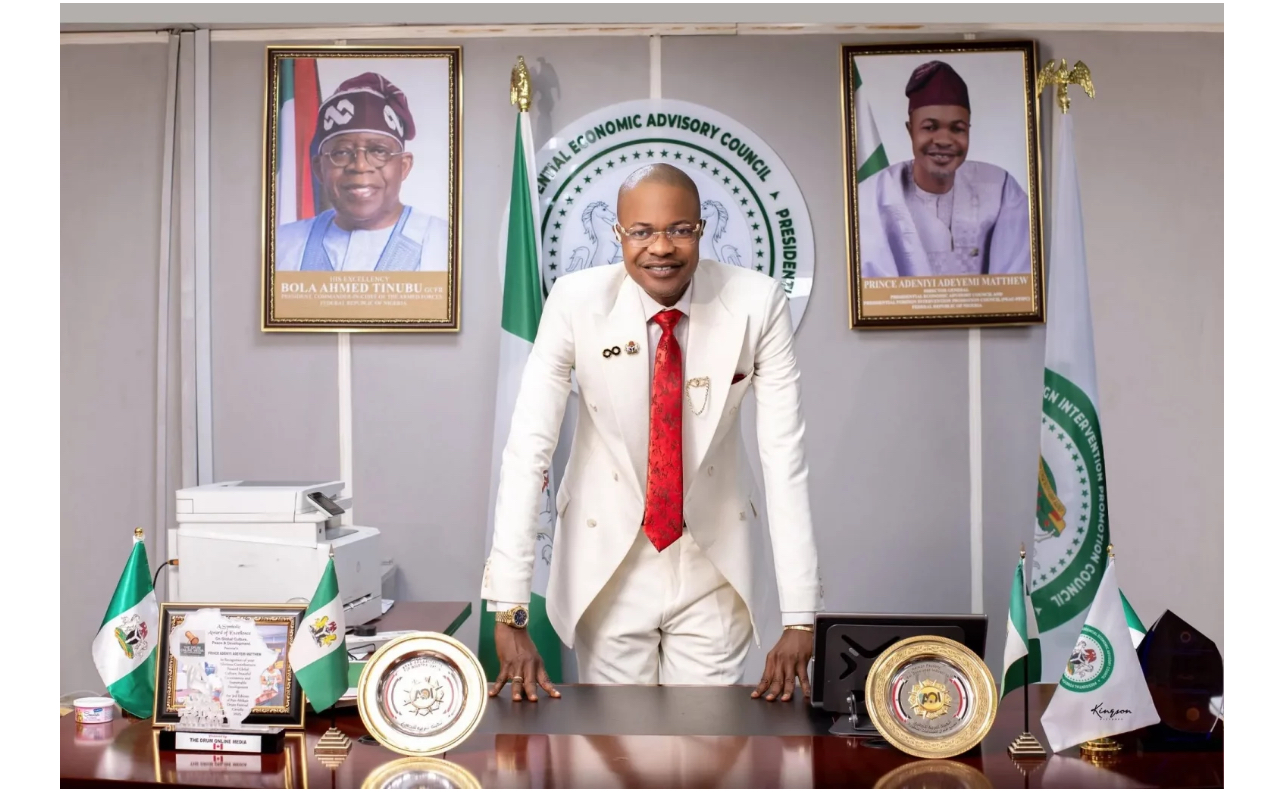
The move comes amid heightened scrutiny of government agencies and individuals claiming to represent the Federal Government, following the controversy surrounding the self-styled Director-General of the purported Presidential Foreign Intervention Promotion Council, Prince Adeniyi Adeyemi.

The controversy has raised questions about how individuals claiming official status can undertake engagements in the name of Nigeria, including foreign engagements, without clear evidence of government authorisation.

However, the latest directive is broader and applies to Federal Government appointees generally.

The circular, titled “Non-Compliance by Government Appointees with the Requirement for OSGF Approval for Official Foreign Trips and the Mandatory Inclusion of OSGF Approval in the Processing of Official Visas,” said the government had observed that some officials continued to embark on official foreign trips without obtaining the required clearance.

It stated, “It has been observed with concern that some Federal Government Appointees continue to embark on official foreign trips without obtaining prior approval from the Office of the Secretary to the Government of the Federation (OSGF), contrary to extant government directives and established administrative procedures regulating official travels outside the country.”

The SGF recalled that the government had issued several circulars over the years to regulate official foreign travel by ministers, heads of ministries, departments and agencies, boards, committees and other public officials.

According to the circular, these directives were issued “with a view to promoting accountability, fiscal discipline and effective coordination of Government business.”

The circular listed a September 18, 2023, circular on “Guidelines for Official Travels by Cabinet Members, Heads of Agencies and Public Officials”, a March 31, 2015, circular on “Guidelines for Official Trips by Chairmen of Federal Government Committees, Boards of Corporations and Government-Owned Companies” and a September 27, 2017, circular on “Additional Cost Control Measures to Guide Foreign Trips by Ministers and Senior Government Officials.”

It also referenced a March 8, 2018, circular on “Observed Indifferent Adherence to Extant Regulations Guiding the Conduct of Foreign Trips by Public Officials” and a November 20, 2012, circular on “Further Cost-Cutting Measures and Fiscal Prudence on Travel by Cabinet Members.”

Despite the previous directives, the SGF said cases of non-compliance had persisted.

The circular stated, “Despite these directives, instances of non-compliance continue to be recorded.”

It warned that the development had broader implications for government administration, stating, “This trend undermines Government’s efforts to ensure proper coordination, accountability, transparency, prudent management of public resources and effective monitoring of official foreign engagements undertaken on behalf of the Federal Government of Nigeria.”

The government consequently reaffirmed the requirement for prior clearance.

The circular stated, “Accordingly, all official foreign trips undertaken by Federal Government appointees shall continue to require prior approval from the Office of the Secretary to the Government of the Federation before such trips are undertaken, except where otherwise expressly provided by law or by specific Presidential directive.”

It added, “This requirement is consistent with the principles of due process, centralised coordination of government business and prudent management of public resources, as reflected in the Public Service Rules, 2021 Edition, the Financial Regulations (Revised Edition, January 2009) and other extant Government directives.”

As part of the immediate measures to strengthen compliance, the Ministry of Foreign Affairs has been directed to ensure that evidence of OSGF approval forms part of the documentation required for official foreign travel.

The circular directed that “The Ministry of Foreign Affairs shall include evidence of valid OSGF approval, where applicable, as a mandatory requirement in the processing of requests for official Notes Verbales, diplomatic facilitation and all applications relating to official foreign travel by Government Appointees.”

The ministry was further directed to communicate the requirement to foreign missions and embassies operating in Nigeria.

It stated, “The ministry is further requested to formally communicate this requirement to all Foreign Missions and Embassies accredited to the Federal Republic of Nigeria, advising that applications for Official, Diplomatic or Service Visas by Government Appointees should, where applicable, be accompanied by duly issued OSGF travel approval as part of the mandatory supporting documentation.”

The new measure therefore gives foreign missions an additional means of verifying whether a Nigerian government official travelling on official business has received the required authorisation.

The Office of the Auditor-General for the Federation was also assigned responsibility for checking compliance with the directive during audit exercises.

According to the circular, “The Office of the Auditor-General for the Federation shall require every government appointee who undertook an official foreign trip at public expense to produce evidence of the requisite OSGF approval during audit exercises.”

The government further warned that public funds spent on unauthorised foreign trips would be subject to scrutiny.

It stated, “Any expenditure incurred in respect of official foreign travel undertaken without the required approval shall be reported appropriately in accordance with extant Financial Regulations and applicable audit procedures.”

The directive also places a direct responsibility on accounting officers and heads of Federal Government institutions to prevent the processing of public funds for unauthorised trips.

It stated, “Accounting Officers, Permanent Secretaries, Chief Executive Officers and Heads of Federal Government Agencies shall ensure that no expenditure relating to official foreign travel by government appointees is processed unless the requisite OSGF approval has first been obtained.”

The SGF consequently directed all ministers, permanent secretaries, accounting officers and heads of ministries, departments and agencies to ensure compliance.

The circular stated, “All Honourable Ministers, Permanent Secretaries, Accounting Officers and Heads of Ministries, Departments and Agencies are hereby directed to ensure strict compliance with the provisions of this Circular.”

It further stated that the directive was effective immediately, declaring, “This circular takes immediate effect and supersedes any administrative practice inconsistent with its provisions, without prejudice to existing extant regulations governing official foreign travel.”

The circular was addressed to the Chief of Staff to the President; Deputy Chief of Staff to the Vice President; all Honourable Ministers and Ministers of State; Head of the Civil Service of the Federation; National Security Adviser; Economic Adviser to the President; Special Advisers and Senior Special Assistants.

It was also addressed to the Chief of Defence Staff, Service Chiefs and Inspector-General of Police; Governor of the Central Bank of Nigeria; Chairman, Federal Civil Service Commission; Chairman, Police Service Commission; Chairman, Code of Conduct Bureau; Chairman, Code of Conduct Tribunal; Chairman, Federal Character Commission; Chairman, Revenue Mobilisation, Allocation and Fiscal Commission; Chairman, Federal Inland Revenue Service; Chairman, Independent National Electoral Commission; Chairman, National Population Commission; Chairman, Independent Corrupt Practices and Other Related Offences Commission; Chairman, Economic and Financial Crimes Commission and Chairman, National Drug Law Enforcement Agency.

Other recipients listed in the circular were all permanent secretaries and Heads of Extra-Ministerial Departments; Clerk of the National Assembly; Chief Registrar of the Supreme Court of Nigeria; Accountant-General of the Federation; Auditor-General for the Federation; and Directors-General and Chief Executives of Parastatals, Agencies and Government-Owned Companies.

The breadth of the recipients means the directive covers ministers, senior political appointees, permanent secretaries, security chiefs, heads of regulatory and anti-corruption bodies, electoral institutions, financial institutions, government agencies and government-owned companies.

The development is coming against the backdrop of the controversy over the purported PFIPC, which has drawn attention to the need for stronger verification of individuals and organisations claiming to represent the Federal Government.

The purported PFIPC and its self-styled Director-General, Adeyemi, have been at the centre of investigations into alleged impersonation and the use of questionable government documents.

The matter has also raised concerns about how purported government officials could engage public institutions and foreign entities while claiming to represent Nigeria.

The latest directive, however, does not single out the purported PFIPC or Adeyemi.

Instead, it establishes a general requirement that government appointees must obtain central approval before undertaking official foreign engagements.

By directing the Ministry of Foreign Affairs to demand evidence of OSGF approval, the government is also creating a formal verification mechanism for foreign missions processing travel documents for Nigerian officials.

The financial provisions of the circular further link official travel approval to accountability for public expenditure, as accounting officers have been directed not to process expenses relating to foreign trips unless the required approval has been obtained.

The measures are expected to strengthen the Federal Government’s control over official foreign engagements, reduce unauthorised travel and ensure that persons travelling abroad in the name of the government have the necessary approval to represent Nigeria.

Continue Reading

news

FG Boosts Indigenous Shipping With $25m Funding for Local Shipowners

Published

on

The Minister of Marine and Blue Economy, Adegboyega Oyetola, has revealed that the Federal Government will provide qualified Nigerian shipowners with up to $25m each, under the Cabotage Vessel Financing Fund, a move he said could strengthen indigenous shipping and create more than 30,000 direct and indirect jobs.

This comes as he also disclosed that disbursement of the long-awaited CVFF to qualified Nigerian shipowners to strengthen indigenous shipping and create thousands of jobs will soon commence.

Oyetola disclosed this in a post on his X handle on Monday, saying the government was finally moving to unlock the fund more than 20 years after it was established.

He said the initiative would help address one of the major challenges confronting Nigerian shipowners.

“After more than 20 years, we are finally moving to unlock the Cabotage Vessel Financing Fund (CVFF) for Nigerian shipowners. This is a major step towards building a stronger Nigerian-owned shipping industry, creating jobs and ensuring that more of the value generated from activities in our maritime space stays in Nigeria.

“Under the CVFF, each successful applicant will be able to access up to $25 million in financing to acquire vessels, subject to the applicable assessment and approval process. This is significant because access to affordable, long-term financing has been one of the major challenges limiting the growth of Nigerian-owned shipping companies”, the minister stated.

On how the fund would improve the competitiveness of indigenous operators, the minister said, “With access to financing at very low interest rates, our shipowners can acquire modern vessels, expand their fleets and compete for coastal and offshore contracts that are currently dominated by foreign operators.

“Our objective is to ensure that more Nigerian-owned vessels operate on Nigerian waters, more Nigerian businesses participate in our maritime economy, and more Nigerians benefit from the wealth our waters generate. Providing Nigerian shipowners with the financial capacity to acquire vessels is a critical step towards reducing foreign dominance in our maritime space.”

Oyetola said he had directed the Nigerian Maritime Administration and Safety Agency to accelerate the process of disbursing the fund to qualified applicants.

He stated, “I have, therefore, directed the Nigerian Maritime Administration and Safety Agency (NIMASA) to work closely with the 12 approved banks, known as Primary Lending Institutions (PLIs), to accelerate the disbursement of the fund to qualified applicants.

“NIMASA has so far received 92 applications. Of these, 20 have been forwarded to the Primary Lending Institutions, while one has so far been reviewed and forwarded for approval. To further speed up access, we have expanded the number of approved banks from five to 12 and launched the CVFF Application Portal to make the process more transparent, structured and accessible.”

Writers urged to promote inclusive maritime sector
The minister added that the expected impact of the fund extended beyond vessel acquisition, as increased indigenous ownership could stimulate several areas of the maritime economy.

He said, “The disbursement of the CVFF could help create a stronger indigenous fleet, which will in turn stimulate activity in shipyards, marine engineering, vessel maintenance, maritime logistics and other supporting industries. It could also create more than 30,000 direct and indirect jobs, while strengthening Nigeria’s ship-owning and shipbuilding ecosystem.

“This initiative is part of the Tinubu Administration’s commitment to unlocking the full potential of Nigeria’s Blue Economy, strengthening indigenous capacity and ensuring that Nigerians take a greater share of the opportunities in our maritime sector.”

He also highlighted the government’s efforts to develop the human resources needed to support the maritime industry.

“Financing vessels is only one part of building a stronger indigenous maritime industry. We are equally investing in the people who will power this industry. So far, 222 seafarers have received free professional training, 333 cadets have completed their academic training and obtained degrees, while 135 cadets under the Nigerian Seafarers Development Programme (NSDP) have obtained their Certificates of Competency. In addition, 7,059 Nigerian seafarers have been placed onboard vessels to gain valuable sea-time experience.”

“We are determined to ensure that Nigerians own, operate and benefit from the economic activities taking place in Nigeria’s maritime space. We are building the capacity to make that happen — through vessel financing, skills development, indigenous enterprise and strategic investment in our maritime sector. The work continues”, the minister concluded.

The CVFF was established under the Coastal and Inland Shipping (Cabotage) Act of 2003 to support Nigerian shipping companies in acquiring vessels and developing indigenous capacity. Its disbursement has, however, been delayed for more than two decades.

The Federal Government launched the CVFF application portal in January 2026 and announced that successful applicants could access up to $25m in financing. NIMASA subsequently began receiving applications from interested operators.

NIMASA had disclosed in April that it received more than 60 applications within four months of opening the portal, with the agency promising that the disbursement process would be transparent and strictly monitored.

The latest figure provided by Oyetola represents an increase in applications to 92, although only one application has so far been reviewed and forwarded for approval, according to the minister.

Continue Reading

news

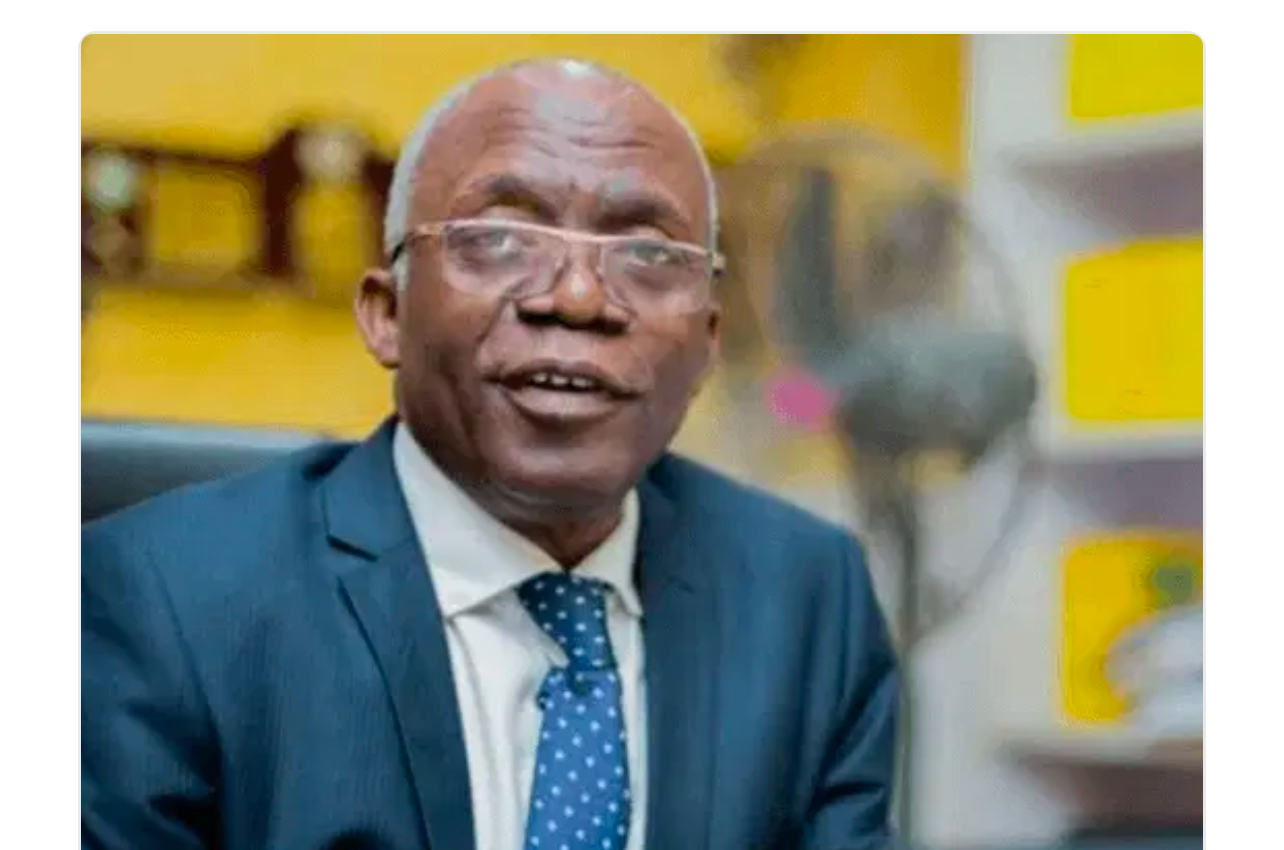
Falana: Prosecute Those Behind Diversion of N33.75bn Meant for Poor Nigerians

Published

on

Human rights lawyer and Senior Advocate of Nigeria, Femi Falana, has called on the Economic and Financial Crimes Commission (EFCC) to investigate the alleged failure to account for N33.75 billion in cash transfers meant for vulnerable Nigerians.

Falana, Chairman of the Alliance on Surviving COVID-19 and Beyond (ASCAB), also urged the anti-graft agency to work with the Auditor-General for the Federation (AuGF) to recover the funds if investigations establish that they were diverted.

He made the demand in a statement on Sunday following a report by the Auditor-General for the Federation, Shaakaa Kanyitor Chira, which raised concerns over the inability of the Federal Government to provide sufficient evidence that N33.75 billion in cash transfers reached genuine beneficiaries.

The disclosure is contained in the AuGF’s 2024 Annual Report on Non-Compliance/Internal Control Weaknesses in Ministries, Departments and Agencies of the Federal Government.

According to Falana, the funds were intended for more than 3.29 million vulnerable households under the National Social Investment Programme.

He said the development was particularly concerning given the safeguards introduced by the Federal Government to strengthen the tracking of beneficiaries and prevent the inclusion of ghost recipients.

The National Social Investment Programme Agency (NSIPA) was established as a statutory agency under the National Social Investment Programme Agency Act 2022, with responsibility for implementing major social intervention programmes, including N-Power, the National Home-Grown School Feeding Programme, the National Cash Transfer Programme and the National Social Safety Net Programme.

Falana said the agency had, however, been plagued by allegations of financial impropriety involving some officials.

He recalled that former Minister of Humanitarian Affairs, Disaster Management and Social Development, Sadiya Umar Farouq, had been investigated by the EFCC over alleged money laundering involving more than N37.1 billion.

He also cited the suspension of former Humanitarian Affairs Minister, Betta Edu, following a December 2023 memo directing the transfer of N585 million in public intervention funds to a private bank account.

Falana said the then Chief Executive Officer of NSIPA, Halima Shehu, was also suspended and questioned over alleged suspicious movement of funds.

He said the EFCC should conclude its investigations into the various allegations and make its findings public.

“The Economic and Financial Crimes Commission should liaise with the Auditor-General of the Federation with a view to recovering the missing N33.75 billion,” Falana said.

He urged the EFCC to immediately investigate what he described as a serious allegation of the criminal diversion of funds earmarked for poor and vulnerable Nigerians.

“All the characters involved in the shameful conduct should be arrested and prosecuted without any delay,” he said.

Falana further raised concerns over the implementation of a $3.05 billion package of development programmes unveiled by President Bola Tinubu in July 2026.

The package, supported by the World Bank, is aimed at deepening poverty reduction, strengthening human capital and expanding economic opportunities across the country.

Falana urged the Federal Government to ensure that funds meant for poverty reduction reached their intended beneficiaries and suggested the establishment of a body comprising credible civil society organisations to oversee the disbursement of the development funds.

He said stronger accountability mechanisms were necessary to prevent public officials from abusing funds intended to support poor and vulnerable Nigerians.

Continue Reading

Trending

Copyright © 2025 Newsthumb Magazine | All rights reserved