Connect with us

news

Illegal Oil Deals : Federal Government says it has Begun Gathering Evidence on Government Officials Linked to the Alleged Looting of $69bn

Published

on

The Federal Government says it has begun gathering evidence on government officials linked to the alleged looting of $69bn (N28.3tn) stashed in various bank accounts in Texas, the United States.

The loot reportedly accrued from illegal oil deals involving some officials of the government-owned Nigerian National Petroleum Corporation and the Central Bank of Nigeria during the Goodluck Jonathan administration.

Our correspondence on Friday exclusively reported that an American assets recovery firm, Forensic Assets Investigation and Recovery Services LLC, discovered the $69bn loot.

Findings showed that the American company, FAIR, is a specialist in anti-corruption asset recovery working independently to trace and help repatriate money stashed away in foreign bank accounts and loot converted to real estate, luxury items, yachts and the money markets.

The firm, founded by a lawyer, Gary Riebschlager, comprises investigators, forensic accountants, bankers, and cyber experts who utilise Mutual Legal Agreements and global Financial Intelligence Units, Camden Assets Recovery Inter-Agency Network, Global Focus Point Network in Asset Recovery (Interpol), and the Stolen Asset Recovery Initiative of the World Bank.

In a January 2019 confidential memo to the Special Presidential Investigation Panel, FAIR said it could help the Federal Government recover the money if hired and compensated for its services.

Out of the loot, $9bn was reportedly traced to a Texas bank account allegedly belonging to the late National Security Adviser, General Andrew Azazi.

Azazi died in a helicopter crash in Okoroba, Nembe Local Government Area of Bayelsa State in December 2012 alongside the Governor of Kaduna State, Patrick Yakowa, and others.

Two months after FAIR wrote the SPIP, the latter wrote a letter dated March 18, 2019 to the President, Major General Muhammadu Buhari (retd), on the matter, explaining FAIR’s proposal.

SPIP stated that FAIR assured that the $9bn allegedly stolen by Azazi could be recovered within three to five months.

The SPIP’s letter to the President, with reference number SPIP/SH/2019/VOL.1/1, was titled, ‘American assets investigation and recovery company has traced a definite $9bn funds linked to the late Gen Azazi.’

The letter was signed by a former SPIP Chairman, Okoi Obono-Obla.

It read in part, “In January 2019, an American assets recovery company, Forensic Assets Investigation and Recovery Services LLC, sent a confidential memo to us stating the discovery of a definite total amount of $9bn in the State of Texas linked to the late General Azazi (former NSA), plus an additional huge amount in excess of $60bn from multiple sources of illegal sales of crude oil from Nigeria into the entire United States of America.

“Mr President, the confidential memo to us prompted our agency to seriously engage the US company to determine the veracity of the information, which resulted in an official invitation to them that they may visit us to further discuss and agree on steps needed to recover and return the funds to the Nigerian government.”

Following the overwhelming evidence provided by the assets recovery company regarding the $9bn and their capacity to recover and return the fund,  the SPIP explained that it decided to engage the American forensic experts on a face-to-face meeting scheduled for March 29, 2019.

The panel also attached a copy of the firm’s acceptance letter to its memo to the President and sought Buhari’s approval for the planned meeting with the American company.

The memo noted, “Mr President, we intend to work together with the Americans in order to secure the recovery of the definite $9bn within 3-5 months they stated and to engage them to see and recover the larger part of the estimated $60bn-$80bn stolen from Nigeria during the oil boom. Also, to engage the NNPC and the CBN in the overall recovery of those funds in the United States.

“Our prayers to the President are: To approve the engagement of the American company to recover the funds and assets in the US and to approve the support of the visiting American firm to integrate software technology in the CBN in order to trace fraud funds.

“To approve the presence of interface offices of the Special Presidential Investigation Panel in NNPC and the CBN. Your Excellency, the immediate recovery of the identified $9bn within the stated timeframe of 3-5 months will totally eliminate borrowing to fund the 2018 budget deficit and sustain the 2019 budget.”

However, two years after the SPIP notified the President of the loot, the Federal Government was said to have not taken concrete steps to recover the money.

Also, Obono-Obla had yet to conclude the recovery process when he was removed from the panel by the President and replaced by the Solicitor-General of the Federation and Permanent Secretary, Federal Ministry of Justice, Dayo Apata.

Over 400 criminal and graft cases retrieved from the SPIP by the office of the Attorney-General and Minister of Justice were also found to have been abandoned.

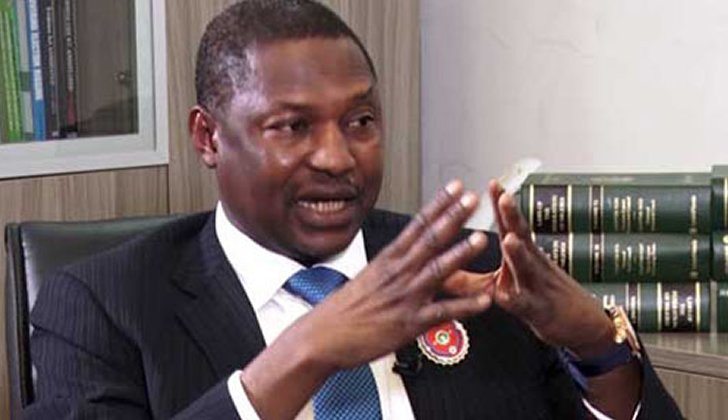
However, the Attorney General of the Federation and Minister of Justice, Abubakar Malami (SAN), on Friday told one of our correspondents that the Federal Government had swung into action with the aim of getting adequate information on the $69bn loot allegedly hidden in American banks in Texas as well as the government officials involved.

The AGF also said the relevant bank details would be traced.

Malami’s Special Assistant on Media and Public Relations, Dr Umar Gwandu, who spoke on behalf of the minister, said the government was at the information-gathering stage and would work on verifiable information.

Gwandu said, “The government has swung into action to generate adequate information on the alleged $69bn, inclusive of the Nigerians involved, incidental bank details, and actionable intelligence to enable us to deal with the matter.

“The details of the alleged lawyers involved and what information is at their disposal can also be very helpful.

Gwandu said the Buhari regime had the track record of repatriating stolen funds stashed in foreign accounts, saying it was one of the “visible and indelible” successes recorded by the regime.

He said, “The Office of the Attorney General has established a historical record of acting on cogent and verifiable information that has led to the recoveries of looted assets upon valid revelations that are subjected to integrity test by the assets recovery units of the office of the Attorney General of the Federation.

“The integrity test of information is not media-based but a process being conducted through the laid-down official process in compliance with the extant laws.

“One of the prime and uncompromising policies of the present administration under the leadership of President Muhammadu Buhari is the fight against corruption.”

 We have nothing to say now–NNPC

Meanwhile, the Group General Manager, Group Public Affairs Department, NNPC, Kennie Obateru, told one of our correspondents that the corporation had nothing to say about the allegations.

“You know the way NNPC is run, particularly on issues like this. We don’t have anything to say about it,” he stated.

However, some officials of the NNPC who spoke on condition of anonymity, expressed doubt over the authenticity of FAIR’s findings.

“What is the entire budget of the country for a company to come up with an allegation that $69bn from illegal oil deals by NNPC was traced to American accounts?” asked an official, who requested not to be named due to the nature of the matter.

The official added, “Because somebody made an allegation does not mean that it has become a fact. Proper investigations should be done.”

Besides, as of the time of filing this report, efforts to get the reactions of the CBN, Ministry of Finance, Budget, and National Planning had yet to yield positive results.

SERAP, CACOL, SAN, lawyers call for thorough probe

However, civil rights organisations, including the Socio-Economic Rights and Accountability Project and the Coalition Against Corrupt Leaders, have called on the Federal Government to conduct a thorough probe of the alleged $69bn loot in Texas banks.

He said, “The Nigerian authorities should investigate how the money got to the said accounts and hold whoever is/are responsible for it accountable so that the money does not get finally lost.”

Also, the Executive Director, CACOL, Debo Adeniran, said no stone should be left unturned in ensuring that the loot was repatriated back to the country.

“All of us should be vigilant, the media and the anti-corruption agencies, to ensure that no stone is left unturned on this matter,” he said.

Adeniran argued that the fraud happened in the first place because institutions such as the Ministry of Petroleum Resources, Office of the Accountant General, and anti-corruption agencies did not perform their duties of monitoring the receipts and expenditures of oil revenue.

He said, “There are international protocols which the Attorney General ought to have commenced but has been reluctant to do.

“The Auditor-General, Accountant General, and the minister under who it happened must answer questions.”

Also, a human rights lawyer and former General Secretary of the Committee for the Defence of Human Rights, Malachy Ugwumadu, said it was the responsibility of the government to recover stolen funds.

He said, “The government should try to avoid the pit-holes that we have all been encountering in the efforts to recover stolen funds in the past.

“Some of those pit-holes include the lengthy period of time that it takes to recover them.

“Take a look at the (Sani) Abacha loot, do you remember when Abacha ruled Nigeria?”

The lawyer advised that the issue should be tackled at the level of diplomatic engagement so that the loot would be “almost automatically” repatriated.

Meanwhile, the Convener, Coalition in Defence of Nigerian Democracy and Constitution, Dare Ariyo-Akintoye, tackled the Buhari regime, saying it had no good reputation in dealing with foreign loot recovery firms.

He said, “Ordinarily, the Buhari administration is incapable of such recoveries, but if it can swallow its pride and seek the help of global assets recovery firms, it has a chance.”

Also, a Senior Advocate of Nigeria, Mike Ozekhome, urged the government to recover the loot and use it for the benefit of Nigeria in a transparent and accountable way.

“The government should go ahead and recover the funds. It’s Nigeria’s money and it should be recovered and used for the Nigerian people. And there must be transparency and accountability in the use of the money.

“What projects is the money being used for? How is it being used? Where will it be kept first when it comes? How much is it? There must be transparency and accountability about it,” he said.

Meanwhile, when asked if the Economic and Financial Crimes Commission would investigate the graft case, the commission’s spokesperson, Wilson Uwujaren, simply said the agency doesn’t give advance notice of its investigations.

He also declined to speak further.

The Independent Corrupt Practices and Other Related Offences Commission spokesperson, Mrs Azuka Ogugua, could not be reached for comment.
 

Continue Reading
Click to comment

Leave a Reply

Your email address will not be published. Required fields are marked *

news

Strengthening Cultural Leadership to Eliminate Violence Against Women and Girls

Published

on

Op-Ed | By Maxime Houinato

As Africa stands at a crossroads in the fight against violence targeting women and girls, the continent’s traditional leaders hold a uniquely powerful key to unlocking lasting change. Their influence—rooted in culture, authority and community trust—positions them not just as custodians of heritage, but as essential partners in redefining norms, protecting rights and leading a continental shift toward safety, dignity and equality for every woman and girl.

In the coming week, traditional leaders from across Africa will meet in Lagos to explore how culture can advance dignity, safety, and equality. Their convening could not be timelier. Violence against women and girls remains widespread, underreported, and a major obstacle to achieving Agenda 2063 and the SDGs. Recent UN and WHO findings confirm that intimate partner and sexual violence persist at alarming levels, underscoring the need for strong, locally led prevention and accountability.
This important convening in Lagos is made possible through the valued support and partnership of the Ford Foundation, whose long-standing commitment to gender justice, human rights, and community-led solutions continues to strengthen efforts across Africa to end violence against women and girls.
Sub-Saharan Africa records some of the world’s highest rates of intimate partner violence, with studies showing that over 40% of women surveyed have experienced emotional, physical, or sexual abuse. Regional data platforms confirm that both lifetime and recent intimate partner violence remain alarmingly common. The effects also span generations: research across 37 African countries links mothers’ experiences of violence to higher risks of illness, undernutrition, and even death among children under five, highlighting IPV as a major threat to child survival and public health.
Where culture must evolve
Africa has made notable strides, yet harmful practices still put millions of girls at risk. West and Central Africa remain the global epicentre of child marriage: nearly 60 million women and girls in the region were married before 18, with Nigeria bearing the largest absolute numbers. These figures, drawn from UNICEF’s databases, remind us that while progress is possible, it is not guaranteed without sustained, community-anchored change.
There are bright spots. In Kenya, the latest Demographic and Health Survey shows FGM prevalence fell to about 15% in 2022, down from 21% in 2014, a testament to policy commitment and local norm change. Yet prevalence remains extremely high among several communities, and sustained vigilance is required to prevent medicalisation or cross-border practices.
Nigerian realities, African momentum
Nigeria mirrors the continental picture: national surveys and administrative data point to widespread physical, sexual and emotional violence, with thousands of cases reported to authorities each year, figures that almost certainly undercount the true burden. The Government’s National GBV Data Collation Tool is an important step toward standardising reporting and improving coordination; scaling it nationwide and linking it to survivor-centred services will save lives.
Encouragingly, the upcoming Conference of African Traditional Leaders in Lagos, already drawing commitments from eminent leaders, signals growing recognition that cultural authority can be mobilised to protect women and girls. UN Women’s work with traditional councils across Africa has shown that when custodians of culture publicly denounce harmful practices, backed by evidence and community dialogue, norms shift and laws gain legitimacy. It is why we helped catalyse platforms like the Council of Traditional Leaders of Africa to champion the abandonment of child marriage and FGM.
Law works best when culture leads
Africa’s legal architecture has advanced. The Maputo Protocol, our continental bill of women’s rights, has spurred reforms, and the African Commission recently moved to develop a Model Law to accelerate domestication and harmonisation across countries. These instruments matter: they provide standards, remedies and budgets. But their power is realised when interpreted through community values that affirm women’s dignity.
Evidence from the Spotlight Initiative, the EU-UN partnership with the African Union, shows that multi-sector, locally-led approaches can reduce harmful practices, strengthen services, and improve prevention. Traditional and religious leaders who champion public declarations, alternative rites of passage, and community bylaws help convert state law into lived practice.
A practical agenda for traditional leaders
I urge traditional leaders to make clear, practical commitments that have been proven to drive change: publicly and repeatedly denounce harmful practices such as child marriage, widowhood rites and FGM, backing declarations with community bylaws aligned with national law; promote survivor-centred justice in customary systems through strong referral pathways, bans on forced reconciliation, and proper case documentation; safeguard girls’ childhoods by ensuring birth and marriage registration, enforcing 18 as the minimum age of marriage, and supporting re-entry to school for married or parenting girls; encourage alternative rites of passage and positive models of masculinity that reject violence; and use their influence to push for stronger laws, adequate funding, and community engagement to address all forms of violence against women and girls.
Culture is not a relic; it is a living promise we renew with each generation. As guardians of that promise, Africa’s traditional leaders can be the champions of a continental transformation: from harmful silence to protective speech, from permissive norms to zero tolerance. If we act with urgency and unity, a life free from violence can become every African woman’s and girl’s lived reality.

Maxime Houinato is the UN Women Regional Director for West and Central Africa, providing strategic leadership across 24 countries to advance gender equality, strengthen women’s rights, and accelerate the elimination of violence against women and girls. In this role, he guides UN Women’s regional programmes on women’s economic empowerment, governance and political participation, humanitarian action, and the prevention and response to gender‑based violence.

Continue Reading

news

Update : FG Outlaws Meter Installation Charges, Vows to Sanction Defaulters

Published

on


The Federal Government has banned electricity distribution companies and installers from collecting any form of payment for meters, warning that DisCo officials and installers found extorting customers will be prosecuted.

The Minister of Power, Adebayo Adelabu, issued the warning on Thursday during an on-site inspection of newly imported smart meters at APM Terminals, Apapa, Lagos.

Adelabu said the meters were procured under the World Bank–funded Distribution Sector Recovery Programme and must be installed for consumers free of charge, stressing that any demand for money would be treated as an offence.

Adelabu, who was received into the Apapa Port Command of the Nigerian Customs Service by Area Controller Emmanuel Oshoba, expressed happiness over the importation of another tranche of 500,000 smart meters under DISREP.

He said the meters would be given to all electricity customers, regardless of their band. “I want to mention that it is unprecedented that these meters are to be installed and distributed to consumers free of charge—free of charge! Nobody should collect money from any consumer. It is an illegality. It is an offence for the officials of distribution companies across Nigeria to request a dime before installation; even the indirect installers cannot ask consumers for a dime.

It has to be installed free of charge so that billings and collections will improve for the sector.

“The main objective of coming here today is to carry out a physical on-site inspection of shipments of smart meters that the Federal Government has imported under the World Bank-funded Distribution Sector Recovery Programme. This programme is supporting the Federal Government to import a total of about 3.4 million meters in two batches; the first batch is 1.43 million meters, out of which we have received close to about a million meters. Currently, almost 150,000 meters have already been installed across all distribution companies in the country.

“And what we have today is close to 500,000 meters that we just received. They are all smart meters, and I believe that the journey of completely eliminating the meter gap in the Nigerian power sector has just begun,” Adelabu said, even as he expressed dissatisfaction with the pace of metering.

Adelabu was optimistic that in a couple of years, every household, business, and institution would be fully metered so that billings and collections in the power sector would become more transparent, fair, and just. He added that it would also improve the readiness of electricity consumers to pay their bills, leading to improved liquidity in the sector.

“I’m quite excited and elated with what’s happening because it’s unprecedented. This is the first time in the history of this country that a government will be importing and locally buying this number of meters to ensure that the power sector is completely transformed. This is like walking the talk. Our target reform in the sector is not just verbal. Nigerians can see that this is real; it’s not just a promise of the tongue.

“We said it is free. We are not saying this behind closed doors. We are telling Nigerians that the distribution and installation of these meters in every location is free of charge, and it is declared an offence—an illegality—for any DisCo official or installer to request money from the beneficiaries of these meters. We will track and monitor this installation. We also await tip-offs. We have the regulatory commission (NERC), which has offices in some of these locations, and the state regulatory authorities also have offices in each state.

“We are going to open a customer complaint desk whereby, if you notice any such requests for illegal money, you report it, and the authorities will follow up. We are not leaving the installation to the DisCos alone; we’re also creating an interface between the installers and consumers to accelerate the pace of installation. We have some issues with the data and addresses of unmetered customers. We are working hand-in-hand with the DisCos to ensure clean data so that we can accelerate installation.

“We also want to maintain a register whereby unmetered customers can register their names. Once we have a list, we will validate it with the DisCos, improving the pace of installation. We are looking for confirmed cases of requests for money by any DisCo official or installer. Nigerians will know what we can do, and it will serve as a deterrent for others not to commit such an offence or illegality. That’s the plan.

“Extortion is not allowed, but there must be confirmed cases of such extortion, and the officials involved—no matter how high—will be prosecuted. It will be publicised and serve as a deterrent to others with similar intentions. We will not allow that. This is a government effort, and no activity of a DisCo or installer should frustrate government efforts to ensure that life is made easy for Nigerians and that we have a stable, reliable, and functional power sector,” he said.

Adelabu added that the Tinubu administration is resolving a decades-long problem that has affected liquidity. “But the boldness, courage, and political will of the government to go ahead with this should be commended. We will track it end-to-end to ensure that the government’s effort is well implemented and our desired objectives are achieved.

“The aggregate meter gap covers all categories of customers. We are not discriminating. We are prioritising every Nigerian, every customer, every electricity user. The issue of Band A, Band B, or Band C is temporary; it is our systematic way of ensuring this reform reaches everyone. The meters will be given to all levels of customers and not restricted to a single band. I am committing to that,” he stressed.

As journalists expressed doubts over the possibility of free meter distribution to customers, the Director-General of the Bureau of Public Enterprises, Ayo Gbeleyi, stated that the bureau coordinates the implementation of the Distribution Sector Recovery Programme on behalf of the Federal Government and serves on the boards of all 11 electricity distribution companies.

Gbeleyi said, “Regarding concerns that DisCos are delaying meter installations, you will soon see a new order or circular from the Nigerian Electricity Regulatory Commission prescribing the protocols and processes DisCos must follow to ensure unhindered access for meter installations.

“We are monitoring this. We have our dashboard, trackers, and all stakeholders’ hands on deck to ensure seamless and rapid deployment of these meters. One more thing—the meters here are manufactured to the specific requirements of each DisCo. They are inscribed on the meter, with an anti-theft protocol embedded. The configuration is for a particular DisCo, so a meter configured for Eko DisCo cannot be installed in Ibadan.”

Speaking, the Chairman of Mojec, Mojisola Abdul, said the meters supplied by the Federal Government are designed to genuinely generate more revenue for the country and supply more power.

“I’m telling you, physically, we have installed almost 150,000 meters, and they are free. Don’t give anybody money. You are not allowed. We had a meeting Wednesday with the minister and the DG of BPE about further progress on making it easy for every Nigerian. We are calling it mobile registration of free meters. If you register today, your meter will be installed within three days,” she said.

On the delay in meter installations after months of application and payments made, the minister reassured, “This is our country. It is valid that there will be apprehensions and reservations because of past experiences. Previously, there was limited meter availability, and payment was required.

“But this programme has two advantages: first, the volume is now sufficient—we have received almost 1 million meters, with another 1.55 million meters coming in the second phase. Second, the meters must be installed free of charge. The complications experienced in the past will be completely eliminated. We had a meeting on Wednesday for almost two to three hours to discuss all existing complications and foreseeable difficulties, and I assure you we already have effective solutions to all these problems.”

Adelabu also visited the National Meter Test Station in Oshodi, where meters are tested by the Nigerian Electricity Management Services Agency to ensure they meet required standards. Nigeria currently has over five million customers under estimated billing.

Continue Reading

news

Impeachment Saga : Rivers Chief Judge Acknowledges Assembly’s Submissions Against Fubara

Published

on

….Gov throws jibe, describes impeachment notice as ‘love letter’

Vows to avoid actions capable of breaching peace
The office of the Rivers State Chief Judge, Justice Simeon Amadi, has received the letter from the State House of Assembly requesting him to constitute a seven-man committee to probe the allegations of gross misconduct leveled against the state Governor, Sir Siminalayi Fubara and his Deputy, Prof. Ngozi Odu.

The House of Assembly Committee Chairman on Petitions, Information and Complaints, Dr Enemi George, confirmed that the Chief Judge had acknowledged receipt of all the documents.

Also received by the CJ’s office were other documents detailing the allegations of gross misconduct against the governor and the deputy governor, copies of the Rivers State Impeachment Panel (Conduct of Investigations) Procedure 2025 and photocopies of The Nation, The Guardian and The Sun, among others.

George said: “It is important to inform the good people of Rivers State that Mr. Speaker has already complied with the Constitution and letters sent by him to the Chief Judge have been received and acknowledged.

“All relevant documents including the Notices of Allegations of Gross Misconduct were attached”.

He added: “Every step going forward, what can happen or what cannot happen is clearly stated in Section 188 of the Constitution.

“The good people of Rivers State should remain calm and should not listen to those who want to truncate our democracy.”

He commended and thanked the good people of Rivers State for their support and prayers for the 10th Assembly in particular and Rivers people at large.

The Rivers State High Court sitting in Oyigbo Local Government Area has however issued an interim injunction restraining the CJ from receiving, forwarding, considering or acting on any request, resolution, articles of impeachment or any form of communication from Speaker Martin Amaewhule and other members of the State House of Assembly for the purpose of constituting a panel to investigate the alleged misconduct against the governor and his deputy.

They just landed me a ‘love letter’, says Fubara

Governor Fubara, in a veiled reference to the impeachment notice, called it a love letter.

“This 2026 that I thought would have been the finest, they just landed me a love letter,” he said while speaking as special guest during the finals of the 2026 Port Harcourt Polo Tournament in Port Harcourt, the Rivers State capital.

He added:”That notwithstanding, we must move on and carry on the responsibilities as a government. We will continue to support everyone who means well for Rivers State.”

He vowed that he would not support, directly or indirectly, any action capable of undermining peace and safety in the state.

He insisted that the protection of lives and property remained the primary responsibility of his administration.

He emphasised that he remained the governor of the state and would continue to deliver on the promises made to the people.

Fubara expressed satisfaction that the 2026 Port Harcourt Polo Tournament was held for one week without any incident.

He described the peaceful conduct of the event as a clear indication that Rivers is safe for residents, visitors and investors.

A supporter of the governor, Amb.Chijioke Ihunwo, asked the assembly members to perform their functions independently.

He pleaded with President Tinubu to intervene on the matter, insisting that the governor had done nothing to warrant his removal.

He said: “This assembly must remain independent to allow peace to prevail in the state.

“Governor Fubara has done nothing to warrant his removal. President Tinubu should intervene in this matter as the leader of the party.”

The high powered committee set up by the Pan Niger Delta Forum (PANDEF) to reconcile the feuding sides in the Rivers imbroglio is said to be working round the clock to stop the planned impeachment.

The committee members have already met with Federal Capital Territory (FCT) Minister Nyesom Wike in Abuja and separately with Fubara and some other stakeholders.

Continue Reading

Trending

Copyright © 2025 Newsthumb Magazine | All rights reserved