Connect with us

news

Minimum wage deadlock: Workers issue Nov. 6 nationwide strike threat

Published

on

Minimum wage: 'We cannot guarantee industrial peace'

THE organised labour is spoiling for war with the Federal Government over the controversies surrounding the new National Minimum Wage and the decision of the government to adopt a “no work, no pay” posture to force workers from going on strike.

Labour leaders are of the opinion that the Federal Government was deliberately sabotaging the plan to arrive at a new national minimum wage and making so much effort to stop workers from protesting non-payment of salaries.

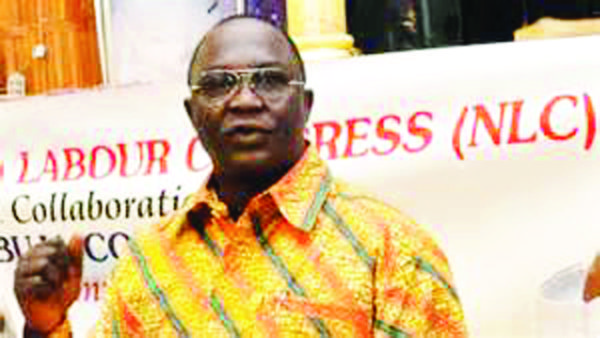
In a highly worded statement, Nigeria Labour Congress (NLC) President Comrade Ayuba Wabba, Trade Union Congress of Nigeria (TUC) President Comrade Bala Kaigama and United Labour Congress (ULC) President Comrade Joe Ajaero said a joint Central Working Committee meeting of the three labour centres will hold on Friday November 2nd to decide on the way forward.

They believe that the Federal Government was trying to provoke workers into taking unpleasant action, stressing that the process of arriving at the new national minimum wage has been filled with betrayals, half-truth and sabotage.

They asked the leadership of the organised private sector to rise up and speak the truth about the decision that was arrived at during the last meeting of the tripartite committee, which Minister of Labour Senator Chris Ngige has consistently denied.

The labour leaders declared October 30, 2018, as a day of national outrage and mourning across the country to sensitise Nigerians on the plight of workers and the issues at stake.

They argued that if the government is trying to criminalise strike by imposing a “no work, no pay” condition, they should also criminalise the act of non-payment of salaries by both government and other employers of labour.

They asked the President to put in motion machinery to turn the agreement on minimum wage into a bill to be presented to the National Assembly.

The labour leaders also urged the President to work with the legislators to make it a law so that it could be implemented quickly.

The statement said: “The path to a new national minimum wage has been expectedly littered with betrayal, resistance, half-truths and now almost outright sabotage.

“That is why it has become urgent that Nigerians are informed of the insistence of the Federal Government to deliberately create confusion and make the negotiations for a new national minimum wage inconclusive as usual.”

They added: “It is not true that we proposed N30,000 as the new national minimum wage. It is also not true that the committee did not agree on a figure during its last sitting. We accepted N30,000 as a compromise to demonstrate the willingness of Nigerian workers to make sacrifices towards nation building.

“Anything to the contrary no matter the quantum and character of the din or how well couched, it may appear cannot be true. Resorting to Goebbelsianism at this time of national emergency, which requires men and women of integrity, is rather unfortunate and cannot suddenly make the brazen falsehoods truths.”

The labour leaders said it has become necessary for the organised private sector to break its silence on the issue and speak out, noting that keeping silent on the issue would not be of any help to the parties involved.

The labour leader said: “As Nigerian workers are concerned and as represented by us, we shall no longer negotiate on a figure for the new minimum wage having reached an agreement on this during the last sitting of the tripartite committee. We cannot continue discussing a figure that has already been agreed procedurally within the committee.”

The statement said: “On Friday, November 2, 2018, a Joint Central Working Committee (CWC) meeting of all the labour centres in Nigeria shall hold to receive reports and make final preparations for our ultimate engagement with the Federal Government on this matter.

“This is the first time in the history of this nation in recent times that such meeting will take place and this goes a long way to show the seriousness with which Nigerian workers and its leadership hold this matter.

“If nothing is responsibly done by the Federal Government to meet our demands, on Monday, November 6, we shall embark on a nationwide strike to compel this government to show more sensitivity to the plight of Nigerians and the suffering that is decimating our people on daily basis.”
Continue Reading
Click to comment

Leave a Reply

Your email address will not be published. Required fields are marked *

news

Breaking : Tinubu Endorses ₦68.32 Trillion 2026 Budget, Prolongs 2025 Spending Timeline

Published

on

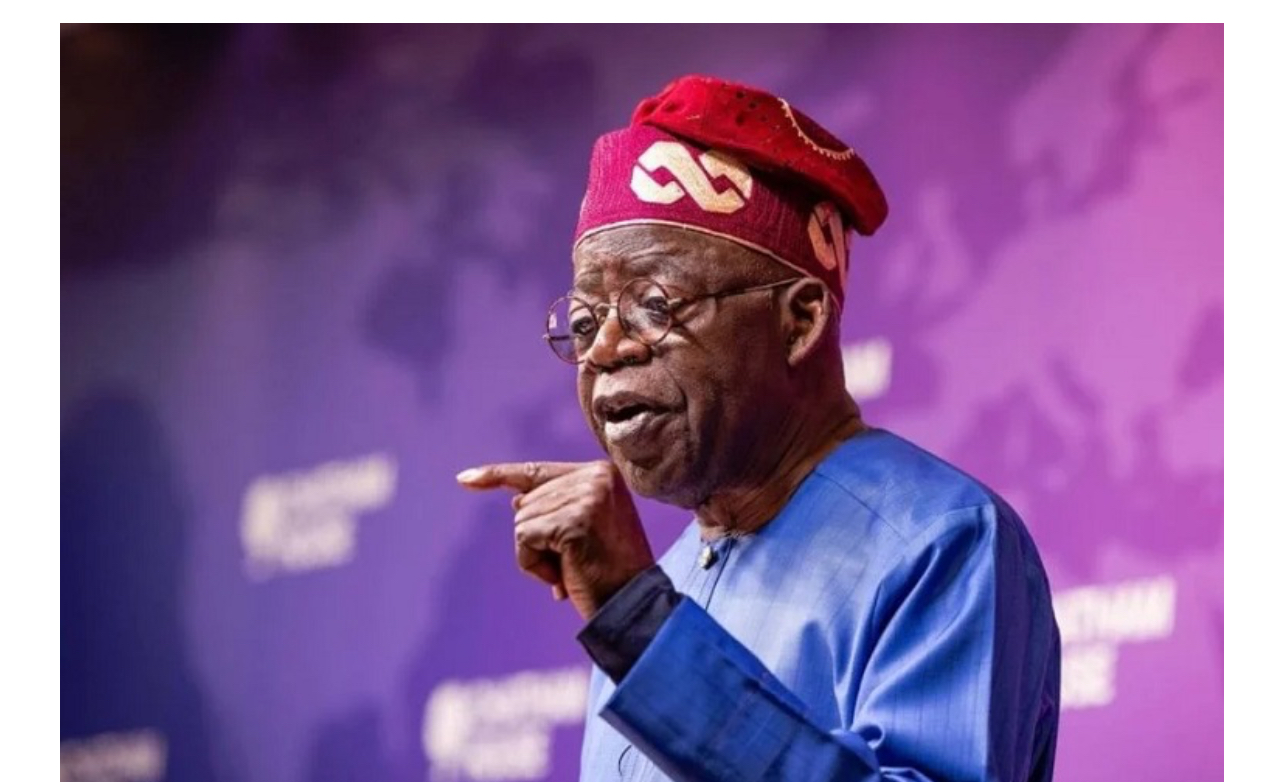
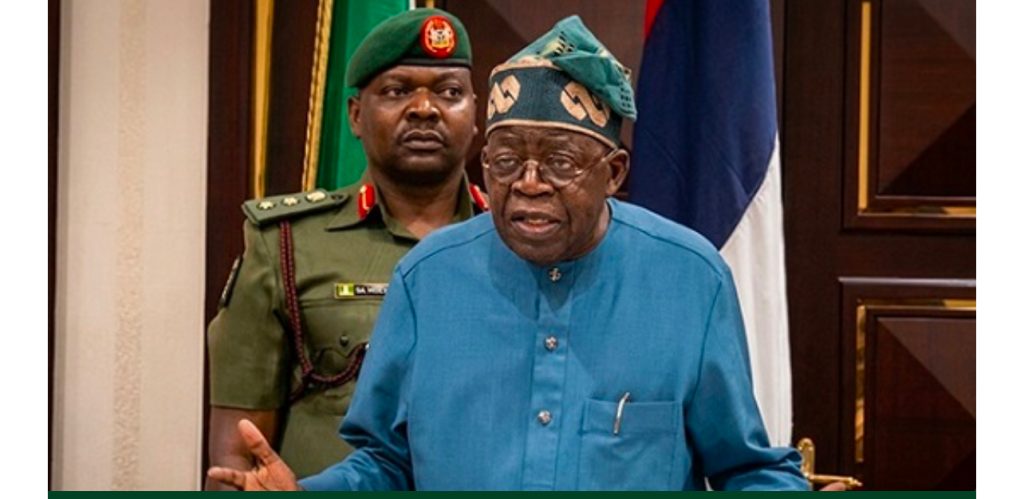
President Bola Tinubu has signed the 2026 Appropriation Bill into law, authorising an aggregate expenditure of ₦68.32 trillion for the current fiscal year.

He also signed a separate bill extending the implementation period of the 2025 budget from March 31 to June 30, 2026.

The budget allocates ₦4.799 trillion for statutory transfers and ₦15.8 trillion for debt service.

It further sets aside ₦15.4 trillion for recurrent expenditure and ₦32.2 trillion for capital expenditure through the Development Fund.

The presidency made the disclosure in a statement signed by Special Adviser on Information and Strategy, Bayo Onanuga on Friday.

The statement read, “President Bola Ahmed Tinubu has assented to the 2026 Appropriation Bill, which provides for an aggregate expenditure of ₦68.32 trillion. He has also signed the bill extending the implementation period for the 2025 budget from March 31, 2026, to June 30, 2026.

“The N68.32 trillion budget for this year earmarks N4.799 trillion for statutory transfers and N15.8 trillion for debt service. It allocates N15.4 trillion to recurrent expenditure and N32.2 trillion to the Development Fund for Capital Expenditure.

“With capital expenditure accounting for about 50 per cent, the 2026 budget underscores the administration’s continued commitment to economic stability, national security, infrastructure development, and inclusive growth.

“The allocations reflect a strategic balance between statutory obligations, debt servicing, recurrent expenditure, and capital investments critical to driving productivity and improving the quality of life for Nigerians,” it added.

The 2026 Appropriation Act took effect on April 1, with the Federal Government commencing full implementation in line with what the presidency describes as the Renewed Hope Agenda.

Tinubu also assented to the Appropriation (Repeal and Enactment) (Amendment) Bill, 2026, which extends the capital component of the 2025 Appropriation Act by three months to June 30.

The presidency said the extension would ensure the full utilisation of appropriated funds, particularly for critical infrastructure projects at advanced stages of implementation.

“The extension will ensure the full and effective utilisation of appropriated funds, particularly for critical infrastructure and development projects that are at advanced stages of implementation across the country.

“It will enable Ministries, Departments, and Agencies (MDAs) to consolidate ongoing works, enhance project completion rates, and maximise value for public expenditure,” the statement read.

Tinubu directed MDAs to ensure disciplined, transparent, and efficient utilisation of allocated resources, with strong emphasis on value for money and timely project delivery.

He commended the leadership and members of the National Assembly for what the presidency described as their “diligence, cooperation, and patriotism in expeditiously considering and passing the budget.”

“The President reaffirmed the importance of sustained collaboration between the Executive and Legislative arms of government in advancing national development objectives,” the statement noted.

Tinubu also assured Nigerians of his administration’s resolve to deepen fiscal reforms and boost revenue generation.

“He further assured Nigerians of his administration’s resolve to deepen fiscal reforms, enhance revenue generation, and prioritise investments that will stimulate economic growth, create jobs, and strengthen social protection mechanisms,” the statement read.

The budget, titled “The Budget of Consolidation, Renewed Resilience and Shared Prosperity,” was originally presented to a joint session of the National Assembly on December 19, 2025, at a proposed sum of ₦58.47 trillion.

It passed second reading in the House of Representatives on January 29, 2026, before going through further legislative scrutiny and emerging at ₦68.32 trillion at the point of assent.

During the second reading debate in January, House Leader Julius Ihonvbere had urged lawmakers to support the proposal, pointing to a projected 3.98 per cent economic growth rate for 2026, a projected drop in inflation to 14.45 per cent, improved revenues, and foreign direct investment growth.

He also cited a stabilisation of the naira at around ₦1,400 to the dollar and a rise in Nigeria’s external reserves to a seven-year high of approximately $47 billion.

When Tinubu presented the bill to lawmakers in December, he described it as a defining moment in Nigeria’s reform journey, acknowledging the pressures the process had placed on households and businesses while insisting the sacrifices were necessary.

“The path of reform is seldom smooth, but it is the surest route to lasting stability and shared prosperity,” he told the joint session.

He vowed that 2026 would mark a decisive shift to stronger budget execution discipline, announcing an end to the long-standing practice of running overlapping budgets and perpetual rollovers.

The budget’s four stated objectives are consolidating macroeconomic stability, improving the business and investment environment, promoting job-rich growth, and strengthening human capital development while protecting the vulnerable.

Key sectoral allocations include ₦5.41 trillion for defence and security, ₦3.56 trillion for infrastructure, ₦3.52 trillion for education, and ₦2.48 trillion for health.

Minister of Information Mohammed Idris, writing in a January op-ed, described the budget as a commitment to consolidate what was working in the administration’s reform programme and ensure that shared prosperity became “a lived reality for more Nigerians, faster.”

He pointed to expanding business activity, improving investor confidence, easing inflation, and stronger external reserves as early indicators of progress, and highlighted ongoing infrastructure projects including the Coastal Highway, Sokoto–Badagry Expressway, and Ajaokuta–Kaduna–Kano Gas Pipeline as evidence of the administration’s delivery record.

Continue Reading

news

Northern Muslim and Christian Youths Warn U.S. Lawmaker Against Fueling Division in Nigeria

Published

on

The Coalition of Northern Muslims and Christians Youth For Religious Tolerance in Nigeria has called for the Florida State representative and Chairwoman of the UN-WCD, Kimberly Daniels to not pretend under Christianity faith to create division between Christians and Muslims in Northern region of Nigeria for her Call on the Nigeria authority to redeploy the Honourable Minister of State for Defence Dr.Bello Mohammed Matawalle.

During the Coalition joint emergency press conference which was held in Kaduna Northwest Nigeria, the Coalition Statement which was jointly signed by Secretary General Mr. Bitrus Bahago along with his counterpart the Public relation officer Ustaz Abdullahi Abubakar,
Read: “The statements credited to Florida State representative Kimberly Daniels calling for President Bola Ahmed Tinubu to redeploy the Honourable Minister of State for Defence Bello Mohammed Matawalle is not necessary and terrible motive aimed at targeting Norther Muslim public office holder”

“Mrs Kimberly Daniels Should note that Nigeria is not owned by only one faith, therefore we are collectively demanding her unreserved apology for her bigotry which could affect the peaceful Coexistence and religious tolerance between Christians and Muslims in Nigeria”

The Coalition Statement further remind Mrs. Kimberly Daniels that, “even though Matawalle is only overseeing the Nigeria Navy enjoyed a Cordial working relationship with his friend a devoted Northern Christian leader General Christopher Gwabin Musa who in charge of Nigeria army and Nigeria Air force combined.

The Coalition concludes by advising Mrs. Kimberly Daniels to desist from making unnecessary bigotry demand targeting or pointing finger at a particular faith.

Continue Reading

news

Onanuga Blasts Aregbesola Over ‘Renewed Hope Is a Scam’ Remark, Calls It Rant of One Who Failed in Public Office

Published

on


Special Adviser on Information and Strategy to President Bola Tinubu, Bayo Onanuga, has dismissed a speech by the former Minister of Interior and National Secretary of the African Democratic Congress at the ADC national convention as the rant of a man with a failed record in public office.

Onanuga was reacting on X on Tuesday to remarks Aregbesola made at the party’s eighth national convention in Abuja, where the former minister declared, “The ruling party never had a vision; its Renewed Hope agenda was a scam!”

Speaking at the convention during the presentation of the secretariat report, Aregbesola said the ADC was “on a rescue mission to pry the country from the strangulating grasp of the ruling party.”

He attacked the APC for enacting what he described as an electoral law that decriminalised forgery in electoral documents, saying the ruling party was “decriminalizing criminality.”

On the economy, Aregbesola cited the naira’s fall from roughly N700 to the dollar when the Tinubu administration took office in 2023 to about N1,400, describing it as a 100 per cent devaluation that was “devastating” for an import-dependent economy.

“The government’s claim that the recent reduction in the exchange rate shows its mastery of economics is false,” he said.

“Before this administration, the cost of a litre of fuel was between N185 and N238, depending on which part of the country you were in; now it is about N1,400 per litre and still rising. The cost of transportation is now so prohibitive that it has become unrealistic for some workers to go to work,” he said.

He also cited deteriorating power supply, saying some parts of the country received an average of two hours of electricity daily while others had been “in darkness for weeks and months at a stretch.”

“The administration told Nigerians that if it does not solve the power problem by providing a constant power supply, it should not be voted for a second term. Today, power supply is far worse,” Aregbesola said.

Aregbesola called on Tinubu to step down, saying: “Ordinarily, having made such a promise and failed woefully, an honest president should simply step down and not seek reelection.”

He added that what Nigerians were witnessing instead was “the most desperate attempt by a candidate in Nigerian electoral history to retain power at all costs, even if it means bringing down the entire democratic system.”

Responding, Onanuga said Aregbesola had no moral authority to criticise the Tinubu administration, given what he described as a dismal record across two stints in public office.

“Unfortunately, Aregbesola did not undertake any honest self-reflection on his own record in public office — as governor or as Minister of Interior,” Onanuga wrote.

He said Aregbesola’s eight years as governor of Osun State had been “characterised by unmitigated hardship”, with civil servants going unpaid for months and pensioners dying because they could not receive their payments.

“It is to Aregbesola’s infamy that Osun became known as a state receiving negative federal allocation and paying just 20 to 30 per cent of normal salaries. It was worse for pensioners in Aregbesola’s Osun State. Many pensioners who relied on their meagre monthly payments died because they were not paid at all,” Onanuga said.

He added that Aregbesola’s immediate successor, Governor Adegboyega Oyetola, “worked hard to clean up much of the mess left behind,” and that Governor Ademola Adeleke was “still dealing with the consequences.”

Onanuga also attacked Aregbesola’s record as Minister of Interior under former President Muhammadu Buhari, saying his tenure recorded the highest number of jailbreaks in Nigeria’s history, including the 2022 Kuje Prison escape in Abuja.

“During his four years, obtaining a Nigerian passport became a nightmarish process, and there were 15 major attacks on correctional facilities in Jos, Abolongo, Imo, Kabba, and Okitipupa, resulting in over 4,000 inmates escaping to join criminal elements.

“For someone who failed so woefully to secure our correctional centres and uphold his duties between 2019 and 2023, it is ironic that Aregbesola now seeks to lecture others on insecurity. Maybe he thinks the entire Nigerian population suffers from amnesia,” Onanuga wrote.

He warned Nigerians to remain vigilant against “power-hungry individuals with no programme,” saying the opposition was “weaponising isolated terrorist attacks, as if the problem started from this administration.”

Onanuga also cited what he described as the gains of the Tinubu administration, including a minimum wage increase of over 100 per cent, a decline in inflation from over 25 per cent to below 15 per cent, and growth in foreign reserves and GDP.

“The Tinubu administration has never shied away from acknowledging that policy reforms have brought unintended consequences, impacting the most vulnerable. However, over the last three years, the government has introduced numerous relief measures to mitigate these effects,” he said

“No, Rauf, the Renewed Hope Agenda is not a scam. The real scammers are the politicians gathered inside the SPV called ADC,” he wrote.

Continue Reading

Trending

Copyright © 2025 Newsthumb Magazine | All rights reserved