
interview
Tinubu: My struggles through life

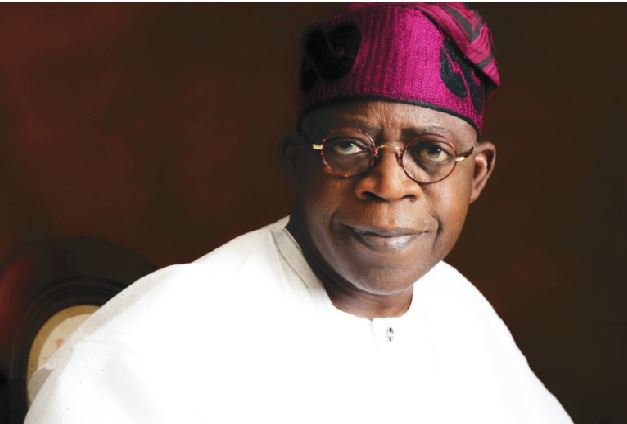
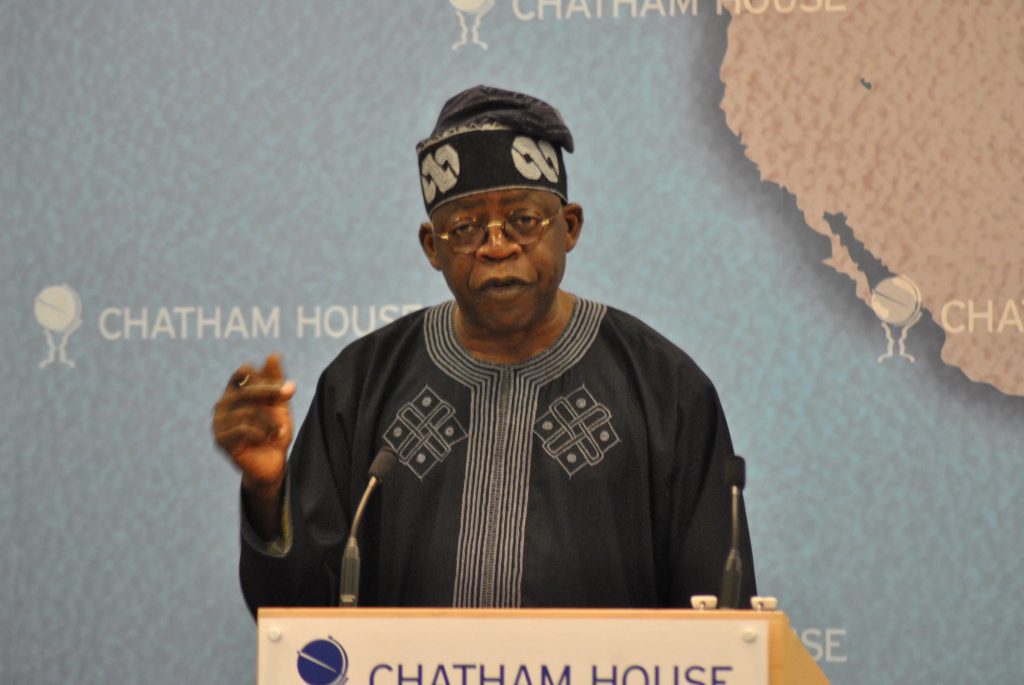
Q: We decided to support Dapo Sarumi.
A: Gradually, I moved from raising funds to getting involved. I brought some money to Nigeria out of my dividends. I was comfortable because my investments in America and London were already yielding dividends. Then came the crisis leading to the ban of Professor Femi Agbalajobi and Chief Dapo Sarumi. I threw my weight behind Yomi Edu. He lost the election and our group was devastated. I went to Ahmadu Abubakar and IBB. I wrote a report and I was strongly against the Structural Adjustment Programme introduced by the military government. The idea of the new generation banks came from those reports. Abubakar, from being a permanent secretary, became Minister of Finance.
IBB saw the significance of the advice as well as the short, medium and long term vision that were in the report. That man was great. He was a good listener. You could think with him. He is still alive. This probe of NNPC dates back to those periods. You can give the NNPC a bank draft for 120 days and you will still be using that money!
They started touting the idea that intelligent, brilliant and dynamic people like me should be in the Senate and must change Nigeria. The idea gradually started coming into my head. People like Kola Oseni, Alhaji Hamzat, Busurat Alebiosu, Demola Adeniji-Adele, Prince Olusi, who were members of the Primrose Group at that time, started persuading me to go to the Senate. The Primrose Group was piling so much pressure on Alhaji Kola Oseni to persuade me.
The MD of Mobil, Bob Parker, thought I was crazy when I told him I wanted to join politics. I also told the Finance Director, Akinyelure, that I wanted to join politics and use my brain for my country and that I couldn’t continue to be an armchair critic. The two of them could not believe what I said. They said, given my career path in Mobil, if there was any chance of anybody becoming something there, then I would be the one. I stood my ground and said I would give it a try.
I told them that people do it in America and Bob Parker agreed. They said they would give me a leave of absence for four years, during which they would not fill my position. They later said that they would not stop me because it would rub off positively on them if I became successful in politics. They told me to come back and take my position if I found it uninteresting and unchallenging. So I contested the Lagos West Senatorial district election.
Q: Why not Lagos Central?
A: Lagos West was where our weakness was apparent. The political leaders in the Social Democratic Party just assigned Lagos West, which was the most challenging district, to me and said I had the money, personality and the wherewithal. Lagos Central was preparing for me and they wanted me.
In our group, we wanted to help Wahab Dosunmu to stay in Central, so I went to the West. It was a big battle, but I won the nomination for Lagos West. Wahab Dosunmu got nomination for Lagos Central, but they got him disqualified. The battle was then left to Shitta-Bey, Towry-Coker and Bucknor-Akerele. Whatever happened in the primaries is history. It was a crude primary election, but a most transparent one. That was how I got into politics, which nonetheless was an adventure for me.
Q: What role did you play in the emergence of Michael Otedola of NRC?
A: I didn’t play any role. I was politically naïve, though a strategist in my own right. Those at the forefront weren’t paying attention and there were a lot of intrigues, which I had never seen before. We could have been flexible and compromised when Sarumi and the late Femi Agbalajobi were disqualified, leaving Yomi Edu. There were two groups then. Baba Kekere (Alhaji Lateef Jakande) would call them “ase”. I recommended that we should have given them the deputy governorship slot. Democracy is about conflict and conflict resolution. Otedola would not have emerged if each side had yielded. We found out later that some people who didn’t mean well didn’t want Yomi Edu to get there. If they wanted, they would have allowed flexibility and compromise.
The late Prince Adeniyi tried so hard to resolve the impasse up till the night before the election. The impasse was unresolved and the party ended up giving Otedola a chance. I learnt a lot from that experience.
Q: What role did you play in the presidential election of MKO Abiola?
A: We worked hard for Yar’Adua. The SDP platform and the Yar’Adua machine were a phenomenon at that particular time. We had won the majority in the National Assembly. I wanted to become the Senate President because we secured all the seats in the West and we had 15 senators and Alhaji Kashim Ibrahim, a brilliant politician, mobilised some of the senators in the North; Chuba Okadigbo in the East and Albert Legogie in the so-called South-South. Iyorchia Ayu of the Middle-Belt was very active at that particular time. We had good leaders. Olu Falae was in contention, Biyi Durojaiye also. We had Olusegun Osoba and the rest of them as governors then. We didn’t pay attention to Lagos and didn’t miss anything. We were not looking at any governor to be politically involved. I was just running my vision. I put my talents into being a strategist and I had got the endorsement of 38 out of the 56 senators belonging to the SDP to become the Senate President. So when the leadership caucus of the party met, the problem of the late Yar’Adua and others had crystallised.
It was then believed that Falae or anyone else among the presidential contenders would be the party’s flag bearer after the disqualification of Yar’Adua. They banned the old politicians and asked that the new breed should come forward. Falae, Olabiyi Durojaiye and others were clamouring that the opportunity should be given to the West. Yar’Adua was very consistent about the South-West and the North-West working together. I was confronted in Abuja, because I was already prepared to be the Senate President. I had 15 senators with me and had gotten the endorsement of the majority of other senators. Senators Kanti Bello (he was my partner in the struggle), Kazaure, Kashim Ibrahim, Lawan Buba, Mogaji Abdullahi and a host of others had already formed a caucus that would work for my emergence as the Senate President. When we met at the leadership level, the late M.S Buhari asked us if we could honestly say that we must take the senate presidency? Okadigbo might be interested and would rather have the East produce the Senate President; the North, the Vice-President; and the presidency in the South-West because they had blocked Yar’Adua.
My position was that a bird in hand cannot fly away; you have to tie it properly. As if it was a prediction that I had seen, that thing was a banner headline on The Punch’s front page at that time. I was adamant. Falae, Durojaiye and the rest of them came to me and said that the leadership of South-West would want the presidency and we could not take the two positions. We had to make a sacrifice. My position was then that if your child would go to the class and come first among 30 students, to whom do you give the best prize in the house?
At the stage, I said I wanted to become Senate President, they said I should review my ambition. I made them realise that out of our 15 senators, the North-Central contributed 12 senators, so I said there must be a reward system for the support and loyalty. I told them that if I were to give up the ambition, the position must go to the zone that contributed the highest number of senators to my support base.
Ayu was among the 38. Meanwhile, A.T Ahmed was on the other side. We had internal caucuses and out of 56, 38 of us bonded together. A.T Ahmed and Okadigbo wanted to be senate president. But it was being rumoured in the newspapers that Babangida wanted to remain in power and that Bola Tinubu – because of IBB’s closeness to our family – would be one of those that would be used for IBB to stay. They didn’t know what I stood for. I was laughing. We were saying the military must exit and we were angry because Yar’Adua had been disqualified. We didn’t even want IBB to stay.
While that was on, Abiola came onto the scene and showed interest in the presidency. Suddenly, I found him in my hotel room with Jubril Martins-Kuye. I realised he was an accountant like myself and I told him he had been severally abused for being anti-Awolowo. He said no, and that he would go to Ikenne. I told him that he should forget it if he was anti-Awolowo. When you talked to MKO about the country, you saw his vision and everything. If you were well educated and serious about the country, you would be convinced that he meant well. If you were to do an analysis about who was likely to be less corrupt and whose vision would be consistent for the nation, then you would agree with MKO. We made Ayu the Senate President. Yar’Adua and Atiku got along with us on the choice of Ayu, while Kingibe was very flexible on it. We warned them that we would concede it to the NRC if they refused to let us choose our candidate since they would not be there with us. That was how Ayu won and I became one of the most powerful and influential senators. I was the chairman of the Appropriation, Finance, Banking and two other committees in the Senate.
We started working for MKO to emerge the candidate and we worked hard for him. My corporate experience and the strategic planning I had was brought to bear on what I was doing at the time.
Q: Babangida wanted to use the Senate to stay. How did the Senate respond to that?
A: Ayu, myself and some others knew what the military was up to. The military is politically smart. Don’t underestimate any military officer when it comes to gathering information on any activity. We got wind of their plan and we took a very strong position that the military had to hand over. Equally, the pressure from the media against the continued stay of the military in power was strong. The wind of change was blowing in the direction of a civilian government. Bagangida made several promises and even declared in a broadcast that the military would disengage from politics in August 1993 and would hand over to a democratically elected president.
So, we strategised and organised a successful joint session of the National Assembly to reach a resolution against military stay. It was very auspicious at the time, because no president had emerged. The NRC and the SDP agreed that they wanted the military to go and, with no apparent successor, the political situation was fluid. In a motion moved by a House of Representatives member and supported by a senator, at the joint session of the National Assembly, it was resolved that the military must hand over to a democratically elected civilian president by August.
The Senate President allowed robust contributions from members at the session, which was devoid of party sentiments and affiliations, and we all jointly agreed to the resolution. That was in 1992, before the presidential election in 1993. Both SDP and NRC were expecting victory. We just wanted a civilian government in place. The resolution was seriously binding because the Babangida administration would have no moral authority to stay, though there were talks about diarchy. It just had to go. So when eventually they brought no-go areas and restricted legislators from discussing certain issues, we went to court. We were determined that democracy must be instituted in the country and that it could not be headed by any military man.
To be honest with you, Ayu was a good leader. I believe I was the only person with computer literacy and I had a big Toshiba laptop and I was churning out all sort of media releases against the continuation of military administration. It was a challenging period for this country and the international community held on to that resolution.
Q: Babangida came to address a joint session of the National Assembly. Was that resolution passed before or after that?
A: Babangida addressed us during the inauguration, where I spoke on behalf of the SDP. I frontally told him that he should not miss the opportunity to leave the legacy of handing over to a democratically elected government. My speech resonated with Babangida and after we finished the inauguration, he walked up to me and gave me a firm handshake. He said I exhibited courage; we had a chat and he left. I did not know what he said after that o! After that incident, I became a persona non grata to the military administration.
We worked hard for the emergence of Abiola. Though there were lot of intrigues, we succeeded in seeing that he emerged as the candidate. I went to 22 states to campaign and the campaigns were very interesting. The election came and we were all celebrating because the election was free and fair. The electoral system was amended and the chairman of the electoral commission, Humphrey Nwosu, was very careful and sincere because of the method employed. The Option A4 was effective. So was the Open Secret Ballot System. It was well monitored. Voters were accredited, allowed to vote and votes counted right on the spot. There was no room for manipulation and the number of ballot papers could not be greater than the number of registered voters and vice versa. It could be lower because some people could get accredited and not vote. Everybody would vote at the same time. It was the Open Secret ballot system. The two-party system would have been the greatest legacy left behind by IBB. We had that election and Abiola won.
Q: Where were you when it was announced that the election had been annulled?
I was with Chief MKO Abiola. A few nights before then, we, including Professor Borisade, were collating the results of the election across the country. Suddenly the crisis started and they stopped the collation. We were waiting for result from Taraba State to make the final run. We had gotten figures from all states, but they banned the announcement until they got to Abuja. Suddenly they stopped. Crisis started. We all did what we were to do. Abiola was using his connections. Then we started hearing that there might be a possibility of a cancellation of the election. The political parties had been divided, with the NRC fearing its loss in the election and starting to talk from both sides of its mouth.
Suddenly, General Yar’Adua’s father passed on. I was in Abuja when MKO called in the dead of the night to say that he was sending an aircraft to Abuja and that he had made moves to ensure that the Abuja and Katsina airports operated at that late hour for the purpose of conveying people. He directed that I went with Shehu Yar’Adua to Katsina to represent him and that he would join us the following morning.
He said he needed to talk to the governors and wanted them to accompany him to Katsina for the burial. We spent the night before the burial in Katsina because Shehu wanted to be with his mother.
We were in Shehu Yar’Adua’s compound when General Babangida arrived; he was still the president. Immediately he came, they had to bury the dead. Abiola had not arrived. He was blocked because the airspace had been closed for Babangida’s flight to Katsina. All I knew was that Shehu and Babangida went inside the house for some time. We thought what was going on inside was the military president condoling with the family, that all of them were praying for the mum.
They emerged eventually and IBB immediately left for Abuja. After he arrived Abuja, the air space was opened and Abiola could fly in a chartered Okada Airlines aircraft, alongside other people who came with him to Katsina. We were full of anxiety. Abiola met us in Katsina and after the visit to the family, the emirs and other key indigenes of the place, we all returned to Lagos. Then we heard the announcement annulling the election.
I was in the panel van of National Concord newspapers because my car was in Abuja. I did not know I was returning to Lagos. Some of my vehicles were in Lagos, but nobody knew that I was in town. We went straight to Abiola’s house and we were locked out because there was chaos in front his gate. What followed was the biggest crisis I have ever been confronted with in my life.
Q: Did IBB explain to you personally, given your closeness to him?
A: No. In fact, at that time, the military had declared me persona non grata! Everybody, except me, got up when he arrived at Yar’Adua’s compound. He touched my head and said ‘you’! I know Mogaji Abdullai walked after him and said: ‘Senator Tinubu, will you not see off the President?’ I did not stand up. I said he was not my president! I did not know about the annulment then. That was how the crisis started.
Q: You spoke about the greatest crisis after the annulment…
A: After the annulment, everything became hot. The crisis began to offer the possibility of an interim administration coming into place. Prior to that, they started the idea that should there be a constitutional crisis, it would be Ayu that would head the interim government. I wasn’t sure if Ayu would start a debate on that or reject it outright.
But I told him: ‘Don’t ever think it would be you.’ Eventually, he agreed. There was suspicion in the public space that he and Shehu Yar’Adua had consented to the annulment. The suspicion pervaded the party. The public was fed all sorts of information. I knew that I approached Ayu that there was no way they would have made him the interim head of government. We knew for sure that Yar’Adua was angry because Atiku Abubakar was not made Abiola’s running mate. It became clear to Ayu that there was deception.
Shonekan was eventually announced as the Head of the Interim National Government. We also learnt that the military had promised Shehu Yar’Adua that they would unban the old politicians and that he would have the opportunity to run six months after Shonekan. They were also touting Obasanjo’s name, but suddenly Shonekan’s name was announced. I remember that I went to Ayu and he said he had been invited and I said: ‘Didn’t I tell you that they would not make you the interim head of government?’ I advised him that the best thing was to challenge them. We were in his house playing and I told Yar’Adua that there was no way the military would make him anything. I advised him that he would have built a great structure to succeed Abiola after his four-year term, and that he would only be 54 years then. I pleaded with Yar’Adua not to abandon the ship. I took my mother, Alhaja Abibat Mogaji, to Abuja to appeal to IBB and there is a picture where she removed her head-tie, using her grey hair to plead with IBB to restore Abiola’s mandate.
It was on the front cover of Newswatch. I mobilised them to go and appeal to IBB. On the day Shonekan was to be sworn in, I was in Ayu’s house to pin him down, so as to prevent him from attending the ceremony. They left the chair reserved for him for a while, before inviting Joseph Wayas to sit. They claimed he was Senate President, whether past or present.
There was a disagreement within our group. They offered me a ministerial position, which I rejected. They offered Sarumi a ministerial position and he said he would accept. We were in the hotel room on the day he said so. He is still alive to confirm or deny what I have said. I begged him and told him point-blank that it would be the end of our relationship because we should not betray the cause we started. I told him I gave up the senate presidency for Abiola to contest as president. I told him that was not acceptable and I begged Yar’Adua, too. I fell out with Shehu on the matter and I told them that none of us could predict the end of the game. I pleaded with him to be consistent and stand firm. He said I had no guns and tanks and that I was incapable of facing the military.
The floor of the Senate was very hot. There was a sharp division in the National Assembly. Thereafter, Ayu was removed as Senate President; I was almost killed. There was a plan to assassinate me, but luckily, Akintola Benson and my late driver, Mustapha, walked into a discussion where the plot was being hatched to terminate my life. That was unknown to the people planning the assassination. I was to be taken out of the hotel. The assistant head of security at the hotel brought a chef uniform to dress me up as a chef, while he asked a driver to wait for me. I escaped and headed for Lagos in the chef uniform.
Abiola travelled to the United Kingdom to start the campaign for the de-annulment of the election and restoration of his mandate and Kingibe was there as deputy to continue to coordinate the rest of us at home. I had a choice to go back to my job, because I was on a leave of absence. People advised me to abandon the struggle because of the risk involved. They advised me to go back to my work.
Q: When were you arrested?
A: I said we would continue to struggle until we had democracy. We had a group of 30 senators called the G-30. The G-30 was determined to actualise the mandate on the floor of the Senate. Suddenly, Abacha came and General Oladipupo Diya and Babagana Kingibe were also running around. Diya was one of the most respected and credible military officers then, and he later approached us that there might be change in government. Abiola was around. General Chris Alli met us and said there would be a change of government, which would be in favour of June 12, because they were tired of the shenanigans of the ING. That night, Abacha changed the government. He outsmarted everybody. They met with me, Dele Alake, Segun Babatope and Doyin Abiola. We were asked to write the terms and conditions, which they would broadcast after a change of government. We wrote it and gave it to Diya. They are all alive.
On the night the government was to be changed, Abacha outsmarted everyone and installed himself. These people I mentioned are all alive to testify to what I have said. I can say categorically that I was even called to leave my office because, as they claimed, that night was a dangerous night for them and that everyone’s life might be in danger. Abiola was told not sleep at home until the broadcast had been made. We were all fooled! Big time deception.
When we heard the broadcast the next day, there was no mention of June 12 and no proclamation of Abiola. I was mad, but was still determined. I rushed to Diya and he was still saying that there was no problem and that they were planning to announce the cabinet containing eminent June 12 people. Abiola said what? I said no, announce Abiola’s victory.
Diya told me that I didn’t know the military and that things were not done like that in the military. But I insisted that it was deception. I said I know the military. I called Okadigbo to my office in Lagos and I put the plan before him that we had to confront the military and we had to declare Abacha himself illegal. I got members of our group together; we wrote the script declaring Abacha’s government illegal. Since we could not get to the National Assembly, we opted to hold our session at the Tafawa Balewa Square. We had gotten Dele Alake to be the media coordinator. We told him to get the CNN and other foreign media ready. I put the coat of arms on a rod! That was the mace. We created our own mace.
We reconvened the Senate here in Lagos and declared Abacha illegal before the international media and others. My colleagues had scattered. After we assembled, and having drafted the resolution, they still didn’t know where we would hold the session. I told them to relax, this is Lagos. After the broadcast, everybody took off, because the SSS and other security agents were combing everywhere for us. I went underground, using the 090 mobile phone. I was still granting press interviews to foreign media. The military people were mad. I became a thorn in their flesh and they arrested some of my colleagues, including Abu Ibrahim, the late Polycarp Nwite, Ameh Ebute and Okoroafor. I was still underground, holding press conferences. The military declared me wanted.
Suddenly they granted bail to the arrested senators. I thought I would be a beneficiary, but I was not. Then, there was a manhunt for me by the police and the SSS. Meanwhile, my late uncle, K.O Tinubu and the present Oba of Lagos, Oba Akiolu, who was then a police officer, were pressuring me to disclose where I was. My uncle called to ask where exactly I was. I did not disclose my whereabouts. I told Akiolu that even though he is my relative, I would still not tell him where I was since he was a police officer! He said: ‘Ha!’
My uncle advised that the military would kill me if they found me underground and no one would be able to locate my whereabouts. He said it was better I surrendered myself because he wanted me to be alive. I told him that I would call him back, that I was to hold a press conference at the time. And he shouted in amazement: ‘You are holding press conference when your life is in danger.’ I told him I would surrender, but would not tell him when.
I disguised perfectly, dressed like a malam, and went to the police at Alagbon. The officers didn’t even know me when they saw me. I went in, deposited my phone and my charger. Senator Abu Ibrahim was with us. The officers were wondering why I, a Mallam, could not speak Hausa! I removed my turban, showed up at the front desk and declared that I had come to surrender. And there was pandemonium among the officers, as to how I got there.
The AIG then was very nice and they put me in the cell. They poured water into the cell room and said, ‘sleep there’. That was the nastiest experience I had within first 48 hours that I was there. It was on a weekend. I told them I would embark on a hunger strike. The late Anthony Enahoro was on the stairway and Beko Ransome-Kuti was at another angle on the stairway. They brought me out repeatedly for interrogation. They asked me to renounce but I said no, I would not recognise Abacha. They took me and my colleagues to court. People who were supposed to meet their bail conditions were stopped from doing so immediately they saw me. They cancelled everybody’s bail because they could not isolate me.
They gave an order that we should be taken out of court, but kept in the police custody at Alagbon. They kept about eight of us in a photocopying room, an eight-by-eight room. We were sleeping across one another. It was a matter of the first to sleep would maintain the position. If your head was this way, your leg would be there and so on. It was a nasty experience.
There were a lot of interrogations, with a lot of carrot and stick. I can never forget the role and determination and sincerity of a compatriot at that particular time. They made an exception to uphold the earlier bail granted to Senator Abu Ibrahim. He was asked to go. He was the only Hausa-Fulani man with us. The late Hassan Katsina had intervened. But Senator Ibrahim said he would rather stay, except every one of us was granted the same bail conditions. He said he would not leave his colleagues behind.
He is a courageous and a detribalised Nigerian, who had a vision of what Nigeria should be. He refused to accept an isolated bail. They started sending emissaries to us in detention, offering us all sorts of appointments and opportunities to renounce our positions, but we refused. The judiciary was still very courageous then. We went to the Court of Appeal. An incident occurred at the lower court. Market women turned out hugely to support us when we were brought to the court. The day they refused my bail, some of the market women appeared naked and so they stopped taking us to the court. The court sessions were usually interesting for us because of the scenes. At Alagbon, we bathed in the open between 4 and 5 a.m.
The condition started improving when they began to bring officials of the failed banks. Those ones contributed money to repair the generating set at Alagbon and we started enjoying electricity a little longer than we used to. It was during the time that the protest became intense. Nigeria was playing at the World Cup then. Italy defeated Nigeria and the security people lied to us that it was otherwise. Eventually, the Court of Appeal courageously granted us bail in enforcement of our fundamental human rights. Our passports were confiscated and deposited with the court. Later, the High Court ruled that our passports be released to us. That night, they finally announced our bail and conditions attached to it. The presiding judge then is today the Emir of Ilorin, Sulu Gambari. We heard that they put so much pressure on him (Clement Akpamgbo was the Attorney-General) not to release us, but he ordered our release. They were going to re-arrest me and I suddenly went underground to continue my protest.
They would throw bombs and say it was us. Mobil called me to come back to my job, but I refused. They bombed my house, but luckily, my wife and children had been evacuated. I would not want to reveal how they were evacuated because there was a diplomatic involvement. They told me that my life and those of my family were in clear danger.
Suddenly, they announced that I was wanted again. They alleged that I was going to bomb the NNPC depot at Ejigbo. Ah! I was still being tried for treason, which carries a sentence of life imprisonment, and I was again accused of trying to bomb an NNPC depot. I couldn’t go back because my photograph was all over the place that I was wanted. A diplomatic source advised me that I should leave the country if I wanted to continue the struggle. Dan Suleiman, Alani Akinrinade were in danger. We asked Bolaji Akinyemi to leave the country and promote the struggle at the international level.
Q: That was the National Democratic Coalition then…
Q: Yes. I was at the forefront of the struggle at that level. When I went to see my uncle, K.O Tinubu, at home, he shed tears that night. He said he didn’t want to lose me and that I was about to be killed. He begged me to leave Nigeria and affirmed that, being a former police officer, he was sure I would be killed.
He said that I couldn’t return to my house since they had bombed it. I went to a friend’s house. Before then, there was an incident that made them believe that I was at Ore Falomo’s hospital. They went to the hospital to look for me. Eventually, I left Nigeria for Benin Republic by NADECO route.
Q: How did you make it across the border?
Q: I disguised with a huge turban and babanriga and escaped into Benin Republic on a motorbike. My old Hausa friend gave the clothes to me. In fact, when I appeared to Kudirat Abiola, she didn’t know that I was the one! I gave her some information and some briefing. I left at 1 a.m. While in Benin Republic, I was still coming to Badagry to ferry people, organise and coordinate the struggle with others on ground. We put a group together, ferrying NADECO people across. It was a very challenging time. I can’t forget people like Segun Maiyegun and other young guys in the struggle. I would come from Benin to hold meetings with them and sneak back. The military created a whole lot of momentum around me. They took over my house, guest house and carted away all my vehicles and property to Alagbon. That is why today, I don’t have old photographs. They took eight of my cars away.
My wife and my two toddlers were dropped in a bush; nowhere to go. Beko and the diplomatic missions came to our aid and ferried my wife and kids to the United States. I was still in Benin Republic. Besides, I didn’t have a passport and couldn’t have been able to travel. At a stage, they discovered our routes, because they had spies all over, including Benin Republic. Twice I was caught and I fortuitously escaped. They traced me to one dingy hotel I was hiding.
The day they came for me at the hotel, I had gone out on an Okada to buy amala at a market, where Yorubas are dominant. I was also to meet Akinrinade and the rest of them. The spies went to the hotel and as I was approaching, I saw two people wearing tajia (skull caps) at the front desk, asking questions. The man attending to them at the reception (I had been very nice to the receptionist) winked to me and I turned back. I contacted a friend in Benin Republic, who was an architect, and had very strong sympathy for us. Professor Wole Soyinka and Alani Akinrinade, who lodged in a better hotel, were fortunate to have escaped that night, too. The people on their trail pursued them to the hotel, but fortunately missed them.
Then the British High Commission got proper information through the Consular-General that my life was in danger. He stamped a visa on a sheet of paper and did a letter, authorising the airline to pick me from Benin Republic to any port of entry in Britain. I didn’t know how they got to me. A lady just walked up to me and handed me an envelope. She said I had been granted an entry into the United Kingdom. She said I could be killed if I failed to leave in the next 48 hours. It was Air Afrique that took me from Benin Republic to London. Meanwhile, my wife was still in the United States. I landed in Britain and worked my way back to Benin Republic. I picked up my passport from somewhere. I went to an African country and through their connections, they gave me a diplomatic passport as a cultural ambassador.
Q: What country was that?
A: No, please! The African country that helped us with the diplomatic passport was showing gratitude for the help Abiola had done to its president before. So, you can make your deduction. Then, I was shuffling and coordinating our activities in the UK, Benin Republic and Cote d’Ivoire. I used the passport to travel to Cote d’Ivoire to hold meetings at the Hotel Continental, because we were planning to make another broadcast that would be aired in Nigeria. By the time I returned to the hotel, the military assailants had broken into my hotel room and taken away my briefcase and diplomatic passport. They dropped a note, saying: ‘You cannot be twice lucky.’ I was taken over by panic. Fortunately, in my back pocket, I had the photocopy of the sheet of paper on which the British had stamped a visa for me to travel out of Benin previously. I took that to the British High Commission in Abidjan. They listened to my story and asked me to come back at night. They did all their verification and found my story to be true. I returned to them and they gave me another sheet of paper and wrote the number of the flight that would take me out of that country.
But I had no money. Somebody suddenly drove in. The person is a well-known name I don’t want to mention. I met him and explained my condition. He had a traveller’s cheque, but the money was not enough. I went back to the British High Commission and the woman said she could assist me with her own personal money to bridge the shortfall in cash.
We founded and coordinated Radio Kudirat and Radio Freedom and we continued to organise. I didn’t see my family for two good years. They were in America. Bayo Onanuga, who also was part of the struggle, joined us there in December 1997. The law of political asylum stipulates that your first country of landing and acceptance is the safe haven, so it’s not transferable. That was how Cornelius Adebayo was stuck in a United Nations camp. My wife had to invoke a family clause that exists in America to fight for her husband to join her before they granted me a special privilege to leave UK to join my family in the United States.
Q: Where were you on 8 June 1998 when Abacha died?
A: I was shuttling between the United States and UK. We were working really hard as NADECO. We went to our NADECO meeting in the UK to finalise the second leg of the strategy to make a broadcast and enforce certain actions. Before then I was reading Jubril Aminu’s interview in The Punch, where he said Nigerians should not worry about Abacha’s transmutation into a civilian president; but they should be worried about what followed. We were persuaded during a brainstorming session that we should get nearer to Nigeria to do something about it. It was agreed that we should stop him, even if we would have to start guerrilla warfare to achieve that.
Tunde Olowu had been with me in my flat for a couple of weeks and on the night Abacha died, we were just eating when a phone call came through that Abacha had died. We could not believe it until we saw on TV his body being taken out in a van. And that changed the texture of the struggle. Suddenly, there was this news, announcing General Abdulsalami Abubakar as the head of state. We started analysing General Abubakar.
I wish to state that out of all the military generals I met through Abiola while he was lobbying for the restoration of his mandate, Abubakar was the most sincere and straightforward. He pointedly told Abiola that no military officer would want to help him to realise his mandate, unless the military general wanted to get himself into trouble. While other generals we had met lied, Abdusalami was different. He simply said: ‘Look, I am a professional soldier and I want to retire a general. I don’t want to be involved in politics. I cannot help you. I don’t want to be involved.’
When we heard that he was the head of state, I challenged the rest of us to interrogate Abubakar’s sincerity. Good enough, he was straight-forward. When we met him, he told us that he wasn’t going to spend more than nine months because he was not interested. He promised he was going to pardon us and urged us to return to the country. That was the situation of things before the death of Abiola.
So, we were coordinating with Abraham Adesanya and the rest of them, who were on ground here. They sought and we granted them our permission to meet with and size up Abubakar. So, they honoured his invitation. He sent people to us and there was a strong debate, which nearly divided the group, whether or not we should return. The suspicion around Abubakar arose because of the manner of people they saw around him, including Major Hamza al-Mustapha. Some people within our group felt that we should evaluate the situation carefully and not look at isolated occurrences. A big debate ensued after his announcement that he had granted pardon to those of us who had been declared wanted. There were a lot of intervening incidents that I cannot publicly discuss.
Q: When you returned from exile, how did the idea of Lagos governorship arise?
A: Myself, Beko, Fasehun and others met. The death of Abiola was quite devastating for us and we debated whether or not to return. We also examined whether or not there was a conspiracy surrounding Abiola’s death. There were so many questions being asked at the same time. The previous elections contested by Abacha’s five political parties got me seriously worried. After giving it serious thought, we decided that we were not going to declare war against our people, but that we should believe Abubukar by returning home to participate. At a meeting presided over by Enahoro, I told them that I would want to return to my mother because I missed her badly. He said no one could stop me if that was the case. The military, in my absence, broke her soak-away, believing that I kept guns there; carted away the generating set and cut our land (telephone) line.
I came home with three pairs of trousers and three jackets. But because I gave her notice and some other people noticed that I was arriving, unknown to me, they had mobilised people to welcome me. I was shocked at the huge crowd when I got to the airport. I was carried shoulder-high. That was the day I was totally convinced that Nigerians could be very honest, if they care about you. Because as they carried me, my ticket, passport and 2,000 pounds sterling fell from my inner jacket. I didn’t know they had fallen off because I was carried away by the euphoria of the crowd. I didn’t know how they got to Sunday Adigun. At night, they told me someone was looking for me, but because the people around me didn’t believe that danger had finally cleared, they prevented the person. But he insisted that he would not give it to anybody and showed them my passport. So they allowed him and he handed everything to me.
Meanwhile, I had no Victoria Island home to return to. It had been taken over by Abacha. They dispossessed me of the house, as well as my office on Saka Tinubu Street. My vehicles and everything else I owned. They claimed they found bombs in it and dispossessed me of it. I was totally cleaned out. I had only five shirts, the 2000 pounds and the jackets. Before then, Akinyelure came to America, looking for me, with one briefcase. He was detained for four hours by the immigration because they were wondering how someone could come to America with one briefcase. They didn’t let him off until they contacted Mobil and Mobil confirmed him as an ex-employee. He didn’t get to my house till about 3 O’clock. He told me I had to come to Nigeria even if I wouldn’t participate. But he said I should participate. I got back home and each time I moved out, people would shout ‘Governor’.
The day I went to our group’s meeting, they were to decide who to endorse among Wahab Dosunmu, Shitta-Bey and others. They asked me if I was interested and I asked them to give me two weeks to go round since I was just returning. Alhaji Hamzat was there. The chairman at our group’s meeting on that day said they would grant me the two weeks. So I started moving round. My late sister got me some clothes to wear, whether they fitted me or not. I went to Mushin, Agege and other places and people were hailing me as ‘Governor’ and urging me to run. On my first tour of my senatorial district, people were saying governor. Even people who had gone to another party started coming back into the Alliance for Democracy, AD, and that was how I decided I would run. People in Lagos West, East and Central said: ‘You must run for governorship.’
Q: You spent eight years in government, what will you consider your best legacy?
A: My best legacy is the financial engineering of Lagos State, especially to bring financial autonomy to Lagos State and eliminate wastage and mismanagement. That was just one aspect of it. My greatest legacy is Governor Babatunde Fashola. I identified and endorsed him. That was when my corporate background as a recruiter and talent seeker for Deloitte came to play. Part of the training when you go on operational audit is that the first thing you evaluate are the personnel and the questionnaire given to them and how they answer it. You look at the ability of individuals to really take and develop others. There is nothing unique about any leadership. Everybody can come up with different ideas. You can take different routes and arrive at the same answer. No matter how much steel and metal you put together, the greatest achievement and legacy is the ability to develop other leaders who can succeed you, otherwise your legacy will be in shambles. It was a very difficult and challenging period for me. I thank God I stuck to my guns.
Q: You waged several battles against Obasanjo on issues like fiscal federalism, seizure of local council funds etc. Which of these wars did you consider the hottest?
A: If I have to rank them, I think the creation of the local governments was my favourite because the processes are clearly stated and well articulated in the constitution. And if you do all of that and comply with the constitutional requirements, then you should not be denied. I believe in true federalism. I believe in local government administration, which I think is a service centre for the state. The constitution is clear. It is a misnomer to even think that there are three tiers of government in a federal system of government. There are only two – the state and the federal. It is because the constitution was put together by a group of military people, who believe in command and control that we have this kind of anomaly.
They tinkered with it and they tailored it in a way that would suit a unitary system and I believe that was the problem. We still don’t have a constitution of ‘we the people’. The battle was not personally directed at Obasanjo.
Q: Let’s move to matters personal. How did you meet your wife?
Through a dating agency! On a serious note, it was through a family connection.
Q: How many hearts did you break?
A: I don’t know, because I don’t look back and I am not a psychologist or medical expert to test for broken hearts and emotional instability. You pray for luck. Sincerely, you don’t know whether my own heart was broken, too. I am a very lucky person and it was through family connection that I met my wife. It is true that I had many dates. Until I met her, I didn’t even want to be married because I loved my freedom. I had also been disappointed along the line, my expectations dashed. I was going to be totally free before I met Remi. She was innocent, homely and very quiet. I was surprised by her manners and I was hooked.
I was a DJ to my friends. I love music and my house was a boys’ rendezvous. Remi used to cook for all of us. She is the best woman I ever met and fully endorsed by all my friends. They were very close. My friends said: ‘Bola, you now have a woman and you have to settle down.’
I was a successful corporate person. She is totally urbane and seriously committed to my professionalism and career. I met somebody who enhanced the value of my life.
Q: Who was your favourite musician then, and now?
A: I was interested in music. I enjoy music, from the days of James Brown. I told you I followed Roy Chicago to Ado-Ekiti, without knowing. I was just lucky. God just made me a professional because I could have ended up with the late Dr. Sikiru Ayinde Barrister! We used to follow him about for were during the Ramadan, to the extent that I would be locked out. Whenever there was competition around Lagos Island or anywhere, we were always there. There was always the possibility of violence because of the competition.
But when I was an in-house DJ, not commercial DJ. Teddy Pendergrass was my favourite and I kept myself updated on the music scene in America. You don’t have music now. You now have O foka sibe, O gbona feli feli. I love listening to jazz a lot.
Q: What is your favourite food?
Q: Amala and ewedu. But to be honest with you, I love rice. Rice first, amala second. I don’t like eba that much. In any form at all, I can eat rice three times a day.
Q: People say Asiwaju is the richest Yoruba man. How rich are you?
If you are talking in monetary terms, it is a lie. But I want them to continue to believe that I am rich. The fact is that I cannot prepare for my death. I want to live long and I believe in people and I believe in sharing. So, whatever you ascribe to me in terms of wealth is your own imagination. I will not do two cheques – one to the Central Bank of Heaven and the other one to the Central Bank of Hell – cashable when I am dead. The money will remain here. I don’t want to be greedy, but frugal with the little I have and be contented. There are certain things they can’t dispute and one of these is that I wasn’t a poor man when I joined politics. I financed the struggle during the NADECO days. Before the NADECO days, I financed political goals and aspirations. I financed political groups and individuals.
No matter how you dream, it is empty without financial success. If you have no concrete financial progress for a state or an entity, it will not endure. I have not taken Lagos to bankruptcy. It was bankrupt before I took over, I turned it into a success within my two-terms as governor. It had existed for so long before I became governor.
During my tenure, former President Olusegun Obasanjo described Lagos as an urban jungle and uninhabitable. But he chose to celebrate his 75th birthday in Lagos! There was a dispute on the Bar Beach during my tenure, but if I didn’t rigidly follow my vision and my belief in Lagos State, Victoria Island would have been submerged.
Adapted from an interview published in Asiwaju: Untold Story of The Leader, a special publication of TheNEWS.
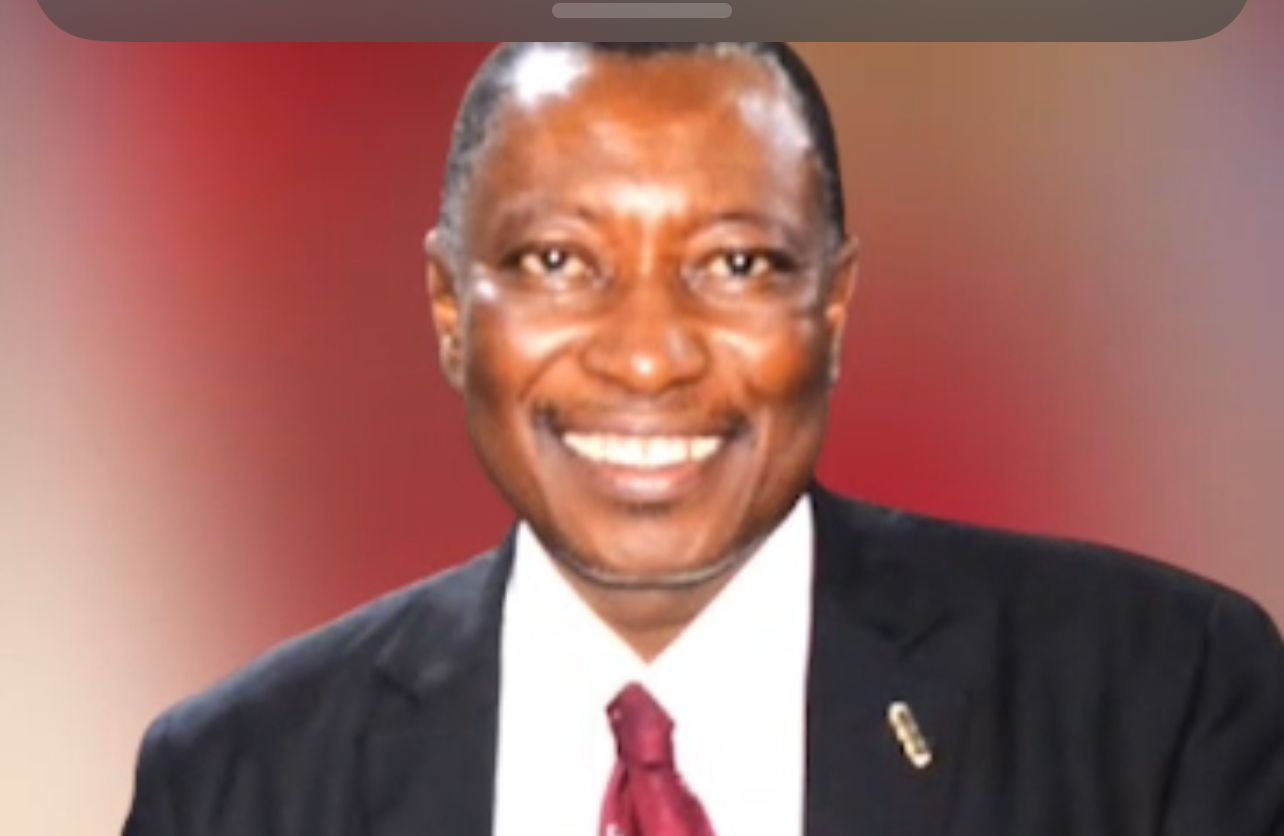
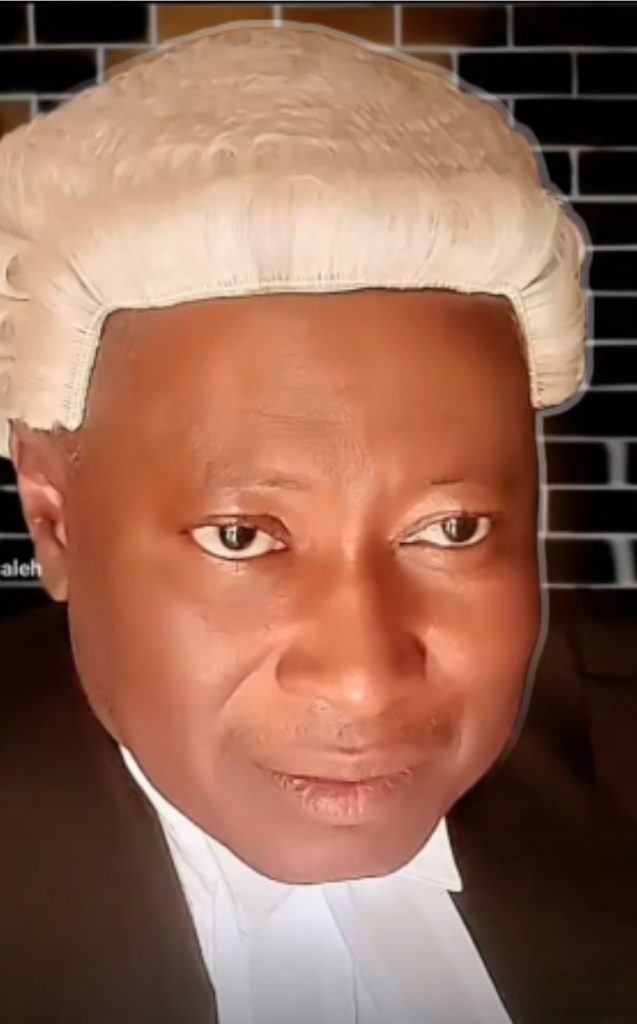
….Exclusive Interview with the Chairman of the Code of Conduct Tribunal
In a modest office in Abuja—where the steady hum of newly restored electricity blends with the quiet rustle of files once left unattended by time—Dr. Mainasara Ibrahim Kogo Umar speaks with the calm intensity of a man entrusted with a renewed mandate.
Honourable Justice Mainasara Ibrahim Kogo Umar, Chairman of the Code of Conduct Tribunal of Nigeria, embodies discipline, depth, and judicial conviction. A man of impeccable character and tested integrity, he is widely regarded as dependable in moments that demand courage and clarity. With decades of experience in legal practice, public service, and institutional leadership, he stands as one who has truly “been there and done that.”
His record reflects landmark contributions—both individually and collectively—shaping conversations around accountability, constitutional responsibility, and anti-corruption enforcement. Justice Kogo Umar represents a compelling study in legal pragmatism, institutional reform, and principled leadership.
In this exclusive interview with a select group of journalists, he speaks candidly about reforming the Tribunal, strengthening anti-corruption mechanisms, and his broader vision for justice and public governance in Nigeria.
Enjoy……….
Interviewer: Good afternoon, sir. Can we meet you?
My name is Mainasara Ibrahim Kogo Umar. I hail from Katsina State. I come from an aristocratic background, but over the course of my journey in unionism and activism, I became deeply influenced by Marxist ideals.
I have been involved in many spheres of life, particularly activism and legal practice. I have fought against corruption for several decades. Currently, I serve as the Continental President of the African Transparency Front, among other responsibilities.
I was appointed Chairman of the Code of Conduct Tribunal on 13th July 2024, after 23 years of leaving the organisation. I previously served here as a young lawyer and later as Chief Registrar of the Tribunal before pursuing other endeavours.
By God’s infinite mercy, I have returned as Chairman of the Code of Conduct Tribunal. My appointment generated some controversies because the President deemed it necessary to revitalise this very important institution.
The Code of Conduct Tribunal is the only judicial institution specifically mentioned in the Constitution under the Fifth Schedule. It tries public officers on matters relating to breaches of the Code of Conduct, abuse of office, illicit enrichment, ostentatious living beyond legitimate earnings, and issues of ethics and morality.
As Chairman, one must be above board. You are the arbiter who determines the personal and official conduct of public officers.
The Constitution clearly defines who public officers are. They include the President of the Federal Republic of Nigeria, the Vice President, ministers, members of the National Assembly, members of the diplomatic corps, service chiefs, judges—including Justices of the Supreme Court and the Chief Justice of Nigeria—members of academia in public institutions, and anyone at the federal, state, or local government level who earns a salary from public funds.
The Tribunal’s mandate is not restricted to asset declaration alone. Even if you declare your assets beyond three months after assuming office, you are already in breach. Subsequently, every four years—whether appointed, elected, or employed—it is mandatory to declare your assets. This serves as a benchmark to determine whether your acquisitions align with your legitimate earnings.
Public officers are not permitted to engage in private business or trade while in office, except farming. If you wish to enter politics, you must resign before contesting.
Upon appointment, the Chairman of the Tribunal can only be removed under three circumstances:
1. Upon attaining the age of 70;
2. By voluntary resignation;
3. For misconduct or breach of the Code of Conduct, in which case both chambers of the National Assembly must invoke their constitutional powers to remove the Chairman.
The Senate, on 20th November 2024, exercised this power and removed the former Chairman on grounds of abuse of office and misconduct. On 26th November 2024, the House of Representatives affirmed the removal with an overwhelming majority.
On 20th February 2025, the Secretary to the Government of the Federation presented my appointment letter, backdated to 20th November 2024. I was subsequently inaugurated by the President and sworn in on 7th October 2025.
What was the state of the Tribunal when you assumed office, and what are the current challenges and your vision?
When I assumed office, the Tribunal was in a very poor state. Staff morale was low, infrastructure was dilapidated, there was no electricity or water supply, and furniture was grossly inadequate.
I immediately restored electricity and water supply, reactivated boreholes, revitalised transformers, and sought technical assistance. Through outreach to international agencies, we secured computers, laptops, photocopiers, and other equipment.
I restructured the institution by expanding it from three departments to thirteen, aligning it with my vision.
One major vision is to transform the Tribunal into the Code of Conduct and Anti-Corruption Court, in line with Section 15(5) of the Constitution, which mandates the State to abolish corrupt practices and abuse of office. A bill to that effect has passed second reading at the National Assembly. If passed, anti-corruption agencies would prosecute relevant cases here.
How does the Tribunal collaborate with agencies like EFCC and ICPC?
Currently, the ICPC prosecutes at State High Courts, while the EFCC prosecutes at the Federal High Court. However, under the proposed reform, cases involving public officers could be prosecuted here.
This Tribunal operates summary jurisdiction. Before assigning hearing dates, I require lawyers to file all written submissions in advance. After reviewing them, hearings focus on adoption and cross-examination, and judgments are delivered promptly. Ideally, no case should last more than six weeks.
The Constitution prescribes specific penalties, including removal from office, disqualification from public office for up to ten years, and forfeiture of ill-gotten assets. These are without prejudice to other criminal penalties under the law.
We have also created departments for international liaison—including collaboration with Interpol and international courts—and enforcement of judgments.
How do you ensure fairness in high-profile cases?
The Tribunal does not initiate cases. The Code of Conduct Bureau investigates and refers cases, while the Attorney General prosecutes. We handle adjudication.
We do not consider status or public pressure—only facts, evidence, and the law. Decisions are reached collectively by a panel of three judges. Public expectation, institutional responsibility, and the demands of the law must be carefully balanced.
How many cases have been referred since your assumption of office?
I inherited thousands of cases, some dating back over two decades. After discussions with the Bureau, we agreed that only cases within a reasonable timeframe—preferably within three years of occurrence—should be referred to ensure effectiveness.
Currently, we handle between two and five cases weekly. The Bureau determines which cases to refer.
What is your vision for the Tribunal in the next five years?
In the next five years, the Tribunal should be placed on first-line charge to guarantee financial independence. We should expand to at least 36 judges, with judicial divisions across the six geopolitical zones and Abuja.
Funding must increase significantly to support infrastructure, security, and institutional growth.
I have served in public service for 36 years and have never taken illegal money. A significant portion of my earnings has gone to charity. My goal is to reposition this institution as a model of public governance and exemplary leadership.
Within five years, once the institution is fully reformed and functioning optimally, I intend to step aside. I do not wish to remain in office until retirement age. My mission is to rebuild, reposition, and leave behind a strong, sustainable institution.
I aim to demonstrate that public institutions can be run with integrity, efficiency, and vision.
interview
NIGERIA MECHANIZED AGRO EXTENSION SERVICE PROJECT, A STRATEGIC MOVE TO ALLEVIATE POVERTY – DR. AMINU ABDULKADIR
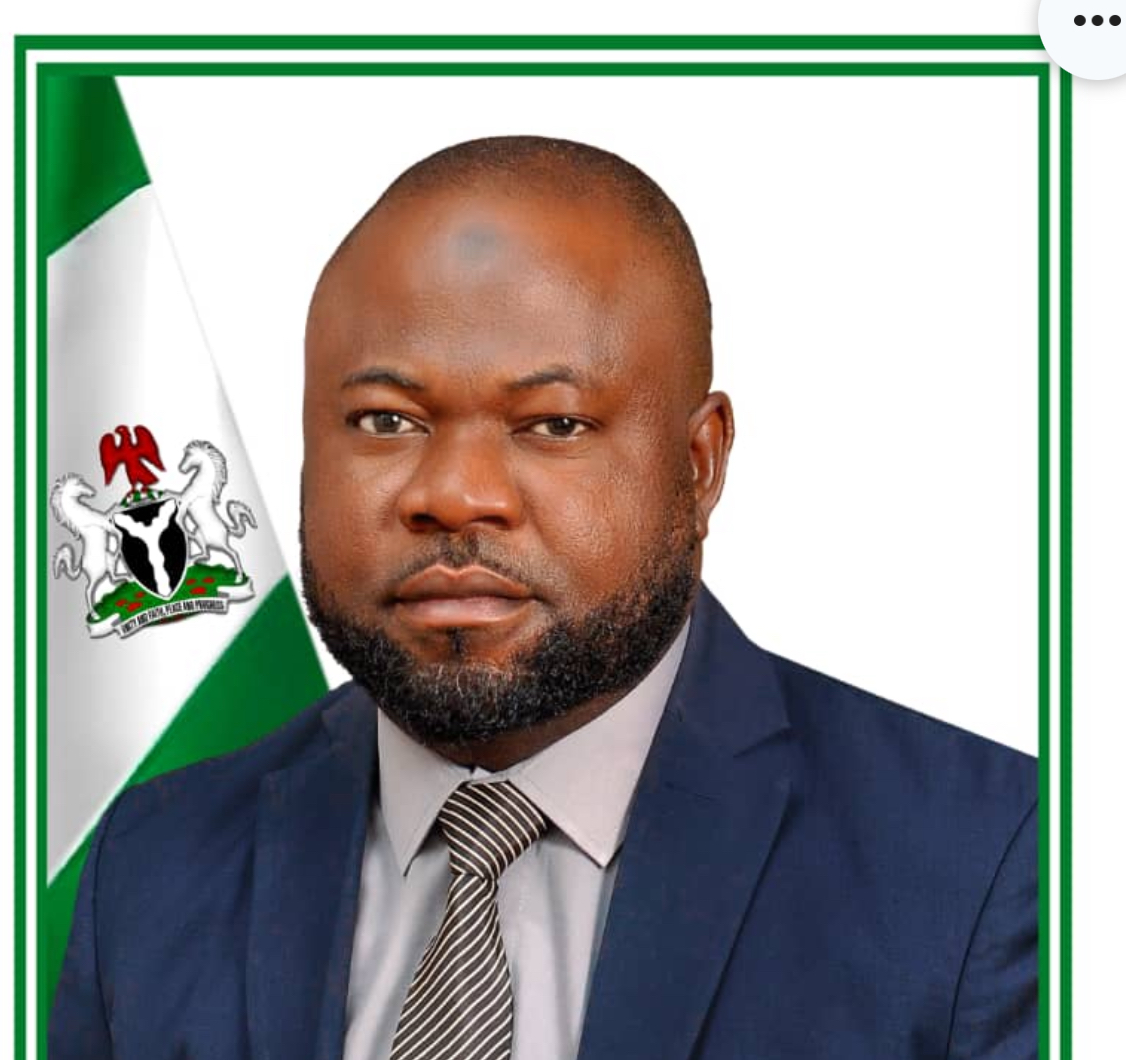
 …. A strategic Agricultural project for job creation, poverty alleviation, sustainable food security and sustainable Economic growth and development of Nigeria.
The Managing Director of NATIONWIDE AGRICULTURAL MECHANIZATION COMPANY OF NIGERIA LTD (NAMCON) and National President of NAMCON GROUP while speaking with Sotayo Newsthumb publisher stated that NAMCON was Established to rebrand Agriculture, with a view to creating job opportunities, alleviate poverty, promote food security and sustainable Economic growth and development of Nigeria. He stated that NAMCON project is strategically structured to relief the Federal government of the burden of funding Agriculture and promote increase private sector investment in the entire Agriculture value chain.
Abdulkadir emphasized that no sector of Nigeria has the capacity to create job and engage the youths like the Agricultural sector. NAMCON project has the capacity to engage 15 million youths in 5years across Nigeria.
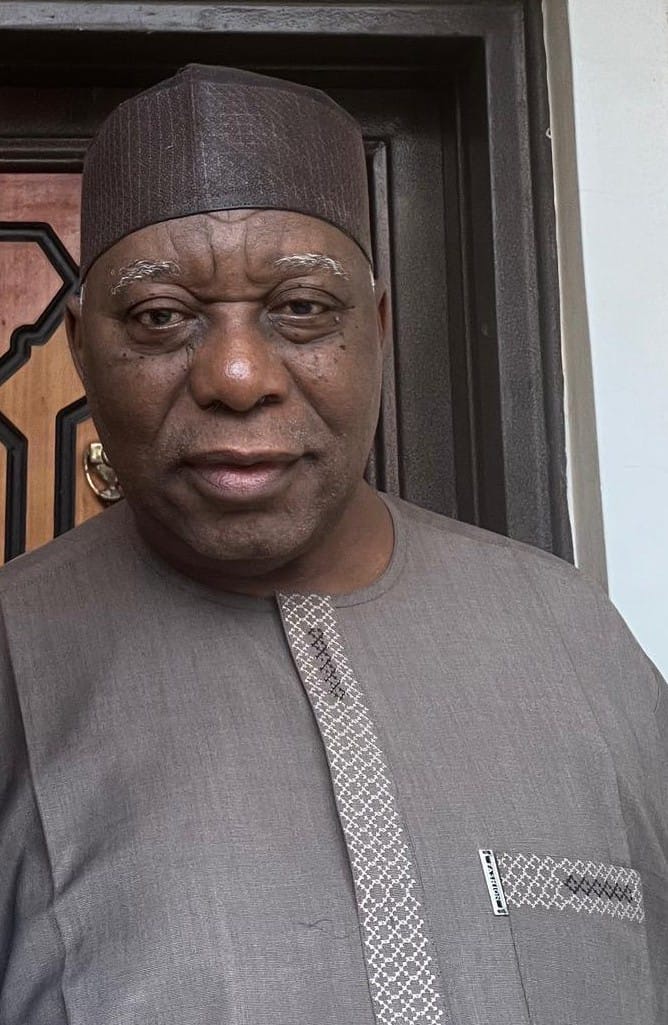
The managing Director and Chief Executive Officer of Nationwide Agricultural Mechanisation Company of Nigeria (NAMCON), Dr. Aminu Abdulkadir, along with a Board member, Engineer Ibraheem Mustapha, the management of NAMCON revealed the plan for the creation of 528 Mechanized Agricultural centers across Nigeria.
Expert………,
WHAT MOTIVATED THE ESTABLISHMENT OF NAMCON AT THIS PERIOD IN THE NATION?
I would say NAMCON is a child of necessity, created after 15 years of intensive research and survey of the agricultural sector with different experts from various units in the industry. We studied and reviewed past Agricultural projects both public and private Agricultural projects and their challenges from 1980 till date. To resolve these numerous challenges NAMCON was created to unlock the enormous potential of the sector and provide comprehensive agricultural solution to rural farmers who constitute over 80% of the farming population of Niigeria. We took into cognizance the need to reduce government funding of Agriculture and make it attractive to private investors.
We have five unique projects code named NAMCON SUPER 5 PROJECTS. The project includes:
1. Nigeria mechanized Agro extension service project.
2. Nationwide Livestock Development Project.
3. Women Nurturing Birds for Wealth Project.
4. Nigeria Agro Market Space.
5. Farmers Housing Project
NAMCON SUPER 5 PROJECTS are strategically structured to provide comprehensive agro solution through the 528 centers across Nigeria.People go to hospitals when they are sick, and when their rights are trampled on, they go to court to seek redress. But where do farmers go for help? Challenges such as these led to the establishment of NAMCON, where farmers will have access to mechanized agricultural consultancy services, technical support, supply of inputs such as improved seedlings, herbicides, organic fertilizer and storage facilities.
For several years, the government has funded the agricultural sector, yet less than 30% of our actual capacity has been utilized. NAMCON has 1400 primary Cooperatives, 284 Union Cooperatives and 32 State Apex Cooperative Societies. To maximize the full potential of the sector, NAMCON will create NAMCON centers in 528 Local Government Areas out of 774 local government councils, with these centers domiciled predominantly in rural areas for farmers. Farmers in these locations do not need to wait for the government but can visit the centers and access all the mechanized extension services and inputs.
Just as doctors diagnose patients to prescribe drugs, these centers will attend to farmers’ challenges—from soil preparation to seedlings. At harvest time, farm produce is shared in a 60/40 ratio: 60% goes to the farmers, while 40% covers administrative costs for the partners. We want to ensure that farmers get premium value from their farming activities.
With this, the yearly struggle to buy fertilizers will be eliminated. Young people, especially those who couldn’t secure white-collar jobs, will be attracted to farming, and their educational upliftment will enable them to contribute to the economy. The project will also drive down the cost of living, complementing the efforts of His Excellency, Asiwaju Bola Tinubu President and commander in chief of the Federal Republic of Nigeria.
We strongly believe that this agricultural project alone can generate at least 15 million jobs within the next three years. It is not rocket science—agriculture is the biggest and best sector that can absorb the labor force, contributing more to the country than oil and gas, ICT, telecommunications, and tourism. Agriculture is vast, and it is the silver bullet that can tackle unemployment, rural-urban migration, poverty, and insecurity in our country.
With our collaboration with the federal government, this project will bring significant sustainable development to Nigeria.
You mentioned bringing tractors to the country and supplying farmers with inputs. How do you intend to fund this and recoup your investment?
Thank you. To revitalize agriculture sector, one needs technology and mechanization. Those who need these machines cannot afford them, and those who can afford them are not interested.
We also understand the numerous efforts and interventions of the federal government under the leadership of President Tinubu in the last two years to bring back mechanization however efforts must be made not to repeat the mistakes of the past. Government can not own and manage and efficient agricultural project.
While we were planning to select a reputable manufacturer that will supply all the equipment needed, we received an invitation from the Chinese government to attend an Agricultural investment summit where we met different tractor manufacturers, and investors willing to supply, manage, and run the equipment with us over a period of 10years.
Our partners have agreed to supply 30,000 units of tractors over five years. other component of the infrastructure include.
1) To deploy 27,000 units of 75Hp Tractors complete with all implements across 528 Local Government Areas over the next 5years.
2). To train and employ 150,000 Youths as Agro Extension Staff over 5years.
3). Provide comprehensive Mechanized Agricultural services to 15million small holder farmers across Nigeria.
4). Provide standard inputs such as Improved seedlings, Herbicide, Organic Fertilizer for the farming of 11 major crops for local consumption and export.
5). Creation of 600 Customized storage centers across Nigeria.
6). Creation of 900 Super Food stores across Nigeria in 5 years.
7). Creation of 2 major service centers and Spare parts centers in North and South.
8). To deploy 600 CNG powered dedicated trucks for the transportation of Agricultural produce.
9). To deploy 600 Bulldozers and Excavators dedicated to creating access roads to farm settlements and cluster farms.
10). Supply of 25,000 Motor cycle for farm inspection, monitoring and supervision.
We are not giving the tractors to farmers outright but providing them as a service. For instance, cultivating one hectare of rice plantation according to international standards costs an average of ₦800,000, which farmers cannot afford. So, we offer this service to them and take 40% of the revenue generated. Farmers do not need to own any of these machines.
How do you raise funds to cover over 500 local governments for the project?
We have both technical and financial partners. The technical partners supply the equipment, while the financial partners fund the project. We have a payback period of about five to ten years.
This strengthens our belief that the agricultural sector is vibrant enough to generate the cash flow needed for repayment. We can feed ourselves and export to other countries. There is a huge market for our cassava in China, and our ginger is highly valuable. These crops alone can generate up to a billion dollars in annual revenue.
All we need is a strategic administrative support of the federal government.
Has this project been communicated to the state governments?
We are currently in discussions with state governments. Every level of government will have a role to play—from federal to local governments, with various contributions that are not necessarily financial.
Relevant government ministries department and agencies will play strategic roles and the traditional rulers will play active role in profiling rural farmers in their communities. Our reward system takes care of all level of government.
How will your organization handle insecurity, especially the herdsmen menace?
Security is primarily the government’s responsibility. We cannot guarantee security, but we have an integrated security solution.
We will engage idle hands in communities so they are not recruited into criminal activities. The social and cultural values of herders must be preserved in any agricultural project. We are creating semi-open grazing areas where they won’t have to roam in search of feed.
Each local government will have designated centers, including demonstration areas where herders can be introduced to modern livestock management through illustrated videos.
Rather than forcing them to buy feed immediately, we will integrate them into the project, gradually shifting their orientation. As they realize that these centers provide better milk yields and improved livestock value, they will naturally adopt the system.
What guarantees do you have regarding your Chinese partners’ ability to supply the needed equipment?
During our visit to China, the government invited many equipment manufacturers and assessed their capacities. Three factors made Zoom-Lion stand out:
1. We needed a manufacturer willing not only to sell equipment but also to operate it with us.
2. They have global coverage and a strong quality control system.
3. The company is 30% owned by the Chinese government and 70% by private investors.
ZOOMLION is the leading heavy equipment manufacturer in China and the fastest-selling agricultural equipment brand in Nigeria.
They have agreed to train and employ two technical personnel for every tractor brought into Nigeria and provide maintenance services. Additionally, ZOOMLION will establish training centers and an Agricultural Technical Hub in Abuja, serving as a seed improvement center, tourism attraction, and equipment assembly plant.
Have you introduced the NAMCON project to President Tinubu’s government, and what kind of collaboration is needed?
At the initial stage, the government can invest—not like the previous interventions where the government provided funding without a structured approach. Instead, we need the government to provide what we call Strategic Administrative Endorsement to establish statutory responsibilities through its agencies and MDAs. Agencies such as NADF and NAFDAC are needed to certify seedlings and other essential imports, while institutions like the Bank of Industry (BOI) would be crucial for effective collaboration.
The Federal Government is primarily responsible for directing all MDAs to participate in the project, ensuring that the benefits for all stakeholders are well-defined for national economic progress. In line with this, we are proposing a national delegation, in collaboration with our Chinese partners, to pay courtesy visits to major stakeholders in Nigeria’s agricultural sector and to our esteemed President. This will serve to formally introduce him to the project and its potential impact on the country.
What is your general assessment and scorecard for President Tinubu?
Well, I must commend Mr. President. Though it is not easy, as a student of economics and a realist, we understand how bad things were before he came to power. What previous Presidents couldn’t do, he has done. He took the bull by the horns—he has performed the necessary “surgery” to remove the “cancer” in our economy. The economy is rebounding, and we are seeing positive signals across major sectors. Food prices are declining, more people are returning to farming, and interest in agriculture is increasing. Our young people are now benefiting from student loans.
So many positive changes have been witnessed, but we strongly believe that our project will complement Mr. President’s efforts by serving as a major silver bullet to further drive economic recovery. There is no road or airport you construct today that will have an immediate impact on rural communities, but agriculture remains the only sector that can thrive without heavy private contributions. That is why our project is strategically designed to partner with the Federal Government in moving the nation forward within a short time.
I also want encourage him to continue on this path because he is doing exceptionally well. He understands the challenges ahead, and that is what brings me joy. I remember during the campaign, someone asked who among the presidential candidates was the best, and Asiwaju Bola Tinubu was rated as the best strategist. That is the approach that successful countries adopt for growth. He is not working for himself but for national progress. Instead of congratulating him, I would rather congratulate all of us.
I know several Nigerian investors who had left but are now returning to invest. However, naysayers refuse to admit that he is doing well. My advice is for him to stay the course. Personally, I have observed that he is not backing down and is leaving no stone unturned. I do not see him serving only one term—I believe, by God’s grace, he will successfully secure a second term.
Engineer Ibraheem Mustapha, a key stakeholder at NAMCON and a former Managing Director of the Federal Housing Authority (FHA), has served Nigeria in various capacities. Drawing from his wealth of experience, he emphasizes the need to take agriculture seriously. He affirms that Nigeria can achieve progressive growth similar to China and Singapore if government-private initiatives are allowed to thrive for the benefit of all citizens. He further asserts that the NAMCON project, in collaboration with the Federal Government, will lift Nigeria out of food scarcity and add significant value to President Tinubu’s scorecard.
interview
My vision is to engage Nigerian youths in sports to promote national pride on the global stage and grassroots developments without political infiltrations, says Senator Obinna Ogba
.
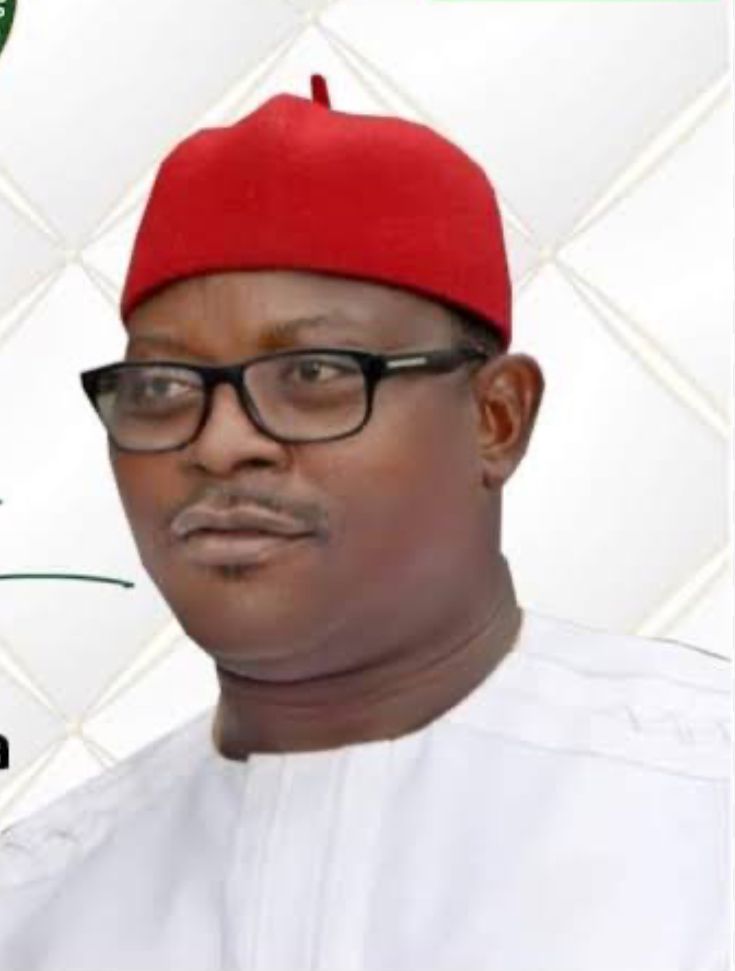
On moving Nigerian sports forward in Nigeria highlight a task that is long overdue. For any renewal move to be achieved, drastic steps and deliberate actions need to be upheld. A former senator representing Ebonyi Central Senatorial District in the 8th and 9th Assemblies, Senator Obinna Joseph Ogba, who is also a sports administrator, hails from Amanvu-
Nkalagu Community in Ishielu Local Government Area of Ebonyi State. Senator Obinna bares his mind on ways Nigerian sports can take its place in the community of sports nations.Excerpt:
We heard of your move from PDP to APC. What informed your decision and belief in this government?
A political party is like a vehicle that can convey you to a destination, and when you get there, it becomes about Nigeria. I never liked APC as a party before, but Senator Oluremi Tinubu talked me through it while we were at the Senate together. She was then the chairman of my committee. It was then I began to yield to APC agendas.
The party I belonged to also disenfranchised me from the Ebonyi State governorship ticket. Myself and others, like my mentor in Ebonyi State, Sen. Anyim Pius Anyim, decided to support APC before the election. It’s therefore wrong for people to assume I just joined APC after the 2023 election. So far, so good. We have been doing well and making efforts to contribute our own quotas, hoping that one day our names can come out at the national level.
Can you mention some of your scorecards during your terms in the 8th and 9th Assemblies?
I don’t like blowing my own trumpet but prefer people to talk about my achievements. However, let me mention them. No senator from Ebonyi State has done what I did since the state’s creation in 1996. I built a stadium while I was the Chairman of the Senate Committee on Youths and Sports for eight years. I assisted in facilitating over 480 Ebonyians into the federal civil service, and all of them are growing in the system. It gives me joy to see those Ebonyians. We attracted developments like road constructions and bridges. I included my community projects in the Nigerian budget, which was unprecedented in the history of Ebonyi State. That is why, on the floor of the Senate, I thank those who introduced constituency projects because, without such initiatives, people like us might not get anything as community gains from the federal government. A cassava processing plant is also part of what my representation brought to my community to date. My first senatorial bill was on the University of Sports, the first in West Africa, which has today been signed into law. Again, to show you that President Tinubu is doing well in recognizing the importance of youths, he has approved the university, which would soon be commissioned, and a vice-chancellor will be appointed. The National Sports Commission has been an illegal entity, and if the President didn’t like it, it could be scrapped. But I had to push a bill for the National Sports Commission, which former President Buhari assented to. That was my bill. Presently, Mr. President has also started implementing the law. Very soon, he will appoint a Director General to run the day-to-day operations of the Commission. When you look at the Commission for Physically Challenged Bill too, I was a partner to it. The National Lottery Bill was also my bill, though former President Buhari refused to assent to it, but the National Assembly vetoed it. That is one of the two bills in Nigeria that has been vetoed. The NDDC Bill during Obasanjo’s era was refused, and this National Lottery Bill was also refused by Buhari, and both were vetoed by the Assembly. I have a lot to tell. The South-East Development Commission (SEDC) Bill was also initiated by me. Now that President Tinubu has consented, myself, Senator Stella Odua, and Anyanwu were the first to sponsor the bill. Buhari assented to the North-East Development Commission (NEDC) but refused the SEDC Bill then. Thank God the present Deputy Speaker has now represented and sponsored the bill, which was assented to by Mr. President. The South-East would forever be grateful for that.
If Mr. President offers you the position of Director General of the Sports Commission today, what would you do differently?
Well, since I know everything about the bill, I have been in sports management all my life. I was a Commissioner for Youths and Sports in Ebonyi State, Senior Assistant to the former Ebonyi State Governor on Youths and Sports, First-Vice President of the Nigerian Football Association (NFA), a retired referee, coach, and former member of the Confederation of African Football (CAF). My credentials in sports speak for me to develop Nigerian youths and sports, to uplift Mr. President’s government in the areas of youths and the Renewed Hope Agendas because you need a system that can relate the agendas to the grassroots. One sure way is through sports. I mean wholesome sports. Be mindful that football is not the only sport we can push to the forefront; there are many other arms of sports too. The era of Nigerians going for international sports competitions without bringing home medals would be a thing of the past. We would ensure sports activities are developed without political infiltrations. I will use my experience to convince Mr. President of the need to develop sports to make his Renewed Hope Agendas proud.
I will develop athletes’ training policies to get them adequately prepared for any competition whatsoever. Releasing money within two to three weeks before a competition would not yield any results; such funds would be a waste. The Olympics is a four-year interval event, and we would no longer wait for athletes to roam the streets without adequate care.
I am aware Mr. President has released ₦12 billion to the Sports Commission, and such funds can be used to care for these talented athletes and not just be spent on a fire-brigade approach for winning Olympic medals with only weeks of preparation—it would never happen. Such funds need to be put to use between now and the next Olympics, while releasing a few billion naira around the tournament period would suffice to achieve commendable results.
My governor just established a football club and appointed me as the chairman of the club. As I am here, I think and talk sports. If given the opportunity, I will do well. In fact, in talking about sports in Nigeria, there is no way my name would not be mentioned. I have a lot to offer. Even most sports ministers usually consult us when they are appointed. You know, after your advice, when money comes, they won’t call you again or even follow the advice offered, and that’s why they always fail.
When people without a track record in sports are appointed, someone like the man from Plateau State who had no knowledge about sports and didn’t belong to the sports community, he was unable to do anything. When you don’t belong to the sports community, you find it difficult to do well and may become frustrated.
In sports, we can also partner with private organizations to raise funds to support sports, making accountable use of the resources garnered to support Mr. President’s Renewed Hope Agendas. I believe in the power of sports as a uniting force for the country.
If given the privilege, I can also establish a National Sports Fund for sustainable funding because most sports funds come from the government alone, and it shouldn’t be so. I will also facilitate sports commission workforce welfare, including coaches and staff. These are the administrators, and adequate training is expected to be given to them for efficiency.
My vision is to engage Nigerian youths to promote national pride on the global stage. I am confident that with the right approach, Nigerian sports can be taken to international levels sustainably.
What do you admire most, and what are your suggestions to Mr. President for almost two years of his administration?
It was his effort to give national honors to athletes who could not win the CAF tournaments but became second with silver medals. No President has ever done that. The President and General Secretary of the NFA were also given national honors. In 1980, when Nigeria first won gold, they were not given national honors. Up to 10 times now, it’s happening for the first time.
Though people say things are very hard and go demonstrating, as an Igbo man, we don’t believe in that. We support President Tinubu’s government. By the time he finishes his second term in office, everything will be normalized.
Why do you think South-Eastern States supported Mr. President?
Our people don’t lie; we focus on what we believe in. Imo and Ebonyi States are APC states. We also believe that by 2027, APC will capture more. Mr. President has been doing well. See the Southeast Development Commission (SEDC) he assented to and approved. Mr. President’s wife visiting our state and we are there to warmly welcome her. We don’t hide our support for him.
How do you think Nigeria can perform well in international competition?
Simply by early preparation. Participants must be fully engaged and exposed to international friendlies to sharpen their talents. We should also learn how to play boardroom politics—that is, not allowing all these Francophone country referees to officiate in our matches against other Francophone nations due to biased officiating. Neutral officials, perhaps from Northern Africa, would be better suited for such games.
If I am appointed Director General, I will make sure Mr. President hosts an African tournament, which would also sell the nation to the world. After Obasanjo, it’s only former President Yar’Adua that hosted an African game. We have something upstairs to offer and make his 2027 election easier for him to win.
What do you think affected our sporting facilities in Nigeria?
Lack of maintenance. We lack a maintenance culture. All our facilities become old. I don’t see any reason why the National Stadium in Lagos should not be working. How much do we think the stadium would cost to maintain that we cannot afford? That stadium, in question, can also yield revenue to cover maintenance costs.
Nigeria has only one FIFA-approved stadium, which is in Akwa Ibom State because the state keeps maintaining it. The National Stadium in Abuja can be maintained too. If appointed, I can reach out to Julius Berger to maintain the stadium to secure a contract from us.
There is also another way we can manage it through private partnerships. Even UBA, as a bank, can be contracted to maintain the stadium for 20 years and earn revenue from it. Dangote, too, can handle it. Look at Murtala Muhammed Airport (MM2) in Lagos—it’s been under private management and functions profitably to this day.
Again, the National Lottery needs to go into sports. In fact, the National Lottery is not paying enough to the federal government as it ought to. We have to ensure they pay all that is due to them.
In addition, our national leagues should be opened for support from government and private organizations. They should not rely only on clubs to survive.
In all, there is no government that has done what Mr. President has done in Nigeria. Security issues have gone down. The proposed tax reforms, too, are a fantastic economic policy to take Nigeria to the next level.
In moving Nigerian sports forward in Nigeria highlight a task that is long overdue. For any renewal move to be achieved, drastic steps and deliberate actions need to be upheld. A former senator representing Ebonyi Central Senatorial District in the 8th and 9th Assemblies, Senator Obinna Joseph Ogba, who is also a sports administrator, hails from Amanvu-
Nkalagu Community in Ishielu Local Government Area of Ebonyi State. Senator Obinna bares his mind on ways Nigerian sports can take its place in the community of sports nations.
Excerpt:
We heard of your move from PDP to APC. What informed your decision and belief in this government?
A political party is like a vehicle that can convey you to a destination, and when you get there, it becomes about Nigeria. I never liked APC as a party before, but Senator Oluremi Tinubu talked me through it while we were at the Senate together. She was then the chairman of my committee. It was then I began to yield to APC agendas.
The party I belonged to also disenfranchised me from the Ebonyi State governorship ticket. Myself and others, like my mentor in Ebonyi State, Sen. Anyim Pius Anyim, decided to support APC before the election. It’s therefore wrong for people to assume I just joined APC after the 2023 election. So far, so good. We have been doing well and making efforts to contribute our own quotas, hoping that one day our names can come out at the national level.
Can you mention some of your scorecards during your terms in the 8th and 9th Assemblies?
I don’t like blowing my own trumpet but prefer people to talk about my achievements. However, let me mention them. No senator from Ebonyi State has done what I did since the state’s creation in 1996. I built a stadium while I was the Chairman of the Senate Committee on Youths and Sports for eight years. I assisted in facilitating over 480 Ebonyians into the federal civil service, and all of them are growing in the system. It gives me joy to see those Ebonyians. We attracted developments like road constructions and bridges. I included my community projects in the Nigerian budget, which was unprecedented in the history of Ebonyi State. That is why, on the floor of the Senate, I thank those who introduced constituency projects because, without such initiatives, people like us might not get anything as community gains from the federal government. A cassava processing plant is also part of what my representation brought to my community to date. My first senatorial bill was on the University of Sports, the first in West Africa, which has today been signed into law. Again, to show you that President Tinubu is doing well in recognizing the importance of youths, he has approved the university, which would soon be commissioned, and a vice-chancellor will be appointed. The National Sports Commission has been an illegal entity, and if the President didn’t like it, it could be scrapped. But I had to push a bill for the National Sports Commission, which former President Buhari assented to. That was my bill. Presently, Mr. President has also started implementing the law. Very soon, he will appoint a Director General to run the day-to-day operations of the Commission. When you look at the Commission for Physically Challenged Bill too, I was a partner to it. The National Lottery Bill was also my bill, though former President Buhari refused to assent to it, but the National Assembly vetoed it. That is one of the two bills in Nigeria that has been vetoed. The NDDC Bill during Obasanjo’s era was refused, and this National Lottery Bill was also refused by Buhari, and both were vetoed by the Assembly. I have a lot to tell. The South-East Development Commission (SEDC) Bill was also initiated by me. Now that President Tinubu has consented, myself, Senator Stella Odua, and Anyanwu were the first to sponsor the bill. Buhari assented to the North-East Development Commission (NEDC) but refused the SEDC Bill then. Thank God the present Deputy Speaker has now represented and sponsored the bill, which was assented to by Mr. President. The South-East would forever be grateful for that.
If Mr. President offers you the position of Director General of the Sports Commission today, what would you do differently?
Well, since I know everything about the bill, I have been in sports management all my life. I was a Commissioner for Youths and Sports in Ebonyi State, Senior Assistant to the former Ebonyi State Governor on Youths and Sports, First-Vice President of the Nigerian Football Association (NFA), a retired referee, coach, and former member of the Confederation of African Football (CAF). My credentials in sports speak for me to develop Nigerian youths and sports, to uplift Mr. President’s government in the areas of youths and the Renewed Hope Agendas because you need a system that can relate the agendas to the grassroots. One sure way is through sports. I mean wholesome sports. Be mindful that football is not the only sport we can push to the forefront; there are many other arms of sports too. The era of Nigerians going for international sports competitions without bringing home medals would be a thing of the past. We would ensure sports activities are developed without political infiltrations. I will use my experience to convince Mr. President of the need to develop sports to make his Renewed Hope Agendas proud.
I will develop athletes’ training policies to get them adequately prepared for any competition whatsoever. Releasing money within two to three weeks before a competition would not yield any results; such funds would be a waste. The Olympics is a four-year interval event, and we would no longer wait for athletes to roam the streets without adequate care.
I am aware Mr. President has released ₦12 billion to the Sports Commission, and such funds can be used to care for these talented athletes and not just be spent on a fire-brigade approach for winning Olympic medals with only weeks of preparation—it would never happen. Such funds need to be put to use between now and the next Olympics, while releasing a few billion naira around the tournament period would suffice to achieve commendable results.
My governor just established a football club and appointed me as the chairman of the club. As I am here, I think and talk sports. If given the opportunity, I will do well. In fact, in talking about sports in Nigeria, there is no way my name would not be mentioned. I have a lot to offer. Even most sports ministers usually consult us when they are appointed. You know, after your advice, when money comes, they won’t call you again or even follow the advice offered, and that’s why they always fail.
When people without a track record in sports are appointed, someone like the man from Plateau State who had no knowledge about sports and didn’t belong to the sports community, he was unable to do anything. When you don’t belong to the sports community, you find it difficult to do well and may become frustrated.
In sports, we can also partner with private organizations to raise funds to support sports, making accountable use of the resources garnered to support Mr. President’s Renewed Hope Agendas. I believe in the power of sports as a uniting force for the country.
If given the privilege, I can also establish a National Sports Fund for sustainable funding because most sports funds come from the government alone, and it shouldn’t be so. I will also facilitate sports commission workforce welfare, including coaches and staff. These are the administrators, and adequate training is expected to be given to them for efficiency.
My vision is to engage Nigerian youths to promote national pride on the global stage. I am confident that with the right approach, Nigerian sports can be taken to international levels sustainably.
What do you admire most, and what are your suggestions to Mr. President for almost two years of his administration?
It was his effort to give national honors to athletes who could not win the CAF tournaments but became second with silver medals. No President has ever done that. The President and General Secretary of the NFA were also given national honors. In 1980, when Nigeria first won gold, they were not given national honors. Up to 10 times now, it’s happening for the first time.
Though people say things are very hard and go demonstrating, as an Igbo man, we don’t believe in that. We support President Tinubu’s government. By the time he finishes his second term in office, everything will be normalized.
Why do you think South-Eastern States supported Mr. President?
Our people don’t lie; we focus on what we believe in. Imo and Ebonyi States are APC states. We also believe that by 2027, APC will capture more. Mr. President has been doing well. See the Southeast Development Commission (SEDC) he assented to and approved. Mr. President’s wife visiting our state and we are there to warmly welcome her. We don’t hide our support for him.
How do you think Nigeria can perform well in international competition?
Simply by early preparation. Participants must be fully engaged and exposed to international friendlies to sharpen their talents. We should also learn how to play boardroom politics—that is, not allowing all these Francophone country referees to officiate in our matches against other Francophone nations due to biased officiating. Neutral officials, perhaps from Northern Africa, would be better suited for such games.
If I am appointed Director General, I will make sure Mr. President hosts an African tournament, which would also sell the nation to the world. After Obasanjo, it’s only former President Yar’Adua that hosted an African game. We have something upstairs to offer and make his 2027 election easier for him to win.
What do you think affected our sporting facilities in Nigeria?
Lack of maintenance. We lack a maintenance culture. All our facilities become old. I don’t see any reason why the National Stadium in Lagos should not be working. How much do we think the stadium would cost to maintain that we cannot afford? That stadium, in question, can also yield revenue to cover maintenance costs.
Nigeria has only one FIFA-approved stadium, which is in Akwa Ibom State because the state keeps maintaining it. The National Stadium in Abuja can be maintained too. If appointed, I can reach out to Julius Berger to maintain the stadium to secure a contract from us.
There is also another way we can manage it through private partnerships. Even UBA, as a bank, can be contracted to maintain the stadium for 20 years and earn revenue from it. Dangote, too, can handle it. Look at Murtala Muhammed Airport (MM2) in Lagos—it’s been under private management and functions profitably to this day.
Again, the National Lottery needs to go into sports. In fact, the National Lottery is not paying enough to the federal government as it ought to. We have to ensure they pay all that is due to them.
In addition, our national leagues should be opened for support from government and private organizations. They should not rely only on clubs to survive.
In all, there is no government that has done what Mr. President has done in Nigeria. Security issues have gone down. The proposed tax reforms, too, are a fantastic economic policy to take Nigeria to the next level.


-
 news6 years ago
UPDATE: #ENDSARS: CCTV footage of Lekki shootings intact – Says Sanwo – Olu
-
 lifestyle6 years ago
Former Miss World: Mixed reactions trail Agbani Darego’s looks
-
 health5 years ago
Chairman Agege LG, Ganiyu Egunjobi Receives Covid-19 Vaccines
-
 lifestyle5 years ago
Obateru: Celebrating a Quintessential PR Man at 60
-
 news1 year ago
BREAKING: Tinubu swears in new NNPCL Board
-
 health6 years ago
UPDATE : Nigeria Records 790 new cases of COVID-19
-
 entertainment2 years ago
Ashny Set for Valentine Special and new Album ‘ Femme Fatale’
-
 health6 years ago
BREAKING: Nigeria confirms 663 new cases of COVID-19