
news
Controversy trails death of socialite, Kayode Badru, As Church leader, two others arrested, detained at SCID

 ….as family alleges foul play, demands identity of seven elders that prayed for him.
Few days after the tragic death of a businessman cum socialite, Kayode Badru, who was burnt to death during a prayer session at a parish of the Celestial Church of Christ in Alagbado, a Lagos suburb, his widow, Kofoworola Badru, recalled his last moments with him while other members of the deceased man’s family demanded justice.
Kofoworola, the widow of Kayode Badru, the businessman cum socialite who died in a parish of the Celestial Church of Christ in Alagbado, Lagos recently had no inkling that a prayer session her husband went for on their wedding anniversary could result in his gruesome death.
Badru, a roundly built successful businessman and socialite who shuttled between Nigeria, Europe and the United Arab Emirates, had hesitated in leaving their palatial residence at No 13 C, Morin Street, New Oko-Oba near Abule Egba on April 26.
”He was restless before he left home on the fateful day. He left our room and returned three times midway the staircase before he finally left,” Kofoworola said.
”He kept saying he forgot something until he finally left home after turning to the room three times.
“He did not eat before he left home, so he asked me to prepare chicken stew and rice for him.
”He told me he was going for prayers at his late mother’s church around Magboro area in Ogun State. He left home around 10 am and promised to come back by 2pm.”
Unknown to his wife of four years, her husband had gone to another Celestial Church parish for the prayers which turned tragic and terminated their four-year-old conjugal bliss.
While Kofoworola was still wondering why her husband had not returned home to eat his favourite meal at 2 pm, cruel fate had played a fast one the Abeokuta-born father of four.
At the church, her husband had clenched his fingers around seven lighted candlesticks and knelt down swathed by seven elders who poured effusive prayers on him to overcome evil.
In the middle of the prayers, the prayer warriors were said to have sprayed him with some spiritual perfume. But before they knew it, the perfume ignited fire which burnt Badru beyond recognition.
He was rushed to the Gbagada General Hospital, where he eventually died on May 4.
“I did not know that he went to another church, the Imole Cathedral of the Celestial Church of Christ. Although the shepherd of the church is his friend and he was the one who facilitated the opening of the church’s branch in Dubai, UAE.
“I became worried when he didn’t return home on time. A few hours later, I was told that he was involved in an accident during the prayers.
”I called his phone at about 2 pm but he didn’t pick his call. At about 5pm, I got a call from the shepherd of the church that my husband was involved in a little accident, and I went to the church.
”At the church, I was told that one of the elders that were praying for my husband sprinkled perfume on him and it triggered fire from the burning candlesticks he was clutching and burnt him.
”On seeing how pathetic my husband’s condition was, I demanded to see the lady who was said to have sprinkled perfume on my husband, but they were just calming me down and did not allow me to see the lady.
“My husband too was calming me down, including the shepherd of the church, Prophet Felix Alebiosu a.k.a. Ebony.
”My husband later developed an infection on his body and he died on May 4, 2021.”
Curiously, when the incident happened, Kofoworola said she was asked by the shepherd of the church, Prophet Felix Alebiosu, not to inform her husband’s family members, assuring her that the situation was under control.
She said: “I was told by Alebiosu not to inform my husband’s family that he was in the hospital. But I eventually did because I couldn’t keep them in the dark for long.
”My husband had no particular parish where he worshipped. He worshipped at any parish he was invited to, and I had accompanied him to worship at this particular church, where he got burnt a few times.
“Besides, he was very close to Alebiosu because he worshipped at a branch of the church in Dubai.
“He is survived by four children. I have two with him while he has two children from his previous marriage.
“He died on our wedding anniversary on May 4; we actually got married on May 4, 2017.”
The 31-year-old widow described her late husband as a man with a large heart even on the sickbed.
”Kayode loved life and was always willing to help people, and he didn’t joke with his children. He had a large heart and always wanted to help people.
“Even on his sickbed in hospital, he was still helping some patients out with their medical bills.”
Recalling his last moments with the deceased, his younger brother, Oluwaseun Badru, also a priest of the Celestial Church of Christ, said there was more to the incident than meets the eye.
“I was called to come see my brother, Kayode Badru, at the Gbagada General Hospital. I saw him in a critical situation.
“When I held his hand to pray for him, he told me that the incident wasn’t natural. He said that he was held down while seven elders of the church were praying for him at the church, and that he felt as if he was in a trance where someone was pouring water on his body. He said that he heard a voice asking him, ‘Is this how you are going to end your life?’ and that he got up to find that he was burning.
“Unfortunately, by the time he got up, the deed had been done as he had been severely burnt. However, my question is where are the seven elders that prayed for him while he was burning? I ask this question because doctors said he was burnt up to the fifth layer of his skin. So, for how long was he held down and how long was the prayer session that those who prayed for him didn’t know that he was burning in their midst?
“I asked the shepherd of the church, Prophet Felix Alebiosu, who led the prayer session for my brother if there were monetary transactions between him and my brother, and he said no. He told me that my brother wasn’t that rich, contrary to what he had earlier told me.
“What baffled me was that my brother told his family he was going to our mother’s parish in Magboro, only for him to visit another parish where he was burnt to death as a result of the perfume poured on him while he was holding candlesticks already lit.”
Oluwaseun urged the police to ensure that justice is served in the matter, noting that other suspects on the run must be arrested and prosecuted.
“Alebiosu and two others have since been arrested and are now in police custody at the State Criminal Investigation Department (SCID), Panti, Yaba, Lagos.
“We heard that the suspects are receiving preferential treatment. However, what we want is justice for our late brother.
“Other fleeing suspects must be arrested and made to face the wrath of the law, because that is the only way justice can be served in this matter.”
Also demanding justice, another younger brother of the deceased, Oluwagbenga Badru, said the circumstances surrounding the death of his elder brother were not real.
He said he suspected foul play and urged the police to carry out thorough investigation and apprehend all those involved in the case with a view to ensuring justice.
He said: “I still find it difficult to believe that perfume was the only substance responsible for my brother’s death. Is it possible for perfume to burn a man up to the fifth layer of his skin without those praying for him perceiving the smoke from the burning?
“Besides, there is another version being bandied by the elders at the prayer session which suggests that the fire started from a burning candle which spread to the spot my brother knelt down and consumed him while praying. So, on this score, the police should arrest all those involved and bring them to book without fear or favour.”
An impeccable source at SCID, Panti, Yaba, confirmed to our correspondent that some persons had been arrested in connection with the case.
“We have arrested the shepherd of the church where the incident took place and two other suspects, and they are in our custody right now. Efforts are being made to arrest other persons involved in the case and carry out a diligent investigation.
“The suspects in our custody will appear before the Deputy Commissioner in charge of SCID this week for proper briefing on the matter.”
Meanwhile, the authorities of the Celestial Church of Christ (CCC) has issued a statement blaming the incident on abuse of perfume by members of the church.
The statement issued by the pastor of the church, Rev. Emmanuel Oshoffa, urged the pastor-in-council to prevent such abuse in the future.
The statement reads in part: “Calvary greetings to you in the name of our Lord Jesus Christ who has called us into His Glory.
“Due to the incessant abuse of spiritual perfumes within the church, His Eminence has found it imperative to state for record purposes and correction that henceforth, spiritual perfumes intended to be sprayed, sprinkled or poured with a lighted candle should be diluted with water.
“The spraying or pouring of undiluted spiritual perfumes in its volatile state with a lighted candle is an imported culture not originally part of the tenets of the Celestial Church of Christ.
“The laid down usage of spiritual perfume within the spheres of a lighted candle by the pastor founder, Saint SBJ Oshoffa, is by mixing it with water. It is high time we retraced our steps for a greater Celestial Church of Christ.
“We are all advised to adhere to this directive. Any parish or member that goes against this directive will be solely responsible for the resultant effect.
“The pastor has also directed the pastor-in-council to come up with a policy document to curb alien practices that have been introduced into the tenets and doctrines of the church to safeguard the church’s divine culture as instructed by the Spirit of God through the pastor founder,” the statement added.


 The Managing Director/Chief Executive Officer of the Nigerian Railway Corporation (NRC), Dr. Kayode Opeifa, has said an efficient railway system will boost Nigeria’s GDP, strengthen trade and food security, reduce transportation costs and improve the general standard of living.
Speaking on TVC’s This Morning Show, Opeifa said the Corporation is focused on optimising existing railway assets while encouraging greater participation by state governments, regional development commissions and the private sector.
“The NRC is not doing badly, but we could do better. We should have been better than where we are today if not for many years of inaction,” he said.
He explained that Nigeria inherited an extensive railway network linking major parts of the country, but decades of inadequate investment and the abandonment of the narrow-gauge system during the modernisation drive created major setbacks.
According to him, the present administration is correcting past mistakes by rehabilitating existing lines, expanding the standard-gauge network and strengthening partnerships with states.
Opeifa said moving railway matters from the Exclusive Legislative List to the Concurrent List has opened fresh opportunities for states and private investors.
He cited the Lagos Red Line as a successful example of what he described as “Railing with the States,” adding that similar initiatives are being pursued in Plateau and Zamfara states.
He also disclosed that regional development commissions and state governments across the South West, South East, North East and North Central are engaging the NRC on railway development.
“Every state and region is now showing interest, and the national government is ready,” he said.
On freight development, Opeifa said the Federal Government had completed the connection of the Lagos-Ibadan Standard Gauge Railway to the port, while goods are also being moved from Apapa towards Ilorin on the narrow gauge.
It
He added that arrangements had been concluded to move freight from Lagos to Kano, Kaduna and Minna, stressing that the Corporation is determined to keep existing railway corridors commercially active.
The NRC boss said the Port Harcourt-Aba section of the Eastern corridor had also been completed and was operational.
He identified poor road links to railway stations as a major challenge to intermodal transportation and urged state governments to provide efficient connections between railway stations, cities and public transport networks.
According to him, railway remains a major driver of industrial development, supporting factories, agriculture, mining, petroleum distribution and inland container movement.
He said completion of rehabilitation works on the Western Line would create opportunities for increased movement of petroleum products and other freight by rail, thereby reducing pressure on roads.
Opeifa also disclosed that the NRC is exploring opportunities in livestock and agricultural transportation, including the use of refrigerated wagons for perishable goods.
On regional connectivity, he said Nigeria’s railway links with neighbouring countries would strengthen trade and give landlocked countries access to Nigerian seaports.
He expressed optimism that the Kaduna-Kano railway project could be completed by December 2026, paving the way for rail movement from Abuja to Kano.
Speaking on the suspended Warri-Itakpe Train Service, Opeifa apologised to passengers and said safety remained the Corporation’s priority.
He explained that although track rehabilitation and a test run had been completed, passenger operations would not resume until safety audits of the track, equipment and personnel were concluded.
Opeifa also said the NRC had completed a proof of concept for the use of Liquefied Natural Gas in railway operations and remained committed to tackling ticket racketeering.
“If we get the railway system right, our GDP will increase, farmers and small businesses will benefit, inflation will continue its downward movement and the general standard of living will improve,” he said.
He urged state and local governments, regional development bodies and private investors to take advantage of opportunities in the railway sector.

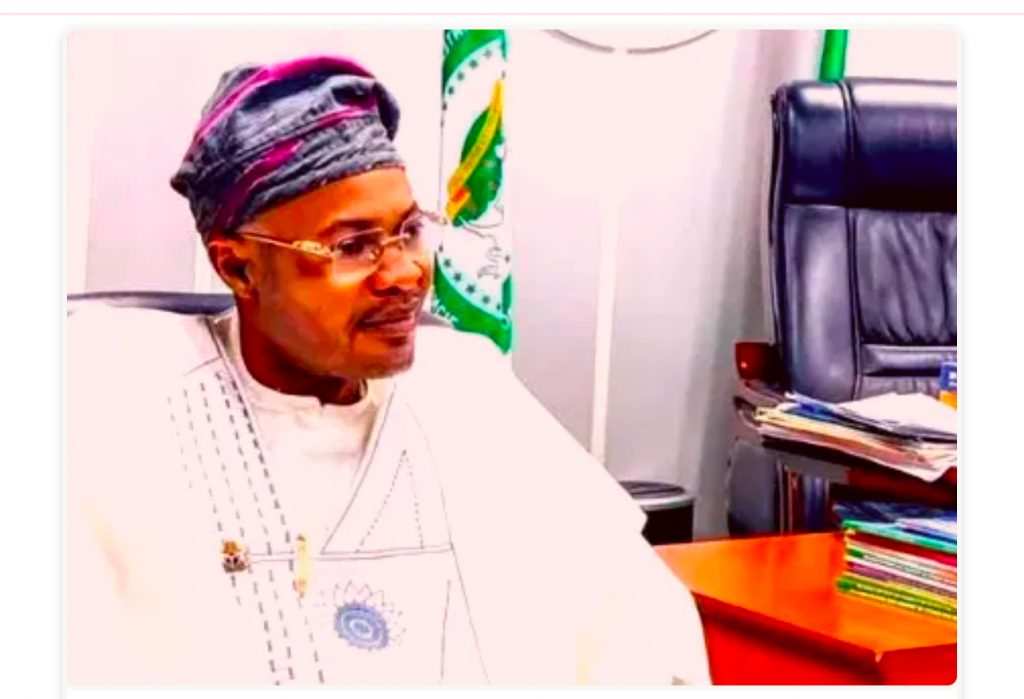
The Federal Government has barred ministers, heads of ministries, departments and agencies and other government appointees from embarking on official foreign trips without prior approval from the Office of the Secretary to the Government of the Federation.
The government also directed the Ministry of Foreign Affairs to make evidence of valid approval from the Office of the Secretary to the Government of the Federation a mandatory requirement for processing official travel documents, including official, diplomatic and service visas for government appointees.
The directive was contained in a circular signed by the Secretary to the Government of the Federation, George Akume, and addressed to top government officials and heads of major Federal Government institutions.
The move comes amid heightened scrutiny of government agencies and individuals claiming to represent the Federal Government, following the controversy surrounding the self-styled Director-General of the purported Presidential Foreign Intervention Promotion Council, Prince Adeniyi Adeyemi.
The controversy has raised questions about how individuals claiming official status can undertake engagements in the name of Nigeria, including foreign engagements, without clear evidence of government authorisation.
However, the latest directive is broader and applies to Federal Government appointees generally.
The circular, titled “Non-Compliance by Government Appointees with the Requirement for OSGF Approval for Official Foreign Trips and the Mandatory Inclusion of OSGF Approval in the Processing of Official Visas,” said the government had observed that some officials continued to embark on official foreign trips without obtaining the required clearance.
It stated, “It has been observed with concern that some Federal Government Appointees continue to embark on official foreign trips without obtaining prior approval from the Office of the Secretary to the Government of the Federation (OSGF), contrary to extant government directives and established administrative procedures regulating official travels outside the country.”
The SGF recalled that the government had issued several circulars over the years to regulate official foreign travel by ministers, heads of ministries, departments and agencies, boards, committees and other public officials.
According to the circular, these directives were issued “with a view to promoting accountability, fiscal discipline and effective coordination of Government business.”
The circular listed a September 18, 2023, circular on “Guidelines for Official Travels by Cabinet Members, Heads of Agencies and Public Officials”, a March 31, 2015, circular on “Guidelines for Official Trips by Chairmen of Federal Government Committees, Boards of Corporations and Government-Owned Companies” and a September 27, 2017, circular on “Additional Cost Control Measures to Guide Foreign Trips by Ministers and Senior Government Officials.”
It also referenced a March 8, 2018, circular on “Observed Indifferent Adherence to Extant Regulations Guiding the Conduct of Foreign Trips by Public Officials” and a November 20, 2012, circular on “Further Cost-Cutting Measures and Fiscal Prudence on Travel by Cabinet Members.”
Despite the previous directives, the SGF said cases of non-compliance had persisted.
The circular stated, “Despite these directives, instances of non-compliance continue to be recorded.”
It warned that the development had broader implications for government administration, stating, “This trend undermines Government’s efforts to ensure proper coordination, accountability, transparency, prudent management of public resources and effective monitoring of official foreign engagements undertaken on behalf of the Federal Government of Nigeria.”
The government consequently reaffirmed the requirement for prior clearance.
The circular stated, “Accordingly, all official foreign trips undertaken by Federal Government appointees shall continue to require prior approval from the Office of the Secretary to the Government of the Federation before such trips are undertaken, except where otherwise expressly provided by law or by specific Presidential directive.”
It added, “This requirement is consistent with the principles of due process, centralised coordination of government business and prudent management of public resources, as reflected in the Public Service Rules, 2021 Edition, the Financial Regulations (Revised Edition, January 2009) and other extant Government directives.”
As part of the immediate measures to strengthen compliance, the Ministry of Foreign Affairs has been directed to ensure that evidence of OSGF approval forms part of the documentation required for official foreign travel.
The circular directed that “The Ministry of Foreign Affairs shall include evidence of valid OSGF approval, where applicable, as a mandatory requirement in the processing of requests for official Notes Verbales, diplomatic facilitation and all applications relating to official foreign travel by Government Appointees.”
The ministry was further directed to communicate the requirement to foreign missions and embassies operating in Nigeria.
It stated, “The ministry is further requested to formally communicate this requirement to all Foreign Missions and Embassies accredited to the Federal Republic of Nigeria, advising that applications for Official, Diplomatic or Service Visas by Government Appointees should, where applicable, be accompanied by duly issued OSGF travel approval as part of the mandatory supporting documentation.”
The new measure therefore gives foreign missions an additional means of verifying whether a Nigerian government official travelling on official business has received the required authorisation.
The Office of the Auditor-General for the Federation was also assigned responsibility for checking compliance with the directive during audit exercises.
According to the circular, “The Office of the Auditor-General for the Federation shall require every government appointee who undertook an official foreign trip at public expense to produce evidence of the requisite OSGF approval during audit exercises.”
The government further warned that public funds spent on unauthorised foreign trips would be subject to scrutiny.
It stated, “Any expenditure incurred in respect of official foreign travel undertaken without the required approval shall be reported appropriately in accordance with extant Financial Regulations and applicable audit procedures.”
The directive also places a direct responsibility on accounting officers and heads of Federal Government institutions to prevent the processing of public funds for unauthorised trips.
It stated, “Accounting Officers, Permanent Secretaries, Chief Executive Officers and Heads of Federal Government Agencies shall ensure that no expenditure relating to official foreign travel by government appointees is processed unless the requisite OSGF approval has first been obtained.”
The SGF consequently directed all ministers, permanent secretaries, accounting officers and heads of ministries, departments and agencies to ensure compliance.
The circular stated, “All Honourable Ministers, Permanent Secretaries, Accounting Officers and Heads of Ministries, Departments and Agencies are hereby directed to ensure strict compliance with the provisions of this Circular.”
It further stated that the directive was effective immediately, declaring, “This circular takes immediate effect and supersedes any administrative practice inconsistent with its provisions, without prejudice to existing extant regulations governing official foreign travel.”
The circular was addressed to the Chief of Staff to the President; Deputy Chief of Staff to the Vice President; all Honourable Ministers and Ministers of State; Head of the Civil Service of the Federation; National Security Adviser; Economic Adviser to the President; Special Advisers and Senior Special Assistants.
It was also addressed to the Chief of Defence Staff, Service Chiefs and Inspector-General of Police; Governor of the Central Bank of Nigeria; Chairman, Federal Civil Service Commission; Chairman, Police Service Commission; Chairman, Code of Conduct Bureau; Chairman, Code of Conduct Tribunal; Chairman, Federal Character Commission; Chairman, Revenue Mobilisation, Allocation and Fiscal Commission; Chairman, Federal Inland Revenue Service; Chairman, Independent National Electoral Commission; Chairman, National Population Commission; Chairman, Independent Corrupt Practices and Other Related Offences Commission; Chairman, Economic and Financial Crimes Commission and Chairman, National Drug Law Enforcement Agency.
Other recipients listed in the circular were all permanent secretaries and Heads of Extra-Ministerial Departments; Clerk of the National Assembly; Chief Registrar of the Supreme Court of Nigeria; Accountant-General of the Federation; Auditor-General for the Federation; and Directors-General and Chief Executives of Parastatals, Agencies and Government-Owned Companies.
The breadth of the recipients means the directive covers ministers, senior political appointees, permanent secretaries, security chiefs, heads of regulatory and anti-corruption bodies, electoral institutions, financial institutions, government agencies and government-owned companies.
The development is coming against the backdrop of the controversy over the purported PFIPC, which has drawn attention to the need for stronger verification of individuals and organisations claiming to represent the Federal Government.
The purported PFIPC and its self-styled Director-General, Adeyemi, have been at the centre of investigations into alleged impersonation and the use of questionable government documents.
The matter has also raised concerns about how purported government officials could engage public institutions and foreign entities while claiming to represent Nigeria.
The latest directive, however, does not single out the purported PFIPC or Adeyemi.
Instead, it establishes a general requirement that government appointees must obtain central approval before undertaking official foreign engagements.
By directing the Ministry of Foreign Affairs to demand evidence of OSGF approval, the government is also creating a formal verification mechanism for foreign missions processing travel documents for Nigerian officials.
The financial provisions of the circular further link official travel approval to accountability for public expenditure, as accounting officers have been directed not to process expenses relating to foreign trips unless the required approval has been obtained.
The measures are expected to strengthen the Federal Government’s control over official foreign engagements, reduce unauthorised travel and ensure that persons travelling abroad in the name of the government have the necessary approval to represent Nigeria.


The Minister of Marine and Blue Economy, Adegboyega Oyetola, has revealed that the Federal Government will provide qualified Nigerian shipowners with up to $25m each, under the Cabotage Vessel Financing Fund, a move he said could strengthen indigenous shipping and create more than 30,000 direct and indirect jobs.
This comes as he also disclosed that disbursement of the long-awaited CVFF to qualified Nigerian shipowners to strengthen indigenous shipping and create thousands of jobs will soon commence.
Oyetola disclosed this in a post on his X handle on Monday, saying the government was finally moving to unlock the fund more than 20 years after it was established.
He said the initiative would help address one of the major challenges confronting Nigerian shipowners.
“After more than 20 years, we are finally moving to unlock the Cabotage Vessel Financing Fund (CVFF) for Nigerian shipowners. This is a major step towards building a stronger Nigerian-owned shipping industry, creating jobs and ensuring that more of the value generated from activities in our maritime space stays in Nigeria.
“Under the CVFF, each successful applicant will be able to access up to $25 million in financing to acquire vessels, subject to the applicable assessment and approval process. This is significant because access to affordable, long-term financing has been one of the major challenges limiting the growth of Nigerian-owned shipping companies”, the minister stated.
On how the fund would improve the competitiveness of indigenous operators, the minister said, “With access to financing at very low interest rates, our shipowners can acquire modern vessels, expand their fleets and compete for coastal and offshore contracts that are currently dominated by foreign operators.
“Our objective is to ensure that more Nigerian-owned vessels operate on Nigerian waters, more Nigerian businesses participate in our maritime economy, and more Nigerians benefit from the wealth our waters generate. Providing Nigerian shipowners with the financial capacity to acquire vessels is a critical step towards reducing foreign dominance in our maritime space.”
Oyetola said he had directed the Nigerian Maritime Administration and Safety Agency to accelerate the process of disbursing the fund to qualified applicants.
He stated, “I have, therefore, directed the Nigerian Maritime Administration and Safety Agency (NIMASA) to work closely with the 12 approved banks, known as Primary Lending Institutions (PLIs), to accelerate the disbursement of the fund to qualified applicants.
“NIMASA has so far received 92 applications. Of these, 20 have been forwarded to the Primary Lending Institutions, while one has so far been reviewed and forwarded for approval. To further speed up access, we have expanded the number of approved banks from five to 12 and launched the CVFF Application Portal to make the process more transparent, structured and accessible.”
Writers urged to promote inclusive maritime sector
The minister added that the expected impact of the fund extended beyond vessel acquisition, as increased indigenous ownership could stimulate several areas of the maritime economy.
He said, “The disbursement of the CVFF could help create a stronger indigenous fleet, which will in turn stimulate activity in shipyards, marine engineering, vessel maintenance, maritime logistics and other supporting industries. It could also create more than 30,000 direct and indirect jobs, while strengthening Nigeria’s ship-owning and shipbuilding ecosystem.
“This initiative is part of the Tinubu Administration’s commitment to unlocking the full potential of Nigeria’s Blue Economy, strengthening indigenous capacity and ensuring that Nigerians take a greater share of the opportunities in our maritime sector.”
He also highlighted the government’s efforts to develop the human resources needed to support the maritime industry.
“Financing vessels is only one part of building a stronger indigenous maritime industry. We are equally investing in the people who will power this industry. So far, 222 seafarers have received free professional training, 333 cadets have completed their academic training and obtained degrees, while 135 cadets under the Nigerian Seafarers Development Programme (NSDP) have obtained their Certificates of Competency. In addition, 7,059 Nigerian seafarers have been placed onboard vessels to gain valuable sea-time experience.”
“We are determined to ensure that Nigerians own, operate and benefit from the economic activities taking place in Nigeria’s maritime space. We are building the capacity to make that happen — through vessel financing, skills development, indigenous enterprise and strategic investment in our maritime sector. The work continues”, the minister concluded.
The CVFF was established under the Coastal and Inland Shipping (Cabotage) Act of 2003 to support Nigerian shipping companies in acquiring vessels and developing indigenous capacity. Its disbursement has, however, been delayed for more than two decades.
The Federal Government launched the CVFF application portal in January 2026 and announced that successful applicants could access up to $25m in financing. NIMASA subsequently began receiving applications from interested operators.
NIMASA had disclosed in April that it received more than 60 applications within four months of opening the portal, with the agency promising that the disbursement process would be transparent and strictly monitored.
The latest figure provided by Oyetola represents an increase in applications to 92, although only one application has so far been reviewed and forwarded for approval, according to the minister.


-
 news6 years ago
UPDATE: #ENDSARS: CCTV footage of Lekki shootings intact – Says Sanwo – Olu
-
 lifestyle6 years ago
Former Miss World: Mixed reactions trail Agbani Darego’s looks
-
 health6 years ago
Chairman Agege LG, Ganiyu Egunjobi Receives Covid-19 Vaccines
-
 lifestyle5 years ago
Obateru: Celebrating a Quintessential PR Man at 60
-
 news1 year ago
BREAKING: Tinubu swears in new NNPCL Board
-
 health6 years ago
UPDATE : Nigeria Records 790 new cases of COVID-19
-
 entertainment2 years ago
Ashny Set for Valentine Special and new Album ‘ Femme Fatale’
-
 health6 years ago
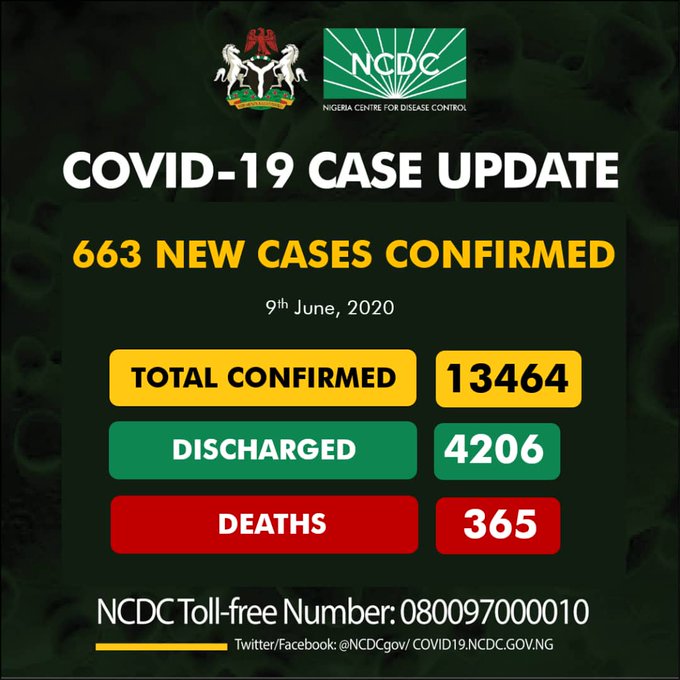
BREAKING: Nigeria confirms 663 new cases of COVID-19