
brand
FirstBank Offers Support To SMEs In Education Sector Through The Pandemic

 First Bank of Nigeria Limited has offered to give financial support to Small and Medium Enterprises (SMEs) in Education Sector to cushion the effects of the COVID -19 pandemic. Mr. Bankole Adediran, Head, Transaction Banking Products, FirstBank, made this known at the Bank’s SMEConnect webinar with theme: “Managing Your School through the Pandemic: Engagement and Retention Strategies”.
Adediran said that the Bank was ready to partner with SMEs in the education sector through the period of the novel coronavirus pandemic to sustain their businesses.
“FirstBank, as an institution, is very passionate about education, and will continue to support the sector,” he said.
He said that the Bank would continue to reinforce its leading role at enabling the growth of the educational sector in the country.
Adediran said that the Bank had an array of financial products that could be accessed by SMEs in the educational sector in the period of COVID -19.
He said SMEs in the sector could key into FirstEdu Loan targeted at private nursery, primary and secondary schools to assist the schools in achieving their desired growth in medium and long terms.
According to him, the product provides funding advancement of up to N20 million for schools with a minimum of 100 students with school fees collection domiciled at FirstBank.
Adediran said that, with the product, school owners/proprietors could stay ahead to make learning easy and conducive for students.
He said the Bank had launched various interventions and initiatives to support the sector to navigate through challenges occasioned by COVID -19.
He noted that FirstBank recently launched an e-learning initiative aimed at reaching out to one million students across the country to ensure they would be academically engaged while at home.
Adediran also said that the Bank supported 10 universities and three secondary schools across the country with major infrastructure projects.
He added that the Bank donated 20,000 e-learning devices to the Lagos State Government to promote online learning for students in the public schools.
Adediran urged schools must learn from the COVID -19 pandemic by embracing automation to plug leakages in the sector.
Mrs. Folasade Adefisayo, Commissioner for Education, Lagos State, who was a panelist at the webinar, commended the Bank for donating 20,000 devices with six months data, to the state for e-learning.
Adefisayo said the state reached out to many companies for support at the wake of the pandemic and that FirstBank came to its aid.
She disclosed that all the schools were not prepared for the situation, noting that most children in public schools did not have device and data for online learning.
“This pandemic has been a terrible thing, and one lesson from it is that we have not invested enough in solutions we can deplore at a time like this,” Adefisayo said.
She said that the pandemic had forced Nigerians to be more creative and innovative, adding that schooling would no longer be the same again.
Adefisayo called on teachers to change their teaching and learning strategies, saying that COVID -19 had changed learning.
Also, Dr. Yomi Otubela, President, National Association of Proprietors of Private Schools (NAPPS), said the association had responded greatly by interfacing between government and its agencies since the beginning of the pandemic.
Otubela said the Central Bank of Nigeria was working out modalities for palliatives for schools and teachers who had not been receiving salaries since the pandemic started.
He noted that there had been an increase in rape, kidnapping and robbery as a result of COVID -19.
Mr. Wale Abioye, Team Lead, Customer Practice in Management Consulting (KPMG), said the pandemic had impacted negatively on many sectors of the economy, especially education.
Abioye highlighted some of the negative impacts of the pandemic to include financial/economic, structural, social and policy challenges.
He said many SMEs in the educational sector could be out of business due to the pandemic, thereby increasing unemployment rate.
Mr. Babatunde Vaughan, Education Lead, Modern Classroom, Microsoft Nigeria, said the company had introduced a lot of products to make online learning easy and interesting.
“COVID -19 is a very unique period for everyone, change has come and we will continue to experience change.
“We must be more proactive than reactive,” Vaughan urged.
brand
AUBA Commences Comtempt Proceedings Against WEMPCO Directors over Alleged Disobidence of Court Order


Mr. Lewis Tung and his brother Robert Tung
The Federal High Court, presided over by Honourable Justice Aluko, has granted an application by United Bank for Africa (UBA) Plc for substituted service of Form 49 on directors of Wempco named as alleged contemnors in the case of UBA v. Wempco.
The application forms part of proceedings seeking to determine whether the named individuals disobeyed an order of the court and whether they should be committed to prison for contempt.
The directors named as alleged contemnors are Lewis Shui Ngor Tung, Phillip Shui Chei Tung, M.A. Ola Yusuf, Tung Lawrence Blake, Aali Aare Hadji Tokunbo, Paul Shui Po Tung, Tung Robert, C.L. Ip and Taiwo Alli.
In advancing the application, counsel to UBA argued that service of Form 49 on the alleged contemnors was necessary to enable them to appear before the court and show cause why an order of committal should not be made against them.
He also argued that the Directors of Wempco and some members of staff took illegal steps in an attempt to disobey the Order of Court.
The court’s decision to grant substituted service provides a procedural step towards bringing the notice to the attention of the individuals concerned in accordance with the court’s directions.
Form 49 is a notice requiring an alleged contemnor to show cause why an order of committal to prison should not be made against them for alleged disobedience of a court order.
The Federal High Court had earlier made an Order of Mareva Injunction and appointed a Receiver/Manager over some of the Assets of Wempco following the indebtedness of Wempco to UBA in the sum of N61,445,695,993.76 (Sixty One Billion FourHundred and Forty-Five Million Six Hundred and Ninety Five Thousand, Nine Hundred and Ninety Three Naira, Seventy Six Kobo).
 A Lagos State High Court, last Thursday, granted interim preservative orders of Mareva Injunction against Vitol SA – a Switzerland based Energy Trading company, and four other shipping companies in favour of United Bank for Africa Plc.
The bank alleged Vitol of wrongful release of cargoes of petroleum products which were consigned to the order of United Bank for Africa Plc in the Bills of Lading.
Addressing the Court, Bode Olanipekun, SAN, lead counsel for United Bank for Africa, urged the Court to grant the interim preservative orders against Vitol and the other shippers.
In a ruling on the application, the presiding judge, Honourable Justice K. A. Jose (Mrs.) granted three prayers in UBA’s application, including requests to restrain the dissipation of assets and dealings with funds up to the disputed amount by Vitol S.A.
“Prayers 1–3 are granted as prayed against the 2nd Respondent only,” the judge ruled.
The application was brought pursuant to Order 43 Rule 1 of the High Court of Lagos State (Civil Procedure) Rules 2019 and the Lagos State High Court Practice Direction No. 2 of 2019.
UBA is seeking to contend in the substantive proceedings that Vitol SA and the owners of the vessels, are liable for alleged conversion, misrepresentation and negligence arising from the non-delivery of the petroleum products.
UBA also cited 34 financial institutions and public agencies, including commercial banks, merchant banks, microfinance banks, the Nigerian Ports Authority and the Nigeria Customs Service, in connection with the application.
In an affidavit supporting the application, UBA’s Group Head of Recoveries and Remedial Management, Anthony Chilaka, stated that the bank issued a letter of credit for the benefit of Vitol SA to facilitate a petroleum products transactions.
UBA alleged that the cargo was transported to Nigeria and that the vessels’ masters issued several bills of lading.
The bank further alleged that Vitol subsequently endorsed the bills of lading “to the order of” UBA and handed over the original copies to it.
UBA maintained that the endorsement entitled it to take possession of the cargo upon completion of the voyage.
However, Chilaka stated that the bank had not received the gasoil despite the completion of the voyage.
“The applicant has not been given possession of the gasoil despite completion of the voyage,” the affidavit stated.
UBA alleged that the cargo was instead, applied to the use of another party, contending that the respondents’ failure to deliver it amounted to conversion and negligence.
The bank argued that the respondents had obligations arising from the transaction and the endorsement of the shipping documents, which it claimed were not fulfilled.
The bank alleged that the cargoes associated with those transactions were also diverted to the use of other parties after their voyages, rather than delivered to UBA.
brand
BANKING ON HER TOMORROW: ZENITH BANK EMPOWERS 300 GIRLS WITH EDUCATION, KNOWLEDGE AND CONFIDENCE
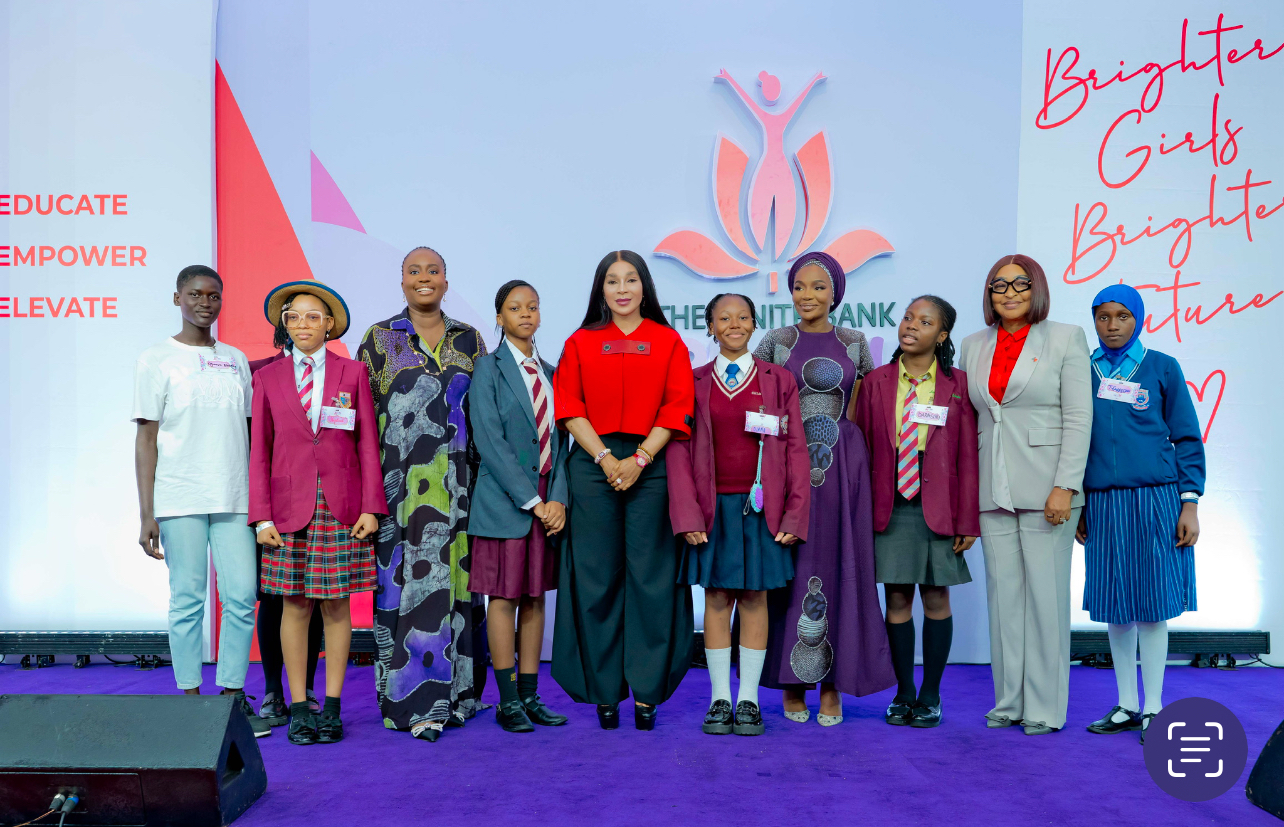
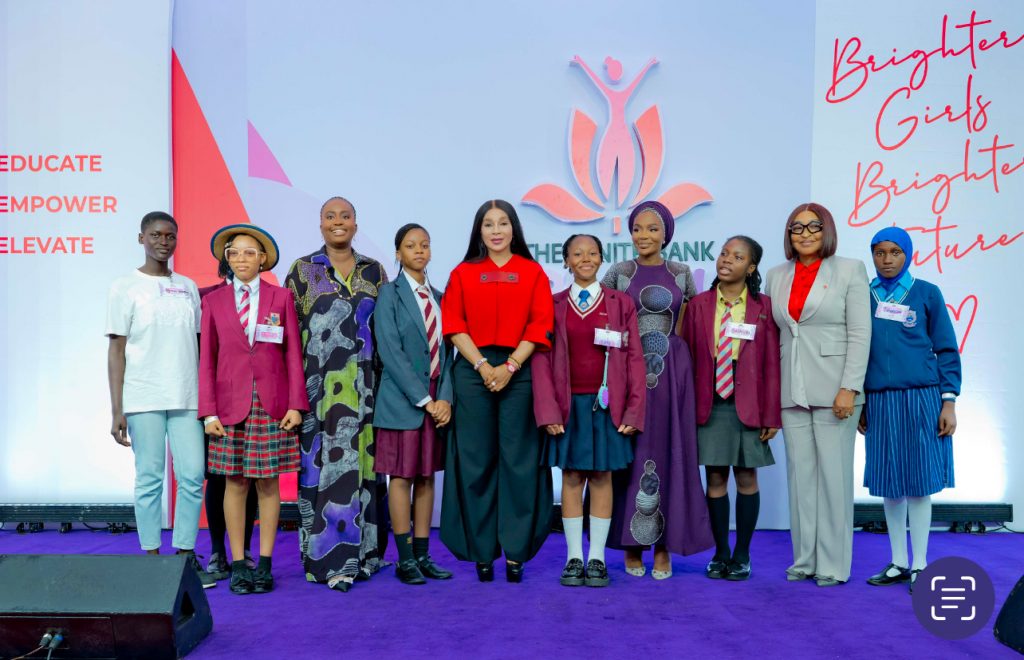
Zenith Bank Plc has launched the maiden edition of its Girl-Child Empowerment Programme, themed “Banking on Her Tomorrow,” bringing together 300 schoolgirls aged 13 to 17 from selected schools across Lagos for a day of learning, mentorship and personal development.
Held on Monday, October 12, 2026, at the Civic Centre, Victoria Island, Lagos, the programme featured sessions on finance and investment, etiquette and personal development, social media ethics, and social relationships and interactions, equipping participants with practical knowledge and skills for their personal, educational and future career journeys.
The initiative, a brainchild of the Bank’s Group Managing Director/Chief Executive Officer, Dame (Dr.) Adaora Umeoji, OON, reflects Zenith Bank’s commitment to nurturing the potential of young girls and helping them make informed choices about their futures.
In her welcome address, Dame (Dr.) Umeoji urged the participants to believe in their abilities, pursue their ambitions and remain focused and disciplined. Drawing on examples of young girls who have achieved remarkable feats, she challenged them to look beyond their present circumstances and envision the women they aspire to become.
“To all my amazing young ladies here today, each of you possesses gifts, talents, and ideas that are capable of revolutionising the world. You can revolutionise the world with your ideas,” she said.
The GMD/CEO further encouraged the girls to explore their interests and resist societal limitations, stressing the importance of taking ownership of their futures.
“Never allow gender or age to limit your goals. Whatever interests you today, explore it. Whatever you choose to pursue in life, give it your best shot,” she said.
Delivering the keynote address, Her Majesty, Olori Atuwatse III, Queen Consort of the Warri Kingdom, encouraged the girls to embrace their identities, develop resilience and use their abilities to make a positive difference in the lives of others.
Using the mangrove tree as a metaphor for resilience, she reminded the participants that challenges need not define their futures and that their worth extends beyond academic results and external expectations.
“Every time you affirm the truth about who you are, you are building confidence. Every time the tide of life goes out and you are still standing, you are building resilience. And every time you use your gifts for another person, you are discovering your purpose,” Olori Atuwatse III said.
The programme featured interactive sessions led by accomplished professionals and personalities:
Ayanime Edem, founder of The Elite Finishing School and modern etiquette educator, discussed confidence, communication, self-presentation and etiquette.
Nigerian actress and content creator Bukunmi Adeaga Ilori, popularly known as Kie Kie, addressed responsible social media use, authenticity and digital boundaries.
Representing Zenith Bank, Thelma Okonye and Adesola Adeyemo introduced the girls to saving, responsible money management and investment, highlighting the importance of developing sound financial habits early.
While Nigerian filmmaker, creative executive and educator,Praise Onyeagwalam, Director Pink, led a session on healthy relationships, self-awareness and effective communication.
The sessions encouraged active participation, giving the girls opportunities to ask questions and engage with the speakers on issues relevant to their experiences and aspirations.
The programme also featured competitions, with cash prizes totalling over ₦1 million awarded to winners. The participants received books to encourage reading and personal growth, while musical performances by Nigerian singers Qing Madi and No. 11 added to the lively atmosphere. The event was hosted by Temi Badru, public speaker, communications coach and lawyer, with Darasimi Destiny Nadi serving as mini host.
Delivering the closing remarks, Executive Director, Zenith Bank Plc, Dr. Mrs. Adobi Nwapa, highlighted the GMD/CEO’s vision for the initiative and the Bank’s commitment to sustaining its impact.
“The programme is the vision of our GMD/CEO, who conceived and championed it, demonstrating her unwavering commitment to the empowerment of the girl child. Through her leadership, she has shown the girls what is possible when a woman dares to lead. At Zenith Bank, our commitment to the girl child extends beyond today, and we will continue to nurture their aspirations through this annual initiative,” she said.
Dr. Nwapa thanked the speakers and participants for contributing to the programme’s success and encouraged the girls to apply the lessons learnt, remain confident and pursue their aspirations with determination.
The initiative builds on Zenith Bank’s longstanding commitment to advancing opportunities for women and girls through programmes including its annual International Women’s Day Seminar, the Zenith Women’s Basketball League, the Women of Honour Awards in partnership with the Ford Foundation, the Pad-a-Queen Initiative and Z-Woman, which supports women-owned businesses through business support and access to credit at discounted rates.
Through “Banking on Her Tomorrow,” Zenith Bank is extending this commitment to a younger generation, equipping girls with the knowledge, skills and confidence to pursue their ambitions and contribute meaningfully to their communities and society.


-
 news6 years ago
UPDATE: #ENDSARS: CCTV footage of Lekki shootings intact – Says Sanwo – Olu
-
 lifestyle6 years ago
Former Miss World: Mixed reactions trail Agbani Darego’s looks
-
news8 years ago
-
 health6 years ago
Chairman Agege LG, Ganiyu Egunjobi Receives Covid-19 Vaccines
-
 lifestyle5 years ago
Obateru: Celebrating a Quintessential PR Man at 60
-
 news1 year ago
BREAKING: Tinubu swears in new NNPCL Board
-
 health6 years ago
UPDATE : Nigeria Records 790 new cases of COVID-19
-
 society3 years ago
Bisbam CEO, Abisola Bamidele, Bags Owu Chieftaincy Title