Connect with us

news

Update : How popular Ibadan thug, Auxiliary’s gang killed 36-year-old father of newborn twins

Published

on


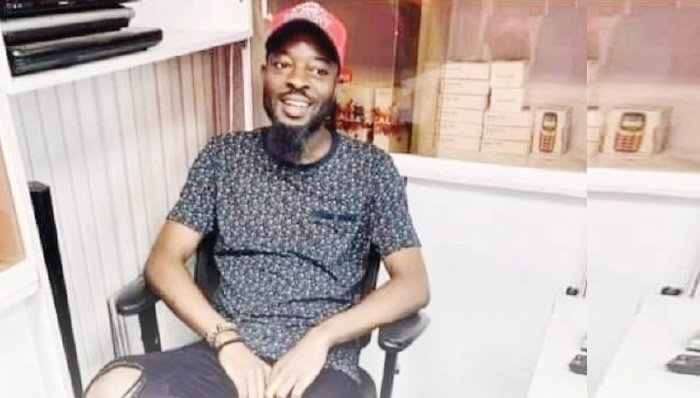
Thirty-six-year-old Rahmon Azeez was full of life on Wednesday and nothing suggested that death loomed.Our correspondent learnt that he just got a visa to travel to the United States of America to see his wife and twins, who he had never carried physically since they were born abroad. He arranged for his wife to travel to the US where she delivered of the babies. But his hope of reuniting with his wife and children was cut short.

Our correspondent gathered that the deceased recently bought a Toyota Camry and drove the car to the Iwo Road Shopping Complex in Ibadan, Oyo State, built by his mother popularly known as Mama Ahmed. However, on getting to the spot, the entrance was said to have been blocked by commercial bus drivers dropping and picking passengers despite the place not designated as a bus stop.

He was said to have asked the drivers to leave the entrance to allow customers and visitors to the complex to access the building. But his speech, it was gathered, reportedly resulted in an altercation. The drivers were said to have reported him to the park managers who were accused of swooping on the young man and dealt him blows and slaps.

Being a popular person at the complex, his mother’s tenants and phone sellers were said to have rescued him from the hands of the drivers and park managers. Not satisfied, the assailants reportedly left to mobilise and invaded the complex with weapons.

Eyewitnesses who spoke with our correspondent said the hoodlums targeted Azeez and hurled stones, sticks and other sharp objects at him before he was stabbed in the chest.

One of the shop owners at the complex, Taye Salawu, told our correspondent that Azeez’s assailants made sure that he was dead before leaving. He noted that they later hid under the cover of the melee to loot and vandalise shops in the complex.  Salawu said, “Not satisfied with the level of destruction, they looted shops and carted away phones and other electronic devices.’’

The deceased’s mother, brother and the entire family were left heartbroken after the violence and traders counted huge losses.

Azeez’s grieving elder brother, Ahmed Azeez, told our correspondent that the leader of the Park Managers, Alhaji Lamidi Mukaila, popularly known as Auxiliary, led armed members who killed his brother at the complex.

Asked if he saw Auxiliary at the scene of the attack, Ahmed said, “There is video evidence to back it up and I saw it.  My brother was 36 years old. His family resides in the US and he already got a visa to visit them. His wife gave birth to twins. He had not seen the babies since their birth. He planned to see his family but that never happened.  We have buried him. I am heartbroken. I can’t talk for long. I don’t know if this is a dream.”

Tension was palpable at the complex and from under the bridge to the Abayomi Bus Stop area when our correspondent visited the area on Thursday. Shops were shut and some traders were seen hanging around the area.

The area was taken over by the police, Operation Burst, a joint security outfit, including soldiers and Amotekun corps. About 25 patrol vans were stationed there to prevent a further breakdown of law and order in the area.

Our correspondent observed that the hoodlums took their time to vandalise the shops. Every glass there was shattered and the floor filled with broken glasses and bottles.

Some of the affected traders took our correspondent to the spot where Azeez Rahmon was killed by his attackers. He was said to have got to a dead end where his assailants pursued him and dangerous weapons freely used to attack him.

Our correspondent gathered that neighbours, his mother’s tenants at the complex and friends picked his corpse later and enraged youths took his corpse to the Governor’s Office at State Secretariat, Agodi, to protest the killing.

Traders recount losses, cry for justice

One of the traders, Akeem Yusuf, told our correspondent that the hoodlums after killing Azeez and injuring many others looted their shops. He added that the thugs returned on Thursday morning and stole the remaining wares in the shops.

Another trader, Mr Kayode Ismail, alleged that soldiers attached to Operation Burst and some Amotekun corps were present when the armed hoodlums invaded the complex and wreaked havoc there.

He said, “The problem started with a complaint that the drivers blocked the entrance of the complex with their vehicles. Azeez came and wanted to park his car but there was no way  for him to enter the complex.  He complained and that led to an altercation.  The drivers called the park managers and they attacked the young man. This led to a fight but some shop owners came to his rescue and the park managers went away and returned fully armed.

“They chased Azeez and he fled before he fell down and they started hurling sharp objects at him. They stabbed him and stoned him. They ensured that he died before they left while others started breaking our shops, stealing and destroying the ones they could not steal. Where were the policemen and soldiers now around? Some of the soldiers and Amotekun were around yesterday when they killed Azeez. They did nothing to stop the drivers.”

Another trader at the shopping complex who identified himself only as Toyeeb said the loss suffered by traders at the complex was huge.

The traders were enraged when the state governor, Seyi Makinde, visited the scene and addressed them. In unison, they accused Auxiliary of masterminding the attack on Azeez and their goods, urging the governor to ensure his arrest, removal from his current position and prosecution.

Deceased’s mother speaks

The deceased’s mother, Alhaja Salmot Azeez, told journalists on Friday that she wanted justice in the case. She said Azeez was a graduate of Lead City University, Ibadan, Oyo State, and was not a cultist.

She said she allowed drivers to use part of the entrance even though their activities usually obstructed movement into shops in the complex.

Salmot said, “A former Commissioner of Police, Adisa Bolanta, intervened and resolved that we should allow them to use part of the entrance and I allowed them. Even a Divisional Police Officer at the time, Ilori, took a photograph of the way the commercial drivers were disturbing us to the then CP and the matter was resolved.

“But this is the way they paid me back by killing my son. My first child whom they attempted to kill studied in London, United Kingdom, but he decided to return to Nigeria. My slain son had a shop where he was selling phones in the shopping complex. He was never a cultist. He was a phone dealer. I don’t know how I offended Auxiliary that made him kill my son. I don’t know what I did to him. He knows me and I usually give him something. I gave him whatever he asked me. This is a great loss.”

Besides, Ahmed said he was the target of those who attacked his brother.

He said, “I was the one they were after. If they were able to lay their hands on me that day, I wouldn’t have been here today. I don’t know why the man is still on the street now. By now, he should be in police custody.”

He said somebody like Auxiliary should not have been appointed by the government to head any place.

In his reaction, the Public Relations Officer for the Park Management System, Alhaji Emiola Jelili, told our correspondent that Auxiliary neither killed nor attacked anybody.

He stated that some politicians were behind the allegation, adding that he also called on the police to carry out a thorough investigation into the crisis and punish whoever was found culpable.

Jelili said, “ Oga (Auxiliary did not attack anybody). He received calls that there was a crisis at Iwo Road and we went there. I was with him that day and thank God that before we got there, the police, soldiers and Amotekun were there and this gave him the confidence that the government had taken steps to bring the situation under control. The alleged attack happened before he got there. He wasn’t there when the crisis happened. He got there after the whole thing. If you analyse the videos in circulation, you will see that he was asking people to leave the place.

“No clashes have been recorded at any motor park since the Park Management System was introduced. But those not satisfied that the government should get from the revenue generated from parks will stop at nothing to tarnish his image. Iwo Road is a big place and three local governments have big parks there so, if Auxiliary was told that there was a crisis there, I don’t think it is out of place that he went there to see what happened.

“The back of the shopping complex is a hideout for cultists and the issue of entrance obstruction was used as a smokescreen. What we heard was that someone bought a phone and the phone was bad. He brought it back the next day but the seller refused to change it, saying he would repair it. The buyer was said to have insisted on getting a refund or a new phone and this led to a clash. The two parties were said to belong to two different cult groups. The allegation against Auxiliary is false and the public should discard it. People should wait for police investigation into the case.’’

Governor, CP promise justice

While inspecting the vandalised complex, the governor appealed to the traders who are mostly youths to allow the police carry out investigation, promising them that justice would be served. The governor who told them that he grew up in the area, said parking at the spot had been an age-long problem which would be solved.

Also, the state Commissioner of Police, Ngozi Onadeko, who was at the scene on Thursday shortly before the governor arrived, also told the aggrieved traders that the crisis would be painstakingly investigated and culprits would be prosecuted.


Continue Reading
Click to comment

Leave a Reply

Your email address will not be published. Required fields are marked *

news

Humanity, Leadership and Legacy: Ooni of Ife Celebrates Prince Eludoyin at 78

Published

on

The Permanent Chairman of the Southern Nigerian Traditional Rulers Council (SNTRC), Arole Oodua Olofin Adimula and the Natural Head of the Oduduwa race worldwide, the Ooni of Ife, Ooni Adeyeye Enitan Ogunwusi, CFR, Ojaja II, has celebrated renowned businessman and illustrious son of Ile-Ife, Prince Eludipo Elusanmi Eludoyin, on the occasion of his 78th birthday.

In a statement on Monday released by the Director of Media and Public Affairs, Ooni’s Palace, Otunba Moses Olafare, the Ooni who is also the Permanent Co-chairman of the National Council of Traditional Rulers of Nigeria (NCTRN) described Prince Eludoyin as one of the shining lights of Ile-Ife whose life has remained dedicated to hard work, service to humanity and the growth of Nigeria’s economy.

The Ooni praised the Ife-born business mogul for his remarkable achievements in the international business community, noting that his contributions through Paragon Holdings Limited and other business platforms have created employment opportunities for thousands of people while also supporting meaningful development projects within and outside Nigeria.

Ooni Ogunwusi said Prince Eludoyin’s impact goes beyond business, describing him as a man who has consistently used his success to uplift people and support communities through various philanthropic activities.

According to the Ooni, the celebrant’s humility, wisdom and commitment to humanity have earned him respect across different sectors both in Nigeria and abroad.

The royal father also acknowledged Prince Eludoyin’s longstanding relationship with President Bola Ahmed Tinubu, describing the celebrant as a trusted confidant and loyal friend whose influence and experience continue to contribute positively to national development.

“Prince Eludoyin is a pride to Ile-Ife and the Yoruba race. His life story is one of vision, resilience and service. At 78, he remains a source of inspiration to younger generations who desire success built on integrity, excellence and compassion,” the Ooni stated.

The Ooni prayed for more years of sound health, peace, strength and continued accomplishments for the elder statesman as he continues to serve humanity and contribute to the progress of society.

Continue Reading

news

Between Hope and History: What Nigerians Expect from Tegbe as Power Minister

Published

on


By Michael Olukayode
For decades, electricity has remained Nigeria’s most enduring national embarrassment. From military administrations to democratic governments, promises of stable power supply have come and gone with little to show beyond recurring darkness, collapsing grids, abandoned projects and rising public frustration.

Now, with the appointment of Joseph Olasunkanmi Tegbe as Minister of Power, expectations are once again rising. Yet unlike in previous eras, Nigerians are no longer impressed by ambitious declarations. They are demanding results.

The question confronting Tegbe is not whether he understands the scale of the crisis. It is whether he can succeed where many before him failed.

Nigeria’s electricity sector is littered with the ruins of grand promises.

From the Olusegun Obasanjo administration’s multi-billion dollar National Integrated Power Projects (NIPP), to the Goodluck Jonathan-era privatisation of generation and distribution companies, successive governments repeatedly promised that stable electricity was around the corner. Under former President Muhammadu Buhari, Nigerians were told that the Siemens-backed Presidential Power Initiative would revolutionise transmission and distribution. The current administration of President Bola Ahmed Tinubu also pledged sweeping reforms, improved generation and a more efficient market-driven electricity sector.

Yet millions of Nigerians still rely on generators as their primary source of power.

The irony remains painful: Africa’s largest economy continues to generate barely between 4,000 and 5,000 megawatts for over 200 million people, despite an installed capacity exceeding 13,000MW.

Entire industries have collapsed under the burden of self-generated electricity. Small businesses spend more on diesel than on salaries. Manufacturers complain of rising operational costs. Students study under torchlights. Hospitals struggle to preserve vaccines and operate life-saving equipment. For many Nigerians, electricity is not merely an infrastructure issue; it is the dividing line between poverty and productivity.

That is why Tegbe’s appointment comes with enormous pressure.

Unlike many previous political appointees in the sector, Tegbe comes into office with the image of a technocrat rather than a career politician. A chartered accountant and management consultant, he built his reputation in the private sector through years of corporate advisory work, investment strategy and institutional restructuring. He previously served as the Director-General and Global Liaison for the Nigeria-China Strategic Partnership, where he was credited with helping to deepen investment engagement between Nigeria and Chinese investors in infrastructure, manufacturing and industrial development initiatives.

Before that appointment, Tegbe had a long corporate career spanning consulting, finance and business transformation. He worked with multinational consulting firm Deloitte and later became a senior business strategist with extensive experience in public-private partnerships, governance systems and economic planning. Supporters argue that this background gives him a better understanding of the financial and structural complexities that have crippled Nigeria’s power sector for years.

His defenders also point to his record in economic coordination and institutional reforms, arguing that the electricity crisis is no longer just a technical problem but a management and governance challenge requiring strategic execution, investor confidence and policy discipline.

At his Senate screening, Tegbe outlined a reform agenda focused on improving gas supply, strengthening grid reliability, accelerating metering, enforcing accountability among distribution companies and restoring financial discipline across the sector.

Those priorities are significant because Nigeria’s electricity crisis is no longer just about generation. The problems are systemic.

Generation companies complain of unpaid debts and inadequate gas supply. Distribution companies struggle with huge financial losses, weak infrastructure, electricity theft and poor revenue collection. Transmission infrastructure remains fragile and outdated, leading to frequent system collapses and stranded power capacity.

The national grid itself has become symbolic of institutional weakness. Grid collapses have repeatedly plunged large sections of the country into darkness, disrupting businesses and exposing the fragility of the system. Regulatory reports continue to show wide gaps between installed generation capacity and actual available electricity supply.

For many Nigerians, these recurring failures have destroyed public confidence.

Citizens openly question whether government officials genuinely intend to solve the crisis or merely manage it politically. Some blame corruption and weak regulation; others argue that decades of policy inconsistency and poor implementation are the real culprits.

That skepticism explains why Tegbe’s promises are being greeted with cautious optimism rather than celebration.

Still, his supporters believe he enters office with certain advantages. His experience in corporate restructuring and investment negotiations may prove useful in a sector desperate for efficiency, investor confidence and credible execution. But technical knowledge alone will not solve Nigeria’s electricity crisis.

What the sector requires most is political courage.

Any meaningful reform will involve difficult decisions: enforcing payment discipline, restructuring failing distribution companies, addressing subsidy distortions, improving tariff transparency, tackling electricity theft and compelling stronger private sector accountability. These reforms are politically sensitive because electricity affects every household and business in the country.

The minister must also confront the deeper institutional problem that has undermined previous reforms — weak governance.

Over the years, billions of dollars have reportedly been invested in power infrastructure with minimal impact on supply. Projects are often launched with fanfare only to disappear into bureaucratic delays, contractual disputes or funding crises. Nigerians have grown weary of ceremonial commissioning without measurable outcomes.

That is why measurable targets will matter more than speeches.

If Tegbe hopes to build public trust, Nigerians will expect clear timelines, transparent reporting and visible improvements in supply stability. Citizens want fewer excuses and more accountability. They want to know why power plants cannot get gas despite Nigeria’s enormous natural gas reserves. They want to know why transmission bottlenecks continue years after repeated intervention programmes. They want to know why estimated billing still persists despite promises of mass metering.

Most importantly, they want leadership that acknowledges that electricity is central to national development.

No serious industrial economy can thrive in darkness.

Countries that transformed their economies invested heavily in stable electricity infrastructure. Without reliable power, Nigeria’s ambitions for industrialisation, digital innovation, manufacturing growth and foreign investment will remain severely constrained.

The challenge before Tegbe therefore goes beyond fixing transformers or stabilising the grid. His real assignment is to restore credibility to a sector where public trust has nearly collapsed.

There are signs that structural reforms may finally be gaining momentum. The Electricity Act 2023 has opened the door for states to develop independent electricity markets, reducing overdependence on the fragile national grid. Several states are already moving toward decentralised power arrangements.

But Nigerians have heard reform language before.

What they seek now is evidence.

The success or failure of Tegbe’s tenure may ultimately depend on one simple question: can his administration deliver stable and predictable improvement, even if gradual?

If he succeeds, he could become the minister who finally begins the long-delayed transformation of Nigeria’s electricity sector.

If he fails, he risks joining a long list of officials whose promises disappeared into the darkness Nigerians know too well.

Continue Reading

news

Ekiti North Residents Reject Fasuyi, Fault Repeated Claims Against Tinubu on Project Funding

Published

on


……Stop Using Governor Oyebanji’s Name” — Orin Ora

…….Ward Fires Warning Over Fasuyi Endorsement

Fresh political tension reportedly erupted in Orin Ora Ward, Ido/Osi Local Government Area of Ekiti State, as aggrieved party members and residents allegedly rejected the re-election bid of Senator Cyril Fasuyi over what they described as “three years without visible development.”

The protest mood in the ward was said to have intensified following claims that the senator had repeatedly blamed President Bola Ahmed Tinubu for not funding constituency projects and budget allocations.

According to sources within the ward, residents expressed frustration over what they called “unfulfilled promises, lack of empowerment, and absence of meaningful projects” since the senator assumed office.

Political stakeholders in Orin Ora Ward were also said to have rejected alleged attempts to impose Senator Fasuyi on the people ahead of the 2027 elections.

“There is no Sakamaje endorsement here. Orin Ora Ward cannot be forced into supporting any candidate,” a party source reportedly declared.

The stakeholders further warned against dragging the name of Governor Biodun Oyebanji into what they described as “political imposition tactics.”

Residents reportedly insisted that any endorsement must reflect the genuine wishes of the people and not political pressure from powerful interests.


Continue Reading

Trending

Copyright © 2025 Newsthumb Magazine | All rights reserved