
news
Sanwo-Olu: Delivering on THEMES developmental agenda

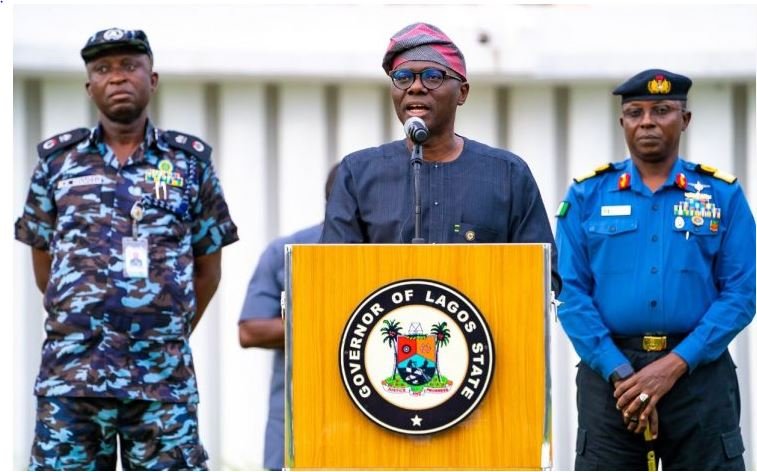
It is over two years that a successful banker and seasoned administrator, Mr. Babajide Sanwo-Olu took over mantle of leadership as the 15th Governor of Lagos State. Sanwo-Olu, who was once a three-time commissioner and Managing Director/CEO of the Lagos State Development and Property Corporation (LSDPC), took the oath of office along with his deputy, Dr. Obafemi Hamzat on May 29, 2019.
Governor Sanwo-Olu, in his inauguration speech, spoke passionately on his plans for Lagos State, especially his dream of a ‘Greater Lagos,’ anchored by a six-pillar THEMES developmental agenda.
Governor Sanwo-Olu is passionate about Lagos and his vision for the Centre of Excellence has made him to deliver good governance and dividends of democracy to millions of Lagosians within his 834 days in office. With massive support and cooperation from his deputy, Dr. Hamzat and other members of the State Executive Council as well as major stakeholders in Lagos State, Governor Sanwo-Olu has taken Lagos to a greater height.
Governor Sanwo-Olu has shown leadership in managing the affairs of Lagos State and protecting the citizens of the state, especially during the COVID-19 pandemic. Since Lagos became the epicenter of the pandemic in Nigeria in February 2020, the governor has been up to the task assuming the position of Incident Commander and ensuring that the pandemic is well managed in Lagos State and today, Nigerians have a relief from the deadly virus as infections rate has reduced drastically going by daily account of the Nigeria Centre for Disease Control (NCDC).
Apart from COVID-19 pandemic, Lagos was also hit last year by massive destruction of properties worth billions of naira destroyed during last year’s #EndSARS protests hijacked by hoodlums. Despite these challenges, Governor Sanwo-Olu took the bull by the horn to put Lagos on the path of success through the Lagos Rebuild initiative.
Governor Sanwo-Olu, who seems to be very conscious of the number of days and years he is constitutionally allowed to spend in office as a democratically elected Chief Executive of the Centre of Excellence, believes that his mid-term in office must be marked with visible and iconic projects that will cut across all the sectors itemised in the THEMES’ developmental agenda, despite the negative impact of the global COVID-19 pandemic and the #EndSARS protest that almost grounded Lagos as a results of hoodlums hijacking peaceful agitations by Nigerian youths.
Speaking at the “2021 State of the State Address” held at the Lagos House, Ikeja on Thursday May 27 in commemoration of his second year in office, which was attended by his deputy, Dr. Obafemi Hamzat, members of his cabinet, traditional rulers, political gladiators, captains of industries and media executives, among others, Governor Sanwo-Olu said the Greater Lagos collectively envisioned by Lagosians is closer now than ever before.
Traffic Management and Transportation
The Babajide Sanwo-Olu administration has developed a reliable intermodal system of transportation by investing heavily in waterways and light rail transportation system as well as road transportation to make life easy for Lagosians.
The State Government has reduced traffic congestion in different parts of Lagos by resolving key gridlock points, maintenance of road infrastructures, decongestion of traffic by connecting more communities with new link roads and bridges, provision of intelligent transport systems to optimise the transport network and completion of ongoing strategic transport projects in rail, water and road. The administration has developed Lagos Bus Reform Initiative, which is designed to provide comfortable and reliable bus service for commuters. Governor Sanwo-Olu, few months ago commissioned 500 First and Last Mile Buses to ease transportation system in Lagos. The incumbent administration also has a success story in the water transportation.
In works and infrastructure, the Babajide Sanwo-Olu administration within two years delivered 51 iconic projects in Lagos State. Among the iconic projects are Pen-Cinema fly over, ramp and road networks at Lagos-Ogun boundary and other parts of the State. The administration also constructed and rehabilitated 301 inner roads in the 20 Local Government Areas and 37 Local Council Development Areas (LCDAs). It also commissioned the Oshodi-Abule Egba BRT lane and rolled out hundreds of buses plying different routes in Lagos State.
Health and Environment
Babajide Sanwo-Olu’s administration has also made significant impact in touching the lives of millions of Lagosians in the areas of health and environment, which is the second pillar of the THEMES developmental agenda. The incumbent government in the last two years, believes that nothing should be spared to give Lagosians quality health care. It has made a lot of intervention in the health sector for Lagos residents to feel the presence of the government, especially during the COVID-19 pandemic.
The proactive and efficient management of the COVID-19 pandemic by Lagos State Government has been adjudged as the most significant achievement of the Health and Environment pillar of the THEMES development agenda.
The State has also witnessed improved capacity and capability in area of infrastructure and personnel. Aside from the comprehensive renovation of medical facilities at Ebute-Metta Health Centre, Harvey Road Health Centre, General Hospitals at Odan, Isolo and Ketu-Ejinrin, the State has also developed new facilities, such as the New Massey Children Hospital, New General Hospital in Ojo, and a Rehabilitation and Mental Health facility in Ketu Ejinrin.
The State Government is also building a 300-bed Isolation Centre and a Research Institute at IDH, Yaba. The administration recently commissioned three Oxygen Plants and new Doctors’ Quarters built at Gbagada and Isolo. The administration has also improved maternal and child health care in Lagos State, with the inauguration of the Mother and Child Centres (MCCs) in Eti-Osa, Igando, Badagry and Epe.
In the Environment, the Babajide Sanwo-Olu administration within two years in office has invested significantly in the waste collection capacity of LAWMA. It has also increased the capacity of PSP operators from 320 compactor-trips to 720 compactor-trips daily, and commissioned a mini-effluent treatment plant to determine waste toxicity before release into the atmosphere. The administration has also made significant improvement in Drainage management and maintenance.
Education and Technology
Education and Technology is the third pillar in the THEMES Agenda of the Babajide Sanwo-Olu administration and since his assumption in office on May 29, 2019, Governor Sanwo-Olu has never paid lip service to education in the State.
The incumbent administration has completed more than 1,097 school projects in just two years. It built six Secondary Schools, provided over 100,000 tables and chairs, built 450 classrooms and provided 2,000 hostel beds in model schools. It also introduced EKO EXCEL – an education reform programme targeted at developing highly skilled teachers through training, support and motivation. The EKO EXCEL initiative has reached about 1,009 schools, 13,000 teachers and 450,000 pupils.
Since the inception of the administration, over 2,000 teachers have been recruited for public secondary schools. It has also stretched the opportunity for continuous learning with the establishment of additional 21 Adult Literacy Centres, which took the number of such centres in Lagos State to 1,284.
It is also worthy of note that the global ranking of Lagos State University (LASU), the state-owned tertiary institution has gone up. It is a reflection of the level and quality of support provided to tertiary institutions in Lagos State by the incumbent administration. LASU moved to prominence, and occupies a regal position in the hierarchy of universities in Nigeria. Like LASU, other Lagos State-owned institutions have received both ample materials and financial support that have adequately strengthened their operations and boosted their competitiveness internationally. The administration has also concluded plans to upgrade Lagos State Polytechnic (LASPOTECH) and Lagos State College of Education (LACOED) to Universities.
As a State that caters for its students, Lagos State Government paid a total sum of N218, 795,000 million as bursary awards to 6,411 students of the state’s origin in various higher institutions of learning to support their education. The government also provided sum of N217, 732,955.44 million as scholarship awards to a total number of 981 beneficiaries.
The popular narrative that teachers’ rewards are in heaven is changing gradually with Lagos State Governor, Mr. Babajide Sanwo-Olu, as he preaches that teachers’ reward should no longer be in heaven but on earth. He believes that teachers should reap the reward of their labour while on earth and not after death. This new belief made Governor Sanwo-Olu present handsome rewards to teachers adjudged to have made quality impacts in Lagos State’s teaching service. Setting new records of reward for teachers in the State, Governor Sanwo-Olu few months ago presented three-bedroom and two-bedroom flats to two teachers and also rewarded 13 teachers and school administrators with a brand new cars each at the Year 2020 Teachers’ Merit Award organised by the Ministry of Education for making quality impacts in the State’s teaching service.
Lagos State Government under Governor Babajide Sanwo-Olu is standing up to the call to implant technology at the heart of everything in Lagos. The vision of becoming #DigitalLagos or a smart city of relevance, has started to crystallise with the laying of 3,000km fibre across the State. The administration has covered 1,800km, which has provided connection to 100 schools and 12 hospitals.
Riding on the Fibre infrastructure is the Smart City Project, which will enhance traffic management and security, with the planned installation of about 2,000 cameras at strategic locations. The test-run has begun, with the installation of about 150 smart cameras on the streets.
As part of the measures put in place for formal and informal education, the Ministry of Women Affairs and Poverty Alleviation through the Women Affairs Department organised a series of programmes and activities aimed at improving the status of Women in Lagos State and making them economically independent. The Lagos State Employment Trust Fund (LSETF) has also provided financial support to residents of Lagos State for jobs, wealth creation and employment. It has promoted entrepreneurship by improving access to finance, strengthening the institutional capacity of MSMEs and formulating policies designed to improve the business environment in Lagos State. So far, the initiative has supported over 14,646 small businesses in Lagos State and created more than 123,720 jobs, especially for young persons in the State.
Making Lagos a 21st century economy
The fourth pillar of the THEMES developmental agenda is Making Lagos a 21st century economy. To achieve this, the incumbent government has recorded a milestone in infrastructural development in various parts of the State, amongst which is heavy investments by public and private sectors at the Lekki Free zones. Lagos State Government has also provided business-friendly environment and ease of doing business for many investors to set up business empires in the Centre of Excellence.
The Babajide Sanwo-Olu administration has also made significant progress in the area of housing by increasing access to home ownership with emphasis on first-time home owners and enhancing the rent-to-own policy; maintaining existing and newly commissioned housing schemes through facility managers to prevent dilapidation of estates and renewal of dilapidated estates.
Within two years in office, Lagos State Government through the Ministry of Housing has completed and commissioned 492 homes unit at Alhaji Lateef Kayode Jakande Gardens in Igando, 360 homes at Prince Abiodun Ogunleye Estate in Igbogbo and 124 home units at Lekki Phase 1. The Ministry of Housing through Joint Ventures agreements has provided 252 two bedroom Bungalows at Lagos State Affordable Public Housing Scheme Idale, Badagry; 124 homes at LagosHOMS Lekki Phase II and 132 homes at Babatunde Raji Fashola Estate at Iponri.
Lagos State Government through the LSDPC provided six units of two bedroom flats in Olutunda Ilupeju, 120 home units at Courtland Villas at Igbokushu, Eti-Osa and Bayview Estate Ikate-Elegushi with 100 units (32 units three-bedroom flats and 68 units 4 bedroom Terraces with Maid’s room) and Sunnyville Apartments located in Nob Oluwa, Ogba (32 units of 2 bedroom flats).
It is noteworthy that the Babajide Sanwo-Olu’s administration strengthened its policy of delivering homes to Lagosians through the existing Rent-To-Own Mortgage System. Under this arrangement, individuals are required to pay only five per cent of the cost of the housing unit as the commitment fee and the balance spread over a period of 10 years with minimum interest obtainable under the scheme.
The Sanwo-Olu administration has done so much in the area of agriculture and food security. Lagos has developed and commenced implementation of a five-year Agricultural and Food Security Road Map. The full implementation of the strategy will enable the state to achieve 40 per cent sufficiency in food production by 2025.
With initiatives such as the Agro Processing, Productivity Enhancement and Livelihood Improvement Support (APPEALS) Project amongst others, which were designed to empower, train and build capacity development of the youth and women, especially in selected key value chains such as fisheries, poultry, rice, aquaculture and horticulture, the State Government has trained and empowered thousands of farmers in the State.
The State Government under Governor Babajide Sanwo-Olu unveiled a five-year Agricultural Road Map between year 2021 to 2025. This road map will enable the State Government actualise her dreams of food security within the stipulated time frame.
The long awaited 32 metric tonnes per hour Imota rice mill, one of the largest in sub-Sahara Africa is at over 85 per cent completion stage. When completed it will provide over 250 thousand direct and indirect jobs across different value chains.
Entertainment and Tourism
Among the numerous transformational initiatives deployed to strengthen the socio-economic positioning of Lagos State globally, the energy of the city, fuelled by a thriving entertainment industry is unmistakable. And this is why Governor Babajide Sanwo-Olu has made huge investment in Entertainment and Tourism, the fifth pillar of the developmental agenda.
Aside from landmark facilities and initiatives like the J.K Randle Centre for Yoruba history, Glover Memorial Hall, Lagos Theatre in Badagry, Badagry Museum and major Tourist attractions in Badagry, the incumbent administration is also working with the Federal Government to rehabilitate the National Arts Theatre Iganmu into a world class entertainment, fashion, music, technology and cultural hub as a deliberate and purposeful mission to boost the tourism appeal of Lagos State.
The Babajide Sanwo-Olu administration’s empowerment drive through partnerships with the Ebony Life Academy and Del York Creative Academy, is yielding positive result with no fewer than 2,000 youths receiving training in different aspects of cinematography; such as Scriptwriting, Directing and others. This is aimed at unlocking the huge talent and potential in the creative arts space.
The administration has also launched the Lagos Creative Initiative (LACI) for focused development of the creative industry, which has birthed the 100-hecterLagos Film City in Ejinrin. Besides, it has given financial support in excess of N1billion to operators to cushion the effect of COVID-19 on the industry.
Security and Governance
In line with the Governor Babajide Sanwo-Olu’s THEMES Agenda, the administration has worked tirelessly to ensure that Lagos is safe and secure for the residents of the State and investors. As at today, security agencies in Lagos State can boast of modern day armoury. On Thursday, June 10, President Muhammadu Buhari joined Governor Sanwo-Olu to officially handover patrol vehicles and various security equipment to security agencies in Lagos State. The equipment were; 150 Double Cabin Vehicles, 30 Saloon Patrol Vehicles, 1,000 Ballistic Vests, 1,000 Ballistic Helmets, 1,000 Handheld Police Radios/Walkie Talkies, 100 Security Patrol Bikes, two Armored Personnel Carriers (APCs), four High Capacity Troop Carriers, two Anti-Riot Water Cannon Vehicles and Office/Command Furniture and other Ancillary Support Resources.
Lagos State Civil Service, which has many ministries, departments and agencies are role models to many states in Nigeria as a result of several developmental strides of the Babajide Sanwo-Olu administration.
Despite delivering on his campaign promises, Governor Sanwo-Olu is not looking back as he is marching on towards the attainment of the “Greater Lagos” dream.
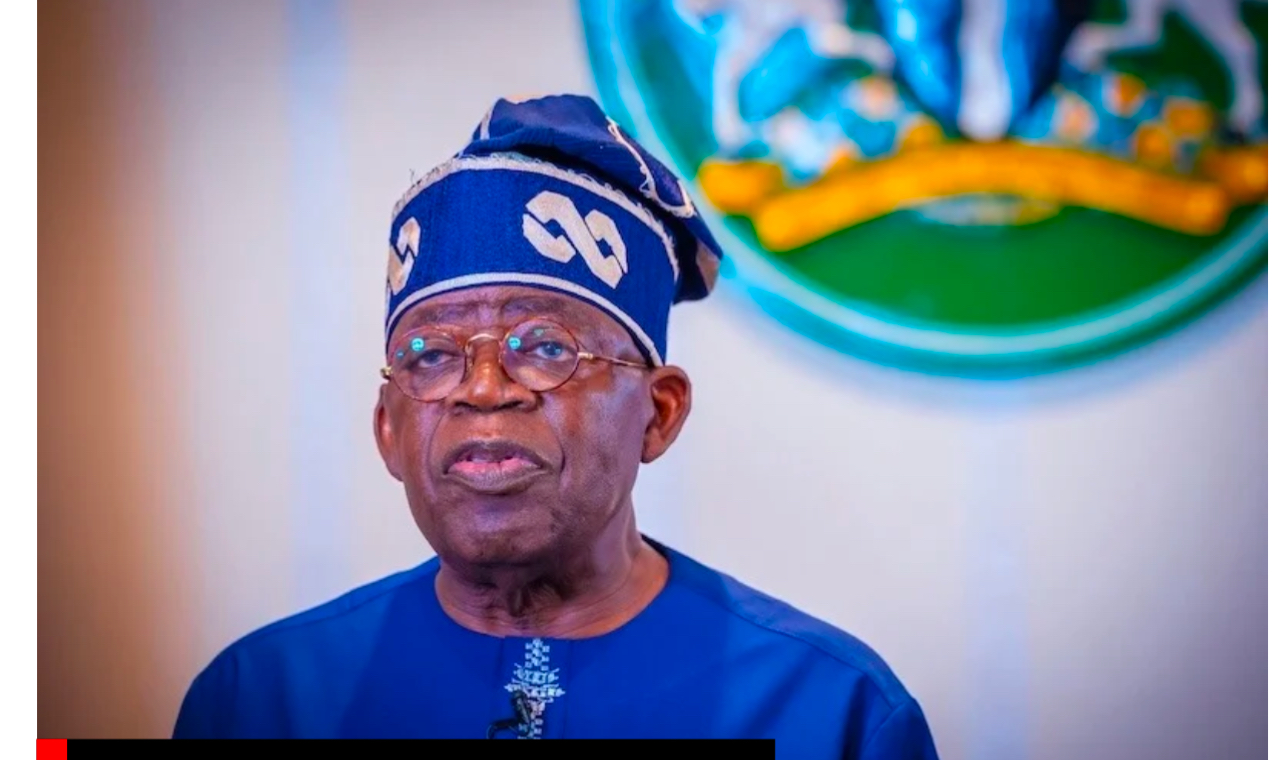
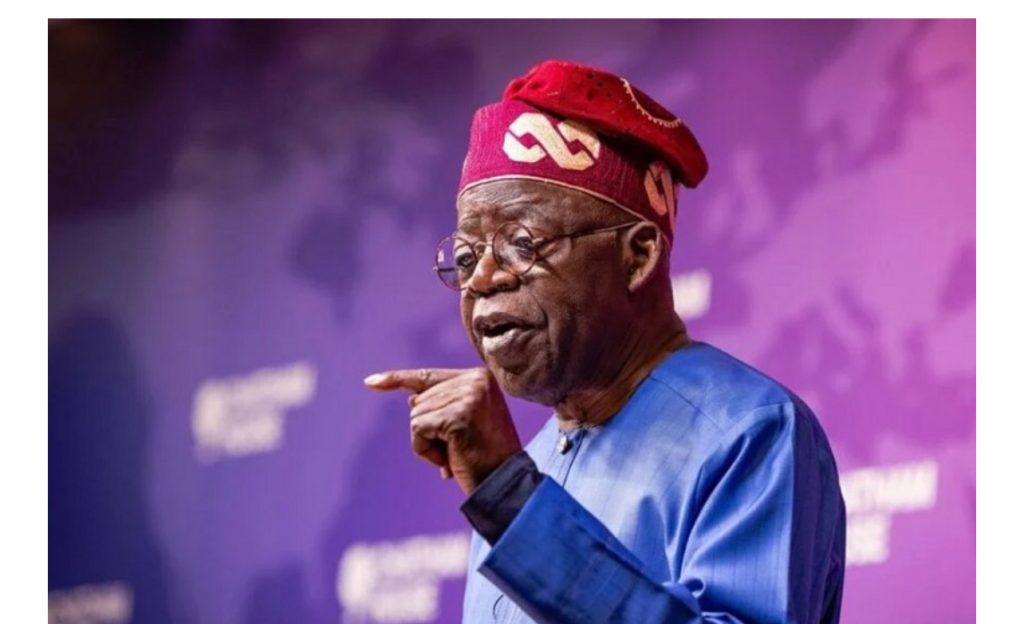
President Bola Tinubu has blamed his political opponents for hunger and poverty in Nigeria, saying his administration is working to address the challenges.
Tinubu spoke on Saturday at the All Progressives Congress presidential campaign flag-off rally at Ranchers Bees Stadium in Kaduna State ahead of the 2027 general elections.
“I have an argument. I hear my opponent talking about hunger, poverty. Who created it? They did! They created the hunger, they created the poverty. We are trying to eradicate it,” the President said.
He also defended his administration’s record on salary payments and praised governors for their performance.
Nigeria’s debt interest payments exceed revenue by ₦1.5 trillion
“We pay salaries regularly. Our governors are working. I am proud of them. They are developing,” he said.
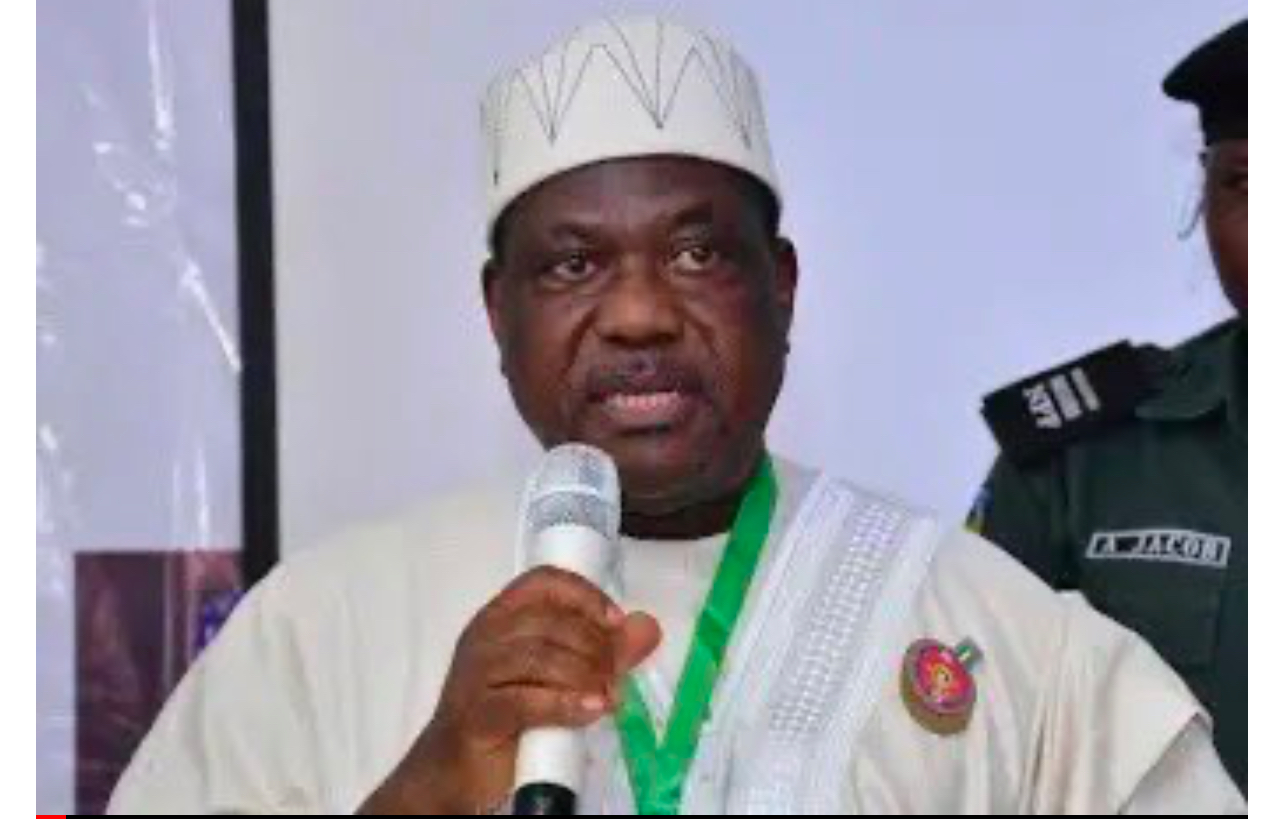
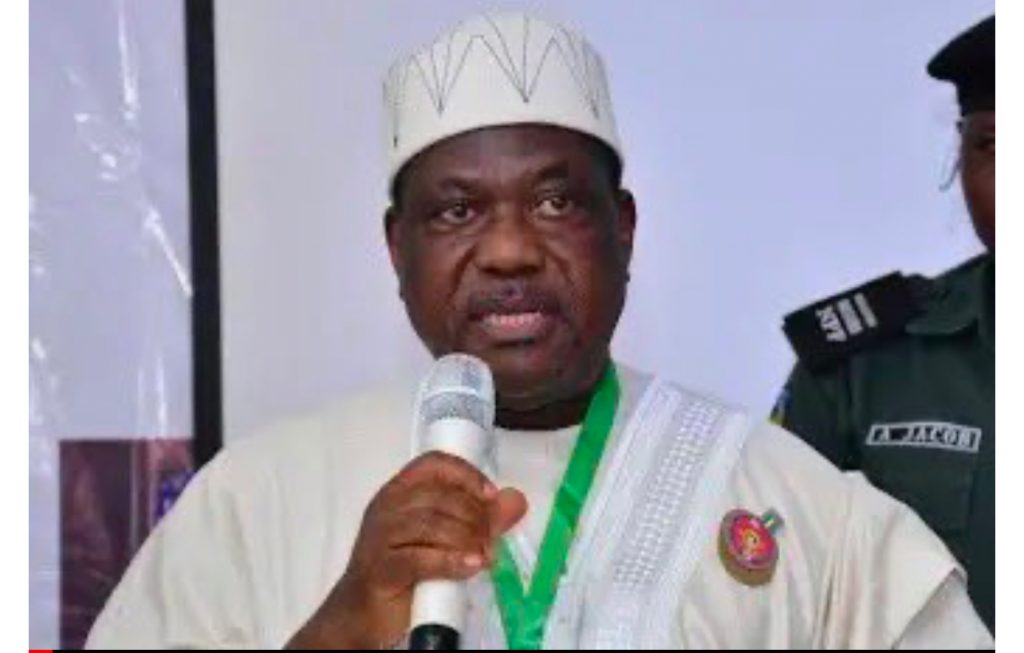 The Secretary to the Government of the Federation, Senator George Akume, has said the North should support President Bola Tinubu for a second term in 2027.
He insisted that any Northerner seeking the presidency in 2027 would be working against the region’s interests.
Akume said the North should allow Tinubu to complete his political project before considering another presidential bid in 2031.
The SGF stated this on Saturday while addressing Benue State indigenes resident in Kaduna ahead of the flag-off of the All Progressives Congress presidential campaign in the state capital.
He urged Northerners to remain united and resist political ambitions capable of dividing the region ahead of the 2027 general elections.
Add us to your Preferred Sources
“The North must remain united and focus on its collective interest rather than allow individual ambitions to divide us,” Akume said.
The former Benue State governor argued that the region needed to consider its long-term political interests and the implications of the 2027 presidential election for its future.
He said, “President Bola Tinubu should be allowed to complete his political project before the North considers its own presidential ambition in 2031.”
Akume also cautioned against attempts to divide Northerners along political, religious and personal lines, stressing that unity remained essential to the region’s political relevance.
“We must not allow political, religious or personal differences to undermine our common interests. The strength of the North lies in our ability to work together,” he said.
The SGF further called for peaceful coexistence and cooperation among Nigeria’s diverse ethnic and religious communities, saying national development depended on unity.
He urged the people to examine political developments carefully and avoid being misled by individuals whose ambitions might conflict with the broader interests of the region.
The meeting brought together Benue indigenes living in Kaduna and other political stakeholders to discuss issues affecting their community, political representation and engagement with leaders at the national level.
The APC presidential campaign flag-off in Kaduna is expected to bring together party leaders, supporters and political stakeholders from across the country.
news
State Police: Five More State Assemblies Pass Bill as 90% of States Are Ready for Transmission to National Assembly on October 29 – Gbajabiamila
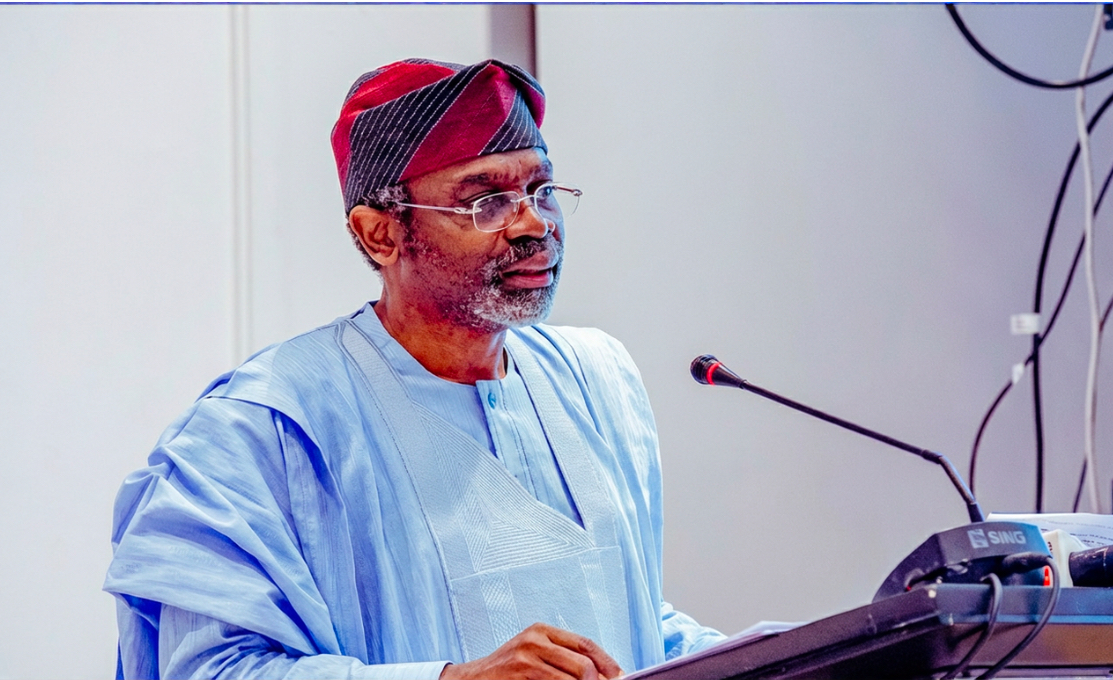
 The Presidential Working Group on the National Policing Bill on Tuesday said it had submitted the draft National Policing Bill, 2026, and 29 consequential amendment bills to the Ministry of Justice for legislative drafting review and validation.
This comes as Ogun, Delta, Plateau, Kwara and Adamawa state assemblies approved the police bill alongside Edo, Osun, Oyo, Rivers and Zamfara, which had earlier endorsed the constitutional amendments required to institute state policing.
The proposed Constitution of the Federal Republic of Nigeria, 1999 (Sixth Alteration) Bill, 2026, was transmitted to the 36 State Houses of Assembly on September 16, 2026 by the Clerk to the National Assembly, Kamoru Ogunlana, for consideration and approval.
The Sixth Alteration Bill amends section 214 of the Constitution to replace the single Nigeria Police Force with a Federal Police Service and State Police Services as part of efforts to address the country’s security challenges.
In a statement signed Tuesday by the Chief of Staff to the President and Chairman of the Working Group, Femi Gbajabiamila, the group said it had completed the drafting stage of its assignment.
The PWG explained that the draft bill was submitted to the Attorney-General of the Federation and Minister of Justice on Monday.
It said, “The submission was made on October 19, 2026, to the Honourable Attorney-General of the Federation and Minister of Justice, in line with the Working Group’s work plan.
“The ministry’s review will ensure that the bills conform to legislative drafting standards and conventions, and that they do not conflict with existing laws.
“The Ministry of Justice is expected to return the validated draft bills to the Working Group on or before Friday, 30th October 2026. The Working Group will then give the validated bills final consideration before presenting them to Mr President, thereby concluding its mandate.”
Gbajabiamila said the proposed National Policing Bill seeks to establish the constitutional and legislative framework for a dual policing structure, made up of a Federal Police Service and State Police Services.
He added that the Working Group remained committed to “a rigorous and transparent process” that would deliver a comprehensive legislative proposal for the President’s consideration and subsequent transmission to the National Assembly.
According to the former legislator, the work was proceeding alongside the ongoing consideration of the Constitution (Sixth Alteration) Bill, 2026 by the State Houses of Assembly, which “must be completed before the Bill is transmitted to the National Assembly”.
On October 15, Gbajabiamila told State House correspondents that the policing bill was “90 per cent ready” and would be transmitted to the National Assembly on October 29.
The Senate passed the bill on June 24, after which it was also passed by the House of Representatives.
Afterwards, the National Assembly sent it to the 36 State Houses of Assembly on September 16, where it must be approved by at least 24 state assemblies.
Tinubu inaugurated the seven-member Presidential Working Group on July 7, with its steering committee starting work on August 3.
He mandated it to produce a “technically robust, implementation-ready draft National Policing Bill.’’
When asked how long the review by the justice ministry would take, Kamarudeen Ogundele, the Special Assistant, Media, to the AGF, said, “Is there any rule that says that it must be done within one week, two months, three months or four months? When did we start having periods within which a case should be treated and sent for approval?
‘’I am not in the position to confirm that now. This thing has a procedure; it has a process, and due process must be followed. So, now saying that maybe it has to be done within one week or two weeks or whatever, where no law says it must be done within that period or whatever, is unnecessary,” he added.
The Senate also declined to comment on the Executive’s proposed timeline, saying it would wait until it formally receives the bills before taking a position.
The Chairman of the Senate Committee on Media and Public Affairs, Senator Yemi Adaramodu, disclosed this.
“Well, we cannot pass comment on what the Executive said until we receive correspondence from them,” he said.
Adaramodu, however, described the proposed legislation as a matter of public interest that lawmakers were determined to conclude expeditiously.
The Senate spokesman dismissed concerns over delays by state assemblies in approving the constitutional amendment, despite the expiration of the 30-day deadline set for them to submit their inputs.
He explained that the deadline was intended for state legislatures to communicate their positions, adding that the Senate would consider their responses alongside the executive’s proposals.
“All those things (state approvals) will be brought to us, and we will put them under consideration because we are still going to hold a conference to address it.
“Again, you need to understand that the 30-day deadline is not for us. It is for the states to send in their inputs. And they have been doing that,” he said.
Adaramodu expressed confidence that all states would have submitted their responses by the time the executive formally transmitted its proposals. He maintained that the process would not undermine the Senate’s commitment to passing the legislation before the end of the year.
Ogun State House of Assembly passed a resolution supporting the consideration of the 1999 Constitution of the Federal Republic of Nigeria (Sixth Alteration) Bill, 2026, on the establishment of State Police Services.
The assembly, during its sitting on Tuesday, passed the resolution, titled: ‘H.R. No. 194/OG/2025- Consideration of the Constitution of the Federal Republic of Nigeria ( 1999) (Sixth Alteration) Bill, 2026 (Establishment of State Police Services).’
The passage of the resolution followed the presentation of the report of the Ad-hoc Committee on Constitutional Review chaired by a former Speaker, Olakunle Oluomo, who presented the committee’s report on 26 clauses and sectional amendments to the Constitution.
Oluomo took the proposed amendments one after the other, with members voting in favour of all the clauses and sections contained in the amendments.
The proposed amendments covered different aspects of the bill, including the substitution, insertion and alteration of specific constitutional provisions.
The lawmaker later moved the motion for the adoption of the committee’s report, seconded by Adegoke Adeyanju and supported by all the members through a voice vote.
The House Leader, Yusuf Sherif, subsequently moved that the report be adopted as a resolution of the House, seconded by the Chief Whip, Omolola Bakare, and was unanimously supported by all the lawmakers through a voice vote.
In his remarks, the Speaker, Daisi Elemide, said, “The Assembly joined other state Houses of Assembly across the country in supporting the establishment of State Police, and this decision is historic.
“The passage of the resolution reflected the position of the lawmakers and the people of the State in supporting the establishment of State Police to strengthen security, through improved security measures in protecting the lives and property of the citizenry, thereby promoting the social well-being and economic development of the state”
Elemide later directed that a clean copy of the resolution be transmitted to the National Assembly to communicate the state’s support for the establishment of State Police Services.
Similarly, members of the Delta State House of Assembly unanimously approved the 6th Alteration Bill of the Constitution of the Federal Republic of Nigeria, 1999 (as amended) to provide for the establishment of State Police Services.
All 23 members present at plenary on Tuesday, through head count, voted in favour of the bill.
The letter, which was read on the floor by the Speaker, Emomotimi Guwor, outlined the objective of the bill, which seeks to provide a constitutional framework for the establishment of State Police Services while preserving the Nigeria Police Force as the Federal Police Service.
Leading the debate on the merits of the bill, the Majority Leader, Emeka Nwaobi, said, “The proposed amendment aims to guarantee security of lives and property through a dual policing system, allowing states to establish and fund their own police services to address rising cases of insecurity, particularly at the local level.”
Other lawmakers, who spoke in favour of the bill, affirmed their support, noting that it would strengthen local intelligence gathering, improve response to security challenges, create employment opportunities and help tackle insecurity at the grassroots.
Guwor commended the members for their support and patriotism, assuring that “the establishment of state police would go a long way in strengthening grassroots policing and creating a safer environment for investment and development to thrive in Delta State in line with the M.O.R.E Agenda of the Oborevwori administration.”
Guwor, who is also the Chairman, Conference of Speakers of State Legislatures, stated, “Distinguished colleagues, I commend you for approving the Constitution of the Federal Republic of Nigeria (Sixth Alteration) Bill, 2026, in line with section 9 sub-section (2) of the Constitution of the Federal Republic of Nigeria, 1999 (as altered).
“This is a significant step towards the establishment of State Police in Nigeria. It brings us closer to a policing system that is more responsive to our communities, improves intelligence gathering and strengthens our capacity to tackle security challenges.
“For Delta State, this reform holds great promise for protecting lives and property, sustaining peace and creating a safer environment for investment and development in line with the M.O.R.E Agenda of our amiable Governor, Sheriff Oborevwori.
“I congratulate this Honourable House on this important resolution. May our collective efforts continue to advance peace, security and good governance in Delta State and Nigeria in general.”
The speaker, thereafter, directed the Clerk of the House, Otto Aghoghophia, to communicate the resolution of the Delta State House of Assembly to the National Assembly, accordingly.
Earlier at the plenary, the House observed a one-minute silence in honour of former Governor of Delta State, Dr Emmanuel Uduaghan, who passed away on Monday.
The Adamawa State House of Assembly on Tuesday passed 24 out of 26 clauses of the state Police Bill, 2026, rejecting two clauses.
At an emergency sitting on Tuesday, the lawmakers, who had been on recess in China, spent over two hours reading each section of the Alteration Bill for members to approve or disapprove.
Speaker Bathiya Wesley, who presided over the session, directed the Clerk of the House to produce a clean copy of the approved 24 clauses and transmit them to the National Assembly.
Speaking to journalists after the sitting, the Chairman, House Committee on Information, Musa Kallam, representing Mayo-Belwa State Constituency, pointed out that state policing would help combat criminal activities in the country.
On the two rejected clauses, he disclosed that they were not properly defined and that the majority of the members were not clear on those clauses.
“Some of my colleagues were not clear on those clauses, and they decided to reject them. Since they were in the majority, there is nothing we can do.”
On the concern that governors could deploy state police against their political opponents, he clarified that the Constitutional alteration had stipulated the limit of governors’ powers in controlling state police.
“Let us not jump to the conclusion that state governors will take over when the state police take off, and if there is anything that the National Assembly feels should be amended to strengthen the state police, the Constitution will still be amended. The idea of state police is fantastic and must be sustained,” he noted.
Like Delta and Ogun, the Kwara State House of Assembly also approved the proposed amendment to the 1999 Constitution to provide a legal framework for the establishment of state police in the country.
The approval was given during Tuesday’s plenary in Ilorin after the speaker, Yakubu Danladi-Salihu, read a letter from the Clerk of the National Assembly on the proposed constitutional alteration.
The development was disclosed in a statement made available toour correspondence by the Chief Press Secretary to the speaker, Abdulkadir Yusuf.
Leading the debate on the amendment, the House Leader, Mogaji Abdulkadri, enumerated the various advantages the proposed amendment would have on the country’s policing system.
Other lawmakers who spoke on the constitutional amendment supported the proposal, saying “it would bring policing closer to the people and strengthen security across the country.”
The lawmakers affirmed that the alteration would “bring police closer to the people, thereby improving the security of lives and property of people across the country.”
Following the debate, the speaker directed the Clerk of the House, Ahmed Olayiwola, to communicate the Assembly’s approval to the National Assembly for further action.
The Plateau State House of Assembly equally endorsed the Constitution amendment bill seeking the creation of a state police, describing the proposal as timely and necessary to address the country’s security challenges.
The endorsement followed the adoption of the report of the Ad-hoc Committee constituted to scrutinise the Constitution of the Federal Republic of Nigeria, 1999 (Sixth Alteration) Bill, 2026, which was considered at plenary on Monday.
In a statement signed by the media aide to the speaker, Philip Eplong, and made available to The PUNCH on Tuesday, he said the decision was taken during Monday’s plenary session presided over by Speaker Naanlong Daniel.
Eplong’s statement read, “Presenting the committee’s report, its chairman and member representing Qua’an-Pan South Constituency, Prof. Theodore Maiyaki, said the proposed constitutional alteration was necessary in view of prevailing security challenges, the shortage of manpower in the Nigeria Police Force and the need to strengthen local policing arrangements.’’
He explained that the proposal sought to establish a constitutional framework for Federal and State Police Services, with appropriate safeguards for human rights, operational standards, accountability and coordination. The committee observed that the proposed amendment was timely, considering the need to strengthen security and improve responses to threats within communities.
The committee further noted that security remained critical to the socioeconomic development of Plateau State and other parts of the country.
It, therefore, recommended that the House supported the proposed constitutional alteration in line with the relevant legislative requirements.
Following deliberations, the House adopted the committee’s recommendations and voted in support of the proposed constitutional amendment.
The speaker commended the committee for its work and appreciated members for their patience, commitment and sacrifice in considering the important legislative matter.
The Kebbi State House of Assembly has received a bill seeking to amend the 1999 Constitution to provide for the establishment of state police services across the country.
The bill was transmitted to the Assembly by the National Assembly for consideration and approval as part of the ongoing constitutional amendment process.
The Majority Leader of the Kebbi Assembly, Faruku Aliyu Nassarawa Jega, disclosed this during Tuesday’s plenary session while reading a letter from the Clerk to the National Assembly, Kamoru Ogunlana.
The letter, dated September 16, 2026, and addressed to the Speaker of the Kebbi Assembly, Salihu Maikasuwa Dangoje, stated that the bill was passed by the Senate on June 24, 2026, and the House of Representatives on July 23, 2026.
According to the letter, the proposed legislation seeks to establish a constitutional framework for state police services while retaining the Nigeria Police Force as the federal police service.
The National Assembly urged the Kebbi Assembly to give the bill expeditious consideration and communicate its decision promptly to facilitate the completion of the constitutional amendment process.
“The leadership of the National Assembly respectfully requests that the Kebbi State House of Assembly accord the Bill expeditious consideration and communicate its resolution to the National Assembly at the earliest opportunity,” the letter stated.
It added that the request was made pursuant to Section 9(1) and (2) of the 1999 Constitution, as amended, following directives from the President of the Senate and the Speaker of the House of Representatives.
The bill has been referred to the House Committee on Internal Security for further deliberation ahead of the Assembly’s decision.
Under the constitutional amendment procedure, a proposed alteration must be approved by at least two-thirds of the 36 state Houses of Assembly before it can be presented to the President for assent.
The proposed establishment of state police has remained a major issue in Nigeria’s security debate, with proponents arguing that decentralising policing would improve responses to local security threats and strengthen community-based security efforts.
The proposal is particularly significant for states such as Kebbi, which have faced security challenges, including banditry, kidnapping and other criminal activities.
Supporters believe state police officers would be better positioned to gather intelligence, understand local security concerns and respond more quickly to emerging threats because of their proximity to the communities they serve.
However, the proposal has also raised concerns about potential political interference, abuse of power and the need for adequate safeguards to guarantee the independence, accountability and professionalism of state police services.
The Kebbi Assembly is expected to deliberate on the bill through its legislative processes before communicating its position to the National Assembly.
Murtala Adamu Diri, Press Secretary to the Speaker of the Kebbi State House of Assembly, announced the development in a statement issued on Tuesday.


-
 news6 years ago
UPDATE: #ENDSARS: CCTV footage of Lekki shootings intact – Says Sanwo – Olu
-
 lifestyle6 years ago
Former Miss World: Mixed reactions trail Agbani Darego’s looks
-
news8 years ago
-
 health6 years ago
Chairman Agege LG, Ganiyu Egunjobi Receives Covid-19 Vaccines
-
 lifestyle5 years ago
Obateru: Celebrating a Quintessential PR Man at 60
-
 news1 year ago
BREAKING: Tinubu swears in new NNPCL Board
-
 health6 years ago
UPDATE : Nigeria Records 790 new cases of COVID-19
-
 society3 years ago
Bisbam CEO, Abisola Bamidele, Bags Owu Chieftaincy Title