
brand
University Dons Proffer Solutions to Africa’s Economic Prosperity at the UBA Professorial Lecture

Intellectuals and leading minds across Africa have suggested the adoption by governments, of strategic policy actions which are expected to ultimately lead to the economic prosperity of the continent.
The Academics who spoke during the first Lecture Series of the UBA Professorial Chair in Finance at the University of Lagos (UNILAG) on Tuesday, listed a number of policy measures and strategies that can bring about far reaching results. These include instituting stable macro-economic policies, the adoption of supply-side strategies, capital market development, enhancement of banking and financial system, liberalisation of the economy, privatisation and reduced government dominance of economic management, democracy and good governance, human capital development, policy co-ordination and enabling the multilateral environment.
These polices are capable of creating a sustainable path towards the socio-cultural, economic and political development of the continent.
The Professor of Finance and Chairman, UBA Professorial Chair, University of Lagos( UNILAG) Prof John Ezike was joined by the Head of Department, Economics, UNILAG, Professor Risikat Dauda and Senior Lecturer, Finance Department UNILAG, Dr Olalekan Obademi as they took turns in making contributions on the theme ‘The Dynamic Structure of World Economy from Globalisation To Slowbalisation; The African Dilemma’.
Ezike who led the discourse, explained that the global economy is currently witnessing the fourth wave of revolution in civilisation, which is the movement towards de-globalisation or Slobalisation, adding that countries that have not benefitted from globalisation are those that fail to implement sound macroeconomic measures to maintain financial and exchange stability.
He said, “It behoves countries in sub Saharan –Africa, therefore, to strive to adopt policies that are in consonance with the realities of the rapid integration of world economies. The world must seek for answers in a new ideology which will allow globalisation to prosper faster, but prevents the rise of elitism. In point of fact, some world leaders are already of this view as they have condemned the trickledown theory of capitalism.”
Supporting his point, Professor Ezike shed light on how the mentioned policies can take the continent to a new high. On Stable Macroeconomic Policies, he explained that Globalisation increases the cost of macroeconomic distortions while enhancing the reward for sound policies. “As a result, it is important that sound macroeconomic, sectorial and structural policies are applied to improve internal balance, ensure external sector viability and increase the overall rate of economic growth”. Stable macroeconomic policies also ensure that the domestic economy is insulated from disruptive short term capital flows as investment savings decisions would be predicated on domestic economic fundamentals rather than market sentiments that may be unrelated to developments in the economy.
While explaining Capital Market Development, he explained that the capital market should be developed before opening it to international competition. He further noted that the gradual opening up of the capital market would help to reduce the influx of destabilising short term capital flows which in some cases may result in economic overheating. To avoid unintended developments, the capital market should be opened up gradually after adequate safeguards have been put in place and productive sectors have been strengthened.
Enhancing of the Banking and Financial System: In this case, he said the banking and financial systems needs to be strengthened through adequate supervisory and prudential regulations to ensure that internationalisation does not disrupt the financial sectors, precipitate macroeconomic instability and weaken the productive sectors of the economy.
For Democracy and good governance, Ezike noted that good governance is invaluable for a prosperous economy and that the rule of law, transparency and accountability, the bedrock of public administration prevails. He added that, it is worthy to note that excessive government intervention in economic management creates a fertile ground for corruption and rent seeking agencies. “A well-focused administration geared towards reducing bottlenecks on the path of the private sector, would generate adequate impetus for the acceleration of economic growth, he concluded, saying rule of law reduces the incentives for corruption and ultimately creates an enabling environment for the efficient allocation of resources through the free interplay of market forces”.
According to him, history has shown that it is difficult or near impossible to sufficiently gain sustain growth in an economy like Nigeria which is highly multi-ethnic, has diverse parts, but is highly dependent on a mono-product export resource.
“At this juncture, it is safe to say Nigeria and other countries in its league, must out of necessity enthrone true federalism, in its governance and diversify its economic and export base in order to reposition the economy so as to reap the attendant benefits of dynamic world globalisation/slobalisation”, she noted
On his part, the Deputy Vice Chancellor, and Chairman UBA Board of Trustees, Mr. Ben Oghojafor, appreciated UBA for resuscitating the UBA Professorial Chair of Finance and the laudable support it continues to give the institution.
UBA had in 2015 resuscitated the UBA Professorial Chair of Finance at the UNILAG with an endowment sum of the N52.9 million with the aim of bridging the huge gap in the funding of educational system in the country.
Oghojafor said, “It is to the credit of UBA, that the seed they planted through the first endowment has grown and is now bearing fruit. It is on record that the first endowment in 1972 facilitated the establishment of the department of finance in 1973, the first of such department in Finance in any University in Nigeria and has helped train a great number of finance graduates who have gone on to make great impacts in the country”.
“We appreciate the generosity of UBA in helping to make this colloquium a reality today and are hopeful that the bank will sustain this noble initiative for a long time to come”, Oghojafor said.
In his response, Group Managing Director, Kennedy Uzoka, United Bank for Africa, represented by Head, Micro-small, Small and Medium Enterprises (MSMEs),Mr Babatunde Ajayi said: “UBA is very proud to be associated with the endowment of professorial chair of finance in University of Lagos and it is our plan to continue to endow that chair”. He also noted that it is the banks passion to improve the quality of education across the continent, particularly in the 20 African countries that the bank is present.
“It is also our way of giving back to the society, as we will continue to sustain the initiative and many more that concern education, because it is very important to UBA and we are more than committed to providing the necessary support for the youths in Nigeria and across the African continent,” Ajayi said
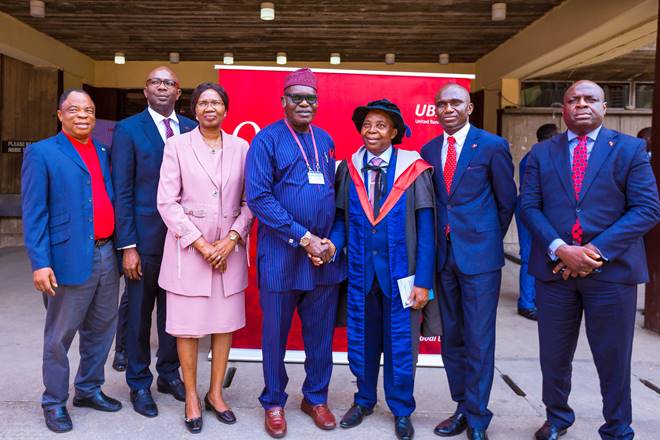
l-r: Director of Advancement office, University of Lagos; Mr. Oluwarotimi Shodinmu; Regional Head, UBA Plc, Mr Uzoechina Molokwu; Guest Speaker, Professor Dauda Risikat; Deputy Vice Chancellor, University of Lagos and Chairman Board of Trustees, UBA Professorial Chair, Professor Ben Oghojafor; Chair Occupier, UBA, Professorial Chair in Finance, Professor John Ezike; Head, Head, Micro-small, Small and Medium Enterprises (MSMEs), United Bank for Africa, Mr. Babatunde Ajayi; and Regional Head, UBA Plc, Mr. Uche Agu, at the 1st Annual Lecture of UBA Professorial Chair in Finance, themed: The Dynamic Structure of World Economy, From Globalisation To Slowbalisation ; The African Dilemma… held at University of Lagos on Tuesday
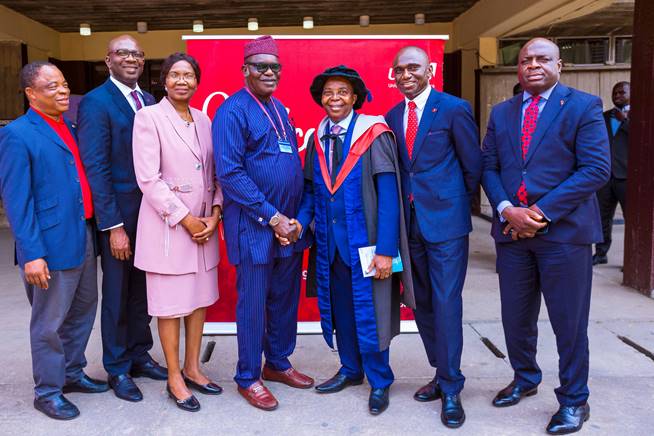
Regional Head, United Bank for Africa(UBA) plc, Mr. Uche Agu; Head, Micro-small, Small and Medium Enterprises (MSMEs), UBA Plc Mr. Babatunde Ajayi; Deputy Vice Chancellor, University of Lagos(UNILAG) and Chairman Board of Trustees, UBA Professorial Chair in Finance, Professor Ben Oghojafor; Guest Speaker, Professor Dauda Risikat; Head Of Department, Finance, UNILAG, Dr. Ayo Olowe; and Chair Occupier, UBA, Professorial Chair in Finance, Professor John Ezike, at the 1st Annual Lecture of UBA Professorial Chair in Finance, themed: The Dynamic Structure of World Economy, From Globalisation To Slowbalisation ; The African Dilemma… held at University of Lagos on Tuesday
l-r: Director of Advancement office, University of Lagos; Mr. Oluwarotimi Shodinmu; Regional Head, UBA Plc, Mr Uzoechina Molokwu; Guest Speaker, Professor Dauda Risikat; Deputy Vice Chancellor, University of Lagos and Chairman Board of Trustees, UBA Professorial Chair, Professor Ben Oghojafor; Chair Occupier, UBA, Professorial Chair in Finance, Professor John Ezike; Head, Micro-small, Small and Medium Enterprises (MSMEs), United Bank for Africa, Mr. Babatunde Ajayi; and Regional Head, UBA Plc, Mr. Uche Agu, at the 1st Annual Lecture of UBA Professorial Chair in Finance, themed: The Dynamic Structure of World Economy, From Globalisation To Slowbalisation ; The African Dilemma… held at University of Lagos on Tuesday
Leading financial institution, Fidelity Bank Plc, has partnered with the Federal Ministry of Humanitarian Affairs and Poverty Alleviation to provide support to vulnerable households in Abuja through its Food Bank programme.
Launched in April 2023, the Fidelity Food Bank is one of the bank’s flagship Corporate Social Responsibility (CSR) initiatives. The programme seeks to combat hunger and malnutrition by supporting communities affected by food insecurity. Since its introduction, more than 300,000 food packs have been distributed to beneficiaries across Nigeria’s six geopolitical zones.
Speaking at an event held recently in Abuja to commemorate the 2026 International Day for the Eradication of Poverty, the Managing Director and Chief Executive Officer of Fidelity Bank Plc, Nneka Onyeali-Ikpe, represented by the bank’s Divisional Head of Public Sector, Richard Madiebo, said the bank’s interventions extended beyond food distribution to entrepreneurship support and other empowerment programmes designed to help individuals and families achieve economic independence.
According to Onyeali-Ikpe, Fidelity Bank’s commitment to community development spans approximately three decades, reflecting its longstanding dedication to improving the wellbeing of its host communities.
“Fidelity Bank has always aligned its CSR programmes with the needs of its host communities. We understand the importance of private sector participation in addressing poverty and promoting inclusive development.
“We have delivered 2,000 food packs to residents of Abuja. There are several other initiatives that the ministry and the bank are discussing, and we will allow the ministry to provide further details at the appropriate time,” she said.
Also speaking at the event, the Minister of Humanitarian Affairs and Poverty Reduction, Bernard M. Doro, commended Fidelity Bank for contributing to efforts to improve the welfare of vulnerable Nigerians. He also called for stronger collaboration between the government and the private sector to address multidimensional poverty.
According to Doro, with 63 per cent of Nigeria’s population living in multidimensional poverty, a significant proportion of citizens remains excluded from economic activity, limiting businesses’ access to potential customers and employees.
“When 63 per cent of the population lives in multidimensional poverty, a substantial number of people are excluded from economic participation. This also means that businesses are unable to reach a large segment of their potential customers.
“Our responsibility as a ministry is to unlock partnerships with the private sector. Such collaboration is critical to expanding economic opportunities and bringing more people into productive economic activities. We are pleased that Fidelity Bank is fully committed to this effort,” Doro stated.
The minister urged stakeholders to move beyond declarations and ensure that poverty reduction initiatives deliver measurable and sustainable improvements in the lives of vulnerable households.
Ranked among the best banks in Nigeria, Fidelity Bank Plc is a full-fledged Commercial Deposit Money Bank serving over 9.1 million customers through digital banking channels, its 255 business offices in Nigeria and United Kingdom subsidiary, FidBank UK Limited.
The Bank is a recipient of multiple local and international awards, including the 2024 Excellence in Digital Transformation & MSME Banking Award by BusinessDay Banks and Financial Institutions (BAFI) Awards; the 2024 Most Innovative Mobile Banking Application award for its Fidelity Mobile App by Global Business Outlook; and the 2024 Most Innovative Investment Banking Service Provider award by Global Brands Magazine. Additionally, the Bank was recognised as the Best Bank for SMEs in Nigeria by the Euromoney Awards for Excellence and as the Export Financing Bank of the Year by the BusinessDay Banks and Financial Institutions (BAFI) Awards.


LAGOS, NIGERIA – Fidelity Bank Plc has successfully redeemed its 5-Year US$400 million Senior Unsecured Notes at maturity, reaffirming its commitment to meeting its obligations to investors and reinforcing its track record in the international debt capital markets.
Issued on 28 October 2021, the 5-year Eurobond matured on 28 October 2026 and carried an annual coupon of 7.625 per cent, payable semi-annually. Fidelity Bank met all scheduled coupon payments throughout the life of the instrument and has now fulfilled its final repayment obligation in full, covering both principal and accrued interest.
The redemption was funded from internally generated liquidity as part of the Bank’s forward-looking liquidity management strategy. Through a dedicated sinking fund, Fidelity Bank progressively provided for the maturing obligation, enabling the Bank to meet its commitment while maintaining business-as-usual operations and compliance with applicable regulatory liquidity requirements.
Commenting on the development, the Managing Director and Chief Executive Officer of Fidelity Bank Plc, Dr/Mrs Nneka Onyeali-Ikpe, said the successful redemption reflected the Bank’s disciplined approach to financial management and its commitment to delivering on its obligations.
“This successful redemption demonstrates the strength of our franchise, the discipline of our balance sheet management and our commitment to honouring our obligations to investors and other stakeholders. We anticipated this maturity from the outset and planned accordingly, which reflects our commitment to responsible financial management,” Onyeali-Ikpe said.
The redemption further strengthens Fidelity Bank’s record in the international debt capital markets. The 2021 issuance marked the Bank’s third Eurobond transaction, following earlier issuances in 2013 and 2017, wherein the Bank raised $300 million and $400 million respectively. The 2021 offer attracted investor orders exceeding US$700 million, reflecting strong demand for the Bank’s international debt offering.
The successful Eurobond redemption follows the completion of Fidelity Bank’s recapitalisation programme ahead of the regulatory deadline. The Bank’s capital-raising efforts increased its eligible regulatory capital to approximately ₦533 billion, exceeding the ₦500 billion minimum capital requirement for banks with international authorisation.
The completion of these milestones underscores Fidelity Bank’s strong capital position, prudent liquidity management and disciplined approach to financial execution. It also reinforces the Bank’s capacity to meet its financial obligations while pursuing its strategic growth objectives across domestic and international markets.

…….GTBank customers can now pay with it and businesses on HabariPay’s Squad gateway can now accept it.
Guaranty Trust Holding Company Plc (“GTCO” or “the Group“) today announced that two of its subsidiaries are live with Google Pay on the day it launches in Nigeria. Customers of Guaranty Trust Bank Limited (“GTBank”) can add their GTBank debit cards to Google Wallet and pay with Google Pay online, in Nigeria and internationally. Businesses that use Squad, the payment gateway run by the Group’s payments subsidiary HabariPay, can now offer Google Pay to their customers at checkout.
The Group is therefore present at both ends of the same transaction: with the person paying and with the business being paid.
For GTBank customers, the change is simple. They add their GTBank debit card to Google Wallet once. After that, they choose Google Pay at checkout, pick the card and confirm, without typing a card number, expiry date or CVV again. Google Pay replaces the card number with a secure digital token, so the merchant does not receive the actual card details. The card can be used wherever Google Pay is accepted online, including for subscriptions, travel bookings, food delivery, bills and digital services.
For businesses on Squad, “Pay with Google Pay” now sits at the top of the Squad checkout, alongside card, bank transfer, USSD, bank payments and Squad’s buy-now-pay-later options. A customer with a card in Google Wallet selects Google Pay, chooses the card, confirms, and is returned to the merchant’s site once the payment is verified. Google Pay is switched on by default for every business on Squad, and a merchant can choose to turn it off. Merchants set up for international payments can accept Google Pay from customers anywhere in the world, which opens Nigerian businesses to buyers abroad, including the diaspora. Fewer fields mean fewer points at which a customer can abandon a purchase, which matters most to the small and growing businesses that make up much of Squad’s merchant base.
Commenting on the launch, the Group Chief Executive Officer of GTCO, Mr Segun Agbaje, said: “Most failed online payments are not refused, they are abandoned. Somewhere along the way the customer gives up, and the business never learns about the sale it lost. As a customer centric Financial Services Group, we are committed to ensuring that we continue to deliver payment solutions that make transacting safe and simple for our various customer Groups. With Google Pay, what matters to us is that we are ready on both sides from the first day: a GTBank customer can pay with it, and a business on Squad can accept it.”
He added: “This is what a group structure is for. Our Bank and our Payments Business were built to do different jobs, and today they meet at the same checkout. We will keep putting the full weight of the Group behind those small moments where people decide whether paying digitally is worth the effort. When it is, everyone in the transaction wins: the customer, the merchant and the wider economy that depends on both.”
The Managing Director of HabariPay, Mr Eduofon Japhet, said: “For a merchant, every extra field at checkout is a reason for a customer to leave. Squad businesses now get Google Pay inside the checkout they already use, so their customers can pay in a few taps with a card they have already saved. A merchant set up for international payments can now be paid with Google Pay by a customer anywhere in the world, with nothing new to integrate.”
Availability. GTBank customers can add an eligible GTBank debit card through the Google Wallet app on Android or through their Google Account. From today, Google Pay is on by default for all businesses on the Squad payment gateway, and merchants can choose to turn it off. Squad merchants set up for international payments can accept Google Pay from anywhere in the world. More information is available at www.gtbank.com and www.squadco.com.


-
 news6 years ago
UPDATE: #ENDSARS: CCTV footage of Lekki shootings intact – Says Sanwo – Olu
-
 lifestyle6 years ago
Former Miss World: Mixed reactions trail Agbani Darego’s looks
-
news8 years ago
-
 health6 years ago
Chairman Agege LG, Ganiyu Egunjobi Receives Covid-19 Vaccines
-
 lifestyle5 years ago
Obateru: Celebrating a Quintessential PR Man at 60
-
 news1 year ago
BREAKING: Tinubu swears in new NNPCL Board
-
 health6 years ago
UPDATE : Nigeria Records 790 new cases of COVID-19
-
 society3 years ago
Bisbam CEO, Abisola Bamidele, Bags Owu Chieftaincy Title