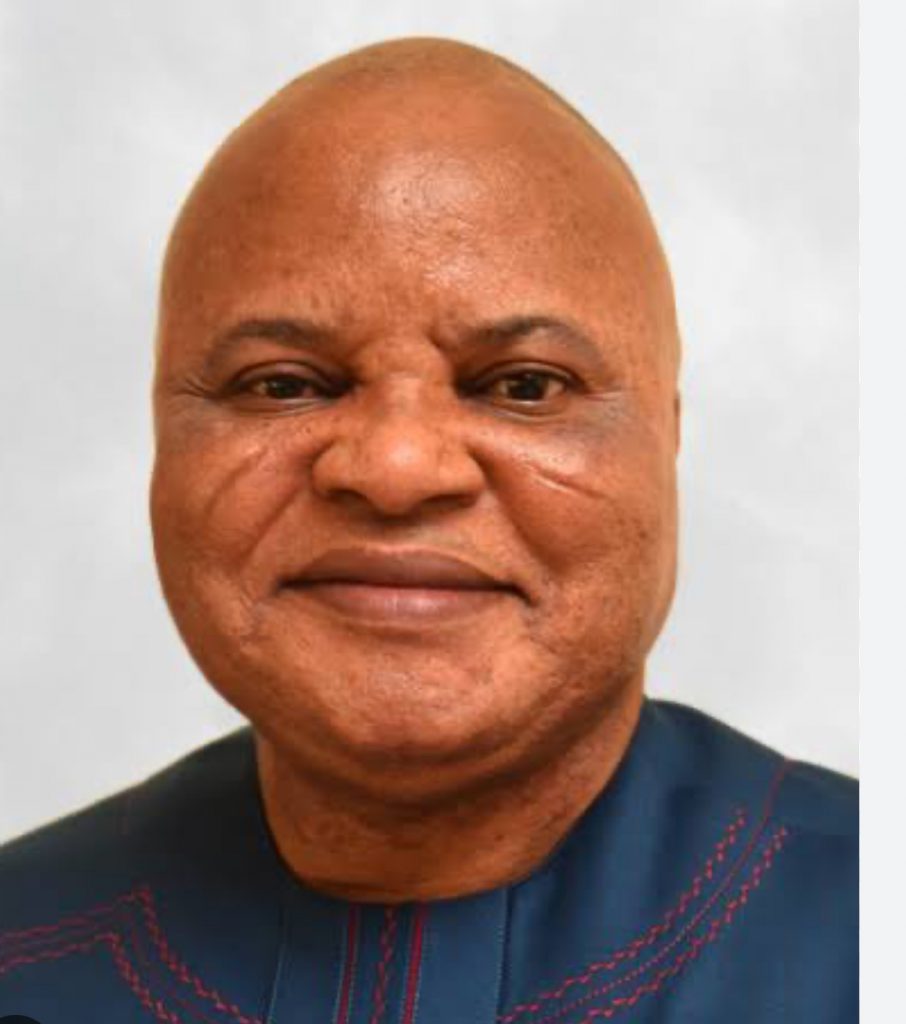
 When great men celebrate, even the stars bow in solemn hallow. As Dr. Victor Alewo Adoji (DVAA), the erudite banker-turned politician celebrates his 50th birthday on Saturday May 29, 2021, the periscope is focused on a man who has given his all to create peace, tranquility and progress for his people in Kogi State and Nigeria as a whole.
It is often said that some were born great, while others attained or achieved greatness. For Adoji, it is a combination of being born great and working hard to attain greatness.
As the former Kogi State governorship and Kogi East Senatorial District aspirants during the last 2019 general elections steps into the golden club, healthy, hearty, resolute and focused, it is never a dull moment for a man who has spent the greater part of his life to render selfless service to humanity.
 Victor Alewo Adoji, simply known as DVAA by friends and well-wishers, is a rare gem and a household name across a garland of interests and places.
DVAA’s humanitarian gestures cannot be overemphasized as he has contributed immensely to the growth and development of the Igala Kingdom (Kogi State) in several areas especially around education, empowerment, health care delivery and physical development.
Even before his attainment of fame as a public figure, his humanitarian service started as a pro bono auxiliary teacher at CSCC, Anyigba for a long period of time on a free of charge.
A visit to the Ministry of Mercy orphanage in Otutulu, any of the Doctors at Diagnostics and Reference Hospital Anyigba, the Ogugu Ofante Catholic Community, the bursary department of KSU or any members of Project Igala Education Committee will update you more than the little that I have mentioned of his humanitarian Services to the orphans, widows and the less privileged.
Though he is not directly in any position to employ people in his service sector, he has influenced a number of people into a number of private firms and public parastatals through his contacts.
He singlehandedly built the main Mosque and UEC Church in his village (Okula-Aloma). Added to this, he built a modern classroom block in the only Primary school in Okula and in conjunction with other elites in the village established the secondary school in the village.
For over twelve years, he has been responsible for paying the salaries of all the teachers in his village. He is in the process of building an estate in the village under a 20-year mortgage scheme for people of his village based in states around the country to own houses in the village.
He has sunk several boreholes in several villages and places including the Open University in Idah, the catholic orphanage in Anyigba and for the people of Ogene-Igah his maternal home.
 The Zenith Bank branches in Anyigba and Ankpa and the cash office in Idah are all to his credit. This is aside from the numerous people whose employment he influenced and never mentions for professional and strategic reasons.
About three decades ago, as an undergraduate, he gained insight into his role as a citizen in the Greek mythological sense of the word. This influenced his commitment to service which culminated in his election as Leader of the Students’ Union Government (SUG) of the University of Jos in 1993 and national Public Relations Officer of the Igala Students Association (ISA).
As a unionist, economist, banker, professional in politics, educator, resource person and others, he has been exposed to and responsible for an array of tropical and broad spectrum developments in several areas. Since the turn of the millennium, he has applied his experience as an independent consultant to provide support, advice and training to a variety of stakeholders in different roles, working in different institutional and cultural contexts, including the Igala region. Wherefore, he gained admiration for sociopolitical perspicacity, integrity, ethical behavior, passion and commitment to his fellow citizens.
As a consensus builder, he demonstrated proficiency in securing high-impact collaborations, acting decisively to deliver successful outreaches; thereby, gaining a track record of launching interventions related to business strategy and citizenship. For such collaborations, he worked productively as an innovation catalyst, dexterous in structuring alliances across private, public, and not-for-profit sectors. This involved high-profile advocacy, best practice in selling public awareness initiatives, a keen understanding of sustainability issues and relationship-building.
He has been focused on empowerment and capacity building of young Igala people especially in the fields of education (where he has several indigent students on his scholarship) and the creative industry where he partners with an assortment of thespians on an ongoing, evolving and ad hoc basis.
Recently, in partnership with the Kamar Football Academy and Igala-Bassa Nations Cup, he sponsored the establishment of the Igala United Football Club with about forty players and the entire coaching crew on his payroll. His partnership with the cashew farmers association of Nigeria, Kogi East chapter, is another evolving goldmine that is set to particularly impact the economy of the eastern part of Kogi State and by extension, Kogi state and the country at large.
Being uniquely different from others in his silent style of humanitarianism, Dr Victor Alewo Adoji has been a source, a catalyst and instrumental to the growth and development of many groups, individuals and communities in Igala nation for over a decade.
He has been focused on empowerment and capacity building of young Igala people to embark on further studies, particularly in Kogi East and Kogi State at large. Because he hates to have his humanitarian services been mentioned in public, he used individuals and organizations to assist several less privileged people to pay school fees, hospital bills and provision of shelters in times of need.
An infrequently misunderstood fellow who balances neatly along demographic and psychographic grids, you find emblematized in him a personality who has met milestones on the (same) road he took to avoid them. Either by discretion or disposition or both, Victor Adoji furtively but discernibly reckons that most of the greatest things in life revolve around knowing which bridge(s) to burn and which to cross and at what cost.
Highly impressionable, liberal and expressive, he is a man whose calmness even under pressure is rare and enormous. His numerous attributes align with sanctity, empathy and collectivism while his dexterity at balancing views, perceptions and affiliations justify and validate his huge appeal across relationships and interests. He duly fits an array of descriptions, meanings and phraseologies including, but not limited to, one with an excellent mind, an anchor and an enthusiast equipped with a disposition that avails a hybrid perspective (on issues) where/when necessary and imperative.
Often regarded as a patient but an excellent planner with high business acumen, he is intuitively analytical, intellectually sound, reasonably determined, highly efficient, appreciably trustworthy and hugely compassionate. Piety, reverence, attention to details and compassion without frontiers distinguish this noble gentleman who is obviously produced from the finest source-materials of the Master Porter.
 By training, Victor wears several hats but would rather be called an economist; a discipline he drifted into after a memorable event at Usman Danfodio University, Sokoto. According to him, he sauntered into studying Economics as a first degree but appreciated it because of its numerate nature that is entrenched in the social sciences with focus on people, society, allocation, preferences, human and social dynamics and interventions/decisions at all levels.
Adoji, a man of peace and a man of the people is married to one of the most unassuming of women and a wife who fits all classifications of “a virtuous woman”, exceptionally accommodating, unusually patient and highly considerate. Their marriage is blessed with two children
His Educational Background
Victor Adoji was born on 29th May 1971 to the reverent family of late (Elder) Bernard Angulu Adoji and Deaconess Rebecca Adoji, of Okula-Alloma in Ofu Local Government Area of Kogi State, Nigeria.
He had his primary and secondary education at the St. Paul’s Primary School (now, Mohammed Bankano Primary School), Sokoto and Federal Government College Sokoto, respectively.
A holder of Diploma in Project Management from the International Business Management Institute, Germany and he also has a baccalaureate degree in Economics from the University of Jos, Plateau State, Nigeria. He has four MBAs with specializations in Corporate Strategy, Leadership and sustainability, Entrepreneurship and Business Analytics as well as five graduate (Masters) degrees in Economics, Public Administration and International Affairs, Sociology, Managerial Psychology and Social Welfare.
Adoji also has several non-credit certifications including, Special Executive Masters in Project and Strategic Management (PSM) and Special Executive Masters in International Business Law (IBL) both from the London Metropolitan Business school. Added to these are certifications in Risk Management, Economics/International Business and Change Management all from IBMI, Berlin.
Victor Alewo Adoji who holds a Masterclass certification in Business Management and leadership from the London Graduate School (LGS), also studied and trained with several reputable local and international, professional and academic institutions including the Pan African University of Nigeria, University of Pennsylvania, University of Edinburgh, Wharton University, Yale University, University of Virginia, Oxford University, Harvard University, the World Bank, the IMF and the Boston Consulting Group (BCG).
His first doctoral degree (PhD) received from the University of Panama, focused on credit management. The second, a doctoral degree in Business Administration (DBA), focused on leadership, corporate governance and people management, from Leeds Beckett University, UK. He has a post-doctoral degree; a DBA (Honoris Causa) in Project Management from the Commonwealth University in conjunction with the London Graduate School, UK.
He holds several professional memberships and fellowships, including Fellow, Institute of Credit Administration (FICA) and a British International Certified Credit Fellowship (ICCF), Fellow, chartered Institute of Public Management of Nigeria, Fellow, Institute of Credit Administration (FICA) and Fellow, American Academy of Project Management (FAAPM). Aside being a Certified Procurement & Project Management Specialist (CPPMS) and a Master Project Manager (MPM), he is also a member of several Professional and academic bodies in Nigeria and beyond including, but not limited to, Nigeria Economic Society (NES), Nigerian Institute of Management (NIM), Institute of Chartered Economists of Nigeria (ICEN) and the America-based Institute for Transformative Thoughts and Learning (ITTL).
Adoji is a faculty member of the Institute of Credit Administration of Nigeria (ICA). The ICA is Nigeria’s only nationally recognized professional credit management body, solely dedicated to the provision of micro and macro credit management education, award of specialist qualifications, development of skills and capacity building of people involved in everyday management of trade, financial and business credits in Nigeria, Africa and the rest of the world. He is a board member of the Institute of Chartered Economists of Nigeria (ICEN). The institute promotes and encourages the study and development of the art and science of economics in public practice, industries, commerce and seeks to inculcate professionalism and specialization in the economics profession in Nigeria.
Victor is a hushed philanthropist, an educator, a publisher, an administrator, a professional in politics and an academic. Victor is also an economic development consultant who has contributed to praxis in entrepreneurship, middle management, economic analysis, strategy development and project management.
In addition to his training as a lifestyle coach and level-1 Neuro-Linguistic Programmer (OLCA), Victor Alewo Adoji also trained as a Conflict Analyst with the United State Institute of Peace (USIP). The Institute was established by the American Congress in 1984 as an independent institution devoted to the nonviolent prevention and mitigation of deadly conflict.
His Working Career – (His superlative footprints at Zenith Bank)
Adoji’s working career started with Paterson Cussons (Nig) Plc as a superintendent from where he moved to as deputy editor, the business section of the Northern based Concern Magazine. He joined Zenith Bank Plc in 2000 and disengaged in 2018 as the head of corporate communication after a meritorious service spanning eighteen (18) years.
While at Zenith Bank, Nigeria’s biggest and Africa’s fifth largest Bank, he functioned as a diplomatic liaison who interrelated with diverse stakeholders comprising board of directors, C-level management and community leads, dexterously building excellent local and international network endeavours around management, governance, administration, the private sector and civil society. Further, in this role, he initiated and cultivated robust and strategic relationships with the Fourth Power, thereby contributing to efforts at repositioning and enhancing interactivity and social collaborations on local, international and social media channels.
Having chaperoned the development of aspects of the bank’s stakeholder engagement strategy, he leveraged the ability to drive the embedding of sustainable practices within an organization as part of reputation management initiatives. He is reputed as a transformation agent with the competence to engineer continuous process improvement, while incorporating business-out sourcing initiatives to enhance productivity and modernize operations to attain remarkable results in the face of regulated resources.
He was responsible for establishing strategic partnerships across some sectors of the economy. He was the liaison between the bank and the Nigerian Economic Summit Group (NESG), an organization of private sector leaders representing key economic sectors in Nigeria, the Corporate Council on Africa (CCA), a leading US business association focused on connecting business interests in Africa by promoting businesses and investments between the United State of America and the nations of Africa. He was also a liaison for the World Economic Forum (WEF), a foremost international Organization (for public-private corporations) that engages leading political, business, cultural and other leaders of society to shape global, regional and industry agendas.
As deputy head of the Corporate Communications department at Zenith bank, he was the lead for the project-specific team charged with the responsibility of marketing (offline and online) the Bank’s Initial Public Offering (IPO). The IPO was oversubscribed by 554 per cent, the highest by any bank, in the history of Nigeria’s capital market till date. He was likewise the team-lead for the marketing team of Zenith bank’s listing of $850 million worth of its shares on the London Stock Exchange (LSE) as well as post-listing marketing required to access a wide range of institutional investors.
At the time he joined the bank, it was regarded as just “a bank” but with growth around the 10,000th percentile in major financial parameters including, but not limited to, Gross Earnings {8,259%}, Profit Before Tax {7,150%}, Profit After Tax {7,317%}, Total Assets + Contingent Liabilities {8, 128%} and Tier-1 Capital {11,643%}, he left the institution as “the bank”: The biggest and most profitable bank in Nigeria and the fifth largest in Africa.
Adoji was one of the definitional figures at Zenith bank having handled several responsibilities and served on critical committees and on crucial decision making bodies of the financial behemoth. For his diligence and impactful roles, he won numerous commendations and awards at both the Board and Management levels: 2007 – commendation for tremendous project success, 2006 – Best Individual Staff bank-wide, 2003 – commendation for impactful and strategic inter-department support, 2002 – 2003 Best Non-Marketing Staff bank-wide, 2002 commendation for outstanding project implementation and 2001 – 2002 Best Non-Marketing Staff bank-wide.
Adoji who left Zenith Bank unscathed after almost two decades of a productive and an untainted career has considerable posteriori knowledge amassed from long-term middle and senior positions in management, including process evaluation, public relations, internal and external communications, strategy implementation, and corporate/brand marketing. He effortlessly applies hands-on experience in market/ecosystem research, business/process analytics, assessment of contexts, initiating and implementing interventions and using design-thinking protocols that are culture-specific and value adding.
Dr. Adoji is cosmopolitan, a well-groomed gentleman and he is joyfully married to Mrs. Helen Eneumi and gracefully blessed with children.
His Public-Sector Related Skills/Trainings/Proficiencies
With over two decades of active private sector engagement at both the corporate and personal enterprise levels and substantial public sector relations, training and experience make Victor Adoji a well-rounded, deeply blended and resourceful individual. Verifiably, he has a good understanding of issues and a great capacity to incorporate divergences in a manner that is seamless and productive, as his achievements in the corporate and personal enterprise realms and the following rendition of some of his proficiencies and skills attest to. Some of these works include: (A.) Oxford University – From poverty to prosperity; Massachusetts Institute of Technology (MIT) – The challenges of global poverty; Harvard University – Entrepreneurship in emerging economies; TUDelft Institute – Rethink the city: New approaches to global and local urban challenge; IIMBx Bangalore – Infrastructure development, PPPs and regulation; Princeton University – Making government work in hard places; Berkeley University of California – Solving public policy problems and SDG Academy (World Bank) – Industrial policy in the 21st century: The Challenge for Africa.
His Political Journey…
When Adoji ran for the Senate in 2019 and was not successful in getting nomination of the Peoples’ Democratic Party (PDP), he alternatively ran on the platform of the African Democratic Congress (ADC). Within four months (October – January) he had (again) traversed over seven hundred (700+) villages in Igala land and all the ninety eight (98) wards in the eastern flank of Kogi State. On the platform of a relatively unknown (at the time) ADC, the people, hand-in-gloves with Victor, humbled pessimists and derided predictions with the pre-election, election and post-election outcomes. Nonetheless, insightful and knowledgeable observers would confirm that the thirty one thousand one hundred and seventy one thousand (31,171) votes ‘received’ by Victor Alewo Adoji was a confirmation of two things; Victor is an entrenched grassroot politician and that his strength resides with a generality of the people.

 Immediately after the ‘loss’, Victor and his ebullient supporters went back to the grieving electorates, across all the nine (9) local governments to express appreciation for their roles and enormous sacrifices enjoining them to remain steadfast and positive with a final word, “I will be back”. I do not know of any politician who returned to give thanks to the people in ‘defeat’.