
news
Update : Ikoyi building Collapse : wife, relations fight over late developer’s cash, luxury vehicles and Six More Persons Rescued As Death Toll Rises To 42

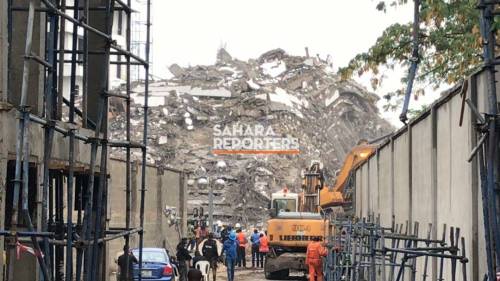
Six more people have been rescued from from the 21-storey building that collapsed in Ikoyi, the Lagos State Governor, Babajide Sanwo-Olu, has said.
According to a statement on Saturday, the number of people rescued from the collapsed building has now increased to 15.
Sanwo-Olu, however, stated that the death toll from the building collapse increased to 42 as of 6pm on Saturday.
The statement was titled, ‘Sanwo-Olu names six more survivors in Ikoyi building collapse, raises number of those rescued to 15 …42 bodies recovered from rubbles so far”.
The statement quoted Sanwo-Olu as giving the update on the search and rescue operation at the scene in company of the National Leader of the Progressives Congress, Bola Tinubu, and Nasarawa State Governor, Abdullahi Sule.
He said “the additional six people were evacuated alive from the collapsed structure”.
According to him, the survivors are presently being treated at the Police Hospital in Falomo, Ikoyi.
He said, “There are additional six people that we’ve also been able to identify and who were on site when the building collapsed. They were taken to the Police Hospital in Falomo for treatment and some of them have been discharged.
“We have taken the full records of survivors in the incident. And this gives a total of 15 people rescued alive. We have a total of 42 bodies that have been recovered.
“Among the latest survivors are a 38-year-old woman, Glory Samson. Others are Ndajor Ahmed, Yunusa Abubaka, Ajiboye Habib, Jeremiah Samson, and one man identified as Emem. While most of them sustained varying degrees of injury, Samson, 20, is said to be in a coma.”
Sanwo-Olu added that 49 families had filled the missing persons’ register as of Saturday morning.
He said the register had helped the State Government to reconcile the details of victims rescued alive and also medically account for bodies recovered.
The Governor added that identification of bodies by relatives had commenced, adding that DNA examination was being undertaken on some of the bodies difficult to be identified by their families.
“There is a sum of money that has been reserved by the State Government for succour and to give for befitting burial for those who died in the incident. Families that so wish to accept it are being supported for the burial arrangement. Also, survivors in hospitals have been given the financial support to help them settle and cope with challenges of feeding in the aftermath of the incident,” he added.
Meanwhile, a crisis is brewing in the Osibona family as his wife and relations are reportedly fighting over the ownership of his property.
It was gathered that the wife, who flew in from the United States of America following the death of her husband, was denied access to the Ikoyi residence of the late developer by his siblings.
Osibona’s wife and siblings were said to have arrived at his residence with mobile policemen to lay claim to his assets, including luxury vehicles, cash, and other valuable items.
But the late developer’s neighbours were said to have shut them out to avoid being caught up in the crisis.
A reliable source close to the family, who confirmed the clash to one of our correspondents, said though the deceased did not die intestate, his family members fought over his assets.
The source said, “There is big fighting going on. The wife had been mostly abroad. There is a will but once a man dies, there is a problem. Instead of them (the family) to focus on the collapsed building, they are looking at the property (on Mosley Road). They are waiting to gain access (to the apartment); they are still there.”
Meanwhile, the search and rescue operation continued at the site, but the heap had receded sharply.
news
Ondo Sports Council Chairman Declares 2026 ADU Unity Cup Open as Ijapo Ages FC Edges Odigbo LG FC


 The Chairman of the Ondo State Sports Council, Hon. (Coach) Abimbola Oladimeji, has officially declared the 2026 ADU Unity Cup open, marking the commencement of another edition of the football competition aimed at promoting unity, sportsmanship and grassroots football development.
The opening ceremony attracted football enthusiasts and supporters who gathered to witness the start of the tournament and celebrate the spirit of competition among participating teams.
In the opening match, Ijapo Ages FC secured a narrow 1–0 victory over Odigbo LG FC in an entertaining encounter, giving the team a winning start to its campaign in the competition.
The ADU Unity Cup continues to provide a platform for players to showcase their talents, foster unity among communities and contribute to the development of football at the grassroots level.
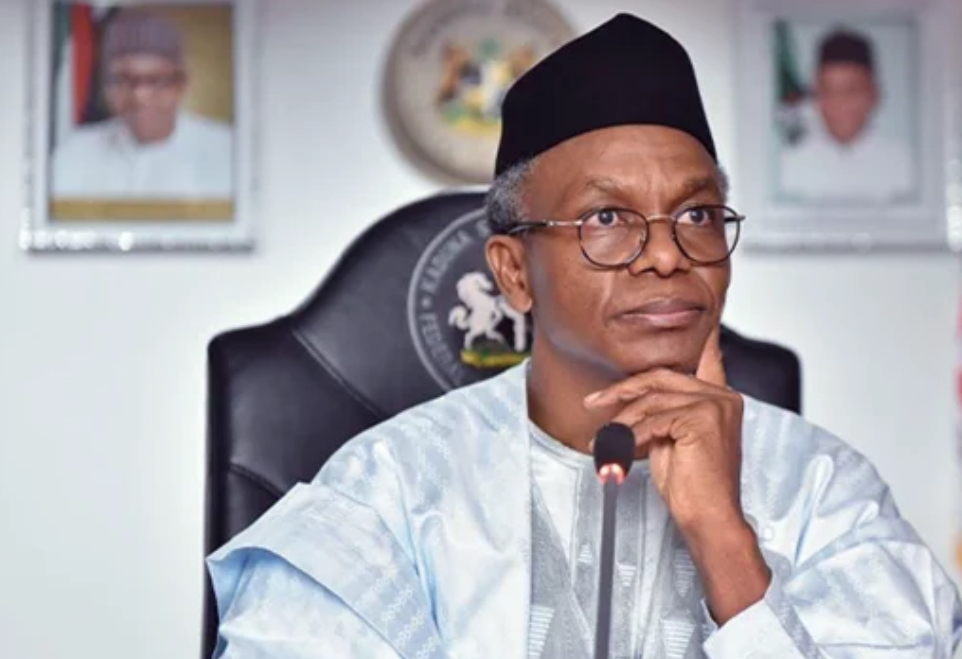
A forensic investigator with the State Security Service, Segun Kayode, on Tuesday alleged that former Kaduna State Governor, Nasir El-Rufai, and some of his associates earmarked $600,000 to settle officials of the Economic and Financial Crimes Commission and intermediaries.
Kayode, the first prosecution witness in the ongoing trial, made the allegation while testifying before the Kaduna State High Court sitting in Kawo, Kaduna, presided over by Justice Darius Khobo.
The witness said $500,000 and $100,000 were allegedly set aside for the payments, adding that forensic audio recordings captured conversations involving El-Rufai and some of his suspected associates.
According to him, the recorded conversations centred on alleged efforts to frustrate an EFCC investigation into a company identified as Singularity.
Kayode named a Senior Advocate of Nigeria, AU Mustapha (SAN); Jimi Lawal; and Bashir El-Rufai among those allegedly mentioned in the conversations.
He told the court that Mustapha and Lawal were allegedly directed to meet one Ahmadu Sule to obtain a template previously used to liquidate another company, with the intention of applying a similar process to Singularity.
The investigator further alleged that the discussions included plans to liquidate the company in Nigeria and Mauritius, where it was reportedly under investigation by the Nigerian Financial Intelligence Unit.
Kayode also alleged that the recordings contained discussions about preventing the EFCC from investigating IHS, which he said was listed on the New York Stock Exchange.
The allegations were presented as part of the prosecution’s evidence against the former governor.
The proceedings lasted nearly eight hours, from 12:26 pm to 8:18 pm, with about two hours devoted to playing the recorded conversations.
Add us to your Preferred Sources
Earlier, El-Rufai’s lead counsel, Paul Erokoro (SAN), objected to Kayode’s testimony, arguing that the witness’s name and summary of evidence were not included in the prosecution’s proof of evidence.
Erokoro argued that the omission undermined his client’s right to a fair hearing, insisting that the defence was entitled to know the evidence it was expected to answer.
However, counsel for the Independent Corrupt Practices and Other Related Offences Commission, Ayodeji Adedipe (SAN), told the court that Kayode was a subpoenaed witness and that the omission did not automatically render his testimony inadmissible.
Adedipe said the subpoena was issued and signed by the court on June 30, 2026, adding that the defence would have the opportunity to cross-examine the witness.
The prosecution counsel also cited judicial authorities in support of his argument.
In his response, Erokoro maintained that the issue was not whether the witness could testify but whether the defence had been adequately informed to prepare for his evidence.
He relied on Section 210 of the applicable Administration of Criminal Justice Law, 2017, and argued that the prosecution should have served the subpoena on the defence.
In its ruling, the court acknowledged that the witness’s name and summary of evidence were absent from the proof of evidence but held that the records showed he had been subpoenaed.
Justice Khobo ruled that the omission did not automatically make the testimony inadmissible, provided the defence was allowed to cross-examine the witness.
The judge consequently overruled the objection and directed Kayode to continue his testimony.
After the witness submitted a hard copy of his findings to the court clerk, the defence complained that the document should have been served earlier to enable it to study the contents.
The judge, however, ruled that the defence could obtain a certified true copy of the document admitted as Exhibit One for examination.
The court adjourned the case until November 30 and December 1, 2026, for continuation of the cross-examination, following agreement by the prosecution and defence.
Our correspondence reported that El-Rufai arrived at the court premises at about 11:50 am, ahead of the scheduled noon hearing, amid tight security.
He was accompanied by the African Democratic Congress governorship candidate in Kaduna State, Isa Ashiru.
His appearance followed an order by Justice Khobo directing the ICPC to produce him in court for the resumed proceedings.
The previous sitting was adjourned on Monday after the former governor was absent following information that he had requested access to his personal physician to review medical test results.
The resumed hearing came days after the Court of Appeal in Kaduna dismissed El-Rufai’s appeal challenging the refusal of bail by the state high court.
In its judgment delivered on October 9, the appellate court upheld the lower court’s decision, ruling that the former governor had failed to establish sufficient grounds to warrant interference with the refusal of bail.
El-Rufai has been in ICPC custody since February 18, 2026, over allegations of financial misconduct linked to his administration of Kaduna State between 2015 and 2023.
The Kaduna State House of Assembly had petitioned the ICPC over the alleged diversion and mismanagement of more than N423bn in public funds during his eight-year administration.
The former governor is facing multiple cases involving allegations of money laundering, abuse of office, fraud and other financial offences before different courts.
He has denied wrongdoing and pleaded not guilty to the charges. The allegations remain subject to judicial determination.
Ok
The Federal Government has announced ten new measures to reduce the pain Nigerians feel from high fuel prices. It insists, however, that none of them brings back the old fuel subsidy for everyone.
The measures were presented by the Federal Ministry of Finance at a press briefing on Thursday, 8 October 2026, titled “Fuel Prices and the Subsidy Question.” The government admitted its earlier steps fell short. According to the presentation, “These measures do not fully relieve the pressure households feel today, so the government is going further.”
The government described the new package as “Help that is targeted, temporary and affordable.” In plain terms, the help is meant for those who need it most, will not last forever, and is designed so that the country can pay for it.
Cheaper petrol and more cash support
The first measure is a discount on petrol sold at NNPC filling stations. The discount will last for the next 30 days, and public transporters, such as commercial bus and taxi operators, will get priority. The government hopes this will help keep transport fares from rising further.
The government also plans to increase cash transfers to vulnerable households. Small businesses will get cheaper loans, known as subsidised credit, to help them cope with higher running costs.
Steps to keep pump prices steady
To protect Nigerians from sudden jumps in world oil prices, the government will sell crude oil in advance to local refineries. This is expected as oil production rises and crude previously committed to other purposes becomes available. The presentation says this will shield “pump prices from global swings.” ShopAfrican Art
The government will also introduce what it calls price modulation. Under this plan, a negotiated limit of ₦1,350 per litre will apply to the ex-gantry price (the price at the depot) or the landing cost (the cost of bringing the fuel into the country). The limit will be reviewed every month, so it can change as conditions change.
A National Strategic Fuel Reserve will also be set up. Fuel from the reserve will be released “under published rules when disruption or hoarding threatens supply.” This means the government can step in when fuel becomes scarce or when marketers hold back products to push up prices.
Lowering the cost of transport and doing business
The government says part of what Nigerians pay for transport comes from illegal charges on the roads. It will work with state governments under the 2025 tax laws to rein in road taxes that push up fares.
It will also speed up the rollout of compressed natural gas (CNG) as a cheaper alternative to petrol, again working with the states. Transporters who benefit from cheaper fuel are expected to “pass savings on in lower fares” to passengers.
Other steps target the cost of goods and services more broadly. The government will cut regulatory costs, described as red tape, that “feed into the price of goods and services.” It will also ease traffic in cities to save fuel, and it will use NIPOST address codes to reduce the cost of moving goods from one place to another.
One measure has not yet been decided. The government is considering an excess profit tax on operators it says exploit consumers. If it goes ahead, the money raised will fund transport support and vouchers for low-income earners.
No return to blanket subsidy
The ministry ended the presentation with a clear message, “None of these measures restores a blanket subsidy.” The government is therefore not returning to the old system, where fuel was sold cheaply to everyone. It says its new approach will reach “the people who need help without putting the wider economy at risk.”
The announcement comes as many households as possible, and businesses struggle with the high cost of transport, food, and other goods linked to fuel prices. How much relief Nigerians feel will depend on how quickly and effectively these measures are carried out, and whether transporters and marketers pass the benefits on to consumers.


-
 news6 years ago
UPDATE: #ENDSARS: CCTV footage of Lekki shootings intact – Says Sanwo – Olu
-
 lifestyle6 years ago
Former Miss World: Mixed reactions trail Agbani Darego’s looks
-
 health6 years ago
Chairman Agege LG, Ganiyu Egunjobi Receives Covid-19 Vaccines
-
 lifestyle5 years ago
Obateru: Celebrating a Quintessential PR Man at 60
-
 news1 year ago
BREAKING: Tinubu swears in new NNPCL Board
-
news8 years ago
-
 health6 years ago
UPDATE : Nigeria Records 790 new cases of COVID-19
-
 entertainment2 years ago
Ashny Set for Valentine Special and new Album ‘ Femme Fatale’